
What Private Eyes Is Teaching Me About Pride and Going Back
Share: X · Facebook · LinkedIn · Reddit · Bluesky · Threads · Email
I leave people forever. When someone tells me to fuck off, I go, and I make sure the door can't be opened again. I've done it with a job, with a business partnership, and with someone I loved. I've known the pattern for years, and what finally let me see it clearly is a Canadian detective show called Private Eyes, which I love.
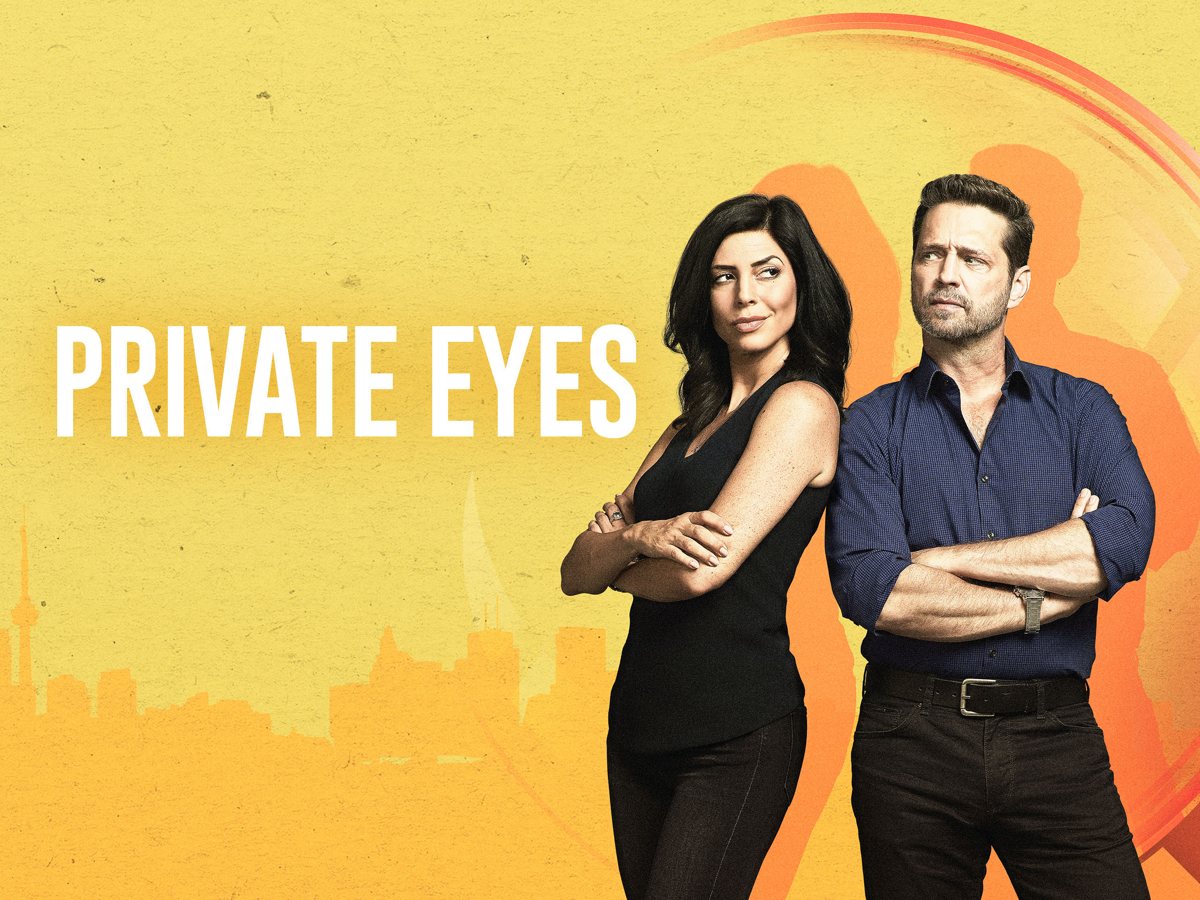
Private Eyes ran on Global from 2016 to 2021, filmed and set in Toronto, and a sequel, Private Eyes West Coast, started this fall. Jason Priestley plays Matt Shade, a former pro hockey player who becomes a private investigator alongside Angie Everett, played by Cindy Sampson. There's a case every week, and the case is the least important thing on the screen. I'd put the show at 80 percent psychology and 20 percent entertainment. Episode after episode, it shows how people should deal with each other when they disagree, when they've hurt each other, and when they need each other.
I'm also a complete smush about it. I watch it on Hulu here in Arlington, and I never skip the opening, because "Private Eyes" plays over the credits and I love Hall & Oates. Jason Priestley is a wonderful actor, funny and charming, and he makes decency look like the most attractive thing a man can have. Cindy Sampson matches him scene for scene, and I love the whole cast. I'm happy to say all of that out loud.
Shade and Angie run the agency as partners. They argue, push back, and cover for each other, and the partnership survives every fight. I have never kept a partnership intact through a real fight. For seasons they're friends before they're anything else, two equals who respect each other's competence and like each other's company, and everything that comes later rests on that friendship.
Shade's daughter, Jules, played by Jordyn Negri, is visually impaired, and the writers let her be a whole person with her own plans and her own judgment. Her father's job is to let her have them, and he learns to do it. Shade is divorced from Becca, played by Nicole de Boer, and she is still family. They raise their daughter together, they both show up, and neither of them keeps the war going. Shade stays close to his father, Don, who runs a diner. Angie runs the agency she inherited from her late father and keeps her mother, Nora, a former gambler and small time con, in her life anyway. People on this show take the sword for each other and then stay to help heal the wound. They make mistakes, get forgiven, and are allowed to come back, and that is the part I'm worst at.
When someone says "I hate you, don't let the door hit you," I take it as an instruction, even when what they wanted was for me to fight for them. I don't want to override anyone's agency, and I don't play games, so I go.
Part of that is how I'm built. I have SDAM, severely deficient autobiographical memory, so I don't get the felt replay of a relationship that most people use to read a moment like that, the memory that the last time she said it she called back in tears, which means it really means "come find me." The words in front of me carry their full weight. Aphantasia means I can't picture the face behind them. ADHD brings rejection sensitivity, and leaving is the fastest way to stop that pain. And I grew up learning that when someone says go, you go before it becomes a fight.
Taking people at their word is a form of respect, and I'm keeping it. The cost is that anyone who says "go away" in a flooded moment, or as a test, loses me over one bad hour, because I've been making two decisions at once: to leave, and to never come back. When I'm the one who leaves, I burn the bridge on the way out. Talking it through with Claude, I got the distinction I'd been missing. Self respect says, "I won't stay where I'm not wanted." Pride says, "I won't let you see that I wanted to stay." Leaving can come from self respect. Burning the bridge comes from pride, and its whole job is to make sure nobody ever sees me wanting anything. I didn't know I carried that pride until I heard it put that way.
I had filed the ordinary moves of caring about someone under groveling and chasing: calling twice, saying "I miss you," saying "I was out of line," asking whether we can talk. Those are what people do when someone matters to them, and pride renamed them so that skipping them would feel like dignity. I don't make any of those moves, and that is a bigger flaw than the leaving. Matt Shade makes them without embarrassment, and the show treats that as his strength.
So I'm practicing where nothing is broken. I tell people I like that I've been thinking about them. I make the second call when a friend doesn't pick up. When I'm out of line about something small, I say so the same day. For the next time someone tells me to go, I have a sentence ready: "I'm taking you at your word and giving you space. If that's not what you meant, you know where to find me." Then I go, and I leave the door standing.
I want to reach the people on the other side of the bridges I burned, and I'm not ready. A message I only half mean would land as one more push. I'll be ready when I can send it without needing any particular answer back, and until then I'm watching Jason Priestley play a man who keeps coming back.
As an Amazon Associate I earn from qualifying purchases.
Share: X · Facebook · LinkedIn · Reddit · Bluesky · Threads · Email