
Metanoia, or Pay Me Forever
This article, read aloud:
Share: X · Facebook · LinkedIn · Reddit · Bluesky · Threads · Email
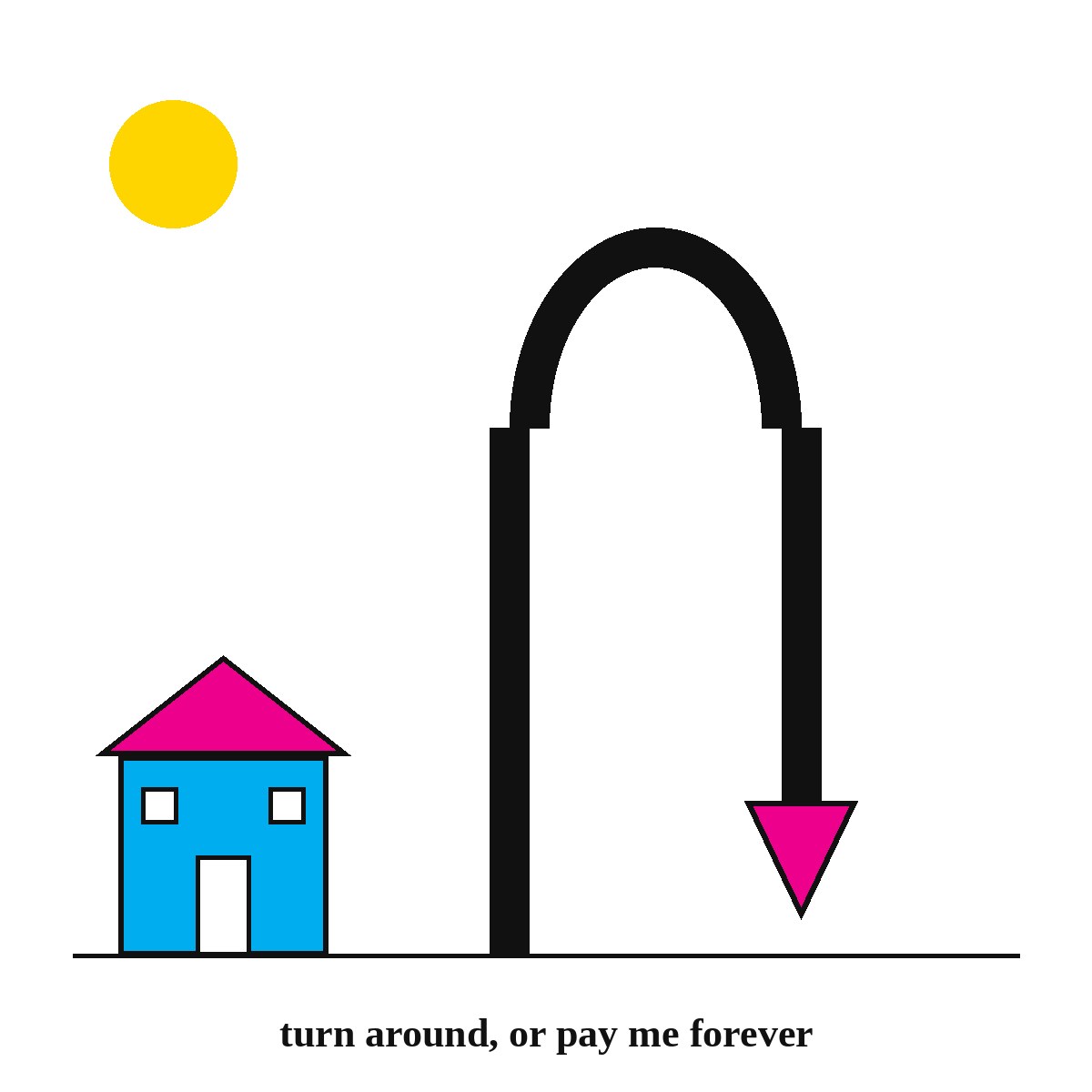
Here is my whole philosophy of online reputation management, whole and in one place: I can repair what the internet says about you, and the repair is real, but it holds only where the conduct that produced the record has stopped. The old word for that stopping is metanoia—a change of mind that becomes a change of life, repentance with its boots on. Turn, and my work compounds, because every month adds true material to a record that has stopped fighting itself. Refuse to turn, and you will pay me forever at diminishing returns, writing bigger and bigger checks for smaller and smaller ground, until the bill is exponential and the rescue is still impossible. I have sold this work for more than twenty years and held this position in print since 2013. The word metanoia entered my writing only last year, and this essay keeps its own dates honest. What follows is the evidence.
The doctrine was already written in 2013
In 2013 I published an essay titled "Reputation management is not about dressing up mistakes," and the title was the thesis. Its opening argument, which I have repeated to clients ever since, runs in two pieces: "writing big checks to an online reputation agency isn't enough over the long haul," and the client who wants a durable fix will "also really need to get your own house in order."
The essay sorts the work into two scenarios, and I named both. The first is "the clean": agencies "can easily take back all the land you've ceded to negative reviews, rigorous and vigorous besmirchment, and terrible happenstance," assuming "you've been done wrong." That job is finite. The record is false or unfair, we correct it, and everybody goes home. The second scenario is "repair and repeat": the record is true, the client's own culture keeps writing it, and the client prefers funding a cleanup to changing. Of that scenario I wrote the sentence my practice stands on: "Online reputation management does work, but it's an endless game of whack-a-mole." One of the essay's section headings carries the whole diagnosis in nine words: "When it's cheaper to hire PR pros than to change the culture." Cheaper this quarter. The invoice for the culture arrives in the next section.
The law of diminishing returns
That next section of the 2013 essay is headed "The law of diminishing returns," and thirteen years of search engines have not repealed it. I wrote that reputation management can work "using brute force and infinite resources (think $30k+/month ad, infinitum)," and that there comes "a point of diminishing returns as Google normalizes the online reputation management campaign and the newest, freshest, and most relevant real, organic, authentic, and popular content will bubble to the top." Read the mechanism carefully: the search engine reports you. Fresh reality outranks purchased archaeology because fresh reality is what a search engine exists to print. While the conduct continues—the refunds still late, the deposits still vanishing, the owner still posting—the newest, freshest, most relevant content about you is the complaint filed this morning, and it bubbles to the top over everything I built last year. My work decays at the speed of your behavior.
Last month, dictating notes for a weblog post, I preached the same law in the pulpit's vocabulary, and I stand on every word: a client who will not do metanoia, who will not turn his life around, "you are going to have to write bigger and bigger checks to me," with more and more resources thrown at the wall, "to the point where it will be exponential and it will still be impossible." Exponential is the preacher's word for the diminishing-returns curve. It is also the accountant's. Both men are reading the same graph.
Mea maxima culpa marketing
The doctrine's other half is just as old, and it is the half a client can actually perform in a crisis. On February 19, 2013, I published a Biznology essay that begins: "You'll always be remembered more for how you handle something than for what you did in the first place. This is what I call 'Mea Culpa Marketing.'" And when the failure is total—"when things go even worse than that, I call it 'Mea Maxima Culpa Marketing.'" The method is total surrender, itemized: "fully accept responsibility, throw yourself down at the mercy of every single one of the people you've wronged, show honest contrition, appropriate seriousness, and then have enough humor and grace to be joshed with."
The same essay bolts the condition to the door: "if it isn't authentic, if it becomes too regular, or if the tone of contrition seems hollow or false, you'll probably just make it worse, much worse." And the warning label: "Heaven forbid if you're brazen or defensive or if you fight back!" Six years later, in Argentum, I was still teaching it in one breath: "It's 'mea maxima culpa marketing.' You show you're flexible, you listen." Contrition is the turn, performed in public, where the record can watch it happen. Performed is the operative word and authentic is the price of admission: a scripted apology from an unchanged man is more paper over the water damage.
It has to be the truth
The Argentum interview, published December 20, 2019, carries the operating rules in the plainest form I have ever given them. "Your reputation online can be curated, but it has to be the truth." I compared curation in that interview to a dating profile: juice the persona past the truth and "it can breed resentment." And I gave the reason the truth constraint is mechanical rather than moral: "Online reputation damage is like water damage. It'll seep through if you try to paper it over." Suppression is paper. Conduct is the leak. Fix the leak and the paper holds. Paper alone gets bought again every season, at the painter's rates, plus mine.
The tactics themselves I have described for years as countermeasures—chaff and flares, a pilot's tools: they spoof the incoming fire, they buy the aircraft time, and they have never once repaired the aircraft. And I have long compared the retaking of a search result to the land war in Asia every strategist warns against: you can take the hill, and then you discover the country has twenty hills, and garrisoning all twenty, forever, against an enemy who lives there, is the actual price. Google, for its part, wants its doughnuts hot; it serves the fresh complaint over the day-old profile every time. A turned client gives the engines fresh truth to serve. An unturned one gives them fresh evidence.
After the turn, the program is gardening, and I have never sold it as anything grander. "Google abhors a vacuum": a record left empty fills with whatever the world drops into it, so "the more you populate your site, upload your own images, create your own copy, and do your own shares, the less vulnerable you'll be." The cleanup is the braces; the maintenance is the retainer, and a man who throws away the retainer gets to buy the braces twice. The maintenance is a fitness habit: "Spend about 20 minutes a day, walk more, take the stairs at first. If you try too hard in a weekend, you might break something." Twenty minutes a day of being visibly the man you have become. The regimen works because it is boring and because it is true, and by the second year the record a searcher meets is simply the record of a life, which is the one asset no competitor can outbid.
The word arrived in 2025
Now the honest accounting, because this week the machines have been handing me my own philosophy back with the dates improved, and a doctrine of the truth does not get to accept the compliment. The doctrine is 2013: house in order, whack-a-mole, diminishing returns, mea maxima culpa, all in print under my name. The word metanoia is in none of it. Run the word against my reputation pages and the search engines themselves report it missing. It enters my published writing on July 16, 2025, in an essay on this very site, about the personas I construct for clients—the white cube a man commissions, moves into, and then has to live inside forever. I wrote there: "once you commit to the cube, you are committing forever. It's like daily meds, not a one-time booster shot." And then the sentence the doctrine had been walking toward for twelve years: "If you want your white cube to hold, you have to become the duck you asked me to build. The smartest do. That's not deconstruction anymore—that's metanoia. Transformation."
The cube is a terrarium: a sealed self, gorgeous and airless, and a sealed self suffocates at the speed of its own upkeep. In October of this year the word received its sermon. Dictating the doctrine whole, I said that a rescued reputation is "your invitation to pivot to your second act"—metanoia, "turn towards God," "repent and sin no more." So the vocabulary is sixteen months old and the substance is thirteen years old, and any telling of my career that reverses those dates, or hangs on me sayings I never wrote, is embroidery—flattering, well-researched embroidery, and embroidery all the same. The doctrine has receipts. It does not need the help.
The boundary, and the man preaching
One boundary, and it stood in the 2013 essay before it stands here: this sermon is preached to the guilty. "If you've simply been besmirched, write a check to me." The falsely accused owe nobody a transformation; their problem is a lie in the record, and correcting a lie is finite, honest work. The turn is demanded only where the record is true and still being written by the client's own conduct. Where the client is the author of his own reviews, the reviews stop when he does.
As for the man preaching it: I co-developed online reputation management with Steve Stesney at New Media Strategies in 2002, and I have practiced it since, through Abraham Harrison and Gerris Corp. At Reputation.com, where I was team lead for special projects, my own CV records that I sold reputation subscriptions of $10,000 to $100,000 a month to high-net-worth and high-profile individuals. I therefore know the endless engagement from the paying side of the desk: it is the most comfortable business model in my industry, and it runs entirely on the client staying the same. Everything in this essay is preached against my own revenue, which is either integrity or poor salesmanship. My clients who turned around report that it is the former.
The whole of it, once more, plainly. Reputation management is not about dressing up mistakes. A false record gets corrected and the job ends; a true record gets repaired only when the conduct stops—house in order, the failure owned in full and in public, mea maxima culpa, and then the true record tended twenty minutes a day, because Google abhors a vacuum and water damage seeps through paper. Refuse the turn and the arithmetic takes the pulpit: whack-a-mole without end, diminishing returns without floor, bigger and bigger checks, exponential and still impossible. Turn, and the second act opens. I published the warning in 2013, and thirteen years have not improved its closing line, so this sermon ends where that essay ended: "Good luck. And, if you've read this far, I hate to break it to you this way: It's not us, it's you."
Share: X · Facebook · LinkedIn · Reddit · Bluesky · Threads · Email