
Security Theater: A Primer
Share: X · Facebook · LinkedIn · Reddit · Bluesky · Threads · Email
Security theater is the practice of putting on a security performance—measures chosen because they are visible, reassuring, and photographable—while the actual risk they claim to address goes mostly untouched. The term comes from the security technologist Bruce Schneier, who coined it in his 2003 book Beyond Fear. His definition, on page 38, is the one the field still uses: security theater is a set of countermeasures that provide the feeling of security instead of the reality. This page is a working primer on the concept: where it came from, what the scholarship and the cost-benefit arithmetic say, how criminologists measure the difference between presence and protection, how the same performance runs in airports, police departments, armies, schools, and server rooms, and how to audit any given measure and tell the show from the substance.
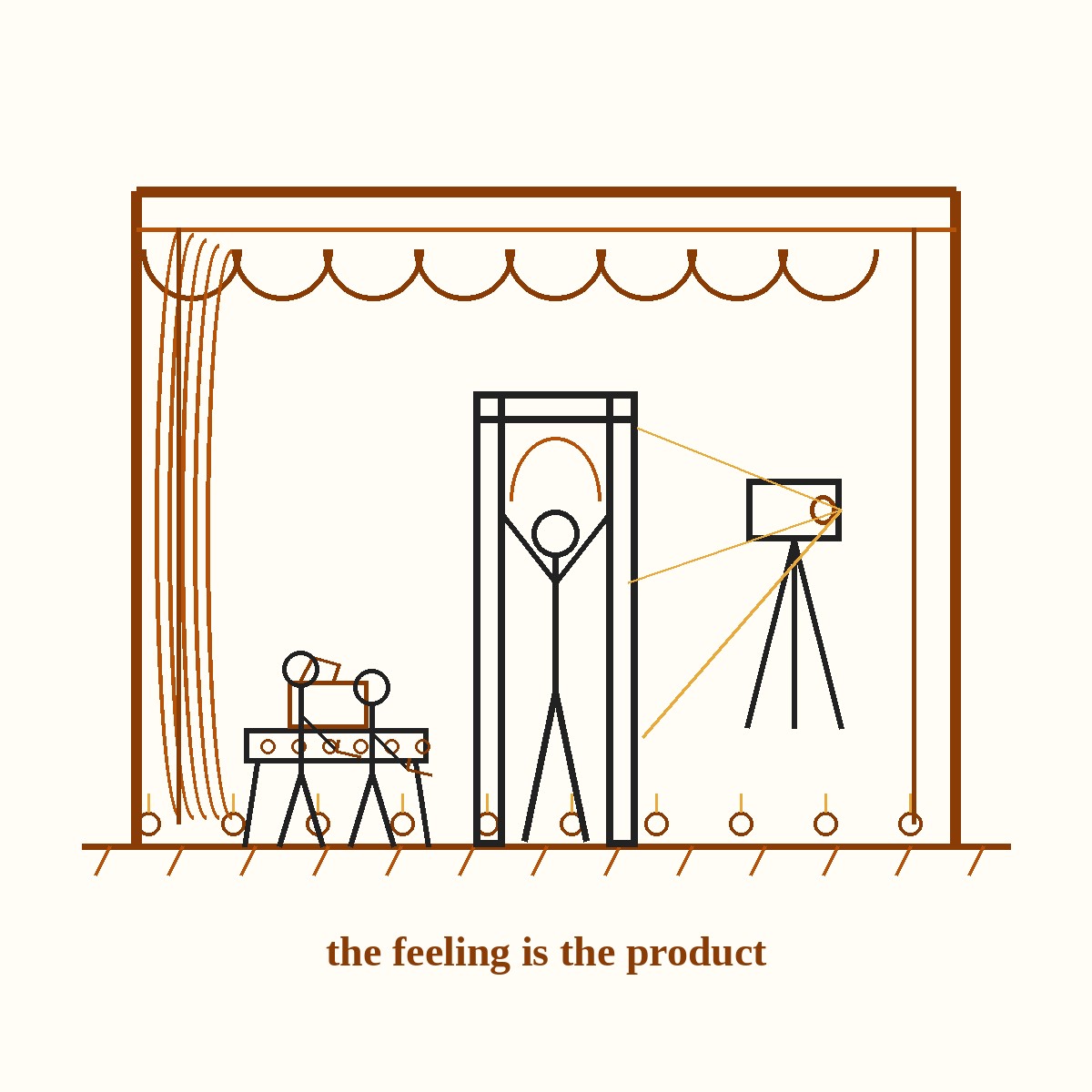
Schneier's starting point is a distinction most security arguments skip. Security is both a feeling and a reality, and the two track each other badly. A measure can raise the feeling and leave the reality flat. It can also raise the reality and leave the feeling flat—reinforced cockpit doors are nearly invisible to passengers. Theater is what you get when the feeling is the product being sold and the reality is an afterthought. Schneier's own archive of two decades of writing on the term is here, and his book's home page is here. The Wikipedia overview is a decent map of the territory; what follows is the territory itself, with the receipts attached.
The test: five questions that end most arguments
Beyond Fear hands the reader a five-step process for evaluating any security measure, and it remains the cleanest audit tool in the literature. The questions, in Schneier's wording:
- What assets are you trying to protect?
- What are the risks to those assets?
- How well does the security solution mitigate those risks?
- What other risks does the security solution cause?
- What costs and trade-offs does the security solution impose?
A chapter-by-chapter set of notes on the book, including the five steps and the page-38 definition, is here. Theater fails this test in a predictable place. It has a vivid answer to a version of question two—the last attack, replayed on television—and a weak or missing answer to question three. Nobody measured whether the new ritual stops the next attack. Questions four and five go unasked entirely, because asking them would mean pricing the liberty, the money, and the new vulnerabilities the ritual itself creates.
Schneier later named the engine that writes the scripts: the movie-plot threat. A movie-plot threat is a specific, cinematic scenario—a bomb in a shoe, a liquid explosive mixed in a lavatory—defended against in exact detail, while the general category of attack it belongs to stays wide open. Defending against the specific plot feels decisive. It photographs well. It also teaches the adversary precisely which door is now watched, while every other door stands as it stood. Schneier applies the five questions in public whenever a new measure is proposed; his walk-through of a school fingerprinting scheme is a worked example worth reading before the history, because it shows the audit running on a small, ordinary case rather than an airport.
A short history of the show
The modern checkpoint begins in the early 1970s, with the hijacking epidemic. The United States recorded dozens of hijackings in those years, many of them flown to Cuba, and in 1973 the FAA required passengers and carry-on bags to pass screening before boarding. The magnetometer arch that still anchors every checkpoint dates from that settlement. That first generation of screening was aimed at a named, frequent, ongoing crime, and it worked on the terms it set for itself: gun-and-grenade hijackings of American airliners collapsed as a routine event. Hold onto that fact. It becomes the control case—the screening regime that was built against a measured risk and measured again afterward.
The template for the purely visible measure arrived in 1982, with the Tylenol murders. Seven people in Chicago died from cyanide-laced capsules, and the industry's answer included tamper-evident seals on every bottle in America. The seals had a real function at the margin. Their larger function was ceremonial: a band of plastic the customer breaks personally, a small ritual of verification performed at the kitchen counter, restoring confidence in a supply chain the customer cannot inspect. The ritual is still performed billions of times a year, decades after the crime it answers. In December 1988, Pan Am Flight 103 was bombed over Lockerbie, and the response—matching every checked bag to a boarded passenger—was aimed at the specific mechanism of that attack: an unaccompanied bag in the hold. A real measure, again tied to a real mechanism, and again the pattern set: a catastrophe writes a rule, and the rule outlives the catastrophe by generations.
September 11, 2001 industrialized the pattern. Congress created the Transportation Security Administration in the Aviation and Transportation Security Act, signed November 19, 2001, federalizing the checkpoint. What followed was a twenty-year accretion of reactive rules, each one addressed to the previous plot. Richard Reid tried to light a shoe bomb in December 2001; American passengers have removed their shoes at checkpoints ever since. The Department of Homeland Security raised and lowered a color-coded threat scale from 2002 until the scale was retired in 2011, a pure communication device that told the public to be afraid in shades of orange without ever specifying an action a citizen could take. The 2006 transatlantic liquid-explosives plot produced the 3-1-1 liquids rule, still enforced long after the plotters' chemistry became a museum piece. Umar Farouk Abdulmutallab's underwear bomb on Christmas Day 2009 produced the nationwide rollout of full-body scanners. The TSA's SPOT program, launched in 2007, trained behavior-detection officers to spot terrorists by their gestures; a 2010 Government Accountability Office review found the program—some $900 million spent—had detected no terrorists, and had failed to flag at least sixteen people who later figured in terrorism cases and passed through airports where SPOT operated. A 2013 GAO report found no evidence that the behavioral indicators themselves work. The program ran for years on the strength of its premise.
The checkpoint also fails its own examinations, in public, on a schedule. In 2015, Homeland Security red teams carried mock weapons and explosives through checkpoints at dozens of airports and succeeded in 67 of 70 attempts—a 95 percent failure rate that cost the acting TSA administrator his job. A follow-up round at Minneapolis–St. Paul in 2017 produced the same neighborhood of failure. The agency's annual budget now runs to roughly $11 billion. None of this ended the show, because the show was never graded on detection. It is graded on whether the line moves, whether the flying public feels handled, and whether, after the next incident, officials can point to a ritual and say the ritual was in place.
Why audiences buy tickets
The demand side of theater is human risk perception, and it has been mapped. Paul Slovic's psychometric research showed that laypeople judge risk along axes experts ignore: a risk that is dreaded, involuntary, and catastrophic looms far larger than a statistically bigger risk that is familiar and chosen. Terrorism scores at the extreme of every one of those axes. Cass Sunstein named the companion failure probability neglect: when the outcome is horrifying enough, the mind prices the horror and discards the odds. A public in that state is not asking for safety in the actuarial sense. It is asking for a performance of control, and it will punish any official who declines to stage one. Theater is the supply meeting that demand.
The cost of the mispricing is measurable in bodies. The psychologist Gerd Gigerenzer documented what happened when Americans, dreading another attack, substituted driving for flying in the year after September 11: an estimated 1,595 additional road deaths, a toll he calls indirect terrorism damage. In the first three months alone his estimate runs to 353 deaths—more than the number of passengers killed aboard the four hijacked planes. The finding is contested, and a primer should say so plainly: Su and co-authors, applying stricter statistical tests, found no significant increase in miles driven or fatalities, and Gaissmaier and Gigerenzer answered with a finer-grained regional analysis in 2012. A separate Cornell study of a specific late-2002 TSA procedure change found it cut air travel by 6 percent and estimated 129 extra road deaths in that single quarter, alongside $1.1 billion in lost airline business. Whichever estimate survives peer review, the mechanism is not in serious dispute: fear moves behavior, moved behavior has a body count, and a security establishment that feeds the fear while claiming to fight it is running a risk of its own manufacture—Schneier's question four, with a morgue attached.
The demand is not evenly distributed, because the fear is not evenly rendered. Mental imagery is an emotional amplifier—Holmes and Mathews showed that imagining a scenario moves emotion further than thinking the same scenario in words. In 2021, Wicken, Keogh, and Pearson wired readers to a skin-conductance meter and read them frightening stories: the response of people with imagery climbed with the story, and readers with aphantasia—no mind's eye—flatlined. Shown frightening photographs, both groups reacted the same. Run the dial the other way, to hyperphantasia, and the imagined attack arrives at the intensity of a lived one. That fear cannot be argued down with statistics, because it was never an argument. It has to be out-imaged—a counter-picture staged in the same medium as the threat, which is the deepest reason the show must be a show. The author writes from the flat end of the spectrum, aphantasia and SDAM, and can report that the theater has never played to him: there is no film running for it to answer, so all that registers is the cost and the queue.
It is also why the author keeps arriving at subjects like this one like a spaceman dropped from the sky. SDAM—severely deficient autobiographical memory—means the past does not replay either: no footage, no rerun, nothing for a ritual to resonate against. Most people's attachment to the checkpoint runs through a film they have been re-watching in their heads since 2001. The record on this side is a dossier—dates, budgets, meters, verdicts. The natives are not stupid and the spaceman is not superior; the equipment differs, and the equipment decides what a performance can do to you. He watches the queue shuffle through the magnetometer the way an anthropologist watches a village ritual: respectfully, unenrolled, and thinking, in his own words, you humans are SO FASCINATING!
The arithmetic: Mueller and Stewart
The cost-benefit literature is where theater goes to be weighed, and it does not weigh much. John Mueller, a political scientist at Ohio State, and Mark G. Stewart, an engineer who does risk assessment for built infrastructure, spent two books applying standard regulatory cost-benefit analysis to homeland security: Terror, Security, and Money (2011) and Chasing Ghosts (2016). Mueller's earlier Overblown (2006) made the political argument; the joint work does the math. Their headline findings: post-9/11 homeland security spending rose by more than a trillion dollars, wars excluded, and the annual cost per life saved by the increased spending runs from $64 million to $600 million—against the $1 million to $10 million per life that American regulators accept as reasonable everywhere else in the safety economy. In their 2017 evaluation of airport security specifically, most measures either fail to prevent terrorism effectively or cost too much for the security they deliver.
The denominator explains the numerator. Terrorism on American soil is, actuarially, a rare cause of death. An updated accounting by the Cato Institute's Alex Nowrasteh runs the break-even the other direction: for post-9/11 counterterrorism spending to have paid for itself in lives saved at standard valuations, it would need to have saved between 390,000 and 442,000 lives—in a period when terrorists of every ideology murdered 347 people on U.S. soil. His full analysis is worth the read, including its accounting of the response's own death toll in the Iraq and Afghanistan wars. Mueller and Stewart are careful scholars, and their concession matters as much as their indictment: a few measures pass their test, and the one that passes most cleanly is the least theatrical object in the entire system—the reinforced cockpit door, a slab of engineering nobody photographs, worthless as reassurance and decisive as a barrier. In Are We Safe Enough? (2018), their aviation volume, they price the layers of the system against each other, and the spread is the whole argument in two numbers: the benefit-cost ratio for hardened cockpit doors runs 82 to 1 in their favor; for the federal air marshal program, it runs 0.08. The show and the substance part company exactly there.
What criminology measures
Criminology's home framework for all of this is routine activity theory: a crime happens when a motivated offender meets a suitable target in the absence of a capable guardian. Theater is guardianship with the capability left out—the uniform, the camera housing, the signage, the posture of watching, minus the watched feed, the response time, and the arrest at the end. The research literature lets you watch the capability term do its work, because cameras have been studied to exhaustion. Brandon Welsh and David Farrington's systematic review and meta-analysis of public-area CCTV pooled 44 rigorous evaluations. The pooled effect was modest. In car parks, crime fell by about half—51 percent—though cameras there arrived packaged with better lighting, fencing, and attendants. In city centers the reduction was about 7 percent and statistically indistinguishable from noise; on public transit, likewise; against violent crime, no effect at all. A 2019 update by Eric Piza and co-authors found the same shape: systems that are actively monitored and paired with other interventions do some work; the camera as wallpaper does not. The camera is a tool with a narrow evidence base. Deployed as a targeted instrument in a bounded place against a named crime, it earns its keep. Bolted to every pole as a general atmosphere of vigilance, it is set dressing.
Real deterrence, where criminologists have isolated it, is dosed like medicine. Christopher Koper's analysis of the Minneapolis hot-spots experiment—over 7,000 observations of police presence at crime micro-locations—produced what the field calls the Koper curve: each additional minute an officer stayed at a hot spot lengthened the calm after the officer left, up to a point. Stays of roughly 11 to 15 minutes captured nearly all of the benefit; longer stays added nothing and eventually subtracted. Sacramento later ran the prescription as a randomized experiment and got significantly fewer calls and Part I crimes at treated spots. Note what the curve describes: presence that is intermittent, unpredictable, measured, and then withdrawn on schedule, so the deterrent lives in the offender's uncertainty about when the guardian returns. Saturation—the permanent occupation of a place, the checkpoint that never closes, the patrol that is always visibly there—is the opposite dosing schedule, and it is the one theater prescribes, because saturation is what photographs. Omnipresence is a set. Dosage is a science.
Policing the audience
Civilian policing runs its own long-running production, and its reviews are also in. New York's stop-and-frisk regime stopped 4.4 million people between January 2004 and June 2012. The federal court that finally examined the practice in Floyd v. City of New York (2013) worked from the department's own paperwork, and the numbers are recited in the appellate record: 88 percent of the stops ended with no arrest and no summons; 52 percent included a frisk; weapons turned up in 1.5 percent of frisks, which is to say 98.5 percent of 2.3 million frisks found nothing; about 83 percent of the people stopped were Black or Latino. The court held the practice, as applied, unconstitutional. Stops peaked at roughly 686,000 in 2011 and have since fallen by more than ninety percent. The performance had been sold as the visible margin between order and chaos. Its own data described a machine for patting down the innocent at industrial scale, and the city's streets did not revert to chaos when the machine was throttled back.
The transit version is smaller and purer. Random bag searches on subway systems—Washington's Metro, New York's transit police—submit a trickle of riders to inspection at chokepoints any determined attacker can walk around, decline, or wait out. Washington's program ran eighteen months on a federal grant and produced zero arrests. Britain ran the experiment in a different register at Manchester Airport in 2008, when facial-recognition gates produced so many false matches that staff loosened the match threshold from 80 percent to 30 percent—at which point, a Glasgow University expert noted, the machines could not reliably distinguish Osama bin Laden from Winona Ryder. Every one of these programs shares the signature: the measure is optimized for the observer standing in the station, watching the ritual and feeling governed. The adversary, who gets a vote, simply routes around the stage.
The military stage
Armies understand spectacle better than any other institution, because for armies spectacle is a legitimate instrument with a name: the show of force. A carrier group parked off a coast, a flyover, a battalion on parade—these are signals, priced in the currency Thomas Schelling spent a career formalizing. A show of force is communication. It is graded as communication: did the intended audience read the intended message? The corruption enters when a signal starts being graded as a defense. A checkpoint bristling with armor at a base gate, blast walls rising around a headquarters, a Green Zone sealed inside Baghdad—these began, some of them, as force protection, and force protection is a real discipline with real arithmetic about standoff distances and overpressure. But the visible mass of protection also performs sovereignty and resolve for three audiences at once: the adversary, the local population, and the home front watching on television. When the performance becomes the mission's public face, the institution starts optimizing for the photograph—the up-armored posture that counterinsurgency doctrine itself warned against, since a force sealed behind its own theater cannot gather the intelligence or the local trust that actually suppress it. The military's own internal critics coined the vocabulary for the failure mode. A FOB is a real place. "Fobbit" culture, the derision aimed at soldiers who never leave the wire, is the institution admitting that the fortress had become a set the garrison lived on. Theater, in uniform, is what you get when force protection's arithmetic is replaced by presence's publicity value and nobody runs Schneier's third question against the patrol schedule.
The compliance wing
The same production runs in server rooms, with paperwork for costumes. For decades, corporate security policy forced every employee to change passwords every 60 or 90 days and to satisfy composition rules—an uppercase letter, a digit, a symbol. Users responded rationally: they chose weak passwords and incremented them, Password1 becoming Password2, and wrote the current one on paper near the screen. The National Institute of Standards and Technology eventually audited its own orthodoxy and reversed it: the 2017 revision of SP 800-63B dropped forced periodic rotation, and the current revision, SP 800-63B-4, hardens the language—no composition rules, change on evidence of compromise, length over ritual complexity. The rotation regime had persisted for a generation after its uselessness was understood, because it generated the artifacts auditors grade: a policy document, a compliance dashboard, a checkbox. The audit is the audience. The same shape repeats across the sector—questionnaires answered by attestation, dashboards green over unpatched systems, annual training videos clicked through at double speed. And the probing problem follows the TSA's own prescreening failure into the digital world: programs that sort travelers by static profiles, like CAPPS and its successors, have been shown vulnerable to the elementary counter-move—an adversary tests the system with expendable probes, learns who gets searched least, and routes the real operation through them. A screen whose rules the adversary can map is worse than a lottery. At least the lottery cannot be gamed.
The case for the show, stated honestly
A primer that only prosecutes is a pamphlet, and Schneier himself refuses the pamphlet version. He concedes in Beyond Fear that the feeling of security is a real good, not a fake one. A public too frightened to fly, ride, gather, or shop hands the terrorist his objective free of charge; Gigerenzer's drivers are the proof that unmanaged fear kills at scale. A visible ritual that returns a city's nerve has done something real, and pricing that something at zero is its own kind of innumeracy. Theater can also deter at the shallow end: deterrence research generally finds that the perceived chance of being caught moves behavior more than the severity of punishment does, and a camera housing—real or dummy—raises the perceived chance for the opportunist, the drunk, and the amateur, who make up most of the offender population a school or a stadium actually faces. And there is a political economy no honest account can skip: visible measures are sometimes the toll a legislature charges for funding the invisible ones. The intelligence analyst, the financial-crimes unit, the reinforced door—none of them cut ribbons. The checkpoint cuts ribbons for all of them.
The purest specimen costs about $2,000 and has a name. Belvedere, California keeps Officer Bob, a mannequin in a former officer's uniform, seated in a retired cruiser with a coffee cup on the dashboard, moved around town twice a week; transportation manuals list the dummy cruiser as a standard speed countermeasure, and a patent covers a life-size photographic cruiser on a trailer for departments that cannot spare the car. Officer Bob is a scarecrow, and the scarecrow is the honest form of the genre—the audience's reaction is the whole mechanism, nobody needs him to make an arrest, and because locals learn, the department keeps him moving and sometimes seats a real officer in his place. He passes the five questions on the merits. The checkpoint fails them at $11 billion a year. The difference between the two is not theater and substance. It is a scarecrow priced as a scarecrow, and a scarecrow priced as a wall.
The honest defense has a hard edge, and the ACLU stated it: borrowed calm is repaid. Perception bought by a measure that visibly fails—a red team walking through, a plot succeeding against the exact ritual staged to stop it—does not return to baseline. It falls through it, taking public trust in the institution's competence down too. Theater is a loan taken against the next failure, at an interest rate set by the size of the promise. The measures that survive their own failure are the ones that never promised the audience a feeling in the first place. Nobody's confidence in aviation collapsed when a cockpit door was tested, because nobody had been asked to feel anything about the door.
The defense never prices the direction of the performance. The checkpoint addresses the traveler, not the threat; the audience being managed is the public in the queue, and the product is a calmer crowd—Congreve's music to soothe a savage breast, played at the airport.
The current symptom: the prop that records
Which brings the account to the present fixation, license-plate readers and the Flock debate—a symptom of the condition, worth diagnosing rather than either worshipping or fearing on its own. The classic camera of the theater literature was a dummy or an unwatched feed: pure sign, a Beware-of-Dog notice with a lens. The networked plate reader is a different object wearing the same costume. It genuinely reads, genuinely records, and files the reads into databases that persist, can be searched, and are shared across networks of agencies and subscribers. The deterrence claim made for the poles is the old claim—visibility, guardianship, the watched feeling—and it runs well ahead of the published evaluation base, exactly as the CCTV claim did in its first decade. Meanwhile the part of the system that is new and consequential sits in Schneier's fourth question, the one theater never asks: what other risks does the solution cause? A recording infrastructure assembled for stolen-car recovery does not stay in its first costume. Retention periods lengthen, queries widen, and the audience for the archive grows. Run the audit on it: what asset, what risk, how well does it mitigate, what does the network itself risk, and what does the whole arrangement cost in money and in the quiet expectation that one's movements are unrecorded by default? The tinfoil register—every pole camera a completed panopticon—skips those questions as surely as the sales pitch does. A town that runs those five questions in public and buys the system anyway has made a decision. A town that buys the feeling of a watched parking lot and discovers the archive later has attended a performance.
The audit, pocket-sized
For any measure, anywhere—a checkpoint, a clear-bag rule, a school's new hardware, a password policy, a camera network—run the list. Name the asset and the specific risk, in writing, with the base rate attached. Demand the mitigation evidence: an evaluation, a red-team result, a meta-analysis, anything graded by somebody with no budget riding on the answer. Ask what the measure displaces, because attackers substitute—when Brussels Airport's terminal was bombed in 2016, the attackers struck the check-in hall, the crowd the checkpoint itself assembles. Ask what risks the measure manufactures: the database, the queue, the precedent, the desensitized guard performing vigilance at hour six of a shift. Price the trade-offs in money, liberty, and attention, and set the measure a sunset—a date on which it must re-justify itself against its own record or come down, the way the color scale eventually did. Then compare against the unglamorous alternative at the same price: lighting, door hardware, staffing, intelligence, dosage-based patrol, the slab of reinforced engineering nobody will ever photograph. Theater cannot survive that comparison performed in daylight. Real security can, and does, and occasionally even gets funded—usually in the same bill as the show.
The shelf
Primary sources and further reading, in the order a newcomer should attack them. Bruce Schneier, Beyond Fear: Thinking Sensibly About Security in an Uncertain World (2003)—the coinage, the five questions, the feeling-versus-reality frame. John Mueller, Overblown (2006), and Mueller and Mark G. Stewart, Terror, Security, and Money (2011) and Chasing Ghosts: The Policing of Terrorism (2016)—the cost-benefit case, with Are We Safe Enough? (2018) applying it to aviation line by line. Harvey Molotch, Against Security (2012)—the sociologist's tour of the checkpoint as a social institution. Barry Buzan, Ole Wæver, and Jaap de Wilde, Security: A New Framework for Analysis (1998)—securitization theory, the account of how naming a thing a security emergency moves it out of ordinary politics and ordinary accounting, which is the academic description of the theater's box office. Gerd Gigerenzer's dread-risk papers and the responses they drew, for the psychology argued at full strength on both sides. Welsh and Farrington's CCTV meta-analyses, for what evaluation looks like when a beloved technology submits to it. The GAO's SPOT reports and the Floyd decision, for the state's own records turned against its own productions.
Disclosure: the book links above are Amazon links carrying this site's Associates tag (gerris-20); buying through them pays a small commission at no cost to the buyer.
Share: X · Facebook · LinkedIn · Reddit · Bluesky · Threads · Email