
The Rebreaking
This article, read aloud:
Share: X · Facebook · LinkedIn · Reddit · Bluesky · Threads · Email
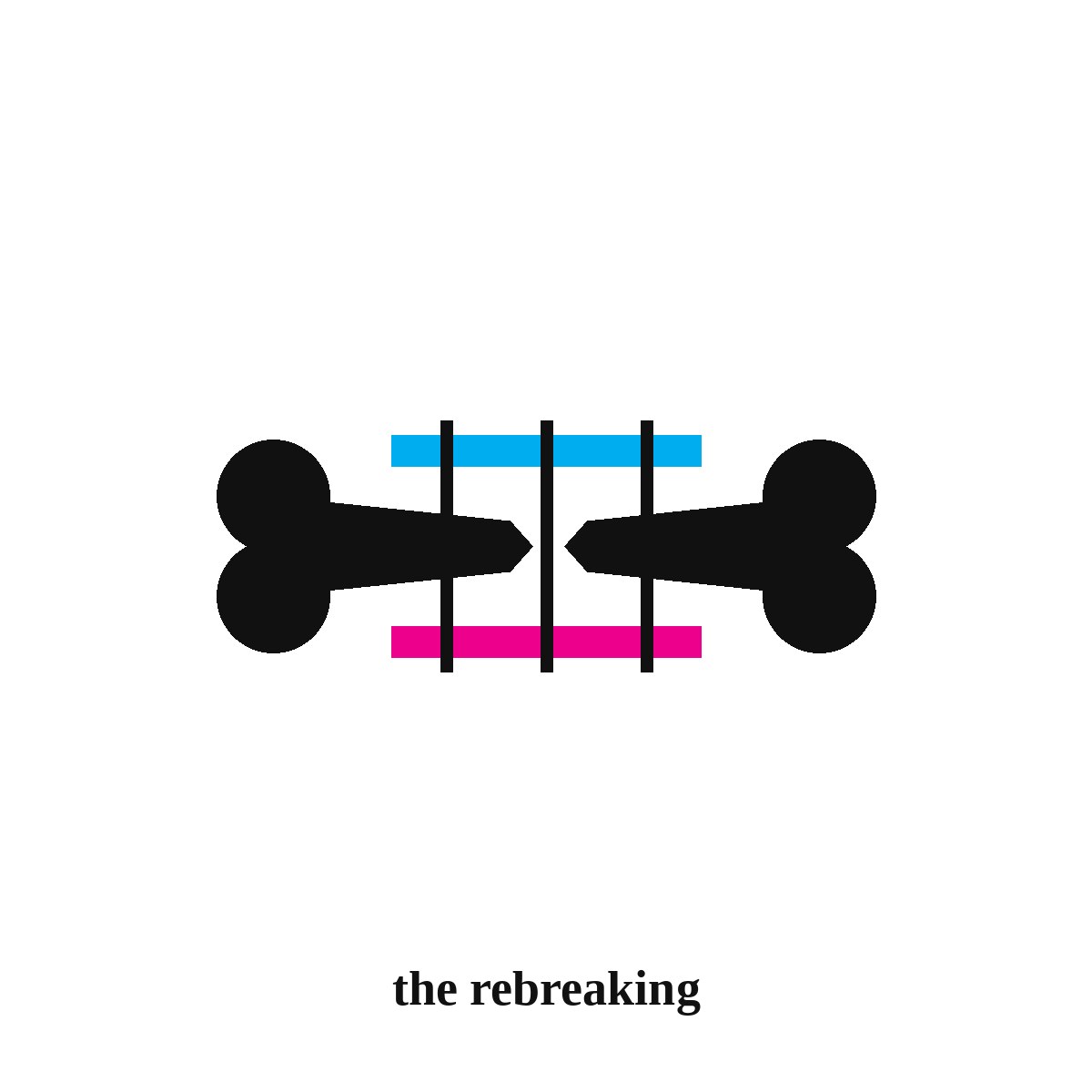
Donald Trump came into office assuming the nation's bones were all broken and all healed wrong, and he spent ten years re-breaking them so they would heal properly. That is the kindest construction of the man available, and this essay grants it in full and then audits it. The audit is a double ledger, and it balances at damage: he did as much damage breaking good bones that did not need breaking, and having them heal wrong, as he did breaking bad bones and re-healing them properly. The procedure has a surgical name, the name is reset, and the reset was real; so was the breakage, and the breakage was indiscriminate. Price the scene honestly while it is graded: the breaker is a bull, and a bull is not a devil, and the shop he is standing in is a store full of tchotchkes, and a cup is not a sacrament.
Reset is the surgeon's word
The polite verdict on Trump is that his value is disruption, that he is a wrecking ball and the swinging is the service. He would hand you a doctor's metaphor instead. He assumed that all the bones were broken and that all of them had healed badly, set crooked by frightened men and left crooked by polite ones, and he spent ten years re-breaking bones so they would heal properly. The image has a clinical name, and the name is worth having: reset is the orthopedic word. A fracture that heals crooked is called a malunion, and the surgeon's remedy is osteoclasis, breaking the bone again on purpose and setting it straight.
The bull and the shop
Price the whole scene honestly before grading it. The breaker is a bull, and a bull in a china shop is an animal being what he is among the shelves; malice has no part in the animal. The shop, for its part, is a store filled with tchotchkes. The cups are cups. The breakage is real, and it is priced in crockery, and treating a broken cup as a desecration is the china shop's own marketing.
Clearing the estate
I know the clearing work from the inside. When my mom died, I got rid of her junk, and nobody called me a monster for it; I was closing up house. When my buddy Mark's parents died, hoarders in a house full of too many cats and too many tchotchkes, glass cabinets crammed with little sculptures, including the era's adorable figurines of Black babies, Mark got rid of all of it, down to the last cabinet, and nobody called him a monster either. He was closing up house.
I am my own first exhibit in this, and my caring had a designer's name on the price tag. The only way I would have cared about my mom's junk is if every piece of it had been mid-century modern, Eames-built, and then I would have kept all of it and called it a collection. Even the real treasures went out under my own hand. My dad left me a Triumph TR6, and I got rid of it. I got rid of my BMW 530i. I got rid of my BMW K1100LT. I got rid of my Honda XR650L. Every one of them was super-precious once, and every one of them went, and I am about to sell my guns, because passions change and the weather changes, and these days I want cameras and a featherlight .38/.357 revolver. No adversary made those calls. It needn't be you against an enemy, deciding what is shit and what is Shinola. It can be you, at a different age, deciding that the thing no longer fits what you want. That is the pendulum's nature: it swings both ways. Not all movement is progressive. Change can run regressive and still be the country's honest weather.
One man's garbage is another man's treasure; that is the whole law of the estate sale, and administrations run on it. Trump took out one kind of garbage. Obama took out another kind. Neither man believed the other man's treasure was anything but trash on its way to the curb. Every administration is an estate clear-out to the side that ordered it and a desecration to the side that collected the china, and the clearing itself is not malice, and the cleared were never relics.
His own house
The frame that turns a clear-out into a crime is the adversarial frame, and the frame is a choice a man makes before he looks at the house. America is America. The president is the chief executive of his own country, the head of the household, and the children don't get to tell Daddy what to do. A man breaking his own stuff is a man breaking his own stuff. The breakage reads as malevolent, vindictive, malicious destruction only after the verdict has been smuggled in ahead of the evidence: the house was never his, the man is a squatter in it, everything he carries to the curb was built by somebody worthier. The squatter theory fails on the evidence of the decade. A squatter's orders do not get carried out across a continent for ten years. Everything he did required the authority and the support to do it: the healthy bones broken to reset them, the unhealthy bones broken to reset them healthier. Strip the authority and the support away, and the same man is a weird rich guy living in Mar-a-Lago, eating McDonald's, playing some relatively good golf, and having sex with porn stars unfulfillingly. The distance between that man and the presidency is measured in nothing but other people obeying. And obey they did: the country moved when the man spoke, people followed the orders, and the vision got enacted, in daylight, by the machinery of the state itself. Authority never waited on the other side's recognition. It demonstrates itself in the only coin that spends: a continent moving when the head of the household speaks.
The ledger
So the ledger, both columns, at full strength. In the first column stand the bones that had genuinely healed crooked: the deference, the credential worship, the priesthoods, the untouchable castings. A man with no respect for any of it re-broke them in public, and some of them are healing straighter than they ever healed under management. In the second column stand the bones that were fine. He broke those too, on the same assumption, with the same swing, and they are healing wrong, and some of them will limp for a generation. He did as much damage by breaking good bones and having them heal wrong as he did breaking bad bones and re-healing them properly. Both columns are his record, and a history that prints only one column is a sob story wearing a credential, and he has already ruled on that combination.
The next breaking
This round leaves behind a million new broken bones of its own, and if they heal badly, the refracture comes for them too, and the refracture is the system working. The entire job of a durable democracy is the refracture: break the malunion again, set it again, and try to get the body to heal in a successful and positive way. Bones do not stay set. The setting is the republic's permanent occupation, and the next surgeon is already washing his hands.
Jimmy Carter ran the experiment and published the result: America does not like austerity measures. The trigger is anything that feels like austerity. Expensive things feel like austerity. Expensive gas feels like austerity. Expensive restaurants feel like austerity. Anything that feels like austerity makes Americans vote in whatever way breaks enough bones to bring the country back to doing what it wants, and the vote arrives on the surgeon's schedule, not the priesthood's.
America is always willing to lame its own horse. A lame horse is a horse you stop riding, and a country that will cripple its own mount in the middle of the journey, to force a new one under it, has confessed the engine of every clear-out and every refracture in this essay.
The whole of it, once more, plainly
Donald Trump assumed the bones were broken and healed wrong, and for ten years he re-broke them: the crooked ones that needed the surgeon and the straight ones that needed nothing, and the ledger of the decade carries the damage in both columns at full strength. The breaking was an estate clear-out run by the head of the household, in his own house, with the authority proven the only way authority is ever proven, by a continent moving when he spoke; the man himself, the one the withering look could not stop, is accounted for in Not Impressed. The bones broken this round are already knitting, straight and crooked, and the healing itself schedules the next breaking, because the refracture is the durable democracy working. And there the story refuses to become a story. Progress is not progressiveness, and progress is no arc bending toward a climax; progress is moving forward and staying alive, and anybody who has lived knows that life declines to resolve into a neat dénouement. No arc, no dénouement: a country clearing out its own house and filling it again, pendulum swinging, alive.
Share: X · Facebook · LinkedIn · Reddit · Bluesky · Threads · Email