
Verbal Kint
This article, read aloud:
Share: X · Facebook · LinkedIn · Reddit · Bluesky · Threads · Email
Scroll through Facebook on any morning and watch the grading happen. Educated people, credentialed people, people with advanced degrees and strong opinions about school funding, look out at their countrymen and post the verdict: stupid. The word lands with the confidence of a teacher writing on a report card. Whole counties get graded at a glance. Whole regions get written off as a classroom that will never learn.
Look at the instrument doing the grading. These judges measure a man against other men. They weigh his diploma, his vocabulary, his zip code, the cut of his opinions, and they total the score. By that arithmetic he comes out dumb, and the grade feels like knowledge. The graders walk away certain they have learned something about the man.
They have learned something about his rank. Rank and danger are different subjects.
Grade him against creation
Change the scale and the picture inverts. Grade that same man against the rest of creation, against every other animal that breathes, and a different fact stands up. He is Homo sapiens sapiens. He belongs to the species that learned to throw a spear, then to throw a fire, then to throw a warhead across an ocean and guide it to a window. His kind hunts in packs, keeps a grudge across thirty years, teaches its young with stories, and builds tools that kill at distances no claw has ever reached.
The slow member of that species carries the whole inheritance. A man at the bottom of the human class still out-thinks, out-plans, and out-waits every predator that ever stalked a herd. Lions grade their prey by species and eat well on the grading. Humans grade each other by report card and call the lowest grade harmless.
There is no harmless model of this animal. Dumb is a ranking inside the family photograph of the most lethal species on the planet. The ranking describes a man's place in line among his own kind. It says nothing at all about what he can do to you while you are busy ranking him.
The country lawyer's raincoat
The graded man hears his grade. Some of the graded men learn to wear it.
"I'm just a simple man. I don't know much." Sam Ervin said versions of that sentence all through the Watergate hearings, introducing himself to the cameras as a country lawyer from North Carolina. Ervin held a law degree from Harvard. Behind the drawl and the self-deprecation sat a constitutional scholar taking a presidency apart piece by piece, and the modest frame did real work for him: witnesses relaxed, opponents underestimated the questions, and the country lawyer kept asking them.
Columbo ran the same con in a crumpled raincoat. The detective apologized for existing, fumbled for his notebook, forgot his pencil, and turned at the door with one more small thing. Every suspect on that show graded him as a nuisance with a badge. They confessed to him by inches, the way you talk freely in front of furniture. The act is always the same act: manufactured underestimation, minted for free, spent at the exact moment the other man's guard comes down.
Understand the transaction and the act stops looking like humility. The listener grades the modesty as capacity. That grading error is the entire business model, and the man running the act is counting on the grader's pride to protect the act from inspection. A proud man never re-examines a verdict that flatters him.
The ward walks through the open door
Scale the grading error up and it becomes public policy. A high-trust benefits system grades its beneficiaries the way the Facebook judges grade their countrymen, and it writes the grade into procedure. The beneficiary is a ward in the paperwork: overwhelmed, fragile, presumed incapable of running anything as organized as a scheme. So the system spares him the indignity of audits. Auditing him would concede he might be competent enough to defraud, and the whole architecture rests on withholding that concession.
Minnesota ran the experiment to completion. Feeding Our Future, a sponsor in the federal child-nutrition program, claimed reimbursement for meals served to children at sites across the state during the pandemic. The claims ran to roughly a quarter of a billion dollars. Prosecutors say the meals existed mostly on paper, the sites were shells, and the money bought houses, cars, and land. Dozens of defendants have been convicted. State officials had worried in writing about the claims and paid them anyway; the fear of being called bigoted in public did guard duty at the door while the money walked out.
Read the failure correctly. The fraud never picked a lock. The presumption of feebleness held the door open and called the open door compassion. And the people who walked through it were nobody's wards: organized adults, literate in the paperwork, fluent in exactly which presumption to wear to the window. Competence is the species default. No immigrant population is dumb, and no native-born population is dumb either; the door takes whoever finds it first, and the door never checks passports. A system that refuses to see competence in the people it serves will be harvested by the first competent people who notice the refusal.
The greatest trick
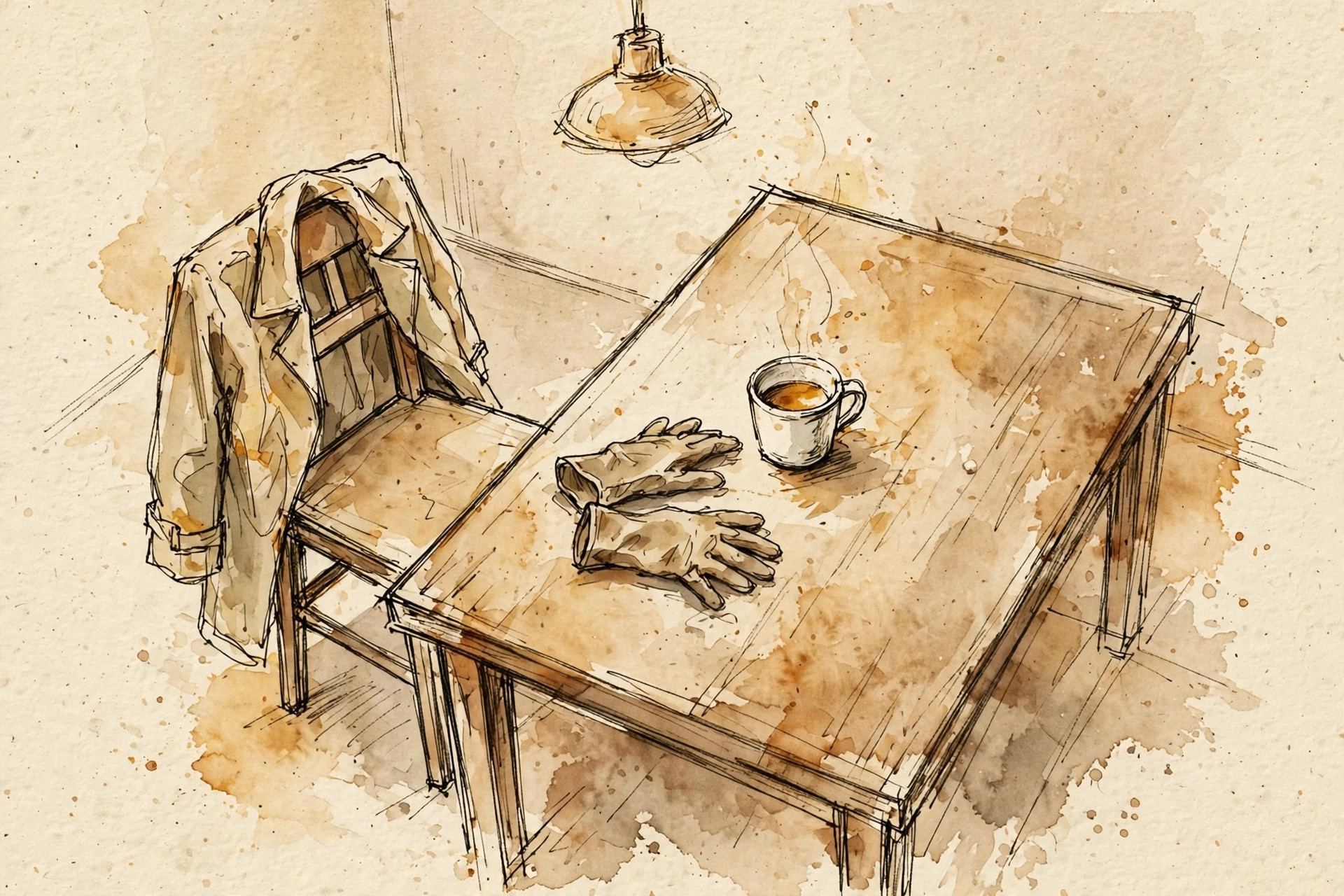
Fiction perfected the specimen in 1995. In The Usual Suspects, the police hold five criminals from a lineup, and the one they keep longest in the interrogation room is Roger "Verbal" Kint, a small-time con man with a limp and a twisted hand and a mouth that never stops. The detectives feed him coffee and let him talk for hours. They keep him because he is obviously the weakest creature in the story, a feeble little man who will tell them everything, since telling is all a man like that can do.
Verbal obliges them. He tells them everything. And in the middle of the telling, relaxed, cooperative, grateful for the coffee, he delivers the doctrine of his whole profession straight into the detective's face: "The greatest trick the Devil ever pulled was convincing the world he didn't exist."
Then they let him go. The final shot of the film is a pair of legs on a sidewalk. Verbal walks away from the station, and the limp straightens with every step. The twisted hand uncurls. The ward walks out of the story as Keyser Söze, the most dangerous man in it, a name the underworld used the way children use the dark. He was never the weakest creature in the room. He was the only one in the room who understood what the grading was for.
Presume adults
The detectives in that film made the Facebook error with a badge on. They graded the man in front of them against the men around him, read the lowest grade as harmlessness, and built their whole case on the reading. The law makes the same error from the other direction when it builds protections on presumed fragility; I worked through that architecture in The Kid Gloves. One error wears contempt, the other wears compassion, and the man being graded wears both as camouflage.
Here is the verdict, plain. Condescension is an intelligence failure. It feels like kindness from inside the grader, and it feels like a warm coat from inside the graded, and it functions as an unlocked door between the two. The people you grade dumb are Homo sapiens sapiens, every one of them, apex stock, and a share of them have been watching you grade them the whole time, taking notes on the door you left open.
Presume adults. Audit adults. Respect the species you are standing in. The alternative is to keep posting the grades, keep holding the doors, and keep acting surprised when Verbal Kint stands up straight on the sidewalk and walks away whole.
Share: X · Facebook · LinkedIn · Reddit · Bluesky · Threads · Email