Read the full transcript (4,611 words, machine made)
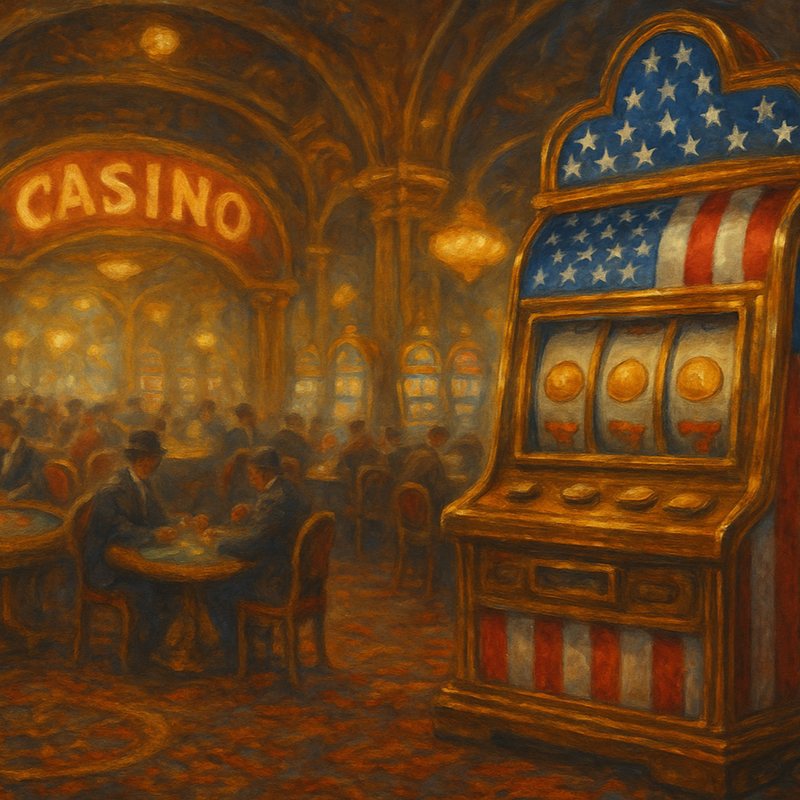
Yeah, let's unpack this. Imagine for a moment not not a country exactly, but this huge, sprawling, neon lit casino. And it's way Wilder, I mean, more chaotic and frankly much more profitable than anything you probably ever seen. That's the the striking analogy really at the heart of the sources we've been diving into this idea of America as the world's casino. So our mission today really is to get out of the hood of that, understand why this analogy seems to fit according to these sources.
You know, who are the players in this this massive game? How is it actually played? And maybe the biggest question, what is it all mean for you, whether you even realize you're, you know, sitting at the table or not? Because look, this horses make it clear, this isn't Vegas. He's not polished tables and watchful dealers know.
They call it the Wild West of casinos, a place where, and I'm quoting here, the doors never close and the rules are written in pencil. It's just constant action built for it. Yeah. And what's really fascinating, I think, is that core argument you touched on in this particular casino volatility, you know, the ups and downs, the chaos. It isn't some like, unfortunate bug. It is the product that's what's being bought and sold. And we're going to explore how that idea, that fundamental concept sort of reshapes how we look at everything, politics, finance, even, you know, your own savings. And along the way, yeah, we'll definitely meet the players. The sources identify the hustlers, the often unknowing marks, the real pros, and this really interesting idea that the house itself is kind of asleep.
Volatility is the product. That's a powerful way to frame it, so let's jump right in. Where do the sources first take us to really flush out this idea? America as this place where instability is, is actually monetized. Where volatility is the product, not a side effect. Well, they're pretty direct.
They call America the biggest and wildest casino ever built, like an open air palace of volatility. It's a very vivid image. And you know, you think of a normal casino, right? Yeah. Polished tables, dealers watching everything, cameras, all that control, trying to keep things fair or at least predictable. Orderly.
Almost. Exactly. But this American casino, the sources painted as the the complete opposite. Here, the hustlers run free, the marks outnumber the pros 1000 to 1. And the pit bosses? Well, they're too busy counting their own chips to really care what's happening on the floor.
Right. So it's chaotic by design, almost. And what really makes it different, they argue, is how opportunity works. It's not just about placing a bet. They say everything. Every spin of the wheel, every fluctuation in the market, every scandal, every election, every war and every rumor. It's not just an event, and it becomes a new chance to extract wealth.
Always. It's relentless, just this constant stream of chances to profit born right out of that instability. I mean, just think about being inside that. If you don't know the rules, or or maybe you don't even know you're in a casino, it must just feel like turbulence, constant, uncertain. Absolutely. And building right on that, the sources make this crucial distinction.
It's really central to everything they're saying in America, volatility is not a side effect. It is the product. And that's not just, you know, a clever phrase. It's fundamental. It means the very instability, the unpredictability most people try to, you know, smooth out or avoid.
That's precisely what others are looking to trade, to package, to sell. And the sources get into the specifics of how this volatility is sort of systematically generated and then exploited. Like, take political cycles. They call the four year presidential cycle a slot machine on steroids. Wow.
Every election isn't just, you know, choosing leaders. It's a wild card. It swings markets globally. It can trigger global panic or euphoria. And the impact isn't slow. It's like boom, instantaneous huge shifts in value you can bet on.
And it's not just the big elections, right? They mentioned smaller things. Oh yeah, even like a single tweet can erase billions or 1:00 speech can pump stocks to the moon. It just shows you how sensitive the system is, how quickly information, even just, you know, informal chatter, can have these massive financial ripple effects, which of course makes having the right information fast incredibly valuable. And it feels like this isn't just accidental. The way they describe it, it sounds like the the very structure of the country, it's politics, it's culture, it's all kind of geared towards this.
They say our politics are a pendulum, our culture is a tide, and our economy is an experiment in perpetual risk. So this constant flux isn't a mistake. It's it's part of the engine. It creates the opportunities. Exactly. They just did it.
Really. Clearly the markets are volatile because they're supposed to be. It's not a problem needing a fix, it's the mechanism itself. They use this great analogy. Volatility is the oxygen that fuels the fire, the thing traders can package, slice and sell.
That's the core idea right there. Instability isn't just weathered, it's actively turned into a commodity, packaged up into complex financial products, leveraged, sold. It's really something to think about instability as the actual product. Yeah, it is pretty chilling when you frame it that way, reframing risk as a commodity. So, OK, what does this actually mean for, you know, the average person for a listener, maybe because for most of us, that inherent volatility that designed in chaos, it probably feels like being on a boat in a storm constantly. It's unsettling.
But for a select few, as the sources say, it's not a storm at all. No, it's opportunity. It's a gold mine, the players in the stakes, who's playing and who's being played. Right. So volatility is the product and chaos is kind of the engine room. The next obvious question the sources tackle is, OK, who are the ones actually doing the buying and selling? Who's profiting?
And they call them the smart ones, the connected ones, the ones who understand the machinery. Not your average Joe investor then. Definitely not. Yeah, these are the the real masters of this game. They list them out the rest of the world's billionaires, hedge fund managers, sovereign wealth funds and corporate sharks. You know, entities with huge amounts of capital, sophisticated networks, deep, deep understanding of how markets really work.
And for these players, America is described as well, perfect. The perfect environment. Why? They point to things like open markets, minimal barriers, and this underlying culture addicted to consumption. It's almost like the system was practically designed for their specific strategies. Yeah, they even use the term economic alchemy. They say if they could have designed a place to turn lead into gold, they would have designed America. It is economic alchemy.
Raw inputs go in, chaos gets stirred and profit pours out. You're really potent image, right? Creating wealth seemingly out of thin air, out of the very turbulence others fear. And this is where you really see the casino mechanics laid bare. The sources explain how these smart players actually profit from the chaos.
It's not just surviving it, it's exploiting it. Every terrible thing that happens here, every crash, every scandal, every bubble popping becomes a chance to win bigger. So they're not just reacting, they're actively looking for the angles and bad news. Precisely, and they give some really stark examples. A natural disaster.
The advice is short insurance stocks bet on them falling. A corporate collapse. The play is buy the bonds at pennies on the dollar, hoping for recovery or liquidation value. A trade war? You hedge the volatility, buy the dip and sell the rebound.
It's this relentless opportunistic mindset applied to every single market tremor, basically weaponizing bad news. And the financial tools they use, The machinery behind this sounds incredibly complex. Oh, absolutely. They stress that the system lets them profit on the way up, make money on the way down, and make even more money on the turbulence in between. So it's not just about writing a rising market, it's about making money from any movement.
Exactly, and the sources list the arsenal, futures, options, swaps, derivatives. Maybe we should quickly clarify some of those. Good idea. So derivatives very simply are contracts whose value comes from something else, like a stock price. They let you bet on where that price is going without owning the stock itself. OK.
Futures and options are just specific types of those contracts. Swaps involve exchanging financial instruments and then you have algorithmic trades in microseconds. That's high speed computers making trades faster than any human could react. Got it. Speed and complexity.
Right. And long bets that stretch over decades. It's a whole tool kit, which means, as they say, bear markets become feeding frenzies. Bowls are just as tasty for the pros who get the stuff. The sources basically say there's no better place on earth to be. Which naturally leads to the other side. What about the average person in all this? The mark in the casino analogy.
Yeah, this is where the sources get pretty blunt and honestly, a bit bleak. They say for the average person saving for retirement, it's terrifying. You know they're told this standard advice. Buy and hold long term strategy. Right, that's what you always hear. But in this kind of volatile setup, what often happens instead, according to the sources, is they end up doing the opposite.
They buy high, sell low and watch their portfolios shrink because there's this huge disconnect. They just don't see what the trolls are doing. They don't see the hedge funds feasting on the swings because they don't even know the swings can be monetized. So it comes down to a massive knowledge gap, a lack of understanding of how the casino actually works. Exactly. The sources put it very starkly.
These average people are the chips in the pot, not the players. They're the entertainment for the pros and crucially, and it's not their fault, they were never told the rules. The casino was designed that way. That really emphasizes the idea that the game isn't just hard, it's fundamentally opaque for most participants. And they use IQ stats to kind of illustrate this point, right, Though they say it's a rough measure. Yeah.
It's less about pure intelligence and more about specialized financial literacy, I think is the point They mentioned, you know, maybe only 10% clear 120 IQ, maybe 2% hit 130. But the underlying principle is and most of the players don't even understand the game. They don't get the tools. Right. They don't know how derivatives work.
They don't know what shorting is. They don't know why volatility is a product to be sold. They lack that specific crucial knowledge about how these complex markets operate. So what happens when most people are playing blind? Well, the sources say they play blind and the casino loves it. The hustlers love it.
The pros love it. It's an environment where that lack of knowledge isn't just a disadvantage, it's actually profitable for those who do know. And they end that thought with this really cutting image. America's marketplace is populated by whales who think they're sharks. Whales thinking they're sharks.
And the real sharks are happy to let them believe it. It's about self deception really and how it fused the whole system. That is potent, the whales who think they're sharks. What really stands out to you there? Because it really paints a picture of these power dynamics, doesn't it?
It really does. It suggests a system where it's not just that most people are losing, it's that they're misunderstanding. They're thinking they're playing the game effectively is exactly what makes them valuable to the game. It transforms the economy from, you know, a place of exchange to this, this grand spectacle, almost a financial ecosystem built to extract value from the unaware. 3 The global angle. America, the world's open Buffett. OK.
So building on America as this sort of unregulated, maybe uniquely designed casino, the sources then widen the lens. Looking at it globally, they draw this really interesting contrast with other major economies. They point out how, you know, the EU protects its markets, how Germany uses things like VAT and tariffs to fund social programs, how Japan tends to keep outsiders at arm's length. It paints this picture of other nations actively using policy tools, regulations, taxes, maybe protectionism to kind of guard their own interests, control capital flows, keep wealth generated inside or at least make it contribute domestically. But America, it's presented as completely different.
Totally different. The sources describe it as just wide open, like. Imports flood in with almost no resistance. Tariffs are low to non existent. Yeah. So this openness which is often framed as, you know, a good thing, free markets and all that, right? In this casino analogy, it's reframed as a huge vulnerability, like an open invitation for global players to just come in and take value without much friction. So like a leaving the casino doors unlocked and unguarded. Pretty much, yeah.
And it's not just goods coming in freely, it's about the consumer base too, right? Right. They argue America has built a consumer base so hungry, so flush with credit, that global corporations use us as their playground. So it's not just a strong economy, it's almost like the perfect target market. That's the implication, that the sheer buying power, the easy credit, makes American consumers irresistible.
And these global players, companies from other countries, they essentially dump their products here, reap the profits and take the chips home. So it's presented less like fair trade, more like a one way extraction of wealth. Profits made here get sent elsewhere. Yeah, that's the core argument there, which. Leads them to this really direct, pretty provocative statement. America is not running the casino. It is the casino.
The world plays here. It's not just the location, it's the game itself. And they call it the world's most naive casino. Naive because. Because they say fraud is rampant, hustling is rampant, misrepresentation is normal. There's this sense of weak oversight, a kind of permissiveness, and that idea again, that the House, the supposed regulator, is asleep.
Sounds less like a market, more like a free for. All Yeah. Which is why the warning isn't just buyer beware. It's gambler beware. Caveat emptor becomes gambler beware.
And the pros know this, but the average person, the whale, doesn't. Exactly. The pros know it, the whales don't. That information asymmetry, again, most people don't even realize the nature of the game they're in. They think it's just normal economic life.
The sources say most of the people walking into the casino don't even realize they're in one. They think they're high rollers, but they're the marks. Is she right back to that power imbalance, that gap in understanding? And they wrap it up with that old poker saying yeah. If you can't spot the sucker in the room, it's you. And the punchline?
In this global game, America is the sucker. That's that's a really strong claim to position America, despite its economic size, as the primary target for global players who understand the rules better. It is, and it really reframes things, doesn't it? Beyond just trade deficits or debt, it suggests a kind of structural vulnerability, a design that favors savvy outsiders. Which then leads to the next big question. If all this wealth is being generated and extracted, where does it actually go?
And what's the impact on the country itself for the uncollected winnings, where the profits go? Yeah, that's a huge question the sources dig into. If you have these trillions just swirling around all this wealth being pulled out of the casino, where does it land? And Paradox they highlight is that despite all this activity, the state collects almost nothing from this chaos. So massive economic turn, but very little benefit to the public purse. That's the argument.
It just seems to bypass the mechanisms for public revenue collection. And why is that? What are the reasons they give? Well, they point to systemic issues, loopholes, ways to avoid taxes, things baked into the financial system. Like they say, income taxes are full of loopholes. You know, deductions, shelters, ways for people with good advice to reduce their burden significantly. Standard stuff for high earners, maybe. Right.
And then corporations offshore their profits, that classic move where companies shift profits on paper to low tax countries. So the money made from US customers isn't actually taxed much in the US, if at all. OK. And for the Super wealthy, is it even more sophisticated? According to the sources, yes. They explain how capital gains are taxed only when realized, meaning only when you actually sell an asset like stock or property.
Right. But critically, the ultra rich can borrow against their assets indefinitely to avoid realization. Can you break that down a bit? How does borrowing avoid the tax? Sure. So imagine you own billions in stock. Instead of selling it and paying a huge capital gains tax, you go to a bank and take out massive loans, using that stock as collateral.
The loan money you receive is an income, so it's not taxed. You can live off that borrowed money while your original assets hopefully keep growing in value. You never realize the gain by selling, so you never trigger the tax. It's a perfectly legal way to access wealth without it ever hitting the tax system. Keeps the money inside the financial machinery not flowing out to the government.
Wow, OK, that's a powerful mechanism. So if the state isn't collecting much of this money, where does it end up? Well, the sources are pretty clear. The trillions that swirl through the casino never touched the social fabric. It doesn't translate into public good.
It doesn't fund social programs. It just stays within the financial system. Pretty much, they say. It tends to inflate the paper wealth of those who can play and evaporate the savings of those who can't. It sounds like a 0 sum game or maybe worse for the majority who are on the losing side. And the implications for society are huge then? Absolutely, the sources argue.
These massive revenue streams, these profits from the casino, they don't flow to universal healthcare, free education, housing or the other services people claim to want. The things societies usually fund with taxes. Exactly. Instead, the money stays locked in the machinery, feeding more bets so it becomes a self feeding cycle. Profits for speculation just fuel more speculation, more financial engineering, more volatility. Rather than being used to build, you know, infrastructure or safety Nets, the capital stays circulating among the players, reinforcing the casino itself V the hedge. A politically poisoned solution?
OK, so given that stark picture, wealth flowing out, not benefiting the public, the sources then turn to potential solutions, or at least ways to maybe harness some of this chaos, right? Yeah, they suggest it's not inevitable that all of this chaos could actually be harnessed. Implying the current setup could be changed. Right. And they propose a very specific tool for doing that.
They say tariffs would be the hedge against this. Tariffs would be the only clean way to extract revenue from the madness. Tariffs. OK, why tariffs specifically? What benefits do they outline?
Well, several. First, they argue tariffs hit at the border. They're unavoidable, meaning they're harder to dodge with clever accounting or offshoring compared to, say, income or corporate taxes. They get collected right as goods enter. Simpler collection maybe What? Else Second, they claim tariffs could fund the state without chasing ghosts or taxing paychecks, so a more direct revenue stream may be less reliant on complex income tax systems with all the loopholes.
Third, they suggest tariffs could slow the churn, protect domestic producers and make services fundable. OK. So generating revenue and potentially helping local industry by making imports more expensive. That's the idea, a dual benefit. And finally, maybe most importantly, in this whole casino analogy, they argue tariffs would stop the casino from being an open buffet for everyone else.
We would kind of close off that wide open door we talked about making it harder for global players to just extract wealth without contributing back. OK, presented like that, it sounds, well, almost like a neat solution to the problems they've described. It does sound logical in that context. But there's always a but isn't there? There is the source is immediately pivot, but tariffs are politically poisoned.
OK, so the problem isn't necessarily the economics, it's the politics. That's exactly what they focus on here. They pinpoint why it's poisoned. Trump like them so half the country hates them, even if they're the only way to get the utopia they say they want. Wow. That's quite the statement on political polarization. It is, it highlights this deep irony, a potential tool which these sources are you could fundamentally shift things. Is basically off the table.
Not because of economic debate about pros and cons, which definitely exists for tariffs. Right. Economists have debated tariffs forever. But here the sources are saying the primary block is just its association with one political figure. Exactly. It's dismissed out of hand by many because of who championed it, regardless of whether it might actually achieve goals those same people might support, like funding social programs or protecting workers.
That's a fascinating and kind of depressing paradox. A potential solution neutralized by politics. Yeah, and the result, according to the sources. Instead, the casino stays wide open and the marks keep walking in. The cycle continues.
The open buffet remains open because the tool to potentially close it is politically untouchable for many. Precisely. What stands out to you about that dynamic? Is it just partisanship? Or maybe does it hint that maybe the people who benefit from the current open system are quite happy to see potential changes get bogged down in politics? That's a really sharp question.
It could be both, right? Deep partisan divides make it easy to dismiss ideas, but it could also serve the interests of those who like the casino just the way it is. A politically poisoned solution is effectively no solution at all. Six The magic trick. Perception versus reality. Which kind of leads us perfectly into what the sources call America's ultimate magic trick.
It's not just that the casino exists or how it works, it's that it convinces everyone they're winning. The grand Illusion. Yeah, the thing that keeps the whole game going, like in a real casino, right? The lights keep flashing, the music keeps playing, the chips keep sliding. Sensory overload.
Distraction. Exactly. It keeps you from looking too closely at how the odds are really stacked. And the sources breakdown how this illusion works for different people. Like the average person, the mark thinks the free drink is a gift, not a distraction. They focus on the superficial stuff, maybe cheap goods, easy credit, maybe their four O 1K went up last quarter. Right, the immediate visible things. Yeah, while missing the bigger picture, the systemic extraction that's happening underneath, focusing on the little wins, ignoring the house edge.
And even people who seem to be doing OK might be fooled. That's what they suggest. The investors think they're beating the market because their portfolios are green this quarter. They see some short term success, a good run, and convince themselves they figured it out. That they're sharks, not whales.
Exactly, unaware of the deeper structure that ensures the House, or rather the real pros, win overtime. And even the politicians. They think they're running the show, but they're just another card in the deck. Also just players in a bigger game they don't fully control. Yeah, their actions often just end up perpetuating the system, even if they think they're reforming it.
It suggests the casino has a life of its own. So if everybody thinks they're winning, or at least in control, who are the real winners here? The sources pull back the curtain for the final reveal. The real winners are the ones who built the game, the ones who know how to bet on every spin, the ones who profit whether the wheel lands on red or black. The architects, the masters of the game.
Right. They don't care about individual outcomes as long as the game itself continues, as long as there's volatility, as long as the mechanisms for extracting profit are still in place. And this leads to that final kind of chilling take away about America's actual role. Yeah, the conclusion is stark. Yeah, America is not America's casino. It's the world's.
Not run for America, but run as a global playground. Exactly. They summarize it as the place where lead turns to gold, where volatility itself is a commodity, where every crisis is another jackpot. Every event, every shock, every downturn. It's just more fuel for the fire, more opportunity for those who truly understand how to play.
And the ultimate punchline. The joke, as they call it. Is that we think we're running it or not. We're the table, we're the sucker and we keep spinning the wheel because that's what the casino was built to make us do. It just drives home that feeling of involuntary participation, the power of the illusion, the way the system just keeps itself going regardless of who thinks they're in charge.
So what does this all mean for you, listening to this? I mean, it's more than just a clever metaphor, isn't it? It's a really stark way of looking at global economics, where the line between a nation and just a giant financial machine gets really blurry. And maybe understanding the game, just knowing the rules as described here, is the absolute first step, Maybe the only first step you can take to navigate it differently, or maybe eventually to think about changing it. We've definitely gone deep today into this, this fascinating, maybe pretty unsettling idea. America as the world's casino, where volatility isn't the problem, it's the product, and where maybe many of us are playing without knowing the real stakes. These sources really push us to look past the bright lights, past the noise, and ask who really benefits from all the chaos and how this whole game is actually designed. So maybe the thought to leave you with is this, if America is this global casino and if you now have a clearer picture based on these sources of the rules, the players, the way it works, what is that awareness actually empower you to do? How might it change how you navigate the economy yourself, how you consume information, how you think about your own financial situation?
Is just knowing the game enough to actually change your odds? Where does it demand something more fundamental in how we think about our participation in this, this huge global gamble?