Read the full transcript (5,627 words, machine made)
Imagine, if you will, a time not so long ago with the very concept of intelligence felt like something out of a spy novel. Secrets were guarded whispers, you know, encased in lead line vaults. Grainy satellite images, almost indistinguishable to the untrained eye, were the exclusive domain of a privileged few, carefully analyzed behind layers of security clearance. Information truly was a rare commodity, hoarded and weaponized, used to shape the fates of entire nations and shift the global balance of power. That was the world we lived in. But then, almost overnight, everything changed. The digital revolution wasn't just about faster communication or more convenient shopping.
It fundamentally altered our relationship with information itself. Suddenly, every smartphone camera became a potential lens on the world, every network was thrown wide open, and live feeds began pouring out from, well, everywhere. What used to be the closely guarded realm of intelligence agencies and covert operatives is now, astonishingly, available to anyone with a Wi-Fi connection and a curious mind. OK, let's unpack this. Today we're diving into a truly fascinating and perhaps a little unsettling transformation of how we consume and interact with information. We're talking specifically about open source intelligence, or Ozent.
For years, Osun promised to be this powerful force for transparency, right? A revolution in how we understand the world, democratizing access to truth. But our sources suggest it's morphed into something else entirely, something far more visceral and pervasive. Open source entertainment OSINT. What's truly compelling here is how the very tools and methodologies you know, the ones designed to reveal objective truth, are now not just informing us, but profoundly shaping our perception of reality. It's moving beyond pure knowledge to provoke powerful emotional responses.
We're going to explore this profound shift today, dissect its underlying drivers, and really dig into the often unforeseen implications outlined in the material you've provided. It compels us to ask, how does this transformation fundamentally change our relationship with information and ultimately, maybe with the truth itself? Our deep dive today is primarily based on compelling excerpts from a piece titled Osintis Osin, When Open Source Intelligence Stops Being About Truth and Becomes the World's Favorite Show by Chris Abraham. It offers a provocative yet incredibly insightful look at how information is morphed into spectacle and how we, the global audience, have become not just spectators, but active participants in this new, never ending show. So let's start at the beginning.
What Olson was initially conceived to be. Historically, as we touched on, intelligence was synonymous with secrecy. It was a world of hushed tones, encrypted dossiers locked away in secure facilities, and those almost abstract satellite images that required highly specialized interpretation. This is information strictly for the privileged few governments, military strategists, top secure diplomats, and it was wielded with immense power, directly influencing geopolitical decisions and dictating the course of history. It was a deliberately opaque world by design. But then came the digital explosion. As our source Chris Abraham so aptly puts it, the world changed.
The proliferation of digital cameras from public CCTV to private smartphones created an unprecedented visual record of, well, everything. Networks that were once proprietary or closed became interconnected and increasingly open. Live feeds, once a niche technology, started pouring out from every corner of the globe, capturing events as they unfolded. That highly guarded information, once the exclusive domain of intelligence agencies and high level operatives, is now quite literally available to anyone with a Wi-Fi connection. The original promise of Osent Open Source Intelligence was genuinely revolutionary in its intent.
It was built in a very simple, yet profoundly powerful idea. If data is truly everywhere, then theoretically anyone, not just a state actor, can find and assemble the truth. This envisioned A radical new era of transparency, A veritable democratization of information. The core belief was that the collective power of Open Access, coupled with collaborative analysis could shed light on events that were once deliberately shrouded in secrecy. It was meant to be a tool for empowerment, enabling a deeper and more widespread understanding of complex global issues. The very notion was that if enough people could access, scrutinize and cross reference information from publicly available sources, well, obfuscation, propaganda and deception would become far more difficult to sustain. And this revolution wasn't just a theoretical pipe dream. Its applications became incredibly broad, spanning numerous sectors and surprising new actors. Governments, of course, utilize OSIN for strategic insights, tracking everything from economic trends to military buildups.
Businesses leverage it for competitive analysis, you know, understanding market shifts and competitor activities. Journalists rely heavily on IT for investigative reporting. Breaking that would have been impossible to verify just a few decades ago, but the truly disruptive element is how it extends far beyond these traditional users. Even highly motivated hobbyists and passionate armchair detectives are now actively engaging with Osen, often with astonishing results. The source highlights a particularly striking and illustrative example.
Random teenagers on Discord can now outpace military analysts and tracking troop movements. And this isn't an exaggeration, nor is it about specialized top secret equipment. It speaks to the sheer volume and accessibility of Open Data Sync, commercially available satellite imagery that updates daily, global flight tracking apps that pinpoint aircraft in real time, public social media posts with geotags, open government records, or even seemingly innocuous metadata embedded in photos and video shared online. These individuals, often collaborating in distributed networks, leverage readily available online tools for geolocation, image analysis, and pattern recognition, effectively pooling their analytical power in a way that traditional hierarchical intelligence agencies often struggle to replicate. You know, due to their inherent structural limitations and need for secrecy.
The initial objective truly was to provide objective knowledge to enable a more profound and fact based understanding of the world around us. Osund was about hard facts, about verifiable information, about meticulously putting together pieces of a complex puzzle to reveal a clearer, more accurate picture of reality. It was designed to inform, to encourage critical thought and to empower individuals to make better informed decisions based on demonstrable evidence. This compels us to ask, if OSINT was so effective at revealing truth, at providing this incredible new level of transparency and empowering so many, why would it then transform into something else entirely? Why wasn't that foundational pursuit of truth enough to satisfy the audience? This is precisely where the narrative provided by our source takes such a fascinating and frankly disquieting turn. That's a critical point.
If OSINT was designed to be this powerful tool for truth and transparency, why did it fall short? Why wasn't that enough to truly satisfy the audience, leading to this transformation you're describing? That's precisely the rub, as our source Chris Abraham so eloquently puts it. He states directly, the truth wasn't enough. The truth never is.
People didn't just want to know, they wanted to feel. This is the core argument, the fundamental shift that we're exploring today. In a world saturated with information, raw emotional content, especially spectacle, is processed much faster and resonates more deeply than complex data. It bypasses the analytical brain going straight for the gut, providing an instant gratification that pure knowledge, and it's often dry and nuanced form simply cannot consistently deliver. This is where Osent Open Source Entertainment truly enters the picture. It's the point where the pursuit of factual understanding and thoughtful analysis takes a backseat to the pursuit of an emotional connection of visceral feeling and immediate reaction. So the source isn't suggesting this transformation was accidental.
Rather, it portrays it as an almost inevitable evolution driven by fundamental aspects of human psychology and the very architecture or digital platforms. When you have access to such wrong, unedited footage and information, it often bypasses the analytical, slower thinking part of our brain and directly triggers our limbic system, the part responsible for emotion and immediate reaction. The impact of a dramatic visual, especially 1, unfolding in real time, is immediate and powerful. The shift implies that the sheer volume of data, paradoxically, rather than making us more discerning, has made us more susceptible to the sensational. It's like the world's largest, most unedited, and endlessly streaming reality show, and we're all tuning in, driven by a deep seated human craving for narrative and emotional resonance, even if that narrative is raw and then contextualized. Exactly.
And the source elaborates on the powerful, almost irresistible drivers behind the shift to oscend. It states because watching is addictive, consuming is easier than thinking, and spectacle, especially raw, uncut spectacle, sells better than any report. Think about that for a moment. In an age of information overload, where our cognitive bandwidth is constantly strained, the path of least resistance often prevails. It's undeniably more effortless, and often more immediately gratifying to passively scroll through a dramatic compilation of events or a shocking, easily digestible clip than it is to carefully analyze a detailed report, cross reference multiple data points, or engage in sustained critical thinking. The emotional high of a compelling spectacle provides an instant dopamine hit, a micro reward that pure, often abstract knowledge struggles to compete with in the attention economy. This distinction is absolutely crucial for understanding the profound implications of this transformation. The fundamental difference between OSINT and OSINT, as our source clearly defines it, is that OSINT is supposed to make you think.
OSINT just makes you watch. OSINT demands active engagement, rigorous critical analysis, the synthesis of disparate pieces of information, and the intellectual effort to form a coherent, nuanced understanding. OSCENT, on the other hand, is designed for passive, often compulsive consumption. It's about the immediate visual impact, the emotional punch, the visceral reaction. Zooming out, the broader implication here is that this isn't just about how we passively consume media. It represents A fundamental and profound shift in our very relationship with information itself. It suggests that our primary mode of engagement has transitioned from one of critical inquiry and active sense making to 1 of largely uncritical observation, driven primarily by the pursuit of instant sensation and emotional arousal.
Now where do we see this phenomenon play out most dramatically, perhaps even disturbingly, in the real world? Our source points directly to modern conflict, arguing that war itself is transforming into global, live content. The peace zeroes in on the ongoing conflict in Ukraine, describing it not as the traditional military engagement, but strikingly, as the video game war. The immediacy and the sheer volume of raw, unfiltered footage streaming out of this conflict are genuinely unlike anything we've witnessed before. War in Ukraine isn't delayed, it's practically unfolding in real time.
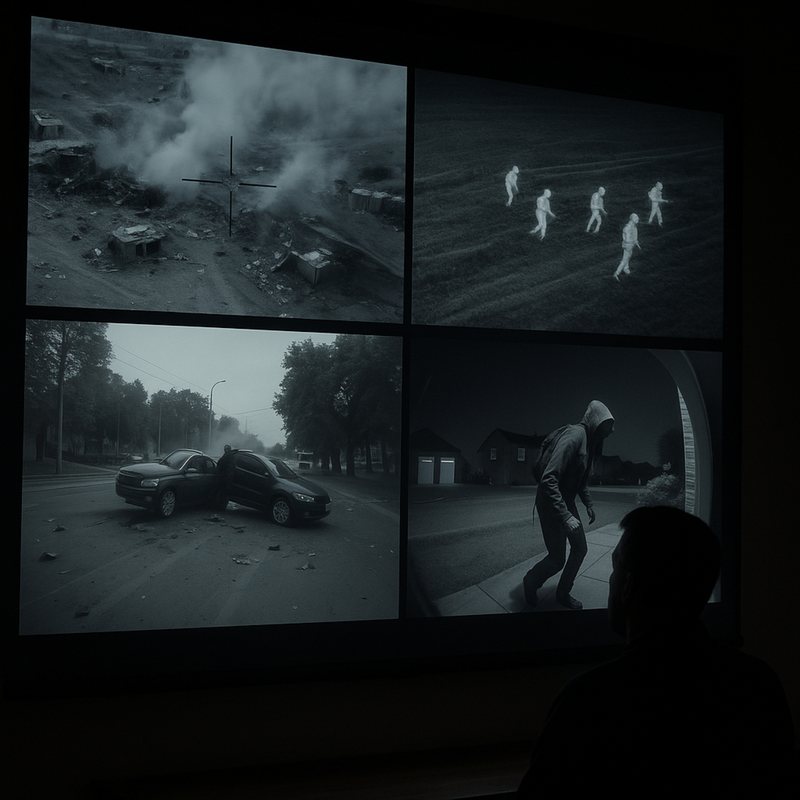
We're talking about unverified drone footage of armored columns getting obliterated streaming on Telegram channels just hours after the strikes, and those same channels are actively posting trench firefights like sports highlights, complete with dramatic music and quick cuts. Think about that for a moment. Real military engagements. Real people in real danger, being presented in a format that mirrors highlight reels from a sporting event or even a first person shooter game. There's a stark contrast presented here between consumption and analysis, and it speaks directly to the Ozent phenomenon. Our source points out that you can watch a tank explode, replay it, meme it, cut it to EDM.
This isn't an intelligence analyst pouring over strategic implications or troop movements. This is a casual viewer engaging with the footage's pure, unadulterated entertainment. While analysts pick apart missile trajectories on Twitter, meticulously examining every detail for actionable intelligence, millions of casual viewers just watch for the boom. The focus shifts entirely from understanding the how and why to simply witnessing the most dramatic, visually impactful effect. The source powerfully reiterates this idea, claiming that this isn't classified Intel, it's content. The line between real world conflict and digital entertainment has become profoundly blurred. It's no longer primarily about military secrets or strategic advantage.
It's about what goes viral, what garners the most views and shares. Exactly. And what's truly striking here is the source suggests that Ukraine isn't an isolated case or an anomaly, but rather it's quickly becoming the blueprint for future conflicts. The peace asserts it's the model every war now runs parallel to its own live broadcast. This transforms conflict from a distant, abstract concept often filtered through traditional news channels, into an immediate, ongoing, and quite literally binge worthy event for a global audience.
Within this new model, the gamification of war becomes incredibly apparent. Consider how Twitter accounts are posting updated maps like scoreboard graphics, transforming the complex, fluid ebb and flow of battle into something resembling a live sports sticker, complete with clear teams and scores. And Telegram channels, meanwhile, are sharing first person drone kills, literally putting the viewer directly into the perspective of the weapon, chillingly blurring the line between actual combat and a video game simulation. Independent analysts, often operating with anonymous avatars, become minor celebrities within their niche communities, their detailed threads dissecting every battle and tactical maneuver, like sports commentators breaking down a major game. It's even worth noting that traditional Western intelligence agencies are quietly using these same open data streams, sometimes even engaging with the crowd, highlighting just how pervasive and influential this public information sphere has become. The sheer entertainment value, as the source notes, is undeniable.
Drone videos track individual soldiers like ants on a battlefield, and convoys explode in cinematic fireballs. We of the global audience find ourselves cheering or jeering depending on our pre-existing allegiances, like they're watching a playoff series. This is a profound departure from the slow, highly filtered CNN coverage of Desert Storm from decades past. This is a TikTok war. It's bite sized, addictive, made to loop.
This fundamental shift from thoughtful, contextualized consumption to immediate, repeatable, and often decontextualized engagement is incredibly significant. The algorithms, the very backbone of these social media platforms, have actively twisted it. They are explicitly designed to boost the most shocking clips, the bloodiest explosions, the most dramatic moments, because these are the elements that generate maximum engagement, shares and watch time. And in this relentless pursuit of virality and attention, context dies in the feed. What's left is an intelligent it's spectacle, No, this compels us to consider what this means for our collective understanding of conflict. Are we truly informed by watching these constant streams of clips?
Or are we merely entertained, perhaps even desensitized by the sheer spectacle, losing our capacity for empathy or nuanced understanding in the process? And if Ukraine serves as this chilling model for how conflict is evolving, then Gaza, according to our source, is described as the purest example of Osant collapsing into Osant. This particular conflict truly underscores the ubiquitous and inescapable nature of access to raw war footage. You don't need to be a government operative. You don't need a top secret security clearance to know what's happening on the ground.
You simply open your phone. TikTok is absolutely saturated with immediate, raw footage of bombed out streets. Instagram has endless reels of trying mothers, often shared with highly emotional captions designed to elicit a specific reaction. And ex, formerly Twitter, presents a steady drip of drone footage, some real, some fake, all shared like clips from a dystopian reality show. This isn't curated news designed for balanced reporting.
It's an unfiltered, overwhelming torrent of images and videos, frequently devoid of context, verification or journalistic standards. What's absolutely crucial to grasp here is that this isn't just passive observation of events, it's become a deeply performative space. Both sides involved in the conflict understand implicitly that the cameras are always rolling and that their actions, as well as the visual representation of those actions, are being consumed and judged globally. 204 Seven. Our source highlights how this awareness fundamentally influences their output. Israel shapes its footage for Western audiences. Precision order.
We targeted militants. Their aim, quite clearly, is to portray a controlled, legitimate military operation adhering to establish norms of engagement. Conversely, Hamas shapes its footage for the global S chaos, destruction. Look what they're doing to us. Their aim is to elicit maximum sympathy and outrage, highlighting the devastating human cost and the perceived injustice, appealing to a different set of cultural and political sensibilities.
Each side is acutely aware of its global audience and tailors its visual messaging accordingly. And this performative aspect extends far beyond the direct combatants, drawing in a broader cast of characters. NGO's, aid workers, journalists, each becomes, in a sense, a character in this complex, unfolding drama. Their posts, their live streams, and their raw footage, while often intended to advocate for humanitarian causes or inform the public, ultimately become part of the broader ongoing spectacle. Their very presence and the content they produce add layers to the narrative, amplifying certain perspectives and emotional dimensions.
The suffering, the source powerfully reminds us, is absolutely real and horrifying for those caught in the conflict. But equally real is the framing, the deliberate way in which this reality is presented, packaged and consumed by the global audience. So how do we, the global audience, interact with this constant stream? Our source says with a stark bluntness. We eat it up.
We scroll, we react, we share. We watch war not to understand it, but to feel it. This, fundamentally, is the essence of OSIM. Gaza isn't just a humanitarian tragedy or a complex geopolitical conflict. It's described as a feed. It's season after season of atrocity. Clips cut to evoke maximum outrage or sympathy, depending on who's doing the editing.
This framing, this packaging of profound human suffering into digestible, emotionally charged clips, transforms A devastating reality into a continuous, often harrowing drama. It compels us to ask. While the suffering is undeniably real for those trapped within the conflict zones, for the rest of us consuming this torrent of images, we watch it like content. It becomes a form of entertainment, albeit A disturbing one, rather than a catalyst for deep analytical understanding or meaningful sustained action. The sheer volume and relentless speed of the speed can also lead to a kind of emotional fatigue or desensitization, where the gravity of the events diminishes with each successive fleeting image, turning tragedy into fleeting spectacle.
But this phenomenon of ascent is transformation of information into spectacle isn't confined to grand geopolitical conflicts or war zones. You see the exact same thing playing out, often in equally disturbing ways with local policing. With the source refers to his cop porn and crash cams. The ubiquity of footage in everyday life is truly astonishing Now cop pullover videos, high speed dash Cam chases, body Cam arrests. They're everywhere you look online, easily accessible on platforms like YouTube, TikTok and Reddit.
Entire YouTube empires have been built and thrive on cutting publicly available police footage into adrenaline fueled dramatic reels. Think about the narrative arc. A suspect flees. The sirens wail dramatically. Spike strips are deployed in slow motion.
The chase culminates in a dramatic crash or a foot pursuit. It's instant content designed for maximum engagement. Millions of people watch these clips compulsively. It's OSIN because the footage is often made public by law or through public record requests. But it's fundamentally OSIN because it's consumed like popcorn for pure entertainment value, often with a very little deeper thought given to the complex implications, the legal ramifications, or the human impact in context of the situations unfolding. This isn't entirely new, of course. The long running reality TV show Cops was in many ways the original Osen turned Osen.
Police departments provided the raw footage, and producers then expertly crafted it into dramatic arcs with compelling storylines which audiences eagerly consumed for decades. But now, instead of a single curated show, there's an infinite, unedited feed accessible to an E47. Police departments themselves often release body Cam clips as part of their public relations strategy, aiming to control the narrative content creators and scrape these public records for dash Cam footage and other incident videos. And the audience? They get their fix in an infinite scroll. Always something new, always something more dramatic to watch.
A particularly fascinating insight the source provides highlights how Russians in fact pioneered the widespread use of dash Cam videos, noting that it seemed like every car with a dash Cam meant every accident online. This cultural phenomenon led to a truly compulsive viewing habit, one that quickly spread globally. People would watch everything from minor Fender benders to intense displays of road rage and even serious, horrifying Hwy. carnage. The types of content were incredibly varied, spanning the gamut of human mishap and aggression on the roads, yet the consumption was remarkably consistent and insatiable. This phenomenon is largely explained as an appeal to instant dopamine, a quick hit to our brains reward system. The source gives vivid examples like four way stop fails, semi trucks tipping, a Mustang spinning out. It's instant dopamine.
These clips, much like the explosion videos from war zones, don't necessarily require extensive explanation, deep contextualization or complex analysis to be immediately impactful. They just need to play. The raw visual impact is immediate and often shocking, triggering a quick fleeting burst of engagement and novelty. Think about how often you've caught yourself scrolling past similar clips on your own social media feeds almost against your will. It powerfully, highly highlights how readily we consume raw, often uncontextualized spectacle, even when it involves real world danger, distress, or serious injury, simply for that quick hit of novelty, surprise, or even a perverse fascination with chaos and mishap.
It taps into a very primal human curiosity about things going wrong. If Ascent as a raw, unfiltered stream of information has a cultural homeland, the source makes a compelling argument that it's Worldstarhiphop. Before the term viral even became mainstream and universally understood, Worldstar transformed raw street fights, intense confrontations, and pure urban chaos into content that spread like wildfire across the Internet. It was essentially the unfiltered, often unedited feed of everyday human conflict, shared for maximum spectacle and shock value. This platform was absolutely instrumental in demonstrating A profound shift how everyday violence could be made shareable, how public humiliation could become content, and, critically, how millions of people would actively TuneIn, often compulsively, to witness it. It normalized the idea that raw, uncontextualized conflict and confrontation, even profound human distress, could be a primary source of mass entertainment. And taking that ethos, that raw, immediate, often unedited view of life and packaging it for mass consumption is precisely where the Ring camera comes into play. Bringing this phenomenon directly into the hardest suburbia, the source points out how every porch is a surveillance post, every doorbell a lens. What was originally designed and marketed primarily as a home security device has rapidly, almost inevitably, evolved into a pervasive new form of entertainment content. Footage of package thefts, quirky pranksters, unexpected encounters with strange animals, even mundane arguments or disputes between neighbors.
Ring footage now floods the Internet, often shared gleefully. It's no longer just about protecting your home from intruders. It's increasingly about providing endlessly amusing or sometimes alarming content. Totally. If we connect this to the bigger picture, the Ring camera and the vast ecosystem of doorbell cameras like it has really taken that raw, unfiltered Worldstar ethos and profoundly democratized it, bringing it right into our quiet suburban overhoods. It's moved well beyond just being a security measure. It's now a widespread, almost constant source of casual entertainment, a kind of neighborhood watch turned reality TV channels across various platforms. Post endless compilations of this footage, you see clips of porch pirates tackled in comedic fashion, Amazon drivers throwing boxes with reckless abandoned, or Karen screaming at HOA. As in Absurd displays of entitlement, The source effectively describes how the suburban mundane becomes binge worthy.
What was once private, or at least unrecorded and unseen by the masses, is now routinely captured, shared globally, and consumed for amusement, gossip, or simple curiosity. This powerfully suggests that the desire for spectacle, for raw, unmediated drama, isn't confined to grand dramatic events like wars or high speed chases. It has fully infiltrated the most ordinary, trivial and even private aspects of our daily lives, transforming our routine interactions into a constant stream of potential highly consumable content. It represents A fundamental shift in what we collectively consider engaging or entertaining. So what does this pervasive shift mean for us, the audience? What truly makes OSCENT different from old fashioned voyeurism, the kind we've always been drawn to as humans, is the element of participation.
The audience isn't passive anymore. We don't just watch, we analyze, we speculate. We actively contribute to the unfolding narrative, or what often appears to be. The narrative, even if it's incomplete or misleading, is transformed into a dynamic, interactive experience far removed from simply tuning into a curated news broadcast or watching a pre produced documentary. And this participatory element has led to a fascinating and often problematic rise in crowdsourced investigations. For instance, after a major event like a bombing or a natural disaster, you routinely see online communities on platforms like Reddit able to geolocate the exact site within minutes simply by meticulously analyzing public footage, open source maps, and geographical landmarks. After a high profile crime, countless TikTok sleuths jump into action attempting to identify suspects by scrutinizing grainy surveillance footage or social media profiles.
While this can, in some rare instances lead to correct identifications or genuinely valuable leads, the source astutely points out that it's often disastrously wrong. This highlights the dual and highly problematic nature of ocean. When it morphs into ocean, the very same tools, the very same open platforms that can expose truth and hold power accountable, can also be misused to spread misinformation, jump to baseless conclusions, and even unjustly target innocent individuals with devastating consequences. OSINT empowers the crowd with unprecedented access to information, but OSENT, by turning this into a high stakes spectator sport, has the potential to transform that empowered crowd into an uncontrolled, often reckless and sometimes dangerous mob. And this crowd sourced investigation, this collective digital detective work, has become incredibly addictive.
The source explicitly describes it as the gamification of investigation. Think of what makes a video game or a competitive challenge so utterly compelling. Clear objectives, immediate feedback on your actions, and the inherent thrill of a win or discovery. Here, people don't just passively watch anymore, they actively play detective. They work diligently to solve digital puzzles, chase down digital leads, and eagerly post their findings for others to validate or critique, often vying for recognition or the prestige of being the first to break a crucial detail. Every click they make is a move in this intricate unfolding game.
Every share they distribute is a point scored, a micro reward that fuels the next step and reinforces the behavior, creating a powerful psychological loop. You get that potent hit of dopamine when you feel like you've contributed to solving something, even if it's just a small, often fragmented piece of a much larger and frequently chaotic. Puzzle. But there's a profound and often devastating downside to this gamified approach. As the source acutely observes, the game has no referee, and innocent people sometimes lose.
Without proper oversight, without adherence to journalistic ethics, or without the crucial guardrails of legal frameworks and due process, the crowd sourced investigative process can very quickly devolve into vigilantism, rampant gossip, and the rapid spread of unverified claims that destroy reputations and lives. The immediate gratification of solving a puzzle or identifying A suspect can completely override the crucial need for rigorous verification, factual accuracy, and respect for individual rights. This compels us to ask in the relentless pursuit of the game, in the thrill of the chase and the satisfying feeling of uncovering something, are we collectively losing sight of our ethical responsibilities or the true and potentially devastating impact that our online actions can have on real individuals caught in the crosshairs of this digital spectacle? The pursuit of the win or the ephemeral satisfaction of being right can tragically eclipse the pursuit of justice or accuracy. And all of this, every single click, every single view, every single share feeds the hungry algorithms that power our digital world. This brings us directly to the ocean economy, where as our source highlights virality, often brutally, Trump's truth. While OSINT might be incredibly valuable for governments, for militaries, and for corporations seeking strategic advantages and deep insights, OSINT Open Source Entertainment is explicitly designed to print money for creators and most importantly, for the platforms themselves.
The economic incentive is clear, powerful, and relentless. Our source provides specific, compelling examples of this monetization in action. YouTube, for instance, monetizes police chases, turning real world law enforcement incidents into lucrative ad revenue generators. Tech talk aggressively pushes ring Cam clips, transforming mundane suburban surveillance into a constant source of entertainment and engagement. The Telegram channels, often focusing on conflict footage, collect significant donations from their followers, who are captivated by drone strikes and military engagements and X accounts.
The new Twitter expertly farm engagement for sharing the latest, most dramatic drone strikes, which can then be monetized through advertising or other revenue models. The underlying principle is powerfully simple. Information in its raw, factual and often dry form may be a valuable commodity, but entertainment, especially dramatic, raw and emotionally charged entertainment, is an absolute gold line in the attention economy. Right. And what's truly fascinating here is how like any commodity in a market driven system, OSEN actively bends and warps reality to fit its economic imperatives.
The focus fundamentally shifts from objective representation to maximizing engagement metrics. The source details, the precise techniques employed. Footage is edited for impact. This means that clips are often selectively cut to highlight only the most shocking, the most dramatic, or the most emotionally charged moments, even if this drastically distorts the broader context or the full narrative of what transpired. Simultaneously, context is stripped away, leaving only the raw, visceral image or moment to stand alone. The crucial nuances, the essential background information, the broader implications, These are systematically sacrificed because they don't immediately contribute to virality, shares or sustained engagement. In this burgeoning ocean economy. Truth is secondary to virality.
The accuracy or the factual completeness of the information becomes significantly less important than its inherent ability to spread rapidly, to generate strong reactions, and to keep eyes glued to screens for as long as possible. If we connect this to the bigger picture, the implications are vast and concerning. This isn't just about what we as individual users choose to watch. It's about how the platforms themselves are inherently incentivized to present information. Their core business models, driven by advertising revenue and engagement metrics, are designed to prioritize sensationalism over substance and entertainment value over factual accuracy. This fundamentally alters the entire information landscape, creating a system where what is entertaining, shocking, or emotionally resonant is often rewarded over what is truly important, accurate, or intellectually enriching. So to bring it all together, and here's what truly struck me when reading this source from Chris Abraham, the transformation is complete.
Open source intelligence ascent no longer serves just to inform us. Its primary undeniable function has become to entertain us. The original promise of transparency, of leveraging readily available data to understand the world more deeply and objectively, has been largely overshadowed by an incredibly powerful, almost irresistible pole towards pure spectacle and raw emotion. Exactly. The source powerfully reiterates this core unsettling message. The CCTV clip, the drone strike, the Ring camera prank, they are all part of the same spectacle.
The world has, in an unprecedented way, become entirely open sourced and the curtain is always up. There's no off switch, no moment when the camera cease to roll or the feed stop flowing. Ascent in its original form has not just evolved, but fundamentally transformed into Ascent, and the show quite simply never ends. This compels us to ask a critical question for all of us immersed in this digital age. How does this constant, never ending stream of raw, often uncontextualized, and frequently sensational content impact our capacity for empathy?
And equally important, how does it affect our ability to engage in critical thought, to discern objective fact from carefully crafted performance, or to truly understand the complex, nuanced reality is behind the compelling, ever present spectacle? So what does this all mean for you as you navigate your daily information landscape? As our sources powerfully suggest, OSINT was supposed to reveal truth. OSINT reveals feeling. The line between the two, if it ever truly existed, is now incredibly blurred, if not entirely gone.
Wars are fought not only on the physical ground, but simultaneously on the digital feed, consumed and reacted to by millions globally in real time. Crimes are no longer just solved in forensic labs or deliberated in courtrooms. They're debated, speculated upon, and solved in common threads and on viral social media posts. Every camera you encounter, whether it's on a street corner, a drone overhead, or a doorbell on a neighbor's porch, is a potential lens for this never ending, all-encompassing show. So consider deeply as you scroll through your feed today and every day, whether you're genuinely seeking understanding or if you're just watching the show.