Read the full transcript (5,863 words, machine made)
Welcome to the Deep Dive, where we dig into complex topics and hopefully pull out the real gems of understanding for you. That's the plan. So today we're tackling a question that might just well flip your perspective on funding big social programs entirely. What if the answer to funding these really ambitious goals, you know, like universal healthcare, free college, truly robust social safety Nets? What if the answer was something everyone seems to love to hate?
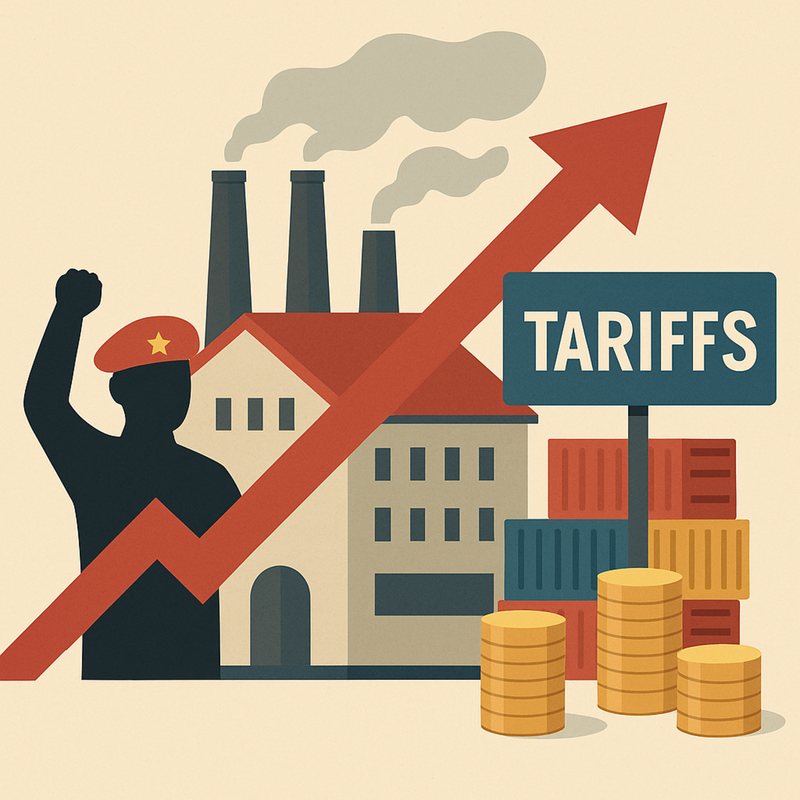
Something that definitely gets a bad rap. Exactly something that consistently gets pushed aside in our public discourse. Right. And our mission in this deep dive is to explore a, well, a truly provocative argument. It's about the unexpected, almost counterintuitive role of tariffs, Yes, tariffs, in potentially achieving what some might envision as a, let's say, comprehensive socialist utopia right here in America.
Tariffs. OK, definitely not the first thing that springs to mind for funding social programs. Not at all, and we're diving deep into excerpts from an essay. It's titled If American Socialists Were Real, They'd Love Terrace dot PDF by Chris Abraham, and the central premise Abraham presents is quite bold. He basically contends that if American socialists were genuinely serious about hitting their stated goals.
You mean the big ones? Healthcare Education. Precisely. Then they should be advocating for tariffs, like really pushing for them as the primary funding mechanism for all these desired social services that they aren't. But as he points out, they are conspicuously not. It's a real disconnect he's highlighting. Interesting.
So for you, our listener, this deep dive is going to be, I think, an illuminating journey will meticulously unpack why Abraham presents tariffs as what he actually calls the only path to achieving these really ambitious social goals. The only path. It's strong language. It is, and we'll challenge some very common perceptions you might hold about tariffs, you know, who really pays for them, what are the broader economic implications, that whole debate. Yeah, the standard narrative versus what Abraham's putting forward. Exactly.
By the end of this conversation, you'll undoubtedly have a uniquely informed perspective on a highly debated topic. It might even prompt you to rethink some of your own assumptions about, well, how we pay for the kind of society we collectively say we desire. It's a fascinating thought experiment, really, but he grounds it in a very direct argument. Definitely. So let's let's begin to unpack this.
OK, so let's unpack this vision first, as it's described in Abraham's essay, This American Socialist Utopia, it's truly comprehensive. I mean, it seems to touch on almost every facet of life that a citizen might interact with. It's not just one or two things. No, exactly. We're talking about aspirations like free healthcare, free college, subsidized childcare, maternity leave, maternity leave, housing programs, mental health clinics, public broadcasting, university personal services of any kind.
It's an expansive list, really almost all-encompassing. It implies a pretty profound societal overhaul for many people. Absolutely. But then, inevitably, comes the crucial question, the one that always emerges right at the forefront of any such ambitious proposal. Yeah, the practical bit.
The fundamental logistical one, Yeah. How do you actually pay for all of it? You know, when you dare to dream big about a better world, you also have to grapple with the very real, very tangible mechanics of making that world economically sustainable. Making it possible. Right.
This isn't just about like wishing for a more equitable society, it's about devising the concrete pathways to actually fund such an ambitious undertaking. And what's truly fascinating here and really central to Abraham's whole argument is his assertion that the traditional ways, you know, high tax rates like those eye watering 80 percent top marginal rates we saw in the US back in the 1950s. Right, the post war era. Exactly, he argues, those are simply no longer effective for funding these kinds of ambitious programs in our, well, profoundly modern, globalized economy. Why?
Not what's changed so drastically. Well, he introduces what he vividly calls the ghost problem. The ghost problem. OK. Yeah, and it's quite a compelling metaphor, I think, for the challenges of trying to tax wealth today.
In today's interconnected world, he argues, wealthy individuals in these massive multinational corporations have this, well, unparalleled ability to, as Abraham colorfully puts it, teleport their money across borders. Teleport. OK, Not literally I assume. No, no, not literally, but it speaks to the speed and the ease. You know capital can just vanish from 1 jurisdiction and reappear in another almost instantly.
So what are we talking about? Like complex accounting tricks. Exactly. Sophisticated financial engineering. Establishing complex offshore holding companies. Strategically transferring intellectual property rights to low tax places like Ireland or somewhere. Like we hear about with big tech companies sometimes. Precisely, Or even just using high frequency trading platforms that can shift vast sums across continents in milliseconds, they can quite legally and efficiently just change their legal address to Dublin or Luxembourg or you know, whatever offers the most favorable tax environment. Making their wealth effectively invisible, or at least untouchable to a single country's tax system. That's the idea.
It becomes elusive. And the core of this contention is quite stark, really, and uncompromising. Abraham declares you can't tax ghosts, and billionaires have already figured out how to become ghosts, so chasing them is futile. Futile. Wow, that's a strong word. It is, And he contrasts this sharply with the economic realities back in the 1950s.
You know, back then, when those extremely high domestic tax rates were in place, the wealthy couldn't just hop on a private to Monaco at a moment's notice with all their financial records. Right. Or move millions with a few clicks. Exactly. Nor could they move their immense wealth with a few mere keystrokes from a laptop.
The physical infrastructure, the digital infrastructure for that kind of global financial fluidity just didn't exist like it does now. So trying to bring back those 80% rates today. Abraham views any attempt to re implement such high domestic tax rates today as fundamentally quixotic, like chasing windmills, a pursuit of an ever elusive target that will always remain just out of reach. Leaving those ambitious social programs perpetually underfunded. And leaving the people who advocate for them perpetually frustrated.
That's his take. OK, so if traditional taxation is basically chasing these financial ghosts through this increasingly complex globalized maze, what does Abraham propose as the well, the concrete unavoidable solution? His answer is tariffs. Tariffs back to Paris. Back to tariffs. And this is where the argument really starts to, you know, challenge conventional wisdom because tariffs are presented as the unavoidable answer, the mechanism that bypasses all those modern financial loopholes that make wealth so incredibly mobile today.
So how are they different? Abraham highlights how tariffs are fundamentally different from, say, income or corporate taxes precisely because, as he puts it, they collect at the border. OK, a physical point. A physical point of collection. It literally cannot be moved offshore or it's geographically anchored.
They don't care about your tax lawyer or your offshore shell companies, Abraham asserts. It just cuts through all those layers of financial sophistication. It sounds almost simple. The simplicity of it, as he describes it, is quite striking. You want to sell in the biggest market in the world, You pay. End of story.
No way around it if you want access to US consumers. That's the argument. There's no complex accounting to evade them, no legal acrobatics needed to avoid them. If you want access to the American consumer base, the cost is clear and it's collected right at entry. And the revenue generated, where does that go?
According to Abraham, it flows straight into the state's coffers. It's direct, it's immediate. And crucially, he argues, it doesn't bleed the middle class dry. How does he figure that? Because that's the usual argument against tariffs, right?
That they hurt regular people. Right, but his point is that because the tax isn't directly levied on domestic income or consumption in the same way, say income tax or sales taxes, the argument is that it falls primarily on the importer. The company bringing the goods in. Yes. And potentially, as we'll definitely get into on corporate profit margins, this also means it doesn't need to chase the rich because the wealth is collected at the point of entry of goods, not by trying to track down individual or corporate income that, as we said, can be hidden or moved. So he sees it as cleaner, simpler. He describes the system as clean and simple, suggesting it's a direct, efficient and surprisingly unburdened way to generate the massive, stable revenue required for comprehensive social services.
It's sort of sidesteps all the complexities and perceived failures of modern taxation entirely. OK, now here's where Abraham's argument gets really interesting, I think, and quite provocative because he tackles head on that common narrative surrounding tariffs. The one we hear all the time. Yeah, he points out that the media can only talk about tariffs as if they're the end of the world, constantly screaming that familiar refrain. Tariffs are attacks on consumer. Right.
Makes everything more expensive for the average person. That is, of course, the widespread belief, isn't it? The tariff just hike prices on everything you buy, hitting your wallet directly. But Abraham pushes back hard on this, well, this oversimplified view. He suggests it's maybe a narrative perpetuated without a full understanding, or maybe even without a Full disclosure of the complex economic realities actually at play.
Implying it serves certain interests maybe, rather than presenting the whole picture. And Abraham doesn't actually outright deny the basic truth of the media's claim. He acknowledges that, well, yes, tariffs are technically a tax on imports. That's just factual. And he concedes that they certainly hit the wholesalers and the importers first, right there at the border.
Some of that cost absolutely can be passed on to consumers. That's a partial truth, an undeniable economic mechanism. But here's the part Abraham claims nobody bothers to say. And it's a really crucial counterpoint to the prevailing narrative. Companies also eat it.
Their profit margins take the hit. OK, So it's not just consumers paying? That's his core assertion here. It's a significant 1. He isn't just talking about some minor adjustment, he's implying A fundamental shift in where the actual burden lands.
Does he give examples? He points to very specific examples asserting that the endless 400% markups on Chinese junk gone. 400% markups. Wow. Think about the current business model for a lot of importers, right? They source incredibly cheap goods from overseas, often from countries with lower labor costs, maybe less stringent environmental rules than they sell them in Western markets with these enormous markups.
Which generates huge profits. Huge profits which ultimately benefit shareholders. Abraham argues that tariffs bite directly into these sacred shareholder returns. Suddenly the people who have been profiting off your consumption for decades by importing these cheap goods at massive markups, they have to bleed a little. As he puts it, they lose some of their inflated margins.
So this wood forest them to either absorb the cost. Or reduce their profit expectations. Or maybe find more efficient, perhaps even domestic supply chains, which is another part of his argument we'll get to. And his reaction to the shareholder complaints? His dismissal of the common outcry from shareholders is quite provocative. He just states, Oh no, the shareholders cry good, cry harder.
OK, so that's pretty blunt. Yeah, it's not just an economic argument at this point. It's a very direct, almost a moral challenge to the current system. He's suggesting that excessive corporate profit has been built on the back of these cheap imports, and tariffs serve as a necessary rebalancing agent. Forcing a redistribution of the economic impact, moving it away from just the consumer, or at least sharing that impact more directly with corporate profits and shareholder returns. Exactly, that's the crux of his counter narrative. So given Abraham's argument for tariffs as this viable, maybe even necessary funding mechanism, one that he says primarily hits corporate profits, not just consumers, he then raises a really pointed critique. Why aren't American socialists the very people who ostensibly desire these vast social programs? Why aren't they embracing tariffs? Yeah, if it's the solution, why the resistance? Exactly.
This is where Abraham introduces this idea of performance versus genuine commitment. He claims, First off, that the very word tariff has been poisoned by politics. By the political dimension, right. Particularly due to its strong association with figures like Donald Trump, it's become so ideologically charged that for many people, it's just instantly dismissed, regardless of its potential economic or societal merits. It becomes an automatic rejection based on partisan affiliation. Almost.
That's what he seems to suggest. But beyond just that political poisoning, Abraham goes deeper. He delves into what he sees as a fundamental contradiction in the desires of many who claim to want this socialist utopia. OK, he argues, that most people don't actually want the socialist utopia they claim to want. They want to want.
It they want to want it, what does that mean? It means, he suggests, they like the feeling of wanting it, of caring, of being on the good team. It implies this significant disconnect between the aspiration and the actual willingness to make genuine sacrifices or accept uncomfortable trade-offs. Because those trade-offs might be. Well, because simultaneously, people also profoundly like, they're cheap Amazon crap. They're $99 homage watches, they're fast fashion, they're three-year car leases.
The stuff tariffs might make more expensive. Precisely. And also things like their 401 KS, their stock portfolios and their ever growing personal investments. So personal wealths tied into the current system. Exactly.
You know 401K stock portfolios. These are personal retirement and investment assets, right? They often benefit directly from the existing globalized economic model that delivers those cheap goods and consequently high corporate profits, which boost stock values. So there's a deep ingrained attachment to the current consumer driven economy and the personal wealth and convenience it enables. Right. So what does this all mean according to Abraham? He suggests this fundamental contradiction is at play, a preference for the performance of caring without the pain of actually changing anything.
Ouch, that's a sharp critique. It is. It's about wanting the perceived moral high ground of advocating for social programs, but without being willing to endure the real World Economic adjustments that might be necessary to fund them. Specifically, adjustments that impact personal consumption habits or maybe even those investment portfolios. So it's an uncomfortable observation, perhaps, about the gap between our rhetoric and the tangible realities of policy implementation. That's exactly how he frames it, a gap between wanting the outcome and accepting the means.
OK. So if we connect this argument now to the bigger picture, Abraham brings in this really fascinating and I think pivotal concept from someone named Mark Wayne Harrison. Mark Wayne Harrison, OK. Yes, and Abraham even has this little aside joking about Harrison's middle name and his playful aversion to it. But the point Harrison makes, which Abraham leans on super heavily, is profound. Harrison states that you can innovate energy to near 0 cost, but you can't innovate materials. Energy versus materials.
OK, explain that distinction. This distinction is critical, really, to understanding Abraham's full argument for why tariffs aren't just a funding mechanism, but maybe a necessary systemic adjustment. Right? So when we talk about energy, Abraham explains this through Harrison's lens, right? Energy can be scaled, hacked, solared, winded, naked into abundance.
We see that happening, right? Solar getting cheaper, wind turbines getting bigger. Exactly. We've seen incredible advancements in renewable energy tech, solar panels becoming exponentially more efficient and cheaper, wind turbines reaching massive scales, and, you know, the long term potential of advanced nuclear power. The conceptual possibility for virtually limitless cheap energy seems potentially within our grasp, at least from a theoretical standpoint, through technological innovation.
OK. So energy can be innovative, potentially to abundance. What about materials? Materials. That's the completely different story. And this is where Abraham introduces a pretty sobering reality check.
Materials have to be mined, refined, processed. They're finite. Finite, unlike energy from the sun or wind. Precisely unlike energy, which can be harnessed from flow resources, sun, wind or transformed like nuclear fission materials are stock resources. They are literally embedded in the Earth's crust.
You have to dig them up. You have to dig them up. The act of extraction itself is energy intensive as environmental costs. Abraham uses this striking analogy to drive this home. We're ants crawling on the surface of a giant asteroid called.
Earth, that's a vivid image, emphasizes our limited resource. Base it really does and the idea of solving this problem by you know, going off world asteroid mining, Mars mining. They buy solutions. He quickly dismisses those as absurd. He argues the cost would be absurd. The resources required to make it feasible would dwarf anything we'd gain.
So we're stuck with what we have here. The core message is clear and unequivocal. Earth is it. Earth is the mine. And while sure, we haven't exhausted all resources yet, every extraction has a cost, not just economic but environmental, and in terms of sheer material availability and the increasing difficulty of accessing the reserves that are left.
This underlying reality of finite materials. For Abraham, it's a fundamental constraint that our current economic models, especially those driven by assumptions of infinite growth and infinite consumption, simply fail to adequately address. And building on that really profound point about the finite nature of materials, Abraham then drives home the unsustainability of infinite consumption. He connected directly to our modern consumer habits. How so?
He uses another insightful example from Mark Harrison. Harrison apparently half jokingly suggested that if energy became truly free, like 0 cost right, we could just build cheap Tyvek houses for everyone and crank the HVAC year round. You know, enjoy perpetual comfort. Sounds nice, if a bit wasteful. Maybe a comfortable dream?
It does sound like a fantastic, futuristic, comfortable dream, doesn't it? But then comes the critical question, the one designed to puncture that illusion of limitless material abundance. OK, what's the catch? The question is, where do the 9 billion HVAC units come from? Where does the copper, the steel, the plastics, the refrigerants, the infrastructure for a global grid come from?
The physical stuff. Exactly this illustrates the core dilemma. Even if energy became effectively free, the physical components required for universal comfort, for widespread technological advancement, for a truly global standard of living, they still fundamentally rely on finite physical material resources. You can't just 3D print more copper out of thin air. You can't just print more copper or manufacture more rare earth elements. Abraham's conclusion from this is stark and he argues undeniable.
Energy can be free, but materials never will be. That's the heart of it. You can't have infinite consumption. Exactly this directly challenges the very foundation of the current economic paradigm, which often implicitly assumes endless growth and endless resource availability for an ever growing global population with ever increasing consumption demands. And he links this to specific things. Yeah, Abraham points to very specific, relatable examples of this infinite crap, as he calls it, that we're just inundated with infinite T, new orders, infinite Aliexpress trinkets, infinite Sheen, fast fashion.
Things designed to be cheap and disposable. Precisely products designed to be cheap, disposable, and constantly replaced, fueling this relentless cycle of consumption that, according to Abraham, is fundamentally unsustainable. Is that the basic math of finite materials just? Doesn't work in the long run. It's a powerful argument against the current global supply chain model, isn't it? The one that prioritizes rock bottom costs and high volume over durability, Quality, maybe long term sustainability. Absolutely highlighting how our addiction to cheap, disposable goods is in direct, unavoidable conflict with the planet's material limits.
And this is precisely where tariffs come back into play. Within Abraham's larger framework, they serve as what he describes as a necessary break on this well, this insanity of infinite a break. OK, the argument is that Terrace don't just generate revenue for the state. They fundamentally alter consumer behavior and market dynamics in a way that he argues aligns with the reality of finite materials. How do they work as a break specifically? Well, by making imported goods more expensive because, as Abraham argues, those increased costs bite into corporate profit margins, which in turn might necessitate some increase in consumer price or at least a re evaluation of product sourcing. They make you think twice before buying another piece of disposable junk.
So it's not just about collecting duties. No, it's about discouraging that culture of disposability, planned obsolescence, the endless acquisition of low quality fleeting trends. And beyond just slowing consumption. Tariffs, according to Abraham, also make domestic products competitive. Again, the protectionist angle. Right.
If imported goods, particularly the cheap ones, become more expensive due to tariffs, then locally manufactured structured alternatives become comparatively more attractive, more economically viable. Which could mean jobs. Exactly. This fosters the revitalization of local industries and creates domestic jobs that were often outsourced precisely to achieve those lower production costs overseas. This, in turn, Abraham suggests, encourages quality. How does encourage quality?
Well, the idea is when domestic producers are competing in a market where super cheap imports are less dominant, they can focus on creating more durable, higher value products. They can differentiate themselves not just on rock bottom price, but on longevity, on craftsmanship. Which would then discourage the landfill culture. Exactly. It naturally discourages landfill culture by making cheap, throwaway items less appealing and maybe incentivizing consumers to invest in goods that actually last longer.
And it still funds the state. And most importantly for the core argument of funding social services, they fund the state without touching your paycheck. This circles back to that earlier point about tariffs being a clean and simple revenue stream, one that avoids the pitfalls of directly taxing individuals or corporations that can easily move their wealth. So Terrace become this multifaceted solution, in his view, addressing material limits, promoting sustainable consumption, supporting domestic industries, and funding social programs all at once. That's the comprehensive picture he paints. Abraham then tries to illustrate this point further right. He shares a personal anecdote from his time living in Germany, an observation that really tries to bring this tariff model to life for you.
Our listener offers a real world example, maybe of how these principles can play out in a developed economy. Yeah, his experience there. He observes something quite distinct, he says. Food dirt cheap and locally sourced. Delicious.
OK, so good affordable local food. Which strongly suggests a robust domestic agricultural sector, probably protected and prioritized through policy, right? But then comes the striking contrast. But everything else, Furniture, electronics, clothes, was expensive. So not everything was cheap. No, and this isn't just presented as a casual observation.
It's framed as a direct, tangible consequence of the economic policies they had in place. And why was that the case, According to him? Abraham explains because of tariffs, because of VAT, because imports were a free for all. VAT remind us what that is right? VAT is value added tax.
It's a consumption tax common in Europe, levied at each stage of production and distribution. So it's not just import duties hitting at the border, but a broader tax on consumption that also discourages disposable goods throughout the chain. So a deliberate policy choice then, to protect their domestic markets from a flood of cheap foreign stuff? That's how he presents it, and it aligns it's perfectly with his argument about slowing the turn of materials. And this protection, according to Abraham, is precisely how they fund their services. That's how they keep domestic industries alive. It's a strategic, integrated approach he's describing. Exactly.
Germany, Abraham argues, doesn't want wash back. They want to sell Mercedes and BMW's to the world, not absorb an endless flood of cheap goods. Right. Export high value stuff, manage the import. Precisely, they prioritize exporting high value manufactured goods that command premium prices globally while carefully managing imports to protect their internal market and implicitly, their resource base.
And he sees this elsewhere, too. Yeah, he extends this observation to other sophisticated European nations, stating same with Italy, with France. They sell wine, cheese, Ferraris, olive oil, and they protect their markets. They export value. They don't import junk. And the crucial link back to the main topic. He makes it explicit, and the revenue from those protective measures underwrites the social services Americans claim to admire.
He's suggesting a direct correlation between these protectionist trade policies, tariffs, consumption taxes like VAT, and the successful funding of comprehensive social safety Nets and a higher quality of domestic production. But as Abraham points out, here in the US, the conversation often just stops. It dies. Yeah. Why?
He argues it's because a particular political figure, Trump, said the word tariff 1st and for half the country that means it's evil. Back to the political. Poison. Exactly. It's presented as the significant, almost insurmountable political hurdle, a chilling effect on rational discourse that prevents A genuine examination of the policies actual merits. He has a name for this, right?
Yeah, Abraham labels this phenomenon. The original Trump Derangement Syndrome defined it basically as if he's for it, you must be against it. Even if it might achieve your goals. Even if it's the only thing that could make your dreams come true. Now, just to be clear, this isn't us endorsing that term or any political figure.
No, of course not. We're reporting Abraham's observation. Right. It's Abraham's keen observation of how partisan association with a policy can, in his view, automatically disqualify it for many people, regardless of its inherent efficacy or its potential to achieve those stated social goals. See becomes less about its economic impact and more about like tribal political identity. That's the dynamic he's describing. And Abraham then presents this really stark choice that he believes many people are making, maybe unconsciously, perhaps partly due to this political poisoning. What's the choice?
He claims that people choose their cheap fast fashion over their free healthcare. They choose their disposable culture over universal college. They choose to protect their portfolios instead of actually funding the services they say they care about. Wow, that's a very direct accusation. Extremely direct, he's saying that the perceived convenience and the immediate gratification of cheap consumer goods, along with, you know, safeguarding personal financial investments that often thrive in the current globalized system. These things are implicitly prioritized over the long term structural changes required to fund comprehensive social services.
Implying a deep seated resistance to discomfort or change. Even when that change might lead directly to the very societal benefits that are loudly advocated for. So the political landscape poisoned by these partisan associations becomes, in his view, the ultimate barrier to implementing what he sees as the only viable funding mechanism for a genuinely progressive social agenda. OK, so let's be absolutely clear here. Abraham's not suggesting that tariffs are some kind of magic bullet, right?
No consequences that they'll make this pursuit of a socialist society totally painless. No, not at all. Quite the contrary, he's very upfront about the unavoidable sacrifices that would inevitably come with such a policy shift. How so? Tariffs won't make socialism painless, he states directly. And you as the consumer would definitely feel it in your daily life.
Prices will rise, he acknowledges without any equivocation. So that cheap Amazon stuff, the fast fashion. That incredibly cheap Amazon trinket or the latest fast fashion outfit you're maybe accustomed to buying on a whim? That easy, constant acquisition of new disposable items would likely largely disappear or become significantly more expensive, Abraham notes. Very pointedly, you won't be able to fill your house with disposable junk. That's a direct tangible trade off then a higher cost for consumer goods, less cheap stuff. A.
Reduction in the sheer volume of cheap material possessions? Yes, in exchange for something else, namely comprehensive social services. It's a candid admission that the pathway to this socialist utopia, as he calls it, isn't some kind of free lunch. Not at all. It's presented as a fundamental reprioritization of societal spending and individual consumption habits.
It requires A willingness to actively give up certain current conveniences and immediate gratifications for broader long term societal benefits. It really forces a choice. OK, but in exchange for those very real sacrifices, Abraham clearly reiterates the promised benefits he believes tariffs would unequivocally deliver. Right. The upside, he argues simply. You'll have services.
You'll have a safety net. Which speaks directly to that core vision, right? Healthcare education, childcare support systems. Exactly. Providing universal, accessible services, ensuring a baseline of dignity and security for all citizens.
But beyond that, and this is a point Abraham really emphasizes, you'll have dignity in domestic work and products. Dignity in domestic work? What does that mean practically? Well, it isn't just some vague aspiration. It points to a very tangible revitalization of local industries and manufacturing, leading to more stable, maybe higher quality, potentially better paying jobs right here within the country. Instead of relying on overseas production. Right.
Instead of relying on external production that often exploits cheaper labor and maybe less stringent regulations elsewhere, imagine, he suggests, a return to craftsmanship, to goods built to last, fostering a sense of pride in national production again. And crucially, from the funding perspective. From the fundamental funding perspective, Abraham asserts, you'll have revenue that doesn't bleed workers or chase ghosts. Back to the ghosts. Back to the ghosts. It circles back to that core argument about the efficiency and the inevitability of tariff collection providing a stable, reliable income stream for the state without, he argues, disproportionately burdening the middle class through direct taxation or attempting that futile pursuit of taxing the elusive, highly mobile wealth of global billionaires. So it's presented as a pathway to a more resilient, more self-sufficient, maybe more materially responsible economy. One that is truly capable, in his view, of sustaining a broad and comprehensive social welfare state for its citizens. That's the promise laid out.
And this brings us, really, to Abraham's provocative final judgement. It encapsulates his entire argument and serves as a pretty challenging summation. Yeah, he doesn't pull any punches at the end. No, he makes an ultimate, uncompromising assertion. In other words, terrorists are the only way to build the high service, low material society socialists claim to want.
The only way still very definitive. It's a bold declaration suggesting that without the mechanism of tariffs, that vision of a comprehensive welfare state is just economically unfeasible in today's global landscape. Especially, he stresses, given the undeniable inherent limitations of finite material resources on our planet. And then he follows this with that really challenging conclusion. Aim squarely at those who advocate for socialist policies but reject tariffs. Right, he says.
And the fact that they hate tariffs just proves they're not serious, they're performative. Performative Ouch again. Yeah, they're capitalists and socialist drag, clinging to their portfolios while they scream about fairness. That is a very sharp critique. Extremely sharp, it implies that the resistance to tariffs, despite what he sees as their logical appeal within his framework, exposes a fundamental hypocrisy, or at the very least, a profound lack of true commitment to the actual economic mechanics required to build the society they claim to espouse.
So it's not just a policy disagreement in his eyes, it's almost a character assessment of underlying motives and priorities. That seems to be the implication. The essay then succinctly summarizes its core economic and philosophical points, really distilling them for maximum impact. Energy may one day be almost free materials. Never will terrorists acknowledge that reality.
Accepting the limits they. Slow the churn, fund the state, and force us to value what we own. And the final sentence of Abraham's essay really is hard, leaving the reader with this powerful critical indictment of the current political discourse around social programs and funding. What's the final line? If American socialists were real, they'd love tariffs.
But they're not, so they don't, and that's why nothing changes. Wow, OK, that really forces you to confront the gap he sees between stated desires and practical willingness. Absolutely. So just to recap this deep dive, we've thoroughly explored Chris Abraham's truly compelling and for many I'm sure, undoubtedly controversial argument, the idea that tariffs are not just a way, but perhaps the only way to fund a comprehensive social welfare state in the modern era. Right, He posits that traditional taxation just falls short because wealth is so mobile globally, creating those ghosts he talks about. And he argues tariffs uniquely address this by collecting revenue right at the border, by passing all those complex offshore financial maneuvers.
And beyond just funding, Abraham presents Terrace as this necessary break on what he sees as unsustainable infinite consumption of finite materials. While simultaneously encouraging quality domestic production and a more sustainable, resilient economy, much like the examples he drew from Germany. It's a comprehensive vision really, linking economic policy directly to environmental sustainability and societal well-being. It really is. This deep dive certainly raises, I think, an important question for you to consider as you reflect on these insights.
We've discussed if the funding mechanism for really expansive social services, like the socialist utopia Abraham describes, truly requires these uncomfortable trade-offs. You know, like higher consumer prices for many goods and a significant reduction in the sheer volume and convenience of cheap imports. Are societies genuinely willing to make those kinds of sacrifices? That's the core tension, isn't it? Or will the enduring, deeply ingrained appeal of readily available, inexpensive consumption ultimately always outweigh the desire for that comprehensive social safety net?
We've seen how deeply entrenched our current consumption habits are, and Abraham's argument really suggests this is the central tension we face. Yeah. And as you ponder that, we definitely encourage you to consider your own relationship with consumption. You know what Are you truly willing to trade for the kind of society you envision? What policies do you genuinely advocate for, and how do they line up with these economic realities, these finite resource constraints?
This deep dive should hopefully give you unique, perhaps even uncomfortable, but ultimately vital ends through which to examine these really complex, intertwined issues of economics, sustainability, and societal aspiration.