
Blame the Victim
This article, read aloud:
Share: X · Facebook · LinkedIn · Reddit · Bluesky · Threads · Email
Donald Trump spent Thanksgiving morning calling his own government's growth numbers fake, and I am going to do the thing you are never supposed to do. I am going to blame the victim. The victim is the counters—the Bureau of Economic Analysis, the Bureau of Labor Statistics, the whole standing priesthood of analysts and statisticians and economists who count the country for a living. The president says they rigged the count against him before the midterms. On the record of this week, they did not. It will not save them. The hole he is poking his finger through is one they spent ten years opening in themselves.
A post in my feed this morning laid out the receipts, and the receipts are good. On October 29, the Bureau of Economic Analysis published its advance estimate for the third quarter: the economy grew at 3.4 percent. The White House issued a release the same day—"President Trump Unleashes the American Economy"—celebrating 3.4 percent as the strongest pace in a year, with business investment at its strongest in nearly fifteen years. The number was the administration's boast, printed under the administration's own headline. On November 3, the country voted, and the president's party lost both houses of Congress. On November 25, at 8:30 in the morning, the bureau published its second estimate: 4.3 percent. The revision was nine-tenths of a point, and it came from the ordinary machinery of counting—investment and consumer spending arriving stronger than the first incomplete tally, consumer spending revised from 3.8 up to 4.2. The bureau counts every quarter three times, on dates announced in advance; the third count of this quarter lands December 23. Nothing about November 25 was improvised. The date was on the calendar before the quarter had a number at all.
On November 26, Thanksgiving, the president wished a happy holiday to "those who issued fake Economic Numbers, just prior to the Election, and corrected them yesterday, three weeks late." The first number, he said, was FAKE. The error was "RECORD SETTING." He demanded an immediate investigation into a deliberate and purposeful manipulation. His own Commerce Secretary spent the same afternoon celebrating the 4.3, and the bureau he wants investigated sits inside that secretary's department. Three weeks late, he said. The correction arrived on the morning it was always scheduled to arrive, on a date printed before the election, before the first estimate existed. Record-setting, he said. A revision of nine-tenths of a point is a big revision, and research co-authored by the bureau's own director counts at least four revisions of a point or more in the past twenty-five years; across this century, the average revision over ninety days runs about half a point. Large is not unheard of, and unheard of is what he claimed. Deliberate, he said. The advance estimate is a count taken before the inventories and the trade figures and the services spending are all in, which is why it is called an advance estimate, and why the same White House that now calls it a fraud spent October 29 bragging about it. The guild of professional forecasters, for its part, expected the second estimate to land between 3.4 and 3.6. It landed at 4.3. The most optimistic forecaster surveyed was half a point short. The counters' own guild missed the count in the same month the count was accused of being cooked.
Last August the same machinery ran the other way, with a name on it. The Bureau of Labor Statistics published a weak jobs report carrying heavy downward revisions to the months before it—May's job gains cut to 19,000 from a printed 125,000, June's to 14,000 from 147,000. Within hours, the president fired the commissioner. Erika McEntarfer is a labor economist; the Senate had confirmed her 86 to 8, with the future vice president's vote among the yeses. The president accused her, without evidence, of rigging the numbers for political purposes. Economists of both parties said the charge was baseless, in print, at length, and it bought the bureau nothing. An acquittal is only worth the credit of the acquitted. The credit is the thing that is gone.
The credit went the way it went because the counters spent ten years acting as storytellers and billing the country for priests. In 2016 the polls missed the election in the states that decided it. In 2020 they missed again, worse—the largest polling error in forty years—and the misses leaned, as they had leaned before, in one direction. A miss is weather. A miss that leans the same way every season is aim. The monthly jobs count, the most-watched number in the country, was revised downward so often in the last years of the old administration that the annual benchmark correction took 818,000 jobs off the books in one stroke—jobs that had been announced, celebrated, and campaigned on, and had never existed. In 2021 the whole profession sang the word transitory over inflation in chorus, and kept singing until the number printed 9.1, and then the word was quietly retired, with no funeral and no resignations. In 2022 the economy shrank two quarters in a row, which was the definition of a recession every schoolchild used to learn, and the priesthood explained that the definition was not the definition; the word was saved, and the credibility was not. Through COVID the models swung by millions of lives between revisions—one famous model out of London put 2.2 million American deaths on the table in March of 2020 and helped lock down two countries—delivered with total certainty on television in the morning and replaced by the weekend, and the modelers kept their chairs and their grants and their seats on the panels. Every error was explained. Every explainer was promoted. The public is not stupid; the public did the arithmetic the profession refused to do. These are players who count. They sacrificed their verifiability at the altar of stopping one man—of having their person win and the other man vanquished—and a sacrifice, once made, cannot be unmade in the one week you happen to be innocent.
And the honest ones kept silent through all of it. The career counters at the bureaus are the cleanest members of the class—they print their schedules in advance, they print their revisions in the open, they print their margins of error on the same page as the number. Not once in ten years did they break ranks and say, in public, what the loud cousins were doing to the family name. They kept the name and let it be spent. A guild is believed as a guild; that is the whole of the law. They are being sentenced under it now, in a week when their own work was clean, and the sentence is still partly theirs.
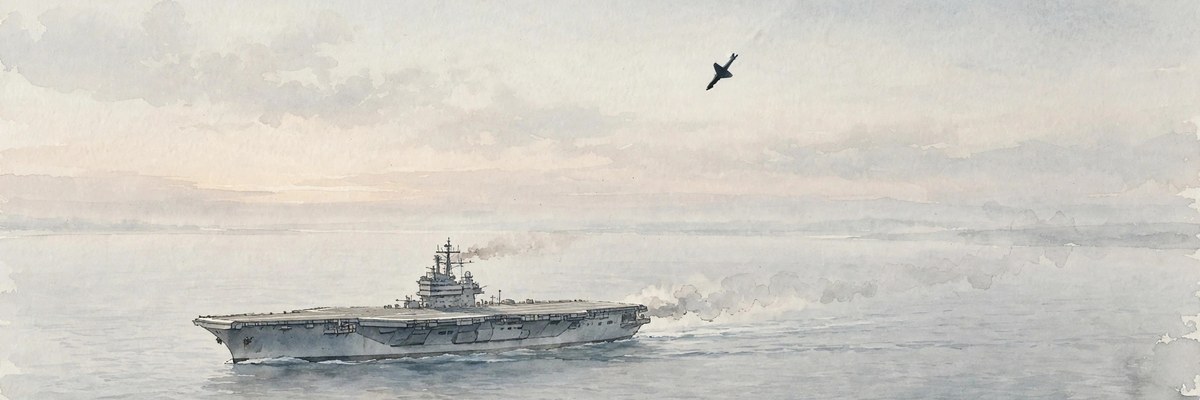
Tora, tora, tora. T-O-R-A—not the Torah. Tora is Japanese; it means tiger, and it was the code word radioed back to the fleet from over Pearl Harbor: the surprise is complete, the attack is on. For ten years the expert class has flown that sortie against Donald Trump, again and again and again. Every cycle a new plane leaves the deck—a bombshell, a dossier, a report, a number that will finally do it, the walls closing in, the beginning of the end—and every plane dives at the same carrier, and the carrier takes the smoke and keeps its speed, and the plane does not come home. It never sinks the ship. It could not sink the original, either: at Pearl Harbor the American carriers were not in port, and the planes sank what was in front of them and missed the thing that mattered, and the thing that mattered went on to win the war. What burns in those dives is not the ship. It is the only weapon that could ever have beaten him: a witness the country still believed about something else. The ocean is full of pilots. Trump can read a chart. He knows there is nobody left on the other side whose denial carries weight, and so he does not have to prove that a number was rigged. He inherits the doubt the way you inherit a lot somebody else burned a house on. The fire was theirs. The lot is his.
The order of that war is the biography. Tora was 1941: the confident phase, the professionals at the height of their craft, certain that one clean strike ends the argument. The diving came later—1944, Leyte Gulf, the special attacks—when the war was already lost and the suicide plane was what remained to an empire that could no longer win a fair engagement. The expert class ran the same sequence in the same order. First the confident strikes, the bombshells delivered with total assurance that this one ends it. Then, as the assurance failed and the ship kept its speed, the dives: each new revelation flown lower and more desperately than the last, each pilot an institution's remaining credibility, spent on impact. A kamikaze is not a strategy. It is what a strategy leaves behind when it dies. And the dives are still launching, on schedule, to smaller and smaller crowds.
So blame the victim. The statisticians are innocent this week—the count was honest, the correction was on schedule, the error was big and precedented—and their innocence will change no minds, because innocence is a currency and they spent theirs. Donald Trump did not destroy the credibility of the counters. He found it destroyed, and moved in. The victim did it to himself, one dive at a time.
Share: X · Facebook · LinkedIn · Reddit · Bluesky · Threads · Email