
The Cabal Is Selection Bias
This article, read aloud:
Share: X · Facebook · LinkedIn · Reddit · Bluesky · Threads · Email
Nobody is running the world. I belong to the institution the world most often accuses of running it. I am a Freemason, 32° in the Scottish Rite, a member of Naval Lodge No. 4 in Washington, and I am telling you the machinery of the cabal does not exist. What exists is a door, a ballot box with black balls in it, and selection bias doing all the work a conspiracy gets credit for.
The question goes: which six families run America? The answers cannot even agree on the number. Five families. Seven. Eight. Thirteen bloodlines, if you buy the big book. The pool the names are drawn from never changes: Rothschild, Rockefeller, Morgan, Du Pont, Bush, and a sixth chair that rotates by decade—Astor, Kennedy, Walton, whoever is rich and safely dead or rich and currently famous. And on the one point that matters, the record underneath all of it is unanimous: there is no concrete evidence that any small group of families secretly controls the United States government. The lists disagree about everything except the absence of proof. A cabal with a rotating sixth member is not a cabal. It is a drawer of famous names, and the drawer gets opened whenever the world does something a person does not like.
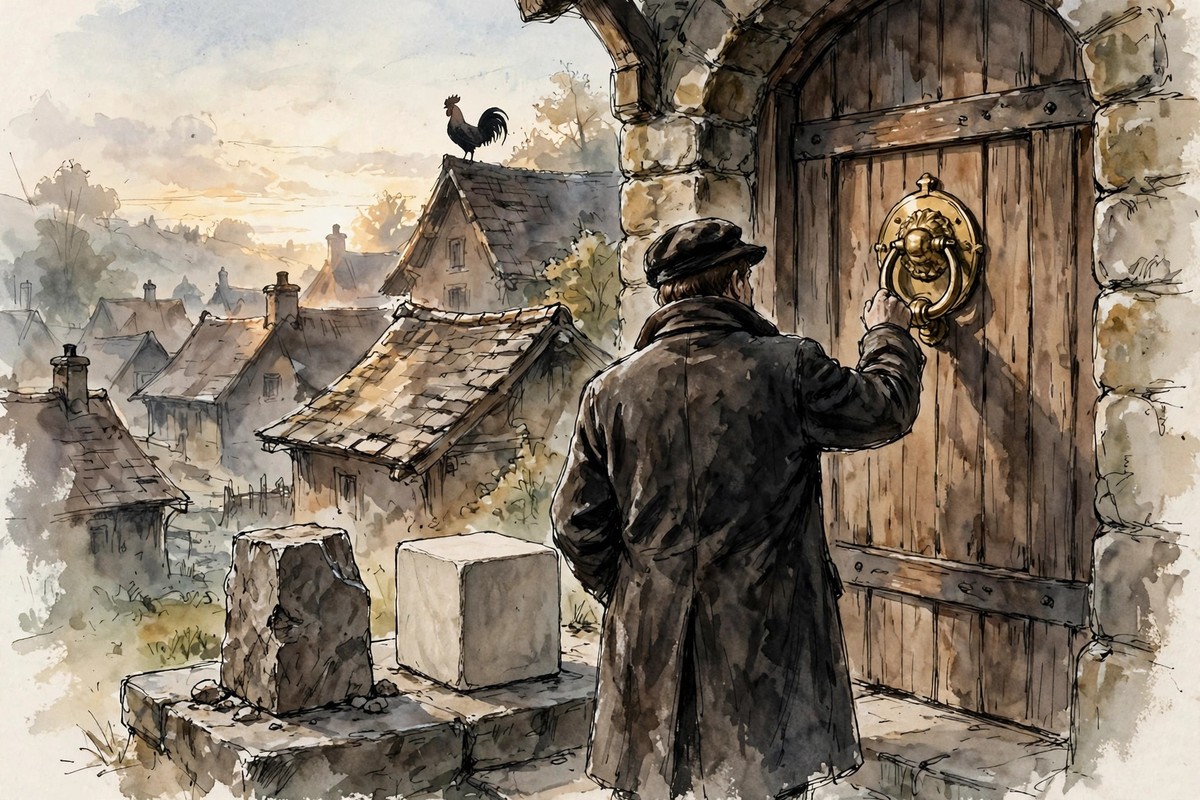
The Masons get pulled out of the same drawer. The eye, the pyramid, the apron, the funny handshake—therefore a shadow government. So here is how a man actually becomes one, because the process is the whole refutation. Nobody is recruited. Nobody is tapped on the shoulder by a man in a dark car. A man knocks on the door himself, or he never becomes a Mason at all. The fraternity does not go hunting for him. He has to want it, find a lodge, and ask. If he never knocks, nothing on earth can make him a member. The world government staffs itself entirely out of volunteers who showed up uninvited and asked to be let in.
One Black Ball
Then the filter goes to work on him. A committee of brothers investigates him: they visit his home, they talk to his wife, they ask around, they check his background and his character and whether the man at work is the man at the dinner table. Then the lodge ballots. White balls elect. Black balls reject. It takes one black ball. One brother, unknown, unanswerable, drops one black ball in the box and the petition dies.
And here is the part the conspiracy version never includes, because it does not fit in a shadow. If the Master of the lodge gets wind that a petitioner might draw a black ball, he will try to talk the man out of standing for the ballot at all. Not to protect the lodge—the lodge can survive a rejected petition. To protect the man. Because a man who is blackballed is finished: the rejection bars him from becoming a Mason anywhere, not just at that lodge, not just for a season. So the lodge would rather hand him back his petition quietly, in private, with his name and his dignity intact, than let one ball in a box mark him for life. The most powerful secret society on earth spends its gatekeeping energy protecting the feelings of the men it turns away.
The Stone Was Already Stone
Who gets through the door, and then who thrives inside it? The men who arrived already wanting to become better men. That is the selection bias, and it is the entire secret. Masonry does not take a scoundrel and hand back a saint; it owns no machinery that could do that. What it owns is a symbol. A rough ashlar is a block of stone as it comes out of the quarry, rough on every face. A perfect ashlar is the same stone dressed smooth and squared, fit to be laid in a wall. The work of a Masonic life is a man dressing his own stone. Nobody dresses it for him. The men who want that work—slow, unglamorous, unfinishable homework on themselves—are the men who knock, and they are the men still in their seats twenty years later. The men who knock looking for a network, a secret, a leg up in business, wash out within a few years, because the thing they came for is not in the building. There is no leg up in the building. There is a mirror in the building, and most men do not enjoy it enough to renew.
The higher degrees run on the same filter, which surprises people, because from outside the degrees look like ranks in an army of control. They are lessons staged as plays. A 32° Scottish Rite Mason has sat through more allegory than a 3° Mason. That is the whole of the difference. In the lodge room the 32° man and the brother who was raised last month vote as equals, and the black ball in the new man's hand weighs exactly what the black ball in the old man's hand weighs. There is no promotion ladder out of the lodge room into a control room. There is only more homework.
God, Country, Family, Then the Lodge
A Mason's own ordering, taught to him by the institution itself, puts the lodge fourth. God first. Country. Family. Then the lodge. He is taught to respect his cable tow—the rope's length, the measure of how far his obligation can call him—and the same teaching that ties it around him tells him his duties to God, to his country, and to his family outrank any call the lodge can make. A lodge night does not beat a sick child. A summons does not beat a job, a wife, a church. The supposed world government instructs every one of its members, as a condition of membership, that it comes last in his life. Some chain of command.
Everything the lodge does in the world after that is opt in. Every stated meeting is opt in. Every pancake breakfast, every scholarship check, every food-bank Saturday, every hospital visit to a brother nobody has seen in a month—opt in, brother by brother, with no orders issued and no roster of the compelled. Nobody is leading armies of brothers. There is no army. There is a hall, a calendar, a kitchen that needs cleaning, and the same fifteen men who show up for all of it because they are the kind of men who show up for all of it. The lodge does not make them show up. The lodge is where men who show up go to be counted.
Count the World Government
Now count it. The estimates of Masonic membership on earth run from two million to six million, and the spread is itself the confession: nobody knows, because nobody can know. Freemasonry has no headquarters. There is no world Grand Lodge, no central registry, no office anywhere that holds the rolls of the fraternity. Hundreds of sovereign Grand Lodges keep their own books, write their own rules, run their own jurisdictions, and do not all recognize one another as legitimate. The conspiracy requires a command structure. The fraternity cannot produce a headcount.
The American numbers finish the picture. The Masonic Service Association of North America counted 4,103,161 Masons in the United States in 1959. The count today stands under 900,000. The shadow government has lost three out of every four of its American members in two generations, its lodges close and merge for want of men to fill the chairs, and the survivors argue about the pancake batter. If this is the cabal, the cabal is dying of old age in public, one lodge supper at a time.
Mass Makes Splash
The families run on the same mechanics without the aprons. Some three thousand families move in the orbit of gatherings like Renaissance Weekend—attendance, not membership, nobody's roster of rulers—and those families overlap, heavily, the families of the Council on Foreign Relations, the Foreign Service, the Ivy League alumni rolls, the Rhodes Scholars, the MacArthur fellows. Not because a committee seated them at the table. Because ambition, money, schooling, and intention pool in the same places, the way water pools at the low end of a field. Nobody dug the low end as a plot against the high end. It is the shape of the ground.
Mass makes splash. A decision taken at that weight lands with a bigger blast radius than the same decision taken in a strip mall, and a bigger blast radius reads, from a distance, as aim. Stanford is not trying to control the world. Stanford admits strivers, and strivers go out and strive in public, at scale, in the open, and the scale gets mistaken for a plan. Multiply the striver by three thousand families, give them the same schools, the same clubs, the same summer geography, and their agreement with one another starts to look choreographed. It is not choreography. It is selection, compounding. Like finds like, knocks on the same doors, passes the same filters, and ends up in the same rooms—rooms with no one in charge of the world in them.
Father's Name and Sons
Start further back. Everything used to be a family business. The farm was a family business. The bank was a family business. The firm had the father's name on the door and the son at a desk inside it, learning the trade at the hem of the man who built it. Then we renamed the arrangement. We called it nepotism, and we declared it unfair—unfair that the nepo babies turn out to be really good at the thing their entire family has been good at for generations. Of course the Bush family makes presidents and governors and senators. That is what a family business produces. The surprise would be a Bush who could not work a room.
My buddy Mark is the son of two university professors at Susquehanna University in Selinsgrove—both of them academics, both of them in the sciences. Mark is much smarter than I am; I will stipulate that before anybody reaches for it, because we were never an equal-IQ comparison. But set the IQ aside and Mark still started the race inside the building. He was raised inside the academic operating system, and the operating system was just normal to him: how to deal with grants, how to deal with money, how to schmooze, how to build a relationship and keep it warm, how to raise funds, how to work a loan, how to find the free money, how to play the system without ever having to call it playing the system. What clubs to join. How to become a member of the key organization. How a kid lands a National Merit scholarship. How a kid gets into the best schools early. How you enrich your child on purpose, as a deliberate project. His parents made him play the piano every single morning when he was a little kid—every morning, without appeal—until he came to hate the piano with his whole heart. It was torture. It was also enrichment, and it is the kind of enrichment only two upper-middle-class academicians would ever think to submit their child to.
Neither of my parents went to college. My dad went to the School of Visual Arts, which was a trade school, not a university. My mom took a credential from an interior design school. Different classes have different priorities. Different wealths have different influence. And the people with no wealth, no connection, no network, no history, and no nepotism start bare—at the door, unannounced, with nothing pooled at their end of the field.
But I know the inheritance from the inside, because I received the photographer's version of it. My dad was a world-class commercial photographer, and so I became one. I shot at the hem of a working commercial photographer from childhood: a Nikkormat in my hands at nine or ten years old, then Nikons and fast lenses and Speedlights and Domke bags, stock photography and travel photography and editorial photography, model releases and agency relationships, from about ten years old until I was thirty-three. Between twelve and thirty-five I was the best photographer of anybody I knew, and that was not a compliment to my talent. Everybody else had to catch up to a head start measured in decades. Now I am in my fifties and I am average standing next to the people who simply loved it longer than I did and never had the shortcut. The shortcut spends itself. The inheritance is a head start, not a permanent rank—and the rank, where it survives, belongs to the ones who kept working after the head start ran out.
The old firm style put the honest label right on the door: father's name and sons. Add the daughters. Add the family. It is the same door. In the worlds of multi-generational wealth there are multi-generational bankers and multi-generational industrialists, the same way the children of academics tend to become academics, the children of photographers tend to do photography, and the children of restaurateurs tend to be good cooks. Not everybody takes the handoff. Everybody likes to recite the cycle—rich men make weak men, weak men make hard times—and the cycle has its exhibits, God knows. For every trustafarian who spends his whole life following the Grateful Dead and doing disco in Ibiza, there is a son or a daughter who wants the baton passed and the father's name kept on the door, and who does the work to deserve both. From outside, that handoff can look like a conspiracy. It can look like RICO. It is a family business doing the oldest thing a family business does: handing the trade to the child who was raised inside it.
From a distance it genuinely looks like magic. The man coaching Little League turns out to be a Mason. The man who organized the food drive turns out to be a Mason. The deacon, the alderman, the fellow who is simply always there when the hall needs painting—Mason, Mason, Mason, until a reasonable person starts to suspect the fix is in. So ask the question straight: are they amazing because they are Masons, or are they Masons because of the men they already were? The door answers it. The door only opens to a knock, the ballot only passes the investigated, and the seats only stay filled by the men who came to dress their own stone. The showing up came first. It always came first.
The wife of the team leader on The Unit said the whole science of it in one line, and I have never found a better one: the cock crows and the sun comes up, but the crowing of the cock does not make the sun come up. The sun was coming up anyway. The rooster is only the loudest thing awake at that hour. So it is with the lodges, and so it is with the families in the drawer of famous names. The work was going to be done by the men who do work. The credit for the sunrise gets assigned afterward, by people standing outside, listening to the crowing, and mistaking the noise for the cause.
Share: X · Facebook · LinkedIn · Reddit · Bluesky · Threads · Email