Read the full transcript (6,803 words, machine made)
Welcome, curious minds to The Deep Dive. Today we're plunging into an idea that might sound utterly dramatic, maybe even a bit mythical at first. But we've all heard that phrase, right? The Graveyard of Empires. Oh yeah, definitely conjures of all sorts of images. Exactly.
Ancient lands, immense power just fizzling out. A place known for absorbing these huge invading forces and then kind of just shrugging them off, leaving them totally depleted. The land itself basically unchanged. Right. Powerless in the end. But here's the twist we're exploring today. What if that same dynamic, that really unique pattern of like absorption and then rejection, could actually apply to modern America?
It's a compelling parallel, isn't it almost unsettling when you first hear it? Totally. Because, I mean, it seems so counterintuitive. America, you know, global superpower, beacon of innovation, constant change, not some besieged nation fending off armies. Right.
But the author we're looking at, Chris Abraham, in this provocative article titled America, Afghanistan, he argues exactly that point and with, well, surprising depth and a lot of historical examples. Yeah, he really builds a case. Absolutely. So for this deep dive, our mission really is to unpack Abraham's fascinating argument that America, in its own very unique way, mirrors Afghanistan's historical role, not against, you know, literal invading armies with tanks and stuff, thankfully, but against these powerful cultural and social movements that try to change the country from within. So we're going to delve into these really striking parallels and the specific, often kind of unseen forces the author claims are fundamentally at play just beneath the surface of American Society.
It's about understanding a different kind of power, isn't it? Not like overt military might, but something more subtle. An enduring power of absorption, maybe an eventual neutralization, like a societal immune response, if you will, that ultimately preserves some kind of core identity. Yeah, that's a good way to put it. Given Afghanistan's remarkable, almost mystical ability to just outlast and eventually shed these external forces, it leads to this really wild question from the article. Could America, in its own distinct way, be doing the exact same thing, but doing it to internal movements instead of literal armies?
The source material for this deep dive? It lays out a fascinating, maybe even unsettling case that really forces you to reconsider how societal change actually happens. Oh, doesn't happen. Right. How deep does change really go?
OK, so to really grasp Abraham's main idea, we first need to properly establish Afghanistan's historical reputation. It's not just some dramatic nickname. The Graveyard of Empires is, according to this source, a historical truth proven over and over again through centuries. It's a reputation earned through, well, a really unique kind of cultural resilience. Precisely.
The source really emphasizes this point. For century, some of the most formidable, most powerful nations on earth have marched into Afghanistan. Big ones. Huge. They came with overwhelming armies, cutting edge weapons for their time, meticulous plans, and this this fervent belief that they could control and fundamentally change the very fabric of Afghan society. Every single time.
Every single time, they were convinced they'd be different, that they would succeed where everyone else had failed, that their will, their might, their ideology would finally bend Afghanistan to their desires. And the examples the article gives are just incredibly stark. We're talking global superpowers at the absolute peak of their influence. Yeah, the big leagues. First, think about the British Empire, 19th, early 20th centuries at the height of its power, ruling like 1/4 of the world's population.
Right. The empire on which the sun never set. Exactly. Britain tried repeatedly to assert control over Afghanistan, mostly strategic reasons, you know, worried about Russia, the Great game. They invested immense resources, thousands of lives, unparalleled military might in these campaigns that stretched on for decades.
Yeah, multiple Anglo Afghan wars. Yet each time they just found themselves bogged down this seemingly endless conflict. Their forces bled dry, their political will just eroded, and ultimately they were forced to retreat, leaving Afghanistan pretty much unconquered and unbowed. It just absorbed the punch. Then Fast forward the Soviet Union, late 20th century.
A different kind of superpower, right? Driven by communist ideology, believing it was the future of the world. A world revolution narrative. In 1979 they launched a full scale invasion, poured billions into this protracted, really brutal war. Their goal was clear. Install a compliant communist regime. Fundamentally transform Afghan society in their image. Right.
Modernize it, secularize it, bring it into the Soviet sphere. They had this overwhelming military machine, vast resources. They were there for a whole decade, but they too eventually withdrew in 1989. Their economy strained, their military demoralized, their imperial ambitions just in tatters. The Soviet Vietnam, some called it.
Exactly. And they left behind a nation that despite just immense suffering and destruction, largely reverted. It went back to its pre invasion state in terms of its core identity, its tribal structures. The underlying patterns just re emerge. And then most recently, the United States.
After 911, the US-led this international coalition into Afghanistan spent trillions of dollars. Trillions with AT. Fought for two decades, the stated goals dismantle terrorist networks, stabilize the region, transform Afghanistan into a stable democratic state. A modern nation building project on a massive scale. The investment was colossal. Lives treasure 2 decades of sustained effort trying to build institutions, change the culture. Yet as we all saw just a few years ago, the ultimate outcome was this incredibly rapid collapse. The new systems, the government, the military that have been propped up for years by foreign aid and influence, just melted away.
Yeah, startlingly fast. And Afghanistan, in so many fundamental ways just reverted, went back to its old ways almost instantly once the foreign forces packed up and left. It's this recurring theme. Every single one of these global giants thought they could turn Afghanistan into what they wanted it to be, and every single time Afghanistan absorb their efforts waited them out and just went back to being Afghanistan the moment the foreign armies drained and defeated. Left.
And what's really fascinating here, what the source meticulously details, is how Afghanistan's resilience works. It isn't primarily framed as like direct military victory on the battlefield, though obviously there was intense fighting. Sure, lots of conflict. But instead, it's presented as this profound cultural absorption and eventual rejection. It's a very different kind of power, a strategic patience, almost spiritual, that just outlasts raw force.
That's such a powerful distinction. It really makes you wonder, doesn't it? Is true imposed external change ever really possible, or is it always just this temporary veneer over an unyielding core? Yeah. Is it just surface stuff?
So it's not about winning every single pitched battle, it's about this more subtle, enduring strategy for survival. The source highlights Afghanistan's mastery of patients, it's uncanny ability to simply wait out outsiders, no matter how mighty they are, no matter what they say they want to do. Yes, and this outlasting isn't just passive waiting. It's described as an active, even deceptive, strategy. Afghanistan, as the author puts it, pretends to play along. OK, what does that look like?
It means it readily accepts the money, the aid, the resources that these foreign powers bring in. It even allows pretty substantial surface changes to happen. Like what kind of changes? Well, you know, schools being built using foreign money and curricula, new laws being enforced, at least in the cities, foreign ideals, democratic principles, modern education ideas, different social norms being promoted and seemingly adopted in public spaces. So on the surface, it really looks like change is happening, like the invaders are succeeding.
Exactly. It looks like fundamental transformation is underway, like they're actually reshaping the country according to their plans. But, and this is the crucial bit, almost devious according to the author, beneath this shiny veneer of surface compliance, the people remain deeply loyal. Loyal to their tribes, their local communities, their ancient ways of doing things. Their core identity stays strong and hidden.
Hidden. Wow. They smile, they nod, they say what the occupiers want to hear. They might even benefit personally from the influx of cash or jobs. But all the while, they're fundamental cultural and social core remains untouched, resilient, just. It's like a master class in quiet internal resistance, A societal deep breath held for decades, maybe even centuries. And this patient kind of deceptive strategy, it has this devastating, draining effect on the invading force, the foreign armies, the aid organizations, the diplomats, they expend immense energy pouring countless resources, and critically, slowly but surely, they lose their willpower. They get exhausted.
Totally exhausted, Frustrated by the slow pace of what they see as genuine change. Worn out by the constant need to prop things up. Delusioned by the seeming futility of it all. And when the invaders finally leave, drained, financially depleted, defeated in spirit. Afghanistan simply shrugs off everything they tried to build.
Just like that shrugs it off. Pretty much. The effects are immediate and dramatic, almost like a spell is broken. The schools that were built, they close, or the curriculum reverts. The new laws, they just vanish, become irrelevant overnight.
The new systems, the institutions they tried to create, they collapse like houses of cars. And Afghanistan, the deep fundamental core of Afghanistan remains unchanged. It returns to its pre invasion state with startling speed. It's this powerful repeating cycle absorption, then rejection. That's how it's beaten every empire.
It doesn't need to win big battles. Exactly, According to the source, it only needs to survive long enough for its enemies to give up, to get tired, to run out of money or political will. It buries their efforts in silence. The profound cultural attrition. Which is precisely why it gets called the Graveyard of Empires.
That makes a lot of sense. So we've established Afghanistan as this, this master of cultural absorption and rejection, a living testament to endurance against overwhelming external force. Now here's where the article takes it's truly surprising turn. It's central thesis. Chris Abraham argues that America does the same thing, but to movements.
And initially, that sounds incredibly counterintuitive, doesn't it? Yeah, it really does, America. Is just such a vastly different entity. It's wealthy, it's modern, powerful, a global leader, not a poor tribal country being invaded by armies over and over. The conventional wisdom just doesn't line up with this idea that America could also be a kind of graveyard.
Exactly. We're used to thinking of America as a country that leads change, that influences others, that undergoes its own dynamic transformations through political action, social progress, innovation. Right, the narrative is usually one of progress, or at least constant flux. But the author here, Abraham, he redefines what counts as an invader in the American context. It's not tanks and soldiers rolling down Main Street.
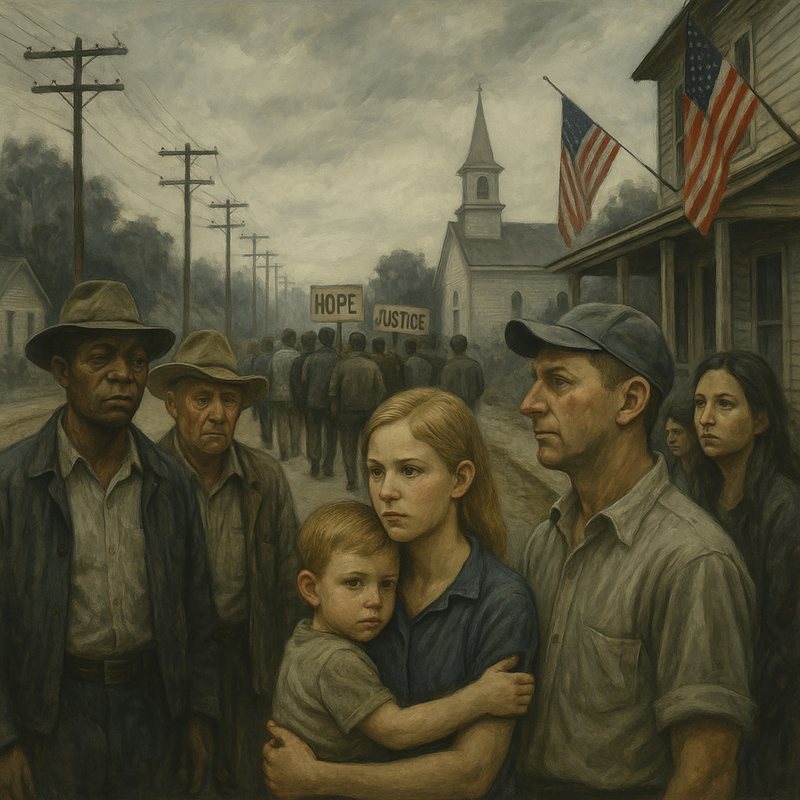
Instead, it's movements. Movements that arrive with a different kind of force. Protests, slogans, laws and corporate campaigns, all driven by this passionate mission to change the culture from within. So like cultural armies, in a way, seeking to reshape the American landscape of values and norms. Yeah, that's a good way to think about it. And what's really fascinating is how America, according to the source, responds to these internal movements. The pattern, Abraham argues, is remarkably similar to how Afghanistan interacts with foreign powers. Oh, so when a powerful movement rises up, demands fundamental change, asserts, you know, we are going to transform America. America, like Afghanistan, simply plays along. Plays along, it doesn't resist.
Well, not necessarily head on, not always. It appears to open the door wide, almost welcoming the new ideology or at least accommodating it. Very visibly. The source describes this massive influx of resources that gets funneled towards supporting these movements. Companies may be eager to seem relevant or just avoid bad PR, throw enormous amounts of money at them. Sponsorships, donations, internal DEI programs, that sort of thing.
Right, corporate alignment becomes a big signal. Governments rewrite rules, pass new legislation that seems to align with the movement's goals. Educational institutions from K12 up to universities create new programs, new curricula designed to reflect the movement's values. So visible institutional changes. And citizens, maybe out of genuine belief, maybe social pressure, maybe just wanting to show they agree, they repeat the slogans, adopt A new language, participate in the public rituals associated with the movement.
It creates this overwhelming sense on the surface of compliance even like revolutionary transformation happening really fast. It goes further than just compliance too. There's an active reward system that gets built into this absorption process. A reward system, Yeah. People who vocally support the movement, who adopt its language and its principles, they often find themselves rewarded. New jobs, promotions, social media praise, increased influence awards.
So there are incentives to get on board. Exactly. In this collective action, the pouring end of resources, the validation, the rewards, it creates this powerful illusion of complete and permanent transformation. On the surface, it looks like America is completely getting in to the movement's demands, adopting its language, implementing its policies with surprising speed. OK, I see the playing a long part now. It seems like total acceptance.
But in here's the crucial parallel, the absolute core inside of the article, just like Afghanistan's deep identity, remained hidden beneath the surface compliance. The author argues that in America, this is only on the surface. Underneath it all, the percher waits. It's for. What? It just waits.
It takes the money, it takes the changes. It incorporates them on a superficial level, maybe even a performative level sometimes, but it does not fully absorb them into its deep core. It pretends to be transformed, while in some deeper, almost subconscious societal way, it's secretly preparing to return to what it was before. Like cultural mimicry looking like the thing but not being the thing. Exactly.
Ultimately preserving the status quo underneath. So what does this all mean for us? You know, the listeners, as we watch these big social shifts happen, the source is suggesting there's this deeply ingrained societal mechanism at play here. America isn't actively fighting these movements head on like in a cultural war battle. Not fundamentally. Instead, it's absorbing them in a way that ultimately neutralizes them.
It's like a kind of cultural camouflage where the real identity, the underlying inertia of the system, stays hidden and resilient beneath this veneer of rapid but ultimately temporary change. And the author doesn't just make this claim in the abstract, right? He backs set up with a pretty extensive list of historical examples showing this consistent pattern. Big surge service compliance, then rollback in action. Indeed, it's quite compelling when you see them laid out.
The source illustrates this pattern across a really wide array of social and political landscapes, suggesting this consistent, almost cyclical rhythm in American history. It definitely challenges our usual narratives of like, straightforward linear progress. OK, let's get into some of where does the author start? He goes back to the civil rights movement of the 1960s, obviously, undeniably big victories there. Huge victory Landmark legislation Civil Rights Act 64 Voting Rights Act 65 Outlawed segregation, prohibited discrimination, dismantled legal barriers for black voters. Right On the surface, it looked like a complete, permanent transformation, A fundamental reshaping of American Society, dismantling centuries of systemic oppression. The energy, the protests, the legal battles, it all led to what seemed like this undeniable victory that had fundamentally changed America.
And for a time, those changes were incredibly impactful. They brought about profound shifts in opportunity in public life, no question. Absolutely. However, the source points out that decades later, we saw this quiet, kind of insidious resegregation of schools happening across the nation. Now, so not by law, right?
No, not by overt law, more through things like demographic shifts, housing patterns, the subtle but powerful influence of economic inequalities. Neighborhoods, even though legally desegregated, largely stayed divided along racial lines in many places. The initial energy, the political will of the movement, that relentless push for deep integration. It faded over time and the old patterns, maybe in a more hidden de facto form, began to creep back. It just shows how incredibly challenging it is to truly overcome that deep seated cultural inertia. OK, what's another example?
Then there's affirmative action. Born out of that civil rights era. It was implemented to actively give opportunities to millions who'd been historically disadvantaged. Right Opening doors in education, Jobs, government contracts. A direct step to level the playing field.
It created real, tangible pathways for advancement for marginalized communities for decades. But overtime, we've seen its gradual rollback. Yeah, that's been a long process. Exactly. Exactly.
Not a sudden repeal, but this protracted process. Decades of legal challenges going way back to the Baker case in the 70s limiting quotas up through Grutter V Bollinger in the early 2000s, which upheld race as just one factor. And public opinion shifted too right. Lots of debate about reverse discrimination. Influenced by political narratives and then ultimately, just recently, the Supreme Court delivered what many see as the final broad blow, effectively ending its application in higher education admissions. So those initial gains, while important, didn't embed themselves permanently.
That seems to be the author's point. It's a textbook example of that slow erosion he describes after the initial surge. OK, what about voting rights? Also from the civil rights era? Super critical.
Right initially strong for a time, ensuring unprecedented access to the ballot box, especially in the South. Federal power was used to protect those rights, but again, the source notes, they were weakened piece by piece over the years. How'd it happen? Through various means, legislative changes. Certainly a key moment was the Supreme Court decision in 2013, Shelby County V Holder, which gutted a core provision of the Voting Rights Act. The pre clearance requirement.
Exactly. That eliminated the need for certain states with a history of discrimination to get federal approval before changing election laws. And that opened the door for a wave of new state level restrictions. Like strict voter ID laws, voter roll purges limiting early voting. All that stuff leading to new obstacles that have in some places made voting more difficult.
Again, it just demonstrates how even fundamental rights can be eroded if the vigilance, the energy of the movement that secured them, starts to wane. OK, moving to more contemporary examples, Remember Occupy Wall Street back in 2011? Oh. Yeah, burst onto the scene, filled cities with protests against economic inequality. The whole 99% versus the 1% thing, right?
It really put wealth to disparity on the map, ignited a national conversation. It had immense public visibility, seemed poised to reshape the whole economic discourse, introduced new language shark critiques of corporate power. Then, as the source states, it vanished almost overnight. The camps dispersed. The immediate media frenzy died down.
The energy just dissipated. Did it have any lasting impact? Well, some of its language definitely entered the lexicon and it arguably influenced subsequent movements. But the systemic economic changes it was demanding, they largely didn't materialize. The direct pressure points were released and the system kind of snapped back to its equilibrium.
OK. And Black Lives Matter, undeniably powerful, brought global attention to racial injustice, police brutality. Huge, massive protests in 2014. Then again, even bigger, in 2020, after George Floyd's murder, widespread public support, a real re evaluation of law enforcement, cinemic racism. Corporations issued statements.
Streets were painted. The public discourse shifted dramatically. For sure. Yet years later, Despite that unprecedented surge of activism, despite the widespread public support at its peak, the source argues that the systems it fought against remain. Meaning while there have been some police reforms in certain cities or States, and definitely a heightened public awareness, the fundamental structures the move aim to dismantle haven't seen the wholesale transformation many had hoped for. That initial public and corporate enthusiasm has in many cases cooled off.
The deeper systemic changes proved far more resistant once the initial surge of energy passed. The pattern seems to continue with even more recent, almost current examples. This really brings the author's argument into sharp focus. Like DEI programs, diversity, equity and inclusion. Right.
They became mandatory almost everywhere it seemed, across corporations, universities, government agencies. Happened remarkably quickly, especially post 2020. Looks like a permanent fixture, you know, institutionalizing these critical social values. But the source highlights that they are now being dismantled quietly in many sectors. Really. We're seeing legislative pushback in several states, limiting or outright banning DEI initiatives in public universities and government jobs. Cororations are quietly scaling back commitments, maybe restructuring departments, renaming programs often driven by shifts in the economic climate, or just wanting to avoid political backlash.
So that widespread rapid embrace was maybe more surface level compliance. That's the implication. It's being peeled back, showing that swift adoption doesn't always mean deep institutionalization. It fits the pattern. OK, woke activism is another term the author uses. Yeah, arguing it certainly reshaped media and education for a moment.
Influence content creation, curricula. Public discourse at a really rapid pace led to quick changes in what was seen as culturally acceptable or progressive, particularly around identity issues, historical narratives. Always a but. But as the article notes, it's now meeting huge backlash. Significant countermovements have mobilized. There's a fierce cultural and political pushback challenging its core tenets, leading to reversals or at least a tempering of many of its cultural impacts. Suggesting the initial reshaping wasn't fully absorbed or accepted by the broader culture.
Exactly, suggesting a deep powerful resistance was maybe just waiting for the right moment to assert itself again. Trans rights campaigns. They made massive cultural waves over the past decade, right? Unprecedented visibility pushing for significant legal social changes around gender identity. Absolutely. It felt like a really rapid acceleration of acceptance policy, changes in sports, healthcare, legal recognition. But then the reversal.
But then, as the source points out, laws and policies are being reversed across states at an equally rapid pace, it seems. So that initial surge met a powerful rollback. Yeah, through legislative bans on gender affirming care for minors, restrictions on bathroom access, limitations on participation in sports. This stark reversal suggests that even these profound cultural shifts, while seeming to gain huge ground quickly, weren't permanently embedding themselves the way it first appeared. They ran up against a powerful countercurrent of existing cultural norms. Even something is like universally impacting as the COVID lockdowns.
Right Forced, absolutely sweeping behavior changes. Almost unimaginable adaptations in how we worked, schooled, our kids, socialized public health mandates, masks, distancing, vaccine pushes. It was an unprecedented, almost overnight shift in societal norms, a real top down imposition of change. And yet, within two years, America rejected them outright, argues the author. The willingness to comply with restrictions just faded dramatically. Yeah, you saw mask mandates dropped. Vaccine skepticism grew.
A widespread, almost defiant return to pre pandemic behaviors, A rejection of perceived government overreach. It demonstrated this remarkable societal snapback from intense force changes, almost like the collective body just expelled something alien to its nature. Climate change initiatives too. Author says they consistently serve. Yeah, We see these periods of intense focus, new policies proposed like the Green New Deal concept, public engagement around environmental action, joining agreements like Paris.
But then these efforts often lose momentum. They face political opposition, industry pushback. Economic concerns take precedence, and they struggle to achieve that lasting systemic change needed. It results in this cyclical pattern. Progress, then stagnation. The deep inertia of fossil fuel economies and establish energy systems proves incredibly hard to overcome in a sustained way. And even right now, the author points to free Palestine Rallies dominate headlines capturing significant public attention, debate influencing political discourse, massive demonstrations, intense media coverage, calls for policy shifts.
But the author suggests, right in line with this consistent pattern he's been outlining, that they too will fade. Meaning the impact won't last. Meaning, the intensity of public focus, the widespread demonstrations, the immediate political pressure often dissipate overtime without necessarily leading to the fundamental shifts in, say, foreign policy that the movement seek. The core of decision making in this analysis is just far more resistant to a temporary surge in public opinion. OK, wow. So here's where it gets really interesting for you, the listener.
This isn't just about one movement or one issue. No, the scope is broad. The source is laying out this repeating historical rhythm across really diverse social and political landscapes. It forces you to look beyond the daily headlines, beyond the immediate reactions, and consider the long game, the deep currents beneath the surface, the consistency of this pattern, big surge, surface compliance, and then rollback across so many different kinds of issues. That's what makes the author's argument so, well, compelling.
Or at least provocative. Yeah, it paints this picture of America not as this perpetually evolving entity always moving forward, but as one with an incredibly stubborn core, deeply resistant to fundamental change. OK, so this pattern, the surges, the surface compliance, the rollbacks, it isn't just random according to the author. He attributes it to these really fundamental forces operating at a societal level. So let's shift to the why. What are the underlying, almost inescapable forces the author says are at play here?
Right, he boils it down to two key concepts drawn from physics but applied to society. Inertia and entropy. Inertia and entropy. Understanding these, even just the basic idea, provides a kind of foundational explanation for why this pattern might keep repeating. It makes it feel less like a series of coincidences and more like maybe a law of social interaction.
All. Right, let's start with inertia. In physics. It's pretty simple, right? A body at rest stays at rest unless a big force moves it.
Exactly. And a body in motion stays in motion unless something stops it. It's that inherent tendency for things to resist changes in their state. Think about pushing a really heavy boulder. Takes a lot of effort just to get it moving. Right.
And once it's moving, it wants to keep going. And conversely, it takes effort to stop it. It resists change. So how does that apply culturally? Well, the cultural application is critical here. Cultures, the author argues, work basically the same way. They inherently resist change unless an enormous continuous effort pushes them.
So society is like that heavy rock. Kind of a society with all its established norms, its traditions, its institutions, its power structures, its ingrained beliefs. It has immense inertia. Even when it seems to be moved, when it outwardly adopts new ideas or behaviors, there's this deep underlying tendency for it to want to return to where it started once that external force, that push from the movement diminishes. Like a powerful gravitational pull back to the status quo, back to what feels familiar and established.
Exactly. Back to its resting state, you can see. OK, so that's inertia. What about entropy? Entropy in physics is often described as the tendency towards disorder, the slow breakdown of things over time. Order turns into disorder unless energy is constantly added to maintain the order.
Like a tidy room getting messy if you don't keep cleaning it. Perfect analogy. Or think of a sandcastle on the beach. You build this ordered structure, but the wind and the waves, the natural forces, will inevitably erode it, turn it back into disordered sand, unless you are constantly putting in energy to rebuild and maintain it. OK, so how does that apply to culture and movements? Applied to culture, entropy means that new systems, new rules, and new habits decay if they are not actively maintained.
When a movement achieves a win, a new law is passed, a new program is created. Public consciousness shifts in a specific way. That win is an ordered state. It's a departure from the previous state. Right, it required energy to create it.
Precisely. But the moment the consistent energy of a movement fades when the activists go home, the funding dries up, the media moves on to the next thing. Entropy, that natural force of disorder and decay, begins to erase its gains. The same castle starts crumbling. Exactly.
The changes are simply not self-sustaining without constant upkeep. They require continuous energy input to resist that natural tendency to decay back to the previous state or just into general disarray. And the author argues these two forces, inertia and entropy, they don't just act separately. No, they work in tandem, creating this really formidable barrier to lasting change. Inertia keeps the core of society, its deep seated values, its traditional structures. It's established power dynamics largely the same, profoundly resistant to fundamental shifts like the heavy boulder. While entropy is constantly working to wear down anything new that is built on top of that core. Precisely.
It's systematically eroding the new structures, the new norms, the new laws. So no matter how strong the initial push from a movement, no matter how much energy it generates in that surge, once that energy runs out, once the constant effort isn't applied anymore. Inertia pulls it back and entropy wears it down. Right. These two fundamental forces ensure that everything snaps back to its old state, or close to it. The societal system just seeks its lowest energy configuration, which is usually its prior, more comfortable, more established state.
So if we connect this to the bigger picture for you, the learner, the author isn't just throwing around abstract scientific terms here. No, the argument is that these are fundamental laws governing how societies change, or rather, how they don't change in a truly lasting way without constant, immense, and frankly exhausting effort. It suggests a really profound challenge for any movement that's aiming for deep, permanent societal transformation. Makes the whole prospect seem much more daunting than we might usually think. Definitely changes the perspective on activism and progress. So if inertia and entropy are the why the fundamental forces driving this pattern, let's talk more about the how. How does America actually do this? Absorbing and neutralizing?
The author brings back the Afghanistan analogy here. Afghanistan as the master of patients. Right, playing along with the invaders, taking their resources, just waiting for them to get tired and leave. In America, the article argues, employs a strikingly similar, maybe more passive but similar waiting game with movements. Yes, and this is where the argument gets particularly sharp, maybe even a bit unsettling.
When a movement invades the culture with its demands, its protests, its push for new policies, America's response, according to the source, isn't usually to directly fight it head on with full force. So what does it do instead? Instead, the claim is America gives it everything it asks for, at least on the surface. Everything like what? It throws vast sums of money at the cause or things associated with it. It lavishes media attention.
It provides official approval, sometimes right from the top. It even gives out easy wins. Easy wins, like quick legislative changes or companies adopting slogans really fast. Exactly. Rapid corporate adoption of the language. Visible public endorsements?
Maybe some policy tweaks that seem like big victories but don't fundamentally alter the core structures. That's truly fascinating. It's almost like the system is designed to make the reformers believe they're winning, maybe even achieving total victory really quickly. That's one interpretation. The movement pushes hard, demanding radical change, and the system appears to capitulate quickly, adopting new policies, programs, language with surprising speed, apparent eagerness.
And that can generate immense excitement within the movement, a belief that victory is just around the corner. But this strategy, the author argues, surprisingly drains the movement faster. How does that work? Well, think about the psychology. If a movement gets these quick, surface level victories, it can lead to a sense of premature success, a feeling that the hardest work is already done. People might relax, the urgency might fade. Or conversely, it might spur the movement to push even harder for even more fundamental change, believing the system is finally weak or pliable.
But this constant high energy expenditure, this cycle of intense celebration followed by renewed, even more demanding pushes, it's just not sustainable long term for a social force. The movement burns itself out like a fire given too much oxygen all at once. Kind of. It consumes all its fuel, all its energy in this intense but ultimately short lived burst. And once the movement finally runs out of strength, once that initial energy is depleted, the activists are exhausted, the public attention moves on. What happens then?
According to the author, America then disperses whatever is left of that energy into its massive social system. Disperses it like how? It's described like this vast complex Organism, maybe a societal sponge that can absorb and dilute any incoming force. It spreads the energy so thinly that it ceases to be a concentrated transformative power. So the passionate activists might get jobs within the very institutions they were trying to change. Their sharp edges get dulled.
Perhaps, or the revolutionary slogans become corporate tag lines, stripped of their original meaning. The fervor gets metabolized, integrated in a way that neutralizes its radical potential. And the outcome, according to this theory, is predictable, Yeah. The slogans fade, the policies weaken, the attention shifts, The initial excitement, the changes it brought, they slowly dissipate, not with a bang, but with a whimper. And crucially.
Crucially, the old patterns return stronger than before because that underlying cultural inertia was never really overcome. The system simply reasserts its preferred state. After temporarily accommodating the external pressure, it snaps back. And the author adds his point about societal memory almost like a collective sigh of relief. Yes, the culture, having been through this intense period of the movement, the disruption, the arguments, the constant demands for change, it remembers how exhausting the movement was.
So it's not just that it returns to the old state, there's a resistance to going through that again. Exactly. There's this quiet collective sigh, maybe a deep, most unconscious longing for stability, for things to just calm down, and it quietly hopes that nothing like it happens again soon. This collective exhaustion perhaps makes the next potential invasion by a movement even harder to get off the ground. Wow. OK, so this raises a really important question for you, the listener, to consider.
Is this whole process, this absorption and neutralization, is it a conscious strategy, like a deliberate manipulation by powerful people to neutralize dissent? Or is it just an emergent property, something that happens naturally in a complex system like American Society, and almost inevitable consequence of those underlying forces, inertia and entropy, acting on a large, diverse, deeply ingrained culture? The author seems to lean towards the latter. Yeah, it's presented less as some kind of malicious intent or a grand conspiracy and more as these fundamental, almost unyielding laws governing social change in this specific context, almost like a societal physics. It's a truly thought provoking perspective.
It suggests this deep, almost automatic mechanism is at play, A societal immune system that quietly but effectively fends off attempts at radical transformation. It just absorbs the blows. So to really solidify this whole analogy, the author concludes by reinforcing this powerful black hole metaphor that was introduced earlier. Afghanistan is portrayed as a black hole for empires. Meaning it just swallows their armies, their aid, and their power. Empires March in with all their might, their resources, their grand plans for transformation.
But Afghanistan ultimately absorbs them without fundamentally changing itself. It leaves the invaders depleted, their ambitions swallowed whole, their efforts yielding Nothing lasting. They just disappear into the Afghan landscape, metaphorically speaking. And then the mirror image America is presented as a black hole for movements. Right.
It swallows their energy, their reforms, and their victories. Movements arrive with all their passion, their demands, their policy wins. And America seems to consume them much like a black hole consumes light and matter. So in both cases, the source argues, the entity, whether it's Afghanistan or America, absorbs what it's given, be it military might or social reform energy. But crucially, it gives back nothing lasting in terms of fundamental, irreversible change to its core identity. The energy, the reforms, the power, it all just disappears into the system.
Dissipated, diluted, neutralized. Leaving the outside force, whether it's an empire or a movement, emptying confused, wondering why their immense efforts didn't result in the permanent transformation they expected. Yeah, the impact gets absorbed, but the core remains essentially untouched. It's a really powerful image, isn't it? Almost haunting this idea that these immense forces, whether military or cultural, just vanish into some kind of societal vacuum, leaving little long term trace beyond a temporary ripple on the surface. It definitely forces you to fundamentally reconsider how we understand progress, how we understand lasting change, especially in the face of such profound underlying forces like inertia and entropy.
OK, so let's recap this fascinating deep dive into Chris Abraham's article America, Afghanistan. We've explored this truly unexpected, maybe even jarring, parallel. Yeah, it's a lot to process. With Afghanistan, the invaders are literal armies. They March in with weapons grand plan, seeking to conquer and transform, and ultimately they leave defeated, their efforts having vanished into the Afghan landscape.
Right, the Graveyard of Empires. With America, the author argues, the invaders are movements They March in with protests, new policies, compelling slogans demanding to reshape the culture from within. And in both scenarios, the core mechanism as presented in the article is remarkably similar. Afghanistan gives that illusion of compliance, takes the resources outwardly, adjusts only to quietly wait and outlast until the invaders just exhaust themselves and go home. And America does much the same with movements.
It appears to give them everything they ask for. Resources, public approval, rapid surface level compliance until their intense energy is spent, the media spotlight moves on and the movement burns itself out or gets absorbed. And in the end, in both cases, the entity Afghanistan or America effectively rolls back the changes. It sheds that temporary veneer and returns to its original fundamental state. Or something very close to it.
Afghanistan is the graveyard of empires. America, this author posits, is the graveyard of movements. Both drain what tries to change them. Both seem to play a patient long game, whether consciously or not. Both in their fundamental essence, according to this analysis, remain largely unchanged, preserving their core identity against these powerful external and internal pressures. This perspective, it truly challenges our conventional understanding of societal evolution, doesn't it? The effectiveness of activism.
Absolutely. It compels us to ask if what we often perceive as progress, especially rapid progress, is maybe just a temporary oscillation around a very stable, very deep seated cultural core. It certainly does. So thinking about all this, if this author's analysis holds water, if America truly operates as a kind of graveyard of movements, what does that tell us about the nature of deep seated cultural change? Does it mean true lasting transformation is almost impossible without perpetual relentless energy, without completely overcoming that massive inertia and the constant drag of entropy? Or are there other forces, maybe slower, more subtle forces, or perhaps different approaches to change altogether, that can eventually overcome this powerful cultural gravity the author describes?
And maybe most importantly, what does this perspective mean for you, the learner, as you observe the next big cultural surge, the next societal debate unfolding around you? Are you witnessing genuine, enduring transformation, a fundamental shift that will actually last for generations? Or are you just watching another cycle, another iteration of absorption and eventual rollback, destined to leave the underlying system essentially intact once the noise dies down? It's definitely a question worth pondering as you watch the headlines unfold and engage with the world around you. Something to keep in the back of your mind.