Read the full transcript (4,728 words, machine made)
Welcome to the deep dive. This is where we take a whole stack of sources, research sometimes conflicting ideas, and really try to boil them down to what you need to know to make sense of things. That's the goal, and today we're tackling something pretty fundamental, I think, about how many of us view America. Yeah, definitely. We have this image, right? The US as this, you know, vibrant tapestry, maybe a melting pot or a beautiful mosaic, This place where all these different cultures just sort of mingle freely, making everything richer.
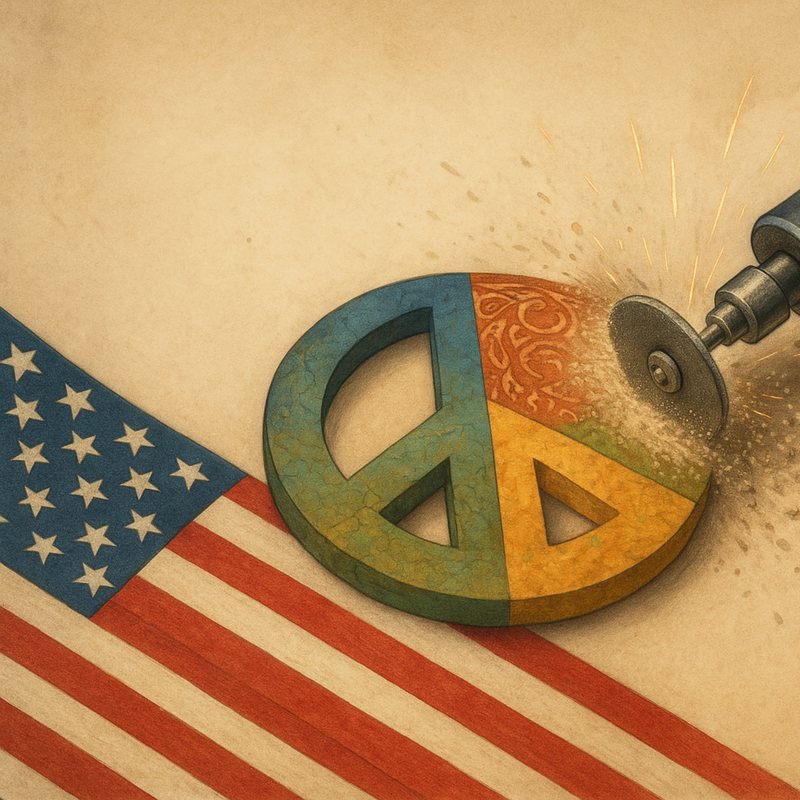
It's a powerful image, very comforting. But what if it's? Well, what if it's not the full picture? What if that idea, that comfortable image, is actually hiding something? Maybe a bit more unsettling. Exactly what if that whole notion of harmonious pluralism, this kind of effortless mixing, is just the surface, and underneath there's actually a much more active, sometimes pretty forceful process going on? OK, so that's where we're headed today. Yeah, our deep dive today is going to unpack a really provocative idea from our sources, pluralism and the Dremel.
Pluralism and the Dremel. OK. And it's not just a catchy phrase. It's meant as a pretty precise metaphor. It suggests that what America calls pluralism is often this continuous, sometimes subtle, but sometimes, you know, kind of brutal process of, well, forced assimilation.
Right. So forced assimilation, hiding behind the idea of pluralism. Let's really get into that because the implications are huge. You really are. So our mission here is to really grapple with this Dremel metaphor.
What does it actually mean? How does it change how we think about pluralism and maybe even how we understand something like racism in the US? Absolutely. We'll look at historical examples, see how it plays out today, and maybe challenge some some deeply held assumptions you might have about culture, identity, power, all of that. OK, so listeners, be prepared. This might shift your perspective a bit. It might.
We're hoping to offer some perhaps surprising, maybe even uncomfortable insights into how all this stuff, culture, identity, power really interacts here, looking beyond that idealized picture. All right, let's dive in. The core argument, as our source puts it, is American pluralism as hegemony plus flavor. Hegemony plus flavor, yeah, and right away that challenge is the usual. More romantic view doesn't. It it does so the base culture, the hegemon is defined as well, hamburgers and apple pie.
Right. And obviously that's not just about food. It represents the dominant, sort of unchanging core of American identity values, norms, the default setting if you like. The default setting OK and then pluralism comes in as the flavor. Exactly. Pluralism in this model allows for these sort of superficial additions, cosmetic changes almost. The source says you can add hot sauce, paprika, cardamom, turmeric.
Or swap in a Turkey Patty if your religion forbids beef. OK, I see. So these are the bits of diversity that are OK, even celebrated sometimes. Yeah, they're tolerated, even welcomed as sort of vibrant additions like seasoning you sprinkle on top of the main dish. But, and this sounds like the crucial part, there's a boundary, an unspoken line.
A very important one. The source stresses that even with these added flavors, the key thing is that the dish is still recognizably American. It's still fundamentally that hamburger and apple pie. So anything that tries to go beyond just adding flavor, like trying to make a totally different dish or live by different rules. That's precisely it. That attempt to make a wholly different recipe to live by a different set of rules that gets defined explicitly as non compliance.
It's basically saying we like your spices but don't mess with the core recipe. And America, the source says, has never had much patience for non compliance. Not much at all. And that's where the Dremel starts grinding this whole idea. It really reframes pluralism, doesn't it? It's not this transformative process where cultures truly blend and change each.
Other no, it's just additive. You can add things, but you can't change the bass. Exactly. And the aha moment here for you listening, is realizing that the whole promise of American pluralism, often sold as this wide open, inclusive thing, might actually be built with these inherent limits baked right in. The welcome mat is out, but only if you don't track mud on the hamburger and apple pie carpet. That's a good way to put it.
It challenges that idealized view right from the start. OK, And this leads to an even more provocative idea, maybe even unsettling, that what we often call racism is actually the sound of this Dremel grinding. Yeah, this. Is a really key part of the argument the source makes this controversial claim. What people call racism often isn't just animus or prejudice.
Though that exists too, it adds, it's important to say individual hate is real. Absolutely. The source acknowledges that. Explicit bias, hatred, that's definitely part of the picture. But it argues that a lot of what gets labeled racism is something else.
It is the grinding sound of the Dremel. So what is that grinding exactly? How does the Dremel work? The source explains it like this. America is relentless in sanding down edges, rounding off corners, polishing difference until it can be sold back to you as flavor.
Wow. Relentless sanding. That's a powerful image. It is. It suggests it's not always about conscious hate from individuals, but more like the intended function of a societal machine. It's the systematic process where anything considered too different just gets smoothed out incrementally until it fits. And the source uses a pretty stark analogy for this, right? That dark joke, Yeah.
It draws a direct parallel. The phrase that best captures it is the old dark joke. The beatings will continue until morale improves, and here the source says it's not physical beatings, but the sanding will continue until you comply. It really drives home this idea of an unyielding, almost inescapable pressure to conform. It makes you think about how that pressure feels. And that's where the perspective really matters. The source points out that for the communities being ground, this whole process feels like racism because it comes in the form of punishment, exclusion, hostility. That's their lived reality of the Dremel, this constant pressure that feels like an attack. Right.
But, and this is crucial for understanding the whole picture, from the Hegemon's point of view, it's simply the machinery of assimilation doing its work. So from the dominant cultures perspective, it's not necessarily malice, it's just maintaining order, integrating people. Pretty much. It's seen as ensuring cohesion, bringing new elements into what's perceived as the sort of natural, correct way things should be. A necessary function, not necessarily a punishment.
So this redefinition, it gives us a systemic lens, doesn't it, Instead of just looking at individual prejudice? Exactly. It encourages you, the listener, to think beyond just finding individual bad guys and to consider how institutions, societal expectations, even subtle cultural norms are the Dremel. These forces, not just overt hate, might be the root of a lot of what we call racism. It suggests it's often the system itself operating as designed, producing conformity.
It shifts the focus from who is grinding to what the grinding machine is and how it works. It's less about individual moral failure and more about the kind of automatic operation of this cultural. Machine. A machine built to maintain a certain kind of sameness. It's this drive within the system to keep its order, its core identity. That's why it can feel so relentless. And this machine, this Dremel, it's not new, is it? The historical record seems to show this has been going on for a long time.
Oh yeah, the source is very clear. We've been running this machine for centuries. It's baked into the American project. So let's look at that history. Ellis Island is often the image that comes to mind. Maybe a bit romanticized.
Definitely romanticized. It was a new start, sure, but immigrants weren't just welcomed with open arms, the source says. They were often herded into Americanization schools. Herded not invited. Right.
And this was direct, explicit assimilation, compulsory. The curriculum was all about conformity. They learned English, studied civics, and were instructed to drop their old ways. Drop their old ways. Not just learn new ones, but actively discard the old.
Exactly. It wasn't just about practical skills. It was about adopting a new identity, shedding the past. You know, things like hygiene lessons that subtly frame traditional practices as backward, or civics lessons that presented this one idealized American identity, often dismissing their own heritage. And this pressure wasn't just in schools, right?
It's out in society, too. Absolutely. The source gives examples like the No Irish need apply signs. Which weren't just prejudice. They were pressure, economic pressure, social pressure, a tool of the Dremel, basically pushing Irish immigrants to Americanize.
Lose the accent, change the habits just to get a job to be accepted. It wasn't just discrimination, it was active shaping. Active shaping. Italians were told to shorten their names. Jews were pressured to lose the Yiddish.
Poles were encouraged to leave the old country at the dock. These were strong societal demands with real consequences if you didn't comply. So historically, the Dremel was often pretty explicit, forceful, not much room for genuine cultural difference beyond the superficial. Very little. It really set a pattern early on. Difference would be sanded down until it fit the mole. It was an active, often quite harsh process. And this didn't stop after the early waves of immigration. The Dremel kept working, sometimes in ways that looked, well, beneficial on the surface, like the post World War 2 era. Right.
The GI Bill, hugely important legislation, transformed millions of lives for the better, no question. But the source argues it also acted as another Dremel tool, more subtle this time. Exactly. Subtle but systemic pressure, the GI Bill helped put millions of veterans into tract homes and suburban ranches. Which sounds like the American Dream.
It was, but the source makes a key point. This wasn't because it celebrated difference, but because it hammered everyone into the same middle class mold. Hammered them into a mold? How so? We'll think about that post war boom, rising economy, mass media growing, a big cultural push for uniformity, the suburban house, the nuclear family, buying consumer goods.
That became the ideal. The GI Bill gave people the money to achieve that ideal. So it created this strong pull towards one specific way of life, regardless of where your family came. From a very strong pull, the goal was still uniformity. Even in prosperity you could still have some limited pluralism maybe.
Like the hyphenated American, a Polish, American, Italian. Yeah, you could be Polish American or Italian American or Irish American. Maybe keep some traditions at home, but crucially, your kids went to the same schools, play baseball on the same teams, and watch the same sitcoms. Your heritage became more like a private thing, not something that changed how you participated in public life. Exactly. It was ethnicity as an add on a flavor. The source repeats the metaphor.
Pluralism was tolerated only as a seasoning on top of the hamburger. So even positive government programs could serve the assimilation machine. Intentionally or not, yeah, it shows how pervasive the drummel is. Not always through force, but through incentives, social norms, creating this widely accepted path. It's not always malicious.
Sometimes it's just the system encouraging a certain kind of cohesion, whatever the cultural cost. Now, to really understand America's specific way of doing this, the source brings in a comparison with Germany, which is really fascinating it. Really is. The author talks about living in Germany under Angela Merkel and experiencing their very different model of assimilation, much more explicit. Explicit how?
Well, to get residency, the author had to attend state-run German classes and civics lessons. No beating around the Bush, the requirements were clear. Learn the language to be 1 level. Study the laws and prove that you understood the rules of the House. Prove you understood the rules of the House. It sounds very direct.
Very direct. It wasn't about appreciating culture, it was about measurable integration into German public life. And Merkel was apparently quite open about the goals. Remarkably so, the source mentioned. She admitted that the point was partly to get women from conservative Muslim households away from their husbands and into rooms where the state could teach them that in Germany they had rights.
Wow, so a very clear, almost paternalistic goal stated right out loud. Blunt, paternalistic, but honest. As the source puts it, you are here. You must learn to be German, even if only in the public square. Even if only in public. But even after doing all that, learning the language, the laws, there was still a line.
A very clear line, the author says. Germans would still never call me German. I had German residency, not German blood. I could follow every rule and still only be a foreigner who happened to live there. So a fundamental difference between belonging based on rules versus belonging based on bloodline essentially. Exactly, and the source lands a pretty heavy punchline on this. That's what an ethnostate looks like when it pretends to be pluralist.
Woof. OK, so using Germany as this contrast really highlights America's method, doesn't it? Germany is overt upfront about the rules. America. America's more subtle, more indirect. And that comparison makes you wonder, you know, which way is more honest or more effective, even? And what does it mean for people trying to belong in either place?
It does seem like there's more than one way to run the assimilation machine. Germany's is like a hammer, very obvious. Well, America's is more diffused, embedded in the culture itself. Harder to see maybe, but still working. So how does America do it differently then, if not compulsory classes? The source says America works differently. We don't tell you outright that the sanding will continue. No explicit mandates usually.
So what's the tool? Sitcoms and pop culture. That's the chosen medium, according to the source. It points specifically to Norman Lear's big shows in the 70s. All in the Family, The Jeffersons Welcome back, Carter.
Those iconic shows as assimilation tools. As soft propaganda, yeah. The argument is they were cleverly designed to show mainstream of America that, you know, immigrants and minorities could be funny, lovable, little quirky. But ultimately harmless and assimilated. OK, I can kind of see that.
They presented a version of diversity that was easy to digest that didn't really challenge the underlying structure. It's strange to think of those shows which felt groundbreaking in some ways as part of the Dremel, but let's take the examples. Welcome back Cotter and the Swathogs. Right, diverse group seemed rebellious, but the source says they weren't revolutionaries. They were just rough around the edge as kids on their way to becoming ordinary Americans.
Their differences were sort of charming flaws on the way to fitting in, getting sanded down through the story. Pretty much the rough edges were meant to be polished off. Or look at The Jeffersons moving on up to that deluxe apartment in the sky. Yeah, that wasn't shown as overturning the system. It was framed as proof that upward mobility worked. Their success validated the American Dream within the existing system.
So it wasn't about changing the rules, but winning by the existing rules. Exactly. Even Archie Bunker's Bigotry and All in the Family, it was often played for laughs. Which, the source argues, was a way of teaching America to tolerate difference as long as it fit inside the sitcom set right. Difference became part of the comedy, not a real threat to the way things were. So the Dremel works through stories, through culture, shaping how we see things, what we expect, what we aim for, without any government orders.
It's the incredible power of entertainment as an assimilation tool. The grinding doesn't feel like punishment. It feels like humor, or success, or just life unfolding. It makes conforming seem normal, even desirable. The path of least resistance is made to look like the most appealing path.
That's the soft power of it. These stories reinforce that fitting in leads to acceptance. Success, being too different, is presented as well, either temporary or a problem. The Dremel becomes a set of unspoken rules guiding us. But the grinding is still happening today, right?
Though maybe the germels target has changed. It seems so. The source draws a sharp contrast between those 70 sitcoms and today's pop culture. Back then you saw modest apartments, dads with union jobs, a reachable middle class life. Now. Now we see penthouses, we see influencers and billionaires. The whole aspirational picture is different. That's a huge shift, yeah.
How does that affect the Dremel, the assimilation process? Well, the source argues, pop culture no longer sells modest assimilation. It sells fantasies. Fanties. Yeah, think about the old American Dream. Chicken in every pot and a car in every driveway. Maybe hard work, but seem possible for many. Attainable stability.
OK, and the new dream. The new dream is private jets, villas in Tulum and Kardashian lifestyles. It's not just a higher bar, it's a totally different planet, a fantasy endpoint with, as the source says, no ladder, no staircase to get there for most people. It's completely detached from reality for almost everyone. Exactly. And that has a huge impact.
Immigrants who maybe used to see a path, steady job, house, better life for the kids. Now look at these media fantasies and assimilation feels like a cruel joke. The promised land looks like a gated community they can't even approach. Right, but it's not just immigrants feeling this way. The source notes the natives to feel like failures if they only achieve what used to be considered success. Just having a decent job and a house can feel like falling short compared to the fantasy.
So the Dremel has raised the stakes for everybody. That's the argument. The hegemon hasn't stopped grinding, it's just raised the bar so high that assimilation feels like a cruel joke. The target is now so elusive it creates this widespread disillusionment, this feeling of inadequacy. The assimilation process feels less like opportunity and more like punishment or just impossible. An impossible burden chasing a mirage. The friction is still there, maybe even worse because the goal posts have moved into outer space. It leads to this deep sense of frustration, I think. OK, now here's a twist.
Something that looks like less Dremel action, but might actually trigger a backlash. The source talks about settlement pluralism. Yeah, this is really interesting complex development that the source says has creeped in. What does that look like? It describes communities where people can live 80 years without ever speaking fluent English. 80 years. Wow.
Yeah, and it's possible because there's an infrastructure. Services get translated into human Spanish, Mandarin. Kids can even go through school taking tests in their parents language. So you can maintain a whole life, raise kids in your own language and cultural context. Pretty much creating these very self-contained cultural world within the larger society. So instead of the melting pot.
The source says we've drifted into a patchwork quilt of settlements. Which on the surface sounds tolerant, right? Like the opposite of the Dremel. More accommodation, less assimilation it. Definitely only feels tolerant and it often comes from a genuine desire for cultural preservation, community support, but. There's a but.
There's a warning, the source argues, that while it feels tolerant, it might also erode the shared civic culture that makes pluralism work. Meaning without some common ground, things fall apart. That's the concern. Without some baseline of hamburgers and apple pie, some shared foundation, the risk is fragmentation. The source uses a strong word. If the baseline is gone, what's left is Balkanization. Balkanization.
That sounds serious. What does that mean here? Why is that the worry? It refers to society breaking down into smaller, isolated, often mutually suspicious or even hostile groups, like the historical conflicts in the Balkans. The fear is that if different groups become too separate, lose that shared language, shared values, basic understanding of each other.
Society itself becomes unstable, harder to govern, harder to cooperate. Exactly. Mutual suspicion grows. National cohesion phrase. And here's the kicker, the warning about the Dremel and when the hegemon finally notices.
Then the dominant culture feels threatened by this fragmentation. Won't come with sitcom laugh tracks, it'll come with Law and Order. The Grinding Dremel all over again, but harsher this time. Wow. So the argument is, paradoxically, that too much separation, even if well-intentioned, could trigger a more aggressive Dremel crackdown. If the dominant culture feels its core identity, its baseline, is genuinely at risk, Yeah, the response could be severe, moving from soft cultural pressure to overt enforcement. It's a really complex dynamic, a kind of precarious balance. It suggests there's this maybe unacknowledged tension. If the dominant culture feels things have gone too far, the assimilation machine might react forcefully. The Dremel becomes a hammer.
And the source is very clear about which group has felt this Dremel most consistently, most relentlessly. Painfully clear. No group knows this better than African Americans. 400 years later. The grinding hasn't stopped because full compliance has never been achieved. 400 years. It's the ultimate tragic example of the Dremel's persistence. It really is.
You can trace the Dremel through literally every phase of African American history. Reconstruction after the Civil War, trying to integrate formerly enslaved people, but often through restrictive Black codes limiting their rights. Then Jim Crow. The most brutal, explicit Dremel imaginable. Segregation, violence, economic control. All designed to sand down any hope of equality, forcing black Americans into a subordinate role. Even the civil rights movement.
A powerful push against the Dremel? Absolutely, but met with ferocious Dremel backlash, resistance, violence, new forms of control, and the source points to mass incarceration today as another form. Another manifestation of the Dremel disproportionately impacting black communities maintaining a kind of order through. Punishing. Exactly. The source sums it up.
It's been sometimes brutal, sometimes paternalistic, always sanding toward compliance. And there's that heartbreaking reason why the grinding never stops, why full compliance is never seen as achieved. The unsandable factor. Skin color color can't be sanded down. That simple profound fact. This visible immutable difference means full assimilation to the white hegemonic ideal is impossible. It creates this permanent friction. The Dremel can never finish its work. So what is tolerated then within this framework? Flavor, The source says the hegemon tolerates Black churches, Black History Month, Black pride as flavor. Things that are seen as cultural additions, not fundamental challenges to the core.
Right, they enrich the disc without changing the basic recipe. But, and this is the stark warning, but the moment blackness asserts itself as a separate civic code. As something autonomous, self determining, not just fitting into the hegemon's rules. The beatings continue until morale improves. The Dremel cracks down hard. It's the most potent example of the Dremel's power, where race prevents full assimilation, leading to this endless cycle of friction and enforcement.
So thinking about all this, how does it change how we define racism itself in America? The source says it's. Slippery. It is slippery, and the source asks, is it hatred? Sometimes, yes, it fully acknowledges that individual hate exists and is racism.
But more often, it argues, racism is the sound of forced compliance, the endless sanding down of people who refuse to comply with the hegemons rules. Which leads to that striking conclusion. What gets called racism is often just hegemony enforcing its laws. Hegemony enforcing its laws, not necessarily personal hate, but the system maintaining its order. It reframes racism as often being a systemic function of power, almost bureaucratic in a chilling way.
And that explains the different perspectives, doesn't it? From the outside, from the group being round down, it feels like hostility, aggression, exclusion. Absolutely. But from the inside, from the perspective of the dominant system, those sane actions can feel like order, like maintaining necessary boundaries, keeping things cohesive, upholding the norms. It's a powerful summary. It really pushes you, the listener, to look beyond individual acts and see the structure of the machine at work.
To see that the grind might not always stem from individual malice, but from the system's fundamental drive to maintain itself, to keep the recipe consistent. The Dremel is just doing what it was built for. OK, so let's crystallize what American pluralism is not, according to this source says very clearly it is not multiculturalism. Right, that's often how we think of it, but the source rejects that. It's not about truly separate cultures coexisting equally and independently. And it's also not a federation of parallel systems, not different groups operating totally on their own term. No, it comes back again to that core metaphor. It is hamburgers and apple pie with whatever spice you sprinkle on top.
That's the limit. So you can be proud of your background, have festivals, food. Yes, you can be proud of your heritage. You can have your parades and your food and your festivals. Those are the acceptable flavor elements.
The things that don't challenge the core. You can celebrate your roots, but they can't spread too far into the public square. That's the idea. It really defines the boundaries clearly. It's integration into and decoration of the dominant culture, not separate spheres. And that leads us to the bottom line, the unspoken deal of American.
Pluralism. The contract, correct? Yeah. But when you step into the public square, you are expected to play by the hegemons rules. That's the core requirement, the price of admission to broader society. And that grinding sound?
The Dremel isn't an accident. It's not a bug, it's a feature. Exactly, The source states it bluntly. That is the deal, and the grinding sound you hear when you resist is not an accident. It's the machine doing exactly what it was built to do. Wow, not an accident, but the machine working as designed. Powerful.
Maybe unsettling. Final thought. It suggests the friction isn't random, it's engineered, and it really makes you, the listener, think about your own place in this deal. How do you navigate it? What does it mean to live inside, or maybe push against?
This isn't built like this. What a journey through this idea. We've really unpacked this pluralism in the Dremel metaphor, how what looks like diversity celebration can actually be this relentless grinding down of difference into just. And how that changes our view of racism. Not just hate, but often the sound of the system enforcing compliance, keeping that hamburger and apple pie base intact. We saw it in history, compared it to Germany, looked at how pop culture plays a role, the complexities of settlement pluralism and the profound ongoing grind experienced by African Americans.
The public square has its rules, its deal, and the Dremel is the enforcer. So it leaves us with a big question, doesn't it? If this Dremel is the machine doing exactly what it was built to do, what does that really tell us about the fundamental design, the true goals of American Society? And maybe more personally, for all of us living here, individuals, communities, what does it mean to operate within or maybe to resist a system that seems engineered for these very specific outcomes when it comes to identity and culture? Something to definitely reflect on. We hope this deep dive gives you a new lens to think about your own experiences and what you see around you. Thanks for joining us.