Read the full transcript (5,499 words, machine made)
Have you ever, you know, stopped and wondered if the news you're seeing right here at home could maybe be influenced subtly by our own government? Like in ways similar to how other countries push their messages abroad. It's a really interesting question, maybe a bit unsettling at first glance. Right. But it actually leads us down this fascinating path, looking into a really pivotal bit of American law and history.
It really does. So today we're doing a deep dive into the Smith Munde Act. This was a month landmark law from way back in 1948, and it was basically America's original firewall against the government pushing its own messages domestically. Yeah, the no domestic propaganda rule, essentially. Exactly.
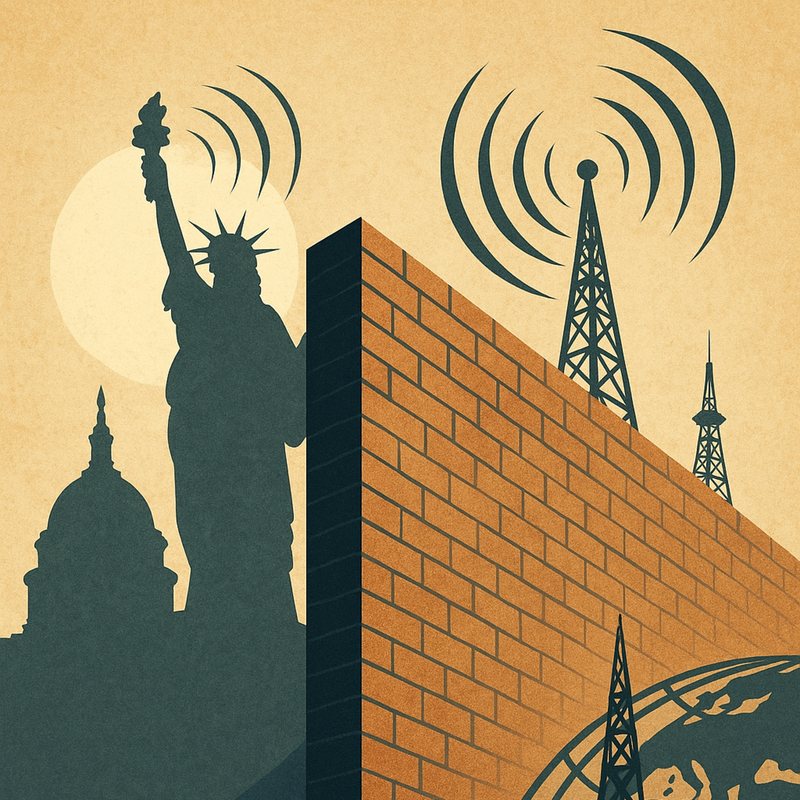
So our mission here is to unpack how this law built up that wall, that barrier between U.S. government info campaigns and the American public. And then, crucially, look at how it's rollback in 2013 pretty much blurred those lines, especially now, you know, in the digital age. It's not just some dusty old law. It really gets to the heart of trust, information flow, and this new reality. We're in this sort of borderless information war. And for this deep dive, we're leaning heavily on some great source material, right?
Specifically, an analysis of the ACT itself. Yes, exactly. A detailed analysis by Chris Abraham which really helps trace the law's journey. You know, from its post World War Two start all the way through its big update, the modernization. So it gives that context the changes how it all fits into the bigger picture of global information stuff.
It really does. It provides that historical backdrop, the legislative nitty gritty, and helps us see how a country like the US, committed to democracy and openness, has tried to handle the sheer power of information both outwards on the world stage and inwards at home. OK, so let's dive in. Let's go back to 1948. Can you paint a picture for us? What was the world like then, and how did that whole atmosphere lead to this act being created? Absolutely.
So picture this the world's still catching its breath after World War 2A, war that showed brutally just how powerful psychological warfare and mass communication could be. Yeah, the impact was huge. Huge. And even as things settled, a new fight was brewing. The Cold War, this big ideological struggle.
And everyone understood that information, strategic messaging, well, it was going to be a weapon just as potent as any tank or bomb. Makes sense. So the US Information and Educational Exchange Act, that's its official name. Soon known as Smith, Munt was born right into that climate. Lawmakers had the lessons of wartime propaganda fresh in their minds.
Very fresh. So the need to project American values, push back against the Soviet bloc, ideas that must have been front and center. A clear external focus for the ACT then. Precisely. The main goal stated right up front was external.
It gave the US government, mostly the State Department, the green light to create and spread information and cultural programs abroad. OK, so things like promoting American values, democracy, countering what other nations were saying. Exactly. Think of it as America's big global PR push. Winning hearts and minds, building understanding, shoring up alliances. It let agencies like the Voice of America VOA broadcast widely. We share news, American culture with people overseas. But here's a fascinating bit, maybe the most important part of the original act.
It allowed this outward push. But what was the crucial counterbalance? Second part The safeguard they insisted on for messages aimed inward at Americans. And that's where they do that really clear line. The ACT explicitly forbade, using those same tools, the messages the techniques developed for foreign audiences, turning them inward on the American public.
So it wasn't just a side note. Oh no, not at all. It was a core principle, a deliberate legal barrier. They wanted to shield U.S. citizens from their own government's messaging machine inside the country.
Lawmakers got it. The power to shape opinions abroad could easily become the power to manipulate at home. And they absolutely wanted to prevent that. And this ban wasn't just theoretical, it came straight from the hard lessons of World War 2, right? What specific examples of wartime propaganda really stuck with lawmakers? Absolutely.
The logic was very practical. Learn the hard way. During the war, the US saw first hand from both sides, Allied and Axis, just how potent propaganda could be, almost terrifyingly so. Shaping morale, public opinion, even firing up or demoralizing troops did. You give some examples. Sure, take the Axis side.
You have the infamous Tokyo Rose. Actually a few different English speaking women broadcasting for Radio Tokyo. Their shows were insidious. They'd play popular American Music, then weave in cynical comments about the war, about soldiers, wives back home being unfaithful. It was pure psychological warfare playing on fear and loneliness.
Wow, that's dark. And then you had Nazi Germany's Lord haha William Joyce. He broadcast in English to Britain. He was clever, mixing bits of truth like reporting actual bombing phase with demoralizing spins and exaggerations trying to create panic. So division. These weren't just news reports, they were calculated psyops. It's chilling to think about that direct psychological impact.
But it wasn't just the access using these tools, right? The allies had their own information operations, too. How did that play into the US thinking? Right. The Allies were also effective.
Britain's BBC World Service, for instance. It became this vital source of credible news in Nazi occupied Europe. It was a powerful counter to Nazi propaganda, offering a steady, factual voice that boosted morale and shaped opinion. So the US saw this power wanted its own tools for the global information fight. Exactly.
But they also recognize the danger. If foreign enemies could manipulate populations with information, imagine how much more effective, how much more dangerous that manipulation could be if it came from your own government. So that was the core fear, domestic manipulation. How do they think that would damage public trust if it wasn't prevented? That was the absolute part of it.
Lawmakers deeply understood that if agencies like the State Department, maybe even the CIA, could legally run info campaigns inside the US, it would just shred public trust. Trust in government, yes, but also, crucially, trust in the media. How so? Well, think about it. If people couldn't tell the difference between independent news reporting and stuff produced or pushed by the government, every news story, every piece of information becomes suspect, right?
How could you trust what you read or heard if you thought your own government might be behind it, trying to sway you? So it was about protecting that separation between independent journalism, which is supposed to hold power accountable, right, and government communication, which could easily slide into propaganda. Precisely. It was about building and keeping that public trust. The fear was that blurring those lines would erode the very foundation of an informed public in a democracy.
They wanted a legal guarantee, basically, that Americans could assume their government wasn't making the news or entertainment they consumed at home just to shape their politics. And this firewall, as our source calls it, wasn't just symbolic, it was strict. Incredibly strict, designed to be a real bureaucratic wall. The rules were super clear, meant to enforce that separation, keep the domestic information space, you know, clean. For instance, Voice of America, VOA, a key part of US international messaging, could beam its shows, its news, its cultural stuff into places like Cuba, the USSR, China.
No problem. But. But, and this is the kicker, they were legally banned from broadcasting that exact same content into, say, Kansas. Wow. Not to Kansas.
Not to Kansas. It was a strict geographic and legal line, not just a suggestion. That level of deliberate separation is amazing. So US embassies overseas could hand out pamphlets about democracy, American value. It's really to foreign population. But those same pamphlets couldn't legally be given out in Los Angeles.
No, not in LA, not anywhere in the US. It wasn't just broadcast, it was any information material created by the government for foreign eyes and ears. It was kept behind this this wall. So there was this explicit is it legal promise baked into the law that Americans were shielded from their own government's info campaigns? You could assume the news at home wasn't government produced spin.
Exactly. It was seen as fundamental to an open, democratic society, a really core principle back then, OK. Let's jump forward now, decades later, from the tight controls of 1948 to the completely different world of, say, 2013. What was the main thing that changed everything, especially how information moved around the globe? Oh hands down.
It was the Internet and the explosion of digital communication that came with it. This wasn't just a small tweak, it was a revolution. It basically smashed those old geographic firewalls. Right, the old rules just didn't fit anymore. Not at all.
Rules designed for radio waves and paper pamphlets started looking really outdated. Kind of like trying to use a typewriter in the age of e-mail. Information that used to be contained by broadcast range or physical delivery could now zip across the planet instantly. Made the old legal lines really hard to maintain. And this borderless information flow created what people started calling the boomerang effect.
Can you explain that what it looked? Like, sure, the boomerang effect is basically when content made for a foreign audience inevitably finds its way back into the US. So imagine VOA produces a video, maybe something tailored for an Afghan radio station, right? Talking about an American view on a local issue, or maybe a cultural exchange. OK, before the Internet, that video mostly stayed where it was intended.
But by 2013, that same video gets uploaded to YouTube, or maybe a VOA article gets posted on their website, and instantly it's not just for Afghans anymore. Anyone anywhere can see it, including someone sitting in Cleveland, OH. And social media just threw gasoline on that fire, right? Yeah. Made it even harder to control where things ended.
UP totally amplified it. It wasn't even about someone actively looking for it anymore. By 2013 social media algorithms weren't checking passports, they were pushing stuff based on engagement. So a VOA piece meant for Central Asia, if it got popular there, got shared. The algorithm could push it into American feeds.
Exactly without anyone in the US ever requesting it. A friend abroad shares a link. A new site picks it up. The content was essentially pulling itself into the domestic space. The old legal barrier designed for a world where you pushed information out.
It just became kind of irrelevant. How do you stop information crossing borders when the borders are digital and everything's shareable? So this practical problem, this boomerang, it obviously sparked a big debate about the Smith Munn Act itself. What were the main arguments from people who wanted to change the law? Well, the supporters of change basically argued, look, this old rule is meaningless in the age of Facebook and Twitter. They felt pretending the wall still worked when digital reality had poked it full of holes was frankly naive. So better to just admit reality.
Their core argument was exactly that transparency was better than pretending the wall still existed. If the content was already out there, accessible to anyone online, why keep a law that didn't match reality? They thought it was better to be upfront, let the content to be openly available instead of having it sweep back in unofficially. But the critics, they saw it very differently. They weren't just seeing a practical adjustment. They saw a real danger, right?
What were their big fears? Oh yeah, Opponents were deeply concerned. They use phrases like opening the floodgates. They saw it as giving a legal green light for U.S. government propaganda to be consumed by its own citizen. Chinese wall was gone, they said. Exactly that clear legal separation between foreign messaging and the domestic infosphere? Gone.
Their worry wasn't just about access, it was about legitimizing that access. They feared that killing the ban would normalize Americans consuming government made messages, potentially dulling critical thinking and damaging trust in independent media even further. A really fundamental worry about the integrity of our information environment here at home. Which leads us right to the change itself, the Smith Mont. Modernization Act of 2012.
It took effect in July 2013. How did this actually change the rules on the ground? Well, it pretty much dismantled the old domestic ban. It legally allowed the State Department and the US Agency for Global Media, USA, GM, the agency that overseas VOA, Radio Free Europe, Radio Liberty, et cetera. It used to be the Broadcasting Board of Governors. It allowed them to make their foreign focused content available inside the United States. This was huge.
A 70 year old legal firewall officially torn down. It was no longer illegal for an American citizen to tune into a VOA broadcast, even if it was made for, say, North Africa. Now, there was that specific phrase in the law upon request, but even with that wording, the lines blurred almost instantly, didn't they? How did that upon request part become, well, practically meaningless? It really did upon request. Sounded like it kept some barrier up, like you had to actively seek it out.
But in the digital world it doesn't really work that way. If VOA puts a story on YouTube, is clicking on it in your feed really requesting it? In the old sense, probably not. Anyone anywhere can find it with a search, click a link someone shared, or just have it pop up thanks to an algorithm. Social media algorithms don't care if you requested it.
They push what's popular or what they think you'll click on. So basically the content became available everywhere online by default upon request. Ended up being more of a legal formality than a real practical hurdle. You used that analogy before the export, only beer or soda. Can you flesh that out a bit more?
How does it show the shift after 2013? Yeah, I think it helps clarify things before 2013. Think of America's propaganda vintage. It's info and cultural stuff designed to promote US values abroad as strictly for export, like a special beer brewed only for international markets, legally barred from being sold at home. Americans were supposed to get their news and info from private independent media, a clear separation. The Smith Munt Act was the law keeping the export brew off the domestic shelves.
And sometimes those export versions might even have different ingredients right tailored for a specific foreign taste. The point was separation. Exactly. Different ingredients because the purpose was different. Domestic audiences were meant to get their view of the world from independent sources, free from government strategic spin. But after 2013, that export product could also be sold at home.
And that's the core worry for critics. That's the crux of it, they argue. It risks diluting public trust, eroding the separation between government PR and independent journalism. If the government is now allowed to put content out there that Americans can consume, how do people tell the difference? How do you evaluate something that looks like news but actually came from a government agency with a specific goal in mind? While their proponents would say, look, it's naive to think a separation still existed anyway given the Internet, But the question lingers for a lot of people. What's the psychological impact?
What does it do to trust in Media, Trust in government info, when that legal firewall is just gone? It feeds into this wider issue with some experts call a crisis of epistemic trust. When that line blurs, even well meaning government messages can start to look suspicious. It forces you, the listener, to constantly ask, is this real news or is it spin? Is it independent or is it designed to influence me? That sounds exhausting.
It is this constant need for vigilance, for source checking, everything. It breeds cynicism not just about government, but about all information sources. And that cynicism unfortunately makes people more vulnerable to actual disinformation from anywhere. Because the old markers of what's trustworthy feel less reliable. The ground feels less solid.
This really hits at a fundamental aspect of state power itself, doesn't it? Propaganda or strategic messaging? It's as much a tool in the state's toolkit as the military or the economy. Is it fair to say every country does this? Oh absolutely. Propaganda, if we use the broad definition strategic messaging to shape opinions, interactions, is a universal statecraft tool. It's fundamental to how nations operate internally and externally.
Though governments prefer other terms. Right, definitely. They'll often use public diplomacy or strategic communication, especially for overseas stuff, to avoid the negative baggage of propaganda. But the core idea is influenced through information highlighting values, building understanding, countering rivals. Nations just differ in how open they are about it and the specific methods they use, but they all do it.
It's a constant part of international relations. And within that, there's the concept of soft power, coined by Joseph Nye, not about force, but attraction. Exactly. Joseph Nye's idea of soft power is a nation's ability to get others to want what it wants, not by threatening them or paying them, but by making its culture, its values, its policies seem attractive and legitimate, its persuasion through appeal. Like Hollywood movies or music? That's a classic example.
The global appeal of American pop culture can project an image of dynamism, freedom, making American ideals seem aspirational. That kind of subtle influence can often achieve more long term than military threats or economic sanctions. And during the Cold War, the US went all in on soft power, didn't it? Billions invested. What were some key examples?
Massive investment think about the big radio operations Radio Free Europe started in 1950. It beamed uncensored news analysis culture into Soviet controlled Eastern Europe. It was a lifeline, offering an alternative to state media telling people news from their own countries that they're governments were suppressing. Giving them a connection to the outside. Right.
Then there was Radio Liberty from 53, aimed right at the Soviet Union itself, trying to foster dissent. Paint a picture of a different reality. These weren't just news shows. There were deliberate counter narratives pushing freedom, democracy, prosperity, everything the Soviets stood against. And it wasn't only radio. There were more direct tactics to information warfare. Absolutely.
Beyond the broadcast, you have tactical information warfare, often called psychological operations or psyops. During Vietnam, for example, the US military dropped tons of leaflets over North Vietnam and Vietcong areas. What did the leaflets say? Messages designed to demoralize enemy troops, encourage them to defect, explain US goals. Sometimes they even included safe conduct passes for surrender. It was a whole spectrum approach, mixing strategic messaging with battlefield tactics. But soft power was broader than just psyops, right? Cultural diplomacy played a huge role. Huge cultural diplomacy was key.
You had the Fulbright program started in 46, sending scholars back and forth, fostering understanding, showcasing American openness, a subtle but powerful counter to Soviet claims about America being closed off. And the cultural exports? Jazz tours. Oh yeah, iconic jazz tours with people like Louis Armstrong, Dave Brubeck, hugely popular behind the Iron Curtain. They conveyed this sense of American freedom creativity that really resonated. Plus Hollywood films showing individual success, consumer plenty, even agricultural shows displaying American tech and abundance, all designed to send a message about American freedom, innovation, prosperity, often more effective because it didn't feel like government propaganda. Of course, the US wasn't the early one playing this game. It's global.
Other countries have their own playbooks. Absolutely. It's universal. Britain, for example, has the BBC World Service, its global flagship broadcaster. They position it carefully as independent news in dozens of languages.
But it serves British interest. Undoubtedly, while maintaining journalistic standards, IT projects an image of British stability, reliability, democracy. It's often a go to news source in places where local media is weak or controlled. In America's rivals. Russia, you see similar moves. Russia had Radio Moscow back in the Soviet days. Later they launched RT Russia Today, basically the Soviet and Russian versions of the same game. What was their aim?
Radio Moscow was the Kremlin's voice pushing the party line, criticizing the West. RT Post Cold War presents itself as an alternative news source, often highlighting Western problems, platforming dissenting voices. A more subtle way to question the dominant western narrative project their worldview sometimes stir up trouble in rival countries and. China's got a massive global media footprint now. Huge CGTN, the China Global Television Network, is Beijing's official mouthpiece worldwide, promoting China's economy, culture, pushing back against criticism on human rights or geopolitics, and more recently, you have the TikTok and WeChat ecosystems.
Not just apps. Not just apps, they're powerful cultural influence channel with state linked content moderation. The algorithms, the rules about what gets seen or suppressed, can subtly align with Beijing views, influencing global perceptions on a massive scale, often without users even realizing it. Then you have the really overt stuff like N Koreas border, loud speakers for decades blasting propaganda South. But you mentioned something interesting for our 2025 timeline.
They dismantled the last one, yeah. Reportedly dismantled the last one on the border in 2025. It's fascinating. For decades those speakers were a constant, unavoidable fixture on the DMZ. Very direct loud psychological warfare, patriotic songs, anti US stuff praising the Kims. So why stop now?
Well, it might signal a slight thaw in relations in that specific spot, but it probably also shows that even North Korea recognizes that in the age of digital media everywhere, a static loudspeaker, however noisy, is less effective than maybe more subtle digital campaigns. It might reflect a shift in their own info strategy following the global trend towards digital. It really drives home to the point propaganda, strategic communication, whatever you call it, it's just part of how states operate, always has been. Exactly a universal tool. The methods change, the transparency varies, but the game continues. OK, let's try and map this out historically. Put it on a timeline, See how information warfare and global messaging evolved, adapting to world events and new tech. We can start right back at WWI, right? The WWI foundations, roughly 41 to 45. the US set up the Office of War Information, the OWI.
It was huge, making films, radio shows, posters, leaflets and critically aimed at both foreign audiences and Americans at home. So unified messaging during the war. Totally. Domestically, it was about morale, explaining the war, pushing, rationing unity internationally, countering enemy propaganda, rallying allies, centralized info control that you know people would question later in peacetime. And Voice of America VOA started then too, in 42. What was its immediate job?
VOA's first job was urgent broadcast news into access territory. Their famous first line was the news may be good or it may be bad. We shall tell you the truth, a direct shot and not see in Japanese lies. They wanted to give an American perspective, counter enemy stories, give facts to people under occupation, undermine morale, encourage resistance. And the allies like Britain's BBC Overseas service.
Crucial the BBC was that vital credible voice in occupied Europe, accurate news, coded messages for resistance fighters, boosting morale, really set a standard for international broadcasting, while, as we said, the Axis had Tokyo Rose and Lord haha doing their psychological warfare thing. OK, Fast forward to the early Cold War 46 to 60. We get the Smith Munt Act in 48, that legal wall against domestic dissemination. We talked about setting the rules for the new Cold War info fight. Exactly, And the US ramps up broadcasts at its new adversaries.
Radio Free Europe RFE starts in 50 aiming at Eastern Bloc countries Uncensored news, culture stuff their own governments were hiding, keeping hope alive, offering an alternative. And Radio Liberty. RL followed in 53 and right at the Soviet Union itself, broadcasting in loads of languages across that vast empire. Plus, the US poured money into cultural diplomacy, jazz tours, art shows, Fulbright scholarships, all subtle ways to showcase American values, freedom, creativity, countering the Soviet narrative. Well, the Soviets had Radio Moscow and Tax News Agency pushing rely globally. Yep, Radio Moscow was the Kremlin's voice worldwide, nonstop praising communism, slamming capitalism. TSS was the official news agency, super tightly controlled, making sure everything fit the party line. Masters of spin.
And the BBC World Service just kept growing its reputation. Became seen as the gold standard for many. Reliable, less overtly propagandistic than others. Building trust globally. Moving into the Vietnam era, 60s and 70s, US psyops in Vietnam really ramped up.
What did that involve? Very active. You had the Chuhoi, or Open Arms program, using leaflets dropped from planes, powerful loud speakers on the ground, special radio stations like Armed Forces Radio, all urging Viet Cong and N Vietnamese soldiers to defect. Promising safety and better treatment. Exactly.
Promising food, medical care, safe passage, Often featuring testimonials from actual defectors. Direct tactical information warfare aimed at breaking enemy morale. And other voices emerged globally in this polarized time. Definitely Radio Havana, Cuba, starting in 61. That was Castro's fiery voice, especially across Latin America and Africa, spreading revolutionary ideas, supporting liberation movements, offering a stark alternative to the West and China.
Radio International pushed Maoist ideals worldwide, challenging both the US and the Soviets. Real counter narratives. Then the late Cold War, the 80s, Reagan's Project Truth. What was that about? Reagan took a more aggressive info stance.
Project Truth was about directly confronting Soviet disinformation, which was getting pretty sophisticated. The US wanted to expose Soviet lies, highlight the contrast with democracy, go on the offensive ideologically. While the Soviets doubled down on active measures disinformation. Oh yeah, Active measures was their term for all sorts of covert influence. Propaganda, forgeries, political meddling.
A prime example was that horrible false story they spread that AIDS was AUS bioweapon. That was a Soviet active. Measure a major one designed purely to damage the US image. So mistrust. Meanwhile, RRL expanded broadcasting into Afghanistan during the Soviet invasion there, trying to counter Moscow's narrative to the Afghan people. Then the Berlin Wall falls.
The Cold War ends the 90s Post Cold War shift, the US information agency USIA gets disbanded. Right in 99, it's public diplomacy functions mostly got folded into the State Department signaled a shift integrating messaging more directly with foreign policy rather than having a separate agency. And we started seeing global news and public diplomacy blurring, like CNN and the Gulf War. Exactly. CNN's live 24/7 Gulf War coverage was revolutionary.
It gave everyone this immediate view, but it also became this huge public diplomacy tool. Intended or not, the images shaped global perception in real time, showed how independent media could become a channel for influence. And Russia, even while struggling, started rebuilding its international broadcasting, laying the groundwork for RT. Which brings us to the Internet era and the post 911 World 2001, 2012. New players like Al Jazeera emerge. Al Jazeera was a game changer, gaining huge reach after 911. Challenging Western narratives about the Middle East showed that powerful global media could come from outside the West. Information flow wasn't just one way anymore. And U.S. military information operations expanded in Iraq and Afghanistan.
Big time. More localized, sophisticated OPS, including covertly setting up and running local radio and TV stations trying to counter extremist messages, win hearts and minds, often making them look like local outlets. But crucially, this is when the Smith Munt firewall really started crumbling. Online content posted abroad was easily accessible at home. The ban was becoming unworkable.
Which leads right back to the Smith Munt Modernization Act of 2013. Lifting the domestic ban, USAGM could now make VOARRL content available domestically. And the debate raged. As we discussed, critics feared domestic propaganda. Proponents said the Internet made the ban obsolete anyway. But the law changed.
What was forbidden was now allowed. Ushering in the era we might call the social media propaganda wars from 2014 onward, Russia's Internet research agency, the IRA, becomes infamous. How do they use these platforms? The IRA mastered social media manipulation, not just old school propaganda. They created fake accounts, bots, fake activist groups, spreading divisive content, amplifying extremism, targeting US elections, using Facebook, Twitter, Instagram to sow chaos, exploit divisions showed how vulnerable open societies were online.
And China's strategy with TikTok and WeChat? More subtle cultural influence. Much more subtle. Often these platforms are huge cultural influence channels with state linked content moderation. The the algorithms, the censorship, even if not always obvious, can shape narratives, suppressed criticism, promote views aligned with Beijing, influencing potentially billions of users, often blending influence with entertainment. Soft power at scale.
And then 2025, the symbolic end of North Korea's loudspeaker diplomacy. Dismantling the last one. Yeah, that's symbolic end of an era. Crude, loud physical propaganda giving way completely to the digital battlefield, even for a regime like North Korea. So after tracing all this history, this evolution, what does it actually mean for you, the listener, right now, in 2025? What's the bottom?
Line The bottom line is fundamental. The old Smith Munt world, the one with clear borders for information controlled channels like radio waves and print. That world is just. Completely gone. Completely Today, information, including state sponsored messages, is borderless. And that's not mainly because the law changed in 2013. It's because the medium changed.
The Internet broke those barriers first. The 2013 law basically just caught up legally, aligning the rules with the reality. It acknowledged the situation technology had already created. But the impact of that alignment, the psychological cost for you, the listener, it's significant, right? That formal guarantee, that legal assurance that your own government wasn't targeting you with its info campaigns at home? That's gone.
It is, and it fits the global pattern we've seen for every major power. Now the message is potentially for everyone, everywhere all at once. No neat split between foreign and domestic anymore in the info space so. What does that mean practically? It means you have a much bigger responsibility now to be critical to really scrutinize the information you consume.
That default assumption that government wasn't in this domestic messaging game? The assumption Smith munt legally supported for decades? You can't make that assumption anymore. So what questions should you be asking yourself when you see news or content online? Constantly ask, OK, where did this really come from?
Who made it? Why? What was its original purpose? Is this independent reporting or is it a government message, maybe originally for overseas, but now legally here for you to see potentially with the strategic goal behind it? And how does the platform, seeing it on Facebook, TikTok, a new site, how does that shape how it looks or how far it travels?
That's the new reality. The lines are blurred. Government content can reach Americans legally. Agencies can talk to domestic media more freely. The global info war isn't happening somewhere else.
It's happening right here in your feed, on your your screen. So wrapping this up, we've gone from that strict 1948 band designed to shield Americans from government messaging at home through decades of changing tactics and global information wars, right up to today's borderless environment driven by tech finally codified by that 2013 Modernization Act. And it's key to remember the law didn't create this borderless world, it just sort of rubber stamped the reality. The Internet had already built that old analog firewall. It was leaky long before they officially took it down.
So maybe a final thought for you to chew on. In this world where any state's message can reach anyone anywhere, and the lines between foreign influence and domestic news are so incredibly blurry, how do we as a society maintain any kind of trust in our media? And maybe more importantly, what new heavy responsibilities fall on each of us individually to constantly question, to evaluate every single thing we see in here, knowing that old legal wall isn't there anymore?