Read the full transcript (8,402 words, machine made)
Welcome to the deep dive. We're the show that plunges head first into, well, the most gripping stories, fascinating research, really surprising insights, all to give you the kind of knowledge that shifts understanding into a into real insight. And today, wow, we're not just diving into a story. We are descending, descending into a world where even angelic wings, they don't soar, they decay. It's a world where heroism, you know, it isn't measured by glory or triumph.
It's measured by sheer brutal survival. That sets a tone immediately, doesn't it? Survival is the peak achievement. Exactly our journey today takes us right into the heart of a place the source material describes with this chilling clarity quote. In Borovia, even divine wings rotten to bone, and the only victories are measured by who escapes alive. It's a stark image, really visceral. Yeah, almost gothic poetry in just how bleak it is and it perfectly.
That's the stage for the profound and unsettling narrative we're about to unpack. So today we're embarking on a deep dive into a really gripping narrative. It's from the heart of a Dungeons and Dragons campaign, specifically a session titled The Lucky Heresy in the Fall of Surin Ironwood. A specific pivotal session. Right. And our source material, it comes from these riveting excerpts from session 16 dot PDF by Chris Abraham. It gives us this first hand account and also a deeply critical analysis of everything that happened. So we get both the what and the why. Precisely.
And our mission today is clear. We're going to uncover exactly why this particular session was, and this is the author's phrase, a cruel reminder of Barovia's unforgiving nature. We'll explore or the tragic downfall of a hero, Sir in Ironwood. We'll try to understand the thematic undercurrents that make the story just so compelling and so bleak. And crucially, we want to extract the key lessons here about narrative, about strategy, and about the, well, the profound subversion of classic heroic tropes we see playing out.
It sounds like a session that really crystallizes the essence of the setting. I think so. So if you've ever found yourself wrestling with, you know, high stakes decisions, or maybe felt that crushing weight of circumstance bearing down, this is for you. This deep dive is about understanding not just what happened, but how and why. Why even the most powerful individuals can be utterly undone by an environment that seems to actively work against them.
It's about the system versus the individual. In a way, exactly. Peeling back the layers to find the why behind what looks like an inevitable failure, and what that tells us about resilience, about the true cost of heroism, and that intricate dance between player agency and narrative design in a world that just refuses to play by the rules. What immediately strikes me about this, this setup is how it foregrounds that central conflict you mentioned, the very nature of heroism against a backdrop designed to dismantle it. It's not just an adventure story. It feels more like a philosophical confrontation. This isn't your typical fantasy quest, you know, where good triumphs over evil just because it's good. No happily ever after guaranteed here. Not at all.
Understanding that fundamental shift in expectations is absolutely crucial for appreciating the, well, the raw, almost uncomfortable truths this session really reveals. That's a powerful way to put it. OK, so let's immerse ourselves. Let's set the stage. Welcome listeners to Borovia, a land that truly defines its own unique brand of horror, and to the iron grip of a city called Valaki.
Indeed, Borovia. It isn't just a location in a game manual. It is, in so many ways, a character itself defined by this pervasive curse. The source calls it a cursed valley within the Curse of Straud campaign. Which, I mean, it's widely regarded as one of D and DS most iconic gothic horror settings.
Oh good reason. So it's not just a backdrop, it's active. It's active, yes. This isn't merely a place where monsters happen to lurk. It feels like a sentient, malevolent entity.
The very air feels heavy with sorrow, with dread and almost tangible sense of despair. Every rustle of leaves, every distant howl you hear, every mis shrouded peak you see, it all reinforces this pervasive sense of inescapable doom. And the source gives us this brilliant chilling analogy for Borovia. It describes it as basically Transylvania meets The Truman Show, run by a vampire overlord. Chuckles lightly. That's quite the mash up.
Isn't it? When I first read that, my mind just, boom, conjured the classic gothic stuff, right? Swirling mists, ancient crumbling castles, shadowed forests where you know ancient evil stir that quintessential Transylvanian dread. But then you add the Truman Show element and suddenly it's not just a scary place. It's a place where you're always being watched, always performing for some unseen, omniotent audience.
Your reality itself feels manipulate. Like an elaborate stage production. Yeah, with you as the unwilling star, what does that blend evoke for you? I mean that psychological burden, the constant surveillance, knowing your choices might be dictated, What does that do to someone trapped there? That analogy is incredibly insightful. You're right.
It captures that overarching theme of control, of inescapable fate that just defines Borovia. Transylvania meets The Truman Show. It's not just evocative freezing, it's a precise dissection of Barovia's unique horror. How so? Well, the vampire overlord Strad.
He isn't just some powerful enemy you fight at the end. He's the architect of this entire existence. He's the director of this macabre play. He doesn't merely rule the land here. He is the land in a sense, and every interaction, every perceived opportunity, it could just be a part of his grand tormenting design. So nothing is what it seems.
Pretty much. This specific blend makes it terrifying because it fundamentally removes the very agency that heroes usually rely on. You're not just fighting a villain, you're fighting the entire fabric of reality. A reality designed specifically to ensnare you, torment you, and ultimately break you. Your choices often feel like illusions.
Your triumphs are fleeting. Your escape routes? They might just be longer corridors in a larger, inescapable prison. It strips away hope by making even the idea of freedom feel like it could be a carefully orchestrated part of the show. It leads to this profound sense of claustrophobia and ultimately, helplessness.
And this leads us right to this fundamental, frankly brutal truth about Borovia, a truth that completely rewrites the heroic script. The source says it plainly. Borovia has no patience for heroes. No patience. It's not a dungeon to be cleared, but a curse to be survived.
What does that statement really mean for the traditional heroic narratives we're also used to? How does it fundamentally alter the stakes, the expectations, even the definition of success? It redefines everything fundamentally. In traditional heroic stories, the goal is usually clear. Overcome evil, defeat the monster, restore order.
Heroes are defined by their ability to conquer, right? Bring light Into Darkness. Achieve some glorious victory. A classic arc. Exactly.
But in Barovia, the very concept of victory is inverted. You're not meant to win in that conventional sense. You're meant to endure. You're meant to survive another day. Maybe protect what little innocence remains. Simply make it to the next sunrise against frankly impossible odds.
Some success is just. Continuing, continuing. Yeah, This shifts the narrative focus dramatically away from glory and triumph towards resilience, attrition, and that desperate, often morally ambiguous struggle for self preservation. It teaches you that sometimes the bravest thing you can do isn't to fight a losing battle head on. Sometimes it's to run, to hide, to make compromises that would be unthinkable anywhere else.
That's tough for a hero character. It's a profound subversion of what we typically expect from a hero. It forces both the characters and us, the audience, to re evaluate what true strength and courage look like in a world where the deck is just perpetually stacked against you. It's about surviving a marathon of psychological and physical attrition, not sprinting to a glorious finish line. OK, so against this backdrop, this pervasive, soul crushing dread, there was Valaki.
Once Upon a time. It was a beacon, right? A glimmer of light, a promise of something, well, less terrible. Relatively speaking, yes. The source describes it as once the only semi safe haven. It had high walls, bustling Taverns, markets that sold more than despair.
It sounds almost idyllic in comparison, doesn't it? It really does a vital promise of respite in an otherwise horrifying land, a place where people might actually breathe a little easier or hope, however faint, could maybe still find purchase. It represents possibility. It was more than just a place. It was a psychological anchor.
For anyone navigating Barovia. The idea of a safe haven, a fortified town where the mists of Ravenloft don't quite permeate it, offered a crucial flicker of hope. It's suggested that escape, or at least temporary sanctuary, was possible. This mental image of refuge, however small, is vital for morale. It provides that stark contrast to the oppressive wilderness.
But but, as the source makes chillingly clear, that hope is tragically extinguished. Vlaki's transformation isn't just a change in leadership. It's a profound betrayal of that foundational promise. It's the collapse of the one place you thought you could maybe find solace. And what a betrayal it was. We learned Vlaki's been seized by Lady Walker. Ah.
Yes, Lady Walker. Explicitly called Strad's aristocratic sycophant, and she handed control over to her bureaucrat enforcer, the Reeve Ernst Larnak. So not just a hostile takeover, but orchestrated from the top. Exactly. A calculated political coup orchestrated from the shadows by the very entity cursing the land. The loss of autonomy, this imposition of a tyrannical regime directly serving the dark master, it just deepens that sense of entrapment, of systematic oppression. And what's truly fascinating here, I think, is how this transformation from safe haven to city under martial law is such a classic horror trope, but it's especially potent in Barovia.
Why there specifically? Because the loss of safety within what was once a refuge is far more psychologically devastating than just encountering danger out in the Wilds. It strips away the last vestiges of sanctuary. It leaves characters with nowhere truly safe to retreat, nowhere to rest or plan. It makes the world feel smaller, the walls closing in.
And that psychological impact? It's often more debilitating than any physical threat. The ground shifts beneath your feet. Exactly. The very source of perceived safety becomes the source of immediate danger. It twists comfort into a new kind of terror. It tells you unequivocally you are alone and nowhere is sacred or immune to the darkness.
And the details of this new regime? Utterly chilling. The source paints this vivid, suffocating picture. Picture a city under martial law, guards at every corner, wardens in black robes casting necrotic magic and bells of alarm, ready to summon reinforcements at any whiff of trouble. There's Madden walking into that.
Constant surveillance. Guards eyes tracking your every move. These silent, watchful figures in black robes moving with this eerie, almost preternatural calm. And then that omnipresent threat of the bells, Always there, always ready to shatter any illusion of peace, to summon an unstoppable force at the slightest sign of dissent. It's.
The Symphony of suppression, as you said earlier. Yeah, every step would feel heavy, every glance suspicious, every whispered word a potential betrayal. You wouldn't just be afraid of monsters and alleys. You'd be afraid of the city itself, its laws, its enforcers, the pervasive invisible fear. And let's really unpack who these wardens are, because they're far from ordinary guards. The source specifies them as devil worshipping enforcers with Ambulus of Asmodeus.
Asmodeus the Arch Devil. Very same. One of the most powerful and cunning arch devils in the infernal hierarchy. A master of contracts, tyranny, the corruption of souls. So these aren't just foot soldiers, they are zealous cultists imbued with dark power, driven by infernal packs. So it's not just political control, it's diabolical. Exactly.
Their presence signifies a deeper, more insidious evil at play. It suggests Valaki's new order isn't just political tyranny, but something infirmly sanctioned and the necrotic magic they cast. The source explains it as life draining, soul rotting spells. It's not just about inflicting physical harm. No, it's about spiritual decay draining the very will to resist, eroding not just your hit points, but your morale, your hope, your soul. This sophisticated, pervasive control backed by infernal power, it's far more terrifying than a simple banded camp. It's an ideological takeover, where the bells, the black robes, the infernal magic, it's all designed to ensure no resistance takes root, and that fear becomes the primary currency of the city, carefully managed, ruthlessly enforced. So into this bleak, oppressive landscape step our protagonists, 3 adventurers, each a distinct personality, each with their own strength, their own vulnerabilities, and each about to face the ultimate test in a place designed to break them. A truly compelling trio, yes.
Deliberately crafted, it seems to highlight different aspects of heroism and struggle in this brutal environment. Their individual identities, their powers, they would typically make them formidable, but here they're about to confront a reality that warps those very strengths. First, there's Soren Ironwood and Aasimar Paladin. He's described as being of Celestial bloodline, a holy night meant to be the Radiant Hammer of Justice. Classic Paladin archetype. Absolutely.
It paints this picture of classic unwavering heroism, right? An awesome R, for listeners who might not know, is typically a mortal imbued with a trace of angelic essence. Often they have physical signs like beautiful feathered wings, a radiant presence, beacons of hope. Literally walking beacons of hope, justice, divine power, bound by sacred oaths. They embody everything noble and pure in a fantasy world.
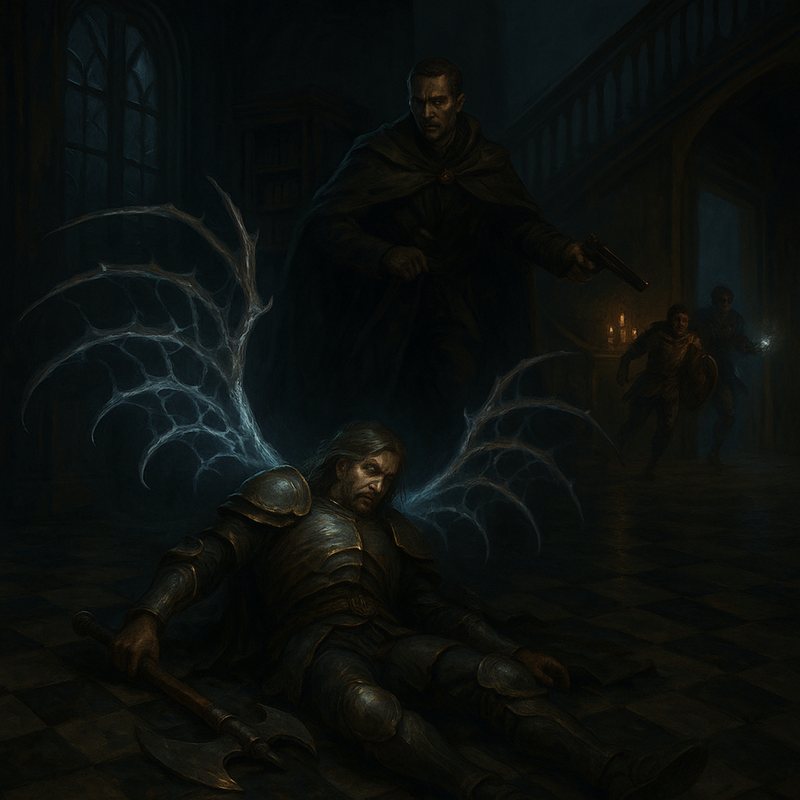
But then Borovia happens. Yes, the Barovian twist. These Angel wings, those glorious symbols of his divine heritage, they brought into skeletal bat wings. The source puts it so powerfully a holy vision, but tainted like a vampire's parody of heaven. Can you just imagine that profound visceral horror? What's absolutely fascinating here is the profound, almost sickening symbolism of Soren's condition. And Asamar's wings aren't just for show. They're the physical manifestation of their divine connection, their inherent goodness. To have those glorious feathered wings twist and rot into something grotesque and monstrous, like the skeletal bat wings of a demon or a vampire.
It's a direct physical representation of Bruvia's corrupting influence, even on the most sacred beings. It immediately signals to the audience, and destroying himself that this land doesn't just challenge heroes, it redefines them, often by stripping away their most cherished attributes, turning their very essence into a source of shame or danger. A visual metaphor for the Valley's power. Exactly. To corrupt, to make what is good and pure fester and decay into something abhorrent.
It raises that terrifying question, if even the divine can be tainted so easily, if a paladin's very being can be warped into a vampire's parody of heaven, what hope is there for mere mortals? And the psychological toll on Surrend. Immense. A holy knight whose very purpose is to embody purity, now physically manifesting corruption. Devastating. Then we have Radley Folthorne, Human Eldritch Knight. He's the sardonic bruiser who mixes steel with fire bolts. The fighter Meege combo always interesting. Yeah, an eldritch knight is that rare blend Marshall prowess and arcane spell casting.
They can weave steel with elemental fire, bolster defenses with magic, fight with both blade and spell. I can just picture him quick wit even quicker sword, maybe cracks a joke or a skull often with that mischievous glint the. Reckless one. Definitely. The source calls him brave, reckless, the kind who throws himself at the worst odds first. Radley sounds like the perfect foil, you know, provides that flash of defiance, maybe some dark humor, but also charges headlong into danger, perhaps a little too eagerly sometimes. What role does a character like Radley usually play, and how might Borovia challenge that?
Radley represents that raw, visceral response to danger, often relying on brute force in a certain audacious courage. In many narratives, he'd be the one who punches through obstacles, whose straightforward aggression wins the day. He's the strong arm, the frontline brawler. Reliable damage. Reliable damage.
Tactical simplicity. But Borovia's unique cruelty often punishes that kind of directness. It forces even the most reckless to confront the limits of their aggression, their magical steal. His effectiveness is contingent on the kind of battle Borovia allows, which is rarely a fair stand up fight. His sardonic wit might be a coping mechanism, a way to deflect the dread, but even that resilience will be tested against truly inescapable horrors. And rounding out the trio, Tracidor 1/2 Elf Cleric of Light, described as the healer and contents. The moral center, perhaps?
Yeah, but listen to this dilemma. He's desperate to keep the others alive while trying to argue morality in a land where morality gets you killed. What an unenviable position. A cleric of light is normally a conduit for divine healing, protective magic, a beacon against darkness, tending the wounded, comforting the afflicted, guiding with moral certainty. But in Borovia, that moral compass becomes liability.
What is the role of a conscience in a land that actively punishes morality, where survival demands compromises that would be unthinkable elsewhere? That internal conflict for tracidor must be profound. Tracidor's internal conflict is incredibly poignant. It truly exemplifies 1 of Borovia's most insidious torments. In a land that actively punishes morality, where the right thing often leads to greater suffering or even death, what is the role of a conscience? He's caught, isn't he?
Tune the pragmatic, immediate need to keep his companions alive, healing wounds, shielding from necrotic energy, and the inherent, deeply ingrained desire to do good to uphold his divine tenets. A constant balancing act. Immense psychological pressure, forcing him to constantly evaluate the ethical cost of every single action. His role as healer is vital for physical survival, sure, but his role is conscience. It's almost a liability in Barovia. It highlights the valleys ability to corrupt even the purest intentions.
He's trying to hold onto the light in a place designed to extinguish it, and that struggle is often far more painful, more complex than any physical battle. He must constantly ask himself, is saving a life worth a moral compromise? What's the true cost of survival here? So this unlikely trio, they find themselves in Valaki. Not for some grand world saving quest, no, for something surprisingly mundane yet still twisted by Borovia's influence. They were there, for one thing.
A wedding dress for the abbot's flesh crafted bride, Vasilka. Chuckles. A wedding dress seems almost whimsical. Doesn't. It right, but in Borovia even whimsy is laced with horror.
It does sound deceptively simple, but this mission immediately connects back to straws overarching grotesque best influence, the Abbot. For context, he's a powerful celestial being, driven mad by Barovia, driven mad, convinced that if he can create the perfect bride for Strad out of, well, various body parts of sort of Frankensteinian horror, he can somehow break the vampire Lord's curse. Oh my goodness, Vasilka is a flesh golem bride. Essentially, yes. So even a seemingly innocuous task like getting a wedding dress is never simple here.
It's steeped in the grotesque, the desperate, the perverse schemes of the valleys denizens, all ultimately serving Strud's twisted desires. It shows how deeply the curse permeates every aspect of life, affecting even what should be a symbol of joy and purity, transforming it into an errand of despair and madness. It's never just about the item, it's about the twisted purpose behind it. And as a source reveals, that one thing quickly unravels. They walked straight into politics, heresy trials, and the long knives of the Reeve. No shopping trip is ever easy in Borovia. Laughs.
Apparently not. It's such a sudden, jarring shift, isn't it? From a bizarre shopping trip to a desperate life or death political entanglement, all within moments. It perfectly encapsulates the unpredictable, escalating nature of danger here. One minute you're trying to find some lace, the next you're fighting for your life against devil worshipping enforcers.
Which brings us to the spark that ignited the fire. The moment Surin's very presence, which should have been awe inspiring, instead ignited a powder keg. Outside the Manor, maybe in desperation, maybe defiance, CERN manifested his angelic wings. Tainted wings. The Tainted Wings.
Now, in almost any other fantasy setting, any other campaign, that would be a moment of pure spectacle. It should have been awe inspiring, right? A clear sign of divine intervention. A display of celestial power meant to cow enemies, inspire allies. Absolutely the manifestation of divine power, especially from an Osmar paladin.
It's typically a moment of undeniable authority and inspiration, a clear sign of cosmic favor. Testament into the character's goodness and strength. It should command respect or at least fearful difference. People fall to their knees. Guards hesitate.
All prevails. It's a quintessential heroic flourish, a moment of unavailable righteousness. But this is Borovia, and as the Source makes devastatingly clear, divine revelation doesn't inspire. It terrifies. Instead of holy light, his wings wittered into grotesque bone and bat flesh, like a vampire's parody of heaven. The visual.
Can you imagine the visceral horror, That visual contradiction? Something meant to be celestial, glorious and said, twisting into something monstrous and profane right before your eyes? It's not just a physical transformation, it's a direct, literal manifestation of Borovia's corrupting power, taking Soren's greatest blessing and turning it into a source of revulsion and fear, a profound betrayal of his very nature. This is classic Borovia storytelling, designed to subvert every expectation, twist every virtue into a vulnerability. The profound irony here is almost unbearable.
The powers you lean on become the very reason people turn against you. Soren's greatest gift became his noose, his very essence. His divine connection, which should protect him, is what seals his doom in this benighted land. It highlights Borovia's insidious nature. It doesn't just fight you physically. It weaponizes your identity, your virtues, your very nature against you.
It turns your light into a spotlight for your enemies, marking you as an outsider, a threat to its established darkness. So the question becomes. It raises A crucial question for any adventurer there, in a world where your strengths are twisted into weaknesses, where your virtues are deemed heresy, how do you even fight? How do you even exist when your light only casts a longer shadow for your enemies to exploit, leading to greater peril? And the immediate aftermath was swift, brutal, utterly devoid of mercy or understanding. The Secretary screams heretic.
The trigger word. And then, without hesitation, guards swarmed. No questions asked, no trial, no chance to explain. Just immediate, overwhelming force brought down on the heretic, whose very existence, whose display of divine essence contradicted the dark, tyrannical rule of Valaki. The spark had lit the fire, all right, but it was a fire of persecution, not inspiration.
With Sirn's divine display branded as heresy, the adventurers found themselves trapped a desperate, grinding fight inside the Manor. And the initial moments, they almost offered this deceptive sense of hope, didn't they? A flicker of the familiar rhythm of battle. Right, the source mentioned some early successes. Yeah, Trexidor's command magic made some guards grovel in confusion. Radley lit them up with fire bolts, his reckless bravery paying off for a moment.
And Soren, ever the dramatic paladin even with tainted wings, flew into the 2nd floor and smashed through a window like Batman. A grand entrance. A grand entrance that momentarily promised Maybe an easy victory. Those early engagements often lead to a false sense of security, don't they? Especially for experienced adventurers.
They faced guards before they breached fortifications. Typically a coordinated party can make short work of that initial resistance. You feel competent in control. Exactly. It's the standard opening for many fantasy conflicts. It gives players that feeling of competence, makes them believe they are the powerful heroes they often are. The initial success provides that brief, intoxicating rush, maybe lulling them into a dangerous overconfidence. For a moment, it really looked like the usual script 3 battered adventurers carving through lesser foes. You can always feel their initial confidence, right? That familiar rhythm, that comfortable sense of we've got this.
Thinking they'd clear the manner, deal with a Reeve, get back to the dress. Exactly. But that confidence, that expectation of a normal heroic narrative, it was about to be brutally shattered by Valaki's unique and relentless brand of oppression. And what's absolutely crucial to understand here, what the source highlights so brilliantly, is that Valaki is not a dungeon full of expendable cobalts. That line is incredibly important. Why so crucial?
Because this isn't a simple hack and slash scenario. The enemies aren't just cannon fodder easily overcome by superior heroic might. The nature of the opposition here fundamentally changes the dynamic. It's not about clearing rooms, it's about being systematically dismantled, facing an enemy that doesn't just attack your hit points, but your morale, your resources, your very will to fight. And the source details that relentless pressure Valakis defenses brought and almost suffocating weight every door led to more resistance guards, wardens, spells of necrotic energy that nod at hit points in morale. Nod.
That's a good word for it. Draining. Yeah, spiritual weapons floating down hallways like haunted blades appearing out of nowhere. It's not just more enemies, it's the type of enemies, the debilitating nature of their attacks. Chronic energy doesn't just cut or burn, it gnaws, A draining, demoralizing effect, slowly chipping away, leaving you weakened, despairing.
And those spiritual weapons conjured by the Wardens, blades of pure magic energy flying independently, constantly hairy and constantly whittling down, creating this multi front assault that makes it impossible to focus. So sheer numbers combined with these unique debilitating abilities. Creates almost insurmountable wall of opposition. The source describes it clinically. Right.
Push here, heal there. One warden cornered and slain, another hurled out a window by thunderous smite. But then it immediately clarifies the grim reality. The tempo was wrong. The tempo was wrong.
We weren't clearing the board, we were being worn down. This perfectly illustrates the Borovian combat philosophy. It doesn't fight fair. It exhausts you, then punishes desperation. This isn't a battle of skill against skill, it's a battle of attrition against overwhelming regenerating force. Your resources are finite.
Exactly. Your spells, your healing, your stamina, your mental fortitude. Finite. There's Backed by the city's endless supply of recruits and Strad's pervasive influence, They seem endless. They're designed to grind you down, making every small victory feel like it costs a monumental amount, slowly draining your hope until you're left with nothing but despair.
It's a cruel, systematic approach to warfare, one that rarely favors the heroic charge. And this grinding dissent? It was made worse by some critical strategic pitfalls. Classic errors, really, but in Barovia they become magnified into fatal flaws. The source is very direct about these. First we split the party chasing the secretary. The Cardinal Sin never split the party. Yeah, especially not there.
Why is it it's so bad there? It's. A classic, often fatal mistake in D&D, but especially in hostile environments where you're outnumbered like this, splitting your forces immediately reduces your combined strength, your ability to support each other. It isolates individuals, makes them vulnerable to being overwhelmed, picked off. In a place like Milwaukee, where enemy numbers are vast and tactics ruthless, splitting up isn't just a mistake, it's an open invitation for disaster.
Turns the cohesive unit into two vulnerable, less effective fragments. OK, then we bottlenecked ourselves in a hallway. Another tactical misstep, particularly against an enemy with ranged attacks. Area of effects, bells, or like you're a female. Endless supply of reinforcements bottlenecking.
Let's a numerically superior foe concentrate their attacks on a confined space. Turns a narrow corridor into a killing zone. No room to maneuver. Exactly. It eliminates your ability to maneuver, to flank, to spread out, to avoid damage.
It essentially traps you, makes you easy targets. You trade tactical flexibility for maybe momentary progress. A trade. Barovia will always, always punish. And finally, a core error often seen when heroes fall We underestimated how strong the Lockie's Wardens were. This is such a crucial lesson in any high stakes scenario, game or real life.
Underestimating an opponent's capabilities, especially when they have unique powers like necrotic magic and devilish backing, it can be catastrophic. You can't just fight harder when the enemy doesn't play fair, when they have tactical and magical advantages beyond what you initially perceive. They don't just want you low on HP. They want you cornered, exhausted, demoralized, convinced of your own impending failure. They exploit everything. They exploit your tactical errors, your dwindling resources, your diminishing hope. This isn't about overcoming a challenge through sheer will. It's about surviving a system system designed to break you. It's a crucial lesson for any learner. Accurate intelligence about your opposition is just as important as your own strength, and lack thereof can quickly lead to an irreversible downfall.
So as the party was being worn down, strategically outmaneuvered, the true master of this section of Awlaki makes his entrance not with a bang, but with this chilling professional precision. The source described it at last. They battered through the barricade of study and to the Reeves. And this is where the nature of the antagonist becomes truly chilling, even more so because he's so utterly mundane in his evil. The Reeve Ernst Larnak. He's in some grand theatrical villain with a booming laugh, no.
Flowery speeches. No, not a noble with flowery speeches, not a gibbering cultist. He's just a cold professional sword poison bolts in the unflinching confidence of a man who knows he controls the city outside those walls. That's almost scarier. It often is, isn't it? This type of villain, a calculating bureaucrat assassin, is often far more terrifying than a raving monster in a horror setting.
He embodies systemic, institutional evil. In horror, authority figures are never just bureaucrats. They're often the most insidious threats because they operate under the guise of order, law, legitimate power. He represents the crushing weight of the system, not just an individual threat. His calm demeanor, his lack of grandstanding, it only amplifies his menace.
And his tactics were just as chillingly calculated, devoid of any heroic posturing. He baited us with the secretary's cowardice. He used cover, crossbow fire, and the promise of reinforcements like weapons as sharp as his blade. He's not relying on raw power. No, it's psychological manipulation, tactical positioning, and the overwhelming numerical advantage from his control of the city. A cold clinical approach to killing. A true professional of tyranny.
That's the mark of a truly dangerous adversary, especially in Barovia. He's not fighting for glory, he's fighting to eliminate a threat to his authority, his order. His confidence comes not just from his own martial skill, but from the full machinery of Valaki. He commands the guards, the wardens, the bells, the very fear of the populace. He leveraged the environment, the fear of his subordinates, the very structure of the city to his advantage.
Turning the manner into a meticulously designed trap makes him far more formidable than a brute force antagonist. He's playing chess while the heroes are playing checkers, and he always has the next three moves planned. And then came Surin's fatal move. The paladin and a desperate, maybe overconfident attempt used Misty Step, a short range teleport spell. Ah. Misty Step.
Great spell usually. Usually, the source says, great for slipping past danger, terrible if you teleport into danger. The irony here is just palpable. A powerful tactical spell designed for evasion or precise positioning, used in a moment of extreme desperation and overestimation, leading directly to doom. He misty stepped into the room. He got a blade in the back for his trouble. What stands out to you about this moment of critical misjudgment?
What broader lessons does it offer about decision making under pressure? What's profoundly illustrated here is how a spell which in almost any other circumstance would be a brilliant tactical advantage, a moment of quick, decisive action becomes an instant liability. Why? Because of a critical lack of complete information and situational awareness. He teleported blind. Essentially, yes.
Soren, in that desperate moment, likely saw an opening, a way to bypass obstacles to directly engage the threat, maybe finally make a decisive strike against the Reeve. But he teleported into an unknown space, blind to the immediate dangers within that room. He didn't know if there were other traps, other enemies, or precisely where the Reeve was positioned for a counter attack. It highlights the critical importance of assessing the environment, gathering intelligence, understanding the full scope of a situation before committing to any bold move, especially in a hostile setting like Barovia. A stark reminder A. Stark reminder that even the most powerful abilities can be turned against you if used without foresight or a complete understanding of the risks.
It wasn't just a misstep, it was a gamble born of desperation. A gamble that demonstrated the ultimate cost of poor situational awareness in a fight where the enemy plays by different much rules. And the Reeves response was swift, merciless, utterly devoid of any romanticized notion of combat. That's when the Reeves showed us what a Borovian boss fight looks like. No honor duel. No fair challenge.
Coup de grace execution. This is where Borovia truly excels in its cruelty, and it's a deliberate narrative choice. A coup de grace isn't just a killing blow, it's a deliberate act of extinguishing hope and dignity and execution of an already incapacitated or vulnerable foe. Stripped of heroic agency. Completely.
It signifies absolute victory, the complete and utter dehumanization of the opponent. Soren, a paladin of celestial blood, a radiant hammer of justice quote, cut down and finished off while his friends watched helplessly from the hall. There was no glorious last stand, no epic confrontation, no noble sacrifice in battle, just the cold, efficient, almost bureaucratic termination of a threat. This underscores Borovia's unique horror. It strips away the very idea of a noble death, reduces it to a pragmatic, brutal elimination.
Anticlimactic. Profoundly anticlimactic. And then that leaves no room for heroic narrative or solace, only the lingering taste of defeat, powerlessness, and profound grief. It leaves you feeling hollow rather than inspired. The aftermath is just as a grim an image that just sears itself into your mind.
Soren's body was claimed by the lackey's wardens, his celestial blood spilled in a study reeking of fear and bureaucracy. Divine blood mixing with mundane dread. Exactly. The divine, the heroic, the pure, reduced to a mere casualty, a piece of evidence, His sacred blood staining the mundane, corrupt carpet of an enforcer's office. The imagery itself is devastating. A final insult is a sacred calling. So with Cern's brutal, inglorious end, his companions faced an impossible, gut wrenching choice. A cinematic last stand, a valiant but almost certainly fatal charge against overwhelming odds, or the smarter, crueler thing.
Indeed, the source states Bradley and Trackser could have made the cinematic last stand. They could have died beside him. And this is what we as an audience are conditioned to expect from heroic narratives, isn't it? Loyalty, Sacrifice. Going down, fighting to the last breath, side by side with your fallen comrade.
The stuff of legends. The stuff of legends. The noble death. But in Barovia, those expectations are constantly upended, not just for the heroes, but for anyone witnessing their story. The narrative actively resists that romanticized archetype.
And what they did, with a tactical and emotional weight that just can't be overstated, was the smarter, crueler thing. They fled. Ran for their lives. Through the back stairs, into alleys, slipping to the Blue Water Inn like rats escaping the flood. A desperate, undignified escape, far from any heroic retreat.
They ran and. This highlights the immense weight of that decision. Why is survival sometimes the crueler choice in a narrative sense, despite being tactically sound? Because it means leaving a comrade behind. It means prioritizing your own life over the shared narrative of dying together, of upholding that unbreakable bond of companionship.
It goes against the very grain of heroic self sacrifice. And yet in Borovia it is often the only choice if you want to continue fighting another day, if you want any hope of affecting the larger conflict. It forces a harsh pragmatism that leaves a profound emotional and psychological scar. A burden they'll carry. Absolutely.
The decision to flee, while strategically correct for long term survival, undoubtedly carried an immense emotional burden for Radley and Tracidor, a burden that will haunt them for the remainder of their time in Borovia and maybe beyond. It is a constant reminder of what they had to forsake to live. It was undeniably the right move for survival, yes, but it left Soren's body behind, claimed by Valaki's wardens, his celestial blood spilled in a study reeking of fear and bureaucracy. That image a divine being, a beacon of hope, reduced to a mere casualty. His body seized as evidence, his very essence mingling with the stench of fear and official corruption.
The contrast is devastating. And this is where the Source delivers one of its most powerful and sobering statements. That's Borovia. Not a place where heroes die in glory, but where they're reduced to evidence bags in a Tyrants investigation. Evidence Act. This raises an important, deeply unsettling question. What does it mean for heroes to be treated like evidence? It means their lives, their struggles, their very existence are stripped of any epic significance. They become mere objects, data points in a larger oppressive system.
Their death isn't a sacrifice, it's an inconvenience, a problem to be neatly catalogued and filed away. It's the ultimate dehumanization, the final indignity, removing all romanticism from death and replacing it with cold bureaucratic efficiency. Which is, I think, a truly terrifying and uniquely Borovian form of horror. Their story is not a legend, it's a police report. The question naturally arises then, both for the players and for us, the audience.
Why did we let Soren die? And the source is clear in its answer. We didn't. We fought as hard as we could. But it acknowledges the convergence of factors. Right, it points to the tactical errors. We split the party chasing the secretary. We bottlenecked ourselves in a hallway. We underestimated how strong Valaki's words were and Soren's misty step into a closed room with no backup. These aren't just minor mistakes, they're critical judgments that, when combined with the Reeve being a deadly assassin who knew when to finish the job and the overwhelming attritional nature of the lackey's defenses, it created an impossible situation.
The source articulates that sometimes in D&D, your character dies not because you gave up, but because the dice, the tactics, and the cruel logic of the story all converge. This isn't about blaming the players or the characters. It's about acknowledging the systemic, almost inevitable difficulty of the environment. It wasn't just bad luck, no. And this raises another important point.
In Borovia, the land itself seems to conspire to make those moments stink, to magnify every mistake. This isn't just bad luck, it's part of the settings malevolent design. The valley is actively working against you, subtly and sometimes not so subtly, twisting circumstances, magnifying every tactical error, turning every weakness into a fatal flaw. It seeks to break your spirit as much as your body. Even though Strad himself never appeared in this session, never stepped out of the shadows for a chilling monologue, his presence was palpable, wasn't it? His shadow stretching over every grim detail, every calculated act of oppression.
The source makes it clear his fingerprints were everywhere. What's fascinating here is how his absence makes his presence even more palpable. Yeah, and terrifying. Strad is the ultimate puppet master of the supreme architect of this prison realm. Falaki's collapse, Walker's rise, the Devil amulet wardens, all or his order imposed on chaos. He doesn't need to be physically present to exert his will. His machinations are woven into the very fabric of Barothian society, turning its denizens into pawns, its cities into extensions of his will.
Controlling events from afar. Exactly setting up the conditions for despair and tragedy. This unseen, pervasive control makes him even more terrifying that a monster you can just confront with a sword. He's the architect of the entire nightmare, and every act of despair, every loss ultimately serves to strengthen his dominion, feeding his insatiable hunger for control and misery. You're never truly fighting against Strad, you're simply moving within the parameters he has already defined.
And the consequences of this session? They just ripple outwards, creating unfinished business that will undoubtedly haunt the survivors. Radley and Traxidor that Abbott's quest for a wedding dress is still hanging over us, now soured by the blood spilled in its pursuit. It's tainted now. Completely. It's no longer just a strange, macabre Aaron. It's tainted by a profound tragedy, by the loss of a dear friend, making it an even heavier, more emotionally fraught burden.
And this feeds directly into that cycle of despair that defines Barofia. Every move we make circles back to Strawd. Every death feeds his legend. Soren's fall now becomes one more ghost in the valley, adding to the oppressive history and legend of Perovia. If we connect this to the bigger picture, it's about the valley itself being a character designed to break spirits.
Every tragedy isn't just a set back, it's a sacrifice that fuels Stride's power, reinforces his control, deepens that pervasive sense of hopelessness that defines life and death in Barovia. The Valley absorbs the defeats. It absorbs these losses of light and hope, making it stronger, making the prospect of true freedom seem ever more distant, unreachable. Soren's death isn't an end. It's another brick in the wall of Stroud's eternal prison.
OK, let's try to unpack some of the deeper, more profound lessons we can draw from this intense deep dive into Valaki Heresy and the fall of Surin Ironwood. This session really exemplifies a unique storytelling approach, doesn't it? One that actively, aggressively subverts typical heroic fantasy tropes. Challenges are very notions. What a hero is what victory looks like. Absolutely.
This session is a master class in narrative inversion. It offers a critical lens through which to view traditional heroic arcs. Consider the core tenets. Divine power, which should be a hero's greatest asset, becomes a glaring liability attracting persecution, right? The wings. Authority figures, often seen as sources of order and justice, are revealed to be deadly assassins, meticulous agents of tyranny, and death itself is rendered inglorious, devoid of any noble sacrifice or inspiring final stand. This profound subversion isn't just for shock value, it's integral to Borovius thematic core. It forces both the characters and us, the audience, to constantly question our preconceived notions of heroism, power, justice.
When the rules are upside down. Exactly when the very rules of heroism are turned upside down, when good intentions lead to tragic ends, it begs the question, what truly defines a hero in such a brutal, unforgiving world? It suggests it's about finding strength not in conquest but in enduring and simply surviving, in making those crueler choices necessary to continue. This challenges us to look beyond simplistic narratives and appreciate the depth and resonance of stories that explore moral ambiguity and the high cost of principle. And for you, the listener, how does understanding these narrative inversions enrich your appreciation of storytelling, whether it's in games, books, films, it changes your expectations, right?
It makes you look for the cracks in the heroic facade, the hidden cruelties beneath the surface. It had so much depth. It really does, allowing for stories that resonate on a far more complex emotional level than simple good versus evil tales. It teaches us that true impact can come from challenging what we expect, creating a more sophisticated, thought provoking narrative experience. It's about building a world where every choice is fraught with consequence, and where the most powerful moments often arise from loss, not victory. And beyond the narrative, this session also offers incredibly potent strategic insights.
Lessons that really transcend the gaming table apply to a multitude of real world scenarios. Like what? Well, the importance of intelligence, for one. Knowing your enemy's true strength. That Valachi's wardens were formidable cultists. That the Reeve was a cold, calculating assassin, not just some bumbling bureaucrat.
That's absolutely critical. The party's underestimation proved fatal. Applies anywhere. Absolutely. This translates directly to any challenge you face. Always assess your opposition accurately. Don't assume.
Gather all available information. Understand their capabilities, motivations, resources, because underestimating a threat can lead to catastrophic consequences, whether you're in AD and D dungeon or a boardroom negotiation. And then there's team cohesion, positioning. Exactly. The dangers of splitting the party, of bottlenecking yourselves in a hallway against an overwhelming force.
These aren't just D&D cliches, they're universal lessons in coordinated action. Shows how quickly a strong force can be neutralized through poor tactical choices. So stay together, communicate. In any collaborative endeavor, whether it's a team project at work or a complex family decision, maintaining clear communication, staying united, understanding how you're positioning literal and metaphorical affects your collective strength Absolutely vital. A strong team can be rendered vulnerable if its members are isolated or poorly deployed.
In Sarin's Missy step. Yes, that highlights the critical importance of assessing risk and understanding the environment before committing to a bold move. He had a powerful ability but used it in a blind rush, teleporting into an unknown space with no backup, leading directly to disaster. This teaches us that even the most potent tools or brilliant ideas, when deployed without proper environmental awareness or a solid support structure, can lead to unforeseen and devastating consequences. It's a crucial lesson in strategic thinking.
Pause. Evaluate the full context. Consider potential repercussions. Ensure you have a fall back or support before making that critical leap. Universal Lessons.
Absolutely universal lessons in strategy and decision making, applicable far beyond the gaming table. This deep dive shows us in vivid, brutal detail the consequences when these principles are ignored. But this deep dive isn't just about mechanics or strategy, is it? It's profoundly about the emotional weight of loss, that crueler decision to flee, to save themselves but leave Soren's body behind. It underscores the grim reality of survival in Borovia.
It's a decision that, while tactically sound, carries an immense emotional toll, a deep, lasting scar on Radley and Tracidor. How does this kind of storytelling resonate more deeply with us, the audience? I think it resonates so deeply because it's raw, it's real. It's the kind of loss that isn't mitigated by glory or a sense of noble sacrifice. It's messy, it's brutal, and it's deeply human. This kind of storytelling doesn't just entertain, it evokes profound empathy.
It forces us to confront uncomfortable truths about what it means to survive in a truly unforgiving world. It tells us that sometimes the hardest choices are the ones that save your life but leave a piece of your soul or the memory of a fallen friend behind. Painful compromises. Exactly. It reminds us that stories of suffering we told with such raw honesty and unslinching detail could be incredibly powerful in teaching us about the limits of human endurance, the true cost of principle, and the high price of hope when it must be bought with a painful compromises.
And so this deep dive into Valaki heresy and the fall of Surin Ironwood leaves us with, well, a profound understanding. Barovia is a land where survival is the highest victory. Glory is a luxury rarely afforded. Soren's story is a powerful testament to the crushing, systematic cruelty of this cursed valley, where even divine light can be extinguished without ceremony, without the dignity of a hero's farewell. As Radley and Tracidor regroup at the Blue Water Inn, their friends celestial Blood still standing, the floor of the Reeves study, claimed as evidenced by the very forces they sought to defy.
We're left to wonder, aren't we? Will they recover from this profound loss? Can they? Will the memory of Surin spur them to even greater, more desperate acts of heroism? Will they dare to bargain for his body or risking everything again for the fallen?
Or will Strad simply keep him, turning Soren's tragic end into yet another pawn in his eternal, merciless game, a grim warning edged into the very fabric of Borovia? It really encourages us to reflect, doesn't it, on how profoundly environments can shape destiny, how even the purest intentions can be twisted, and how, even in the face of overwhelming despair, the choices made by characters or by us to find their legacy not just for themselves, but for those who survive to tell the tale. The. Echoes will certainly continue. The echoes of CERN Ironwood's fall will undoubtedly shape the future of his companions, and perhaps the very fate of Borovia itself. Thank you for joining us on this profound, albeit dark, journey into the shadows of Borovia.
Until next time, keep diving deep.