
America Fits BRICS Better Than NATO, and ARC Is the Future
This article, read aloud:
Share: X · Facebook · LinkedIn · Reddit · Bluesky · Threads · Email
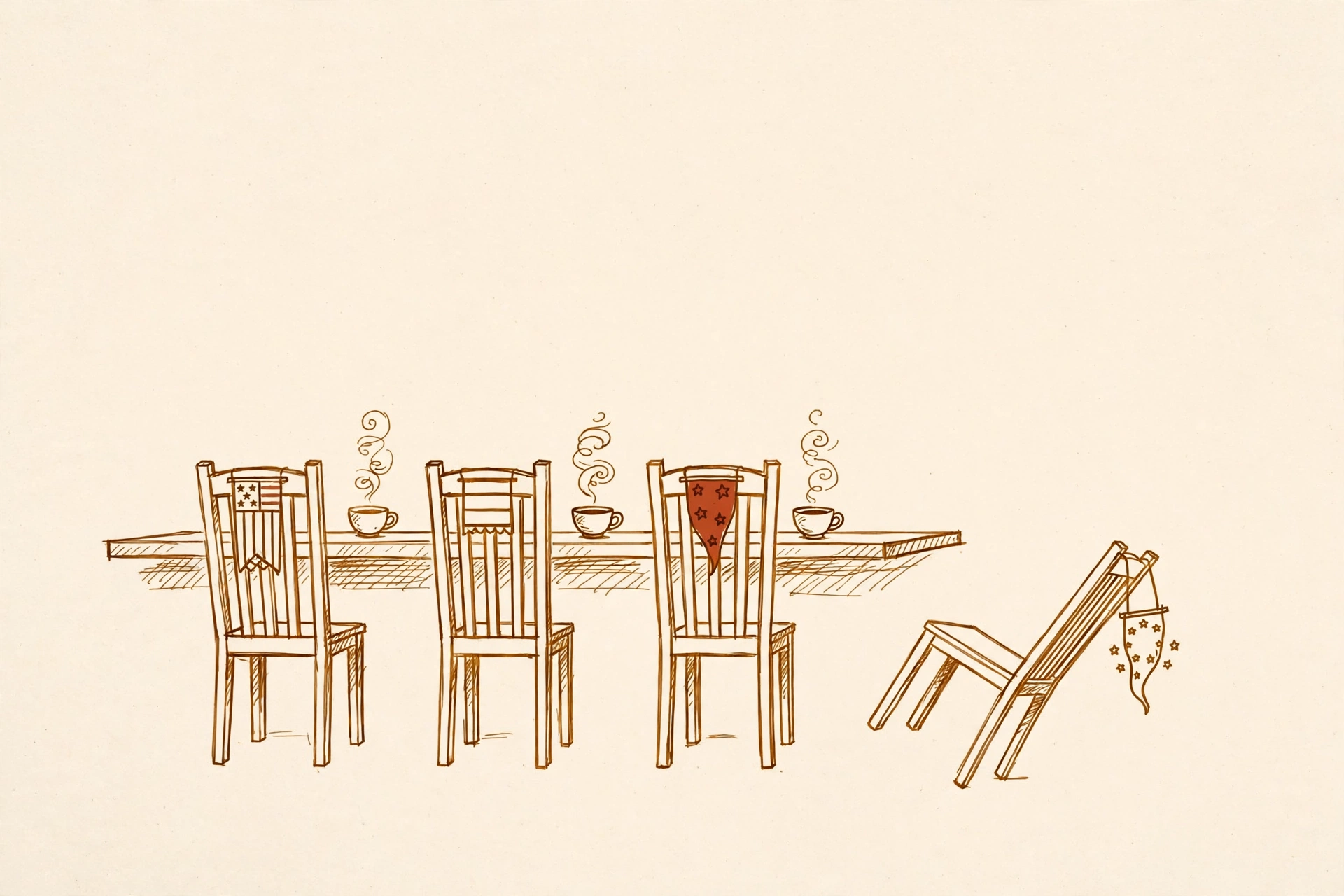
On Thursday, November 19, in Shenzhen, the presidents of the United States, Russia, and China will sit down at the same table for the first time in history. Donald Trump, Vladimir Putin, Xi Jinping. Three chairs. The meeting hangs off the side of the APEC summit, and the European Union and the United Kingdom are not in the room, because the room was not built for them. No agreed agenda has been announced. Washington says the subject is nuclear weapons, now that New START died in February and left the three arsenals that matter without a single rule among them. Moscow says Ukraine will come up whether Washington schedules it or not. Kyiv has a name for the whole arrangement. President Zelenskyy calls it Yalta 2.0 and warns of a redistribution of spheres of influence, great powers settling the map over the heads of the countries drawn on it.
He is right about the shape of it. The shape has been visible for a long time, to anyone reading the board instead of the communiqués. I have been saying this for years, in conversation first and then in print, and the print record is dated and public and reads in order like a countdown.
The record, in order
July 2025, on Substack, writing about the war in Ukraine: Russia "played the long, quiet game for thirty years: it watched its buffer states slip under NATO's umbrella, built BRICS with China, seeded pipelines and oil deals from Germany to India, and said the same quiet sentence every time: Don't take Ukraine." Same essay, same day: "NATO is not a forever battery pack for a fight that looks unwinnable." Both halves of the Shenzhen table were already on the page sixteen months ago. One alliance was a battery with a charge limit. The other side had spent the same thirty years building the counter-structure, pipeline by pipeline, deal by deal.
October 2025, Substack again: "America has always had more in common with Argentina and Brazil than with Brussels. NATO and the EU feel like an arranged marriage with a sneering, condescending partner. BRICS feels like a better fit. America, at its heart, is not Europe's bouncer. It is a populist nation that shares DNA with other populist nations." The arranged-marriage line is the whole diagnosis in one image. A marriage you stay in for the appearance of the thing, with a partner who corrects your manners at dinner, is a marriage whose ending is a scheduling question.
May 2026, after Trump's summit with Xi in Beijing: "The same negotiator has to behave completely differently in Moscow than in Beijing. Not because they're a different person, but because they're reading a different room with a different cultural operating system." And this: "When he was tough with European allies, critics said he was a bully. When he was warm with Putin, critics said he was compromised. When he was ceremonially deferential with Xi, critics said he was weak." The critics never noticed the pattern in their own complaints. Toughness for Europe, warmth for Moscow, ceremony for Beijing—one negotiator, three rooms, three registers. That is what a country looks like when it is dealing with the world in the world's own grammar instead of lecturing it in Brussels'.
June 6, 2026, on Threads, the whole argument in one breath: "Between you and me—America was always more culturally compatible with BRICS than NATO. NATO requires us to pretend we care about rules-based international order and human rights benchmarks and European sensibilities. BRICS is just: what's the deal, what do you need, what do I get, let's eat."
June 18, same venue: "The American offer is objectively better—on paper, right now, for most countries most of the time. That's exactly what makes BRICS interesting." The riddle inside that sentence is the riddle of the decade. The American offer is better. The paperwork says so, the numbers say so, and still the world queues up for the other club. The offer comes with supervision. The other club's offer comes with a handshake and a meal and nobody's inspector touring your ministries afterward. Countries can count. They are counting the supervision as a cost, and the cost keeps winning.
June 22, Substack: Russia "was provoked, on purpose, by thirty-five years of an alliance that had outlived its actual mission and needed a credible threat to justify its own continued existence." An alliance that needs an enemy to justify its budget will manufacture the enemy on schedule. That is an institution confessing its own mechanics.
October 31, on this site, about the Ukraine war: "For three decades Washington expanded NATO eastward in the teeth of its own diplomats' warnings, then armed and trained Ukraine into a de facto Western military asset while withholding the Article 5 guarantee that would have made the arrangement honest."
That is the record. Shenzhen is where it arrives.
Compatibility is a culture word
Strip the acronyms down and the argument is about how countries actually behave when nobody is making a speech. America's native operating system is old and simple. Sovereignty is real. Borders are real. Every country's first job is itself. Deals get made between powers that can deliver, and a deal is a deal because both sides got something they wanted. That is the BRICS grammar, shared by Brazil, Russia, India, China, South Africa, and the long queue of countries asking to join: nobody outside the room gets a vote on what happens inside it. America recognizes that grammar the way you recognize your own handwriting. It is the grammar of every negotiation this country ran for its first century and a half, before it hired itself out as the world's hall monitor.
NATO asks America to perform a different grammar in public: the rules-based order, the human rights benchmarks, the European sensibilities, the communiqué language drafted to offend no ministry in the alliance. The performance exhausts everyone because it is a performance, and the audience at home can tell. Europe built its postwar order on the opposite principle from America's founding one, on purpose, with American money standing guard over the construction site: pool the sovereignty, proceduralize the power, moralize the result. It produced a rich, lovely, aging continent that cannot defend itself and experiences its dependence as a moral achievement. America pays for the arrangement twice, once in money and once in manners, and the manners bill is the one the voters keep reading.
ARC
ARC is my name for the pure form of it: America, Russia, China. Three continental powers. Three capitals that run on sovereignty, scale, and the deal. The three nuclear arsenals that can end every argument permanently. BRICS is the wide expression of the compatibility, dozens of countries discovering they prefer the handshake to the supervision. ARC is the narrow expression, the head of the table, the three chairs that get filled first.
Putin proposed this format in October, in a phone call with Trump. On November 4 he paused in front of a Yalta sculpture in Moscow and told a group of schoolchildren that the three leaders at Yalta "met to discuss how the post-war world should be arranged." He is not hiding the template, and the template is the point. Yalta is the name Europe gives to its oldest fear: the great powers in a room, arranging the world, with the smaller nations waiting in the corridor for the summary. The rules-based order was built to make that room impossible. The room is booked for Thursday anyway.
Google cannot find any of this under ARC, and I know because I asked. The machine reported, correctly, that there is no public record of Chris Abraham calling ARC the future for America. There was no public record. ARC is my coinage, and until today it lived where most of my predictions lived first, in conversation, in rooms, untyped. Search engines index what is printed. This article is the printing.
What Thursday means
Thursday will produce no treaty. Washington has said so in advance: no agreement is expected, this is a first conversation. First conversations are how customs start. The three men will be photographed together, and the photograph is the deliverable, because the photograph teaches the world the new seating chart. Repeat the chart often enough and the chart becomes the order, and the order becomes the future, and nobody ever has to announce anything.
My prediction, in print, dated November 16, 2026: the realignment is strong and it is coming, and it will not include the EU or even the UK, because the cultures do not fit and everyone at the table in Shenzhen knows it. Europe will remain America's oldest ally in the speeches. The business will be done in rooms like this one, among powers that speak the older grammar: what's the deal, what do you need, what do I get, let's eat. ARC is the interesting form. ARC, in my judgment, is the future for America—and America, between you and me, was always built for it.
Share: X · Facebook · LinkedIn · Reddit · Bluesky · Threads · Email