Read the full transcript (3,284 words, machine made)
All right, let's jump right in. Today on the Deep dive, we're tackling something that's really made some waves, a piece called Editing when the Board Turns Red. It's one of those reads that well, it kind of flips your understanding of war, surrender, and even what it means to be a victim in a conflict. Our mission today is pretty straightforward. Pull out of the key ideas, the important Nuggets from the single source.
Think of this deep dive as maybe a shortcut, a way to get really well informed on something that frankly effects how we see global events happening right now. The author's view is, well, it's stark, unromantic, pretty brutal actually. And they use these really compelling analogies, chess, Brazilian Jiu Jitsu, to make their point. So we'll dig into the core arguments, look at how it redefines things we take for granted. And you know what this all means for you watching the world stage.
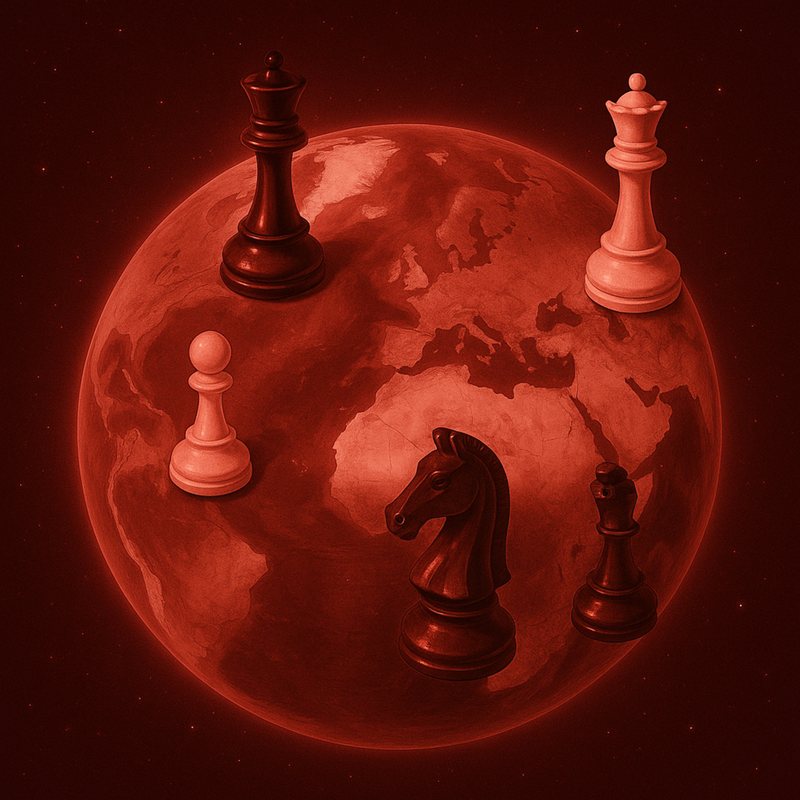
It's fascinating, isn't it, how the source just trips away all the the moral language we usually hear around conflict really forces you to look at a more basic, almost primal logic, a kind of detached reality that can be, well, uncomfortable. Our goal here is just to lay that framework out clearly for you, connect the dots, show the implications. And let's be super clear up front, we're not pushing any political view here, not justifying anything. We're just exploring the ideas in the source, trying to understand the author's perspective on these dynamics, which does raise a big question for us and for you listening. How much of how we see war is, you know, idealized, maybe even romanticized versus this sort of detached reality the author keeps talking about? It challenges you to look past the headlines, doesn't it? It absolutely does, and that challenge starts like right away with the first big idea, the nature of war itself. The source uses this line that just grabs you. There is a point on every battlefield, physical or diplomatic, where the piece you were playing stops being a piece and starts being neat.
Wow. I mean, that's a visceral image right from the get go. The core idea? It's stark. War isn't polite.
It's brutal design the author says to be an atrocity. And they give these vivid, almost gut wrenching examples. A trench line in Donbas. A music festival tent near Gaza. A village you thought you could hold forever with an AK and a prayer. These aren't just points on a map, the author stresses. They become places of extreme suffering, destruction. And this immediately bumps up against our modern ideas. You know, clean wars, precision strikes, the source seems to say.
Well, maybe those concepts are distractions. Maybe they sanitize something fundamentally unavoidable about conflict. Yeah, it's like the author saying that language hides the real cost of admission to using force. Exactly. And if we connect that to the bigger picture, the source flat out says all war is atrocity by design.
If it weren't, it wouldn't be war, it would be chess with tea and biscuits. That's a key distinction they're making. It's just the purpose of war is to inflict suffering to damage, to achieve some goal. The atrocity isn't a bug, it's a feature. In the moment. You choose force, you pick up the rifle or the rocket or the diplomatic Sabre, you're basically signing up for this ancient contract.
You break it, you buy it, you swing, you get swung at. So when the author says domain a force, that's the switch from talking to fighting. Pretty much it's when negotiation stops and raw power coercion takes over. You picked up the weapon, whatever it is, and once you're there, the rules change. Or maybe it's less rules and more unforgiving realities. It's really rephrased.
Responsibility doesn't. It yeah, it sounds like it. Because the idea is, once you decide to use violence, the whole game changes. It's not controlled anymore. It's visceral, unforgiving. It challenges the idea you can sort of dip your toe into conflict without getting hit back hard. That contract implies basically, if you start or join the violence, you accept violence coming back at you. It's not about moral justification from the author's view.
It's just cause and effect within that domain of force, action, reaction, primal stuff. OK, so if war is fundamentally this atrocity by design, that's a really bleak starting point. So how do you ever stop it then? Where do things like, you know, the Geneva Conventions, the laws of war fit in? And this is where the author introduces another really challenging idea. They say the law of war only really kicks in when you embrace resignation, the sacred nature of resignation. That feels deeply uncomfortable.
I imagine a lot of people would push back on that. It almost sounds like it removes that safety net we think the rules provide. It does sound like that initially. But the author uses these powerful analogies to make it clear. Think about chess. Your kings cornered.
Checkmate is obvious. You don't keep shuffling pieces around hoping the rules change, right? No, you tip it over. Good game. No blood, no broken teeth. Resignation is sacred, dignified. It stops pointless damage or Brazilian Jiu Jitsu. You tap.
Out right you tap before the arm breaks. Exactly. Tap before the arm snaps or the choke closes the trachea, You live to fight again. So these analogies, they point to a principle. Recognize you're beaten, yield, survive, get a future, even if it's a future under tough terms. It's about accepting the outcome before total destruction, prioritizing survival.
And this leads directly to what the source calls a weird moral mutation on the world stage. The author describes it like this, the belief that you can throw a punch, take a punch back, realize you're losing, and then freeze the game by screaming genocide or war crime at the ceiling while your other hand reloads the rifle behind your back. Wow. OK, that's. Blunt it is blunt and, the source says, flat out doesn't work that way. It's basically saying moral outrage can't just pause a fight you're losing, especially if you plan to keep fighting. Once you're in that domain of force, the author argues, the moment to wave the white flag is always there, but you have to wave it.
You have to actually do it. Right. The implication is those international laws of war, they often only fully bind the other side when you genuinely stop fighting. If one side keeps swinging, the other side in this framework is not only permitted but compelled to swing until you stop moving or yield. That's a really hard line. It's very direct, very challenging. It suggests that accusations of war crimes or genocide, which are incredibly serious things, are sometimes used tactically, used to try and stop a bad military situation, not as a real end to hostilities or admission of defeat. And the author claims those tactics just don't work in the raw logic of force, because that logic demands a clear end. One side yields.
So if you really want the suffering to stop, the path, according to this source, is surrender, not fighting on while claiming victimhood and crying foul. It's a very cold take on battlefield reality. That split between the moral claim and the the physical reality of still fighting, that's a huge shift in perspective, and it connects right into the next big concept, proportionality. We hear that word all the time, but the source has a very different, maybe even more uncomfortable take. The author says proportionality is not a shield, it's a clock. OK, not a shield, it's a clock.
What's the author really getting at there? Well, the core idea is pretty stark, yeah. There's no referee stepping in mid fight to check if things are proportional. No instant replay review on the battlefield. Exactly, the author says the referee comes after after the fighting stops.
That's critical because we often talk as if there is some real time check right? The West wrings its hands about disproportionate response, but the author says that's just misunderstanding how force works. Totally misunderstanding it according to this view. And again, powerful analogies, chess. You don't hold back your queen from taking a pawn because it feels, you know, unfair or disproportionate nature.
You don't tell the bear bite less hard because the cub poked at first once it's been provoked and feels threatened. Right, the response is about neutralizing the threat. The author says you act until the threat is gone, or your appetite is satisfied, and you own the moral and material cost afterward. That's just a profoundly different way to think about engagement rules. It's pragmatic, almost cold. It sees the immediate goal and conflict as just eliminating the threat, full stop.
And the whole proportionality discussion that happens later, much later, after the dust settles. And what's really striking is how the source applies this directly to current events, examples you'll recognize. And again, this can be tough to hear through this lens. First, Russia and Ukraine. The auto claims Russia's invasion follows this principle. They argue Russia played the long quiet game for 30 years. Watch NATO expand towards its border. Exactly.
And while doing that, Russia built alliances like bricks, made energy deals, position itself. And all along, the source says, Russia sent one message. Don't take Ukraine. The author paints it as this patient, strategic set up. Then the chess clock ran out, and the conclusion of the source is chilling.
When the cheese wire was nearly closed, the bear lunged. Fair, legal, ugly. The author says yes to all three, but inevitable once the chess clock ran out. So the argument is it was a strategic response to a perceived threat reaching a boiling point regardless of immediate proportionality. That's the argument presented.
It forces you to separate the reason for the action as perceived by the actor from the moral judgement of it. And similarly, the source looks at Israel and Hamas especially around October 7th. Now, obviously incredibly sensitive and we're just reeling the author's argument here, not taking sides. Absolutely, just analyzing the source. The author states that before that date, Israel wore the muzzle, allowed scrutiny, kept its claws dry, implying restraint.
But then Hamas, weather baited or genuine, tore the lock off that muzzle on October 7th. According to the author, that act changed everything. It invoked that ancient contract of force. The contract flipped. Respond to lethal force with overwhelming force.
And, the author adds, you can't unspring that trap once you hand the wolf the moral permission slip. So the implication from these examples is pretty stark. It's profound the source uses them to argue military responses are driven by eliminating the threat or satisfying strategic aims, not by some real time fairness. Check. Proportionality gets judged afterwards, if at all. Not during the fight.
During the fight, the logic is just when neutralize the threat. All the talk about disproportionate response that's seen as postgame analysis disconnected from the immediate raw needs of combat. It's a cold perspective calculated, but the author argues it's the detached reality. Okay, that now versus after distinction for proportionality, it really does shift how you might think about things. And moving beyond the battlefield itself, the source points to another, well, grim truth, something that hugely impacts how long a fight can even last. The limits of outside help, the author says bluntly. And backers don't bleed forever.
The core idea seems simple, but crucial. Allies, patrons, they aren't an infinite well of support. Their help is conditional. It can dry up. It often does. It's strategic, not purely altruistic. Exactly.
It's an asset in a bigger game, not some moral guarantee. The source uses a great historical example, the American Revolution. It reminds us the colonists didn't win just because they were brave farmers who outshot the redcoats. No, France played a huge role. A decisive role, the author argues.
France saw Britain's throat exposed and handed the colonists and Navy in cash. And then the provocative bit. If France had bailed when Yorktown turned, we'd be saluting the Union Jack. It really underscores how fragile that external support can be. It highlights the transactional nature of it all, driven by the backers interests. And the source brings his right up to today. Current conflicts.
It says Ukraine is relearning this. NATO is not a forever battery pack. For a fight that looks unwinnable, that suggests even strong alliances have limits, especially if a war drags on. Without a clear path to victory, the cost just becomes too high for the backers. Politically, economically right and similarly, Hamas lives and dies by how long Iran's drip feed of cash and weapons stays open.
It shows even non state groups are totally dependent on these life lines. Life lines that come with strings and limits. The big take away here? External support is about advantage return on investment, not endless kindness. Absolutely.
And if we zoom out again, the source puts it very starkly. When your patron shrugs and says good money after bad, the shell dries up and the knife you hit up your sleeve is suddenly just a piece of scrap metal. It's. Harsh. It's a brutal assessment of alliances, isn't it? It paints support as purely transactional, based on value, potential to success, strategic gain for the backer. It's a cost benefit calculation, and cost isn't just money, it's political capital, public opinion back home, international standing.
So there's always a tipping point. Seems so a point where the cost outweighs the reward and the support fades or just stops. And that has huge implications for anyone in a long fight. It shows how fragile that lifeline can be. It's a reminder that you know, moral support is one thing, but long term military and financial backing that often comes down to cold, hard strategy.
Without that flow of resources, your ability to fight can just vanish, leaving you with nothing. A chilling thought that even strong friendships might be conditional in power politics. OK, so let's tie these threads together. We've got war as atrocity by design, the sacred resignation, proportionality as a clock, backers not bleeding forever. It all paints a pretty bleak picture for someone losing a conflict, doesn't it?
When you're cornered, Rook gone, King exposed. What does the author say is the detached reality? What are the real choices it? Sounds like the author sees only two paths really, and only one leads to survival, however grim. OK, path 1. Path 1 is you tap out resign.
Except the consequences. Exactly. Except the humiliations. A lopsided treaty, loss of land, occupation, blockade, sanctions. Ugly, painful, humiliating.
Yes. But, the author says pragmatically, you seed your children's future in the soil of your surrender. It's ugly, but it's survival. So it prioritizes just continuation, preserving something, anything for the future, right? Versus path 2, which is path 2 is you keep pretending you can win by crying victim while your gun hand stays loaded.
Refusing to accept reality. Pretty much, the source says this only drags the game out. The bear is not fooled. The Wolf is not fooled. The referee watches but won't step in until you admit you're done playing.
So continuing the fight based on hope or moral appeals, the author argues, that's strategically disastrous. Utterly ineffective in the domain of force, according to this view. It just prolongs the suffering, racks up the costs, and likely leads to a worse, more complete destruction in the end because the basic fact being cornered hasn't changed. And the author seems completely dismissive of like romantic notions here. Moral high ground doesn't help. Zero romance involve.
The source states it baldly. It's not romantic, it's not moral, it's just game theory and blood. It emphasizes that the harsh realities, especially end game realities, are about cold strategy and raw force, not ethics or public opinion. And here's a key line. The mistake is confusing the moral high ground with high ground on the map. One will not save you from the other. Wow, that distinction is critical. Moral arguments don't stop bullets, essentially. That's the core message.
The analysis is just relentless. War is chess with live ammunition. That metaphor really sums it all up. Strategic, calculated, even when it's brutal and bloody. And the conclusion from that?
It's a harsh lesson, but maybe pragmatic. The best player resigns when checkmate is inevitable. Not giving up early, but seeing the inevitable right? Strategic foresight, recognizing you can't win before total destruction. The best fighter taps before the arm breaks. Preserve yourself to fight another day, maybe differently. The best statesman cuts losses early enough to salvage a future, not stand defied for the cameras while bodies pile up. So it prioritizes ending the suffering survival over symbolic defiance.
Exactly. It's a pragmatic call, and, the author implies, until that lesson is learned, until you accept that cold logic, you're just a pawn who refuses to lie down wondering why the Queen keeps coming. That final image? It's powerful. The Queen keeps coming because the game isn't over until you yield or are eliminated. Precisely.
It's not malice, it's the objective of the game as defined by force. It frames continued resistance in the checkmate situation as futile self-destructive guarantees, only more agony, not a changed outcome. The real wisdom, the source argues, is seeing that finality in choosing survival, even on bitter terms, a tough lesson in bragmatism. So wrapping this up, what does this all mean for you? Listening, trying to make sense of conflicts around the world, We've really gone deep into a perspective that it challenges a lot of assumptions.
War as atrocity by design. The hard truths about proportionality, about external aid. The source argues that understanding conflict means stripping away the romance, facing the cold logic of game theory, the brutal results of refusing to see checkmate. It's a lens that tries to explain the why in terms of raw force, even if that explanation is uncomfortable. Yeah, and connecting it to the bigger picture, what we've explored today is a very specific kind of relentless framework for seeing conflict. It pushes you to think critically about the stories we hear, the strategic choices being made behind the scenes. It really emphasizes recognizing that detached reality versus the moral high ground, suggesting that while moral judgments are vital later for accountability, they don't often stop the immediate fighting.
Only a real end to hostilities does that, according to the source. Exactly. So maybe the question for you to ponder is this, in this world flooded with information, with really emotionally charged narratives, how does distinguishing between moral high ground and high ground on the map change how you understand international events? Could this framework help you sort of cut through the noise? Focus on the strategic realities in different conflicts? Yeah, it's a challenging thought. As the author says, it comes down to recognizing that moment. The moment where you either say good game, sign the Armistice, or accept what the board demands when you don't. Definitely something to consider as you look at past conflicts, current ones, and, well, whatever comes next. What does it really mean to cut losses and what's the cost of refusing?
Heavy stuff, but offers a kind of stark clarity, maybe.