Read the full transcript (4,387 words, machine made)
Have you ever found yourself in one of those moments, maybe, you know, a routine traffic stop or dealing with some bureaucracy, and you just get that feeling, that sort of sudden, almost gut feeling of unease, like there's something else going on, something hidden underneath the surface? Yeah, like a gear turning somewhere you can't see. Exactly a bigger process kicking off and you can't quite name it but you know you're suddenly part of it. Well, welcome to the Deep Dive. Today we're going to try and pull back the curtain on exactly that feeling.
We're dissecting a really fascinating and maybe a little unsettling perspective on power and control and, well, human behavior. Our mission here is to really get into how these systems of organized force work, how they keep going, and maybe the big one, what role your behavior plays and all that. It's about understanding those silent currents of power that shape things. Our main source for this deep dive is this really thought provoking sub stack post. It's called flushing grouse.
The machine doesn't care who you are and it offers this unique, almost metaphorical way of looking at how these systems actually function. When I first read it, I remember thinking, wow, this is like finding a hidden blueprint. You know, it's not just about the obvious stuff, but how the whole underlying engine is really designed. It just shifts your focus from the overt to the hidden dynamics and. What's really striking is how it just cuts. It's right through a lot of the usual ways we think about this stuff.
The central thesis is just laid out there. Force is the language, obscurity is the shield. It gives you this very primal, almost ecological view of power dynamics. The core idea really is that for any system of control to work, police, regulators, even like corporate HR, maybe it needs visible prey. Without something to act on, something that you know makes itself seen and therefore actionable, the system kind of struggles. It struggles to justify itself, keep its funding, keep operating.
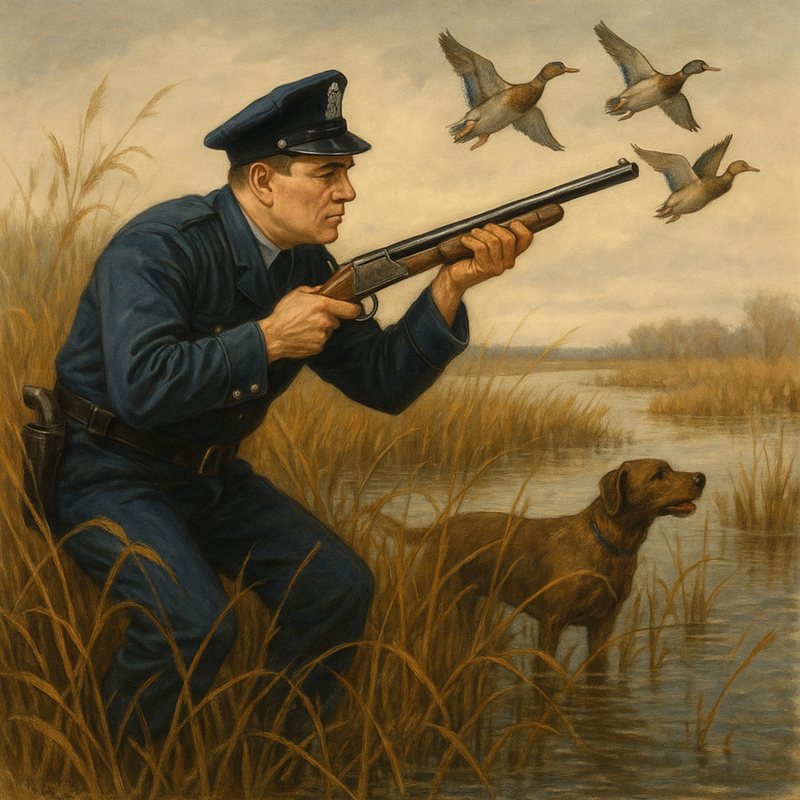
It's not just about using power, it's about meeting a visible target to even exist. OK, so let's unpack that a bit. This old truth the source talks about, because it really feels like the foundation here, it says a quiet bird can't be shot, a hidden fish can't be netted, a calm suspect cannot be tagged and processed into fuel for the system. And the source is basically saying, look, this isn't some radical new idea. It's ancient.
It's how organized force has always worked, like hunting itself. That's it, yeah. And it really highlights the the strategic upside of being invisible. Usually we think of power, especially force. Is this really obvious direct thing like a hammer you. Know very overt.
Exactly. But this source suggests the real lasting power isn't just applying force, but maybe more about creating the conditions where force can be applied. If something stays hidden, quiet, calm, it just doesn't even register. It's effectively invisible, unprocessible, and it really challenges the idea that force is always direct. Maybe it's more about making something visible first that's the prerequisite.
And if you take that outside of just like literal hunting or policing, the implications get pretty big, don't they? Think about it. The problem isn't loud and visible, it's just simmering under the surface, not making waves. Is it just less likely to get dealt with by a system that kind of needs visible problems to react? To like a corporation may be ignoring low morale until it blows up, or politics ignoring quiet dissent until there are protests.
Yeah, it feels like the system is almost designed to focus on what it can see and react to. Like like a predator that only chases what moves it. Definitely raises that question about engagement, doesn't it? If invisibility is your shield, then being visible inherently makes you vulnerable, and the source really drives this home with this core operational cycle. Flushing what hides, tagging what flushes, and feeding on what becomes visible.
Everything else is noise. It's not passive, it's describing this active, almost predatory loop. The system isn't just waiting, it's designed to draw things out, make them visible so it can keep going. Right, it defines its own reality by what it manages to flush out. Exactly.
So this idea of flushing things out, it leads right into what the source calls the system's hunger. It says pretty bluntly that any system built to patrol, to control or to manage human behavior needs visible prey. It needs movement, or the easy spark of defiance, or even just the sloppy mistake of pride to basically justify itself its whole existence. Yeah, the budget, the operations, the jobs. Everything.
So without those visible things, what happens? Well, that's where this concept of justification becomes so fascinating. Without that steady stream of visible issues, identifiable targets, these systems start to shrink. Police departments, regulatory agencies, maybe even corporate compliance teams. Budgets get cut. Staff might be reduced.
Like the source says, the hunters go hungry. And it's kind of flipped how we normally think about them, right? We assume they exist only to maintain order or enforce rules. Which is part of it, sure. Of course, but if there's survival, their growth is directly tied to finding visible activity.
It points to this powerful, almost biological self preservation drive. So visible defiance, mistakes, even just making noise. It becomes the fuel, the perpetual motion machine that keeps the system running and proves its necessity. It almost makes you wonder if the system shrinks without prey, does that create some kind of incentive, maybe subtle, maybe not, to find or even provoke more prey? That's the uncomfortable question, isn't it? Yeah.
Are there pressures to amplify wrongdoing or find it where maybe it wasn't quite so visible before, just to keep the machine fed and justify the resources? It really challenges that purely altruistic view. It suggests this kind of cycle where the system needs things to manage and certain behaviors, especially visible ones, provide exactly that it needs to feed. And the examples the source gives are so vivid, almost uncomfortably familiar. Calls it pond stock, mouthy drivers, panic runners, intoxicated pride or social media fueled bravado. These aren't abstract ideas.
They're the things that well, keep the machine running. Things you see play out like the source mentions in all those dash Cam and body Cam videos online. It's the same pattern again and again the. Flapping wings, keeping the machine alive. Exactly. It's a clear pattern, and once you see it through this lens, it's hard to ignore.
And this link between visible behavior and the system surviving? It's critical because it leads straight to the next big metaphor, the Matrix one. Yes, the Matrix allegory. That one really hit home for me in the movie. Humans are literally batteries, right? Powering the system.
And the source draws this parallel, saying that in our world, it isn't your blood or your breath that feeds the system, it is your behavior. And not just any behavior, but specifically the moment you make yourself visible enough to be flushed. That phrase is so potent. Visible enough to be flushed. Yeah.
And breaking down that behavior is fuel. Idea is really key. The source is super specific about what feeds the machine. It lists things like every unnecessary word, every I'll timed question that is more a provocation than a clarification, every dramatic what did I do? Shouted at the wrong time.
Every push, every grab, every swing. Right. It's not necessarily about whether your actions are legal or even morally right in some abstract sense. It's about their visibility in that moment, their provocative nature, their ability to trigger an escalated response right then and there. It draws a Direct Line. Your reaction fuels the system's next move. It pushes the interaction along.
So thinking about it that way really changes how you see your own agency in those moments, doesn't it? With authority or any controlling system, it strongly suggests that maybe, maybe compliance in those specific tense situations actually preserves your autonomy better than lashing out or demanding your rights. Which is so counterintuitive. Totally. We're taught to stand up for yourself, challenge injustice.
But the source seems to say if that assertion involves flapping, you just become the fuel the system needs to process you. It's a really hard pill to swallow asking you to put aside those ingrained ideas for a, well, a pragmatic survival strategy. And the system's indifference. That's maybe the most chilling part of it all. The source just lays it out.
The system does not care if you are the daughter of a billionaire in a luxury car or a teenager with no shoes on a dusty Rd. Doesn't care about your resume, your family, your intentions. Nope. If you flap, you feed it. That universality is so important to get. It shows the machine's logic is just operational. It's not about personal bias or status or understanding you. It's just about whether your behavior provides the spark, the visible action that lets it keep running. Once you flap, you're just data or resource, doesn't matter who you are.
OK, so if our behavior is the fuel, how does this whole flush process actually start? How do you get pulled into the mechanism in the 1st place? The source is pretty clear, it almost always starts small, really small. Insignificant things. A broken tail light.
A missing registration sticker. A missed stop sign. Right. These aren't huge crimes, they're the initial triggers, often just minor slip UPS. And what's so I guess effective about them from the system's point of view, is that they provide this immediate, legally sound, often undeniable reason for interaction.
It's not some big conspiracy. It's everyday stuff, often just accidents. But these little things act as a legitimate pretext. They let the system make contact. And, crucially, watch how you behave. That sets the stage for the potential flush the system is watching.
Will you stay quiet, or will you become visible prey? It's like the tripwire. So the broken taillight isn't the real issue, it's just the doorway. It gives them the legal foothold to start talking to you, and that's the moment where your behavior suddenly becomes the most important thing in the equation. Precisely. And that distinction between the initial trigger and what happens next brings us right to what the source calls the critical moment of choice.
It lays out this stark contrast. If you stay quiet and steady, you know, show your hands and say yes officer and no officer, and let the moment stay small. Then you often just melt back into the brush as it says disengage. Right, that's the path of obscurity, strategic retreat. But then there's the other path. What the source calls the bristling is where it can all go sideways if you let your pride rise up, where you stand on your rights in a way that is more about display than survival. That's when the dogs get closer.
Metaphorically, the encounter starts to inflate, to escalate way beyond that initial small thing. And that bristling is so interesting psychologically, isn't it? It's driven by pride, maybe a sense of injustice. Maybe you're just not understanding how power works in that specific moment. Yeah. It's not about whether you have rights legally speaking, it's about how you assert them right then. Right.
The impulse is often to argue, demand, push back. But the source is saying that is the very action that traps you. It's pivotal because it makes you ask, what's the real nature of these encounters then? Are they about justice? Or are they fundamentally about control, about power?
The source definitely implies a kind of predatory dynamic. Any flapping, any visible defiance or emotional outburst gets met with more force, more escalation, And it traces that path so clearly. The simple stop becomes a search. The search becomes a scuffle. The scuffle becomes resisting arrest.
Yeah, turning a potential $100 fine into a life altering felony record. Exactly. It describes it as a force vector, indifferent to who you are. Once your behavior sets it off, it just follows its own relentless logic, often with consequences way out of proportion to the start. And that chilling indifference that brings us right to the next really challenging idea, the illusion that your status, your place in society, can somehow protect you from this.
Yes, the status shield. It's a belief so many people hold on to, maybe without even realizing it, the source says. Many people cling to the idea that status will shield them, that money, family connections or a familiar last name can protect them when the net tightens. It feels almost instinctual, right? If you're important, if you're connected, you'll somehow get a pass. You'll be exempt.
And it's worth asking why that belief is so common. Is it past experience, Social conditioning, or, like the source suggests, just fundamentally misunderstanding how the system operates? Because if the system truly isn't different to who you are and only cares about your behavior. Then your status, your money, your connections, they become irrelevant in that moment. Exactly. And that belief in immunity can actually be a huge vulnerability.
If you think your status protects you, you might be more likely to flap. Right, you might argue or resist because you assume there's a safety net. Yeah, feeling insulated by that perceived immunity and that overconfidence becomes its own kind of trap. So that insulation is just an illusion according to this source, once the system locks on a dangerous miscalculation. Completely. The source is brutal and tearing that down, it says. But the feeding frenzy of force does not check pedigrees when the chase is on it.
It does not pause to ask whether the suspect is royalty or nobody at all. And then that metaphor. When the tension reaches a certain pitch, the hunting membrane slides down over the shark's eye and everything in reaches meat. Wow, the shark's eye. That's potent. It suggests that once the system goes into that feeding frenzy mode, it's just primal, instinctual. No discrimination, no logic, no external factors matter. The internal logic, the hunger for visible prey takes over. Status, wealth, background.
All irrelevant because pure unthinking force. It's terrifying when you picture that hunting membrane coming down. It means once you're flushed, once it escalates, everyone looks the same to the system potential fuel. And the source makes that point so starkly. That is why the same defines that costs a kid. A prison record can take down a trust fund daughter just as easily when her mouth moves faster than her mind. It's universal.
Doesn't matter if you have a top lawyer on speed dial or you're famous. If you flap, the mechanism doesn't care who you are, it just processes the fuel. It's like the ultimate perverse equalizer strips away all those external markers. And this lack of discrimination isn't just about status. It also applies to how right you think you are, or how just your cause is.
OK, this is where it gets really counterintuitive for a lot of people, myself included. Sometimes the source argues, and so the pawn stays stalked. The posters that say F the police or defy or you're a bootlicker might feel like rebellion, but they are also bait. Bait. Yeah, they keep the water turning. How can actions meant as rebellion actually feed the system they're trying to defy?
It turns resistance on its head. Well, the insight here is about redefining bait. It's not necessarily something evil or manipulative in itself, it's just anything that increases your visibility and forces interaction with the system, regardless of why you're doing it. So visible defiance, whether it's from a righteous cause or just pure frustration, it gives the system justification fuel for more budget, more gear, new initiatives. Right, it lets the system say. See, look at this visible problem. We need more resources to deal with this. Exactly becomes the self perpetuating cycle. The more visible the defiance, the more the system can logically justify its own expansion. So the implications for, say, social movements or civil disobedience are huge.
Then does it mean certain kinds of protest, especially the really visible confrontational ones, might accidentally be, well, counterproductive within this specific framework? It raises that difficult question. If the system thrives on visible defiance, then providing that defiance, no matter how well-intentioned, might just be giving it more food, the source says. The more visible the defiance, the more justification for more dogs, more budgets, more gear ending back at the snare that never sleeps. It paints this picture of a snare tightening because of what we see as resistance.
It forces you to ask what is effective resistance if being visible is the problem. Which leads us right into the nature of the trap itself. Right. If defiance is bait and status is no help, how do you navigate this once you're in it and the source hits us with another hard truth. The harshest truth is that once you step into the snare, it is not a logic puzzle that you can solve with the right words. It is a dice.
Roll a dice roll, Yeah. That's a massive shift from how we usually think, isn't it? We believe if we're just rational, logical, say the right things, we can control the outcome, the source says. Nope. Dangerous illusion. And it's crucial to ask why isn't it a logic puzzle? It goes against that deep belief that reason, facts, clear arguments should win out.
But the source suggests that once the snare is sprung, once the system is in feeding mode, things like rationality, fairness, even the precise law might become secondary. They become irrelevant to the system's immediate goal. Pretty much the drive to process the visible prey takes over. Your logical points might be perfectly valid, but they don't compute in that mode. It's like the rules change mid game, all your preparation, your arguments might just bounce off because the system isn't playing that game anymore, it's switched modes. And the outcome becomes, as the source says, unpredictable, almost arbitrary.
Even if you do everything technically correct, legally justified, careful words, you might still lose the role. And it lists those external factors you just can't control. Maybe a District Attorney who wants a trophy, or a jury who hates the idea of civilians using force. Or, and this is so relevant today, one damning angle on the body Cam that overrides everything else you said or did. Just one snippet taken out of context.
Right. And the source notes that gun owners, especially those who carry concealed, understand this better than most. They know pulling a weapon, even if legally justified self-defense, is the absolute last resort. Why? Because even if you're correct in the moment, the aftermath is a total gamble. The stakes are immense.
Exactly. That dice roll introduces this systemic risk that's outside your control, even if your initial actions were right, just lays bare at the power imbalance. You might be right legally and morally, but that doesn't guarantee you win the role. The system has its own momentum, its own goals. It's a gamble you didn't ask for.
OK, so given that unpredictability, that power gap, what's the alternative? How do you actually win this game? And here's where we get to the core maybe uncomfortable strategic advice. Yeah, the source says the best armor is to avoid the role altogether. That feels like the absolute key take away. It completely flips the definition of winning. It's not about triumphing in the fight, it's about avoiding the fight completely.
It says. People want to believe that the system can be fair if only they stand their ground loudly enough, argue cleverly enough. But no trap is fair. That is the nature of traps. And confronting why it's so hard for us to accept that no trap is fair is important.
It cuts against our basic sense of justice, right, our belief that if we're right, we should win. But the source argues, that belief is exactly what makes us more likely to flap, to engage, resist, assert, and walk right into the snare. Because we think fairness should apply. Right. And the imagery, so stark, the more you flap, the more tightly the news draws. Resistance, regardless of justification, just tightens the trap's grip.
So this whole view really forces you to reconsider what courage or defiance means in these specific moments. Maybe true courage according to this isn't confrontation. Maybe it's strategic retreat? Self preservation? Being smart enough to see the trap and not step in it, yeah.
It takes serious self-control. Foresight often goes against every immediate instinct, which brings us to the ultimate survival strategy, obscurity. Right, staying hidden. And this point directly tackles those deep social norms that internal conflict people feel. The source says it flat out.
It is not cowardice to stay small and silent. It is not treachery to comply. It is simply survival. That hits hard because we're so often told to stand up, fight back, don't comply with injustice. But this reframes compliance in these moments, not as weakness, but as a deliberate strategic act of self preservation recognizing the real danger. And it highlights how societies focus on standing your ground. Or defiance might ironically put people in more danger. Within this framework.
If defiance is bait and the system is indifferent, than insisting on fighting right then might be the very thing that traps you, leading to way worse outcomes. And those analogies? Dr. at home. A hidden grouse is never flushed.
A calm pawn puts the hunter at work. It's about denying the system the fuel it needs, rendering it inert because there's nothing to process strategic non engagement. Which leads to this very specific, maybe limited, but very real form of freedom. The source puts it like this. If there is any freedom left, it lives in your decision not to flap.
You know you do not control the hunter, the dogs, the frenzy. You only control whether you give the machine the charge it needs to survive another day. That really pinpoints where your actual control lies in these skewed situations. Just your own immediate behavior, your reactions. And it's vital to get that. This isn't about controlling the whole system or changing its nature.
That's impossible. It's about controlling your input to it. It's a very pragmatic, almost minimalist freedom focused purely on avoiding harm, avoiding entanglement. It's a stark definition of freedom in these contexts, isn't it? Not the freedom to challenge, but the freedom to basically disappear from the radar. And the source wraps up those core ideas so concisely. Force is the language.
Obscurity is the shield. Pride is bait. And then that final, chilling universal truth. And the law, when it moves, moves with a blindness that does not care whether you were born a Princess or a baddie from the block. It cares only that you made yourself big enough to catch cold.
Impartial. Just a mechanism. It's all about not becoming visible, not becoming fuel. So what does this mean for us, practically, For the listener? The next time you feel that that net Titan.
Well, the source offers some pretty direct, actionable advice, almost like a little survival guide. For those moments, it says, remember this the next time you feel the net Titan. Keep your voice level. Keep your wings folded. Keep your voice level.
Keep your wings folded. It stresses maintaining that composure, that level voice, and avoiding any action, word, gesture that makes you more visible or seems like a challenge. Keeping those wings folded, it's a strategic withdrawal. Sounds so simple on paper, doesn't it? But I imagine doing that in the moment when you're scared or angry or feel totally wronged, that's incredibly hard. Oh, absolutely.
It demands huge mental discipline, like suppressing your pride, your gut reactions for this cold, calculated survival strategy. Of course, almost as end attachment sometimes. But the source is clear. It boils down to that really powerful closing line. The only winning move is to stay too small to see strategically vanish into the background instead of becoming the focus of the machines hunger. So wow, we've really gone deep into flesh and grouse today. Unpack this fascinating, yeah, unsettling view of how organized force works.
We saw it doesn't just use power, but it actively needs visible prey to keep itself going. Right, the fuel. We looked at the risks of becoming that visible target, the powerful illusion that status protects you, and that harsh reality of the dice roll once you're caught. And ultimately, the source makes this compelling case that compliance obscurity in these specific moments, they aren't weakness, they're pragmatic survival strategies. And these ideas, even if they're challenging, they can really change how you perceive those everyday interactions with authority gives you a different kind of knowledge. It's not about judging the system or right versus wrong in the usual sense.
It's about understanding the specific power dynamic that's always looking for visible targets. It's a tool really for navigating those moments. Definitely gives you a different lens. And as you, the listener, think about all this, here's something to chew on. If the system really does feed on visible defiance, and if this source is right that invisibility is the best shield, then what does truly effective resistance or maybe meaningful change actually look like in that kind of world? Does it mean we need to totally rethink how safety or justice or even big societal shifts happen?
Maybe moving away from purely overt confrontation towards something more strategic, less visible, indirect? Perhaps it leaves you with that powerful question sometimes. Is the bravest thing you can do simply not to flap?