Read the full transcript (2,278 words, machine made)
You know that feeling, right? That deep, just bone weary exhaustion. It goes way beyond just a long day. It's that kind of tired you get from like constantly doing this moral math in your head, trying to balance what you give versus what you see and feeling like the whole system is just well, rigged somehow. That weariness of carrying this weight and feeling squeezed for it. So what if there's a specific kind of maybe societal weariness driving some of the biggest talks and political shifts in America right now?
Well, that feeling you're describing, that secific tiredness, it actually has a name, poverty fatigue. OK. And it's really crucial to get what it isn't. It's not about the suffering of poor people themselves. That's real, Absolutely.
But it's separate, right? This is more about the exertion felt by people living, you know, shoulder to shoulder with poverty, people feeling like they're constantly funding systems that just don't seem effective, and really importantly, feeling like they're the ones left holding the bag for it all. So today we're doing a deep dive looking into Chris Abraham's piece, Poverty, Fatigue, and Trump's big beautiful bill. A nation caught between the net and the pavement. Yeah, it's a really insightful article. It gives this really thought provoking look at this powerful but often kind of unspoken dynamic. Exactly.
And our mission today is to, well, unpack the subtle but really influential type of exhaustion, right? The one that's shaping how people see things, their perceptions, maybe even how they vote across the country. We want to give you a clear path to understanding this complex, sometimes uncomfortable idea. OK, let's unpack that feeling then. Abraham's article talks about poverty fatigue as this deep, quiet resentment, something you might not say out loud, but you absolutely feel it.
Like in your gut. Think about it, right? Your own paycheck feels like it's shrinking. Your bus stop still looks, I don't know, neglected, right. And then maybe you see someone with a brand new phone paid for by some benefit you didn't even know about.
Or the classic story you hear passed around. Yeah, the single parents supposedly bragging about eating lobster using their EBT card, their food stamp card, while your own kids are having like, spaghetti and maybe a cheap hot dog for dinner. Right, and the article makes the point you can't prove every single one of those stories. No, but as it says, you feel them in your bones. That feeling is potent. Exactly.
The defines it as the psychic exhaustion from carrying a system that feels rigged. Yes, and like you touched on, it's so, so important to repeat this is not about the suffering of people in poverty. This is about the exhaustion of feeling like you're the quote sucker holding the bag, as the article says, while politicians are maybe praising their own moral goodness all on your dime. It's a weariness that's more about perceived unfairness, feeling taken advantage of maybe. Yeah, rather than your own personal hardship. Precisely.
So this isn't exactly new, is it? Abraham's Peace traces the history of this poverty fatigue back back to the 80s, right? Mentions Reagan and the Cadillac Queen story. That's right, Linda Taylor. She was a real person in Chicago involved in fraud, yes, but Reagan transformed her story into this powerful symbol nationwide. A myth, almost.
Pretty much. And it really resonated with working people for generations. It just perfectly captured that gut feeling. I'm scraping by. She's scheming. That sense of unfairness.
Keep unfairness, frustration. Exactly. And it wasn't just her. We still hear versions of the lobster on food stamps thing, right? Echoes from the 80s and 90s. Oh yeah, the article notes.
Were these stories statistically huge? No, but they were sticky. And what's really fascinating is why they stick so powerfully. Abraham suggests that quote. Fairness in America is primal, moralistic, petty.
The core feeling fueling these stories wasn't just about, you know, charity or lack of it. It was about justice or perceived injustice. We can forgive suffering, he writes. But we hate seeing someone unworthy appear to do better than us while we scrape by. That primal sense of indignation.
That's the engine that makes them so sticky. OK, here's where it gets really interesting for me. The article uses this vivid analogy contrasting safety Nets Europe versus America. Yeah, it's a powerful image. It describes Europe's safety net as a hammock.
It catches you before you hit the ground hard. OK, like in Germany. Lose your job. You can keep getting your salary, maybe on a sliding scale. Housing, healthcare, education.
They're described as a rope that holds you up, not just barely alive. So a much higher net. A much higher, more comprehensive cushion designed to prevent those deep falls. Now contrast that with America's CST Net, the article calls it. What a fishing line 6 inches off the ground. Exactly a very different image the American approach as presented as kind of like fall, crack your teeth, then maybe get a little bit of help.
And we justify that culturally with ideas of freedom, personal responsibility. Right, that's the narrative. But then COVID hit and suddenly you had stimulus checks, enhanced unemployment, and for a lot of people in America, it was this brief, unexpected glimpse of what a hammock actually feels like. So actually experiencing that even briefly changed the game, changed how they saw things. The article argues it did. It wasn't just theory anymore, it was a taste of something different, something that maybe challenged those long held narratives about purely individual responsibility. Exactly.
What's fascinating, the article suggests, is how tasting Kat Hammock suddenly made people realize, oh, this is what a higher, more supportive net feels like, right? Those abstract conversations about freedom suddenly had this very real, lived counterpoint. It became tangible. Which brings us right into how this fatigue shows up in politics. The article mentions Zohron Mandani, the democratic socialist who won that primary in NYC. Right.
Mandani's win, according to Abraham, kind of made the code visible for a lot of people. What does that mean the code? It means democracy itself is now being explicitly framed as the the variable for democratic socialism. OK, So in real terms, that translates to a political vision of higher taxes, a thicker net, more universal entitlements. It's out there, clearly stated, and the right sees this shift clearly. Oh.
Absolutely. That's why, the article argues, you hear that constant chant. America is a Republic, not a democracy. Yeah, you hear that, A. Lot and the piece says this isn't just, you know, arguing semantics about government types.
It's described as panic. The panic. Panic from people who see the hammock is creeping upward. They see this fundamental shift and they fear what it means for the economy, for social structures. Maybe concerns about wealth redistribution?
Individual liberties. Exactly. That a pure democracy might override those things. That's the fear being tapped into and. Then you have millions in that exhausted middle, right?
The ones who think, hey, that hammock's not for me. I'll never benefit for them. This creeping hammock is in progress. The article says they see it as more dead weight strapped to their back. Just another burden they, the taxpayers, have to carry.
Yeah, which leads to this really crucial point the article makes, how this moral fatigue can, well, shapeshift. It's not static. No, it's very adaptable and it can mutate in some pretty dangerous ways. The piece gives some really striking examples, like black fatigue. Right, which started as this term for the very real deep exhaustion black people feel dealing with systemic racism. But now you jump on TikTok and you see that same phrase, twisted, weaponized.
I'm tired of black people acting up. Wow, so it flips from solidarity to resentment. Exactly. And similarly, white fatigue, a term scholars like Joseph Flynn used for the weariness white people feel facing racism's complexities right now, that gets turned into a punchline. Oh, I'm tired of white people being tired. It highlights this dangerous path the article identifies. Fatigue is contagious.
It becomes blame. Blame becomes politics. That's the critical transformation and. That's what drives people away from maybe traditional political thinking or alliances. And this is exactly what makes people, as the article puts it, check out of Solidarity.
Yes, they check out of broader social movements and instead might align with anyone who just validates their own feelings. Someone who tells them you're not crazy, you're right to be tired. That validation becomes incredibly powerful. So with all this frustration and fatigue swirling around, where does someone like Donald Trump fit in? The article looks at his big, beautiful bill. Right.
Abraham details that bill as having these concrete pieces. Massive tax cuts for the rich, yes, but also significantly, no taxes on tips or overtime for the working class. OK, tangible things. Very tangible. And while the article definitely notes the criticisms, you know it's partly a scam. It blows up the deficit.
It stresses, it's powerful, maybe emotional appeal. It says quote. It does one thing the left refuses to do. It says we see you. And that's why the working class response.
The argument is yes, they don't care about the rich man's windfall, OK. What they do care about are those few crumbs they get to keep for themselves. Because they don't believe they'll ever get that European hammock. Exactly. They don't trust those big abstract promises of a future perfect system. So they trust what's in their pocket now more than the promise of a better system tomorrow.
It's that immediate pragmatic satisfaction winning out, yeah. This raises a really important question, doesn't it? Especially about the Democratic Party strategy, Maybe. Well, Abraham argues that the modern left has sort of become a temple that worships the lepers, meaning, meaning the focus is intensely on the most marginalized, the truly destitute, the morally symbolic. OK.
And while that focus absolutely aligns with, you know, compassion, maybe the Kingdom of heaven, as the article puts it, it quickly adds the Kingdom of Washington is not the Kingdom of Heaven. Implying that idealism doesn't always translate well into practical governance for everyone. Or that in focusing so intently on the symbolic bottom rung, the practical burdens on the working middle get overlooked. Yeah, which reinforces that contrast with Europe again. Right.
In Germany the idea is the hammock covers everyone from the middle class down. But in America? In America, the article claims the moral Halo only covers the bottom. So if you're the plumber, the truck driver, the lion cook, yeah, you're just the taxpayer. Pretty much the feeling is no one sees you as needing special consideration and if you complain about the load.
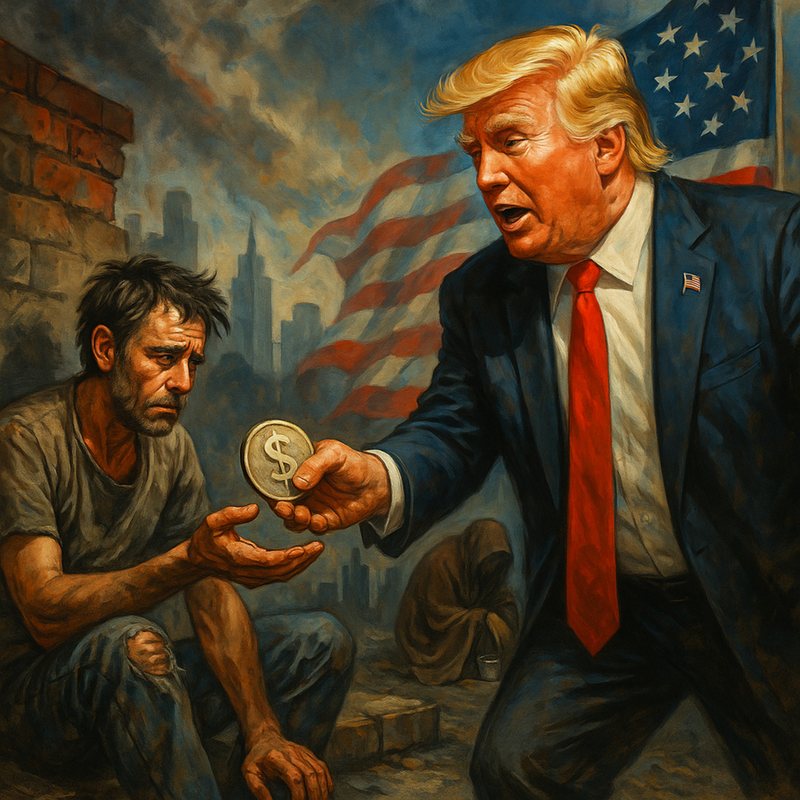
You get told to check your privilege. Exactly. Yeah. Which you can imagine creates this deep sense of alienation for a lot of people. And this, the article argues, is what leads many in that working middle to quote Drift to Trump, the roughnecks ruffian, the only guy who tosses them a bone, while the left offers sermons and hashtags.
It's about feeling acknowledged, even if it's just a small gesture. Which brings us to what the article calls the ugly secret. Poverty fatigue votes. Simple as that. Yeah.
So just to recap that cycle Abraham lays out, fatigue turns into resentment, and that resentment turns directly into votes. And because of that powerful cycle, the working class keeps slipping away from maybe more traditional political homes. Why? Because, as the article sums it up, they'd rather be tossed a cheap break now than be told how good they'll have it someday when the perfect system finally arrives. The immediate, tangible thing wins.
It often does, yeah. Over the long term from abstract promise. So how do you even start to fix that? What does the article suggest? It suggests you have to get honest about the grift, the moral hazard, the Cadillac Queens and the lobster EBT myths. Face it ahead, I acknowledge it all. Some are true, some aren't, but the resentment is always real. You have to deal with the.
Feeling and that moral hazard part. That's the idea that safety Nets might discourage work for some. Right. It's that perception, whether statistically accurate or not across the board, that safety Nets can sometimes reduce the incentive for self-reliance. It feeds into the fatigue. So the stark conclusion is just laid bare. Poverty fatigue is real.
It votes. Guess why? It's this powerful, often invisible force just shaping everything absolutely. So bringing it back to that core metaphor one last time, Europe offers a hammock, America a fishing line just above the concrete. And then Trump comes along, tosses you a bone and, crucially, says, I see you. And understanding that dynamic, that poverty fatigue, is just profoundly important if you want to grasp what's happening in society and politics today.
It's a really key factor often missed in why people vote the way they do, even when it seems maybe counterintuitive from the outside. So something to think about, right? How much of our public arguments, our political divides, might actually be rooted in this unspoken exhaustion? Moral, emotional, financial What kind of new conversations could we even start? What solutions might appear if we really tried to see this fatigue in ourselves and in others, instead of just dismissing it or making it political ammo?