Read the full transcript (1,906 words, machine made)
You know, it's funny how some families have these stories, or maybe not even stories, just patterns, things that kind of hum through the wall. Oh absolutely. Like an unspoken vibe almost. You feel it even if nobody talks about it directly. Exactly.
And that feeling, that subtle hum, is actually right where we're starting this deep dive. We're getting into a concept the source essay calls Manufactured Descent. Right. And you know, if you're immediately thinking Q Anon or Russian bots, this essay argues it goes way deeper, much older. Yeah, it's not just digital noise. It's about how real old grief's actual historical pain get deliberately, you know, stoked back into a flame. When someone needs cheap fuel, that's the phrase the essay uses.
It's quite chilling, really. It is. And the essay we're looking at today, it leaves this idea through personal stories, history. Yeah, uses some really potent metaphors. Definitely. So our mission really is to unpack those core metaphors, the ghosts, the coal seams, and this idea of the switchboard. Trying to understand how that ancestral pain, that real suffering, can be sort of harnessed and redirected. Without people even realizing their own history is being used that way so for.
You listening? We want to make this clear and quick, give you those aha moments about how these things shape our world, your world, without it feeling like a lecture. Yeah, it's not just academic. It's about seeing those floorboards humming, maybe in your own life or just out there in the world. So where does the essay start? It kicks off with a really personal story, doesn't it, About family?
It does it talks about the author's pop pop moving Nana to a dead end Rd. Spring Lake, NJ The. Idea of being. To stop her reaching the bar, basically keep her away from the bottle. But as the essay puts it, the bottle always finds its way.
She'd drink, get furious, use the phone, dial in that, rage out. Half real, half imagined, all unstoppable betrayal is how the author frames it. Yeah, and the key line there you can build a cul-de-sac to trap a body, but a ghost always finds the switchboard. Wow. OK, so that switchboard idea comes in early. And how does that connect to the author's own childhood? Well, they describe their childhood soundtrack as ice cubes against cheap glass.
Mom's whiskey. Dad's gym. Held together by drinking, the essay suggests. And a kind of silent agreement not to poke at the ghosts too much. You know the family history.
Parish famine, Hungarian fascists, all that stuff. Exactly. Beat cops, boarding houses, generations of it. Even moving to Hawaii didn't silence it. The ghosts were patient.
Humming under the floorboards, rattling the pipes still there. So how do we get from this very personal family hum to say global conflicts? Is there a bridge? A metaphor. Yes, and it's central, the coal metaphor. Pain as buried carbon.
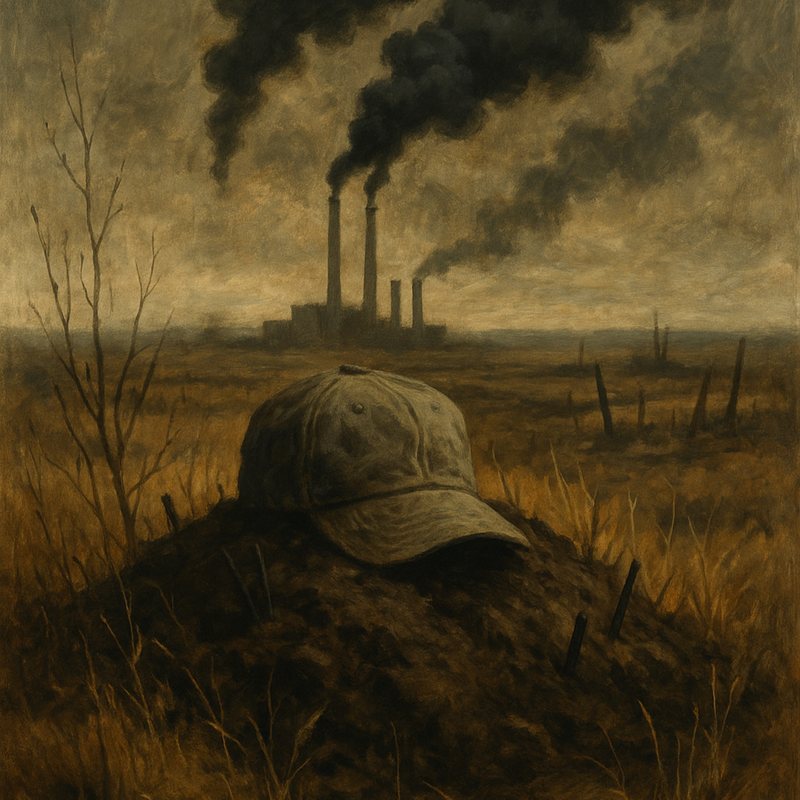
OK, explain that a bit. They give historical traumas, genocide, slavery, famine, like ancient carbon deposits we build over them. Call it progress. New towns on top. Pretend it's dealt with sequestered right? But the essay's point is crucial. Buried carbon is only dormant until someone wants to feed oxygen to the seam.
It's waiting and someone can choose to light it. Precisely. And that's where you see these ancestral coal seams being stoked internationally. Like in Ukraine, The essay tackles that. It does. It contrasts the sort of bedtime version we often get. Democracy versus tyrant, good guys versus bad guys. Simple narrative.
With a deep coal seam underneath the Holodome war, Stalin's famine in the 30s, millions starved. And that's not just history. According to the essay, it lives. Exactly in whispers and fears about Moscow taking the bread, that ghost, it argues, waited until someone knew how to stoke it. And the stocking part. How does the essay frame external influence, say from the West?
It's quite direct. Suggests the US didn't invent the wound, obviously, but quote we sure as hell knew how to dial it. Dialing the ghost via the switchboard. Promises of never again NATO protection, fighting Stalin's ghost. Yeah, just enough oxygen, the essay implies, to push things towards conflict. Towards a grinder they can't win is the phrase used. Yes, the original trauma.
The carbon is real. The switchboard just connects the match. Now, the essay is very careful here about not excusing current aggression. Extremely careful, it explicitly states this is not an apology for Putin's slaughter. Not a soft word for the Kremlin.
It's. An accusation. Aimed at anyone who looks at someone else's ancestral pain and says that'll burn nicely. It's about the manipulation of trauma. OK, so that's one example.
How does this play out with something like soft power? Less overt conflict? Hawaii is the key example there. The author grew up with it. The stolen Kingdom, the sugar barons, the Navy bases. It was no.
A ghost that slept. A quiet rage. Yeah, something simmering in families at gatherings. The sovereignty movement existed but often lacked oxygen. A buried scene. So what happens when the switchboard plugs into that? It's not a physical phone line anymore, is it? Right now it's hashtags, Instagram protests, Ted talks. Duolingo offering Hawaiian lessons. While hedge funds buy up Maui.
The grief is real, absolutely, but the switchboard dials it into. Virtue points. Tourist skill. The soft glow of empire laundering its sins, as the essay puts it, and the hinge the crucial. Part the carbon burns, but the people still can't afford to live there.
Exactly. The energy is consumed, but the root issue persists. That's powerful. OK, this leads to me the most sensitive example. The Shoah, The Holocaust. How does the essay approach Never Again? Very carefully.
It calls the Shoah, the nightmare that eats all the bedtime stories, a trauma that lives everywhere. Synagogues. Friday nights, Tel Aviv bunkers, checkpoints. The fear is undeniable. Real translates to never again. Of course, and the essay acknowledges, never again is vital.
Like a guard dog, it can also become a hired gun, the same carbon that vigilance can be used to justify walls, checkpoints, bulldozers, bombs. It's the echo, the essay says. You'll never be cattle again. Right and the machine. Politicians, arms dealers, ideologues, They know how to stoke that echo. Dial the ghost at the right moment. So again, the trauma isn't fake, the grief is real. Absolutely not fake, but it makes it vulnerable. That's the core point.
No one is safe from the switchboard. And this applies elsewhere to the essay mentions. The white working class in America? Yeah, floorboards humming with the Depression, lost factories, the 2008 bailout, humiliation. When the banks got saved and they didn't, right? The algorithm knows that seem people whisper about replacement betrayal.
Same dynamic stocking the embers. And the author brings it back home personally, even after quitting drinking. The pipe still hums manifests differently overeating, overthinking, late night writing, so the. Ghost isn't just the past event. It's the open line, the vulnerability.
If you don't guard it, someone else will dial it. U reroute it, sell you something. And the switchboards themselves have evolved from Nanas old phone line. Oh yeah. Now it's smartphones, TikTok, maybe a well meaning NGO that wants you to speak your truth. As long as it comes with hashtags and donations. Potentially, yes.
And the author is clear. I'm not better than this. I'm not outside it. We're all part of it. We're all switchboards too. OK, let's drill down into some of the concepts here. The essay mentions epigenetics.
Can you unpack that a bit? How does it make people easy to hook? Sure, it's not pop psychology, it's biology. How major stressors, famine, terror can literally change how your genes express themselves. Not the DNA code itself, but how it works.
So stress responses can be inherited in a way. Yeah, descendants might metabolize fear differently, react more strongly, makes them potentially easier to, well, hook when those old traumas are triggered. Think Dutch hunger, winter children of Showa, survivors, descendants of enslaved people. Doesn't doom you, but. Makes the floorboards hum louder, maybe more resonant.
Gotcha. And how is manufactured descent different from Tomsky's manufactured consent? Good question. Consent is about propaganda for passivity, getting people to agree or just go along. Descent is the flip. You activate old grievances, stir up the rage that's already there, and then aim it.
So consent is about quiet agreement. Descent is about directed anger. Exactly. Suffering in manufactured descent is real. The manipulation lies in the deliberate provocation and redirection. Which makes the switchboard the absolute key metaphor. It's the the control panel.
Yeah, the hub. The line that lets the ghost dial out, connecting that personal or group pain to a bigger current, amplifying and steering it, often for someone else's benefit. And soft power is a tool for that switchboard, just to recap its role. It's the indirect influence, culture, education, aid apps, the friendly face that can still reroute the ghost channel grievances in subtle ways. And finally, that carbon sequestration idea ties it all together.
Ancestral trauma as buried fuel. Right. Like coal or oil, it can lie dormant for ages. But once you dig it up and burn it, stoke those old wounds, it poisons the atmosphere all over again, causes new harm, new conflicts. OK, super important.
What is this essay not saying? Let's be crystal clear on the disclaimers it makes itself. Crucial point. First, it does not blame victims. It says trauma makes you vulnerable to being baited.
Doesn't dismiss real grief either. No, but it urges you to see when grief is being repackaged and sold back to you. The pain is valid, the manipulation isn't. And politically regarding Ukraine or the Shoah? It's explicit, not pro Putin, not anti Ukraine. Focuses on how wounds get used by those who benefit. And not anti Jewish or both sides of Jing of the Holocaust. Correct, it affirms never again, but points out how even that truth could be tempting fuel for those profiting from a siege mentality.
The critique is always aimed at the manipulators. So wrapping up, this isn't a sermon, the essay says. It's an elegy. An elegy for the carbon we can't seem to keep buried. The ghost never dies, but maybe we don't have to feed it to the same machine generation after generation. Some ghosts want a memorial, some a closed door. Some just want to stay asleep.
The key is knowing which is which for ourselves. Which really puts the question to you listening. What are your floorboards humming with? What's your switchboard connected to? Yeah, because, the essay warns, every coal seam you feed burns someone's lungs. In the end, we need to recognize that not every seam needs to burn forever.
Maybe we can choose differently. And we'll leave you with that closing blessing from the source text. Something to Mull over. May you know your ghosts, may you witness them, but not sell them cheap. May you watch the floorboards hum, but keep your switchboard guarded. May you drink the whole bottle of your own story, not the boxed wine your enemies would sell you in its place.