Read the full transcript (2,264 words, machine made)
OK, so today we're jumping into something pretty fascinating. It's this question of, well, who really shapes culture? For the longest time, right, we were kind of told it was, you know, the academics and their ivory towers, maybe powerful financiers or even that sort of whispered idea of a gay agenda. Yeah, like some kind of secret script being passed around. Exactly. But the sources we've been digging into, they suggest something completely different.
They basically say if you wanted to find the real authors, the ones holding the cultural pen. You didn't need to look in boardrooms or faculty lounges. Nope, you just needed to hang out near a high school auditorium late on a Thursday night. It really does shift the focus, doesn't it? All that energy spent looking for these like grand manipulators when the material we looked at points backstage to this, well, surprisingly powerful source of influence that was hiding in plain sight.
Right there amidst the, you know, the dodgy sound effects and the smoke machine that never quite worked properly. That's where you find them, what our sources can affectionately call the Flitty Floofs. Flitty Floofs. Yeah, it's a memorable term. It is, and this deep dive is really all about figuring out how these tacticians of the stage, as the sources put it, use their kind of good script to basically change how we think about things like sexy or safe, even what it means to be masculine today.
And that leads us to exploring these newer archetypes, right? Like the Zaddy and the the Bud Light dad. Exactly. And how the stage in a way, has become this new battleground for identity. So let's start there with this group.
The sources point to the theater kids. We were so busy looking elsewhere, right? Academics, financiers, that whole phantom script idea, the. Tweety tenured wonks or the deep cabal? Yeah. That the sources say Nope.
The real action was backstage. Precisely. And they were there way before we even started talking about cultural wars. The research paints this picture. You know, sitting cross legged on some worn out carpet, swapping back massages, wearing first store finds that smelled faintly of mothballs and maybe some late night tears. Oh.
Yeah, I can picture it and. They'd audition for the part of a tree you know and commit so hard you'd think they were actually photosynthesizing. Totally. They'd weep openly, hold each other's faces, sing pop songs like their life depended on it. And in a way, maybe it did.
Which brings us to that key idea from the sources, them being tacticians of the stage. That's such a great phrase. It really captures how they operated. Understanding that, you know a good story, a good script, is way more powerful than a sharp sword when it comes to shaping the world. Exactly.
They understood narrative emotion. They always kind of held the script, subtly influencing our dreams, the things we whisper to ourselves. So when we say they held the script, what does that actually mean in practice? Well, it means they weren't just acting out parts, they were sort of intuitively mapping human emotion, social dynamics. And this ties into that core archetype, the Flitty Floof. OK, let's unpack right?
So the sources are clear. It's affectionate, it's self adopted, never used as a slur. It describes that fae flamboyant, emotionally porous performer. So it's more than just a person, it's like an attitude. Exactly. An identity, an attitude, a mix of theatricality, maybe a certain touchiness, but also this real openness, this willingness for self revelation.
You can really see that in those early descriptions, the original fliddy floofs, they were kind of teaching us how to hold space before that was even a phrase, right? Absolutely. They just crack open emotionally right there, maybe in the cafeteria, and let you see your own fragile bits reflected without any judgment. And the sources even mention a specific subgroup, the tree people. Yeah, the tree people, those were the kids who even if they were playing a rock or, you know, the wind, they pour so much emotional depth into it.
They held the vibe together. As the sources say, they're sort of the ancestors of every modern flitty floof who keeps the energy right at a party. So is that deep emotional availability, the theatricality, the courage to be vulnerable, that's the source of their influence? That's what the research suggests. That's what makes the Flitty Floof this powerful, even if often unseen, cultural engine. OK, so here's where it gets really interesting, I think. How does this fliddy floof legacy connect to how our idea of sexy has changed over time?
Right The sources propose that what they call the queer male imagination, or more directly, the male gaze, has had this really subtle but profound effect on what we find sexy in men and women and they. Use Sex in the City as an example. They do. It's called a touchstone, right? Famously a show with huge appeal within the gay community. The idea presented is that Carrie and her friends, while aspirational for many women, really embodied a certain sensibility.
How so? Well, the humor, the banter, the whole aesthetic. The research suggests it resonated deeply with that male gaze perspective that these women were, in a sense, acting out these flamboyant flitty spoof versions of the modern libertine. So it's not like a conspiracy, but more like. More like a poetic inevitability, as the sources frame it. When the people who understand performance and narrative so well end up writing the lines, those lines tend to catch on. And this isn't new.
This goes back decades, the 60s, seventies, the Peacock men. Exactly. Think Mick Jagger, those hips like switchblades or David Bowie constantly playing with gender. And Prince, he called him, the Flitty Floof of all time. In purple. Yeah, Terrifyingly beautiful.
More than man enough. The key insight there is how these figures use theatricality fluidity. They made vulnerability and flamboyance part of masculine sex appeal. Then the 80s hit hair bands. Oh yeah, the hair band. Flitty floofs, Poison Mötley Crüe, mascara, smudged spandex, lace, what the material calls reckless peacockry. It wasn't subtle.
Not at all. It was wild, messy, and it really cemented the flitty floof as a permanent resident of the American libido. That performative gender bending masculinity became a rock'n'roll standard for sexy. But then the pendulum swung hard in the 90s. Heroin shake. Totally different 5 suddenly desire was about absence vulnerability.
Kurt Cobain in that moth eaten cardigan you. Call him a flitty floof in ruin. Exactly beautiful because he was breakable, visible bones, eyes like bruises. It was the anti boulder look. Sexiness shifted from showing off to this fragile, maybe wounded, authenticity.
Revealing something deeper, more emotional. Right. And then came the 2000s and the metrosexual. Ah yes, the watered down flitty floof for the suburbs. Kind of the straight guy, using hair product, plucking eyebrows, carrying a man bag.
It felt like a costume for a while, but it stuck it. Did and the material highlights this as the moment a guy could borrow that flitty floof wardrobe shine without, you know, giving up his dad hood card. It really shows how that aesthetic influenced by the queer male imagination just seeped into the mainstream, didn't it? Blurring those old lines. Absolutely. Which brings us pretty much up to today and this whole new script playing out this contrast between the Zaddy and the Bud Light dad.
OK. But before the Zaddy, we have to acknowledge the other side, what the source is called the boulder shoulder holder. Right. That super hyper jacked, like 3% body fat look. The superhero aesthetic, your Hemsworths, your Jackman's.
Yeah. Action Hero standard. But here's the irony. The sources point out that physique, which is now peak mainstream action? Masculinity. It actually got its start in the gay underground. No way.
Really. Yeah. Think old school Muscle magazines. It's another example of how that queer male imagination influenced the broader culture in ways people might not even realize. What was niche became the norm for heroic men on screen? OK, so contrasting that is the soft zaddy. This hybrid creature, yeah, born in the queer corners of slang, the definition being like protective kind of bear leaning, but also slutty daddy.
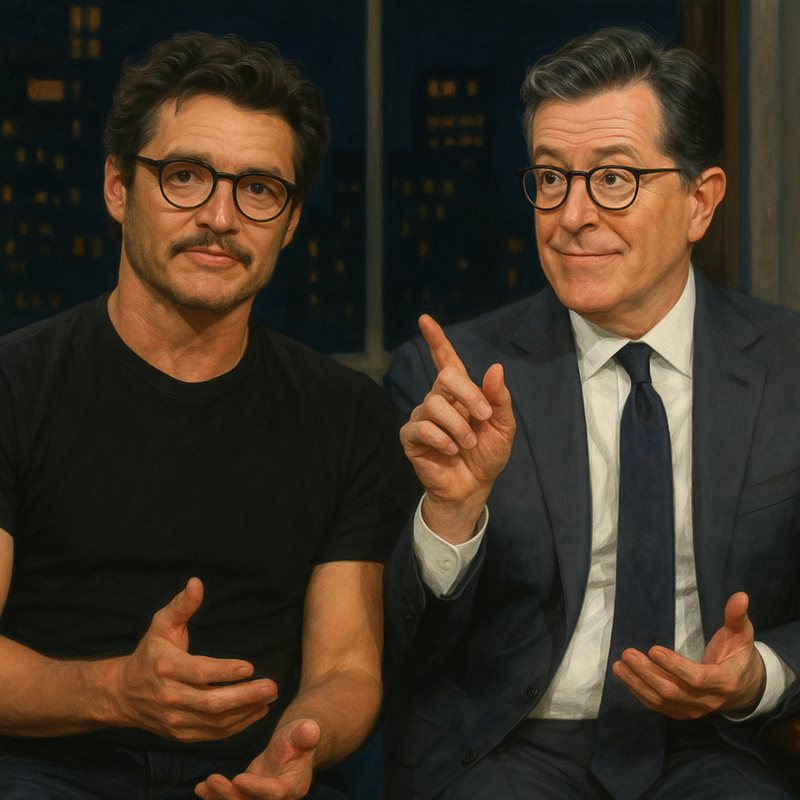
It's a specific combo. Very specific and the analysis really points to Pedro Pascal's the prime example right now, the reigning flitty floof Zaddy. What makes him fit the mold so well? It's his ability to slide between and being that gruff protector, the father figure, and then suddenly dropping this sly, charming, almost flirty vibe, that slutty daddy aspect. He.
Seeks gay bar banter but with stoicism. That's a quote from the sources, right? Exactly. It's a carefully calibrated performance, a script that really hits that Zaddy archetype perfectly. And you have others may be trying to fit that mold, like Stephen Colbert.
Well, the sources discuss his transformation from the sharp tongued mask wearer of his old show to this more flitty floof in dad glasses persona now dancing, giggling, the safe late night gesture. But the sources bring up that Mean Girls line stop trying to make fetch happen. You can't just force a vibe, it has to feel authentic. Right, you can't just put on the costume. Exactly. The authentic flitty floof just is. Which leads us to the counterpoint, the Bud Light dad. The old, stoic, untouchable American man. Yeah.
Often seen as like, emotionally underfed but fiercely loyal in his own quiet way. His strength isn't in speeches, it's in actions, in silence. He's a reminder that maybe masculinity didn't need a total rewrite. Just yes, room to breathe. That's a core argument in the material he represents a kind of masculinity that exists without needing the performative layer. OK.
But this raises a really important kind of critical point. What happens when this flitty flu way of being, which started as maybe offering permission, starts feeling compulsory? Yeah, the sources warned about this, about a new kind of closet being built. How so? Well, the original flitty floof, The research is really clear on this.
They never asked anyone else to become them. They just wanted space to be them. They offered permission. Right, permission to be vulnerable, authentic. But the danger now, according to the analysis, is that this ritual of permission is getting, well, flattened, turned into APR strategy.
So the very people who championed being real are accidentally creating a new box. That's the irony, highlighted the theater. Kids might own the pen now, but their authentic movement risks being Co opted turn into a new set of expectations everyone has to meet. Which leads to what the sources call this inherent absurdity. Yeah, this idea that every stoic man has to be a zaddy now, or every dad has to be slutty daddy adjacent.
Or that say an ex military guy, the bed like dad type must learn the language of the flitty floof to be considered OK, safe, enlightened, desirable. The sources basically scream no, that's absurd, it's not true. It takes something genuine and turns it into a performance requirement. It misses the whole point of authenticity versus just acting apart. Completely.
The original spirit was about opening up, not about telling everyone else how they have to be. Once it becomes mandatory, it's not liberating anymore. So where does that leave us navigating all this? Well, the sources come back to that metaphor. The world is a stage, but a good stage needs room for every kind of player. Not just one type.
Exactly. There has to be room for the tree people, the flitty floofs crying under the spotlight. There's room for the zaddies, the slutty daddies, the Fay boys and eyeliner, the glam boys and lace. But also, crucially, as the research really hammers home, there must be room for the Bud Light dad, the one who has no mask to drop, no big speech, whose love is just a quiet presence that outlasts applause. He gets a place at the cast party, too, even if he doesn't dance like Colbert or flirt like Pascal. He has to.
That's the point. And the core message from all this seems to be improvisation. Freedom to improvise your lines. That's it. The only thing worse than the old closets, the sources argue, is building a new one out of rainbow curtains and someone else's glitter script.
Just letting people be who they are, yeah. That freedom is paramount. OK, so let's wrap this up. We've taken this deep dive into how maybe surprisingly, it was the theater kids, the flitty floofs who've been holding the pen on culture. Not some secret group, but these vulnerable performative souls shaping how we see sexy from, you know, Mick Jagger swagger to today's zaddies shifting the script through performance, not force.
And the material definitely suggests that, yes, the theater kids are at the table now. They hold the pen. But the final thought from the sources is for you, the listener. You still hold your own tone. May you? Find your lines.
May you improvise your lines. And maybe most importantly, may you never let someone else's fetch become your closet. The stage is waiting, whether you flip or floof or just stand strong in your own quiet way.