Read the full transcript (1,900 words, machine made)
OK, so let's really dig into something big today, July 1st, 2025. It's a pretty monumental day and honestly a bit unsettling. USAI, you know, America's biggest humanitarian arm, has officially shuttered its doors after 63 years. Yeah, it's huge. And this isn't just like an agency closing down.
It feels more like pulling back the curtain on this whole complex system of foreign aid, this thing people sometimes call America's soft empire. Exactly. And the consequences, I mean the implications for millions of people worldwide, they just staggering. And what's really fascinating, or maybe revealing, is how this whole thing forces us to look at a paradox that's been there a long time. Our mission today really is to unpack this idea that, well, when it comes to foreign aid, we've maybe always been living on borrowed time.
A borrowed time? Yeah. So this deep dive, we'll explore why this lifeline, why it was never really permanent, what it actually cost, you know, beyond the dollars, and what happens now when the lender, so to speak, decides to call in the debt. And you can't ignore the immediate shock of it all. The Lancet, I mean, that's a top medical journal.
They're predicting this closure could cost up to 14,000,000 lives by 2030. 14,000,000. Yeah, it breaks down to what, An average of 88 deaths an hour? And a third of those are kids under 5. Yeah, those are the raw facts.
Really sets the stage. It absolutely does, and it feeds right into that core metaphor you mentioned Borrowed time. Exactly. Yeah, that's the central idea here. Foreign aid, it is often presented, you know, as this promise, freedom, prosperity.
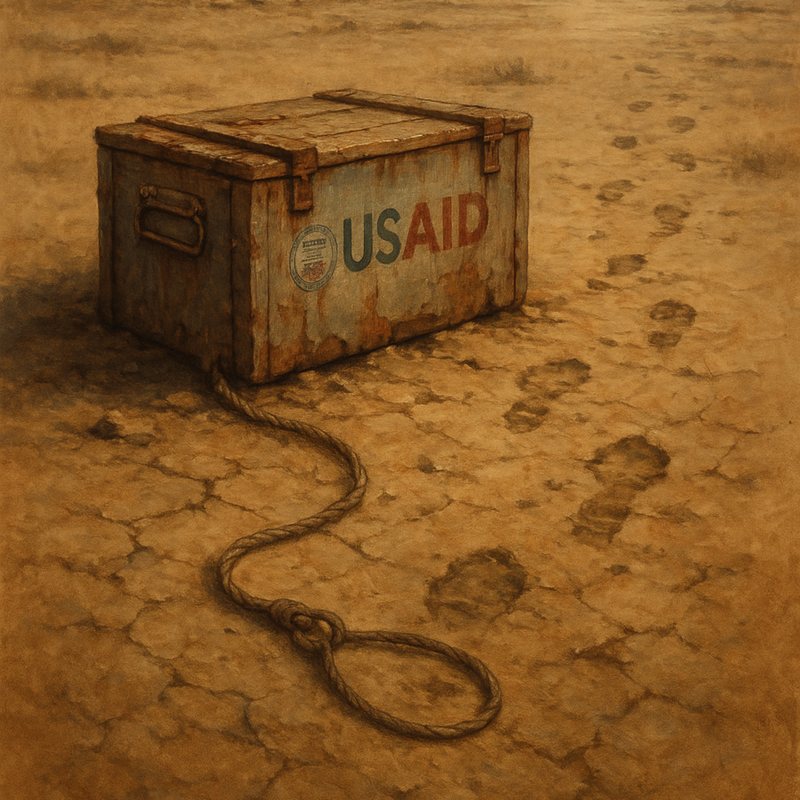
But there's always this hidden threat, this sort of fine print. The promise can be withdrawn. It's not really a gift. Our sources suggest it's much more like a lease. A lease. That's quite a way to put it.
A moral lease, you said. What does that imply? Like what happens if the tenant defaults or the landlord just changes their mind? Precisely. The sources use that term moral leasehold.
It suggests this power dynamic, right where the aid recipient, but it might be building things, improving lives, but they never truly owned the foundation. They're building on the support, the help. It's rented, it's not really yours. And that really frames the whole thing as transactional. Underneath it all, you're essentially building on someone else's land.
That's a stark image building on rented ground. But let's rewind a bit. Was it always like this, this lease model? What was the original idea behind USAID? Back in 61, Kennedy pitched it as this. This noble thing, right?
A moral obligation. Oh, he definitely framed it that way, but it was always sort of dual natured. Right from the start. Kennedy was smart. He talked about moral obligation, and I think there was genuine humanitarian impulse there, for sure.
But at the same time, it was also a very shrewd geopolitical move, a necessity. Well, it bought friends. It opened up markets, it created buffer states against communism. Very pragmatic, really. So it was both things at once, A rescue mission. And also, like our sources put it, a kind of Trojan horse aid that gets you compliance or leverage. That's the idea.
How did it work on the ground? Well, the sources say it was designed to keep boots polished and Halos clean. Basically, you could be seen doing good feeding the hungry, which is genuinely good work, right? But while doing that, you're also sort of inoculating markets against your rivals, preventing threats, stabilizing regions in your favor, its influence without, you know, sending in the troops. Clever.
And that approach, that strategy, it really hit a high point, didn't it, with George W Bush's PEPFAR program, the President's Emergency Plan for AIDS Relief starting around 2003. That was huge. Saved millions from AIDS, especially in Africa. Absolutely. PEPFAR is often seen as like the peak of American soft power in action.
Yeah, an undeniable public health success. But our sources call even that a civilizational bargain. What's meant by that? How is it different from, say, earlier aid? Well, even this, you know, this gold standard of targeted aid, it's described as that bargain, because it wasn't just pure altruism, it was still deeply transactional. The underlying message, may be unspoken but clear, was something like We help you survive this crisis, you align with us, we keep you alive, you stay in our sphere of influence. Our sources really highlight this as the soft empire in its best, most honest form.
A powerful, if implicit, deal. A deal, A pact. But what happens when that pact, that lifeline, starts feeling, well, more like a leash? This is where it gets tricky. You almost hear Reagan's ghost, right?
I'm from the government and I'm here to help. Yeah, that quote just hangs over this whole discussion, doesn't it? Because the help as a source of stress again and again, it's never really unconditional. Relief isn't meant to be a permanent foundation. It's more like a bandage. A bandage, Yeah, Buys you time.
Time for a wound. You're sort of expected to heal yourself eventually, so. What are the dangers then, when that bandage of A just stays on becomes permanent? How does it freeze political risk, like the sources say, or undermine local efforts? Well, the big one is dependency aid saves lives absolutely in the short term, but it can also unintentionally freeze things. It can prop up weak states or leaders who maybe wouldn't survive otherwise, reducing the pressure for them to reform. And it can undercut local agency. If people get used to external help solving problems, it can dampen local initiative, local solutions. You start expecting someone else to feed you next time, which ironically makes you more vulnerable if that aid suddenly disappears.
That makes sense. It's a difficult dynamic, and our sources mentioned Bono's farewell to USAID workers. He apparently got quite emotional, said something like they called you crooks when you were the best of us. You can understand the sentiment seeing the human side. Oh absolutely, you can feel the grief there.
Many people USA were incredibly dedicated. But there's a counterpoint in the sources too. Isn't there a kind of challenge to that? Yes, a really crucial one. While acknowledging the dedication and the grief, the sources posed this question.
OK, but who built the dependency that allows crooks to exploit the system in the 1st place? Who kept the soft power flowing, sometimes in ways that actually weaken the local capacity? Aid, even with the best intentions, can sometimes feed corruption, empower elites who capture the benefits right. So sometimes maybe the best of us end up being well meaning cogs in a system that perpetuates problems even as it solves others. Which brings us right back to today, to the foreclosure, essentially the 2025 closure under Trump 2 point O, fueled by this isolationist populism.
And then Elon Musk comes in as this czar of government efficiency. Yeah. Reportedly calling USAID corrupt and putting it through the wood chipper. That's the language used. Wow. And this really is the moment that moral leasehold we talked about it just expires.
Can put the sources point to the cold calculation. From a republic's viewpoint, that soft empire Moat cost Americans about $0.17 a day. Not a huge amount individually, but. But voters got tired. Taxpayers decided they wanted the defenses, the Moat inside the walls, not projected outer. It's a fundamental shift from global engagement back to focusing inward.
OK, so let's get to the really tough questions this raises. The analogies are sources use are quite powerful. One compares relief aid to AIDS medication. Can you unpack that? Yeah, it's a really critical, maybe unsettling analogy. Relief aid, like ART, the antiretroviral therapy for HIV, it operates on a similar paradox. Once you start it, you create a dependency. The body or the system relies on it. If you suddenly pull that support, the patient or the guest case, the independent system can crash, sometimes even worse than if they'd never had the help. So it's chronic care, not a cure. Exactly.
It manages symptoms, keeps things going, but it doesn't necessarily fix the underlying vulnerability. That's a really stark way to think about it. It forces you to reconsider, consider what help even means long term. And it leads to this just raw moral question the sources posed directly to you, the listener. Would you rather drown alone or live forever on borrowed time with a leash tied to your next meal?
Yeah. And what about sovereignty? I mean the sources asked what kind of neighbor builds you a house but keeps a kill switch for the lights. These are the core dilemmas, aren't they? But it's important we need to bring in the nuance here to the conflicting views. There's what the source calls a bullshit check, an argument against just saying tough luck, bootstrap or drown. What's that argument it?
Basically says look that's cold and it ignores how we got here. It ignores history, colonialism, Cold War, proxy fights, propping up puppet regimes. All these things contributed to making some states fragile in the 1st place. You can't just expect them to magically become strong overnight, especially if their foundations were messed with for decades. That's.
A fairpoint acknowledging the history, right? And on the flip side, revisiting Bono's point is teary fears are real. The human cost is real. But there's also the perspective that aid bureaucracies can become self-sustaining entities. They feed contractors, build careers, maybe benefit local elites as much as the needy.
So the system itself develops interests. Exactly. So sometimes the best of us, as the source puts it, might just be well meaning middle men tangled up in a very complex, sometimes self-serving system. So where does that leave America's perspective in all this? What the core take away seems to be that the whole soft power myth was always half cover a way to project influence nicely. But when that influence isn't seen as strategically vital anymore, or it just gets too expensive, well, the world's margin kids get pushed off the Ledger. Wow, pushed off the Ledger.
Yeah, the moral lease runs out the tenants on their own. So wrapping this up, what's the main message for us, for the listener trying to process this huge shift? It sounds like the bottom line is, well, relief is temporary. That seems to be the strong message coming through. Relief should be a bridge, not your bedrock.
Build on your own foundation, your own stone. Because otherwise. Or you'll drown when the flood comes. It's a challenging thought, and the sources leave us with this final provocation. Something for you listening to really chew on.
If you build your children's survival on the grace of strangers, you can't rage when the grace expires. If you think the Empire's help is a blank check, you just haven't been reading History A. Sobering reminder. And maybe the final thought is when that flood comes, you can't really blame the empire that told you over and over I'm from the government and I'm here to help. Until I'm not.