Read the full transcript (1,779 words, machine made)
So let's start with a big question, one that's really personal but also cuts deep into American history. What does it actually mean to belong here in America? Right. And was this country ever really intended to be just one thing? You know, one single uniform identity. Exactly.
These are the questions swirling around the piece we're diving into today. Yeah, it's this really fascinating and very personal article by Chris Abraham. It's called Poi Dogs Impurity Tests. Why America was Never an ethnic ethno state. And it started apparently, from reflecting on a tense conversation, but it spiraled into this much deeper look at his own past, his memories, and what it means to be American.
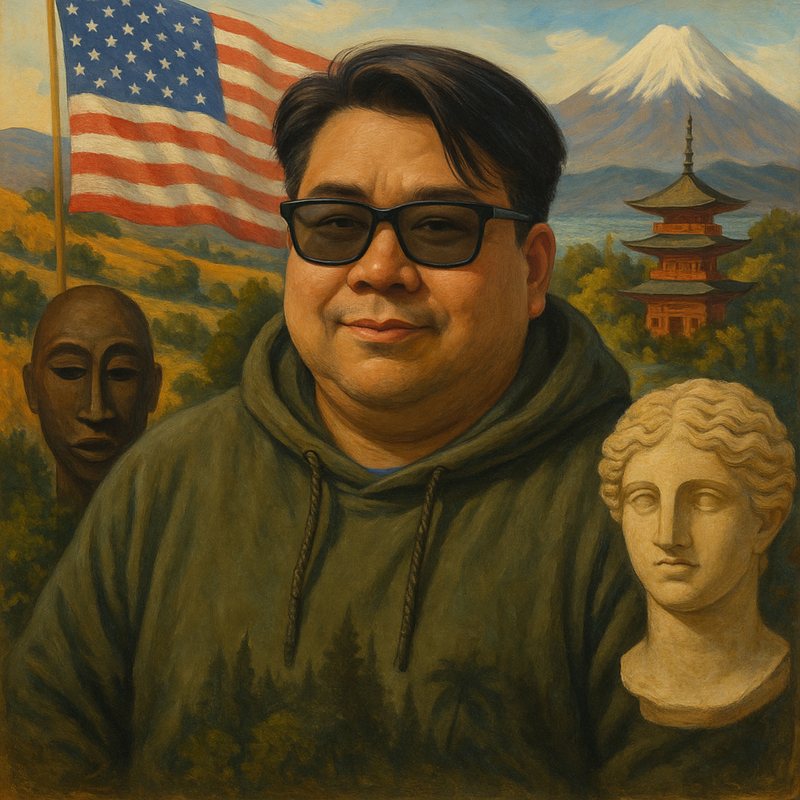
So our mission for you in this deep dive is really to unpack Abraham's argument, his core idea that America fundamentally was never set up to be an ethno state. And we'll see how his own life story, his experiences, shed light on these really complex ideas, identity, belonging, even how the definition of whiteness keeps changing. Hopefully it gives you a more nuanced way to think about being American. Let's. Jump in. OK, so Abraham kicks things off back when he was 6. He's in Salt Lake, Oahu, living in this pretty modest garden apartment complex near the airport. Right, and he describes himself as a hail kid. Yeah, Irish, English, German, Czechoslovakian, Hungarian, quite a mix.
And his friends also mix kids name Sukhai Maida Chen. Japanese, Korean, Filipino, Chinese, Samoan. Really diverse. And he had this great term for all of them together. Poi dogs.
Which means basically mutt kids, but proud of it, proud of the, you know, the stories in their blood. Such a cool image of childhood, but then things changed. He did, he says. By Intermediate School, that pride, that whole poi dog identity, it started to fade. Now, so suddenly, he wasn't this unique mix anymore.
He was just white, or just hail, as he puts it, and he describes it feeling like an erasure, like a flattening of all the specific parts of him. His dad's stoic German grit. His mom's Irish laughter. His grandmother's hushed check prayers. Wow, that's specific.
You can feel the loss there. Totally, he says. That memory still lives in him, and it really seems to be the seed for this whole exploration. He also mentions a really nice detail about his first friend right Frank Park. Ohio. Yeah, that's lovely.
Frank Park, whose mom would grill Colby and introduced him to kimchi. He says the flavor lit something up in him and he. Still eats it, The Korean store downstairs. It shows how those early mixed experiences really stay with you. Absolutely. That personal feeling, that sense of being flattened, it directly leads him to ask this bigger question. Was America ever meant to be an ethno state? And he has a pretty clear answer. Very clear, he says.
I don't think so. In fact, I know it wasn't. OK, So what was it then, According to him? Chaos. Basically, he paints a picture of the beginnings as chaotic, contradictory, alive with migration, with faiths, with fractured languages and fragile alliances. Not exactly unified vision.
Not at all. His main point is purity wasn't the project. The project was possibility. Possibility. Like, I like that it's less about a fixed identity and more about potential, an ongoing thing. Exactly.
It reframes the whole narrative and he tackles the idea of America's original sin. Which he doesn't see as diversity itself. No, he sees it as hypocrisy, the huge contradiction of dreaming of liberty while being built on slavery. But even with that massive hypocrisy, he insists even then, this land was a Stew. It wasn't monolithic. And he gives examples.
Yep. Straight from the source. Free black citizens before slavery fully industrialized, but Jews in New Amsterdam, Even the fact that Hawaiian royalty once visited the White House. So layers of complexity from the very start. Which leads to his simple conclusion. We've always been messy.
And this messiness, he argues, is fundamentally different from actual ethno states. Right. He contrasts the US with places like Japan, Korea, Hungary. There, he says, ancestry is law and legitimacy flows through blood. Meaning immigrants, even those born there, often remain outsiders.
Pretty much. He points out that that even second or third generation immigrants often live as outsiders. Assimilation isn't really on the table because it isn't offered. That's the stark difference. It is, and he makes this interesting observation that somehow America gets judged more harshly for failing at perfect inclusion than these other countries are for not even trying. Like we're held to the standard of our own possibility, even when we fall short.
You can say that, and this idea of shifting standards leads him to look at whiteness itself in America. Saying it, it wasn't always what we think it is now. Exactly. He argues forcefully that whiteness in America has never been stable. He lists the groups Irish weren't white, Italians weren't white. Jews weren't white.
Slabs weren't white. So what was it then, if not just skin color? He defines it as a constantly shifting proximity to power. Like a gatekeeping system, the rules change depending on who the powerful wanted to let in or keep out at any given moment. Power, not just pigment.
That's a key distinction. It really is. It reframes whiteness as more about social and economic access than genetics. Which brings us to today's identity conversations. He has some critiques there too, right? He does, he points out, a kind of inconsistency. He sees people will demand, quite rightly, the most exacting forms of nuance for themselves, like. Distinguishing between Dominican and Puerto Rican or Korean and Japanese.
Exactly insisting on those important specifics. But then, he says, those same people might turn around and reduce every pale skinned person to white. And he feels that's not progress. He says flatly, that's not justice, that's just reversal. It feels like a strong call for genuine, consistent pluralism.
Saying if we want pluralism, we have to mean it. That means everyone gets a seat, even people like me meeting people with European backgrounds like him. Right, and it connects to this plea he makes for listening to all pain, including those who are quietly hurting. People who don't want to dominate but also don't want to be told they don't belong in the conversation at all. It's a call for broader empathy, basically, to recognize complexity everywhere. And this complexity isn't just an American thing. He shares a really jarring personal story that takes this global.
Yeah, this is quite something. He talks about an encounter on Mastodon with an actual white supremacist. In what? Happened. This person told him point blank that because he's Irish, Hungarian, American and Catholic, he wasn't really white. Seriously, what was the logic there? The logic, if you can call it that, was that true whiteness was only for the True Bloodlines, ethnic English and Germans.
They even used the British monarchy as supposed proof. Wow. So even within whiteness there are these brutal hierarchies. Absolutely, and the labels thrown at Abraham were awful. Cultural mimic mud, blood, garbage, people, even untermensch the Nazi term for subhuman. That's deeply disturbing.
How did he process that? He talks about finding power in naming what others use to shame. He connects it to reading the book Bloodlands and thinking about the language of the underman and. He uses this awful experience to make a broader point about hierarchies everywhere. Exactly. He broadens the lens gives examples like Singapore, where social status can be tied to Han Chinese lines, or Finland, where historically Swedish elites held power over native fins. So his point is even in supposedly homogeneous societies.
Someone is always deemed less than. There's always an in Group and an out group. Which reinforces his core argument about purity. Yes, that purity is a myth used to exclude, not elevate. It's never about lifting everyone up, it's about pushing some people down. South, If purity is the problem, what's the alternative? He points towards?
Where does he go from here? Well. He doesn't offer easy answers, but he does bring it back to thinking about justice, class opportunity. He even specifically says we should talk about Ubi, universal basic income. Interesting, why Ubi?
He has this insight about how sometimes grievance and sedation can sometimes do the same thing, meaning meaning they can both stop people from striving, keep them just comfortable enough or just angry enough to stay put, to stop reaching for more. He calls that management, not freedom. That's provocative, suggesting that even things meant to help could potentially dampen that possibility. He values so much. Right.
It challenges you to think about what true freedom and opportunity look like. And this leads him to his final thoughts on America itself. It does. He ends with this really powerful statement of belief in the country. But not, he stresses, because it's pure, but because it's unfinished.
That's the key. He has that line. It's the only place I know where poi dogs can speak. Yeah, it beautifully brings it back to his childhood, that mix, that potential. His final thought really sums it up. No, America isn't an ethno state. And the very fact that we try to include everyone. Even when we fail is something extraordinary. It's the attempt, the aspiration, that matters to him. So it is messy, but as he says, it's ours and. I'll defend that with Aloha.
A perfect ending, bringing in the spirit of his Hawaiian upbringing. So wrapping up our deep dive today, Chris Abraham's story gives us this really personal, compelling argument against the whole idea of America as some kind of ethno state. Yeah, he really leans into the historical messiness, the contradictions, but also that unique American capacity for for possibility and how identity itself is always shifting here. And hearing it through his personal lens, you know, it's a way to get at these big ideas that maybe feels more direct, gives you those aha moments you might miss in a dryer. Purely historical account.
Definitely. It makes the abstract feel concrete. So here's a final thought for you to chew on. Building on Abraham's idea, he says America is unfinished. What does that mean for you personally being part of an unfinished project?
How might seeing it that way shape your own sense of belonging? Or maybe how you interact with all the different stories and people around you.