Read the full transcript (1,712 words, machine made)
You know, we often think of cowardice as, well, trembling or anyway, basically a lack of guts, right? It could. It's always painted as this negative thing, a weakness you need to fix. But what if that's completely wrong? What if, what if cowardice isn't a flaw at all, but actually a really deep kind of wisdom, a strategy?
That's the pretty startling idea we're going to get into today. That comes from our source material, the virtue of cowardice, Courage without bravery in a world obsessed with performance. So our mission here is to really unpack that conventional thinking and see how this redefined cowardice could actually be, Oh well, a powerful, even predictive type of courage. It's less about running away and more about, say, really calibrated actions, perfect timing, and thinking about the long game. Let's dive in.
It really does just flip the script immediately, doesn't it? The source acknowledges how we normally see it. You know, timidity, dodging responsibility. But then it hits you with this paradox. It asks, what if cowardice, rightly understood, is not weakness but wisdom? Not timidity but timing?
And then what if cowardice is courage? With a Longview, that question alone, it just forces you to reconsider everything. It frames cowardice as strategic intelligence right from the start. Yeah, that line really grabbed me too, because it feels so backwards, doesn't it? And like you said, the source makes it clear this isn't about, you know, getting out of doing things. It actually calls it a strategic treatise to disguise as a personality defect.
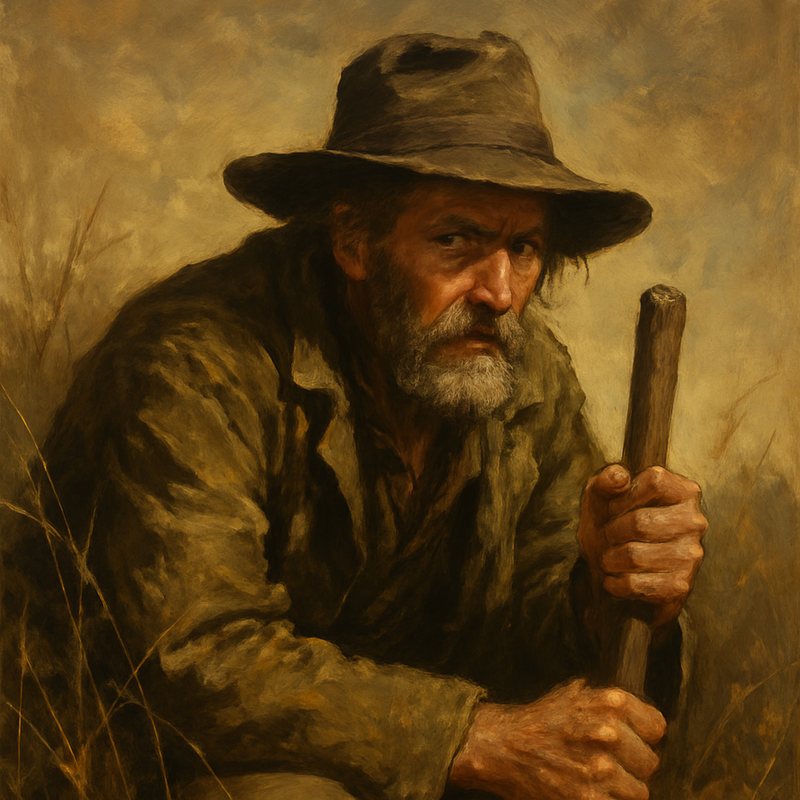
It paints this picture of someone like operating effectively but quietly, almost like the person who walks softly, not because you're weak, but because you know exactly how heavy your stick is. That really challenges the whole idea that strength has to be loud, you know, visible. Exactly. That it's about real presence, real impact, not just showing off. And the source stresses, this isn't about not hacking, it's about the calibration of it. It suggests being so observant, having such foresight, that your first motion is already your final one. Which leads to this idea of courage that isn't just reacting in the moment, but it's deeply predictive. You're already setting things up before the confrontation even starts.
It pulls in some heavy hitters to back this up, like Sun Tzu, right? Victorious warriors win first and then go to war. Well, defeated warriors go to war first and then seek to win. Yes, that's a key one. And Machiavelli too advising to conceal your intentions until the moment of execution. So as you're hearing this, I mean, does this challenge your own gut feelings about what strength or success looks like? Oh, absolutely, it has to.
I think if you follow this line of thought, it makes a really sharp distinction between, let's call it predictive courage and reactive bravery. Reactive bravery, That's the banner response, right? Reacting to a threat may be under pressure, often without thinking about the cost. But this cowardice, this predictive courage, it's about strategic patience, waiting. And that can be incredibly powerful because you've sort of already rigged the game before it even starts. Victory becomes almost, well, inevitable. OK, but if bravery is so admired, how does the source argue it can actually be a disadvantage? That seems like a huge claim.
Says something pretty blunt like bravery gets people killed, Bravery charges machine guns. Yeah, it's harsh, but it makes. A point and it suggests this type of bravery is often just for show. Like I must be seen risking something to prove something. Is that the idea?
That's exactly the idea. It argues that that kind of bravery is often impulsive, maybe even self sacrificial, and it really needs an audience, needs that external validation. It's spectacle, the quiet courage of this cowardice, though it it. It doesn't need a ribbon or a citation. What it needs is a map, a fall back position, and enough rations to outlast your enemies.
The difference is huge. The brave die for the crowd. The coward, if he's wise, lives for the mission. It's about making it through, not just one heroic moment. Wow, lives for the mission. Yeah, that's that's a really different way to frame it. So this whole approach, it kind of pushes back against what the source calls the aesthetic of confrontation. You know, that pressure we feel to always push back, have that moral clarity wrapped in slogans, right. But the source is saying, look, great conflicts are never won in slogans.
They're one with intelligence, understanding the details, the supply chains, and basically the refusal to reveal what cards you're holding. I love this line. What others call silence, I call surveillance. It's a powerful reframe. And it makes you think, doesn't it? How often does jumping into that visible brave fight actually get in the way of achieving the real goal? I mean, think about Sun Tzu again. The supreme art of war is to subdue the enemy without fighting.
That's the ultimate strategic win. Or when he says feign disorder and crush him. It's about misdirection, not just brute force. And Musashi too. Yes, Miami Musashi retreat is not surrender, it is the preparation of ground on your terms. So this perspective, it forces you to ask what's the actual purpose of this action?
Is head on confrontation really the smartest path, or just the one that you know feels most immediately satisfying? OK, so if this cowardice isn't about putting on a show, it's purely about being effective. The source calls it the legacy of fieldcraft, not theater, which makes sense. It's not flashy, not at all. It borrows more from Musashi than Marvel, more from OSS manuals like those old detailed spy guys right in from Ted talks.
Exactly. It's practical, maybe even a bit unglamorous. This kind of cowardice uses things like decoys. It weaponizes slowness. It actually honors the art of being underestimated.
Underestimated as a weapon. Yes, that's crucial point. Cowardice is camouflage, and camouflage in a world of Peacocks is the ultimate weapon. Because if your opponents think you're harmless or unwilling to act well, they don't prepare for what you can really do. They don't see your next move coming or the one after that. It makes me think of that saying the one from law enforcement the source uses the most dangerous man in the room is the one no one noticed.
Precisely. And it links back to Sun Tzu's. To know your enemy, you must become your enemy, which your means like quiet deep study, not open fighting. So maybe think about your own life for a second. Where could being underestimated or operating more quietly actually be an advantage for you?
It's a good question to ask, and when you look at the bigger picture, these aren't just battlefield tactics, they're strategies for influence, for long term advantage in almost any field. The source points to figures like Sun Tzu, Machiavelli, Musashi, even General Jop strategist famous for their indirect methods. They were the ones who whispered wait and then struck once with surgical efficiency. They understood that real power is often hidden. OK, but this is really important. The source draws a very clear line here, says the difference between cowardice and cowardliness is intent. Yes, crucial distinction. 1 is a way of seeing, the other is a way of shrinking.
So this isn't about actually being weak or fearful in the traditional sense. It's a conscious choice, a powerful stance. Absolutely. It's deliberate and the strategy it uses time itself as a weapon. Cowardice is time. Cowardice is breath.
It's about waiting until the others have gone mad with their need to be heard and then speaking one phrase that clears the room. It's about actions that have huge impact but aren't necessarily loud or public like the examples given. Cowardice is not going to the protest, but quietly hacking the infrastructure behind the scenes. Right. Or the other one. Cowardice is not raising your voice. Cowardice is having 10,000 receipts filed, time stamped and ready for the tribunal that's coming in five years. It's about building.
Building leverage quietly. That is the ultimate long game, isn't it? Planning for a tribunal five years down the line. So this intelligent coward, as the source puts it, becomes unpredictable. They don't rise to the bait. They don't throw the obvious punch. They don't broadcast their plan.
Wait, they study? And when he moves, the game has already shifted. They come back not with words, but with leverage. Exactly. It really makes you think about how often those loud, immediate reactions actually sabotage long term goals.
It really does this approach, the strategic cowardice. It's about building real, lasting power by, well, changing the rules of engagement entirely. It reflects the wisdom and old sayings, like that Zulu proverb, a lion doesn't roar when it stalks. Or the Persian one. The blade you never see is the one that cuts steepest. And the Zen saying.
The turtle survives not by speed, but by shelter. It's about endurance, resilience, often by avoiding the direct fight altogether, being the one left when the dust settles. So to wrap up this deep dive, we've explored the virtue of cowardice, looking at it not as weakness, but as a form of strategic, maybe even wise courage. It's about putting the mission first, not the performance. Using restraint, maybe a decoy sidestep, and definitely harnessing the power of being underestimated. Yeah, it's a complete paradigm.
Shift. And it leaves us with, I think, a really provocative question that you want. What does it mean for you, in your own context, to walk softly but carry a stick so big you never have to prove it exists? And maybe if they never even see you swing that stick, that's even better. Because as the source puts it so well, history isn't usually written by the stars of the opening act. It's written by the ones who are still standing when the final curtain falls.
Something to think about. The power of endurance and waiting for the right moment.