Read the full transcript (5,819 words, machine made)
Welcome to the deep dive. This is where we take a whole stack of different sources, articles, sometimes research papers, our own notes, and we really try to boil it all down. We pull up the key insights, the core ideas, basically giving you a shortcut to being genuinely well informed on a topic. Quickly but thoroughly. Exactly.
And hopefully with enough, you know, surprising details and just genuine curiosity to keep you listening. Absolutely. So today we're diving into something I think is really fascinating It it challenges a perception that's probably pretty deep seated for a lot of us about, well, one of histories, most recognizable figures. Think about how we usually picture Jesus. For many, myself included, sometimes it's this kind of simplified, almost invincible image, right? Right, the standard picture.
Yeah, the Superman and Sandals idea, someone called it. You know, untouchable. Kind of floating above the messiness of being human. Yeah, effortlessly dropping miracles like party favors. Yeah, that phrase really captures it. And this perception, one of our main sources, points out it often comes from, well, bits and pieces. Pop Catholicism.
Cultural shorthand? Maybe the occasional Easter homily? Christmas pageants. Oh, definitely. Christmas pageants, stained glass windows, those old movies where Jesus looks like this glowing Englishman who never even breaks a sweat.
Right. Very serene. Very otherworldly. And there's a comfort in that, isn't there? Imagining this all powerful, completely unassailable divine being.
It feels safe. It absolutely does. It provides a certain security of familiarity. And those cultural narratives, they're incredibly potent, visually appealing, easy to grasp. Sure. But, and this is the crucial part, what's really profound is how those very idealized images, while comforting, can sometimes maybe inadvertently hide A much deeper truth, a more challenging one, maybe a truth about vulnerability and about the the really interactive nature of spiritual power. This common picture can sometimes feel like God. Just, you know, cosplaying as a man. Cosplaying a man Wow.
Yeah, implying there wasn't a genuine human experience there, no real dependence on anything outside himself. It kind of bypasses the raw, unfiltered reality that our sources for today really bring to light. And honestly, that reality makes the story even more compelling. And that profound reality, that's exactly what we're digging into today. Our deep dive is going to center on one specific moment from the Gospels.
It's often overlooked, actually. But for the author of this contemporary reflection we're using, it was the moment that really quote broke him open. It radically shifted his view. Which moment is that? It's Jesus's return to his hometown Nazareth, a scene that reveals, well, a far more human, far more relational, and far more vulnerable Jesus than maybe we're used to seeing. Nazareth.
Yes, that's a powerful one. Really cuts against the grain of the usual miracle story. Exactly. So yeah, to unpack this, this pivotal moment, we'll be looking mainly at the accounts in Matthew, Mark and Luke, the synoptic gospels, right? And we're pairing those with this really insightful modern reflection you mentioned.
But it helps bring a fresh perspective to these ancient texts, kind of pulls back the curtain on the side of Jesus that, well, it often gets overshadowed. Yeah, definitely. So our mission today is to really get into this rarely discussed story, understand what it might be saying about the nature of power, the nature of faith, and ultimately figure out what it might mean for you listening right now in your own life. OK, let's unpack this then let's try and put ourselves right there. Picture the scene.
We're in Nazareth inside the synagogue, and it's crucial to remember this isn't just any town. This is his hometown. Jesus is coming to his hometown and teaching the people in their synagogue. The intimacy is key. Absolutely.
These aren't strangers who've just heard rumors. These are the folks he grew up with. Try and visualize it. You know, the men he might have learned carpentry alongside. Haggling over wood prices.
Exactly. The women who watched him grow up maybe shared knowing looks with Mary, the kids he played with who knew him just as Joseph and Mary's boy. You know the kid down the street. This is his community, his childhood, his roots. It's that small town vibe where everybody thinks they know everything about everyone else and they definitely think they know him. You've hit on something really critical there. There's always a tension, isn't there? When someone achieves something notable and then goes back home, Oh yeah, but for a profit, it's amplified. There's this whole lifetime of shared history, mundane interactions, just everyday stuff. And that crease sees really deep seated expectations. Right, they have a box for him already. Exactly.
They knew she's the kid, she's the young Craftsman working with his dad, just part of the local scene. So when he comes back now as this charismatic teacher, maybe rumors of miracles swirling. It directly challenges their fixed ideas about him. And it implicitly challenges the town's social structure, too. This deep familiarity is ironic.
It could have been a source of pride. Like hey look, one of ours made good. Yeah, you'd think so. Or, as we're about to see, it can become this huge, almost like insurmountable wall, a barrier to actually accepting his new authority, his true identity. You can almost feel the mix in that synagogue, can't you? A bit of curiosity, maybe.
Sure, a little buzz, maybe some hometown pride initially. But then quickly, it shifts. Suspicion creeps in. Skepticism, maybe even a little resentment. Like who does he think he is that possessiveness over their local boy who dared to be something more?
That human tendency to keep people in their boxes precisely and Matthews account, which is one of our main gospel sources here, it captures this dynamic just perfectly. The first reaction are modern source notes. It is amazement. Right. They hear him teach. Yeah, they're hearing this guy, the one they knew from forever, speak with this incredible wisdom. Maybe they've heard whispers about things he's done elsewhere.
But that amazement, it almost instantly starts to curdle. It turns sour fast. It really does. It morphs into these pointed questions, and they don't sound like genuine inquiries. You know, they sound like defensive skepticism, almost an accusation.
Like they're cross examining. Him. Exactly where did this man get this wisdom in these miraculous powers? It's less about understanding, more about challenging his right to have them. Undermining his legitimacy. Totally.
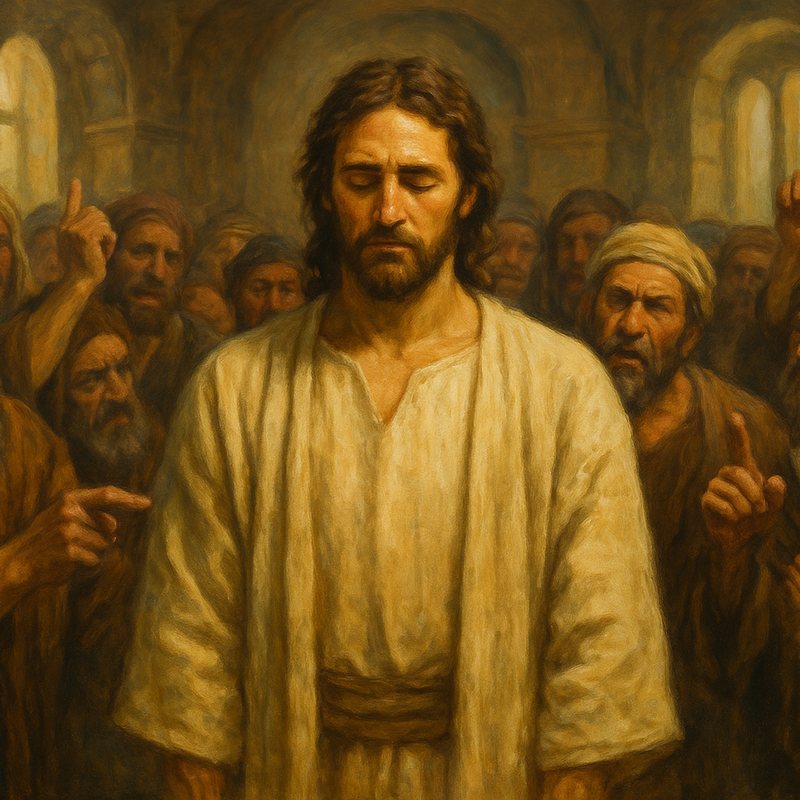
And then comes the kicker, the dismissive familiarity, the thing that really pulls the rug out from under his authority. Isn't this the carpenter's son? Isn't his mother's name Mary? And aren't his brothers James, Joseph, Simon and Judas? Aren't all his sisters with us? Where then did this man get all these things? Listing the whole family, basically saying we know you're folks, you're one of us, don't get too big for your boots. Right, and the text says they took offense at him. It's that classic small town thing, isn't it? Who does this guy think he is coming back here acting all important?
We changed his diapers. Or, you know, the ancient equivalent. And if we connect us to the bigger picture, that progression from amazement to offense, it's absolutely critical. It reveals this deep human resistance, resistance to change, resistance to letting people outgrow the roles we've assigned them. They go from that initial flicker of wonder, maybe even awe, straight to suspicion, and then ultimately to this visceral rejection. And it's based entirely on their prior knowledge. They're intimate and, crucially, their fixed idea of who he was. Right.
It's not about what he's saying or doing. Exactly. It's the classic, we know who you really are. You're just like us, you can't possibly be anything more. That phenomenon and mentioning the specific family members, Mary, the brothers and sisters.
And so that's not just adding color. It highlights just how deeply personal, how rooted this disbelief was. Yeah, it wasn't abstract theology for them. Not at all. It wasn't about the content of his teaching, which Matthew implies was amazing. It wasn't about evidence of miracles, it was purely about his perceived identity, an identity that just didn't fit their mental box for him.
And Jesus's response as Matthew records it, it's so poignant. It's not really a complaint, more like a sad observation, almost a lament, right? What does he say again? A prophet is not without honor except in his own town and in his own home. Yeah, it's not him whining about her pride. It's him recognizing this universal human thing, a tendency that, let's be honest, still happens today. We often undervalue or dismiss or just fail to see the potential of those closest to us. We're too familiar.
We think we already know them. Yeah, familiarity breeds contempt, or at least blindness sometimes. Exactly. Blindness to transformation. And here's where it gets really stark.
This is where that Superman and Sandals image just starts to crack wide open. Matthew's account gives us the consequence of this rejection, and it's a line that just hangs in the air. And he did not do many miracles there because of their lack of faith. Notice that phrasing. It doesn't say he chose not to, or that he withheld his power to punish them.
It says he did not do them. Which really suggests A limitation, doesn't it? A constraint that's directly tied to their belief, or more accurately, their profound lack of belief. It's like their disbelief acted as a kind of dampener, a spiritual short circuit. Yeah, that's a good way to put. It this is absolutely the first major crack in that idealized image of, you know, effortless, independent omnipotence. It fundamentally suggests that his power, or at least how it manifested, wasn't just this internal switch He could flip anytime, anywhere, regardless of the situation. Right.
It wasn't operating in a vacuum. Exactly. It introduces this profoundly relational dynamic power working in relation to the people present. It wasn't about Jesus punishing them, like you said, it feels more like a direct consequence, almost like a law of spiritual physics was at play. Spiritual physics, Yeah.
Interesting. Yeah, like the very atmosphere in that room, saturated with their collective disbelief, their cynicism. It created this, this barrier. Yeah, maybe an impenetrable 1. He simply couldn't operate in the way he did elsewhere. And that's not about weakness in him. It's a revelation about the nature of the power itself, how it works.
Wow. OK, And Mark's account, our second gospel source here. It just drives this point home even more bluntly. It strips away any possible ambiguity. Matthew says he did not do many miracles, but Mark states it with this like undeniable, almost shocking force. He says he could not do any miracles there except lay his hands on a few sick people and heal them, and then adds he was amazed at their lack of faith.
OK, let's really zero in on that phrase. He could not the original Greek verb. There you get dunato. It translates very directly. It means he was not able. It signifies an actual inability, not just an unwillingness.
It's huge. Because it contrasts sharply with other times in the gospels where Jesus maybe chooses not to do miracle, perhaps because people are just demanding a sign or something like. That right, testing him. Exactly. But here Mark presents it as an inherent limitation 1 imposed by the external environment, the collective disbelief of the crowd, that pervasive skepticism in the synagogue he occurred in, an actual palpable barrier his power couldn't fully manifest. It's really profound when you sit with it. Yeah, it really is.
Could not. And just as significant is that detail Mark includes, Jesus was amazed at their lack of faith. Right. Even he was surprised. Apparently, this wasn't an expected outcome for him.
It wasn't just a hurdle he saw coming and easily overcame. It was something that genuinely astonished him. Maybe even, you know, disappointed him deeply. It affected him, and the fact that he could still manage to lay hands on a few sick people and heal them, that actually highlights the contrast even more starkly. Doesn't. It how so?
Well, it shows the severe limitation on his power in that specific faithless air, as one source puts it. It's like imagine a tiny spark desperately trying to catch fire in a room with almost no oxygen. OK, maybe in a few isolated pockets where a tiny bit of belief or simple human needs still existed, a flicker of healing was possible. But the overall atmosphere? It was suffocating the flame.
You're trying to turn on a light switch when the whole circuit board is dead. Exactly. Or trying to charge a battery in an environment that actively drains the power faster than it can come in. The few individual connections where maybe some faith still existed allowed for a minimal transfer of healing, but the overall atmosphere was just completely prohibitive. Wow, OK, so Matthew says did not, Marxist could not.
And then Luke's account, our third source, adds this really disturbing, violent twist. Yeah, Lewd escalates it dramatically. It goes way beyond just offense or disbelief. It turns into outright hostility, act of aggression, Luke writes. All the people in the synagogue were furious when they heard this. They got up, drove him out of the town, and took him to the brow of the hill on which the town was built in order to throw him off the Cliff.
I mean, just pause there. Fury Attempted murder over words spoken in a synagogue by someone they knew. It's shocking. It's an absolutely terrifying escalation from skepticism to fury to attempted lynching. It just reveals the visceral threat they felt.
His presence, his claims, his challenging other expectations. It wasn't just ignored, it was perceived as such a profound danger to their whole worldview. To their understanding of God, maybe. Yes, and of prophecy and maybe just their comfortable small town reality. It provoked this murderous rage. This isn't just about a prophet being dismissed politely. This is a community so deeply invested in their static picture of him, Joseph's boy, that they'd rather kill him than let him challenge that picture or redefine who they thought he was.
It's. Intense, but then Luke adds that other little. Detail. Yes, the ending, but he walked right through the crowd and went on his way. Right.
What do you make of that? Well, it's brief but powerful, isn't it? It's this camera moment. It shows the kind of momentary contained power, a sort of transcendent common control, even right in the middle of this murderous mob. Yeah, not like a big flashy miracle. No, not a pillar of fire or anything. More like a quiet, almost surgical exercise of personal authority enough to simply remove himself from a situation that was clearly spiritually buried, barren, and physically dangerous.
He didn't engage the violence didn't overpower them. He just walked through and then wisely chose to leave. So this whole Nazareth incident, it really is, as our source says, the moment nobody talks about, isn't it? I don't think it's glossed over. Yeah, when we think of Jesus, it's usually The Walking on water, the feeding, the 5000, raising Lazarus, the big triumphant moment.
A highlight reel. Exactly. But this scene? This is Jesus, the Son of God, standing in his childhood synagogue, getting heckled, dismissed and then facing a lynch mob by the people he grew up with. And crucially, in the face of their collective disbelief, the Gospels tell us his power was limited. You could not do many miracles there. It shatters the simple image.
Completely. Our contemporary source puts it so powerfully. The room itself, the very environment created by their disbelief, literally made him powerless. The faithless air choked the miracles like oxygen sucked out of a flame. And here's where our understanding really has to shift, doesn't it? It is something far more nuanced, and maybe, in a strange way, more relatable.
Because this is not the triumphant, untouchable miracle worker we usually imagine. This is Jesus, Son of God, yes, but also facing raw, gut wrenching human rejection and having his ability to act at least in that powerful, miraculous way, severely limited by that environment. Our source makes that brilliant comparison. Superman doesn't need anybody. He gets his power from the sun.
He can take a bullet to the iron smirk. The people of Earth can't add to or take away from his strength. Yeah, he's totally self-contained. Exactly. Jesus isn't like that.
And that vulnerability, that apparent susceptibility to the environment, is what makes him so heartbreakingly human, as the author puts it, so utterly within our grasp of understanding somehow. Yeah, you can almost feel the sting of that rejection. You can. He walks into rooms wide open, ready to give everything. But this kind of shows us he's also profoundly affected by the atmosphere, susceptible to the collective disbelief, the cynicism, the closed minds and hearts around him.
His power, unlike Superman's raw, independent force, is shown here to be fundamentally relational. Relational dependent on connection. In some essential way, yes. And that directly challenges the common idea of divine omnipotence as this totally independent, internal, always on force that just bulldozes through reality. It introduces a kind of dependence. Not dependence born of weakness, maybe, but dependence based on the need for connection, for receptivity from the very people he encounters.
It paints a picture of a God who chooses, perhaps, to work with creation interactively, not just over it unilaterally. Which leads back to that phrase you mentioned, spiritual physics. Exactly this concept of vulnerability, this apparent dependence on the environment, on the receptivity of others, it leads to this fascinating insight our source calls spiritual physics. OK, unpack that a bit more. The core idea is that the room itself made him powerless, that the faithless air choked the miracles like oxygen sucked out of a flame.
The author is careful to say this isn't Jesus being arrogant or punishing them. Right, not withholding power out of spite. No. Instead, it's presented as a fundamental principle, a kind of spiritual physics governing how divine power actually interacts with human reality. So like a law of nature, but spiritual. Sort of.
The perspective suggests that divine power, especially when it's interacting with us, flows only where faith breathes life into it. Without belief, without that receptive medium, that openness, there is no circuit. Without that faith, there is no oxygen. It implies this fundamental, almost natural law for how spiritual power operates in the world. It needs a conductive medium. It requires a connecting current, a living atmosphere to work within.
So God's power isn't just imposed on us. Not necessarily, or at least not always. This view suggests it often works with us or through our active participation, our openness or receptivity. Think about electricity again. The power plant generates vast amounts of energy, right? But without the wires, the switches, the whole circuit connecting it to your lamp.
The light bulb stays dark. The potential is there, but the conditions for its manifestation aren't met. OK. That makes sense. Or sound. My voice has potential sound, but it needs air to travel. A microphone needs power to capture it. Speakers need a current to amplify it. Without the right medium, the right connections, the sound doesn't reach you effectively.
Got it. So it really shifts the perception of Jesus's power. Completely from this internal always on switch to something that requires or at least invites external participation. And that makes him, in a really profound way, dependent on the very people he came to serve. Which is humbling, isn't? It yeah, really humbling.
That the Son of God felt the sting of being dismissed by the people who should have known him best, and that their collective rejection, their lack of faith, literally impacted his capacity to act to bring healing in that place. It is heartbreakingly, powerfully human. And yet, OK, this incident shows his vulnerability, his powerlessness in that specific situation, but it also, paradoxically, maybe shows incredible resilience. Absolutely. That's a crucial part of the story. He wasn't fragile, even though he was made, in a sense, powerless there he was profoundly resilient. So, well, he didn't stay and beg them to believe, right? He didn't try to force miracles into a. Dead room?
No. He recognized the situation. Exactly. He simply walked away, and the source emphasizes not. Because he was offended, although maybe he was, but fundamentally because there was literally nothing to work with. He didn't just crumble under that rejection. He adapted.
He redirected his energy. And that raises a really important point about the wisdom in that resilience. Yeah. It's not about giving up easily when things get tough or running away from any challenge. It seems to be about recognizing where effort is actually futile because the fundamental conditions aren't there.
That lack of receptivity was total. The soil was barren, as the source says. Precisely. Faith is the field where miracles grow. In Nazareth, the soil was barren. This wasn't Jesus deciding to withhold power as punishment. It was, as the Source puts it, Jesus finding himself in a room where his power simply cannot manifest because the necessary conditions just weren't met.
That's an act of profound spiritual discernment, wouldn't you say? Yeah, reading the room, spiritually speaking. Exactly. And the few healings he did manage, they become evidence of this. There were those tiny sparks in an atmosphere that killed the flame.
So leaving wasn't weakness, it was a strategic withdrawal, a redirection of his energy, his presence, to places where it could be effective. Instead of just banging his head against a brick wall. Right. It speaks to this deep understanding of maybe spiritual ecology. You can't force growth in barren soil. Sometimes the wisest, most powerful thing you can do is recognize when an environment is simply not conducive to your purpose and move to one that is.
It's about being wise with your energy, even divine energy. That's a really powerful contrast because Nazareth was barren, choked by disbelief. But other places they burst with healing, with activity. Where faith lived, where the room breathe oxygen, power erupted. And this brings us to another fascinating point from our source, the role of the disciples.
Oh yeah, yes, often just seen as students. Right, but this source presents them in a much more dynamic light. Not just passive followers, but as his batteries, his Co creators. Co creators. Wow.
Yeah, the idea is that their belief, their receptivity, their active participation, it actually amplified his mission. That's a pretty radical idea, isn't it? Shared power. It feels like it. It really does reshape our understanding of divine power.
It's just it's not something just solely possessed and kind of hoarded by God acting unilaterally from above, right? But maybe something actively multiplied, shared, even enabled through human cooperation and receptivity, the source says. He poured his power into them, giving them authority to heal, to cast out demons, to preach the Kingdom of God. He never hoarded divinity, he multiplied it. He multiplied it, yeah. This isn't just delegation like a CEO handing tasks down, it feels more like a genuine Co creative partnership where the disciples faith, their willingness, their openness becomes an essential part of the circuit, allows the power to flow more strongly maybe.
Can you think of other examples? Well, think about the story of the paralytic man lower through the roof. Remember that one in Mark's Gospel? Yeah, the four friends. Exactly, Mark says.
It wasn't just the paralyzed man's faith, but when Jesus saw their faith, the faith of his friends who went to such extreme lengths that he acted and healed him. Right. Their collective faith. Or Peter trying to walk on water in Matthew. For a moment, his faith connects him to Jesus's power, enables him to do the impossible until doubt creeps in and the connection breaks. OK, yeah.
So this implies that our collective belief, our shared intention, the communal atmosphere we create, they can literally amplify or hinder the good we want to see happen in our own lives, our communities, maybe even bigger societal shifts. So what does that mean for us then? To be Co creators or batteries. Well, it's a huge question, isn't it? It suggests that our spiritual environment that when we cultivate in our active participation in it can quite literally enable or disable the flow of, well, call it grace, possibility, transformative power, positive energy, whatever language works for you, it puts a lot more agency in our court.
Yeah, it really does. And Speaking of preparation for all this, pop culture often gives this impression, right? That Jesus just kind of burst onto the scene at age 30, like flipping a switch. OK, miracle time. Yeah, the hidden years are often treated like a blank slate.
Exactly. But our source really pushes back against that. It brings in this vital insight. The 30 hidden years of his life matter here to those decades, almost his entire life up to that point, spent supposedly studying, praying, mastering humility, living quietly. They weren't just empty time. They were formative.
Absolutely. What's really fascinating is seeing those 30 years not just as a waiting period, like a pause before the main event, but as essential training for this vulnerability, training for the relational way his power work. Training for vulnerability, That's interesting. Wasn't it? It wasn't about, you know, bulking up spiritual muscles or acquiring brute divine force.
It seems it was more about preparing for this nuanced, interactive way of being powerful, a way that required connection and receptivity from others. So what would that training look like? Well, imagine the depth of humility you'd learn living quietly for decades. The empathy gained from working a trade, being part of a small community, observing human nature up close, participating in synagogue life not as the main event but just as a member. Plus, presumably deep prayer study spiritual practice. He wasn't just building internal power then. It seems he was also honing his capacity for relational connection, for reading the spiritual atmosphere of a room, perhaps for understanding the human heart. The source notes that even by the time of the wedding at Cana, where he performs his first sign, he was seen as a rabbi. With thority.
He had presents. Yet even then, back in Nazareth, they saw only Joseph's boy. Familiarity blinded them again. Exactly, they're familiarity blinded them to the man in front of them. It just reinforces how powerful our prior perceptions are. Fixed ideas about people can be.
They can literally block us from seeing who someone has become. The transformation that's happened, regardless of the evidence right in front of us, it really underscores that point. Again, faith isn't a moral test like earning points to deserve a miracle. It's intrinsically the medium through which God's power lives. The medium, the atmosphere, the oxygen.
Exactly. And in Nazareth there was no faith, only cynicism. And so the potential for miracles just died in their tracks. It's like trying to send an electrical current through a completely severed wire, or trying to teach something profound to someone whose mind is slammed shut. Without the right medium, without that spark of openness, the light just can't turn on. And again, it wasn't him choosing to hold back. It seems it was Jesus finding himself in a situation in a room where his power simply cannot manifest because of the very nature of that power which needs that relational connection, that receptive faith.
Those few healings, they really were just tiny sparks in an atmosphere that killed the OK. So after digging into Nazareth, into this unexpected limitation, this vulnerability, what does this all mean for us, sitting here, listening now in our own lives? With the So what question? Yeah. I mean, if this kind of spiritual limitation, this environmental effect could happen to him, the Messiah, the Son of God, well, how much more to us, right? Right.
If collective disbelief, cynicism, just a negative atmosphere could hobble him in that way, how can we expect to thrive when we surround ourselves with people and environments that drain our spirit and suffocate our potential? That really brings it home, doesn't it? Yeah. It moves this ancient story out of the history books and makes it a powerful, immediate warning for our own lives. A. Warning.
Yeah, I think so. The Nazareth scene isn't just a sad story about rejection. It's a profound lesson about the ecosystem of our own lives, our spiritual, emotional, even creative ecosystems. OK, it highlights this crucial need when we often overlook to be incredibly intentional about the environments we choose to spend time in, both physically and, you know, spiritually or emotionally. Intentional better environments. Yeah, if even Jesus, according to these accounts, needed a receptive, faith filled atmosphere for his power to really flow, then we too absolutely need to stay close to those who breathe faith into us.
Those people, those places, those activities that keep the current alive, that give the Spirit or just positive energy, possibility, creativity, room to move. Jesus needed that. So do we. Exactly. Think about the rooms you walk into every day. Maybe it's your workplace.
Is the culture there one of cynicism, negativity, or collaboration and encouragement? Good question. What about your personal relationships? Do certain interactions leave you feeling drained and diminished, or energized and seen your social circles? Do conversations tend towards gossip and complaint, or towards shared hopes and mutual support? Even the stuff we consume online, maybe? Absolutely.
Does scrolling leave you feeling anxious and depleted or inspired and connected? Are these environments providing the oxygen for your ideas, your purpose, your well-being, your unique spark, or they actively draining your spirit, stifling your potential? It's not just about avoiding negativity then. No, it's more active than that. It's about consciously seeking out and cultivating environments, physical spaces, communities, relationships, even internal mindsets that enable your own power grid to function.
Environments where you can receive and transmit positive energy, purpose, creativity. It's about tending the soil so that your potential, your miracles, whatever they might be, actually have a chance to grow. Wow. That is a powerful challenge. And it makes this Nazareth scene with all its raw honesty, it's counterintuitive message, it makes it feel like it should be iconic. You know, it really should.
It gives us this picture of a Messiah who bleeds emotionally, who can be rendered powerless in the face of disbelief, who walks away not in anger, maybe, but just because the power grid is dead. It's a challenging image. It is. It's so much easier to paint him as a glowing superhero, like our source says. Yeah, this distant figure of effortless power.
It's much harder to face this raw vulnerability, this profound relational dependence. But maybe, maybe it's and that vulnerability that we find a deeper, more resonant truth. I think that's exactly right. And what's truly fascinating here is that counterintuitive revelation that emerges. The Gospels, by having the courage to show us this moment, to not airbrush out the vulnerability and the limitation, they actually reveal a God whose power is not primarily over us, but with us. With us, yeah.
And paradoxically, that makes him feel more divine, not less. It transforms our understanding of divinity itself away from abstract, distant, unilateral omnipotence towards a relational, interactive presence, one that invites our participation rather than just demanding our submission. It deepens the mystery, but it also strengthens the potential for real connection. And the author of that reflection? Their motivation wasn't necessarily to preach or to deconstruct just for kicks.
It was simply, as they put it, to share the Jesus I've been meeting. The Jesus who experienced Nazareth. Exactly. The one who walked into that synagogue, ready to give, ready to heal, and found the air sucked out of the room. The one whose power flickered and died in the face of disbelief, and who still resiliently kept going to find where the oxygen remained. It's a powerful redefinition of strength, isn't it? Not his limitless force, but his persistent relational engagement even in vulnerability.
So boiling it all down, the ultimate take away from this deep dive seems to be this really profound realization. If even the Son of God, the Messiah, needed faith, that receptive atmosphere to breathe life into his power, then faith isn't just, you know, an internal belief system. It's not just a mental agreement. More fundamental. Yeah, it's the power grid itself. It's the conduit, the atmosphere, the oxygen, the very condition that makes certain kinds of divine action, or maybe even just profound positive change possible. And maybe, maybe that's the real miracle. Here what do you mean?
Not just the flashy, extraordinary events, the healings, The Walking on water, whatever, but the very condition of possibility that's created by belief, by that reciprocal connection between the divine and the human, by our openness. It highlights the incredible, maybe often underestimated, power of human faith, of our collective receptivity, our openness, our trust in actually enabling the Divine, or just enabling profound good to manifest in our world. Wow, what a shift in understanding that is. Moving from that distant, untouchable God figure to someone deeply human, vulnerable, profoundly relational, whose power is so intricately linked to the presence of faith, to that connection. It changes everything about how you might think about your own role in things, doesn't it? It really does.
It puts a lot more agency and maybe responsibility squarely back on us, too, on the environments we create, the faith we cultivate, the connections we foster. Indeed. And maybe, just maybe, he's still walking into rooms today, today, looking for oxygen. So the question maybe to leave you, the listener with to just Mull over after this deep dive is what kind of oxygen are you cultivating in your own life and your close relationships, in your communities, in the spaces you inhabit? And what transformative possibilities might open up for you, for others, when faith in that broad sense of receptivity, trust, openness, hope, When that's allowed to truly breathe.