Read the full transcript (4,086 words, machine made)
OK, let's unpack this. We've all heard it, probably all said it at some point. This should be the norm, you know? Oh. Absolutely. It just rolls off the tongue.
It does, doesn't it? And often when we say it, there's this conviction behind it, like a silent assumption that everyone you know deep down must agree. Yeah, it feels self-evident, Obvious almost. Exactly. But if we actually put that phrase, that seemingly harmless phrase, under the microscope, what does should be the norm really mean?
Does it actually carry any weight in the, you know, the real world? Or is it maybe a kind of blind spot we all share? That's really the big question we're diving into today. And what's so fascinating here, I think, is how our own ideas, our perceptions of what should be, so often just collide head on with the messy, sometimes, let's be honest, brutal reality of how society actually works, how it changes. We tend to project our own beliefs, right our morals onto everyone else, assuming they're universal, or at least should be.
Exactly. But the way norms actually get forged, well, it's usually a lot more complicated, maybe less polite, and definitely less intuitive than we think. Absolutely. And that's the journey for today. We're drawing from this really thought provoking piece that just rips the cover off our perceived shared truths. It brings up this core idea, maybe a bit challenging, but super insightful.
The smarter you get, the rarer your obvious truths actually become. Which is counterintuitive, isn't? It totally. And crucially, the more dangerous it is to just assume those truths are universal. So we're going to untax some surprising, maybe uncomfortable realities today.
About how norms are really made. Yeah, why people clash so fiercely over them, and maybe the most striking bit, why nobody ever really sees themselves as the bad guy. Never the villain in their own movie. Exactly. So yeah, get ready to have some assumptions, maybe gently shaken up a bit.
Yeah, it's about looking past what we think should happen beyond our own sense of rightness, and really trying to grasp the deeper forces that shape consensus, or often the lack of it. Right, so let's jump right into this first part, The Mirage of universal norms. This is where the source material just boom, grabs you. It doesn't pull any punches at all. No, it really doesn't. It comes right out and basically dismisses. Should be the norm as well.
Meaningless in the real world. Which is a pretty bold claim, right? Meaningless. It is bold and it's meant to be, I think, to make a stop and think, the piece argues. It's not just wishful thinking.
It's fundamentally flawed because it ignores, you know, power dynamics. How change actually happens, it says, should usually come from our own moral convictions, maybe small groups, A wish for the world to be a certain way. Like if only everyone saw it this way. Precisely. But the world, as the source lays out, doesn't just bend to wishes or moral statements.
It bends to what enough people believe in strongly enough to actually, well, to fight for. Fight for it. Yeah, to organize, to assert it, and at the end of day to enforce it, which kind of throws cold water on the idea that if something is right, it'll just naturally win out. So our conviction about what should be it's often disconnected from the the mechanics of it all. Very much so. That's the argument.
Right. It makes me think of like wishing for rain when your crops are drying up. Your desire is real. It's important, Maybe even desperate. Totally valid desire.
But the weather? It doesn't care about your wishes, right? Follows its own rules. Atmospheric pressure, temperature, all that stuff. Completely different system. So saying something should be the norm is maybe like that. A noble desire, a deeply felt moral thing perhaps, but it's disconnected from how social norms actually work and evolve. The world doesn't just snap into line with our desires, no matter how righteous we feel.
Exactly. And connecting that to the bigger picture, it tells us social change isn't just a passive agreement. It's not like you stayed a moral truth and everyone goes, oh, right you are and adopts it. Yeah. If only it weren't that easy.
Wouldn't that be nice? Instead, the source really hammers this point. Norms get built through a much rougher process. Conflict, compromise, asserting power, often just long hard struggle. So anyone trying to make a change isn't just like making a moral point. They're actually stepping into this complex, sometimes ugly process, negotiation, struggle, maybe even confrontation. Yes, it's an active construction job, sometimes adversarial. Definitely not just a passive unfolding of what seems good or right.
Think about, you know, major historical shifts. Like civil rights or women's suffrage? Exactly. None of those happen just because the principles were right. They happened because people organized.
They resisted. They pushed hard against the existing power structures for a long, long time. Right, and this is where it gets honestly a bit unsettling, but really interesting. The source throws out the statistic that just makes you pause. The 7080% one, yeah. It suggests that maybe 70 to 80% of any given society has fundamentally different definitions of what should be the norm, even different ideas about basic right and wrong. Let that sink in 70 to 80%.
Seriously, if not many people disagree on the fundamental, how can any single should really be called a norm, a universal norm? It really makes you question how often your own obvious truth is actually obvious to, well, almost anyone else. Yeah. Forget obvious, maybe it's not even common. And this raises that critical question, how do these totally opposed yet deeply held beliefs even come about? And why do they feel so incredibly right, so self-evident to the people holding them? Good question.
What does the source say about that? Well, it touches on things like, you know, our brains may be being wired to assume others think like us. Yeah, we project our own framework outwards, and historically societies haven't really had genuine universal agreement on ethics beyond maybe the most basic survival stuff. So consensus is maybe rarer than we think. Much rarer. Often what looks like consensus is more about power structures, dominant stories, or just plain inertia keeping things in place. The source gives a really stark example to show this divergent. OK, let's hear it.
So take something like anti racism, especially its modern forms. One side might see it as absolutely basic morality, like non negotiable, a fundamental requirement for a decent society. Some of this should be accepted by everyone, period. OK, that's one perspective. Pretty clear, but then you've got the opposing view and they're just as convinced they're right. The source describes how this other side might see those same anti racist movements or certain aspects of them as Marxist, maybe authoritarian, corrosive to their way of life, their traditions, their national identity even. Wow.
OK, so a totally different lens. Completely. They might even look at certain groups the source mentions Antifa as an example, and see them not as justice fighters but as something dangerous, drawing parallels to, you know, historical groups like the Red Guard or even modern Brown Shirt. Seriously, that's strong language. Extremely strong, but from their perspective the norms the anti racists are pushing are seen as subversive, anti democratic, maybe anti American, A threat to the very fabric of society as they see it.
And what's really wild and kind of chilling is the symmetry you mentioned. Exactly. The source points this out very clearly. Both sides genuinely believe they are the last defense against tyranny. Both are utterly convinced they're saving the world. From the other side, presumably.
Precisely. And both are absolutely certain the other side is one step away from tearing everything down. It's not just a policy disagreement anymore. No, it sounds like a clash of realities. Each side thinks the other is an existential threat.
That's the core of it, a battle over who defines reality, who holds the moral high ground, and what the future even looks like. Which leads us perfectly into this next section, the righteousness trap. Why no one thinks they're the villain? Yes, this is such a key insight. It really is, the source basically says.
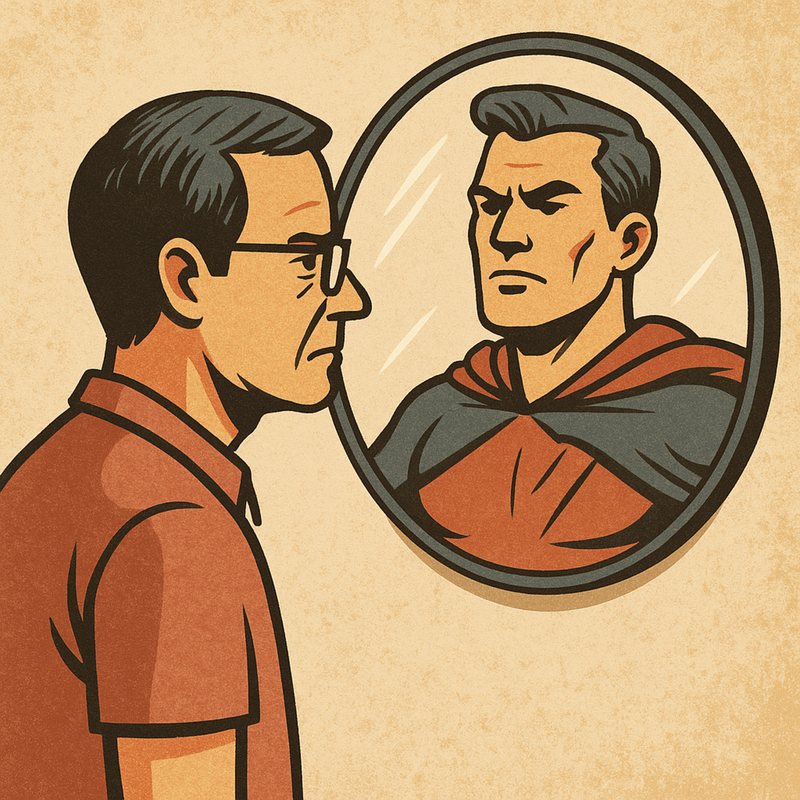
Nobody, absolutely nobody, thinks they're the bad guy. Like ever. It's almost a universal human condition, isn't it? I think so. The person we see as the villain, they look in the mirror and they don't see a monster. They see a hero, maybe brushing their teeth, feeling good about themselves, totally convinced they're holding the line, doing the right thing.
While everyone else is just wrong or asleep at the wheel. Yeah, or maybe even complicit in the danger they see. They're the ones fighting the good fight in their own minds. It's a profound self perception. Every side, every person, every group, they all have their own story.
A story of righteousness, a narrative that justifies their actions, makes them feel noble, necessary, correct. And understanding that really shifts how you view conflict, doesn't it? It's not just about logic or opinions anymore. Not at all. It becomes about deeply ingrained self preservation identity. People's beliefs are tangled up with who they are, their community, their values, their whole sense of purpose. You know, it makes me think of something simple like driving. You get cut off, right, and you're instantly furious. That guy's a maniac.
Happens all the time. But from his perspective, maybe he had to swerve to avoid something you didn't see. Maybe he's rushing to the hospital. Maybe he just messed up and feels terrible. He's not the villain in his story.
Right. We're sports fans. Both sides always think the ref was biased against them. Always. Even if the replay shows something else entirely. Exactly.
It's that deep conviction in your own narrative, your own side's rightness. It makes it almost impossible to challenge from the outside. It's like a shield. An incredibly powerful shield of self justification. And that's precisely why just shouting you're wrong almost never works. Yeah, the source is really clear on that. It basically says it's useless because. Johnny and Becky with the same conviction. That's the quote.
That's it. You're not having a logical debate where facts rule. You're in something deeper, existential. As the source puts it again very powerfully, they're not debating you, they're defending their very existence. Wow, defending their existence.
When someone feels their core identity, their way of life, their fundamental values are under attack, reason often just goes out the window. It becomes about survival. They're not trying to win an argument, They're fighting to survive as they see it. OK, so for you listening right now, think about a time you were just absolutely certain you were right. Maybe arguing with family or at work or about some big issue. We've all been there.
How hard was it for anyone to change your mind? How did it feel when someone just flat out told you that you were wrong, especially if you felt like your poor values were on the line? It's incredibly difficult, isn't it, to shift when you're in that mode. Exactly. And that feeling, it's not just you, it's universal. It's what fuels so many of these conflicts. Which brings us right to this idea of the blind spot of moral absolutism.
The source isn't just describing A belief system here, It's calling it a critical, even dangerous assumption. A trap? What trap specifically? The trap of thinking that your version of right and wrong, your moral code is just self-evident, universally true. Like it doesn't even need explaining.
OK, assuming you're obvious, is everyone's obvious? Exactly, and the author argues that is the core blind spot that can just completely derail any attempt at understanding or communication in a world full of different views. So what does this mean for us then? It means if you're not careful, really careful, your strongest beliefs, the things you feel most passionate about. They can become your biggest blind spot.
Ironically, yeah. The source warns that the second you forget how rare, how specific your worldview actually is, 2 really critical things happen. What are they? First, you stopped really listening. Why bother if you already know they're wrong or irrational, right?
Makes sense you tune out. And second, because you're not listening, you lose the ability to understand why the conflict even exists. You can't grasp the other side's motives if you just assume they don't get it, or worse, that they're just plain evil. You stop asking why and just shout. How dare they?
Precisely. And this is where the source brings back that statistic, that reality check. In the US, maybe only 20% of people share your specific moral framework, your exact shoulds. Only 20%? It's not a lot. At all.
And globally it's even rarer, maybe tiny depending on the belief. Now this doesn't mean your truths aren't valuable. The source actually argues their rarity makes them precious, unique, important to you. OK, so. Rarity equals preciousness.
But it also makes them fragile, Yeah. And the big picture, rare things survive, the source says. Not because they assume they'll win, but because they understand their position and they fight for it. So it's not about being passive, but about being realistic and active. Exactly.
It's about active engagement, knowing your beliefs are unique and maybe vulnerable, not just assuming everyone secretly agrees with you. And this leads to that idea of impotent truths, which sounds harsh but maybe realistic. Yeah, it's a striking phrase, the. Source describes these as moral statements that sound really strong. They feel righteous.
They make you feel good, Clear. Morally superior, maybe. Very affirming. But without enough people actually sharing that belief, without collective power behind them, they become what was the quote? Loud, righteous and powerless against the tide.
Powerless against the tide. Yeah, they might comfort you or your group, but they don't actually change the world. They don't shift the big currents. They just echo in your own bubble no matter how true they feel. And that highlights a really crucial difference we often miss.
The personal comfort we get from a belief isn't the same thing as its power to actually influence a diverse society. Right. Feeling good isn't the same as being effective. Precisely. A belief can be deeply comforting, give you purpose, but if hardly anyone else shares it, it's ability to shape the norm is tiny. So for you, the listener, think about how often you might just assume others share your basic moral starting point, especially in tough conversations.
Yeah, we do that automatically, don't we? We do. Recognizing this rarity that your truths might be impotent in the wider world. It could change your whole approach, maybe moving from demanding agreement to thinking more strategically. How do I build bridges? How do I actually advance this view in a world that mostly disagrees?
OK, so if those impotent truths don't change the world, what does? This really pushes us into the next section, the real battlefield, a clash of Titans. Yeah, this section uses some powerful imagery. It really does. It cuts through any idea of polite disagreement. The source just states it bluntly. The world isn't Sunday school.
It's a clash of the Titans. Wow, not Sunday school. No, it paints this picture of huge powerful forces smashing against each other. Forces that aren't going to be swayed by a well reasoned argument or a moral appeal. It emphasizes that we're not just talking about small policy tweaks or misunderstandings you can clear up with a chat.
These are deep, fundamental clashes, fights over the entire operating system of society, you could say. And importantly, the source says, these sides, these Titans, they've been building towards this clash for decades. This isn't new. It's not a sudden flare up. Right. It's been simmering, These tensions, these ideologies, they've been growing, getting stronger, shaping how people see the world for generations.
It's like different rivers carving deeper and deeper channels heading for collision. So it's not just about today's policies. It's generations of different worldviews, different histories, different visions for the future, all finally meeting head on. Yeah, the source even names. Names, doesn't it?
It talks about movements sharpening their swords in the dark. That's another vivid image. Very vivid, it mentions specific forces like Christian nationalism, identity politics, populism and different strands of Marxist theory. These aren't just abstract ideas then. Not according to this source.
They're presented as active, organized, often passionate movements, each with its own followers, its own text, its own way of seeing the world, its own emotional fuel. And the source says generations of narratives have shaped them, giving them the force of myth. Exactly. Which means they're not just intellectual positions you can debate away. They're woven into people's identities, their history, how they see themselves.
Take Christian nationalism, for example. The source analyzes it not just as faith, but as a political ideology. Believing the nation should reflect certain Christian values. Seeing current changes is wrong. Wanting to restore a perceived past. Right and identity politics.
The source perspective suggests it may be started as a fight for rights, but sometimes shifts to prioritizing group identity over universal ideas, leading to clashes over justice equity. Who's the victim? Populism. Marxist theory. Similar idea presented as powerful world views, each with its own story of what's wrong, who's to blame, and a compelling, maybe even revolutionary vision for fixing it.
So connecting this back, it's not petty arguments, it's deeply embedded belief systems colliding, each with its own origin story, its own grievances, its own vision for the future, and each absolutely convinced it's right. And when these forces, these Titans, finally collide on that real world battlefield, the source says, they don't care about your shoulds. Ouch. Yeah. Doesn't matter what you think is right or fair or ought to be. Their main concerns are just survival, asserting their truth, and who gets to write the next chapter. That's the picture of pain, which completely changes the game.
It's not a debate about logic or ethics within one shared system anymore. It's a raw struggle over existence, power, the future direction of society itself. The stakes feel absolute to those involved. So for you listening, think about current events through this lens. Are we just seeing arguments about what should happen? Or is it, like the source suggests, something deeper? A battle for survival, for the future story, for who defines reality?
Understanding it that way maybe shifts things from just frustration at the other side being irrational to a clearer, maybe more sobering view of what's actually driving the conflict. High stakes, deep convictions on all sides. OK, so if it's a clash of Titans on contested terrain, how do we navigate that? That brings us to the last part. Understanding the terrain a path forward, though maybe resolution isn't the right word.
No, the source seems more pragmatic than that. It advises something like hold your beliefs, fight for them, but don't lie to yourself about how universal they. Are so stand firm, but be realistic. Exactly, They're not universal, they never have been. It's about being grounded, self aware even while you're advocating for your cause, passionate but profoundly realistic. And that point about rarity?
Again, your truths might be rare. And that rarity makes them precious, the source argues. Unique, valuable, worth protecting. But also fragile. But also fragile in the bigger picture. They need active defense strategy understanding, not just assuming they'll automatically win because you think they're right.
It's recognizing their unique spot without assuming everyone else is or should be on the same page. And the danger of forgetting that rarity, of falling into that moral absolutism trap. That's where the source gives that really stark warning. The moment you forget that, you risk becoming the villain in someone else's story. Wow, becoming the villain yourself.
Yeah, and it uses that image that really sticks with you. You're there, heroically shaving in your bathroom mirror, totally convinced of your noble cause. Feeling pretty good about yourself? While they're sharpening their blades, while you're admiring your reflection, maybe flexing, they are marching, plotting, believing just as fiercely as you do with their own story, where you are the problem. That is quite an image, a real cautionary tale.
It is about self-awareness and conflict. It pushes us to look beyond our own heroic internal story and see the external reality. How are we perceived? Why are their beliefs just as strong to them? Ignoring their view doesn't make it go away.
Not at all. It just blinds you to the actual battlefield, the source suggests. If you miss that, you're not just at a disadvantage, you're fundamentally misunderstanding the world and how these conflicts work. So the ultimate lesson here, the big take away, seems to be the battle isn't won by who feels most righteous. It's won by who understands the terrain, yeah. It's not about being the good guy in your own movie or shouting your shoulds the loudest. It's about really, truly grasping the complex reality of the situation you're in.
And understanding the terrain means really digging in, often uncomfortably. What are the other narratives? What truly motivates the other side? What are their fears, their histories, their sense of injustice, the power dynamics? It's moving past just saying they're wrong to understanding why they believe what they believe, exactly. Engaging with the messy reality of human belief in conflict, recognizing that every powerful movement, every deep belief system, no matter how much you disagree, has its own compelling, often righteous reasons for existing from its perspective.
It takes some intellectual humility. So for you, the listener, the encouragement is to look at things, big conflicts, small arguments, not just through the lens of your own shoulds, but by trying hard to understand the whole terrain, all the different beliefs, motives, fears. It's tough because what feels undeniably right to you might feel totally wrong, even oppressive, to someone else, and they're just as convinced as you are. This perspective doesn't say abandoned your beliefs, not at all. But maybe arm yourself with a deeper understanding of the world as it is, not just as you wish it was. So let's quickly recap the core insights should be the norm, often a comforting illusion disconnected from how change really happens.
Nobody thinks they're the villain. Everyone's the hero of their own story. Moral absolutism, Thinking you're right is the right is a huge blind spot. Stops us listening. Stops us understanding. And conflicts, often not polite debates but existential clashes, deep worldviews colliding, built up over time, each with mythic power for its followers.
Right. And this deep dive, it wasn't about telling you what to think or taking sides on any issue. No, definitely not. Our goal was to offer a framework based on the source material to help understand why people believe what they believe, why conflict seem so stuck, and why your own strong beliefs, while precious, are rarely universal. It's about appreciation, the complex dance of human conviction stories and the messy reality of how societies actually shift or dig in their heels. Which leaves us with a final maybe provocative. Thought yeah, this raises an important question. In a world where righteousness is so subjective, where agreement is so rare, and conflicts are driven by these deep existential stakes, what's our real measure of progress or understanding?
How do we even define common ground or success when the very idea of right and wrong is so fiercely contested and felt so differently by different groups? Something to chew on, definitely. Something to think about as you navigate that fascinating, often clashing terrain of the real world. We really hope this deep dive helps you see it all with perhaps some new eyes, and maybe approach things a bit more strategically with a bit more understanding of the whole picture.