Read the full transcript (5,172 words, machine made)
You've definitely seen it, haven't you? That meme, you know, the one that pops up on your feet and you're just like, Yep, exactly. Don't blame me not owning a house on my daily latte. Oh yeah, that one's everywhere. It really is. It's become this like cultural shorthand, right? A collective eye roll at the idea that somehow those tiny little daily treats are the real reason we're not hitting those big financial milestones.
And it Piaka's kind of validating to share it, doesn't it? Because I mean seriously, who actually thinks a $6 coffee is the only thing standing between them and a house? Exactly. But, and here's where it gets interesting, our source material for today takes a bit of a turn. It's this article.
Your daily latte won't buy you a house, but your burn rate will keep you broke. OK. And while it totally agrees, yeah, the latte isn't the main villain, it introduces this other concept, something it argues absolutely is the problem burn rate? Burn rate like from the startup world. Precisely. If you know startups, you know that term, it's basically the cash they burn through every single month just to keep the doors open, you know, keep things running before they even think about profit.
Right salaries, rent, servers, all that essential stuff. Exactly, and this article makes this really provocative claim. It says most Americans now live like bad startups. Oh, OK, that's that's a statement. It is. Think about it.
Every dollar that just flows out of your account, every payment, every little purchase before you've even put a cent aside for savings or investing or, you know, building any kind of real wealth. That's your personal burn rate. That's your personal burn rate. According to the source, it's the baseline cost of just existing today. OK, so let's really unpack this. In this deep dive, we're going to dig into this whole burn rate idea piece by piece.
We're sticking strictly to the insights from this one article. We'll look at the specific things that make up this burn rate, what the source says about how our idea of normal living plays into it, and ultimately what this could all mean for your financial future. It's kind of looking under the hood of modern spending. What's immediately fascinating here, I think, is how the source just right away challenge is that common assumption, that comfortable idea about the latte. It deliberately shifts the focus, doesn't it, away from those like isolated small purchases we can easily dismiss. Right, the little treats.
And points us towards something much bigger. This sort of systemic, almost hidden lifestyle cost. It's not just what we spend on occasionally, but how much we need to spend or feel we need to spend just to maintain what we see as a normal standard of. Living. That's a really good way to put it.
Systemic lifestyle cost because the source doesn't pull any punches. It defines personal burn rate as quote, every dollar that goes out before you've even thought about saving, investing, or building wealth. So everything that leaves before you pay yourself, essentially. Pretty much. And then it hits you with this.
The modern American burn rate is brutal, brutal. And honestly, when you start looking at the categories the source breaks down, you kind of start to see why they use that word. It's surprising how much just Spanish is. Indeed, And connecting that to the bigger picture, the source seems to be arguing that this isn't just about, you know, discretionary spending in the old sense, like buying fancy clothes or gadgets. You don't, strictly. Need.
Well, not just the fun stuff. No, it's framing it more as the fundamental cost of just participating existing in today's society. And that cost, the article argues, has just silently crept up and up. Inflated without us really noticing. Exactly. So it raises this really key question, how much of this brutal burn rate is actually a choice we could easily change, and how much has just become normalized? You know what society now considers the absolute baseline for an acceptable life?
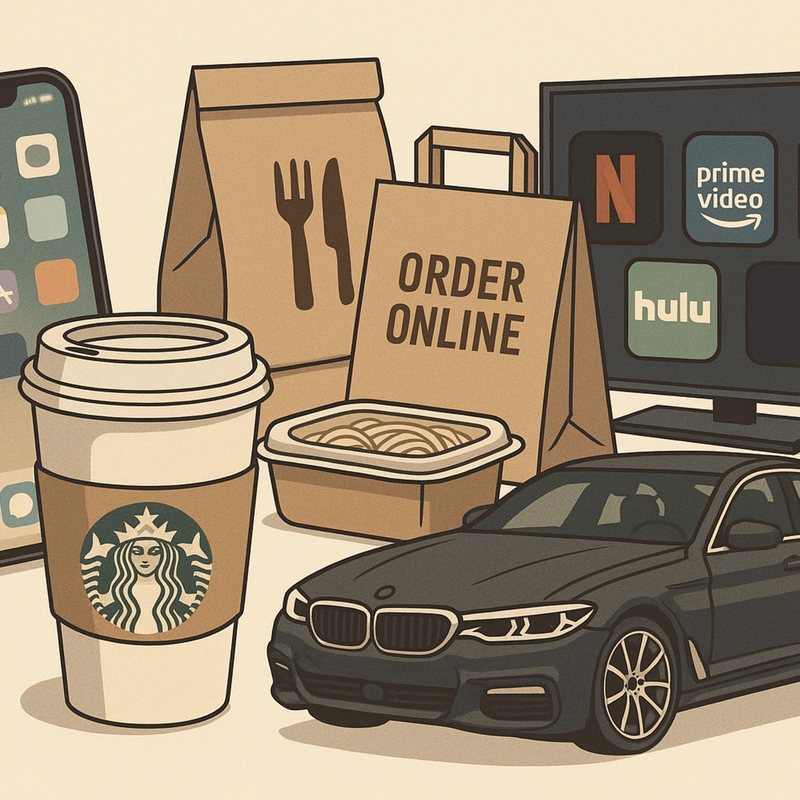
It makes you question what keeping the lights on even means anymore for an individual doesn't. It it really does. It's not just electricity and rent. Not anymore, anyway. Let's start peeling back those layers, looking at the specific categories the source digs into. The first one they tackle is what they call the Bleed on media, basically our entertainment subscriptions. Ah yes, the streaming wars impact on our wallets. Totally think about your own setup. The source lists the usual suspects. You've probably got Netflix, right? What's that now?
Like 1599 a month. Government around there. Yeah, then maybe Disney Plus, maybe 1399 Hulu's up there too, like 1799 Amazon Prime, which let's be honest, isn't just for shipping anymore. It's 1499 and. That's just the video streaming often.
Right. The source points out that many people have YouTube TV now, specifically as an alternative to cable they thought was too expensive. But YouTube TV itself is what, 7299? 973 bucks, yeah. It's not cheap, not at all.
And then you add Spotify or Apple Music for your audio fix. And maybe, like the source mentions, you've got Paramount Plus because your kid begged for it or you just had to see that one show. That just one more subscription. Trap. Exactly.
And the source tallies this up. It says people are easily spending 150, two, $100 a month just for entertainment subscriptions. Wow. Before anything else potentially. Before rent, before food, just to be entertained.
It really shows that cumulative effect, doesn't it? These small monthly hits adding up to a pretty significant chunk of change it. Absolutely does, and the source really emphasizes that saying the average American household is bleeding money on media before they even pay rent. Bleeding money. That's strong language.
It is. It's meant to be provocative, I think, to highlight how insidious these costs can be. And the contrast? Remember, they say this stuff used to be free over the airwaves with a rabid ear antenna. Yeah, the good days.
Rabbit ears. It sounds quaint, but it highlights a massive shift. We went from mostly free access to needing multiple paid subscriptions just to watch while TV and movies. It's that lifestyle creep you mentioned earlier, isn't it? What used to be extra is now just expected normal. Precisely.
It becomes part of the baseline cost of living, often without us making one single big decision. It just kind of happens subscription by subscription. Yeah, the source even uses this great little anecdote to show the scale of change. It talks about someone's ex's parents in San Francisco. Quote, my ex's parents in San Francisco had the same phone line for 50 years. One bill, that was it. 50 years, one phone bill. Wow.
Right. Contrast that with today. Multiple streaming services, multiple cell phone lines in a family, high speed Internet. It's just a totally different world and each piece adds to that burn rate. That anecdote really puts it in perspective.
It's not just that new services exist, it's that the expectation of having instant access to Everything, Everywhere, on every platform that's become the default. And that default has a price tag a recurring 1. A significant recurring one. The convenience is undeniable, sure, but the financial obligation is just as real. OK, so that's media. Then the source moves on to something even more fundamental. Food.
But it's not just talking about your grocery bill. No, it zooms in on convenience, right? It's food delivery. Exactly. Think about ordering DoorDash or Uber Eats.
The source points out that once you add up the actual food cost, the delivery fee, the service fee, maybe a tip, a single order for one person can easily hit $3540. Yeah, those fees really stack up. It's never just the menu. Price. Never. And OK, maybe $35.
Feels like a splurge. A treat after a long day. Yeah, manageable, right. It's like it in isolation, but then the source does the math. Right, they say, do that just three times a week and you've torched $500 a month. $500 a month on food delivery. Yeah, just let that sink in. 500 bucks that's that's a car payment for some people.
It really is, and this is such a prime example of how convenience directly translates into a major financial impact. The source shows how these small choices just accumulate into a massive chunk of your burn rate. And you might not even realize how big that annual number is. Exactly. Because $500 a month, that's $6000 a year. $6000 The source just puts it bluntly. That's 6 grand a year gone.
Poof. Yeah, vanished on takeout. And that's probably conservative for some people, right? That doesn't even count. Like the random fast food runs, the Friday night takeout tie the I'm too tired to cook pizza deliveries. All those little moments where convenience wins over cooking, they add up fast.
So that six grand might actually be low balling it for a lot of folks. It very well might be, yeah. And the source really drives home the significance of that number, the opportunity cost. What does it say? It suggests that $6000 could be a down payment for a house in rural Ohio, or at least the used Honda Fit you claim you can't afford. Ouch.
OK, that puts it in stark terms. It does. It's not just that you spent the money, it's what you gave up the chance to do with it. Saving, investing, buying a reliable car, whatever might be. It's like that convenience is actively eating away at your other financial goals without you even realizing the scale of it.
Precisely. It feels normal, maybe even necessary sometimes, until you actually add it all up. That's why it's such a big part of the burn rate discussion. OK, so media, food, convenience. What's next on the burn rate hit list, according to the source? Transportation.
Another big one where Normal has really shifted. How so? Well, the source points directly at the desire for the new lease special. You know, the shiny new car. Right, keeping up appearances.
Exactly. The author mentions the BMW, the Tesla, the Audi, basically whatever Instagram says makes you look like a functioning adult. Yeah, the pressure is real, isn't it, To project that image through your car? It really is, and that's the fascinating part. The source highlights a social and psychological drivers behind these choices.
It argues our expectations around cars have just ballooned way beyond just needing reliable transport. So it's more about status than getting from A to B. Often, yes. According to the source, it's driven by external perceptions impressing others, signalling success rather than just pure function. Which leads to the question, how much are you spending on your car to keep up appearances versus just meeting your actual needs? Good question.
The source? Contrast this right with older cars. It does. It explicitly mentions the 15 year old civic that runs forever but doesn't impress the neighbors. The practical choice versus the Flashy 1.
Exactly. And it gives that historical context to which is really telling. Says in the 1980s, if you had a Camry, you were considered to be doing great A. Camry Wow, times have changed. Massively a reliable well made sedan was a sign of success, but now the source claims people think they deserve a luxury SUV as a baseline. A baseline, not even aspirational, just the starting point.
That's the implication. And that leap in expectation obviously comes with a huge leap in cost, purchase price, insurance, gas, maintenance, it all goes up. So what is the source called this it? Labels it pretty bluntly. That's a Gordon Gekko lifestyle masquerading as middle class. Gordon Gekko Like Wall Street, greed is good. Gordon Gekko.
The very same, yeah. The source uses that analogy to suggest there's this fundamental disconnect now between typical incomes and the aspirational high cost lifestyle people feel entitled to, especially with cars. It directly feeds that burn rate. OK, that makes sense. Media.
Food. Cars. What's the last major category the source identifies? Housing, but specifically the location aspect of housing. Location, location location. Right, the source gets pretty direct here, saying everyone insists they must live in the city, in the neighborhood that vibes with them.
The vibe tax, Yeah, I see that people wanting the cool neighborhood, the trendy spot. Exactly. There's this idea that where you live is a huge part of your identity, your lifestyle. It's emotional. Expensive. Extremely.
Yeah. And this is where the source just brings it back to you. Cold, hard math. It says quote, but if you can't afford it, you can't afford it. That's how math works. Blunt but true.
Very it emphasizes that chasing that ideal location, that perfect vibe, often clashes directly with financial reality. If that desired spot pushes your rent or mortgage way up, it just massively inflates your burn rate, becoming maybe the single biggest obstacle to saving anything. So your dream neighborhood could actually be keeping you broke. According to the source, absolutely. It forces you to weigh that ideal lifestyle against your actual financial capacity. Are they aligned or is the pursuit itself the problem? OK, so we've looked at these big categories, media, food, transport, housing, location.
Now the source does something really useful. It puts it all together. Right, the hypothetical budget breakdown. Exactly. To make it less abstract, less theoretical, it lays out a line item budget for what it calls a single adult.
Nothing extravagant, just normal. This is where the numbers get really stark, I think. They really do. This is the concrete evidence, right? It pulls all those pieces together to show the cumulative weight of these supposedly normal costs. And it makes you ask yourself, have I actually done this? Have I listed out my own burn rate items like this? Do I even know the real total?
It's a confronting exercise for sure. OK, let's walk through the sources example. Remember, this is for one person living what many would consider a Standard Life. Ready. OK, First up, $160 on subscriptions, that's all the Netflix, Spotify, etcetera we talked about.
Then $120 on a phone bill, pretty standard for a smartphone plan these days. Now the food part, $500 on food delivery and take out, that's that convenience cost we dissected. Right the stocks K year habit. Then transportation, $500 on a car lease or loan. Again, leaning towards that newer nicer car the source mentioned. Plus $200 on insurance car or maybe renters and $250 on gas to keep that car running.
Makes sense now. This one's interesting, $200 on random Amazon crap. Love that phrasing. Me too. It perfectly captures those impulse buys, the stuff that just appears in boxes.
Things you felt you needed, but maybe didn't. The little dopamine hits delivered to your door. Totally. Then $100 on clothes because as the source notes, you don't want to look. Cheap social pressures again. Then basic household stuff, $300 on utilities, Internet, electric, standard bills, and finally $200 on weekend fun. You know, bars, brunch, drinks out with friends, social life. The essentials of modern socializing for many. Right.
So Add all that up, just those expenses before rent or mortgage, what do you get? Let's see 160 + 120 + 500 + 500 + 200 + 200 + 200 + 300 + 300. +200 that's oh, it's $2530 a month. 2 1/2 grand before housing. Before housing. Now the source says OK, let's add in $2000 for a rent or mortgage in a decent metro area and honestly $2.00 OK might be low for some cities.
Definitely conservative in many places. So add that $2000 and suddenly this normal non extraviant single adult life costs $4530 a month. $4530 every month. Which translates to over $54,000 a year just to exist, just to cover the baseline normal. 54 grand.
That's it. That's more than the median individual income in the US, isn't? It it is significantly more for many, and this is where the source really hammers at home quote. That's burn rate. That's before saving a dollar, before investing, before emergencies.
That's the hole you have to climb out of every single month. The hole you have to climb out of that language really frames it as a deficit. You start from each month. You're already $4500 in the hole before you can even think about. Getting ahead? Exactly.
It makes the challenge of savings seem almost insurmountable if your baseline is that high. How do you build wealth if just living consumes that much? It makes that $54,000 figure incredibly impactful. It's not just a budget, it's presented as the barrier itself. Right. And this leads us straight into the sources core argument. And they're very careful to make this distinction. This is not about judging you.
Yeah, they put a disclaimer in. They do, explicitly. It's not about moralizing. I don't care what you do with your money. The author is saying.
Look, this isn't a lecture on being frugal just because. It's not about right or wrong choices in a moral sense. It's. Framed more as a statement of fact, like here are the consequences, here's the math. Precisely. It's positioned as a dispassionate observation. They argue certain lifestyles, even if they feel totally normal and everyone around you is doing it, are just fundamentally incompatible with building wealth if you're on an average income.
It separates the lifestyle itself from any judgement about the person living it and focuses purely on the financial outcome. Does this lifestyle allow for wealth building given your income, Yes or no? Exactly because right after saying I don't care what you do, the source hits you with the blunt fact, as they call it. What's? The blunt fact? Quote the entitlement to live like a suburban Gordon Gecko. Multiple cars streaming bundles, takeout as a food group keeps you broke.
OK, back to Gecko. So the entitlement to that lifestyle is the problem. That's the argument. Not the individual latte, but the whole package, the high baseline you feel you deserve, the source says. That high burn rate makes sure you'll never have a safety net, let alone wealth. So connect that lifestyle directly to a lack of financial security.
Directly and it circles right back to the start. And no, a $6 latte won't buy you a house, but the $4000 a month burn rate you consider normal? That's why you'll never own one. Wow, that's incredibly direct. It pins the lack of homeownership squarely on that overall burn rate, not the small stuff. It really does.
It connects all the dots, the subscriptions, the food, the car, the rent, adds them up and says this total is the barrier. It makes wealth building sound less about earning more, though that helps obviously, and more about managing the outflow, controlling that burn rate. That seems to be the absolute core message. It's a game of outflows. Which implies a choice has to be made.
You can't necessarily have that high burn lifestyle and significant wealth accumulation, at least not for most people. Exactly, and the source frames this not as sacrifice, but as trade-offs. trade-offs. That's the keyword they use. I'm not talking about sacrifice, I'm talking about trade-offs.
That framing is clever, isn't it? Sacrifice sounds negative, like deprivation. Trade off sounds like a conscious strategic decision, choosing one thing over another because you value it more. Right. It puts the power back in your hands. You're choosing your priority, and the source lays out the choice very starkly.
What's the either? It says basically you can have Netflix, DoorDash, Disney trips, Uber rides, the latest iPhone, the least BMW and a constant flow of Amazon boxes. The whole high burn package. The whole package. Or you can have wealth not and not and, but you can't have both. The source is emphatic.
That's burn rate. That's the whole story. So for most people it's presented as a mutually exclusive choice. High consumption, lifestyle or wealth building? Pick one.
That's the argument. It forces you to really think about what you prioritize more, the immediate gratification and convenience of that lifestyle, or the long term security and freedom that wealth could provide. And it implies that many people haven't consciously made that trade off, they're just defaulting to the high burn lifestyle because it's normalized. And then wondering why they aren't getting ahead financially. The source suggests the answer is right there in their monthly bank statement in the burn rate.
Now to really underline how much normal has shifted, the source brings in some really interesting context. It uses the example of immigrant communities. Right. How does it describe their approach? It says my immigrant friends crowd into small apartments, share rent, rotate use of a van for DoorDash and contracting gigs, and save relentlessly.
So a focus on minimizing costs and maximizing savings, a much lower burn rate by design. Exactly. It's presented not just as an anecdote, but as a deliberate strategy focused on long term goals, contrasting sharply with the consumption driven normal we've been discussing. And the source isn't necessarily saying everyone should live exactly like that, but using it as a comparison point. Precisely to show that different definitions of normal exist and those definitions have huge financial consequences, it makes you question how much of our normal is driven by genuine need versus cultural expectation or marketing.
It highlights that a lower burn rate is possible, and for some groups it's the standard approach, often out of necessity, but also clear prioritization. And the source draws this really striking parallel. It says these friends, they live like Americans did in the 1960s. The 1960s How so quote? One phone line, one TV, one family car, home cooked meals and vacations that looked more like Rd. trips than resorts. Wow, that paints a very different picture of normal American life.
Much simpler, much less consumption focused. Doesn't it? It implies that the baseline burn rate back then was just inherently lower because societal expectations were different. Fewer subscriptions, less eating out, more basic transportation, simpler leisure. That comparison is powerful.
It suggests our current high burn rate isn't some inevitable endpoint of progress, but maybe a divergent from a more financially sustainable way of living that was common. Not that long. AGO and still exists in some communities today. Like the immigrant groups mentioned, it challenges the idea that our current normal is the only way. It suggests our expectations have inflated dramatically, maybe even more than our incomes for many people. Exactly.
And that's the contrast the source then makes explicitly it pits that 1960 semigrant model against what it sees and many others today. What does? It say about them. It says that many second and third generation Americans have convinced themselves that normal means streaming services, artisan coffee, yearly Disney trips and Uber whenever they don't feel like walking. So it's pointing to a self-imposed definition of normal that includes a lot of expensive conveniences and luxuries as baseline requirements.
That's the argument. It's not just that these things are available, it's that we've come to expect them to feel almost entitled to them as part of a Standard Life, even if the math doesn't quite work on a median income. That highlights the psychology of it, doesn't it? How perceived needs driven by social comparison or marketing become real financial obligations that steadily inflate that burn rate? It's like we're constantly chasing an ever expanding definition of normal and it's costing us dearly. A.
Treadmill of consumption almost. Yeah, OK, now we get to a part the source calls the kicker, and this is where it steps back a bit and brings in some broader socioeconomic context. It gets a little provocative. OK, what's the context? First, it makes an observation about who maybe doesn't have to worry quite as much about this burn rate stuff.
It says most people who scream about this stuff have a trust fund. Rich parents or household incomes north of $300,000. So pointing out a difference based on existing wealth or very high income. Right. The source suggests that for these folks, they'll be fine. They'll inherit, they'll cash out. The implication is that a high burn rate might be observable or less consequential if you have those massive safety Nets or income streams.
So it's positioning the burn rate discussion within that wider context of wealth inequality. The same spending habits have vastly different consequences depending on your starting point. Exactly. For those people, maybe the merciless math doesn't apply in the same way. Merciless math. That's what I call it for everyone else. Yeah, it says.
For everyone else, the math is merciless. Quote You can't live like a 1980s Wall Street yuppie on a median income and expect to get ahead. Back to the Gecko comparison, trying to live that high consumption life on an average salary just doesn't compute mathematically. That's the core argument for the vast majority. Without those external cushions, the burn rate becomes the critical factor, the primary determinant of whether you sink or swim.
Financially, the math is unavoidable. It underscores that while individual choices matter, the economic context magnifies the impact of those choices immensely for people without wealth or high incomes. Right. And then comes the part the source actually labels. The kicker.
It shifts gears into some pretty direct socio political commentary. OK, And again, just to be super clear, we're relaying exactly what the source says here. This is the author's specific provocative point. Understood. Presenting the sources.
View right? The source poses this hypothetical. If you want socialism, if you dream of the revolution, guess what? And then it answers its own question quite vividly. How so? It says You're not going to be sipping cold brew in your suburban Maryland kitchen anymore. Instead, you'll be in my tiny efficiency apartment, grateful for the thick walls and strong AC, maybe commuting to a Corning factory in Kentucky.
Wow, OK, that's quite an image. What's the point it's making there? The source concludes that thought by saying because socialism means everyone comes down to the same level, not that you get to keep your Gordon Gekko life while Jeff Bezos takes the hit. So it's using this provocative scenario to argue that even under a different economic system, the idea of maintaining a high consumption gecko lifestyle wouldn't necessarily hold that resource constraints and trade-offs would still apply, perhaps even more universally. That seems to be the thrust of it.
It's a challenging commentary suggesting that fantasies of systemic change might ignore the potential impact on individual consumption levels for everyone, not just the very top. It definitely redirects the focus back to individual lifestyle and consumption. Regardless of the broader political framework being discussed. It's a jarring point to make. It is.
But then, just as quickly as it introduces this kicker, the source pulls right back. It immediately says, but let's stay in the present. Let's stay with the math. OK, a deliberate pivot back to the core topic. A very clear pivot, like, OK, that was a thought experiment, maybe a provocation, but let's get back to the practical reality right now. Whatever your politics, whatever you hope for the future, the current math of your burn rate is what's impacting your ability to build wealth today.
That makes sense. It grounds the discussion. Again, regardless of ideology, the immediate financial reality is shaped by income versus outflow. It reinforces that understanding and managing your personal burn rate is the fundamental, actionable step you can take right now. Exactly.
It puts the focus back on individual agency within the current system. OK, so let's try and wrap this up. Thinking back over our whole deep dive into the source article. Your daily latte won't buy you a house, but your burn rate will keep you broke. The core message really seems to be forget the latte. That's a distraction.
The real issue, the source argues relentlessly, is the total cumulative burn rate. Right, The sum of all those normal expenses that eat up your income before you can save or invest. Yeah, all those things, streaming, the food delivery, the fancy car, the vibe neighborhood, they add up. And according to the source, that total adds up to a lifestyle that for many makes significant saving or wealth building mathematically very difficult, if not impossible. And the solution presented isn't about finding blame, but about recognizing the trade-offs.
Exactly. It boils down to that conscious choice. The source presents the high consumption lifestyle or wealth accumulation, but likely not both for most people. You have to decide which path you value more. It really forces a hard look at what we consider normal spending and whether that normal aligns with our long term financial goals.
It does. Which brings us to the final thoughts. This whole discussion, drawing just from this one source, really raises A fundamental question for all of us, doesn't it? Definitely. In a world that's constantly bombarding us with messages about what normal looks like through ads, social media, keeping up with friends, how much of our own spending, our own burn rate, is driven by our own choices and priorities? Versus how much is driven by just trying to keep up by those external pressures by a definition of normal, we didn't necessarily choose, but just sort of absorbed. Exactly.
And where do you personally draw that line? The line between enjoying modern conveniences and ensuring your financial future? Between status symbols and actual financial freedom. It's a tough balance. Maybe the real deep dive isn't just into the numbers, but into our own personal definitions of what a good life actually means and what it truly costs. Will said.
What do we genuinely value financially and otherwise? The source leaves us with this really punchy final thought. It urges us not to blame the small stuff, the lattes, but to finally confront, quote the burn rate you refuse to acknowledge the one that's eating your future alive. 1 streaming subscription, one DoorDash burrito, one luxury car lease at a time. Wow, eating your future alive.
Yeah, that's a powerful closing image. It is a direct call to awareness really, to understand where the money is actually going and what future that outflow is actually building or maybe preventing. Definitely something to think about, maybe even calculate for yourself. A worthwhile exercise for sure.