Read the full transcript (12,506 words, machine made)
This is the Chris Abraham show. To a brand new deep dive. Glad to be here. I want you to start by just pictured a scenario for me, OK? And I really want you to put yourself in this headspace. Have you ever spent years building something? Oh yeah.
Right. Maybe it's a a a massive multi phase work project or a complex creative endeavor. A novel you've been drafting for a decade. Exactly. Or even just building a tight knit team culture at a startup. You've poured hours, weeks, months into this thing. The foundation is set.
The end game is insight. Yes, the end game is insight. And then, have you ever watched it all burned down in a single impulsive moment of glorious, irreversible, terrible stupidity? A painful. Thought it really is, but if you have, you are going to deeply, uncomfortably relate to the absolute train wreck we are unpacking today. It is quite the train wreck.
We are looking at a pair of highly unusual, intimately connected source documents. Very unique sources today. Yeah, the first is a raw, uncut 2 1/2 hour audio transcript of the final fateful session of a tabletop role-playing campaign. And we're talking about a group of friends who have been running the notoriously brutal Cursive Strad module. Right, for somewhere between 18 and 24 months.
A massive time investment. Huge and the second source is a personal post mortem audio reflection recorded by one of the players, Chris Abraham, who played a character named Bradley. It's an incredibly revealing pair of documents, honestly. Because we rarely get both sides. Exactly.
We rarely get the unedited real time audio of a group's catastrophic failure right alongside the solitary psychological aftermath from the person who essentially pulled the pin on the grenade. Pulled the pin is putting it mildly. It really transcends the context of just a role-playing game it does. It serves as a profound case study in human impulsivity, the fragility of collaborative storytelling under immense pressure, and really the intricate, unforgiving design of consequence based systems. So you aren't just going to recount the tactical errors made in the mark halls of Castle Ravenloft? No, we are going to isolate the exact mechanical and psychological breaking points.
The exact moments that caused a seasoned group of players to completely abandoned rational decision making. That is the mission for today's Deep Dive. Deconstructing the anatomy of a spectacular failure. We're going to look at how someone willingly throws away 2 years of investment in a single suicidal charge. And then, once the dust settles on that terrible decision, we'll pull back the curtain on the massive, hidden world of secrets they left behind. The alternate timelines, the agonizing what ifs. The things they never even knew were there. Let's jump right into the thick of it, because the transcript doesn't ease you in at all.
No, it drops you right in. Right in Meteor Res, you're immediately dropped into a chaotic, terrifying combat encounter deep inside Castle Ravenloft. And the party is locked in a desperate fight with an entity that the Dungeon Master Sean refuses to name conventionally. He just refers to it as the hate. Which is brilliant. It really is.
The nomenclature alone is a master class in psychological warfare by the Dungeon Master. Well, he doesn't call it a demon or an elemental or a stalk. Calling it the hate strips away the player's ability to categorize it. It makes it abstract. It elevates the threat from a mere stat block to a lethal concept, and mechanically, Sean leverages the environment and the rigid rules of the system to induce a very real sense of claustrophobia.
And panic. You can hear it. The audio at this point is just dripping with anxiety. The primary mechanical terror here is that the entity is completely invisible. Right.
Imagine trying to swat a deadly Hornet, but you're blindfolded. Exactly. They are trapped in this enclosed space and because they can't see the target, they are swinging wildly at disadvantage. Meaning they rolled 2 dice, take the lower number and just constantly miss it. Drastically throttles their action economy and their morale.
Every single attack is a desperate, flailing guess. And the compounding pressure is what makes this encounter so devastating. The invisible nature of the creature is bad enough, but Sean stacks the deck further by enforcing the creatures communities with chilling impartiality. Yeah, let's talk about Yuri Horn for a second. Ah.
Yuri. Listen to the transcript. When Yuri attempts to lock the battlefield down, he casts in Snaring Strike. Hoping to wrap the creature in magical vines. Just to at least reveal its position or restrict its movement.
The spell triggers, but Sean calmly informs the table that the creature cannot be grappled. It cannot be paralyzed, made prone, or restrained. The players are throwing their best control tactics at a literal brick wall. And offensively, the hate isn't using mundane slashing or piercing damage. No, it's dealing massive amounts of force and Thunder damage. It's physically blasting them with concussive shock waves, rattling the characters and the players alike. At one point, Shawn describes the hate, treating the characters like literal rag dolls. It's terrifying.
There's this incredibly cinematic, horrific moment where the entity grabs Yuri Horn and hurls him straight out of a castle window. Out onto the Parapex, into the freezing Barovian rain. He is literally defenestrated. They even pause the game to morbidly joke about the word defenestration. Which is a great word, but the tactical reality of that moment is absolute devastation.
The party's physical formation is shattered. They are no longer a cohesive unit focusing fire. They are isolated individuals getting systematically picked off. If we abstract this out, it perfectly simulates how tightly integrated teams breakdown in high stress business or survival scenarios. Unit cohesion is the first casualty of overwhelming pressure. Once communication lines are scrambled and physical or operational proximity is severed, panic just fills the void.
The players stop coordinating their abilities to synergize with one another. They regress to a state of pure reactive self preservation. And that fragmentation leads directly to the cascade of failures that follows. Which brings us to Pearlin. Poor brave Pearlin.
Poor Pearlin. He's a halfling monk, vastly outsized by everything in this castle, but he is giving it his all. He's burning through his key points using Flurry of Blows. Joking nervously that he's just going to try and pop it in the knee. But the disadvantaged mechanic is just too punishing.
He's burning his resources and missing continuously. And then the hate pivots its attention back to him. The audio captures this awful moment of realization. The monster unleashes its attacks and Perlin takes 22 points of force damage in a single concussive blow. He drops TO0HP immediately. The shift in the room's energy is palpable in the recording. This is where the cold, indifferent math of the system asserts itself over the narrative the players want to tell.
Dropping to zero hit points forces the game into a completely different tempo. The tactical skirmish pauses and the raw mechanics of survival take over. Perlin is dying. Forced to make death saving throws on the freezing stone of the parapet. And he rolls a critical failure. A natural one on the die. 2 failed saves instantly. He bleeds out right there on the stone. He is permanently, irrevocably dead. The visceral gut punch in the audio is haunting. The players just stunned into silence for a moment before quietly muttering.
This character did not last long, I'll tell you that much. It's a brutal, sudden end to a character they've journeyed with. Think about the times you've been part of a long term project or a complex organizational rollout where a critical load bearing pillar suddenly unrecoverably fails without warning. That sudden absence doesn't just damage the project. No, it fundamentally alters the psychological state of every surviving member. For Radley and Yuri Horn Perlin's sudden death flips a heavy switch in their brains.
They transition instantly from a mindset of we are heroes engaging in tactical combat to we are prey and we need to run. The objective is no longer victory, the objective is merely surviving the next 6. Seconds. That survival instinct kicks in hard. Radley, played by Chris Abraham, the voice of our post mortem source, realizes the math is against them.
He openly admits he's trying to wipe the green cowardice off his hands. He disengages from the hate fully, abandoning Perlins corpse and bolts. He manages to scrape Yuri Horn off the ground, reviving him from unconsciousness, and the two of them just run. They have no plan, no map, just a desperate need to put distance between themselves and that room. Their desperation completely overrides their situational awareness. The transcript details them finding a dark staircase and just descending.
And Sean's description here is vital. He emphasizes that the stairs go down, down, down into the pitch black. They're descending past the recognizable architecture of the upper floors and plunging blindly into the subterranean levels of Ravenloft. They are letting their fear dictate their navigation. Sean is quietly, almost sadistically, noting that this staircase doesn't even connect to the main thoroughfares of the castle. They are running entirely off the board into the deepest Darkest Dungeon infrastructure.
They finally hit a door at the bottom, and this is where we witnessed the absolute deterioration of logical gameplay. What does a veteran player do when they are hanging on to life by a thread deeply entrenched in a vampire lore's cursed stronghold and they encounter an unmarked door in the pitch black? Well, Radley decides to kick the door open like an action movie SWAT team. He kicks it so hard it flies open, smashes against the interior wall and rebounds, slamming shut again. It's a comical image, but the recklessness of it is staggering.
It perfectly illustrates A psychological concept incredibly familiar in competitive gaming and professional poker. Tilt. Yes, tilt. Tilt is a state of mental or emotional confusion, frustration or exhaustion where a person abandons their optimal calculated strategy and adopts a highly aggressive, emotionally driven approach. The players are profoundly tilted. They are drained.
They just watched a comrade die horribly and their cognitive load is maxed out. They're making decisions based on adrenaline rather than analysis. Total unadulterated tilt. So they compose themselves, open the door properly this time. And the environment Sean describes? It should have been a massive red flashing light. Oh, absolutely.
It's a 30 foot square room with a 20 foot vaulted ceiling. Standing in deep alcoves facing each other in perfect symmetry are two 9 foot tall iron statues of Knights on horseback with their swords drawn. Suspended from the ceiling by thick, heavy iron chains is a massive wooden framed hourglass the size of a dwarf. And dead center in the room is a fiercely burning stone Brazier filled with white flames that bizarrely emit no heat at all. The environmental storytelling here is screaming at them. Everything about the architecture of this room is the textbook definition of a lethal trap. When you place oversized statues, unearthly flames, and suspended mechanisms in a symmetrical room deep in a dungeon, you are telegraphing to the players that they need to proceed with extreme caution and high perception. Right on the edge of the Brazier are 7 spherical colored stones, red, orange, yellow, green, blue, indigo and Violet. And etched in glowing common script on the base of the massive hourglass is a poem.
It is explicitly a puzzle room. It's a Riddle hinting at a teleportation network. It's their way out. The optimal play here is so obvious. Take a short rest, bandage your wounds, read the poem carefully, and decode the exit strategy. But tilt has completely consumed them. The impulsive trigger that fires next is almost hard to believe. Yuri Horn, who is operating on absolute fumes and pure, unfiltered frustration, looks at this intricate, ominous setup, turns to Sean and declares.
I expletive. Judy chop the hourglass. He chooses to make a mundane unarmed strike against a massive suspended magical object in a room guarded by giant iron statues. A Judy Chop. The sheer absurdity of trying to karate chop a dwarven sized hourglass in a cursed castle. And the system's response is instantaneous and merciless. Sean calmly dictates the consequences. The 29 foot iron statues animate their heavy metal hooves, striking the stone as they step off their pedestals. Simultaneously, the room floods with a toxic, blinding green gas and searing flames.
Sean asks for ADC 18 Constitution saving throw. It's a brutal check of their physical endurance against a high level trap. Unsurprisingly, they both fail. The Mathematic of this failure are staggering and they perfectly illustrate the danger of taking blind aggressive action in a collect system when you are emotionally compromised. The trap unleashes 55 points of poison damage and 22 points of fire damage. Yuri Horn's innate resistance to poison halves that specific damage type, but it is entirely irrelevant. Both players are already severely depleted from the invisible stalker upstairs.
This massive, sudden influx of area of effect damage overwhelms the remaining hit points instantly. They both dropped to 0. They are bleeding out on the floor of a toxic room surrounded by animated Iron Knights. It is a catastrophe authored entirely by their own impatience. Both Radley and Yuri are now rolling death saving throws on the cold floor. 3 successes to stabilize, 3 failures and you're erased.
Radley rolls his first save. Failure. The tension in the audio is suffocating. He rolls his second save. He is 1 bad roll away from following Pearl and into the grave.
He picks up the 20 sided die for the third time, rolls it, and it lands on a natural 20. Mechanically, a natural 20 on a death save is the rarest cinematic miracle the system affords. It defies the fading odds. You don't just stabilize and remain comatose, you instantly regain consciousness with exactly one hit point. You snap awake, gasping for air, lingering on the absolute razor's edge of mortality. It's a second chance, handed down by the dice gods themselves.
It's a phenomenal moment, Bradley gasps awake. The trap seems to have run its course. Or reset. The statues are dormant. The gas is cleared. Yuri Horn is still bleeding out beside him. Radley quickly uses a medicine check to bind Yuri's wounds and stabilize him.
So put yourself in Radley's boots for a second. You are miles beneath A hostile castle. You have exactly one hit point. If you trip over a loose cobblestone, you die. Your only ally is unconscious on the floor. You are standing next to a magical teleportation brazer. What is your next move?
The only rational move is risk mitigation. You hunker down. You take a short rest to expand hit dice and regain some health. Or you meticulously decipher the poem to figure out which colored stone teleports you to a safe zone, perhaps outside the castle entirely. So you can regroup, mourn Pearland, and strategize.
But Chris Abraham's postgame recording provides A fascinating psychological autopsy of what actually happens next. He labels his own cognitive process in this moment a perfect storm of stupid. That's putting it mildly. Radley walks over to the glowing poem. Sean reads it aloud for him. Cast a stone into the fire.
Violet leads to the mountain Spire, orange to the castle's peak, green to where the coffins hide, indigo to the Master's bride, blue to ancient magic's womb, yellow to the Master's tomb. The master Stride von Zarevich, the vampire Lord, the apex predator of the campaign. The hubris of what follows is staggering to analyze. Chris is fully aware of his character sheet. He knows he has one hit point out of a maximum of 46.
He knows his ally is unconscious and cannot assist him. He knows that teleporting directly into the final boss's layer in this condition is tactical suicide. Yet the allure of the epic narrative, the intoxicating idea of a heroic climax, completely overrides his logical faculties. In his audio reflection, Chris notes that the player behind Yuri Horn was hyping him up, saying wouldn't it be epic, dude, if you could just go in there and with one hit point, kill the big baddie? The desire to author a legendary moment actively sabotages the pragmatic goal of survival.
Chris's self-awareness in the post mortem is wild. He literally says I know that there's nothing more heroic and stupid than with one hit point at a 36I double down. Sean, as a good Dungeon Master, actually tries to offer him a lifeline. He pauses the game and explicitly asks, Are you certain ending the campaign now is what you want to do? He is begging Radley to read the room. But Radley is locked in.
He says yes. He picks up the Yellowstone, tosses it into the Brazier, watches the flames shift to a brilliant yellow, and leaps in. When you listen to Chris deconstruct this later, he asks himself, was I hangry? I mean what was the reason? He eventually admits it was a profoundly selfish decision. By choosing to go out in a blaze of glory, he unilaterally destroyed 18 to 24 months of future collaborative gameplay for the rest of the table.
In the specific structure of Curse of Stride, if even one player survives and escapes, the narrative thread continues. By committing his character to inevitable death, he severed that thread for everyone. It's a brilliant demonstration of how our innate craving for a satisfying, dramatic conclusion can cause us to blatantly ignore the unglamorous, necessary mechanics required to actually achieve success. The teleportation sequence spits him out into the confrontation, the environment Shawn describes as dripping with gothic dread. The heavy scent of freshly turned earth.
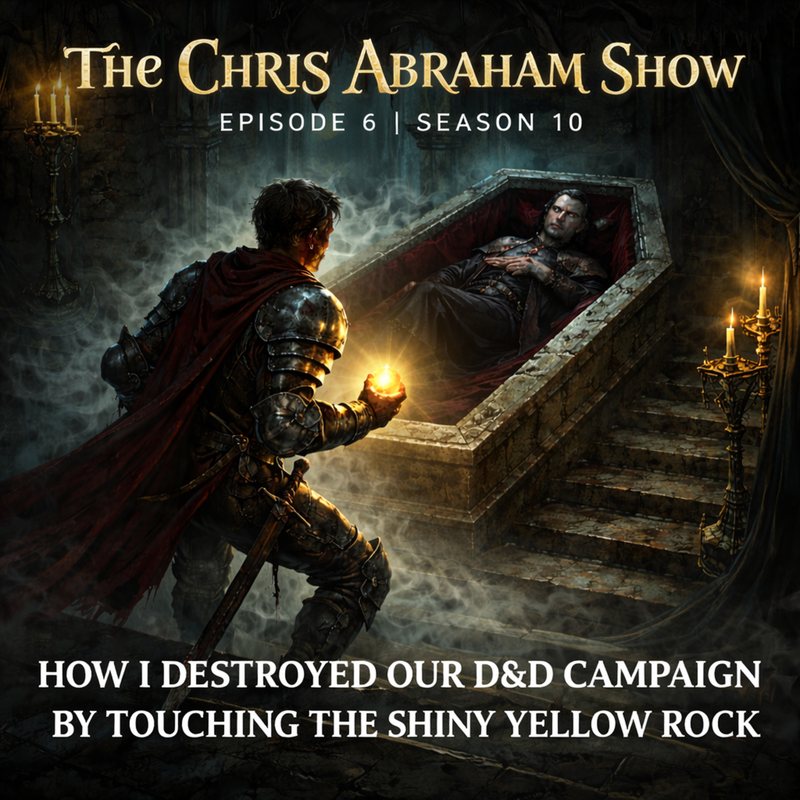
A massive vaulted ceiling 30 feet overhead. Dead center in the dark silent tune sits a shining black coffin of finely waxed wood adorned with brilliant brass fittings. Readily approaches, throws back the lid, and there he is, Strad von Zarevich, the ancient vampire Lord, lying there with his eyes closed, seemingly comatose. It is the quintessential set up for a classic horror movie climax. The monster is vulnerable in his sanctuary. The Batter hero stands over him, weapon drawn, ready to strike the final blow.
And Radley just unleashes everything he has left. He starts stabbing Stroud wildly with his mundane sword. He narrates that he's trying to decapitate the vampire because Stroud is technically unconscious. Radley is rolling with advantage. He's hitting every time. He's rolling maximum damage on the dice. He is pouring every ounce of his characters remaining will into this assault.
And this is exactly where Sean brings down the cold, unyielding hammer of the game's mechanics. Dungeons and Dragons is at its core a rule based simulation. You cannot permanently dispatch an ancient, magically warded vampire Lord with a standard piece of sharpened steel. Sean clinically explains the reality of the situation. Radley did not possess a wooden stake to paralyze the vampire. He did not possess a magical weapon capable of bypassing Strode's supernatural.
He had no holy symbols, no radiant magic, and no sunlight. Mechanically speaking, Radley's desperate maximum damage attacks are functionally equivalent to hitting a brick wall with a feather. Sean's delivery is wonderfully impartial. He absorbs all of Rally's damage rolls, looks at his notes and says even with maximum damage, Stroud isn't even bloodied. Stroud's eyes simply snap open.
He looks down at his chest, inspects his ruined, though bloodless shirt with mild annoyance, and lets out a mocking laugh. He looks up at this battered, desperate adventure and purrs Radley, the last of our heroes. It is the ultimate brutal subversion of the hero's Journey. The climactic sacrificial charge doesn't end with a triumphant world saving blow. It ends with a dismissive chuckle from an apex predator who is barely inconvenienced. Strad doesn't even draw a weapon. He simply reaches up from his coffin, sinks his fangs into Radley, and effortlessly drains that single, solitary henpoint. Radley.
He falls dead. It is a definitive total party kill by TPK. The campaign is extinguished. Yuri Horn is still lying unconscious back in the trap room, destined to be devoured by wandering ghouls. Everyone is dead or doomed, and traditionally this is where the story ends. The heroes failed.
Close the book, roll the credits. But the audio recording doesn't stop. This brings us to the most fascinating part of the transcript. The game is over, but the deep dive is just beginning as we pull back the curtain on the lore dump. The tonal shift in the room is immediate because the campaign has officially concluded the players are no longer bound by the restrictive rules of in game discovery. Sean is no longer the adversarial keeper of secrets. He becomes a tour guide through the Museum of their failures. For the next hour of the recording, Sean lays all his cards face up on the table, revealing the staggering amount of content, lore and vital items the players completely missed. I want you to imagine struggling with a convoluted piece of enterprise software for over a year. You've built these insane, complex workarounds. You've pulled your hair out in frustration. And then the day you finally quit, an IT specialist leans over your shoulder and says, oh, didn't you know you just had to click this one toggle in the settings menu? That absolute agony of the hidden. An easy button is exactly what this next hour feels like for Chris and the table.
Let's look at the arsenal of magical items they unknowingly walk past. The most glaring omission is the Sun Sword. This is a legendary artifact within the module, essentially functioning as a fantasy lightsaber. It emits true sunlight and deals massive radiant damage, which is the specific kryptonite for vampires. But the location of the Sun Sword is the cruelest irony of the entire 2 year campaign.
Sean reveals that the Sun Sword was hidden and inside the tomb of Sergey Stroud's murdered brother. And Sergey's tomb was located in the exact same crypt room where Radley had just committed suicide. If Radley had ignored Stroud's coffin, walked 10 feet to his left and opened Sergey's tomb, he would have found the 1 weapon capable of turning the tide. Hearing the players groan at that revelation is painful, but Sean keeps twisting the knife. He brings up the Amulet of Ravenkind.
This is an item specifically designed to allow the party to cast literal blindness ending daylight. And Sean breaks down exactly why missing this item doomed them from the start. Let's say Radley did have a magical sword and somehow managed to reduce Straw to zero hit points. In the mechanics of Borovia, Stride wasn't die at 0HP. He transforms into an invulnerable mist, floats back to his coffin, regenerates his health, and begins hunting the party again.
The absolute only way to prevent that mistransformation and secure a permanent kill is if Stroud is bathed in sunlight when he drops to 0. Without the Amulet of Ravenkind or the Sun Sword, victory was mathematically impossible. Stroud would have just poofed into mist and laughed at them. Then Sean reveals the icon of Ravenloft, a 12 inch silver statuette that acts as a localized battery of divine protection. It casts protection from evil.
It provides healing. It bolster saving throws. It is a massive, indispensable boon for surviving the castle's horrors. However, Sean explains the brilliant, wicked alignment trap the designers built into it. If any character who is not inherently of good alignment attempts to touch the icon, it blasts them with 60 points of radiant damage. Sean.
Reminds the table that earlier in the campaign, another player tried to grab it and was nearly vaporized. But the true tragedy The Hafling monk Purlin. The character who rolled a critical failure and died on the parapets right at the start of this final session. He was the only party member with a good alignment. He was the only person in the entire group who could have safely attuned to and wielded the icon.
It's like a meticulously plotted Greek tragedy. The one character capable of holding the ultimate defensive shield is killed off right before the final push. But the mechanical failures are only half the story. Sean then starts unpacking the narrative tragedies they left unresolved, starting with the lore of Tatiana and Irina. This is the dark romantic core of the entire module.
Sean explains that Irena and NPC the party had been escorting much earlier in their adventure was actually the reincarnation of Tatiana. Tatiana was a woman from centuries past who was the object of Strad's obsessive toxic love. Strad literally murdered his own brother, Sir Guy to claim her, prompting Tatiana to throw herself from the heights of Castle Ravenloft to escape him. The curse of the land ensures she is reincarnated over and over, and Strad eternally hunts her down. Sean reveals the mist salvation for this cycle of abuse.
He explains that the module provides a very specific escape route for Irena's soul. If the party had successfully escorted her to a specific gazebo overlooking a blessed pond in a town called Kresk, a divine event would have triggered. A column of holy light would have descended, the spirit of Sergey would have materialized from the water, taken Irena's hand, and her soul would have finally escaped the cursed Demi plain of Borovia forever. Permanently denying Strad his eternal prize because the party failed to follow through on her escort mission, Irena was left vulnerable, eventually captured and doomed to repeat the cycle. As if that wasn't depressing enough, Sean shares this hilarious yet incredibly bleak anecdote about another group of players he ran this exact module for.
This alternate group actually managed to get Irena to the gazebo in Kresk. The holy light shines down. Sergei's spirit emerges from the pond. The music swells. And the players operating on weapons grade paranoia cultivated by Monts in Barovia immediately assume it's an evil illusion conjured by Stride.
We tackle Irina to the ground, drag her kicking and screaming away from her literal eternal salvation, and lock her inside an insane asylum for her own protection. They permanently ruined her soul's chance at heaven because they thought they were outsmarting the Dungeon Master. Shawn noted that Irena never spoke to them again. That anecdote perfectly encapsulates how deep seated player paranoia can completely short circuit the intended narrative arcs built by the game's designers. The players become so conditioned to expect betray betrayal that they attacked their own redemption.
And Speaking of hidden truths, Sean was on to the concealed identities within the world. The party had spent considerable time interacting with a flamboyant, eccentric half elf Bard named Rick Tavio. Sean casually drops the bomb fell that Rick Tavio was a magical disguise worn by the legendary vampire hunter Rudolf Enrichten. And then Richten's back story is arguably the darkest piece of lore in the entire setting. Shawn explains that decades ago, a faction of Vistani kidnapped Van Richte's young son Erasmus and sold him to a vampire. Van Richten spent years hunting them down only to discover he was too late.
His son have been turned into a vampire spawn. Van Richten was forced to stake and kill his own undead child. The agonizing trauma of this event, combined with the dying curse of a Vistani seer he killed in retaliation resulted in a literal magical curse upon Van Richten. Anyone whoever allies with him, befriends him, or weights alongside him is doomed to die a horrible death. The psychological weight of that curse dictates Van Richten's entire existence in Barovia. He operates in total isolation.
Sean explains that van Richten even deliberately abandoned his brilliant, capable protege, a woman named Esmerelda Davenir, solely to protect her from the lethal radius of his own cursive proximity. The players had actually seen Esmeralda's brightly painted Vardo wagon parked ominously outside an abandoned tower earlier in the campaign. The players hear this and immediately say, oh man, we should have explored that wagon. We probably missed so much loot. And Sean just starts laughing. He reveals the lethal reality of Esmeralda's paranoia. She and Van Richten do not take chances. The door to that vardo wagon was heavily magically trapped. If any player had attempted to open that door without the precise bypass mechanism, it would have instantly detonated 100 bottles of alchemist fire stored inside. Sean does the math for them right there. It would have unleashed 80 points of fire damage in a massive radius, instantaneously vaporizing the entire party before they even knew what hit them, just for turning a doorknob.
Which serves as a brilliant Segway into the broader cosmic irony of the campaign setting. The entire architectural philosophy of Borovia is designed to be a meat grinder, yet it is intricately layered with brilliant narrative subversions. Let's examine the revenants that Arjun Vostholt. The players encountered this ruined mansion filled with an ancient order of undead nights. From a standard RPG perspective, the logic is simple.
These undead nights hate Stride. Therefore, they must be powerful allies we can recruit to help us kill Stride. But the truth, Sean reveals, is incredibly twisted. The revenants explicitly do not want Strad to be destroyed. Their leader, Vladimir Horngaard, understands the true nature of Borovia. He knows that Strad's existence as a vampire in this realm is not a reign of terror, It is a prison sentence. Strad is trapped here, endlessly tortured by the reincarnations of Tatiana.
The revenants hatred for Strad is so absolute, so pure, that they want to keep him alive just so he is forced to suffer his eternal curse. Sean explains that if the players had somehow recruited them, those Knights would have actively turned against the party to prevent them from striking the killing blow. And yet there was a hidden path to redeem the order. Sean mentions the skull of the ancient silver dragon Argenvost. The players had actually been inside the bone ossuary of Castle Ravenloft earlier, a massive room constructed entirely of bones.
If they had possessed the insight to locate the Dragon's skull within that room and simply returned it to the Dragon's Mausoleum, back of the Night Stronghold, it would have ignited a magical silver beacon. This beacon would have put the tormented souls of the Revenants to rest and provided a massive permanent defensive aura to the players for the remainder of the campaign. They walked right past the trigger for their own salvation. It is agonizing to listen to them realize how close they were to these massive turning points. But Sean saves the ultimate twist, the deepest structural secret of the campaign's architecture, for last.
Let's play out the hypothetical. Let's say Radley didn't roll a natural 20. Or let's say he did have a sun sword in the amulet. He rallied the party and they actually managed to kill Stride. They win, right?
They save the land. Wrong. Sean introduces them to the concept of the Dark Powers. These are unknowable Elder Evil entities trapped in a subterranean complex called the Amber Temple. They are the true architects of this reality.
They're the ones who created the misty borders of Borovia, sealing it off from the multiverse. They're the ones keeping straw trapped as their personal tormented plaything. The foundational system of the setting dictates that even if the player successfully executes Strad, burn his body to ash and salt the earth, the victory is an illusion. The Dark Powers will simply inevitably resurrect him. He is the designated Dark Lord of that specific realm. A prison requires a warden.
The cycle is eternal and unbreakable within the strict Canon of the module. There is no permanent victory over Strovanzarevich. But here is where Sean flexes his brilliance. As a Dungeon Master, he had planned a custom, incredibly dark twists specifically tailored for his friends. He tells them if you had actually managed to kill Strad, I wasn't just going to let the Dark powers hit the reset button.
Because Irena Tatiana's reincarnation was still alive in their specific game at that moment, Sean was going to have her ascend. He. Planned to rule that the trauma of her endless cycle combined with the sudden power vacuum of Strad's death would cause Irena to embrace the darkness of the Amber Temple. She would become the the new Dark Lord of Borovia, replacing her eternal tormentor. And in her first fleeting act of lingering humanity, before the corruption fully took hold, she would mercifully open the misty borders just long enough to allow the players to escape. It is a breathtaking piece of narrative design by the Dungeon Master, but it poses a massive, unsettling philosophical realization for the players at the table. They spent two years fighting a fundamentally rigged game-winning didn't mean healing the world or defeating the ultimate evil.
It merely meant resetting the trap for someone else or swapping out the prisoner in the cell. Their entire struggle was cosmic theater. Which perfectly transitions us into the aftermath and the meta gaming. How exactly does a group of friends process losing 2 years of imaginary, emotionally taxing work? Well, if you listen to the final minutes of the audio, the tone is surprisingly, profoundly wholesome. Despite the crushing absolute defeat, the players are laughing.
There is no resentment toward Sean. In fact, they express immense gratitude. They recognize the sheer logistical and creative effort it takes to run a multi layered jigsaw puzzle of a world like Barovia, constantly tracking all these moving parts, factions and butterfly effects. There's a fascinating, very real world detail mentioned during this wrap up banter. Sean the Dungeon Master was dealing with a real world federal government furlough at the time.
He wasn't receiving his paycheck at his actual job navigating real world financial stress, yet he was still pouring hours of his free time every week into prepping this intricate, depressing world for his friends to escape into. It beautifully highlights the deep social contract, the mutual care, and the profound appreciation that forms the core of tabletop role-playing. But Chris Abraham, the architect of the suicidal charge, handles his lingering guilt in a very fascinating, very 21st century way. He takes this entire massive audio transcript of their failure and he feeds it into various AI tools. He specifically mentions using notebook LM to have various and sundry AI agents evaluate his behavior.
He is literally risking an algorithm. Was his final one HP charge tragic? Was it a heroic sacrifice? Or was it just undeniably stupid, irresponsible and desperate? It is a totally modern, almost dystopian way of seeking absolution for a fictional mistake.
Chris knows his friends forgive him, he mentioned. They just laughed bemusedly to his face about it, but he clearly feels the internal weight of throwing away the campaign. He turns to the cold, analytical, emotionless judgement of a machine learning model to tell him if the narrative weight of his heroic heroic intention somehow out balances the mathematical stupidity of his action. It's a fascinating attempt to extract objective meaning from a chaotic, highly emotional failure. And clearly this group has not learned their lesson about punishing masochistic game systems, because before the recording cuts out, they are already excitedly discussing what they're going to play next.
Sean pitches a new system to them, a grim dark Renaissance era RPG called Spyhander. He gleefully explains to the table that unlike D&D, where your characters eventually become demigods, in Swyhander you are just a miserable, fragile person. Characters routinely start the game with hideous diseases, missing limbs or crippling debt. The mortality rate makes Borovia look like a vacation. If you get into a minor Tavern brawl, you spend 2 weeks in a hospital bed risking infection. They are absolute, undeniable gluttons for punishment. It speaks to the resilience of the human spirit, or perhaps just the sheer addictive joy of collaborative suffering. They are more than ready to dive back into an even more unforgiving, brutal system, armed with the harsh lessons and the psychological scars of their spectacular failure in Castle Ravenloft.
They didn't beat the game, but the game gave them a memory they will dissect for years. What an incredible journey to unpack. We started with a deep dive into a game that ended not with a triumphant, swelling orchestral victory, but with a foolishly brave, doomed 1HP charge into a fundamentally rigged system. And in failing so completely, so spectacularly, they left behind a beautiful, tragic web of unseen stories, missed artifacts, and doomed romances that we get to appreciate from the outside. I think the core take away here, whether you were we're running a tabletop game, designing a high stakes business strategy, or just navigating the complexities of life, is that taking the impulsive heroic shortcut almost always requires you to completely ignore the necessary unglamorous mechanics of success. Hubris blinds us to the tools we need and the realities of the systems we're operating within.
But on the flip side, it is very often the spectacular, catastrophic failures that yield the most fascinating, enduring stories. Nobody talks for two years about the project that went perfectly according to plan. We analyze the wreckage. We absolutely do. So I want to leave you, our listener, with a final provocative thought to Mull over building on that terrifying concept of the Dark Powers holding Stred hostage.
A rigged system. Exactly. If we discover that a system we are operating in is fundamentally inherently rigged against us, much like the Dark Powers, ensuring that the villain will eternally return no matter how hard the heroes fight, does a suicidal, futile act of rebellion actually lose its meaning because it physically achieves nothing? That is the question. Or in the universe that is meticulously designed to break you down, rob you of agency, and trap you in a cycle?
Is choosing the exact moment in the spectacular manner of your own defeat, the ultimate, purest expression of free will? It is a heavy, lingering thought when structural victory is truly impossible. How you choose to lose becomes your defining act of defiance. Thank you so much for joining us on this deep dive into the crypts of Ravenloft. We've loved unpacking the anatomy of his failure with you.
Stay curious. Keep exploring the hidden mechanics of your own world. Today we're examining a really fascinating piece of source material. We are looking at the detailed transcript and the post game breakdown of the final session of a very long running tabletop role-playing campaign. And not just any campaign, right? This was set in the famously unforgiving gothic horror world of Curse of Strad.
Exactly. The central disagreement we are exploring today revolves around the final, fateful action taken by player Chris Abraham. He was controlling the character Radley Fulhorn, who was sometimes affectionately known at the table as Deadly Deadhorn. And, well, what an action it was. Right.
So, after miraculously surviving a devastating trap with exactly one hit point remaining, Radley intentionally uses a magical teleportation Brazier to cast himself directly into the vampire Lord Strad's tomb. He initiates A suicidal attack on the sleeping antagonist, which swiftly results in a total party kill and abruptly ends the entire campaign. Now I will be arguing that Radley's final charge, while perhaps mechanically doomed from the start, was a narratively satisfying and remarkably heroic conclusion to a very desperate situation in a grim, dark setting. And I'll be taking the opposing view here. Radley's choice was a tragic, selfish strategic failure.
By throwing his character into an obviously unwinnable encounter, he unnecessarily destroyed 18 to 24 months of future gameplay. And you know, he denied the entire table the opportunity to uncover the campaign's incredibly rich hidden lore. To really understand the weight of that final choice, I mean we have to look closely at the narrative reality of that exact moment. Radley's decision was, in my view, the only narratively honest choice left for a broken survivor. Honest. Yes, honest.
Just look at the trauma this party had endured in the hours prior. They were decimated by an invisible, ungraphable entity known only as The Hate, which relentlessly battered them with massive force and Thunder damage. Well, it was a. Brutal encounter, certainly. Beyond brutal.
This creature literally threw another player character, Yuri Horn, out of a window and permanently killed their halfling monk Purlin. The sheer desperation is palpable. In the transcript. Radley and Yuri managed to escape down 87 dark stairs, completely isolated from the rest of the castle, only to stumble into a trap room. Yuri Impulsively, Judy chops an hourglass, triggering an absolutely devastating trap that fills the room with toxic gas and fire.
We're talking 55 poison and 22 fire damage. Both characters immediately dropped to 0 hit points. Which usually means death in this system. Right, they are bleeding out. When you hit zero, you roll what players call death saving throws, literally rolling a 20 sided die to see if your character perishes or hangs on.
Against all odds, Radley rolls a perfect natural 20. A very lucky roll. Very lucky and that mechanic dictates he instantly wakes up, but with just a single fragile hit point. He manages to stabilize Yuri so he won't bleed out, but the situation is utterly dire. This created a cinematic nothing left to lose scenario.
Diving into the yellow teleportation fire wasn't some cold mechanical calculation. It was a bold, heroic blaze of glory moment when you were standing in the dark with a single breath of life left striking at the heart of the darkness is the essence of a hero's journey. Look, I can appreciate the romance of a tragic final stand, but you're ignoring the reality of the medium here. This isn't a scripted novel, it's a collaborative game. Tabletop role-playing is fundamentally about resource management and group storytelling.
Radley's decision was driven by an impulsive desire for personal glory that entirely disregarded the mechanics of the game and the social contract at the table. How was it disregarding the social contract to play your character authentically? Because you have to look at the concrete alternatives available to him. He had just successfully stabilized the unconscious Yuri. The Dungeon Master. Sean Scanlon explicitly confirmed in the post game breakdown that the trap room they were in was completely safe to take a long rest in once the gas had cleared. But let me finish.
For those unfamiliar, a long rest is essentially an 8 hour sleep that allows characters to heal their wounds and reset their abilities. They could have recovered. You keep bringing up this idea of a safe room, but we have to look at what safe actually means to a character in that specific moment. You are applying hindsight. The Dungeon Master confirmed it was safe after the game ended, but we are analyzing a role-playing game where decisions must be made based on character knowledge in the volatile present. Even without hindsight, the Brazier puzzle provided crystal clear escape routes.
The glowing poem in the room explicitly offered survival. It promised that the green magical stone led to a coffin maker shop in a nearby town, and the Violet stone led to a mountain Spire. Half of the stones in that puzzle would have safely evacuated them from Castle Ravenloft. Sure, but. By deliberately choosing the Yellowstone, which was explicitly labeled yellow, to the master's tomb while possessing only one hit point and a standard non magical sword, Radley made a mathematically hopeless choice.
Mathematically hopeless perhaps, but psychologically sound, Radley is standing in a 30 foot square room. There is a fiercely burning stone brigier and two animated 9 foot tall iron statues of Knights on horseback that had just nearly incinerated him. From the character's perspective, there is absolutely no logical reason to believe that sitting down to roll out a sleeping bag for 8 hours in that room is a survivable plan. Right, but. The invisible entity that killed their monk could theoretically track them. The iron statues could reanimate. Sitting still probably felt like a guaranteed death sentence. But charging the vampire Lord with a single hit point isn't a death sentence.
Come on. It is, but it's a death on his own terms, and we can't forget the collaborative aspect you mentioned earlier. Yuri Horn, the only other surviving party member, actively enabled and encouraged this suicide mission. When Radley is contemplating the Yellowstone, Yuri urges him on. He literally says go do it, kill him. This wasn't a single rogue player ruining the game for everyone else.
It was a. Collaborative embrace of a heroic death by the last two broken survivors of a doomed expedition. Right, but enabling a bad tactical choice doesn't make it a good narrative. 1 Intellectual charity requires acknowledging the text, and I cannot accept that this was just pure unadulterated character agency acting logically. The text itself undermines that defense. How so?
The player, Chris Abraham, explicitly admitted his own culpability in the post game recording. He calls his action a perfect storm of stupid and outright labels it a selfish, heroic decision. A player being self deprecating after a dramatic failure is pretty common in tabletop gaming. It doesn't invalidate the narrative weight of the choice. It's not just self deprecation, it's an acknowledgement of the game's mechanics. He acknowledged that his character's constitution was weak, that he had exactly one out of a maximum 46 hit points, and that he threw away what might have been another enjoyable year or two of gameplay for the entire group. Even the Dungeon Master gave him the classic Are you sure you want to do this?
Which is terrifying. Exactly, that is a universal signal in tabletop gaming that you are about to make a catastrophic error. The DM offered him an opportunity to back down and Radley double down. I would argue that backing down in that moment would have felt entirely hollow. Hollow or not, Dungeons and Dragons operates on a framework of rules.
Charging the final boss of a massive campaign without any magical amulets, without proper healing magic, and, crucially, without wooden stakes to actually paralyze a vampire is a fundamental failure of the core mechanic that makes the game function. The narrative only works when it interacts meaningfully with the mechanics. I hear you, but. This wasn't a calculated risk, it was an abdication of the game's premise. You can't solve a complex lock by hitting it with a hammer, which is essentially what Radley did to the campaigns final boss.
You're touching on something crucial there, but I think you are focusing entirely too much on the mechanical futility of the action. Yes, hitting the lock with the hammer doesn't work, but I would argue that this futility was based on missing information that the character could not possibly have known. You are retroactively applying the Dungeon Masters postgame Lord dump to judge a character's in game decision. But the Lord Dump proves precisely why the action was so destructive to the experience. It highlights exactly how much of the game they chose to bypass. Let's examine what we actually learned from that postgame breakdown.
Radley teleported into the tomb, found Stroud asleep, and landed a maximum damage attack. Eight points of slashing damage plus 12 points of strength. A massive blow for a standard weapon. And yet Stroud wasn't even bloodied. It was completely ineffective.
Why? Because the party had missed every single artifact required to actually win the campaign, they miss the tone that held the crucial lore about the vampires weaknesses. They miss the legendary Sun blade, which was hidden just across the crypts and is necessary to create daylight. Most importantly, they miss the specific amulet needed to cast that sunlight and stop Straud's regeneration. Wish again they didn't know they needed. But the mechanics of the world dictate that without sunlight, even if Radley had miraculously reduced Strad to zero hit points, the vampire would simply turn to mist and regenerate in and his coffin.
Add to that the fact that the party's halfling monk who died earlier was the only character with a good moral alignment, right? Perlin. Yes, Perlin. That meant he was the only one who could even touch the powerful holy icon in the castle without taking 60 points of damage. The entire mechanical framework of the campaign dictates that you must gather these specific tools to defeat the antagonist.
Ignoring that framework isn't bravery, it's ignoring the puzzle the Dungeon Master spent months building for you. I reject that framing because it penalizes the player for the gaps in the character's knowledge. Radley didn't know that his sword wouldn't severely wound the vampire. He didn't know that Strad would regenerate infinitely without that specific amulet precisely because they missed the lore book that would have explained it. You have to look at this from a tactical in world perspective. From a tactical perspective, attacking a vampire Lord alone with one hit point is absurd.
Is it? Imagine you are a desperate fighter. You find yourself standing over the shining black coffin of your seemingly invincible enemy, and he is fast asleep. That is the ultimate tactical advantage. Why would a fighter take that shot? If a player calculates that this is the best, most vulnerable state they will ever catch the villain in, punishing them for taking a brave risk based on their limited information severely undermines the spirit of immersive role-playing. It's not punishing them, it's applying the rules of the world they're playing in.
But the game isn't just a spreadsheet of optimal moves and required inventory items. It's a living narrative where characters act on what they perceive. Radley saw an open coffin and a sleeping monster. He took his shot. That is pure, unadulterated character agency. If we demand players only act when they have mathematically solved the campaign, we strip the danger and spontaneity out of the storytelling.
Spontaneity is one thing, but burning down the theater is another. Have you considered the sheer volume of world building and narrative potential that was sacrificed for that single moment of unadulterated agency? The Dungeon Master crafted an incredibly intricate world, balancing multiple factions and complex character arcs. Radley's choice essentially burned the final chapters of a masterful book before anyone could read them. I think Burned is a bit dramatic.
The story simply ended differently than expected. It ended prematurely, leaving massive emotional storylines permanently unresolved. Think about what the table lost. There was the storyline of the doomed reincarnation Irena, a woman the party was supposed to escort to a specific sacred gazebo in Kresge, where a divine light would allow Sergey's trapped spirit to rescue her and let her escape this cursed realm forever. That beautiful redemptive arc?
Gone. A tragedy, yes, but fitting for the setting. But they never got to experience the tragedy. Then we have Rudolf Van Richten, the legendary vampire hunter, a man cursed because he was forced to kill his own son, who had been turned into a monster. His curse meant anyone who allied with him would die.
The players never explored his trapped vardo wagon loaded with alchemist fire. They never resolved his pain. Right. And what about the entire faction of Undead Nights, the revenants of Argenversed Hull to actively wanted Straw to live forever in torment? If the party had just returned the skull of a dead dragon from the castle's bone ossuary to a specific tomb, it would have lit a beacon, providing a massive boon to the group.
Which sounds like another mechanical fetch quest. It's not just about missing optimized items or buffs, it's about denying the table the resolution of deep emotional storylines. The Dungeon Master managed all of this brilliantly, weaving these threads together even while dealing with real world stresses like a government furlough. Radley's choice robbed everyone, including himself, of the catharsis of seeing those threads resolve. I hear the weight of those lost storylines, and I understand the frustration of leaving stones unturned. But we must thoughtfully challenge the idea that this campaign was marching toward a traditional catharsis or a happy ending that Ratley somehow squandered. You're assuming that completing those quests would have led to a satisfying victory.
It would have led to a complete story at the very least. But let's look at the revelation regarding the dark powers that actually control this realm at the Amber Temple. The hidden lore the DM shared post game the Dungeon Master explicitly revealed that even if the party had done everything right, the victory would have been an illusion. If they had gathered the magical sun sword, found the amulet of Ravenkind, and killed the vampire perfectly in the sunlight, these dark entities would simply bring him back. They keep him trapped in eternal torment as a plaything.
That cyclical nightmare is a staple of the gothic horror genre. It doesn't mean the players shouldn't get to fight the battle. But it gets darker. The DM had planned a devastating twist. If they somehow managed to permanently kill Strad, the woman they were trying to save, Irina, the reincarnation we just discussed, would have tragically ascended to become the new Dark Lord of Barovia.
She would have to take the vampire's place just to mercifully allow the player characters to leave. Which is a phenomenal narrative twist. Exactly, but my point is that there was no true permanent victory to be had. The house always wins in the setting. Therefore Radleys feudal bloody stand perfectly encapsulates the gothic horror, an inevitable tragedy of the source material. Think about the imagery of that final moment. Radley strikes with all his might. The Empire is unbothered.
He wakes up, casually inspects his bloodless wounds, laughs at the last of our heroes, and effortlessly drains Radley's final hit point. It is certainly a vivid image. It is a perfect image. It wasn't a disruption of the narrative, it was the ultimate realization of it. Radley's death merely made the subtext of the campaign textual.
The heroes were never going to win. They were always going to be broken by this place. Radley just forced the issue. Thematic resonance is great, but the medium of a tabletop game demands a respect for the journey over a premature player forced conclusion. Yes, the dark entities ensure that the realm is a cyclical nightmare. Yes, the ally ascending to become the new villain would have been a bitter, compelling pill to swallow. But the crucial distinction is that the players didn't get to experience that realization.
They experienced a different realization of the same theme. They experienced a shortcut. They didn't get to confront the moral weight of their ally taking the throne. They didn't get to uncover the tragedy of the cursed hunter by short circuiting the campaign with an attack that the game's math simply wouldn't support. Radley substituted a rich, multi layered tragedy crafted over months with a brief, impulsive one. It reduced a complex tapestry of gothic storytelling into a single, somewhat comical image of a severely wounded fighter poking an invulnerable vampire with a standard sword. It sacrificed deep, unresolved world building for a fleeting moment of glory that didn't even mechanically register as a threat.
We have explored some deeply compelling arguments today, pulling at the very seams of what makes tabletop role-playing such a unique medium. To summarize my position, I view Radley Fulhorn's final act not as a failure of mechanics, but as a beautifully tragic role play driven climax. It honored the grim reality of a broken party trapped in an unforgiving castle. After losing friends to an invisible horror and surviving A lethal gas trap by the narrowest possible margin, Radley made a choice that was narratively authentic to a traumatized survivor. He faced the darkness head on, delivering A conclusion that perfectly mirrored the inevitable tragedy woven into the fabric of the Perovian setting.
And from my perspective, I maintain that Radley's decision represents an impulsive rejection of strategic alternatives and collaborative gameplay. In a medium defined by group resource management and the uncovering of a deeply plotted narrative, choosing a mathematically impossible confrontation over exploring clear avenues of escape was a disservice to the table. It sacrificed an incredibly intricate, deeply crafted world full of unresolved character arcs and hidden lore for a selfish and ultimately feudal gesture that prematurely ended a years long collaborative endeavor. Despite our very different lenses on this outcome, I think there is a strong point of convergence between us. We both recognize the incredible depth of the jigsaw puzzle that was placed before these players. The Dungeon Master Sean Scanlon crafted A remarkably reactive world and managed it with brilliant dedication. Without question, the sheer effort required to weave together the fates of multiple factions, cursed NPCS, and hidden lore, especially while navigating real world challenges like a government furlough, is worthy of immense respect. Our debate today truly highlights the profound emotional investment inherent in tabletop role-playing. The fact that a single impulsive choice regarding a yellow teleportation stone can spark such deep discussion speaks volumes about the power of this kind of interactive storytelling.
It absolutely does. Tabletop role-playing is a unique tightrope walk. It balances the rigid math of mechanical strategy with the boundless freedom of dramatic storytelling. Moments like Radley's final charge sit right on the razor's edge of that balance, for the rules of the game in the impulses of the character violently collide. We highly suggest that listeners explore the transcripts themselves to see how they would have handled the puzzle of the glowing poem, the colored stones, and the sleeping vampire Lord.
In this mistrouded realm of Gothic horror, the lying between heroism and foolishness is often indistinguishable. And perhaps that is exactly as it should be. Thank you for joining us. Narrative recap and confessional transcript detailing a catastrophic campaign ending final stand against the vampire straw. So let's dive straight into the feedback.
Yeah, let's get right into it. The narrative tension leading up to the climax relies heavily on mechanical accidents rather than character driven fatal flaws. You really feel this right at the entrance to that puzzle room. Oh, absolutely, especially given the environment the author has meticulously established up to this point. Right, because the atmosphere before this moment is just, it's incredibly heavy. The party has just barely survived A devastating skirmish with an invisible entity known as the Hate. Yeah, we have a permanent character death on our hands with Pearl and failing her death saving throws, and Yuri Horn has basically been tossed out of a window like a rag doll. It is incredibly bleak.
I mean, the survivors, Radley and Yuri, they're descending this endless, suffocatingly dark staircase. Completely isolated. Exactly. They are completely isolated, their resources are depleted, and they are desperate. But then right standing before a puzzle involving 9 foot tall iron statues and a burning brassiere. The weakness here is that the catastrophic trap that decimates the party is triggered by a seemingly random comedic action. The sudden Judy chopped to the hourglass. Right, which abruptly shifts the tone and undercuts the grave life or death stakes of infiltrating Castle Raven loft. It takes the reader entirely out of the grim reality of the setting, like you're no longer immersed in the terrifying depths of a cursed gothic castle. No, you are suddenly reminded that you are reading about players sitting around a table making jokes to cut the tension. Which is a completely natural defense mechanism when you were actually playing a tabletop game. Oh, for sure.
When a group of friends is stressed about losing a campaign they've played for years, they use humor. Yeah, but the translation from a live role-playing experience to a written narrative requires filtering out that out of character table banter. Right. Retaining those literal game mechanics and jokes and prose severely damages the immersion. So the suggestion here is to reframe the inciting incident of the trap to emphasize the psychological toll, exhaustion, and despair of the characters.
Making the mistake feel like a tragic consequence of their grueling journey rather than a slapstick error. Exactly. By rooting this fatal misstep in the character's internal state, you maintain that oppressive, horror driven tone. It makes the resulting catastrophe feel completely earned. Yes, it becomes a deeply human failure of endurance rather than a mechanical gag about an unarmed strike.
If the characters are broken, we just need to let their actions reflect that brokenness organically, right? There are a lot of ways to tackle this, but let's look at some concrete examples for how the author could pull this off. For instance, you could really lean into describing the suffocating darkness of that endless staircase. Explicitly mention their dwindling hit points and physical exhaustion to contextualize why someone might act so rashly. Picture this instead of stating that Yuri impulsively, Judy chops the hourglass for a laugh.
Right. You frame the strike as an act of desperate frustration, a complete emotional breakdown. Oh, that is so much stronger. He could be staring at the sand that simply refuses to fall. Yeah, his mind is just fracturing under the weight of Perlin's permanent death.
Exactly. And in this fit of hysterical, weeping rage, he shatters the glass just to force time to move forward. That changes the entire complexion of the scene. It transforms A comedic misfire into a moment of profound psychological collapse. Or, if you want to lean into the supernatural elements of the setting, you could describe the dark magic of Ravenloft actively whispering to him. Yes, like the environment itself could be convincing his exhausted mind that breaking the hourglass or having a hallucination born of the dark magic is the only way to escape the room.
Right, these are just a few out of all possible ways of solving the problem, but making that adjustment ensures the subsequent release of poison gas and fire damage feels like a grim, inevitable punishment. They broke under the immense pressure of the dungeon, and the dungeon capitalized on it. And think about how beautifully that sets up the final confrontation. If the trap is triggered by crushing despair, then Radley subsequent decision to throw the Yellowstone into the fire and teleport to the Masters tomb with only one hit point left. It feels like a natural continuation of that same despair.
Yes, it links the events thematically. The entire sequence transforms from a series of unfortunate, clunky game mechanics into a poignant character study on how heroes break when pushed past their limits. That sense of exhaustion and the burden of choice actually bleeds right into the second-half of the submission during the audio transcript confessional. The integration of the author's real world logistical commentary alongside the in universe character tragedy creates A jarring tonal inconsistency that dilutes the emotional impact. Because the author has done incredible work establishing A somber, reflective mood here.
It is a highly intimate, vulnerable moment of storytelling. We're sitting with a narrator who is genuinely questioning the root of their self-destructive impulse, right? They're wondering if they were simply hangry and lamenting the demise of a character they had spent years inhabiting who was just about to level up to an eldritch night. They are mourning the profound selfish character choice that resulted in the loss of a multi year campaign. Yeah, but then the weakness is that the confessional testimony abruptly shifts from mourning A profound character choice to discussing mundane recording tools, Zoom software, and AI transcription processes.
Which shatters the immersive tension built by the protagonists guilt completely. In the very very next breath we are suddenly reading about how the audio was routed through notebook LM and transcribed by Microsoft Word. It completely breaks the spell. It is a sudden, clinical insertion of the mundane into the profound right. It feels as though we are reading a devastatingly beautiful eulogy and halfway through the speaker stops to review the brand of microphone they are using to deliver it.
The reader wants to stay in that space of mourning and reflection with Radley's player. We want to feel the chill of the crypt. Yes, the bitter irony of surviving a deadly gas trap with a miraculous natural 20 on a death saving throw only to willingly throw oneself right into the jaws of an ancient evil. The suggestion here is to isolate the out of universe mechanical and logistical details from the emotional confessional, using the player's real world reflection strictly as a concluding epilogue once the narrative arc has landed. You definitely do not have to delete this meta commentary entirely. No, not at all.
It holds significant value for documenting the creative process and understanding how the transcript was born. However, it needs a distinct boundary so it does not bleed into an corrupt the emotional climax of the peace. Let's discuss some concrete examples of how to restructure this. OK, the very first step is stripping the lines about Microsoft Word and Notebook LM entirely out of the central monologue about the suicide run. Exactly. Clear out the technical jargon so the narrator can focus entirely on the haunting visual of standing before the yellow teleportation fire, right?
Emphasize that they only have a single hit point and they know in their bones that walking through leads to death. Let the text linger on the quiet earth scented crypt. Describe the polished black coffin with its brilliant brass fittings. Lean into the sheer futility of stabbing an ancient evil with a non magical weapon while he mockingly laughs at the last of our heroes. You can even expand on the psychological torment of the surviving player as they process the fallout.
Oh, definitely. That is so deeply relatable and tragic. And As for the meta discussion about audio tools, recording software and generating AI feedback? Move all of that to a distinct author's note at the very end of the document. Keep it completely separated from the character's internal monologue. And again, these are just a few out of all possible ways to solve the problem and organize the flow, but this approach ensures the reader is allowed to fully process the tragedy of the narrative before being invited behind the curtain to see how the artifact was generated.
You have to let the emotional dust settle first. Right. This structural isolation is so crucial for the emotional pacing, and it actually brings up a similar issue with how the postgame revelations are handled at the very end. The extensive lore dump provided at the end of the piece introduces fascinating alternate realities that currently feel disconnected from the antagonist's actual journey. Yeah.
We get this massive debriefing session where the Dungeon Master pulls back the curtain on everything the party missed. And the world building is spectacular. We learn about the Tome of Strad detailing the villains tragic back story right and the Amulet of Ravenkind which could cast the daylight needed to stop his regeneration. We discovered that the Sun Sword was hidden just across the crypt in Sergey's tomb. Such a great detail.
We learned the heartbreaking truth that the Bard Rick Tavio was actually the legendary Rudolf Van Richten, operating under a curse that dooms his allies. We even find out that Esmerosa's trapped wagon was loaded with alchemist fire. Yeah. And perhaps most strikingly, we learn about Irina's true parentage and a potential salvation at the pool in Kresk versus her terrifying alternate destiny is the new Dark Lord of Borovia if the party had succeeded. It is a brilliant, intricate puzzle box of a campaign, but the weakness is that profound campaign secrets are delivered as a dry, bulleted list of post game trivia, rendering them as detached facts rather than haunting what ifs that serve the story. From an editorial standpoint, presenting this huge influx of rich narrative information as a separate appendix fundamentally robs it of its emotional power.
It reads like a textbook summary of a fantasy module. The reader is given all this incredible world building, but because it is completely divorced from the protagonist's emotional state, it fails to elicit a meaningful response. Right. It is simply raw data without any dramatic application. The tragedy of the story isn't just that Radley died. No, it's that he died needlessly inches away from the exact tools that could have saved him and his friends. Providing that information as a detached bulleted list completely misses the opportunity to twist the knife. The suggestion here is to weave these missed opportunities directly into the protagonist's confessional reflection, to weaponize the dramatic irony and deepen the tragedy of the fatal choice.
Instead of treating these reveals as a separate, out of character debriefing logged at the end of the text, integrate them into the narrator's litany of regrets. Make the lore active. Make it hurt. By filtering these campaign secrets through the lens of a player who has already admitted to Profound own guilt and sadness over their actions, you elevate the trivia into a powerful thematic device. It underscores the overarching themes of futility, hubris, and the devastating consequences of acting without full knowledge. Let's look at some concrete examples for how to integrate this seamlessly.
OK, instead of placing them in a disconnected list at the end, have the narrator agonize over these missed paths during their reflection. For instance, the narrator could lament I died stabbing him with a mundane blade, never knowing the sun's sword lay just across the crypt in his brother's tomb. That is absolutely devastating. Yeah, the proximity of salvation compared to the reality of their failure is heartbreaking. They could also reflect on the people they failed to protect.
They could say we perished thinking Irena was doomed, completely unaware that we could have guided her to salvation at the gazebo and Kresk right. Instead, because of my rush to glory, she is left to inherit the mists as the new Dark Lord. It hits so much harder when the narrator is actively torturing themselves with the information. You could have the narrator express absolute horror at discovering that the eccentric bar they travelled with was actually Van Richten. Carrying a curse that doomed everyone who allied with him, the narrator could wonder out loud if their own terrible suicidal decision at the Brazier was influenced by that very curse. Even the detail about the silver icon of Ravenloft dealing massive damage to anyone without a good alignment could be utilized, right?
The narrator could reflect that Perlin was the only pure soul among them who could have wielded it, and she had already bled out on the floor above them. By reframing the bulleted facts as a desperate, grief stricken monologue of all the things that could have been, you ensure that the complex world building directly serves the emotional climax. Exactly. And of course, these are just a few out of all possible ways to solve the problem and blend the lore into the narrative. Someone might wonder if the evidence supports weaving the lore into the actual final battle scene itself, rather than the confessional. Sure.
But keeping it in the retrospective confessional feels so much stronger because it authentically mirrors the actual experience of playing a tabletop role-playing game. Exactly. You only realize the true breadth of your mistakes once the character sheets are put away, the game is over, and the Dungeon Master finally opens their notes to show you what you missed. Weaponizing that specific universal post game experience as a literary device within the confessional is a brilliant way to capture the unique heartbreak of this medium. It really is. It honors the source materials origins while elevating it to a truly compelling piece of prose.
To wrap up, today's critique focused on elevating the emotional thematic weight of this campaign recap. We suggested reframing the trap triggering accident as a character driven moment of despair. We also talked about separating the technical meta commentary from the emotional confessional to maintain immersion, and finally weaving the postgame Laura Beals directly into the narrator's regrets to amplify the dramatic irony. Please implement these actionable suggestions and we warmly invite you to submit your revised. Work on the Curse of Strad campaign finale.
You know the source captures a hilariously tragic final session of a Dungeons and Dragons game where a series of absolutely terrible, impulsive choices leads to the total wipeout of an adventuring party. First, let's detail this staggering string of fatal mistakes. So the party was already pretty battered from fighting an invisible entity called The Hate, right? Well, a player named Yuri Horn impulsively punches a puzzle hourglass. BAM, that triggers a trap room packed with poison gas and fire, instantly dropping the party and leaving a player named Radley barely alive with exactly one hit point. 2nd, we have to talk about Radley's suicidal last stand. Instead of running away, Radley throws a Yellowstone into a magical fire to teleport straight into the sleeping tomb of the main vampire villain, Strad. Talk about tragic comedy.
Radley stabs the sleeping vampire repeatedly, does absolutely zero damage, and is effortlessly bitten and killed the second Strad wakes up, ending a multi year campaign just like that. Finally, we get the Dungeon Masters postgame lore dump. After the total party kill, the Game Master revealed all the crucial secrets the players completely missed, like the sunlight producing Amulet of Ravenkind and the legendary Sun Sword, really highlighting how much deep lore they bypassed with their hasty actions. Ultimately, this catastrophic finale is a perfect reminder that in tabletop role-playing games, the deadliest monster you face is often your own terrible decision. Thank you for listening to the Chris Abraham Show.
Make sure you subscribe so you don't miss any future episodes. Until next time.