Read the full transcript (6,815 words, machine made)
Have you ever found yourself just utterly bewildered by how two people can look at the exact same event, the same footage, even the same person, and, well, come away with completely opposite interpretations? You know, where one sees a hero, the other sees a villain. Absolutely. It happens all the time. It's a phenomenon that really cuts right to the heart of how we understand conflict, history and frankly, the very fabric of our societies.
So today we're embarking on a deep dive into the profound truth behind that. That age-old phrase, one man's freedom fighter is another man's terrorist, right? We're going to explore why this isn't just, you know, a simple cliche, but actually a fundamental reality that deeply shapes how we perceive the world around us. And what's truly fascinating about this concept, I think, is how deeply ingrained it is. It's in human nature.
It's woven through historical narratives. I mean from ancient rebellions right up to modern day movements, societies have consistently grappled with this this dichotomy. One group elevate certain figures, as you know, noble rebels, champions of Liberal the hero, while another group condemns those exact same people as dangerous villains, threats to stability. And the distinction, as we'll get into today, it often hinges entirely on perspective. Perspect, yeah.
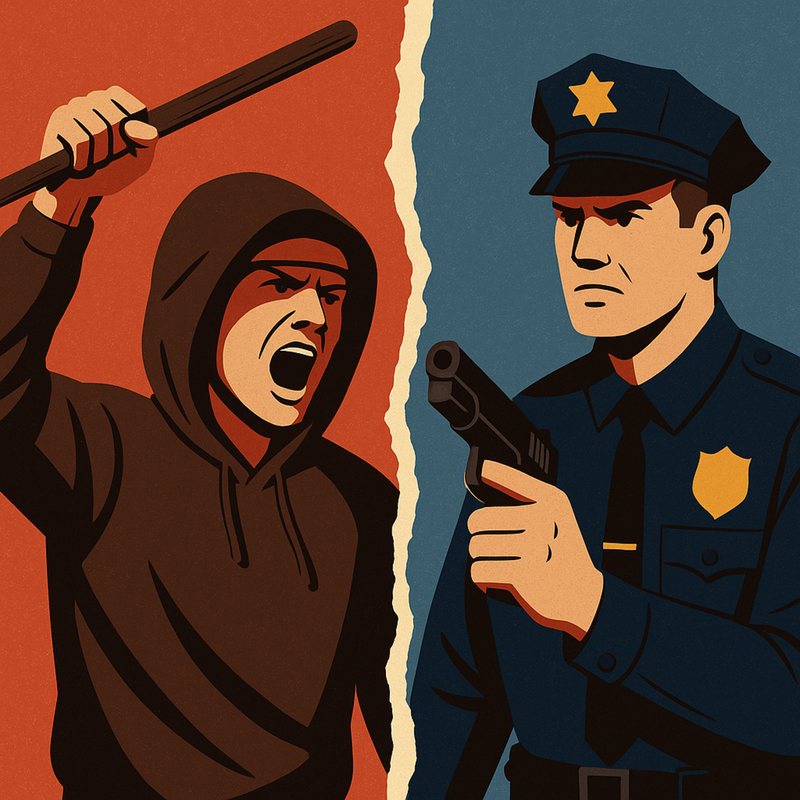
Whose narrative you believe, whose side you're on, maybe what meaning you choose to assign to their actions. It's a really powerful and often subconscious mechanism of societal interpretation. And our sources, they take this concept even further. They introduce this really compelling framework, they call it Dimension A and Dimension B. Now, these aren't physical places you can visit, obviously, not even distinct geographical regions.
Instead, you should think of them as two entirely separate mental frameworks, almost like 2 distinct realities that, well, a significant portion of Americans currently inhabit simultaneously. Sounds a bit. Sci-fi, but it's a useful way to think about. It it is, Yeah. It's almost like living in parallel universes, you know, sharing the same physical space but perceiving it through fundamentally different lenses.
That's precisely the idea. So in dimension a defiance, and that could be almost any act of opposition or non compliance against established authority. It gets interpreted as noble resistance, a brave, necessary stand against what's perceived as injustice or oppression. OK, so defiance equals resistance in. A Pretty much.
But then, on the flip side, Dimension B views that exact same defiance, those identical actions, as dangerous chaos, an unacceptable threat to order, stability, the rule of law. Wow. OK, polar opposites. Exactly. And what's crucial to understand, I think, is that these dimensions don't typically engage in direct debate. They don't often seek to understand each other's viewpoint.
Right, they just sort of coexist. They largely coexist as separate realities, only occasionally clashing. And when they do collide, it's often through these high impact events, A viral video that just sweeps the Internet. We see those all the. Time a social media storm that ignites a national conversation.
Or, you know, unfortunately, real life conflicts that force these divergent interpretations into direct, often explosive and profoundly irreconcilable collision. OK, so our mission for this deep dive is pretty clear. Then we aim to navigate these complex, often colliding realities. We're going to sift through the provided sources, try to extract the most important Nuggets of knowledge, the key insights to help you, our listener, really understand what defines these two Americas. And maybe even more critically, we'll explore the profound implications of their collision. We'll delve into how these vastly different perceptions are formed, what happens when they inevitably clash, and maybe what the potential future holds for a society grappling with such deep divisions.
And importantly, throughout this entire discussion, we're going to remain steadfastly impartial. We're simply conveying the ideas and analysis present in our source material. Our goal here is purely about understanding, not taking sides or endorsing any particular viewpoint. Right, just laying out the concepts as presented. OK, let's start by really unpacking that core concept we introduced. One man's freedom fighter is another man's terrorist. On the surface, like we said, it's simple, almost a cliche. But what does it really mean for how we perceive the world, especially through this framework of dimension A and dimension B?
Well, it's far more than just semantics, you know. It's not just picking different words for the same action. Our sources reveal that this phrase embodies A fundamental framing device. A framing device. Yeah, it's the intrinsic lens through which individuals operating within dimension A or dimension B, Well, they don't just perceive the world, they assess actions, assign moral value, determine legitimacy. So it dictates how they judge things. Precisely.
For those immersed in dimension A, an act of defiance, no matter how disruptive it might seem, is inherently brave. It's seen as a justified response to systemic failures. The whole narrative is 1 of liberation of challenging oppressive power structures. But for those in Dimension B, that same act is inherently destructive. It's an illegitimate challenge to necessary order.
Their narrative emphasizes the sanctity of laws, stability, public safety. So it's not just describing reality, you're saying this perception actually shapes their reality. Exactly. It actively shapes reality itself. For those who inhabit either dimension, it dictates what is seen as legitimate or illegitimate, heroic or villainous, not just as an opinion, but as a kind of undeniable truth. For them, this means that even the most you know objective facts can be bent or interpreted to fit a preexisting moral framework, which makes finding common ground incredibly elusive.
That's a powerful insight, perception shaping reality, creating these distinct moral universes, and it really reinforces that dimension A and dimension B aren't just abstract ideas, there are these deeply personal psychological constructs, these deep seated mental frameworks. So if you think about it based on our own individual experiences, our values, maybe our upbringing, the media we consume, even our communities, how might different people naturally gravitate towards 1 framework or the other? What drives this fundamental split? Do the sources suggest? Well, the fact that they're psychological constructs is precisely why they're so profoundly influential and, frankly, so difficult to shift.
These frameworks fundamentally dictate how individuals process incoming information. Right. How they make sense of things. Exactly how they assign meaning to events, and ultimately how they form judgments about identical occurrences. Think about it this way.
The raw data of an event, say a protest or an interaction with law enforcement. It might be the same for everyone who sees it. OK, the objective facts. Right. The what happened, but the narrative constructed around that data, the interpretation of motives and tensions, potential outcomes that will be vastly different depending on whether you're viewing it through the dimension A lens or the dimension B lens.
Can you give an example? Sure, someone who has maybe personally experienced systemic injustice or belongs to a marginalized community might inherently resonate more with dimension as narrative. They see defiance as resistance because that aligns with their lived experience. Conversely, someone who prioritizes societal stability, perhaps a small business owner worried about property damage during a protest, or maybe someone from a background that emphasizes strict adherence to rules, they might naturally gravitate towards dimension BS. Emphasis on order and the necessity of state authority. OK, and this leads to wildly divergent conclusions about what happened, who's at fault, what the right response should be. It's like a complete the ordering of the facts into a self consistent yet often contradictory understanding of the world.
Which is why I guess you often hear people from opposing sides expressing genuine disbelief, right? Like how can they possibly see it that way? Precisely because they're fundamental reality of the lens they're using has been shaped differently. It almost sounds like you mentioned parallel universes. Maybe like 2 parallel trains running on the same track.
They're moving in the same general direction, sharing the same physical space, but they're operating on entirely separate rails mentally. That analogy of parallel trains is remarkably apartment, actually. Yeah. Our sources pinpoint specific moments and mechanisms where these dimensions momentarily and often frankly, violently intersect. OK. The collision points.
Exactly. These are primarily viral videos, social media storms, and regrettably, real life conflicts. And importantly, these aren't moments of reasoned debate. You know, where one side tries to persuade the other with logic and evidence. No, it doesn't feel like that online, does it?
Not at all. Quite the opposite. They're typically explosive clashes of deeply entrenched pre-existing interpretations. The incident itself just becomes the trigger, the spark. The spark for an immediate, often unresolvable conflict between two entirely different moral narratives. Take a viral video of an arrest, for example. In one dimension it's instantly seen as police brutality, and the other it's just as instantly seen as justified action against non compliance.
There's rarely an in between. And the implications of that, I mean, if two major societal frameworks exist without true debate, just these occasional, often visceral collisions, what does that mean for trying to solve problems together? Well, it suggests A profound lack of common ground for any kind of constructive discussion. It makes genuine societal consensus increasingly difficult, maybe even impossible, to achieve through conventional political or social means. It's a society where factual truth itself becomes subject to interpretation, making shared understanding a really scarce commodity.
OK, let's really dig into the role of visual media here. Our sources highlight how body Cam footage, dash Cam videos, those viral clips we just talked about, how they've become these incredibly potent mirrors of our societal divide. How is it possible for the same video, the very same set of images, to be interpreted so profoundly differently by people operating in dimension A versus dimension B? It really is like watching two different movies from the same raw footage. It's truly one of the most striking phenomena of our current information landscape.
When a piece of visual evidence, say, a police encounter, goes viral, its interpretation is almost immediately bifurcated, split right down the middle. OK, so in dimension A, these videos are almost universally perceived as clear evidence of vulnerable individuals courageously standing against systemic oppression. The predominant narrative here is 1, where these individuals are seen as being crushed by a heavy-handed state. Right, the power imbalance narrative. Exactly.
It highlights an inherent power imbalance and a profound sense of injustice. The actions of the state, even if they're procedural or technically they're the book, are viewed through a lens of overreach, excessive force, or outright oppression. There's a strong emotional resonance with the perceived victim, and the act of defiance is framed as this desperate, valiant struggle. And so the same footage viewed from dimension B would tell a completely different story. What's their narrative?
What did they see in those same images? Well, in dimension B, those very same videos depict individuals escalating unnecessarily, refusing lawful orders, and actively provoking a state reaction. OK, so the focus shifts to the individual's actions. Entirely for this perspective, the state's response is then seen as not only predictable but also entirely justified, a necessary measure to maintain order. The narrative shifts completely to one of personal responsibility, the imperative of maintaining law and order, and the legitimate, often difficult exercise of authority.
There's a focus on the individuals choices and their consequences, rather than on the systemic context that Dimension A emphasizes. So the sources emphasize that the identical factual footage can lead to two different moral stories. Precisely, which dramatically underscores the profoundly subjective nature of truth. In this context, it's less about what objectively happened and more about what it means within one's pre-existing moral and political framework. The visual evidence just confirms what each dimension already believes about the world. OK.
Here's where it gets particularly interesting, I think, and it touches on the incredible power of words themselves. Our sources delve into how a term like authoritarian, a really loaded word, has seemingly undergone a radical transformation in its meaning. Historically, that word carried such a negative, even terrifying weight, right? It immediately conjured images of tyranny, oppression, dictatorships. Absolutely. For decades, authoritarian was a word that instantly invoked a visceral sense of fear and alarm across the political spectrum. It was a potent warning, a stark signal of oppressive regimes, basically the opposite of democracy and freedom. But now.
But now our sources claim that in the current climate, particularly from the perspective often attributed to the left, this label has been applied so broadly, so liberally. Well, it now seems to encompass nearly every display of state power, even what many might consider routine law enforcement actions. Like what specifically? We're talking about things like traffic stops, lawful arrests, or even the necessary use of force by police to de escalate a dangerous situation. It's as if any exercise of governmental authority, no matter the context, is immediately suspect, immediately potentially authoritarian. And what's the profound consequence of that incredibly broad application?
I mean, what happens to a powerful word like that when almost every single instance of state power, no matter how minor or routine, is immediately branded as fascism or authoritarianism? The consequence is incredibly significant and ironically, perhaps often self defeating for those using the term so broadly. When every display of state power gets branded with such extreme labels, the term authoritarian itself begins to erode. It loses its specific historical meaning, It's critical precision, exactly it's impactful warning power. It transforms from a precise description of a political system into a generalized, almost casual accusation rather than a tool for nuanced analysis.
So, thinking bigger picture, what happens when critical terms lose their precision in public discourse? When they just become generalized accusations. Well, meaningful dialogue becomes almost impossible, doesn't it? The words lose their ability to convey specific, important concepts. If everything is fascism, then nothing truly is, and we lose the ability to identify genuine threats when they might actually appear. It makes it difficult to even agree on what we're discussing, let alone debate its merits.
This kind of linguistic inflation just numbs the public to the true meaning of the word. This then raises a truly provocative and frankly almost absurd question. Given its historical baggage, how could authoritarianism possibly for any group, become a compliment or even a desired trait? It seems completely counterintuitive. It does.
But our sources present a fascinating and, yeah, somewhat chilling argument for this semantic shift. They contend that for a significant segment of Americans, particularly those who are deeply concerned about what they see as the erosion of order and stability, authoritarianism begins to simply mean authority. Authority getting things done. Basically, it's remarkable redefinition born out of a perceived societal void, when authority is seen as the necessary force that holds back chaos, keeps contracts enforceable, and makes neighborhoods livable. You know, when it's viewed as the essential backbone of a functioning society?
Then, for those who value order and stability above all else, the ladle transforms. It shifts from being an insult, a term of condemnation, into a positive descriptor, maybe even a compliment for someone who effectively takes charge and re establishes control. Wow. So the implication there is profound. It really is. It means groups who historically would have reacted with alarm to the term authoritarianism might now do to this redefinition, and perhaps their desperate craving for stability, view certain strong, decisive displays of state power as desirable, even necessary, rather than tyrannical. It completely flips the script on how different groups perceive state power, and it's legitimate exercise. Exactly.
And it highlights a growing desperation for order that might, for some, override traditional democratic principles. OK, let's shift our focus now to what our sources call the freedom fighter archetype. When you hear that term freedom fighter, what images typically come to mind? Maybe, I don't know, a historical revolutionary like George Washington or a figure fighting against a colonial power, something like that. Yeah, those are the classic examples, the romanticized figures. But our sources describe a significant and pretty consequential modern expansion of this idea, particularly within dimension A How has the very definition of a freedom fighter broadened in contemporary discourse, according to them?
Well, our sources contend that what they refer to as the left has dramatically broadened the idea of a freedom fighter to include, and this is a direct quote, nearly anyone who defies the state. Nearly anyone who defies the state. That's incredibly broad. It's a massive expansion from the traditional understanding. Like you said, Historically a freedom fighter might have been someone risking their life against a foreign occupation or an oppressive dictatorship. Now, this label is apparently applied to a much wider array of individuals and groups, often those engaged in forms of civil disobedience or direct action that might not typically be associated with classic freedom movements. Why?
What's the underlying thinking there? The underlying premise seems to be that the state itself or its institutions are seen as fundamentally oppressive. Therefore, any defiance becomes a form of liberation. Can you give us some specific examples from the source material? Who exactly falls under this expanded umbrella of freedom fighter in dimension A, and what does this broadening really signify?
Certainly, the sources provide quite a range Activists, rioters, Antifa militants, white suburban women screaming at police and St. crews shutting down intersections in the name of fun. Wow, that's a very diverse group from activists to St. crews blocking traffic for fun. It is, and they're all presented as figures who, within dimension A, are elevated as symbols of resistance.
So what are the potential reasons, strategically or ideologically, for such a broad expansion of the freedom fighter label? Well, it could be seen as an attempt to legitimize a much wider range of confrontational actions against the state by framing them all within this narrative of heroic defiance and the pursuit of social justice. Well, it imbues their actions with the kind of moral righteousness, regardless of the methods used. So it cast them as heroes. It cast them as heroes in an ongoing struggle against an inherently unjust system.
This cast a very wide net, making almost any form of opposition to state authority a form of noble resistance, even if those actions cause disruption or significant discomfort for others. It seems to be about creating a unified narrative of resistance, where all acts of defiance are connected by a shared moral imperative. OK, so if Dimension A perceives these individuals and groups as freedom fighters, heroic resistors against an oppressive system, how does Dimension B perceive them? What's the Stark counter narrative? What do they call these very same figures?
Well, according to the sources to the populist nationalist right and the majority who value order, these very same figures are unequivocally labeled as the terrorists of Dimension B. Terrorists. That's a strong word. It is. They're not seen as heroes at all, but as agents of chaos who actively undermine stability, destroy property, threaten public safety and disrespect the rule of law. So.
It's a complete inversion. A complete inversion. The sources highlight the stark, irreconcilable contrast in perception. One side calls it bravery, the other calls it madness. This fundamental disagreement on the characterization of these individuals and their actions is absolute. It leaves basically no room for negotiation or common ground. It's a foundational worldview clash. And you can see this clash of archetypes playing out constantly, right in public debates, policy discussions, cultural narratives.
Oh, absolutely. One news outlet might lionize A protest leader, highlighting their cause and courage, while another condemns them as a dangerous radical, focusing entirely on their disruptive methods. And in policy? In policy debates, it means one side might advocate for, say, police reform and de escalation techniques, viewing the encounters through Dimension A's lens, while the other side demands stricter enforcement, harsher penalties, seeing the same events through Dimension B's lens as criminal behavior needing suppression. It makes productive discourse incredibly difficult.
Because the foundational understanding of the actors involved is so diametrically opposed, it's a clash not just of opinions but a fundamental world views, each utterly convinced of its own moral superiority and the depravity, or least the dangerous folly, of the other. So what does this deeply divided landscape, these colliding realities, what does it ultimately mean for the future of a society facing such prolonged internal conflict? History often gives us clues, doesn't it, about where things might be headed when you have such deeply entrenched, mutually exclusive realities coexisting? History, as our sources keenly observe, suggest a very specific and often uncomfortable pattern. Every prolonged conflict, whether it's internal or external, eventually seems to reach what is termed A tipping point. A tipping point?
OK, what does that mean exactly? It's not just a gradual shift. It's usually an event, or maybe a series of events that is so jarring, so disruptive, so unequivocally significant that it compels everyone within that society to choose a side. It forces a choice, ends the ambiguity. Exactly. It effectively ends.
Neutrality dissolves all's ambiguity, enforces a definitive alignment. The psychological and societal pressure that such a moment exerts is immense. It makes fence sitting or remaining detached simply untenable. The luxury of ambivalence disappears. It's stripped away.
Individuals are forced to confront which fundamental reality, Dimension A or dimension B they truly inhabit and ultimately wish to uphold. It's a moment of brutal clarity where previous allegiances or sympathies might be severely tested, may be reevaluated in the face of an undeniable crisis. And our sources provide a powerful, very recent example of precisely this kind of tipping point, the events of October 7th in Israel. How does that serve as an illustration of this concept? Indeed, the events of October 7th serve as a chilling and potent example of exactly this kind of societal tipping point, not just within Israel but globally, in terms of how it fractured perceptions almost instantly.
The sources state unequivocally that one side immediately saw resistance, viewing the actions of the lens of Dimension A as a fight against occupation, A struggle for liberation, however violent the mean. In stark contrast, the other side unequivocally saw terrorism requiring eradication, viewing the same actions through the lens of Dimension B as an abhorrent, unprovoked attack on civilians demanding a swift and absolute response. So an immediate non negotiable divide. Immediate, visceral, non negotiable. It left virtually no room for nuanced interpretation or middle ground.
The event instantly bifurcated global opinion, forcing individuals and nations alike into a clear alignment with one narrative or the other. It really demonstrated how a single catastrophic event can expose and solidify pre-existing ideological divides. The raw horror of the events just made neutrality impossible for many, demanding A moral stance that then dictated their entire interpretation going forward. This then leads us to a very stark and maybe unsettling question for us here in the United States. Given the deep internal divisions we've been discussing, could America face its own version of such a moment? And if so, what might be the potential catalysts? What could push us to that tipping point? Well, the sources delve into potential catalysts for America's own tipping point, and they paint a pretty sobering picture of possibilities, scenarios that could shatter the fragile coexistence of dimensions. A&B like what?
They suggest Things such as a coordinated riot wave implying widespread synchronized civil unrest across multiple locations simultaneously. OK, mass unrest. Or a domestic terror act of significant scale, perhaps targeting critical infrastructure or a large population center. Or maybe a mass breakdown of public order that leaves communities feeling abandoned, unprotected by established authority. These aren't just abstract fields 10, but specific potential triggers. According to our sources, yes, specific triggers that could force a national reckoning.
And the prediction is stark. When this moment arrives, it will not leave the country unchanged. It won't be a return to business as usual back. Instead, it will force a fundamental, maybe existential, choice upon the nation, a decision that will define its future trajectory. And the implication the choice presented, it sounds dire. It is profoundly serious.
The sources present 2 dire, almost apocalyptic sounding options. Will Americans, faced with overwhelming chaos, demand a harsh crackdown, a decisive, perhaps severe reassertion of order that prioritizes stability above all else, potentially at the cost of certain liberties? Or will the nation spiral towards civil war, a complete and catastrophic breakdown of societal cohesion, with the divides become utterly irreconcilable and potentially violent? The weight and finality of such a choice as presented by the sources are immense and, they suggest, perhaps unavoidable. It beats a picture of an inevitable confrontation with core societal values.
Let's now delve into a truly critical and exceptionally sensitive issue that complicates enforcement in this fractured societal landscape. What are sources refer to as the racial optics problem? Even if laws are applied absolutely fairly with no bias, what does the source material say about how enforcement actions are perceived, especially in the context of these two dimensions we've been discussing? This is an incredibly complex and, yeah, emotionally charged issue. It poses a significant challenge to any kind of authority trying to maintain order. The sources explained that even if enforcement is evenly applied across all demographics, the object of that enforcement will almost always be racialized.
Always be racialized, even if fair. How? It isn't necessarily about the intent behind the enforcement action itself, but rather it's visual interpretation, particularly when these moments are captured on camera and go viral. The viral videos again. Exactly those prime collision points for Dimensions A&B. Viral images, the sources argue, will disproportionately focus on black suspects.
It's just the nature of what gets shared and amplified. And as a result, the narrative that swiftly emerges, especially within Dimension A, will then inevitably frame any crackdown, any reassertion of state authority, as a return to America's darkest chapters. It evokes powerful historical injustices. Jim Crow the civil rights era struggles. The perception, regardless of the factual impartiality, of this specific incident becomes 1 of systemic oppression targeting specific communities.
And how does this racial optics problem impact the ability of the state, particularly law enforcement, to act decisively? Does it create a kind of paralysis where legitimate actions are held back simply by the fear of how they will be perceived? Absolutely. The sources describe this phenomenon Is creating a powerful shield. Shield.
Yes, this shield makes decisive enforcement politically untouchable. The immense fear among politicians, among agency heads, of being accused of racism, of being seen as perpetuating historical oppression, effectively paralyzes state action, even when there might be a clear, urgent need for intervention to restore public order or safety. So it creates this challenging paradox. It does. The very groups perhaps calling for justice and accountability may inadvertently hamstring the state's ability to act when necessary. Because of this fear of the optics, the profound complexity lies in addressing real societal issues. When the optics are so easily manipulated or misinterpreted, regardless of the underlying intent, it creates an environment where legitimate actions, however necessary they might seem to mention B, can be delegitimized simply by their visual presentation and how they slot into the pre-existing, deeply ingrained narratives of dimension A. And this paralysis means that problems can just fester, disorder can grow.
Because the political cost of strong action is perceived as just too high. But can this shield, this political paralysis born of optics, Can it last indefinitely? Does our source material suggest there's a limit to its power, a point where other factors might override these concerns? The. Sources directly address this. They stay quite pointedly.
But Shields can break. There's a fundamental breaking point, a critical threshold where the dynamics fundamentally shift, where the fear of negative optics becomes secondary to a more primal concern. This occurs, according to the sources, when ordinary people feel cornered and endangered and endangered. They care less about accusations and more about survival. This marks a profound instinctual shift in societal priorities. It's not intellectual anymore.
It's gut level. And that shift? The sources emphasize that shift changes everything. The implication here is critical. Consider the societal consequences when the Basic Instinct for survival, for self preservation, overrides political correctness, overrides accusations of systemic bias or even perceived injustice. When personal safety, the security of your family, the stability of your community are genuinely felt to be at stake, the priorities of a significant portion of the population shift dramatically.
Which could lead to. What it could lead to a widespread acceptance of, or even a demand for actions that might otherwise be condemned as overly harsh or discriminatory. It's a stark warning that basic human needs for security can eventually override more complex social and political concerns. This then leads us to another potent historical pattern that our sources highlight. What happens when the state may be paralyzed by the shield or other factors, hesitates or fails to act decisively in the face of escalating disorder?
What fills that vacuum? History, as the sources emphatically point out, provides a very clear and often unsettling answer. When the state hesitates to enforce its own laws, private citizens fill the vacuum. Vigilantism. Essentially, yes.
This isn't just a theoretical concept, it's a recurring societal phenomena. The sources cite the vigilante wave of the 1970s in America, for instance. They frame it as a direct historical reflection of a deep distrust of government and an appetite for self-defense among the populace. During a period of perceived disorder and rising crime rates, citizens feeling abandoned or unprotected by the state took matters into their own hands. Fast forward to today, and the risk of this phenomenon recurring is, the sources argue, exponentially greater.
They explicitly state today, with half a billion privately owned guns, that risk is even greater. Half a billion. That statistic alone underscores the sheer scale of potential private action. And the inherent danger when individual citizens feel compelled to take on roles traditionally reserved for the state. And what are the specific actions, according to the sources, that actively contribute to this weakening of state authority, things that might pave the way for private citizens to step in and fill that perceived vacuum? The sources are quite explicit on this. They named several actions that they argue contribute to this dangerous erosion of state authority. Things like defunding police, which obviously reduces law enforcement presence and capacity, right? Then there's suing officers into paralysis, creating an environment where officers fear career ending legal repercussions even for legitimate actions, which naturally leads to hesitation.
The deep policing idea. Exactly. And finally, labeling enforcement as fascism, which, as we discussed earlier, delegitimizes the very concept of state authority in the eyes of many, particularly in Dimension B. So. These actions regardless of intent.
Regardless of their intended motivations or goals, they are presented by the sources as actively weakening the state's capacity and willingness to maintain order. But, and this is crucial, the sources make a very important distinction. While these actions may indeed weaken state authority, they cannot erase the citizens instinct to protect their own. That fundamental drive. That fundamental human drive for self preservation, for the safety of 1's family and property, remains incredibly powerful, unyielding. It's a force that cannot simply be legislated or protested away. And the warning from the sources if that instinct takes over. The warning is stark and unmeasured. If Americans decide they must act unilaterally, the consequences will not be measured or polite. This suggests the potential for uncontrolled escalation, widespread violence driven by a desperate, raw need for perceived order and security, operating entirely outside of, or perhaps even in direct opposition to state control. It's a vision of a potentially chaotic self help society emerging from the breakdown of state authority. OK, let's turn our attention now to a group that often gets overlooked in the daily noise of public discourse, yet hold immense potential power according to our sources, the silent majority.
Who are they truly, and what are their fundamental beliefs that make them so impactful when they finally decide to act? Right. The silent majority. Our sources define them as the patient ones who keep to themselves. These aren't the ideologues, not the activists, not the vocal proponents hammering away for either Dimension A or Dimension B online or in protests.
Just regular people. Largely yes. Individuals who by their nature tend to be less vocal in public debates, less engaged in ideological arguments. They're more focused on their daily lives, their families, their jobs, their communities. They are characterized as having a practical sort of non academic view of the world, prioritizing stability over abstract ideals and.
Their core belief, What drives them? Their core belief, the fundamental operating principle that underpins their entire worldview, is described as remarkably simple and pragmatic. They believe law and order make peace and peace makes life possible. Order equals peace equals life. Simple.
For them, this isn't a political slogan or an ideological stance. It's presented as a fundamental truth upon which their ability to live their lives, raise their children, build their futures depends entirely. And their power lies where if they're silent. The often underestimated power of this group lies precisely in their quiet pragmatism and their sheer numbers. While they're not constantly in the headlines, their collective will, when it's finally roused by a perceived threat to these foundational values, can be a potent, potentially overwhelming force for change, precisely because their values, basic safety predictability, are so fundamental and broadly held by average citizens.
And what happens when this silent majority is pushed too far, When their fundamental belief in peace through order is genuinely threatened? Our sources suggest their response isn't necessarily proportional. Is it when they feel truly cornered? That's a crucial and often overlooked insight from the sources. Yes, they state that when cornered, they do not respond proportionally.
They overcorrect. Overcorrect. What does that mean in practice? Well, overcorrect implies a response that isn't merely reactive or balanced. It goes significantly beyond what might be considered a measured incremental reaction. Think of a pendulum swinging hard the other way. So not just fixing the problem, but maybe going much further. Potentially, in practical terms, it could mean supporting policies, leaders or actions that are far more assertive, maybe even punitive, than what they might typically endorse during times of relative calm.
They're not seeking reform or nuanced solutions. At that point, the sources suggest, they are seeking the swift re establishment of the fundamental peace and order they believe is essential for life to be possible. Their patients, once exhausted, gives way to a demand for decisive, often uncompromising action. They might become willing to sacrifice certain liberties or procedural niceties for the sake of restoring stability. There's a particularly crucial irony here that the sources identify, one that suggests A profound, perhaps unintended, consequence of the strategy employed by some, specifically the left as described in the sources.
How has consistently labeling every exercise of authority as fascism potentially backfired in such a significant way? This is perhaps one of the most sobering and, yeah, strategically ironic observations presented in the sources. They argue that the left, by branding every exercise of authority is fascism, is inadvertently teaching Americans to associate authoritarianism with someone finally doing something. Wow. Say that again, they're teaching people to associate authoritarianism with getting things done. That's the argument.
It's a profound and, as you noted, deeply unintended consequence. By consistently applying the most extreme, historically loaded label to even routine displays of governmental authority, from a traffic stop to enforcing a municipal ordinance, the term itself becomes desensitized. It gets redefined in the public consciousness. And the critical implication of that. The critical implication is that this desensitization and redefinition could perversely pave the way for actions that would typically be rejected, maybe even feared, by a democratic populace, if authoritarianism becomes synonymous with effective action, action that curbs chaos, restores order, makes neighborhoods feel safe again. Then people might actually want it. Then those desperate for stability and peace might, paradoxically, not only tolerate it, but actively embrace it. They might see a strong leader, someone willing to act decisively as the only one willing to do something, rather than as a threat to their liberties, precisely because the extreme label fascism or authoritarian, has lost its original terror through overuse.
So what was intended as a warning against tyranny could, for a significant portion of the population, become a welcome sign of strength because they're just tired of the chaos. That's the danger highlighted by the sources, yes. This chilling irony then brings us to the ultimate conclusion presented by the sources. When this inevitable backlash from the silent majority comes fueled by this dynamic, what will it look like? What's its fundamental nature and what distinguishes it from, say, a typical reform movement?
The sources prediction here is stark and uncompromising. It leaves very little room for ambiguity. They emphasize that when the backlash comes, it will not look like reform. No. This isn't about incremental changes or polite adjustments to the system, or a careful recalibration of policies.
It won't be driven by a desire for nuanced improvement or societal introspection. What drives it then? Instead, it'll be driven by a primal, non negotiable need for fundamental survival and the restoration of a basic operating environment. The sources final chilling statement encapsulates this perfectly, and it resonates with the kind of raw, undeniable force they will look like. Survival survive, and survival never asks permission.
Wow, survival never asks permission. It highlights the unmeasured, potentially brutal and unconstrained nature of such a societal response. It implies actions that might disregard established norms, legal niceties, perhaps even democratic processes, all in service of what is perceived as an absolute necessity. Restore order. Ensure security.
It's a vision of a society pushed past its breaking point, where the most fundamental human instincts override all other considerations. We've covered a remarkable amount of ground today, navigating the complex, often turbulent landscape of America's two realities. We've explored the fundamental clash of dimension A and dimension B, how critical terms like authoritarianism have drastically shifted their meaning, the potential for a societal tipping point that could redefine our nation, and the profound, often overlooked consequences of neglecting the deep seated human instinct for order and self preservation. It's clear that these forces are incredibly complex, deeply intertwine, and constantly shaping the American landscape. Often, you know, beneath the surface of the Daily News cycles. And understanding these two realities, even if you find yourself strongly aligning with one particular dimension, one way of seeing things, is absolutely crucial for anyone seeking to comprehend the current societal tensions. And maybe the potential trajectory of the country. It's not about choosing a side or endorsing 1 viewpoint over another.
It's really about truly grasping the motivations, the fears, and the fundamental perceptions of those inhabiting a different dimension. To see the whole picture, to understand why others see the world so differently, even when confronted with the same facts. That's the essential first step toward any meaningful understanding of our current moment and what might lie ahead. It's about developing a kind of intellectual empathy, maybe to see the world not just as you perceive it, but as others genuinely experience it. Absolutely. That's well put.
So as we wrap up this deep dive, here's a final thought for you, our listener, to Mull over. Building on everything we've unpacked today, considering everything, we've discussed the subjective nature of truth, the redefinition of core concepts, and that primal drive for order. What might be the single most defining characteristic of true order in a society where so many see chaos and resistance so differently? And maybe more personally, what might each of us, regardless of our dimension, truly be willing to sacrifice for it? That's a heavy one to end on. It is something to think about.
Thank you for joining us on this exploration of the profound truths shaping our world. We encourage you to continue exploring these complex ideas and observing how they play out in the world around you, maybe through the lens of these two colliding realities.