Read the full transcript (7,113 words, machine made)
What if the very government meant to unite a nation is, well, for some of its own people, perceived as an occupying force? It's a jarring thought, isn't it? A provocative idea that truly challenges our conventional understanding of national identity and, you know, internal conflict. It really does. Today we're diving deep into precisely that concept, the Profound Occupier thesis by Chris Abraham. Yeah, it's quite a framework.
This framework, as we'll explore, offers a startlingly new and frankly pretty unsettling lens through which to understand profound internal divisions right here within the United States. It forces us to ask what if there isn't just one America, but multiple kind of coexisting on the same map? Our source material for this deep dive is a meticulously analytical paper titled the occupier.pdf. And this document doesn't just theorize, it really digs in right. It dissects how specific amount of things like enclaves, autonomy, and what it actually calls parallel realities, how these explain America's seemingly intractable internal divisions. Parallel realities, OK.
Yeah, our mission today is basically to extract the most crucial and sometimes, you know, counterintuitive insights from this paper. We really aim to challenge some widely called assumptions about, say, national unity and internal governance, connecting the docs for you, our listener, in a way that truly illuminates these incredibly complex dynamics. Like peeling back the layers maybe? Exactly, peeling back layers to reveal a hidden but potentially crucial aspect of the American experience. And why does this matter to you listening right now?
Well, whether you're trying to make sense of complex social dynamics unfolding in the news. Which seems constant these days. Right. Or maybe you're preparing for a critical discussion on community relations. Or perhaps you're simply, you know, immensely curious about the surprising ways different parts of America perceive governance and authority. This deep dive is your shortcut to really getting your head around a concept that's often talked about, maybe indirectly, but rarely truly understood at this level. It gives you a new lens basically. Exactly.
It's about providing you with a robust framework to interpret events you see every day, offering maybe an aha moment that could profoundly change your perspective. Hopefully, yeah. So let's unpack this immediately. How can a government, particularly one established by its own citizens, be an occupier in its own country? Yeah, that's the big question.
It sounds almost contradictory, doesn't it? When we hear that word occupier, our minds typically conjure images of, you know, foreign armies and distant. Lands right or empires? Or historical colonial powers imposing their will. It implies an external, fundamentally foreign force. But Abraham's thesis courageously turns that notion inward, asking us to consider that perception within a nation's very own borders.
It's a bold move. How does the paper define this very specific and undeniably powerful term in the American context? Well, a key point the paper makes is how it defines occupier with such precision. It states that an occupier is quite simply someone or something that controls a place where the people feel the control is not legitimate. The feeling of illegitimacy.
That feeling of illegitimacy is absolutely really crucial. It's not about whether the control is legitimate in a legal, statutory sense, you know, on paper. Right, and not the legal definition. No, it's entirely about the perception of it from the perspective of those being controlled that immediately shifts the focus from like objective legal frameworks to subjective lived experience. That's a big shift.
It is, and to contextualize this further, the paper gives us familiar historical examples that really ground this concept. Think about the classic understanding. In traditional warfare, an occupier is the army that stays on land that isn't theirs long after the initial conflict might have ended. Foreign soil. Exactly. In the context of colonialism, it's the empire that rules over a people without their consent, imposing its laws and systems from afar.
OK, those are clear external forces. Very clear cut cases where the authority is external, coercive and critically perceived as illegitimate by the local population. The core feeling across all these examples is one of being governed against one's will or cultural norms, of having an external system sort of grafted onto an existing, often deeply rooted, internal one. Like an overlay that doesn't fit. Precisely this fundamental dynamic of external position meeting internal rejection is what the thesis argues is mirrored within parts of the US. That's a powerful and quite unsettling shift in perspective. So bringing that back to the US context, the paper makes a profound point that when certain communities in America call the US government an occupier, they are describing how it feels to live under laws they see as foreign to their way of life. Exactly.
It's about that feeling of foreignness. So this isn't merely A metaphor or like an exaggeration for rhetorical effect. No, the source insists. It's a descriptor of a genuine lived experience, a deep seated disconnect where the governing body feels alien to the governed community. It speaks to a fundamental difference in what is considered right, is considered legitimate, and what truly represents their values.
It suggests a chasm, really. The chasm and understanding that runs far deeper than simple political disagreement or ideological differences. It hints at a clash of fundamental realities. OK, so if it's that deep, is this solely about law enforcement? Is it just about police presence or, you know, court rulings?
That's a really important clarification. The source makes a crucial distinction here, emphasizing that this concept of occupation is not just about law enforcement. It is about identity, belonging and power. Identity, belonging and power. OK. This reframes the entire discussion, moving it beyond mere legal compliance or public order issues. We're talking about something much more foundational. Like who you are as a group?
Exactly who a community believes itself to be, where its deepest loyalties lie, and who legitimately holds authority over their lives and spaces. It delves into the very fabric of how communities define themselves against a broader external system. So it's deeper than just obeying the law. Much deeper, it implies that when an external force is perceived as an occupier, it's not just their laws that are resisted. But they're very right to reshape the community's identity, belonging and internal power structures.
So it feels like an existential threat almost. In a way, yes. This is a battle over the soul of a community, not just its regulations. OK, here's where it really gets interesting and frankly foundational to the entire thesis you mentioned earlier. The source introduces this incredibly powerful concept of parallel realities, which it calls dimension A and dimension B. Yes, this is central.
It's not just a clever a phrase, is it? It seems like the analytical backbone of Abraham's entire argument. It absolutely is. It asks you to fundamentally shift how you perceive the landscape of authority and understanding within the United States. It's an almost philosophical lens for examining societal friction.
Indeed, the core idea is to imagine 2 distinct mental worlds existing in the exact same physical space, often overlapping. 2 worlds, same place, yeah. And the paper posits that these aren't merely different viewpoints or opinions. They are entire self-contained frameworks of understanding, each with his own internal logic, its own set of rules, and its own definition of what is real, legitimate, and just. This duality is central to understanding the friction that inevitably arises.
OK, so breakdown dimension A for us first. Right Dimension A in this framework is defined as the internal life of the enclave, the community that rules itself through its own customs and codes. The inside world. The inside world, yeah. Built from Within is shaped by shared history, tradition, religion, ethnic identity, or even common socioeconomic circumstances that bind people together.
So the glue of the community. Exactly and dimension a community. Norms dictate behavior, disputes might be settled outside formal legal channels, and loyalty to the group's internal system often overrides external directives. It's a deeply self governing entity, even if it lacks formal recognition from the state. It governs itself, really. Yes, this dimension embodies the autonomy, distinct identity and collective will of the community, where unwritten rules and social contracts hold immense power and legitimacy for those within.
This is their true reality. OK, so that's dimension A. What about B? So, in stark contrast, dimension B represents the external authority of the federal, state and local government. The official stuff.
The official power structure exactly with its codified laws, established institutions, recognize enforcement mechanisms, police, courts, agencies, right. This is the world of statutes, city ordinances, state police, federal agencies, the universal legal framework that on paper applies to all citizens and all territories within the United States. The system we usually think of as the government. Precisely. It's the system designed to be comprehensive, overarching, and universally applicable. Believing its legitimacy stems from democratic processes and a broad social contract, Dimension B operates under the assumption that it is the singular ultimate authority. OK, so you have a the internal world and B the external authority.
How do they interact? Or not interact well. What's truly illuminating, and this is the crux, is how these two dimensions, while sharing the same map, do not same rules. Same map, different rules. That's powerful.
Isn't it? This is the core of the inherent tension. They literally exist on the same geographical plane, but their operational principles, their interpretations of events, their definitions of legitimacy are fundamentally different. So when they overlap. When they overlap, which they inevitably do, tension doesn't just follow, it's virtually guaranteed to erupt.
As the source powerfully points out, this framework helps explain why the exact same event, say, a police raid, a federal arrest, or even just a simple patrol can mean something drastically, irreconcilably different to each side. How so? Give us that example. Well, to dimension B, that police raid might be seen as upholding the law, ensuring safety, maintaining order, acting within its legitimate purview. Perfectly logical from their perspective.
Standard procedure maybe? Right, but to dimension A that identical action can be perceived as an act of occupation and intrusion and affront to their self governance or even an assault on their way of life. So the same action means safety to 1 and occupation to the other. Exactly. The deeply divergent perceptions are not merely semantic.
They reflect fundamentally opposing views on who holds legitimate authority and what constitutes just action within a given space. It's a clash of realities, not just opinions. So if these dimension A realities exist, these sort of self governing spaces within the larger nation, where exactly do we see them manifesting in America? Yeah, good question. What do these enclaves, these communities with their own internal codes, actually look like on the ground?
The paper says. They're more common than we might think. It does, and an enclave is the paper precisely defines. It is a community that sees itself as separate. Sees itself as separate OK.
This isn't just about drawing physical boundaries on a map, although those often exist. More fundamentally, it's about a shared identity, a collective sense of distinctness, and often a deep seated desire for autonomy from the broader society. A feeling of being a unit. Exactly. A group feeling like a cohesive, self-contained unit operating under its own internal logic and norms. And the paper gives examples right across different kinds of communities.
Yes, and the diversity is really striking. Yeah. It broadens our understanding beyond just one type of community. For instance, it could manifest as a Black inner city neighborhood, OK, where, you know, historical context, shared struggles against systemic issues and deeply ingrained cultural traditions forge a unique identity and internal support system. Makes sense.
Or think about a Latino district, perhaps centered around common language, family networks, cultural heritage that distinguish it, fostering a strong sense of internal solidarity. The paper also points to an Orthodox Jewish suburb where religious law, community support systems and a distinct, often quite insular way of life create a highly self-sufficient and internally governed environment. Very strong internal rules there. Absolutely. And it stands to a Mormon town where faith and communal values shape nearly every aspect of daily life, influencing everything from business practices to social interactions.
A Chinatown, with its strong ethnic ties, unique language practices and cultural institutions, serves as an enclave. So it's not just race or religion then? Not at all. And the paper explicitly states this isn't limited to urban or ethnically distinct areas. It says even rural areas with strong local identity, like parts of Appalachia, operate with suspicion toward outside interference.
Appalachia. Interesting. So it's about that shared sense of autonomy. Precisely. It highlights that the enclave isn't defined merely by race or religion, but by a powerful shared sense of autonomy and a distinct internal system that differentiates them from the surrounding dimension B.
And what's the dynamic like inside these spaces according to the paper? Well, the paper emphasizes, there is pride and autonomy. This pride isn't just like civic or local patriotism. It's a deep seated connection to their unique identity, their resilience, and their ability to sustain themselves according to their own principles. This autonomy manifests in subtle but profound ways, perhaps through informal justice systems, communal support networks, or social pressure that enforces internal codes.
The unwritten rules again. Exactly. The source notes outsiders may be allowed in, but they are not part of the dimension. You can visit, but you don't belong. Pretty much, you can visit, you can conduct business, but you are not of the community, You don't inherently understand or abide by their unwritten rules and social contracts. And here's a crucial point the paper makes. While these enclaves might follow US laws on paper, their local codes matter just as much, sometimes more. So there's the potential clash right there. Absolutely.
This is where the potential for friction often arises. For instance, a community might legally comply with federal mandates on crime reporting, but internally, disputes might be resolved through mediation by elders or social order maintained by collective shaming rather than involving external law enforcement. Dimension B. So they handle it themselves. Right.
This unwritten internal system holds immense power and legitimacy for those within the dimension reality, often prioritizing communal harmony or traditional justice over formal legal procedures. OK, given what we've just discussed about these self-contained enclaves and their deeply ingrained internal systems, what happens when external authority, what the source calls the occupier shadow, actually enters these spaces? Right, the shadow. It seems like it would immediately create a palpable and often volatile tension. How does the mayor describe this this inevitable clash?
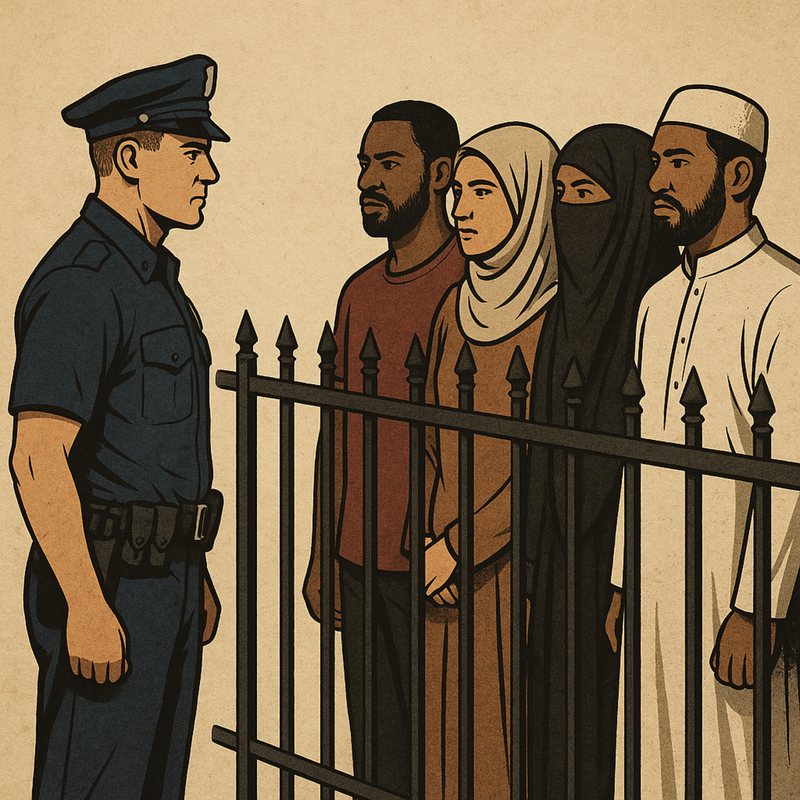
It describes a very visceral reaction, almost instinctual. It states quite directly when someone from outside comes in with power, police, ICE, federal agents. It feels like an invasion. An invasion. Strong word. Very This isn't just a mild inconvenience or routine interaction.
It's perceived as an incursion, A hostile act against their autonomy and their established internal order. For those living within dimension A, it's a fundamental challenge to their self governing nature and their right to exist according to their own rules. The very presence of Dimension B's enforcement can activate deep seated feelings of historical oppression or disregard. And the paper connects us to popular culture too, right? It does, and it's quite striking. It specifically mentions the trope of an outsider cop on a reservation.
Oh yeah, I can picture that. Right. Think about how often you've seen that narrative play out in movies or TV shows. A law enforcement officer from the outside coming into tribal land where their authority isn't implicitly recognized or welcomed. They're always met with suspicion.
Always. They're often seen with suspicion, even as a threat, regardless of their individual intentions. This trope, the paper argues, captures a profound and incredibly real feeling for communities experiencing the occupier shadow. So it's not just fiction. It's not fictional.
It's a pervasive, lived reality that resonates deeply with many enclaves in the US because it mirrors their own experiences of external authority. Why is it felt so acutely though? What's the core perception? The core perception here is stark and undeniable. For many communities, outside enforcement is not help, it is intrusion. Not help intrusion.
Big difference. Huge difference, and this is a critical distinction that often eludes dimension B. The external authority, operating from its own logical framework, believes it's providing a service, maintaining order, ensuring safety for all citizens as mandated by its loss they. Think they're doing their job? Right, but from the perspective of dimension A, that identical action is disruptive, unwelcome, and a direct affront to their internal governance. It's an unwanted imposition of external will onto a space that considers itself self regulated, often viewing the help as a pretext for control or subjugation. This fundamental difference in interpretation is what fuels so much of the conflict.
And this difference in perspective, it actually manifests in public ways like slogans. Yes, absolutely, and the source meticulously analyzes the significance of slogans like All cops are bastards, ACAB and Snitches get stitches. OK. Yeah, those are well known. Right, and it explains that they are not just anti police, there are warnings to keep dimension B out of dimension A. Warnings.
How so? Well, they aren't simply generalized expressions of anger or a signal of criminal intent, although maybe sometimes they are. But the paper argues they are in fact powerful declarations of sovereignty from Dimension A. Yeah, they function as internal codes, signaling to community members that loyalty to the enclave's internal system is paramount, and that any collaboration with the external authority with dimension B. Like snitching. Exactly.
Snitching is seen as a profound betrayal of their communities autonomy, identity and collective security. There are boundaries articulated through defiance marking, where internal rules supersede external ones. That reframes the slogan significantly. The idea of internal occupation feels incredibly significant, almost global in its implications. It forces us to confront uncomfortable parallels.
Does the source offer maybe a historical or international analogy that can help us understand this dynamic even better? An example that makes this abstract concept of parallel realities more concrete. It does, and it's a remarkably powerful and I think, illustrative analogy to help bridge this conceptual gap. It dedicates an entire section to Baghdad, a story about layers of power. Baghdad, OK.
How does that connect? Well, it presents a context many of us can grasp of recent history to illuminate the complexities of authority and perceive legitimacy in a profoundly fragmented landscape. Right post Saddam. Exactly. The source vividly recounts the situation in Baghdad after Saddam Hussein's fall.
It describes how the city quickly became a patchwork of warlords, each with their own rules. Right, I remember reports like the very chaotic. Extremely this created a decentralized, highly fragmented landscape where local power structures held sway, each governing their territory according to their own system of justice, their own economic principles, their own methods of maintaining order. Little fiefdoms, almost. Kind of. And above this incredibly complex localized reality, the US Army was another authority above it all, but not part of it.
Above, but not part of it. They were an external force operating with a different mission, different rules, attempting to impose a singular overarching order onto a multi layered, already self governing reality. They were on the map, physically there, but critically, not of the many internal systems that defined life for the locals. So how did the locals perceive US actions then? Well, what's? Truly eliminating is the crucial point the paper makes about perception, which is central to this whole occupier thesis. It highlights when U.S. forces struck A warlord, local saw it as an invasion, even if that warlord was cruel. Even if the warlord was bad, they still saw it as an invasion.
Yes, this is absolutely vital to grasp. From the US perspective, intervening against a warlord might have been seen as a necessary act to restore order, protect civilians, dismantle criminal elements, a legitimate function. That would be the dimension B perspective. Exactly. But from the ground within the local dimension, A that warlord, despite any cruelty or injustice, represented their existing power structure, their system, maybe their protector, or at least their own known oppressor.
The devil you know, perhaps? Perhaps an attack on the warlord was perceived as an attack on the existing local order and intrusion into their self governed space. Regardless of the warlord's ethics, the external force wasn't seen as a Liberator or a restorer of order. But as an outsider messing with their reality. Precisely an illegitimate intervener disrupting their established, albeit imperfect, reality.
So how does that Baghdad story mirror the US dynamic? Then make that connection explicit. The paper connects it directly, stating that Americans thought they were restoring order. Locals felt occupied. Same dynamic. This story mirrors the dynamic in American cities and enclaves. 2 systems exist at once until 1 pierces the other. This analogy is incredibly potent because it strips away our preconceived notions of national unity and forces us to confront the idea that within America's borders there could exist deeply ingrained local systems. Dimension A systems.
Right dimension, a systems of governance identity that perceive federal or state intervention in much the same way as an external occupying force. It's a powerful illustration of how the symbol act of enforcement can be interpreted so differently depending on which dimension you inhabit. Which inevitably leads to friction. Inherent friction in conflict, yeah. The source then takes this powerful analogy even further, doesn't it?
Framing policing within these enclaves through a truly challenging lens. Policing as colonialism. Yes, and that's bound to be controversial phrasing for some. Absolutely. This isn't just strong language.
It implies a deep historical resonance and a power dynamic that goes far beyond mere law enforcement. It suggests A systemic issue echoing past injustices. Well, the paper makes the comparison quite directly. It argues that when federal or state forces enter enclaves, they're often seen as colonizers. Their authority is not welcome. Seen as colonizers.
This perspective use the police or federal agents not as fellow citizens upholding a shared law, but is agents of an external power, imposing rules and control on a territory that in the hearts and minds of its inhabitants already governs itself. So it's a fundamental rejection of their legitimacy. Yes, rooted in a feeling of being subjected to foreign rule. The historical echoes are profound, suggesting a continuity of power dynamics even if the context is domestic. So how do the justifications differ then between the police and the community?
That's where the fundamental difference lies. The paper highlights this stark contrast. The outside power believes it is acting lawfully. The inside sees it as oppression. Two totally different realities again.
Completely. Dimension B operates under the belief that its actions are legitimate, lawful, necessary for the good of all citizens, maintaining universal order, following statutes, procedures, applying neutral law. But Dimension A views these same actions through a fundamentally different lens, one of historical subjugation, maybe cultural imposition, the erosion of their internal autonomy. So it's a clash of moral frameworks too. Yes, and legal ones. What is right and just is diametrically opposed, and the very act of policing becomes a symbolic and often literal act of control from the dimension a perspective. And this explains resistance.
That helps explain it, yes. From this perspective, the source states, This is why defiance of the police is framed as resistance. To dimension B, this is crime. To dimension A, it is self-defense. Resistance versus crime, Self-defense versus illegality.
Exactly. It's not just a semantic difference, it's a fundamental divergent in understanding the very nature of an interaction from dimension B. Resisting arrest, failing to comply? That's a criminal act, a breach of law and order. Undermining society? Right, but from within dimension A, within its moral economy, it can be seen as an act of self preservation, a defense of their communities autonomy, A stand against perceived oppression. Their right to self rule.
Exactly their inherent right to self rule. It's a tragic collision of two irreconcilable realities, each side believing in the righteousness of its own actions. Which just leads to cycles of conflict. Profoundly difficult cycles to break because the underlying premises are so fundamentally different. That's a powerful and deeply uncomfortable framing that makes me wonder, are there communities that explicitly go beyond just feeling occupied and actively try to reject outside authority? You mean like formal rejection?
Yeah, almost creating their own nations within a nation. It seems like a natural, if maybe radical, extension of this thesis, moving from perceived occupation to outright attempts at self governance. Yes, the source definitely delves into this very concept and it provides concrete examples calling them autonomous zones, modern reservations. This takes the theoretical framework of dimension A and shows how it manifests in concrete real world attempts to establish self rule and actively push back against dimension B. So they're not just conceptual spaces.
Not just conceptual, but tangible attempts to enact a different form of governance. What examples does the paper give? Well, it provides compelling examples that we've seen play out in recent headlines and ongoing policy debates. Consider sanctuary cities. Right, that's a big one. Where a municipal government explicitly chooses to ignore or limit cooperation with federal immigration laws, here a local government is directly saying our local priorities or values supersede federal mandates in this area. That's dimension A winning locally in a way. It's a direct manifestation of Dimension A's collective will, expressed through local governance superseding Dimension B's mandates, at least in practice. And then there's the more radical but well known case of Seattle's Chaz, or the Capitol Hill Autonomous Zone. Chaz.
Which literally claimed independence from police authority attempting to establish an entirely self governed area within a major US city, complete with its own internal security and social services for a time. That was a direct attempt at secession from dimension B. Absolutely. These weren't just protests, they were tangible, albeit often short lived, experiments in secession from external control, a declaration of Dimension A's intent. Are these just isolated incidents though, or is it broader?
The paper argues it's broader, perhaps less publicized, but pervasive. It states that many neighborhoods act like reservations, policing themselves and resisting outside enforcement. Acting like reservations. Interesting phrase. It suggests A widespread trend where communities informally or formally take on the role of self governance.
They develop their own methods for maintaining order, resolving disputes, enforcing norms. How like community elders or something? Could be through the influence of community elders, Yeah, or informal social pressure, or even organized neighborhood patrols that operate independently of official law enforcement. It effectively creates a parallel system of justice and authority. Another layer of dimension.
A Exactly, and it sometimes comes into direct conflict with official channels embodying a quiet but pervasive form of self determination. So what's the core logic driving this? Why try to govern yourselves? Well, the paper articulates the underlying logic as remarkably simple, yet incredibly powerful. We govern ourselves.
Just that we govern ourselves. It's not a complex political philosophy or an obscure legal argument. It's a direct, almost primal assertion of autonomy. It reflects a deep seated belief that the community itself is the legitimate source of authority for its members, and that external forces lack the consent, the understanding, or maybe the moral right to legitimately rule over them. It's the core desire of Dimension A to remain unmolested and self-sufficient, to determine its own destiny and maintain its own way of life independent of external decrees.
So these enclaves aren't static then? They're constantly evolving, shifting, even forming a new. That's right, they're dynamic. Which makes me wonder, does the source discuss how global migration impacts this dynamic within the US? Does migration create new enclaves? New dimension?
A spaces. Absolutely. Something striking about how the paper highlights the dynamic nature of this phenomenon is its explicit statement that migration brings new enclaves. As populations move and settle within the United States, particularly from different cultural or national backgrounds, they often seek out and create communities that reflect their shared cultural, linguistic, or religious identities. Makes sense, people stick together.
Right, and these then become new pockets for Dimension A can take root, asserting its own internal logic and social codes within the broader American landscape. What kinds of communities does it mention specifically? The source details the types of communities establishing these new autonomous zones. It mentions Syrian, Afghan, Somali, Persian and other communities that create tight knit zones with their own codes. So often communities coming from very different contexts.
Exactly. Often groups fleeing conflict, persecution or simply seeking better opportunities. And they arrive with distinct cultural norms, languages, social structures already in place. And maybe experiences with government back home. That's key. Their shared experiences, including crucially often a history of corrupt or oppressive external authorities in their home countries, naturally lead them to form close knit communities.
So they bring a certain skepticism. You can say that within these communities they often develop their own internal systems for social organization, economic activity, conflict resolution, which might be quite alien to dimension B. A key characteristic, as the paper notes, is their inherent distrust of outside interference, A mistrust forged by past experiences and reinforced by the desire to preserve their unique identity. How does this self rule function in practice in these newer enclaves? Well, the paper gets compelling pangible examples. It notes that some Somali areas are so concentrated they function like independent societies. Independent societies within the US. It suggests A remarkable level of self-sufficiency where many services, social interactions, dispute resolutions occur primarily within the community, relying on internal networks and trusted community leaders rather than external government structures.
Wow. Any other examples? Similarly, it points out that Mexican American neighborhoods in Los Angeles with the Southwest enforce for us by US norms. For us, by us. Yeah, this highlights a strong internal loyalty and a preference for community driven solutions and support systems where the community takes care of his own and looks inward for guidance, often preferring to handle matters internally to avoid interactions with external authorities perceived as hostile or unhelpful. And how do these enclaves signal their boundaries? It's not always obvious.
Right. It's often subtle but incredibly powerful. The source shares a fascinating detail about cultural markers like Go Go Music in DC signal boundaries. Go go music. How does music signal a boundary?
It's not about physical walls or explicit signage. It's about cultural cues, music, language, specific social behaviors that delineate where one dimension ends and another begins. They signal this is our space, our culture. And the paper recounts a specific anecdote that truly brings this to life. A local once warned me at a go go club.
You can come in, but I wouldn't. You can come in, but I wouldn't. What did that mean? Was it dangerous? The source clarifies it wasn't a threat of physical harm or an act of aggression. Instead, it was a clear, implicit message that you were entering a space governed by different rules, different social contracts, different expectations of behavior. You're crossing into dimension A. Exactly.
It was a friendly but firm reminder that while you are physically present, you are still an outsider to that dimension, a reality. It illustrates the powerful, often unwritten social codes that define and protect these autonomous zones, asserting their distinct identity and sovereignty in subtle yet profound ways. That anecdote perfectly illustrates the nuance of these invisible boundaries. This concept of boundaries and self governance, however informal, leads to another powerful idea introduced in the source the warlord mentality. Yeah, that's a provocative term. It certainly grabs your attention. What does that mean for these enclaves and how does it relate to the internal dynamics and loyalties we've been discussing? Doesn't mean they're actually run by warlords. No, not literally warlords in the sense of armed conflict, usually.
What's truly illuminating is how the term warlord mentality in the paper is used not necessarily to imply chaos or lawlessness in the conventional sense, but rather a fierce, almost primal territoriality. The source states directly every enclave is territorial. This means they view their specific space, their community, as their sovereign domain where the rules apply. This is our space. Exactly. The paper then clarifies A crucial point. It may not be lawless, but it governs itself, so it's not an absence of order.
It's a distinct system of order where authority originates from within the enclave itself, not from external governments or legal systems. Their own dimension, a order. Right. This territoriality is a core, non negotiable aspect of their dimension, a identity, a deep assertion of their autonomy against any perceived external encroachment. So how do these internal governance systems operate and assert themselves then?
What are the rules? Well, often they're unwritten. The paper explains that outsiders crossing the line break the unwritten rule. This turf is not yours. Break the unwritten rule. Yeah, this highlights the existence of implicit codes of conduct, social contracts, boundaries that are deeply understood and rigorously enforced by those within the enclave.
These aren't necessarily written laws or formal statutes. And everyone knows them. Right. Powerful norms that dictate behavior, resolve disputes, maintain social cohesion. When outsider, particularly one representing dimension B, enters this space without acknowledging or respecting these unwritten rules, it's seen as an infringement, A disrespectful crossing of a boundary.
Issues. You don't get it. Exactly. It signals A fundamental misunderstanding of who truly holds sway and whose authority is legitimate in that territory, emphasizing the paramount importance of internal acceptance and community sanctioned legitimacy over external legality. And how does this connect back to defying the police or other authorities? Well, this perspective profoundly shifts how we interpret defiance of external authority within these communities.
The source points out that defiance of police is often seen by insiders as protecting their autonomy. Protecting autonomy, not just breaking the law. For the perspective of dimension A resisting law enforcement isn't necessarily about committing a crime or challenging abstract notions of order. It's fundamentally about defending their self governed space, their cultural identity, their right to exist independently from an external system they perceive as illegitimate or oppressive. Which highlights that internal loyalty again. Immense loyalty.
The paper contrast this starkly. From the outside, this is chaos. From the inside, it is loyalty. Chaos versus loyalty. Same action, different label. Precisely to dimension B, actions taken by enclaves to defend their autonomy might appear as disorder, criminal behavior, a breakdown of societal norms. But from within dimension A, these same actions are perceived as acts of solidarity, courage, a powerful demonstration of fidelity to their communities, distinct way of life and its inherent right to self rule.
That distinction is absolutely critical for understanding the motivations, isn't it? It really is. It explains why external efforts to impose order often meet such fierce resistance. So what does this all mean when we bring all these powerful and at times frankly unsettling pieces together? How does Chris Abraham's occupier thesis ultimately redefine our understanding of the United States? Yeah, the big picture.
It challenges the very notion of what it means to be 1 nation. It sounds like a truly seismic shift in perspective. Well, what's truly illuminating is the overarching conclusion. The source arrives at a stark and profound summary of its entire argument. The US is many cultures on one map. Many cultures 1 map.
Each believes in its right to self rule. This is a powerful assertion, moving beyond the idea of a simple melting pot or even a multicultural mosaic. It's more fragmented than that. It posits a more fundamental segmentation where distinct cultural entities not only coexist but also fundamentally assert their inherent current right to govern themselves, often independently of external legal frameworks or centralized authority. It suggests the American experiment is far more fractured at its core than commonly acknowledged.
And this brings us back to the core clash. Exactly. It brings us squarely back to the core clash we explored earlier. The government sees itself as the ultimate authority. Enclaves see it as an occupier. Dimension B versus Dimension A's perception. This is the central irreconcilable tension that defines the entire thesis.
The federal, state, local governments representing Dimension B operate under the absolute assumption of their universal legitimate authority over all territory and all people within their borders. They believe they have the right. They view their laws and enforcement as universally applicable and just, but the enclaves embodying Dimension A fundamentally reject this universal claim, viewing interventions by the government not as legitimate governance, but it's an illegitimate imposition on their inherent right to autonomy and self determination. It's a fundamental disagreement about sovereignty. Absolutely.
It's not merely A misunderstanding, it's a deep seated philosophical and practical disagreement about the very nature of sovereignty itself. A constant push and pullover who truly holds the reins of power within their communal spaces. So what's the consequence of these unreconciled realities? If they don't reconcile, what happens? The paper issues a stark warning about the consequence. Until these two realities reconcile, every clash will feel like colonizer versus colonized.
Every clash feels like that. That's the implication. It means that each interaction, whether it's a police action, a federal initiative, A zoning dispute, a cultural policy, it's not just a routine policy implementation or legal enforcement. It gets loaded with meaning. Exactly. It becomes imbued with the historical weight and power dynamics of colonial encounters.
It transforms every encounter into a power struggle where one side feels an ancestral or deeply cultural right to self determination and the other asserts a legal right to universal governance. Which just guarantees ongoing conflict. It sets the stage for ongoing, deeply rooted conflict that goes far beyond simple policy disputes. It is a battle for recognition and legitimacy. And the paper insists this feeling of occupation is real, not just rhetoric.
It's strongly emphasizes the profound authenticity and lived experience behind this feeling. The cry of occupation is not just rhetoric, it is the voice of communities guarding their own worlds within America's borders. Parting their own worlds. Yeah, this validates the lived experience of countless individuals. It's arguing. It's not hyperbole or an exaggerated complaint to be dismissed lightly.
It's a genuine, heartfelt expression of communities protecting their distinct identities, their internal codes, their chosen way of life from what they perceive as an external, illegitimate and potentially destructive force. A defense of dimension A itself. Precisely a defense of their very existence has dimension a a struggle for cultural and social survival against an overwhelming external power. So This is why autonomy matters so much in this thesis. This is why the concept of autonomy matters so deeply, yes, and why understanding this thesis is, I think, crucial for anyone trying to make sense of America today.
The thesis leaves us with a powerful final statement that truly encapsulates his core argument. America is not one dimension, it is 2. And they're always on the verge of collision. This is the ultimate take away. 2 dimensions on the verge of collision. Yes. the United States, from this perspective, is not a unified entity with a singular understanding of governance or legitimacy.
Instead, it is a complex bifurcated system where two distinct realities coexist constantly at risk of clashing because they're fundamental principles of authority, belonging and self determination are so profoundly opposed. The collision might not always be violent, you mean? Right. It might not always be violent, but it manifests in persistent friction, misunderstanding and a perpetual struggle for dominance or recognition. Wow, OK this deep dive into Chris Abrahams occupier thesis is truly transformative. I mean, for many of us it isn't just about understanding different communities or some new academic framework. It feels more fundamental.
It really is. It's about seeing America through a completely new and challenging lens. For many of us, I think this framework provides those crucial aha moments, suddenly making sense of headlines and social tensions that previously seemed inexplicable or just chaotic. It gives you a different way to interpret things. Exactly. It allows you, the listener, to look at interactions between communities and external authorities with a far greater degree of nuance and insight, moving beyond simplistic explanations to grasp the underlying conflict of realities.
So if America truly is, as the thesis suggests, two countries on one map, it really does raise a challenging but I think necessary set of questions for all of us. Like what? Well. What are the profound implications for policy making, for community engagement, or even simply for our individual approach to empathy and understanding? Yeah, how do we even talk to each other across these divides?
Right. How might acknowledging these parallel realities, dimension A and dimension B change how we think about solving internal conflicts rather than, you know, inadvertently exacerbating them through a singular, uninformed approach? That's a huge question. It leaves us with a provocative thought. What if the path to greater unity isn't forcing one reality onto another, but first truly understanding and perhaps even in some way acknowledging the existence of both?
Acknowledging both realities, that's definitely something to chew on. We truly encourage you listening to take these concepts and apply them. Yeah, think about it in your. Think about where you might observe these dynamics playing out in your own communities or in the news stories you consume. Begin to apply the concepts of dimension A and dimension B to real world situations.
See. If it changes your perspective. Perhaps even trying to see a familiar situation through both lenses. This framework is a powerful tool for critical thinking and seeing the deeper layers of societal dynamics that often go unnoticed. Keep digging. Keep exploring, keep questioning, and keep thinking critically about the complex, sometimes colliding tapestry that is America.