Read the full transcript (6,501 words, machine made)
OK, So what is the ultimate state of peace wasn't actually the final destination we all imagine. What if, you know, it was actually, well, kind of boring? Now, that might sound like a wildly provocative question, right? Especially when we talk about things like spiritual enlightenment or Nirvana, these concepts are almost always painted as this ultimate, blissful, unchanging end goal, a seat of perfect contentment that, well, we often spend our lives striving for. But today, we're going to dive into a truly surprising alternative perspective, one that radically challenges this deeply held idea. And it invites us to maybe rethink what true fulfillment might actually look like.
It's true, isn't it? That question feels almost. Yeah, provocative is the right word because for so many of us, the whole pursuit of peace, you know, freedom from suffering, that is the ultimate answer. It's the pinnacle of human experience we're aiming for. We dedicate ourselves to practices, to philosophies. We try to curate our environments, to just eliminate every last bit of discomfort.
We really believe that pure serenity is the final supreme goal. We chase it. We meditate for it. We try to smooth out every single wrinkle in the fabric of our lives. Yeah, we really. Do But what if that very pursuit, if you take it to its absolute extreme?
What if it misses something crucial, something dynamic about what it truly means to live fully, to actually grow and to feel, you know, vibrant? This deep dive today is really designed to challenge that deeply ingrained assumption and maybe open a door to a more nuanced, perhaps a more engaged way of existing. Absolutely, and to do that we are pulling from some really thought provoking material today. It's excerpts from Nirvana is Peaceful and Boring While You Still Need Suffering by Chris Abraham. Our mission with this deep dive is really to unpack this fascinating perspective on suffering, on growth, and crucially, on the absolutely essential role of rest in a life well lived.
We want to show you how consciously embracing both challenge and tranquility together can lead to a more fulfilling, more dynamic life, a life that feels both rich and purposeful. We're trying to extract some surprising Nuggets, maybe some moments that might just shift your perspective a little and hopefully give you some actionable insights for your own journey. Now the source material is framed around a guru's teaching, almost like getting direct wisdom, but in a very modern context, which I think really sets the stage for a profound and actually very practical exploration. It really does that framework. It lets us step beyond just abstract philosophy, doesn't it? We get into something that feels deeply personal and like immediately applicable to daily life. We're not just sitting here discussing theoretical ideals. We're kind of stepping into a conversation about the practicalities of a balanced, evolving existence. It frames these huge concepts in a way that feels less like some distant spiritual goal and more like a handbook for navigating the messiness of being human, right here, right now. OK, so let's unpack the surprising ideas straight away, because it really does flip the script on what so many of us have been, I guess, conditioned to believe. The source starts by referencing an earlier teaching from this guru figure.
Apparently he'd explained that suffering for most of us in modern life often stems from what he vividly and quite bluntly called the shit. Huh. Yeah, not mincing words there. Not at all. Yeah. And he meant those very basic, fundamental, and frankly quite uncomfortable things that, ironically, modern life is largely removed or made incredibly easy for us to avoid. Think about genuine physical hunger. Not just, oh, I fancy a snack, but real gnawing hunger or extreme cold, real exposure to the elements or the intense physical labor that was once just required for survival. Or, you know, the constant threat of predators or conflict that shaped much of human history. Things we barely even conceive of now, most of. Us exactly.
And his point was, if we simply choose to see this, to really acknowledge the immense comfort and safety that is our default setting in many parts of the world today, the Nirvana, this freedom from the kind of suffering the Buddha was talking about is actually readily available. It's right here, right now. It's just a shift in perspective away. Right. And this foundational idea, it resonates so deeply with a lot of contemporary thought, doesn't it?
Things like mindfulness, gratitude practices, even certain branches of, say, Stoicism. It suggests that a huge chunk of our perceived suffering isn't actually caused by these insurmountable external forces anymore. It's more about our internal resistance to what is, or maybe our attachment to what is and our expectations. It proposes that if we just choose to acknowledge the incredible comfort, the convenience, the sheer abundance of modern existence, then much of the suffering we tend to experience is in a way self-imposed. Or it's a product of our internal narrative, right? Our endless pursuit of what's next instead of appreciating what's right here.
That constant striving. Exactly. And society, with its relentless drive for efficiency and comfort, often reinforces this. We're always striving to eliminate all discomfort, even tiny ones. Think ergonomic shares, instant gratification and entertainment food delivery in minutes. We've become so accustomed to this highly cushioned existence, and we often wait total comfort with the ultimate good. So this initial teaching from the guru, in a way, it gives us permission.
Permission to acknowledge the profound peace that can exist when those fundamental shits are largely gone, when we aren't constantly battling for basic survival. It's a powerful invitation, really, to recognize the peace that's already here if we just look. That makes so much sense, especially when you think about how much of our lives now are just designed to avoid even minor inconveniences. Like you said, you don't have to build your own shelter, hunt your own food, or, you know, worry about a Saber toothed tiger lurking in your backyard. So much of what used to be a daily visceral struggle is just gone for many of us. And yet we still managed to find ways to feel miserable, don't we?
Which is fascinating in itself. Oh, absolutely. Human ingenuity finds a way even for misery, right? But then the guru sends this new e-mail to the author, Chris Abraham, and this is where the teaching really deepens. It adds this layer that for me truly shifts the whole perspective. Because he added this crucial bit. Nirvana is peaceful, yes, but Nirvana is also boring. And that is precisely where the paradox hits you, right between the eyes.
It's so counterintuitive because for so many people, the very word Nirvana conjures up images of ultimate bliss, doesn't it? A state of perfect contentment. It's seen as the final, supreme goal of spiritual aspiration, the end of the line. So to hear it described as boring, well, it feels almost blasphemous, like a contradiction in terms that can really challenge deeply held spiritual and philosophical beliefs. Totally.
It feels wrong somehow. Yeah, we've been taught, or we've absorbed the idea that we should aspire to a state without struggle, without want, without friction, without desire. So why would perfection, which is often how Nirvana gets framed in popular understanding, why would it have such a strange, almost undesirable catch? This really challenges the whole notion of what a perfect state for a complex creature like a human being might actually entail. It really reframes our understanding, doesn't it?
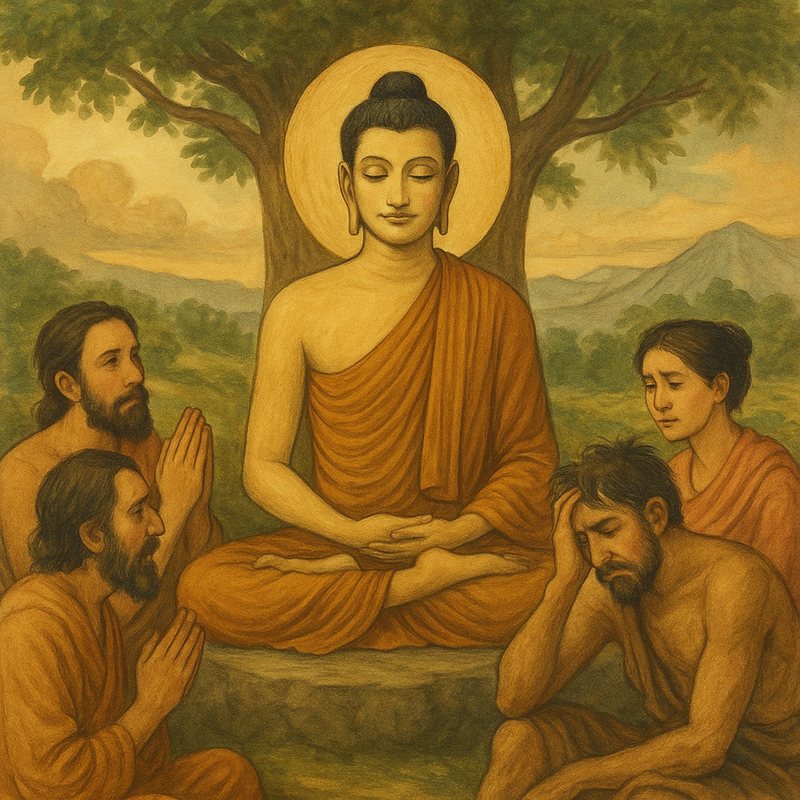
It kind of bumps Nirvana down from being the ultimate destination. It makes it more like a very important stop along the journey, a crucial resting place. And the guru score argument clarifies this paradox. Perfection, by its very nature, has a catch. Nirvana is described as calm, soothing, pleasant. All good things.
Definitely things we crave, but crucially, the keyword is unchanging. There are no struggles there, no challenges, no dramatic ups and downs, no novelty. It's a place of ultimate rest, profound stillness. Stillness. Yeah, that's a good word for it.
And here's the kicker. The analogy from the source just drives this home. It makes it incredibly relatable, he says. Like any resting place, if you stay there too long, it stops being fulfilling. Yeah, you might love a vacation, but you wouldn't want to live in the same hotel room for the rest of your life.
That image, a luxurious hotel room, perfect for a week maybe, but just soul crushing for a lifetime. It really makes you stop and think. Oh, that analogy is incredibly powerful because it taps straight into a universal human experience, doesn't it? And I would argue it taps into a fundamental aspect of human nature itself. We are, I think, at our core creatures that are wired for novelty, for growth, for progress. We need change, so consider what this implies. Even when we achieve maximum comfort, total tranquility, complete freedom from suffering, some innate part of us seems to still seek change, new experiences, or maybe a sense of purpose that goes beyond just existing comfortably. Right, we get antsy.
Exactly. Absolute stagnation. Even if it's stagnation in a state of perfect peace, it might inherently be dissatisfying precisely because we are organisms wired for dynamism. Our brains thrive on new stimuli and challenges. Our bodies adapt to new stresses. That's how they get stronger.
And our spirits, well, they seem to seek evolution and expansion. Meaning, if everything is always perfectly calm, perfectly settled, perfectly predictable, what's left to strive for? What's left to learn? What's left to do that feels meaningful? Yeah, what's the point then?
Almost. Right. So the boring aspect of Nirvana isn't necessarily a flaw in Nirvana itself. It's perhaps a profound reflection of our own human design, our fundamental need for interaction with a changing world. I need to engage, to create, to overcome.
It suggests that even in paradise we might find ourselves restless, maybe even, you know, creating little problems just to have something to do, something to engage that innate drive. Like making mountains out of molehills just for the stimulation could. Be so yeah, that reframes Nirvana. Not as the end all be all, but as like you said, a vital pit stop. A spiritual pit stop? Yeah, I like that.
Which leads us directly into the guru's next incredibly vital assertion. He says if you want to grow, you cannot live in Nirvana all the time. Growth comes from stress. Growth comes from challenges. Growth comes from the friction of living.
Now, this isn't about some, you know, masochistic desire for pain or glorifying suffering itself. It's a profound recognition of a fundamental truth about development, really in all its forms. Precisely. That's a crucial distinction. This isn't about chasing suffering for its own sake.
That just leads to, well, masochism or burnout, doesn't it? Instead, it's about understanding suffering's integral, maybe even unavoidable, role in any form of meaningful development. It's about acknowledging that true, lasting growth often arises from situations that push us, push us beyond our current limits, situations that are inherently uncomfortable, difficult, or demand more from us than we initially thought we could give. Right, the comfort zone thing. Exactly. Think about any skill you've ever learned, seriously learned, or any emotional resilience you've gained, any real wisdom you've acquired.
It rarely, if ever, comes from a place of absolute ease or undisturbed comfort, does it? It comes from pushing through a problem, grappling with a complex idea, and during a tough experience, or maybe venturing into the unknown. The friction of life, the resistance we encounter, that's often the very force that sculpts us. It makes us stronger, more capable versions of ourselves. And the source uses such a vivid, really relatable analogy to illustrate this. The muscle, it says a muscle only grows when you strain it, when you stress it in just the right way. Too little stress and never grows stronger. Too much stress and it tears apart. It's so incredibly clear when you think about it physically, like weightlifting, but then applying it more broadly. I mean, what happens if you never stress a muscle? It atrophies.
It weakens. Simple as that. It's an undeniable physical law, and this principle, as the guru explicitly states, applies directly to your mind, your heart, and your entire life. It's not just physical. Just as a muscle needs that precisely calibrated resistance to strengthen your cognitive abilities, your emotional resilience, your personal character, they all develop through encountering and, crucially, overcoming difficulties. If your mind is never challenged with new ideas, complex problems are genuinely different perspectives, it just becomes soft, maybe prone to rigid thinking, complacent, complacent.
Exactly. And if your heart never experiences loss or disappointment, or the tough complexities of deep empathetic connection, it might lack depth, real understanding, true compassion. So the delicate balance is absolutely key here. You need, as the source says, enough suffering to push you, to stretch you, to make you grow. But, and this is critical, not endless suffering that just breaks you down, that traumatizes you. Right.
So it raises the big question, maybe the $1,000,000 question for anyone listening. How do you know what's enough? How do you find that line between productive challenge, that sweet spot for growth and just destructive overload? How do we calibrate that? It truly is the $1,000,000 question, isn't it? And there's no simple universal formula, unfortunately. It'd be nice if there were, but the answer seems to lie in a blend of, I think, deep self-awareness and active discernment.
Paying attention. Firstly, it really involves listening to your own signal. Your body, your mind, your emotions. Things like persistent physical exhaustion, emotional burnout, that feeling of constant mental fog. Those are pretty clear indicators you might be pushing too hard heading towards the too much stress zone. The breaking point.
Exactly. Conversely, feelings of stagnation, maybe persistent boredom or a nagging lack of purpose that might suggest you're in a too little stress zone, Not enough friction. Secondly, it's about understanding the context of the challenge. Is this difficulty aligned with your core values, your long term goals? Is it a challenge you've consciously chosen for growth? Or is it one that's just been imposed on you with no clear benefit or end insight?
That makes a huge difference. Thirdly, it often involves a bit of experimentation, taking calculated risks, maybe stepping just slightly outside your comfort zone and then observing the outcome, really paying attention to how you feel afterwards. Do you feel stronger, more capable, energized even? Or did you feel depleted, anxious, broken down? Learning from experience.
Precisely. And finally, it's recognizing that this line, this sweet spot, it's not static. It shifts all the time based on your current resources, your energy levels, your support systems, what else is going on in your life. So the mastery is in finding some fixed perfect point and staying there. It's in continually calibrating and adjusting your exposure to challenge based on your internal feedback and your external circumstances. It's about developing this inner wisdom, this intuition that guides how you engage with life's friction. And that discernment, that ability to calibrate and adjust, brings us right back to the guru's crucial teaching on choice.
This is so important. He emphasizes that this isn't about just passively enduring suffering when it comes or foolishly running towards it, either. It's about intentionality. It's about agency. He says mastery of life is learning when to step into suffering and when to step out of it.
That completely shifts the paradigm, doesn't it? From being maybe a passive victim of circumstance to being an active conscious agent in your own life's journey. Kind of dictating your experiences rather than just reacting to them constantly. This is where the practical implications really, really shine through. It moves from just interesting theory to actual actionable wisdom you can use. The guru states it so clearly, so powerfully. You choose Nirvana when you need rest, period. You choose suffering when you want growth. Again, a conscious choice.
And then this is key. When the suffering starts to break you instead of build you, you choose Nirvana again. See, this isn't a passive acceptance of life's inevitable ups and downs. It's an active, conscious and continuous decision making process. It offers you, the listener, a really powerful framework for navigating challenges with real intention, rather than just being tossed around by whatever life throws at you.
Can you give some examples of how that might look practically? Sure, absolutely. Imagine maybe you've been working incredibly hard on a demanding project at work, really pushing your boundaries, feeling the mental and emotional strain building up instead of just blindly pushing through until you hit a wall, which so many of us do. You consciously decide, OK, I need Nirvana now. You actively choose to step back.
Maybe you take a real day off, No emails, no calls. You engage in profound rest, maybe a digital detox. Whatever truly recharges you, you allow your mind and body to genuinely recover. That's a conscious choice for Nirvana. OK, I get that.
Or consider the opposite. You've been in a comfortable routine for a while, maybe feeling a bit stagnant, like you're not quite reaching your potential. You identified A challenging new skill you want to learn, or perhaps a difficult but necessary conversation you need to have to move a relationship forward. You recognize this will involve discomfort, maybe even fear or frustration, but you choose to step into that suffering, that friction, because you want the growth that's on the other side. You see the value in it. Choosing the challenge for the reward. Precisely.
And then maybe even during a period of intense personal difficulty, perhaps a family crisis or a prolonged period of unavoidable stress, you start noticing those subtle signs, the signs that the suffering is beginning to break you rather than build you. You're losing sleep consistently. You're becoming irritable with everyone. You're feeling hopeless. At that critical point, you choose to step out, or at least step back. You seek professional help.
Maybe you prioritize radical self-care. You find ways to return to your personal Nirvana, even if it's just for brief, restorative moments during the storm. This kind of intelligent, deliberate engagement with both comfort and discomfort, well, the source presents it as the very essence of how to live fully. It implies this dynamic path, not a static one, Is the way to a rich and meaningful existence. It really is a complete game changer when you start to view life through that lens.
It's so empowering. It's not about finding the one perfect static state and then desperately clinging to it forever. It's about mastering the transitions between these states, getting good at the dance. And that brings us to another great analogy from the source that clarifies this rhythm, the sports analogy. The guru said athletes know that rest is part of the workout. That's so fundamental, isn't it?
You don't grow stronger just by lifting weights every minute of every day. You grow stronger by lifting weights than resting, than lifting. Again, it's absolutely fundamental to physical training, yet somehow we often overlook it completely in other aspects of our lives. Yeah, it's such a perfect analogy because it illustrates those two essential, completely inter connected components of growth in basically any system. First there's the effort, the workout phase.
That's what breaks down the muscle fibers, creates those micro tears, pushes the system just beyond its current capacity. That's the suffering part, the stress, the challenge. And then there's the equally vital rest phase. And rest isn't just passive downtime. It's the critical period when the body actually rebuilds those muscle fibers, making them stronger, more resilient than they were before.
Adaptation happens during rest. The rebuilding phase. Exactly. Without the breakdown from the stress, there's no signal for the body to improve, to adapt, nothing changes. But without the rest, there's no opportunity for the body to actually do that crucial rebuilding work. You just keep breaking it down.
And the guru issues a really clear warning against the consequences of imbalance, which, let's face it, we see playing out constantly in modern life. He says without rest, you burn out. Without challenge, you never improve. It's that simple. And it applies to everything from physical training, sure, but also to mental acuity, emotional resilience, even spiritual development.
It's a universal principle. So he explicitly extends that analogy to life itself. It's not just about muscles or athletic performance. It's like a blueprint for living well. You rest in Nirvana, then you challenge yourself in suffering, then you return to Nirvana to recover. Sounds like a beautifully orchestrated dance when you put it like that, doesn't it?
A continuous movement rather than trying to hold one fixed pose forever. It absolutely is. The source calls it the Rhythm Rest challenge. Rest again is the dance of growth. I love that phrasing. It's this continuous cyclical process and it's essential for sustained development and for well-being. You need both for the long haul.
And the guru points out a really common pitfall, something that plagues so many people in our society today. He says people get this wrong. They tend to go to 1 extreme or the other. They either chase suffering endlessly, never resting, or they chase comfort endlessly, never growing. Sound familiar?
Oh yeah. Definitely see both of those patterns out there. Right. Both paths lead to an incomplete, ultimately unsustainable existence, just in very different ways. Think about the person who constantly seeks suffering, always pushing, always grinding, maybe obsessed with productivity or extreme challenges. They will inevitably bird out physically, mentally, emotionally.
We see this everywhere in the relentless hustle culture, right? Where chronic exhaustion is sometimes worn like a badge of honor. They'll be perpetually depleted, unable to actually integrate the lessons learned during the struggle or genuinely recover. It leads to the state of chronic depletion breakdown. Yeah, running on empty constantly.
Yeah, exactly. And then, conversely, think about the person who only chases comfort, always avoiding any form of discomfort, any real challenge they might achieve. A kind of superficial peace, maybe, but that peace often lacks richness, depth, and that deep sense of accomplishment that comes only from overcoming meaningful challenges. They miss out on the incredible satisfaction of growth, of expansion, of developing their latent capabilities and potential. Think about the modern convenience culture, sometimes endless passive consumption, streaming binges, social media bubbles that just reinforce existing beliefs without challenge.
While these things offer comfort, they can often lead to a creeping sense of unfulfillment, maybe apathy, and definitely a diminished capacity to adapt when genuine, unavoidable challenges eventually arise. Because they will. So you become brittle. Brittle is a good word for it. Yeah, these are the two extremes, the two ways people get it wrong.
And the guru suggests neither truly leads to a full, vibrant, resilient life. And that's where the Secret lies, isn't it? The profound aha moment in all this. The secret is to use both. It's not an either proposition at all.
It's a dynamic interplay. It's about integration. And this circles us back, maybe with even deeper meaning. Now to why Nirvana can feel boring. It is restful, yes, profoundly so.
We need that rest. But it's also still it's unchanging. It doesn't have the novelty, the friction, the excitement, or that unpredictable texture of life's ups and downs, the very things that actually engage our human curiosity and our drive for meaning and purpose. This highlights such a profound aspect of the human experience are inherent restlessness, even when things are perfectly calm. The source notes that some people, even when they find peace, feel restless because there's no stimulation in perfect calm. That's a crucial insight.
I think it's why despite meditation practices often aiming for deep inner peace, so many people, even those who meditate, even those who find spiritual peace, often step back into the world. They step back to work, to create something new, to love maybe to fight for something they believe in. They re engage. They don't just stay on the cushion forever, Yeah. Exactly. And this isn't a failure of their spiritual practice. It's not a sign they can't reach deeper states of peace. It's actually a testament to our fundamental wiring as human beings.
Deep down, maybe even unconsciously, we recognize that true growth and that feeling of vibrant aliveness requires friction. It requires engagement. So Nirvana isn't meant to be a final, permanent destination, not a passive retirement from the challenges of life. Instead, it's best understood, as the source says, as a place you go to recharge. It's home base.
It's the safe place you return to when the world gets too heavy. It's the sanctuary from which you launch your next exploration into the world. And crucially, it's the place to which you always, always have the option to return to recover and integrate. So it's like that spiritual pit stop, exactly like we said before. You go there, you refuel, you check your tires, maybe adjust your strategy based on what just happened out there, and then you get back on the racetrack of life ready for the next lap. But if you try to stay in the pit stop forever in that perfect quiet place, well, life loses its texture. It's a great phrase.
It becomes bland, muted, maybe even Gray. Peace without challenge becomes dull. So the whole point, then is not to live only in Nirvana, to desperately cling to it at all costs, terrified of any discomfort. The point is to learn how to move between Nirvana and suffering with wisdom. It's about knowing when to be still and when to engage, when to absorb and when to exert effort.
It's about conscious navigation, absolutely being the pilot of your own experience, not just a passenger being buffeted around. And this brings us to another really powerful image the guru shared in the source material. He said life is like a path you have to walk one step at a time. If you want to go somewhere, you have to keep telling yourself where you're going. This speaks volumes about the immense, and I think often underestimated power of intention and sustained focus in sheeping our reality. And he used this really fascinating, almost whimsical concept to explain it.
He talked about like talking to the machine elves of reality, describing those little helpers that respond to what you focus on, which is just such a unique way to put it. But strangely, it makes a lot of sense when you think about how our minds actually seem to work, doesn't it? It's a very imaginative, almost mythical way to describe a very real principle, I think, Whether you call it machine elves or, you know, the reticular activating system in your brain, or just the power of focused intention. Think about it practically. When you decide you want to buy a specific model of car, what happens?
Suddenly you start seeing that car everywhere on the road. You notice details you never saw before. It happens every time. Right. Or when you commit to learning a new skill, maybe playing the guitar, suddenly opportunities to practice, helpful resources, other musicians, they just seem to appear in your orbit with uncanny frequency. Now, this isn't magic, obviously. It's a profound psychological phenomenon where you're focused intention literally directs your perception and consequently your actions.
You notice what's relevant to your goal. So if you tell these L's or your subconscious mind or maybe the universe itself, through your focused actions clearly and consistently, OK, I want to go to B, then C, then D, They or it will help you perceive the path and take those necessary steps. But if your mind is scattered, if your desires are unclear or conflicting, if you're constantly changing direction, well, the elves get confused. They end up taking you to random places because you never gave them a clear direction. This really emphasizes how crucial internal clarity is.
It translates directly into external manifestation, or lack thereof. Without that clear inner compass, you just drift. You get pushed around by external currents or fleeting impulses, and that leads to a life that feels kind of accidental rather than purposefully built. And he also gives a warning about that drifting, doesn't he is if you wander off track. If you lose that clarity of direction, getting back can take time. It might involve going through strange, uncomfortable stages and visiting places you didn't plan to visit on the way back. It's not always just a simple U-turn back to the path you wanted.
No, it often isn't. And this connects directly to the practical reality of making intentional choices and then having to consciously realign when you inevitably stray. Because we all do Life happens. It acknowledges that the path isn't always smooth sailing, even when you have the best intentions. Those strange, uncomfortable stages he talks about, that might be periods of intense disorientation, maybe self doubt kicks in, or even that frustrating feeling that you're actually moving backward before you can start moving forward again.
The messy middle. The messy middle? Exactly. It's the friction involved in changing course. It's like the uncomfortable sensation of a large ship slowly, ponderously turning to face a new heading. Especially in choppy waters, there's an inertia you have to overcome, both internally and externally. But the guru's assurance woven into this is that if you keep telling yourself clearly where you want to go, if you maintain that intention, eventually, through consistent effort and renewed focus, you will find yourself back on the desired path, or maybe even on a better path you discovered during the detour.
This is why focus and intention aren't just, you know, abstract woo woo spiritual concepts. They are immensely practical tools for navigating reality and actually manifesting the life you truly desire. But here's another one of those deeply counterintuitive ideas from the source that really stuck with me. He says steering can feel boring, too. Being in control can feel like work, which is funny because we usually think we want control.
But, he points out, we often romanticize just letting go and being surprised, right? Even if that surprise means ending up somewhere we genuinely didn't want to be. The guru makes this really keen point that this resistance to the boring work of steering is often why people often resist discipline and just feels dull. Maybe in the moment to guide yourself deliberately, especially when compared to the immediate thrill of impulsivity or just going with the flow. I think we've all been there, haven't we?
That moment where I don't know when Netflix binge feels infinitely more appealing than tackling that important but slightly tedious task that would actually move us towards a goal. Oh, absolutely. Daily struggle. For many of us, it's a really profound observation about human nature and our often complicated relationship with effort and reward, especially immediate versus delayed gratification. The immediate hit of impulsivity, or maybe the thrilling uncertainty of the unknown path can often feel more alluring than the quiet, often delayed satisfaction that comes from disciplined, intentional effort.
Guiding yourself, deliberately keeping your focus on a long term vision often involves repetitive steps, steps that can seem unexciting, even boring day-to-day. It lacks the dramatic highs and lows that some people might mistakenly equate with living fully or finding exciting surprises around every corner. So yeah, people resist discipline because it can feel like a constraint, like a suppression of immediate desires, or just plain boring compared to the short term thrill of reacting spontaneously. And maybe there's a fear of failure too, if you don't actually try to steer. You can't fail. It's steering.
That's a really interesting point. Yeah, there could be a subtle fear of failure baked in there, too. If you don't choose a destination and try to navigate towards it, you can't really be blamed if you don't get there. Plausible deniability to yourself. However, the guru stresses the payoff of discipline of taking the wheel is immense.
He says if you want to get where you truly want to be, sometimes you must take the wheel. This is about true agency, real empowerment. It's about recognizing that while spontaneity and going with the flow certainly have their place in a vibrant, enjoyable life, true fulfillment, especially in reaching desired, meaningful long term outcomes, often requires that boring but absolutely essential, consistent work of conscious, deliberate steering. It's ultimately the difference between intentionally arriving at a chosen destination versus just, you know, ending up somewhere by chance. Or worse, ending up somewhere you actively tried to avoid but drifted into anyway.
OK, this brings us beautifully, I think, to this synthesis of the guru's entire teaching here. It's like the culmination of all these profound, sometimes paradoxical threads. It simplifies all of this complexity down into a piece of deeply actionable wisdom, he says. Don't treat Nirvana as your final destination. Treat it as your resting spot, your home base, the quiet place where you recover. It's like Maven, he stresses, not a cage you lock yourself into.
Exactly. It's your charging station. And from that place of recovery, from that safe home base, the cycle continues. Dynamically and purposefully. He completes it. From there, step back into the world, into the challenges and the suffering that help you grow. Choose the friction.
Then, when those challenges start to wear you down, go home again. Choose rest. This creates that fundamental rhythm of life itself, a rhythm that the guru describes using another incredibly powerful biological analogy. It's like breathing, he says. You inhale the piece of Nirvana. You exhale the effort of growth.
Both are necessary. Think about that. You cannot perpetually inhale, nor can you perpetually exhale without disastrous consequences to your health, your vitality, your very life. Similarly, you cannot perpetually rest, nor can you perpetually strive without suffering deeply from that imbalance. Life is lived in that dynamic, continuous exchange between the two. Wow.
The breathing analogy is powerful because it really emphasizes the dynamic, continuous, absolutely necessary nature of it all. It's not optional. It's not about choosing one state over the other forever, not about trying to live a life of either pure comfort or constant struggle, but about integrating both, finding the flow between them. And the guru really stresses again that this is fundamentally a choice. He says, quite pointedly. Many people don't choose.
They just react. Ouch, but true. They either cling to comfort or chase suffering blindly. They just let life happen to them rather than actively, consciously shaping their engagement with it. And this right here is precisely where the transformative potential for you, the listener, truly lies.
It's that crucial distinction, the distinction between being a passive passenger just reacting to the bumps in the road, and becoming the conscious, intentional driver of your own life's vehicle. You can choose when to rest. You can choose when to work, when to engage with challenge. You can choose when to face pain constructively and when to consciously let it go or seek refuge. This proactive engagement, this conscious dance between the two states allies for remarkable balance, resilience, and ultimately, deeper fulfillment, as the guru profoundly summarizes it, articulating the ultimate mastery, the goal of this whole approach. You can choose to grow without breaking and to rest without rotting.
This, he declares right at the end, is the secret and lesson. It's the core take away. It's about building genuine strength, wisdom, and resilience over time, rather than just bouncing between enduring hardship and escaping into comfort. It's not about trying to avoid life's difficulties, which is impossible anyway, but about navigating them skillfully, with an understanding that they are often essential for your expansion. Preventing the breaking that comes from perpetual unmanaged stress, and also preventing the rotting, that stagnation, that lack of vitality that comes from perpetual, unchallenged comfort.
Grow without breaking and rest without rotting. That really is the ultimate balance, isn't it? Such profound wisdom condense into a few words. So life isn't about finding that static, perfect state of Nirvana and the desperately clinging to it, forever trying to build walls against any discomfort. Instead, as the source puts it, life is about knowing when to go there and when to leave.
It's about flow, not fixation. It's about skillful movement between these essential states. Peace gives if you rest. Suffering gives you strength. Together they make you whole.
A truly integrated, vibrant, and fully lived existence requires both. And that core idea of wholeness, I think that's the truly profound take away here. Instead of seeing peace and suffering as these opposing forces, one inherently good, the other inherently bad, something to be eliminated, this teaching encourages us to see them as complementary, like two sides of the same essential coin, maybe like yin and Yang, each utterly necessary for a rich, meaningful, well lived life. So as you reflect on this deep dive today, maybe consider this for yourself. Instead of just defaulting to either endless comfort seeking or maybe endless reactive struggle.
How might you start to intentionally map out your own life? Think about the moments you consciously need growth, which implies choosing some friction versus the moments you genuinely need profound rest that Nirvana state. What might your own personal Nirvana cycle look like? What's the unique rhythm of challenge and tranquility that would truly serve your development right now in your life circumstances? And maybe ask yourself yourself, what's one small, deliberate step you could take this week? Perhaps consciously leaning into a minor discomfort for the sake of growth, Or conversely, intentionally carving out a moment of true restorative Nirvana, time protecting it fiercely.
Just one small step to start honoring both sides of that essential rhythm in your own life. Those are powerful questions to ponder for sure. A lot to think about there. Thank you for joining us on this deep dive into what it truly means to live a fulfilling life by embracing both peace and challenge, and by consciously mastering the dance between them. Keep exploring, keep reflecting, and keep choosing your path with wisdom.