Read the full transcript (5,801 words, machine made)
OK, let's unpack this. Imagine a place where, like, every single decision feels like a trap, or even a fleeting moment of peace. Is this luxury you can barely afford? A world where you, the mortal, are constantly forced to choose between, well, the unthinkable and the unbearable? That's the chilling reality we're diving into today. And what's truly compelling here, I think, is the sheer suffocating weight of these choices. You know our source material for this deep dive. We've got these some ticulously detailed session notes, player accounts from a recent adventure. They just vividly illustrate this unending struggle. Yeah.
It's not merely about the mechanics of survival, the dice rolls and stuff. It's a profound exploration of the moral, the emotional cost of every single step our protagonists take in this land defined by despair. And that's exactly our mission. With the Deep Dive, we take your sources, peel back the layers you know, and extract the most vital Nuggets of knowledge. Get right to the good stuff.
Exactly the surprising facts, those crucial insights that make you truly well informed. Today, we're distilling the harrowing journey of a specific group of adventurers through the cursed land of Barovia. We'll trace their encounters, reveal their shocking discoveries, and ultimately unravel the chilling cliffhanger that left them branded as heretics. Yeah, that was something. Prepare for twists, turns, profound moral dilemmas, and, frankly, truly unsettling. Moments definitely unsettling.
So to truly understand their plight, we first have to grasp the nature of Borovia itself. This isn't just like a backdrop. No, it's a living, breathing antagonist. Our sources describe it as a valley perpetually wreathed in mists, where sunlight barely touches the earth. You can almost feel that, can't you?
You really can. The pervasive damp, the chill that just seeps into your bones, reading the descriptions and looming over it all is Count Strad von Zarevich. The big guy himself. The vampire Lord who overseas his domain with the patience of eternity, watching everything. It's a place where even the air feels heavy, kind of pressed down by an ancient, malevolent will.
And if we connect this to the bigger picture, Barovia isn't just a setting, it's a unique kind of prison. It really is. How so? Well, the walls aren't physical, right? They're psychological, spiritual.
Even. The landscape itself reflects the curse. It's this constant mirroring of the despair that permeates every facet of life there that. Makes sense? The accounts vividly paint this picture. The people live in fear, superstition, and hunger. Hope is as rare as warmth.
And that's not just, you know, a metaphor. It's a tangible, crushing force that relentlessly grinds down spirits. Every interaction, every decision for those trapped within its borders is profoundly shaped by this oppressive, suffocating environment. It's an active, insidious antagonist, constantly working against any glimmer of light or freedom. So you get a palpable sense of the pervasive gloom, right?
It's not just dark, it's fundamentally broken. It feels steeped in hopelessness. And into this bleak, despairing landscape, a group of outsiders, 4 adventurers, have been unwillingly drawn. They're caught in this nightmare, tasked with navigating its many horrors. Tell us a bit about who these individuals are, because their individual strengths, and maybe their flaws too, are critical to their survival or lack thereof.
OK, yeah, our sources introduce us to 4 pretty distinct personalities who find themselves ensnared in Borovia. First up, we have Soren Ironwood. He's an awesome art paladin. OK, Divine Warrior type. Exactly. A warrior of the divine.
His bloodlines trace back to celestial beings, and he draws immense power from his divine oaths and radiant light. But, and this is important, the player accounts also highlight a significant burden he carries. Yeah, the arrogance of someone who knows they are chosen, which you can imagine can be both a powerful driving force and, well, a dangerous blind spot in a place like Barovia. Definitely see that. Who else? Then there's Radley Folthorn, a human fighter. He's an intriguing blend, the notes say. Masterful sword play with arcane tricks, so he's incredibly versatile.
Bit of a gish. Sort of, yeah. He's described as bold, sardonic, and always the first to leap into danger. His quick wit and eagerness to act make him a formidable frontline presence, but also maybe potentially impulsive. Next to him is Tracidor 1/2 elf cleric of the Life Domain. He is the party's healer and voice of faith, wielding divine magic not just to mend wounds but also to smite the undead. Which is got to be crucial.
No Absolutely essential in this land. He represents that direct connection to higher powers, the conduit for healing and Holy Wrath. And the fourth? Finally we have Dermont Cobain 1/2 Elf Swashbuckler Rogue known for being quick with blade and Wit Classic rogue archetype but with that swashbuckler flair. Nimble. Clever, right?
But while his cunning and agility are usually invaluable, the session notes confirmed Dermont was actually absent during the events we're focusing on in this deep dive. Oh wow, so they were down a person? Yeah, meaning the party was navigating the specific horrors with a crucial piece of their puzzle missing. It just made their situation even more precarious. These aren't your typical squeaky clean fantasy heroes, are they? Each one brings a distinct flavor, and like you pointed out, even their strengths seem to carry a shadow potential liability like Soren's arrogance. Exactly.
And it's not their first rodeo in Barovia either, is it? Our sources make it clear they've already survived some pretty horrific stuff, collective horrors that would break lesser individuals. Oh yeah, the notes mention undead trees, the terrifying werewolves of the Ballenoc Mountains, relentless vampire spawn dealing with volatile mobs, and even encounters with angels who may not be sane. Angels who may not be sane. We'll probably come back to that. One, we definitely will.
It's just they've already seen how the corruption there permeates even supposedly good entities, right? So this raises a critical question, doesn't it? In a land like Barovia, where this existential evil is so pervasive and actively seeks to corrupt, how do these individual strengths truly hold up the dynamic of this party? You've got Cern's divine power, Radley's Marshall prowess and arcane tricks, Traxidor's healing, and it's fascinating. These unique abilities are undoubtedly their greatest assets, but as the sources show, they can also be twisted into potential liabilities in a world that fundamentally corrupts everything it touches. Yeah, their past encounters, vividly detailed in the notes, show they've already faced entities that challenge not just their physical survival, but their very sanity, pushing them to their breaking points.
It's this constant, brutal test of their resolve. And this deep dive will reveal just how much further they get pushed to the edge. Precisely. And Speaking of being pushed, this particular deep dive picks up right after a really harrowing encounter with Shadows. Shadows.
Nasty things. Right, these terrifying undead creatures that don't just kill you, but drain strength from your very soul, leaving you this withered husk. So the adventurers are desperately seeking refuge in a place that should offer respite, the Abbey of Saint Markovia. Should be in the operative word. Definitely.
They collapse into a dormitory, just utterly exhausted. And what's immediately striking is the profound irony of finding sanctuary in Borovia, the Abbey, you know, once this beacon of healing and holiness, it's become a grotesque den of suffering. How so? What's going on there? The sources explicitly detail its current inhabitants, mongrel folk.
These are people warped into half human half animal forms by generations of cursed healing. Cursed. That sounds awful. It's a chilling testament to the Abbott's twisted ministrations and their howls, the notes say, echo beneath the floorboards like 100 nightmares, making sleep incredibly difficult, if not impossible. Wow, so this isn't a haven? Not even close.
It's a place where even just resting is an act of struggle against the pervasive despair and this horrifying guttural cacophony. It really demonstrates that the corruption of Borovia isn't just some external force. It has seeped into the very foundations of supposed refuge, transforming it into another form of prison. You think you're safe finally after a tough, soul draining fight, but the very walls of your supposed sanctuary are literally screaming at you. It's like the land itself refuses to let them find a moment's peace.
Exactly. And it gets worse, doesn't it? Even that broken attempt at sleep amidst the howls is violently interrupted. Absolutely. The sources make it painfully clear that in Borovia, even sleep isn't safe. The two shadows they had previously driven off, those terrifying, soul draining entities, they did. They seep back into the room like liquid darkness less than an hour into their exhausted attempt at rest. They specifically target Radley and Tracidor, leeching away vitality and leaving them critically weakened. The accounts vividly describe the chaotic scene. Radley scrambles for his sword without armor, just a desperate, vulnerable act.
Tracidor's prayers sputter as exhaustion breaks his connection to divine power. That's terrifying for a cleric. It really is his connection to his source of strength. Falters, spells fail. The room just erupts into chaos until Soren, roused by the sudden attack, manages to join the fray. Do they manage to fight them?
Off again. They eventually destroy the shadows, yes, but it comes at a significant cost. The notes highlight they are critically weakened, their strength, both physical and spiritual, profoundly diminished. This forces them to take shifts, standing watch through the remainder of the night. Their brief respite is completely stolen, their vulnerability just laid bare. That really drives home the attrition doesn't. It does.
The key take away here is Barovia's relentless war of attrition. Victory offers no true respite, only deeper exhaustion. It forces these heroes to confront their own rapidly diminishing resolve resources at every turn. That's a powerful insight. Their powers aren't limitless. Exhaustion has immediate, real consequences. It underscores the pervasive, relentless nature of Borovius threats.
Even after a momentary victory, the heroes are constantly under attack, emphasizing that theme of gradual attrition. It brings into stark relief the fragility of their power and spirit. This begs the question, how much more can they endure before their resolve or their very life force breaks completely? They're always on the precipice, always just one more encounter away from being entirely overwhelmed. And that profound fragility leads them to press on. Despite their depleted state in The Pale Dawn. Soren, ever driven by his conviction, insists on exploring the Abbey further.
Even though they're weakened. Yeah, even as Tracidor, acutely aware of their weakened condition and frankly, the disquieting presence of the mongrel folk, warns against it, their first stop is an old Infirmary. And the details our sources provide are genuinely gruesome. They paint a vivid picture of the Abbey's horrific past. I bet what do they find? Well, the player counts describe finding a surgery still smeared with dried blood.
That immediately tells you the kind of twisted healing that must have happened there. Then an even more haunting discovery. A nursery filled with rotted cribs. You can almost feel the phantom chill of discarded hopes and lost lives in that room. And in a fleeting, unsettling moment, Radley catches sight of a spectral nun in a reflection, A ghostly figure hinting at the Abbey's past tragedies. But she vanishes when he turns, leaving her secrets tantalizingly intact.
Creepy. Just another layer of mystery. It's a lingering, unexplained mystery that adds to the pervasive sense of sorrow and unanswered questions. But there's another detail here, a seemingly small one, but one that our sources explicitly call out is crucial. OK, as they explore a morgue, which is described as bear except for a Raven perched outside the window, the bird causes them excitedly before flying down to the ground below.
A Raven? Aren't those usually bad omens? Usually, maybe, but the notes specifically highlight that this Raven is an omen of hope and Borovia, a rare beacon. Yet the adventurers ignore this bird just consumed by their immediate concern. Nift Opportunity.
It feels like it. It's a significant moment. It's either a missed warning, a lost opportunity for critical guidance, or maybe just a reflection of their increasing weariness and tunnel vision in the suppressive land. The Abbey's full, horrific fall from grace is vividly painted by these details. The gruesome Infirmary, the spectral nun hinting at unseen tragedies, and this ignored symbol of hope. It all contributes to a powerful sense of decay, desecration and poignant missed opportunities.
Here's where it gets really interesting and frankly, quite tragic, isn't it? The details of this exploration are chilling. The spectral nun that forgotten Raven. What do those moments, particularly the dismissed omen of hope, mean for the adventurer's journey psychologically, maybe even spiritually? It really hints at a deeper narrative layer, doesn't it? A path not taken perhaps?
And their persistence, or maybe it's just Soren's unwavering will, leads them even deeper to an even more terrifying discovery beneath the Abbey. Indeed, their decision to ignore the Ravens potential warning and descend further into the asylum below, plunging Into Darkness only illuminated by their magical lights, leads them to something far worse. OK, bracing myself. Our sources describe a massive flesh golem stitched together from human parts. And this creature isn't just another monster, it's explicitly called an unfinished cousin to the Abbott's creation, Vasilka.
Right, the Corpse Bride we'll get. To exactly and the stitching on this Gollum is noted as being cruder. This immediately suggests a spectrum of the abbot's grotesque experiments. Vasilka is the relatively speaking, refined masterpiece, and this Gollum is a more primal, perhaps failed attempt. It's a chilling insight into the escalating scale of the Abbot's depravity. It's not just sitting there, is it? It's active.
Oh, very active. Soren, ever the paladin, attempts to speak with it. Maybe seeking to understand or even offer solace. Noble, if maybe foolish. Perhaps, but it answers only with fists that crush and shock with electrical bursts. The heroes, depleted as they are, fight briefly but are quickly forced to retreat by its rage and power. OK, so it's powerful.
Immensely. But what truly struck me reading the player accounts was the description of its terrifying impact. It stomps shake the very foundations of the floor, and its fury silences even the mongrel folk. Wow, it silences the howls. Think about that. A creature so profoundly terrifying, so utterly destructive, that it manages to quiet the constant madding howls of the mongrel folk.
It speaks volumes about its power. Yeah, that's that's a measure of horror right there. And if we connect this to the bigger picture, this encounter powerfully highlights the sheer brute danger of the Abbot's creations. The Golems immense physical force, combined with those raw, uncontrolled electrical attacks demonstrates A terrifying, unstable mastery over desecrated life. They're.
Definitely unstable. The fact that it's rage silences even the mongrel folk underlines its immense, terrifying power and the depth of the horror festering within the Abbey. This raises an important question about that blurry, dangerous line between creation and desecration, especially when the being performing these acts claims to be an Angel of light. Right. What was the Abbot even thinking? What was his ultimate intent intention for this monstrous creation?
Was it a guardian, a weapon, or simply a horrifying byproduct of his twisted, deranged vision of salvation? The unanswered question just adds another layer of dread to the Abbey secrets. Shaken but seemingly undeterred, they return upstairs, and this is where they finally confront the mastermind behind these horrors, the one responsible for the Abbey's twisted reality, the Abbot himself. And the scene they walk into is just profoundly disturbing. It's like a truly baroque tableau of madness.
It truly is a scene out of a nightmare, yet presented with this bizarre, serene grace. Back upstairs they find the Abbot, who, remember, is an Angel claiming to serve the morning Lord in the midst of teaching Vasilka to dance. The Silka, the corpse bride. The very same described as a pale, mute woman assembled from corpses, A grotesque patchwork of human remains created with the chilling and utterly delusional intention to Mary Straud and redeem his blackened soul. Redeems with a Corpse bride.
Yeah, and Cloven, the two headed mongrel folk servant, provides them a Cobb soundtrack to this disturbing lesson, playing the Viola with an eerie competence. So they're literally dancing. They are, and our sources describe her movements during this dance as having a surreal elegance, a fleeting moment where the horrific reality of her construction is almost forgotten. Almost. But then, when Cloven stops playing, her movements revert immediately to jerky awkwardness.
A puppet without strings, a stark reminder of her true unliving nature. It's as if the music is the only force capable of animating this dead bride with any semblance of grace or purpose. And the Abbot? What's his reaction to the adventurers walking in on this? He just smiles, utterly untroubled by their presence, calmly reminds them of their tasks to bring him a wedding dress for Vasilka. He still wants the dress after they fought his flesh column. Apparently so, and the adventurers agree to this unsettling quest, though the notes explicitly state that unease gnaws at them.
I bet it does. The profound insight here is how deeply Borovia's corruption has warped even divine grace. The Abbot's Macabre project isn't just twisted, it's this chilling demonstration of a supposedly angelic being falling into utter madness believing A corpse bride can redeem a vampire Lord. It's completely bonkers. The juxtaposition of beautiful music and graceful movement with the gruesome reality of Vasilka's creation is just striking. It perfectly encapsulates the Abbey's utterly warped morality. It forces us to question the very nature of good and divinity in Borovia.
Seriously, what are the broader implications of the Abbot's plan for Borovia? Is this a genuine, albeit deluded, attempt at salvation? Or merely another layer of cruel games? Or perhaps something even more profoundly twisted, A true desecration masquerading as a holy act. It's hard to say.
And that unease gnawing at the heroes is a powerful indicator of their growing moral conflict. It foreshadows how deeply this task challenges their very core beliefs and sets the stage for future internal and external struggles. So, with this new, profoundly unsettling mission hanging over their heads, find a wedding dress for a corpse bride being offered to a vampire Lord by a mad Angel. The adventurers decide to leave the Abbey. You need to find answers, supplies.
Maybe just get away from that place. Can't blame them. But before they dive back into the pervasive gloom of Borovia, they find a momentary, precious glimmer of something truly hopeful, a stark contrast to the horrors they just endured. Yes, and it's such a vital counterpoint, a brief but potent moment of spiritual reprieve. Descending from the Abbey, they pause at a shimmering pool beside a crumbling pavilion. Sounds peaceful.
It is. There's a statue of a man facing east, and Tracidor, as the cleric, immediately recognizes it as the Morning Lord, an old God of light, a nearly forgotten deity in this cursed land. As Tracidor kneels to pray, the sources note a profound shift. For a moment, the crushing despair of Barovia. Lifts.
Like actually lifts. Yeah, it seems so. A powerful, almost miraculous sensation. A villager named Maldean appears, a gentle soul tending the shrine, calling it the Shrine of the White Sun. She speaks softly, confessing it is the only place she feels peace. And critically, the adventurers for once, feel it too. A shared moment of genuine tranquility, however fleeting. You see these small victories, these precious pockets of light, aren't they crucial?
It keeps them and us, the listeners, from just sinking into total despair. Absolutely. It's a poignant reminder that not everything in Borovia is corrupted, that there are still vestiges of genuine good comfort and even divine presence, however rare and fragile they may be. It's a spark in the overwhelming darkness. And this raises an important question about the true, enduring power of such a place in the land, so steeped in darkness.
It's a fascinating detail that a simple act of devotion and a forgotten shrine can cut through the despair, even temporarily. The white sun offers a spiritual reprieve, a reminder that spiritual resilience and the quiet, persistent power of faith can still manifest, providing a fundamental solace even in the most cursed of lands. It hints that there are forces other than Straud's pervasive evil at play, even if they are few and far between, and that hope the rare is not entirely extinguished. Rejuvenated, even if only slightly, by that spiritual reprieve, they move on to the more practical matters of their journey after securing permission to re enter Kresk from Lord Dmitry Kreskov. Which is probably a whole story in itself.
Probably they travel to the Wizard of Wines now. This is a vineyard they had previously saved from a covenant of druids and their blight spreading tree, so they already have a history and a connection here. It represents a different kind of hope, doesn't it? Not spiritual, but practical. It absolutely does.
This location represents tangible, ongoing defiance against Barovia's corruption. Our sources note that magic is slowly returning to the soil here, a clear sign of nature healing, with buds sprouting on vines long dead. That's great to hear. Davian Martikoff, the vineyard owner, greets them warmly, and the accounts make it clear that the Martikoffs, who are secretly were Ravens, part of an organized resistance against strawd, are actively repairing the destruction caused by a walking effigy named Winterson Splinter. The were Ravens secret allies.
Exactly. This shows that there are not just isolated acts of goodness, but active, organized resistances against Strad's tyranny, quietly working to reclaim the land. The Martikoffs represent a quiet but persistent defiance, a community rebuilding and literally healing the land itself, which is a powerful, inspiring counterpoint to the decay seen elsewhere. It's a moment of tangible progress, a clear sign that their actions have real positive consequences, however small they might seem in the grand scheme of Borovia. But that brief welcome at the winery quickly turned sour when they approach a rather grim, indeed macabre task.
They need to deal with the severed head of Henrik Vandervoort, a man they had previously killed for his involvement in stealing holy relics. Right, the head. OK, Yeah. And apparently not everyone at the winery is thrilled about. It I can imagine. Our sources reveal that Adrian and Dag, the Martikoff sons, scowl at them.
They're clearly disgusted by the grizzly trophy that the adventurers had left in their wagon, Emrich's severed head. Which they buried. Yeah, the brothers had unceremoniously buried it by the roadside, so with directions to the shallow grave, the party digs it up, then tracks the door. Uses Speak with Dead, that necromantic spell that forces a corpse to briefly answer questions. Got to get that Intel somehow I guess. The description of this magical interrogation is quite vivid in the sources.
Dirt dribbling from its mouth and it's slack musculature begins to aurofacially twitch as the eyes blink open. That's in settling imagery. Horrifying puppet like animation. It just highlights the grim realities and morally ambiguous methods required for information gathering in Barovia. No kidding.
So what does the head say? Does it help? Well, Henrik, compelled by the spell, confesses that Strad's minions ordered him to steal Saints and Andrel's bones. He claims he hid them in a wardrobe's false bottom. OK, a lead Santander's bones. Those sound important.
They do. But here's the kicker, the gut punch of the revelation. Oh no. The heroes realized they already found that compartment when they searched his bedroom days ago, and they only found money. The bones were gone then. So it's a dead end.
Completely. The trail ends there, cold and fruitless, and they just dump Henrik's head unceremoniously in the dirt, a symbol of their frustrated efforts. Wow. What's profoundly striking there is the immediate futility of their macabre effort and the moral ambiguity involved using necromancy on a head. The Martakoff Sons palpable disgust.
All for nothing. Exactly. It highlights the deep, frustrating nature of their quest in Borovia. Information is scarce. Leads often go cold, leaving them in this perpetual state of uncertainty and setbacks. So it raises the question, right, What is the true significance of San Andrews bones? Why would Strawd want them stolen so desperately? And the fact that they vanished from a supposedly secure hiding place implies A deeper, ongoing plot, a mystery that continues to elude the adventurers, adding to their growing list of setbacks and dangers.
With this lead utterly exhausted, the party, frustrated and still burdened by the wedding dress quest, decides to return to the Locky. It's a larger town in Barovia. Maybe they can find some answers there, or at least a vendor for the dress. Makes sense as a next step. But the city is profoundly changed from how they left it, and certainly not for the better.
It's a chilling demonstration of Strad's tightening grip. The sources describe a dramatic and unsettling transformation. The party finds Valaki not as they left it. The kind of casual oppression they once knew is replaced by something far more sinister. How so?
Lady Walker, a noble woman who is now ruling in Strad's name, has militarized the streets. Patrols are everywhere, a constant menacing presence, and each patrol is accompanied by dark robed wardens wearing arcane amulets. Wardens with amulets? That sounds ominous. It is. This immediately signifies Straud's increasing overt grip on the region, using human proxies to enforce his will and instill pervasive fear.
And Tracidor notices a chilling, deeply disturbing detail. What is it? 1 Warden's amulet is glowing with the infernal sigil of Asmodeus, a prominent devil Lord. Whoa, devil worship out in the open. Apparently this overt display reveals the new regimes dark allegiances and the truly terrifying corrupt nature of its power.
Even the old Burgamasters Manor, once a symbol of Awlaki's previous, if flawed rule, is now being repaired after a mob attack and seized as the official office of Reeve Ernst Larnak. Lady Watchers right hand furnishings removed or burned. A clear sign of a total regime. This is a massive, alarming shift, isn't it? Volaki was already tense under its previous ruler, Bergamaster Volakovich, with his forced festivals and desperate attempts to cheer. Yeah, all will be well.
Right, but now it's under an iron fist and you can practically smell the sulfur in the air with those Asthmodeus sigils. It's not just a change in leadership, it's a fundamental shift in the city's very essence from paranoid repression to outright demonic allegiance. It's a terrifying escalation. And this new oppressive atmosphere is immediately felt at the city gate. Absolutely. At the city gate, the guards immediately refuse them entry. Their demeanor is cold, unyielding. Soren attempts to bluff his way in, claiming they hunt fugitives, Viktor Volakovich and Isaac Strozny trying to, you know, align themselves with a new authority. Does it work?
Not a chance. The guard mocks him, his voice laced with a disdain, saying Vlaki has been scourged thoroughly already, implying any fugitives would have been caught or eradicated. Ouch. Then a warden, identified by that ominously glowing as a Modaeus amulet, approaches and commands them to leave. His presence just exudes this quiet, infernal authority.
Soren, ever the pragmatist despite his divine nature, resorts to bribery. Does that work? It does. The warden greedily takes his coins. The bribe comes with a chilling warning. What's the warning?
They'll need special permission to exit if they enter. So Valaki's become a trap. That's the profound insight here. This exchange vividly demonstrates the new regime's tight control and immediate suspicion of outsiders. The bribe warden reveals the systemic corruption, sure, but also the dangerous trap Valaki has become. Easy enough to enter with a bribe, but seemingly designed to be exceedingly difficult to leave. Which raises that important question, is the warden's warning just a bureaucratic rule? Or is it a subtle, sinister threat, a way to ensure they become ensnared within the city's new devil lined order? Maybe for some darker purpose?
It feels like the walls are closing in. Definitely feels that way. Despite the warning and the palpable shift in the city's aura. They gain entry, only to find the interior equally unsettling. Also, the atmosphere inside is just tense.
The town is crawling with soldiers and wardens, their eyes constantly sweeping the streets. They head directly to the burgomaster's old Manor, which, as we discussed, is now Reeve Ernstlernak's office, the heart of this new, darker bureaucracy. And. Getting in there is an easy I assume. Not at all.
Guards there immediately refuse entry. Just a wall of uniformed contempt. It's like hitting a brick wall made a spite, isn't it? Pretty much, But Soren's commanding presence, that subtle echo of his celestial nature radiating and inherent authority, it does manage to sway the guards slightly enough for them to call a secretary. Progress maybe?
Well. This is where the mundane bureaucracy becomes its own kind of monster. A wiry but well attired man emerges and upon seeing the adventurers he immediately sneers in disgust. Oh, lovely. He doesn't even bother to hide his contempt. He denies them an audience, stating they'd need an appointment a month from now.
A clear, deliberate stonewalling tactic. A month. They don't have a month. Exactly. This encounter truly reveals the new regime's utter disdain for outsiders and it's suffocating bureaucratic stonewalling, which for adventurers used to facing physical threats, is a different, perhaps even more infuriating kind of obstacle. Yeah, fighting a monster is one thing. Fighting paperwork and disdain is another. Right.
The secretary's sneering contempt highlights the complete disregard for the adventurers past deeds or perceived in this new infernally influenced order. They've faced literal monsters, powerful vampire spawn, twisted constructs, but now they're up against pure, unadulterated bureaucratic spite designed not to kill them, but to isolate, frustrate, and slowly grind down their will. It feels like a deliberate act of psychological warfare, making them feel utterly powerless. That's a good way to put it. So what does this all mean for their journey? They faced monsters and horrifying creations, battled in City is Undead, and now they're just being stonewalled by a sneering bureaucrat.
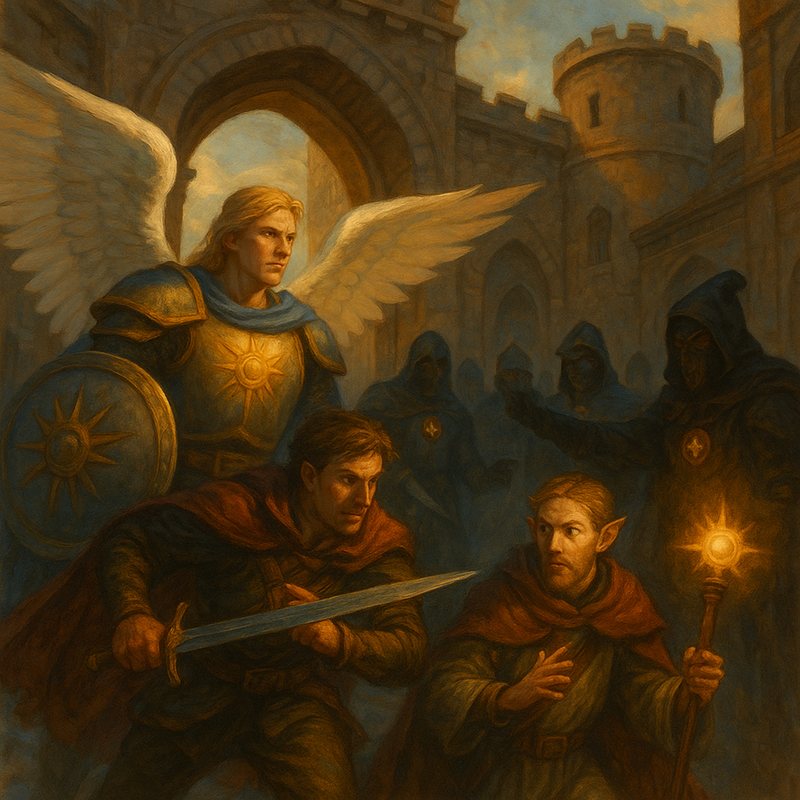
Their urgent mission? Finding that dress, finding answers, it's all stall. Frustrated to their core by this infuriating stonewalling, Soren makes a bold, almost desperate move, seeking to cut through the bureaucratic nonsense with an undeniable display of power. What does he do? He evokes his Celestial Revelation ability, manifesting his angelic wings glowing with divine light and what our sources describe as a display of dominance.
Wow, OK, flashing the Angel wings, that should get their attention. It certainly does, but this is the climactic moment, a dramatic and terrifying reversal of Surin's intended intimidation. The guards are, as expected, taken aback by the paladin sudden, radiant spectacle. But the secretary's reaction? It's entirely different and utterly devastating. What does he do?
He doesn't cower. Instead, he screams in a high pitch, his voice shrill with venom. They're heretics. Arrest them. Heretics for showing Angel wings.
Apparently so. The soldiers immediately move, weapons drawn, and the sources emphasize that the Warden's amulets glimmer with those infernal sigils of Asmodeus responding directly to the secretary's accusation, and the session ends right there. No surrounded. Surrounded, caught in the trap of their own making. Just chilling. Soren's very essence, his divine power meant to inspire awe or fear, is instead immediately perceived as heresy by this new devil aligned regime.
It's a profound and catastrophic misjudgement of the new political landscape of Valaki and the deep, pervasive corruption that has taken hold. His inherent nature, a source of hope elsewhere, is suddenly his greatest liability. If we connect this to the bigger picture, it underscores the deep, fundamental conflict raging within Borovia, the hidden yet now overt war between divine and infernal powers. Soren's very essence, a beacon of hope and a source of righteous power in any other realm, becomes a direct target in this twisted reality. That's terrifying.
The true insight here is the dangerous nature of light in darkness. When divinity itself is branded heresy, it forces us to confront a terrifying truth about Borovia. That it's corruption is so absolute, its moral compass so inverted, that even the purest acts can lead to condemnation. Which leads to that question, right? What truly constitutes heresy in a land where supposed Angel creates corpse, brides and devils walk the streets openly dictating what is permissible?
Exactly. It's a world turned utterly on its head, leaving our heroes in an impossible bind. So where does that leave our adventurers? From a restless Abbey filled with literal stitched together horrors, to a fleeting, precious moment of peace at the Shrine of the White Sun, to being branded as heretics in what was once their tenuous refuge. The Angel's power, Soren's inherent divinity, has suddenly turned into a noose, ensnaring him and his companions in the grip of a truly infernal bureaucracy. Indeed.
And the Abbot? He still waits for a wedding dress. That MC Cobb task they've agreed to, yet they are now cornered and outlawed in the very city where they might have hoped to procure it. In stride. He waits, always pulling the strings from the shadows, watching as these impossible choices force mortals to confront the unthinkable and the unbearable, twisting their very essence against them.
In Borovia, we've seen how even the most well-intentioned actions, even the purest divine manifestations, it can be fundamentally reinterpreted, weaponized, and ultimately condemn you. The very idea of an Angel being labeled A heretic, It forces us to consider what truly happens when your inherent nature, your very being, becomes a weapon against you. In a world where evil reigns supreme, it's. A heavy question. What stands out to you about this deep dive?
How do you navigate a world where divinity is heresy and the search for light only draws the attention of deeper shadows? It leaves us with a lot to think about, doesn't it?