Read the full transcript (5,725 words, machine made)
Welcome, curious minds to the Deep Dive. Great to be here. Today, we're plunging into a topic that, well, it sparks intense debate, floods our news feeds, and for many, it creates this sort of pervasive sense of unease. Gun violence and firearm statistics here in America, You're the numbers constantly, right, Often aggregated into this single, alarming figure that paints a picture of constant danger. Yeah. It's everywhere.
It's a narrative that can really make you wonder if you're ever truly safe. Or maybe, just maybe, if you're not getting the full nuanced picture. And what we often encounter is exactly that, a single, often very emotionally charged statistic. Numerically it might be correct, but the way it's resented, the material we're looking at suggests, can be profoundly misleading. So our mission in this deep dive is to really unpack the actual data behind those widely cited gun deaths. Yeah, and explore the underlying narratives that shape how we all perceive this issue.
We'll challenge some common assumptions, dig into the material you've shared with us, and hopefully deliver a clearer, more segmented understanding of the facts. Absolutely. Think of this as your shortcut maybe to being truly well informed on a topic that's often obscured by rhetoric and, you know, a singular focus. We're going to try and cut through that noise. Meticulously examine specific categories of firearm incidents and even get into the crucial constitutional and cultural context of gun ownership in the US.
Yeah, expect some genuinely surprising facts, I think. And hopefully some real aha moments that might just reshape how you approach this vital conversation. Let's get into it. All right, let's unpack this. When the media and political discourse focus on gun deaths, there's that widely sighted figure that gets thrown around all the time, right? For example, according to the CDC Centers for Disease Control and Prevention, there were approximately 48,830 firearm deaths in the United States back in 2021. Yep.
That's the number you often hear. And that number, just on its own, it's undeniably high. It immediately conjures these powerful images of, well, rampant, indiscriminate violence. It's a statistic that, in isolation, can feel overwhelming. Deeply unsettling, really.
And this is exactly where the deeper analysis of the data becomes incredibly insightful. What's fascinating, according to the material we've examined, is how that single aggregated number numerically accurate, Yes, is presenting in a way that's argued to be fundamentally misleading. How so? Well, it's systematically lumps together really disparate categories. The firearm incidents, You've got suicides, criminal homicides, tragic accidental shootings, even those rare defensive uses that end in a fatality, all thrown into one giant, undifferentiated bucket. OK, And this simplification, the analysis suggests it doesn't just make the narrative easier to digest. It actively shapes and maybe even manipulates public opinion by creating the singular, terrifying image of gun violence.
So it obscures the very different realities beneath the surface. Exactly, It's like taking every way people die of car crashes, illnesses, natural disasters and just calling them all death events, you know, without any context. So when we hear 48, 8830 gun deaths, our minds often jump straight to a specific kind of tragedy. Maybe a random act of violence, a mass shooting, a street crime. That's the common perception.
But what you're highlighting based on the source, is that by not differentiating these categories, we're kind of prevented from understanding the distinct problems and more importantly, the distinct solutions needed for each one. Precisely. It's like a doctor diagnosing a patient with just general illness. Is it a cold? A broken leg, Heart attack.
You can't treat it effectively without breaking it down. Right, that diagnostic breakdown is missing. Exactly. That lack of differentiation is absolutely crucial for any meaningful policy discussion. If you don't break down the data, you can't have a targeted, effective conversation about causes and remedies.
Yeah. I mean, think about the different approaches needed for suicide versus gang homicides, right? Totally different worlds. Conflating them under that single gun death umbrella, it just distorts the whole picture. It often leads to these generalized policy ideas that might completely miss the biggest part of the problem. It's using a broad brush where you really need like surgical precision.
OK, here's where it gets really interesting. And this is often a huge surprise for people when you actually break down that big number. The dominant statistic, which you called the silent majority, is suicide. That's right. The analysis from our sources, it reveals over 55% of all firearm deaths in the US are in fact suicides.
Over 55%. To put a number on it for 2021, that's over 26,000 people. That immediately shifts the narrative pretty dramatically. Doesn't. It it absolutely reframes the conversation.
What this data powerfully shows is that over half of these fatalities point not just to a gun crisis, but maybe more fundamentally, to a profound mental health crisis, one that's often overlooked in the bigger discussion. So the gun is the method, but not necessarily the root cause in those cases. Well, the availability of a firearm can tragically impact the method chosen, yes. But the underlying suicidal ideation, the despair, the hopelessness, that's the core issue driving these tragic outcomes. And it's crucial to remember, even countries with super strict gun bans like Japan or South Korea, they can still grapple with really high suicide rates.
That's a really important point. It suggests the problem goes beyond just firearm availability. It's about, you know, underlying despair, mental illness, and often a severe lack of accessible support systems. Effective intervention strategies are key. That's such a critical distinction because the public's typical perception of gun deaths, it's often dominated by those visceral images, right? Random violent acts, school shootings, St. crime, those are undeniably devastating.
They demand attention, of course. But the reality, as the data shows, is that suicide, this deeply personal, often hidden struggle, accounts for the single largest chunk of that overall gun death figure. And that fact alone just urges us to look beyond the weapon itself, doesn't it? To delve much deeper into the human condition, the societal supports, or maybe the lack thereof, that contribute to such despair. Precisely when the public hears gun deaths, their mental image almost certainly isn't someone in deep distress alone, taking their own life and this huge gap between perception and statistical reality. That itself is a powerful force shaping public discourse, influencing policy debates.
So if the conversation was framed more honestly around suicide rates. Then the solutions would naturally shift, wouldn't they? More focus on mental health resources, support networks, early intervention, destigmatizing, getting help, not just focusing on broad gun control is the only answer. It really calls for a multifaceted public health approach. OK, So what about the rest of that figure, then?
If suicides are over 55%, there's still a big chunk Last night, the next largest group, according to our sources, accounts for about 40% of all firearm deaths, homicides. And this is the category where a lot of people's immediate fears about gun violence probably live. And this is another area where again, context is just paramount. The analysis details that the primary drivers of these homicides, they are almost universally linked to very specific circumstances like what predominantly involving individuals already engaged in criminal activity, gang related violence or tragically deep personal domestic disputes. OK, so that's a crucial distinction that often gets glossed over.
Absolutely. These are, by and large, not random acts against strangers committed by otherwise lawful law abiding citizens. That's not to diminish the tragedy, of course not. But it's about understanding the nature of these events and the specific environments where they happen. So the picture that emerges is less about some random omnipresent threat lurking everywhere, yeah, and more about targeted, often pre-existing conflicts or high risk situations like rival gangs, people involved in crime, or really intense, tragic domestic situations. That's what the data points to.
These circumstances really dictate the nature of the violence. And that different differentiation is vital, then, for understanding the root causes. It suggests that maybe broad, sweeping gun laws might miss the mark if they don't specifically address those drivers. The socioeconomic issues, the criminal networks, the interpersonal conflicts. That's the crux of the argument presented in the material.
When you grasp that nearly all firearm homicides are criminal, on criminal, gang related, or domestic, that sweeping blanket gun violence label, it becomes way less helpful, actually misleading. The material argues these incidents are fundamentally different in nature and cause from what that general label implies. For instance, if most homicides are coming from gang activity in specific areas. In the solutions look different. Exactly. Effective solutions would involve things like robust unity policing, creating real economic opportunities, dismantling criminal networks, targeted interventions in those high risk zones.
Rather than just restricting gun access for everybody. Right. It calls for, you know, surgical precision and policy, not these broad strokes that often fail to hit the core problem. What about those tragic accidents we hear about? We often see news stories about accidental shootings, especially involving children.
And they are. I mean, they're just heartbreaking. Unquestionably heartbreaking. They leave such a deep impression depression and understandably add to the overall anxiety around guns. They do. Those incidents are incredibly tragic, and they grab our attention and sympathy, as they should. But when we look at the actual data provided in the sources, accidental shootings make up a statistically tiny portion of overall firearm deaths.
How tiny? In 2021, the numbers show just 549 such incidents. 549 That number feels stark in isolation, but I guess it becomes even more striking when you put it in the context of how many guns there are in the US. Absolutely. And the material we're looking at highlights exactly that. Compare 549 incidents to the immense number of privately owned firearms, estimated over 450 million. Wow, over 450 million guns.
Yeah, so when you have nearly half a billion firearms out there, but only 549 accidental deaths in a whole year, the risk for most individuals is actually vanishingly small. That doesn't mean we shouldn't aim for zero accidents, obviously. Not at all. We should always strive for zero through rigorous gun safety education, responsible training, secure storage. All of that is vital, but it strongly challenges the idea that firearms themselves are inherently causing widespread accidental deaths all the time. The data just doesn't back up that level of constant pervasive accidental risk.
OK, this raises another really important question, one that often feels overlooked in the broader conversation. What's that? What about guns used for self-defense? We hear so much about firearms as instruments of violence, but far less about their role potentially in protection and preventing harm. That's a profoundly important point, and it's a critical piece of the puzzle that, according to the sources, is frequently just omitted from the public discourse.
So defensive gun uses or DG us. Right. Those DG us that unfortunately result in an attacker's death, They barely register in the overall homicide stats, mainly because if they're justifiable, they get categorized differently. But the sources point to extensive work by criminologist Gary Kleck. His research indicates that defensive gun uses might number in the 100 of thousands, maybe even 1,000,000 per year.
Millions. That figure, even at the low end, is massive compared to criminal homicides or accidents. It's. Huge We're talking about situations where a firearm is used, often legally and justifiably, to prevent a crime or stop an attacker, potentially saving lives. And these instances, Kleck argues, are happening way more often than criminal acts or accidents involving guns. That's a really powerful counter narrative. It is, and here's a crucial insight from Kleck's research, as cited in our material.
Most DGU's they end without a shot even being fired. Really, just showing the gun is enough. Often, yes, the mere presence of the firearm or just the verbal threat of using it is frequently enough to deter the criminal and stop the crime from escalating. This is a vital, yet very often overlooked aspect of firearm use. And it challenges that singular narrative of guns purely as tools of violence. Profoundly, the analysis argues, this category is consistently omitted or downplayed in public discussions, contributing directly to what it calls a manufactured narrative of fear. How so?
Well, if the public only ever hears about the violence caused by guns, and never hears about the successful prevention of violence or defense of self and on others using guns, it creates A deeply skewed perception of firearms and their role in society. So when we simplify this sometimes to the idea of guns is just tools, it feels almost too simple for something with such huge implications. How does that perspective as the source presents it really tie into this? It might sound simplistic, yeah, but it's a core argument the sources make. They draw on an analogy from commentator Colean Noir.
Noir basically says, look, every society uses its tools. And in the US, where guns are widespread, doubling green culturally, they're naturally going to be present in both crimes and defenses. Like a car, a tool for transport, but can be a weapon for a drunk driver. Exactly. Or a knife, a kitchen tool, but potentially an instrument of violence.
The tool itself is inert. Its use, its ethical weight, is determined by the intent and actions of the person holding it. So the core argument here from the source material is that conflating, say, a homeowner using a gun to defend their family from an intruder. Which is a morally and legally justifiable act often. Right. Conflating that with a purely criminal act, like a gang member shot in a turf war, that's an intentional move in public discourse.
Yes, the analysis we've reviewed argues that this conflation is intentional. It serves to simplify the narrative, making it easier to manipulate public opinion by presenting all gun deaths as if they're equivalent and tragedies caused solely by the guns themselves. But there's a clear moral and legal difference. Undeniably, one is an act of defense, often legally protected, socially sanctioned even. The other is a criminal act with totally different motivations and consequences. Lumping them together under 1 gun death statistic, it just blurs those critical lines, fuels this undifferentiated fear, and ultimately hinders an honest look at the different types of firearm incidents and their very distinct causes. It's about crafting an impression, the source argues, not illuminating the complex truth. OK, let's shift slightly and talk about something that creates just a profound amount of anxiety for so many of us, especially parents.
The haunting idea of a school shooter. It's a terrifying image. It can lead to immense fear, this feeling of constant vulnerability in places that should be the absolute safest. And that's precisely what the analysis addresses head on. It presents a really striking, almost counterintuitive statistic, which is the likelihood of any specific child's school being attacked in any given year is less than one in 2 million.
Less than one in 2 million. Extremely low statistical probability. Yet, as you rightly point out, the public perception is often one of an omnipresent, immediate, pervasive threat. So how does that happen? The material attributes this huge gap between the tiny statistical reality and the widespread fear to something it calls fear amplification. Right.
And if the actual statistical likelihood is so incredibly low, how is this feeling of threat amplified so much? What are the mechanisms creating this disconnect? Yeah. What does the analysis say drives that amplification? It details several methods.
It points to the widespread use of school shooting drills which have become, you know, a regular part of a kids school experience now. Right active shooter drill. Yeah, yeah. It also highlights relentless media saturation. Every incident, no matter how isolated, often gets extensive, repetitive coverage, creating the sense of it happening all the time, everywhere.
And finally, it identifies what it calls political grandstanding, where the issue is used for rhetorical leverage. The source claims these aren't just isolated things. These methods actively amplify fear beyond all proportion and using very strong language, weaponize it. Weaponize fear. Yeah, the intention, it argues, goes beyond just being prepared. These drills in particular are described as not just preparing kids for a rare event, but actively indoctrinating. Them indoctrinating?
Wow, that's a really strong word. Exactly. Does the analysis mean by that? What are the implications? It means embedding in children this deep, almost subconscious belief that danger is constant, that they're perpetually at risk, regardless of the actual statistics saying otherwise. I mean, imagine the repeated physical and emotional stress of preparing for this terrifying the rare scenario year after year from a young age.
Yeah, it would have an impact. Even if intellectually a kid knows it's unlikely, that repetitive stress, that focus, it can imprint this sense of imminent vulnerability ability. It fosters anxiety and shapes their view of the world in a way that's maybe disproportionate to the actual threat. And this, the analysis argues, then serves to maintain and heighten public fear, creating fertile ground for certain policy narratives. Exactly.
It moves beyond just preparation into, well, psychological conditioning, according to this view. So connecting this to the bigger picture, the material uses that very strong phrase, the manufactured crisis. That's a bold claim suggesting A deliberate construction of how we see things. It is a bold claim, yeah, and the material backs it up by circling back to the sheer number of privately owned firearms in the US That staggering figure? Over 450 million, the analysis argues. Look, if the mere presence of guns automatically cause rampant violence, America would essentially be a war zone, a perpetually chaotic battleground. But it's not.
But it's not. The reality is the vast majority of these firearms are owned by lawful citizens. They're never involved in crime, accidents or suicides. They're stored securely or used for legitimate, lawful reasons. So the conclusion, according to this analysis, is that the epidemic of gun violence isn't some organic truth just bubbling up from the numbers, right? But it's more of a rhetorical creation, inflated by lumping statistics together like we talked about, and significantly, by fear mongering that taps into our deep anxieties. Exactly when you analytically pull out suicides, accidents, and criminal on criminal violence from that overall gun death data, what's left, the analysis argues, is a society where lawful citizens overwhelmingly use firearms responsibly, safely, and often for defense. Leads to a key discussion point from the material. Yeah, that policy debates, if they're going to be effective, truly serve the public, they need to be grounded in honesty. They need to focus on the root causes of violence. Like mental illness, gang culture, specific criminal behaviors driven by other social and economic factors. Precisely.
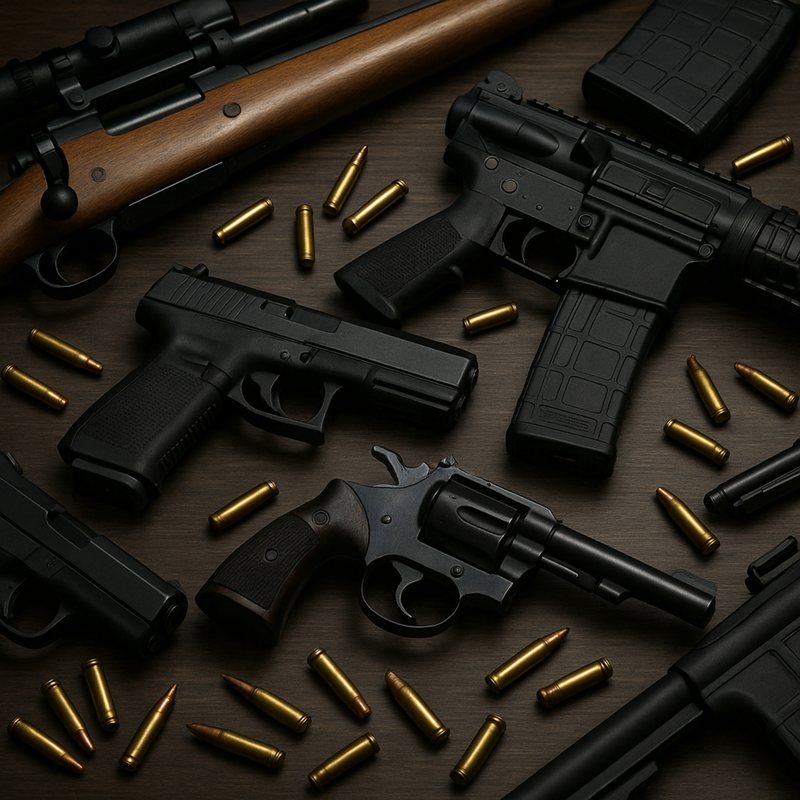
Rather than just advocating for these blanket restrictions that hit the vast majority of responsible gun owners, the manufactured crisis narrative in this view basically serves to divert attention from genuine targeted solutions by creating this simplified, alarmist picture of the problem. OK, let's shift gears a bit now and consider the just staggering number of firearms in private hands across America. It's a statistic that, on its own, can be pretty overwhelming to even comprehend. It truly is. The United States is home to an estimated 450 to 500 million privately owned firearms. Half a billion potentially.
Potentially that's more guns than people in the country. It's a scale of ownership just unmatched anywhere else in the world by a huge margin, right. And what's really remarkable, as the analysis highlights, is despite this absolutely vast arsenal, this huge number of weapons in civilian hands, only a tiny miniscule fraction are ever. Involved in crimes, homicides or even accidents. The overwhelming majority, they say, securely stored, used for sport collecting. Lawful self-defense completely outside any criminal context. It really defies a simple, direct link between just the number of guns and the level of violence. So why is this number so incredibly high then? Is it because of widespread criminality? A nation of people just waiting to cause harm? Or is it something else we might not immediately think of? Well, the material we're looking at argues pretty strongly it's not due to rampant criminality or intent to misuse them. Instead, it offers this analogy that kind of brings it into focus.
OK, think of firearms ownership in America as often being like owning A diverse set of golf clubs, or maybe a comprehensive box of specialized tools for different jobs. Right, you don't just have one hammer if you're a Carpenter. Exactly. Each firearm for many owners serves a unique, distinct role. For instance, you might have a compact handgun specifically for concealed carry for personal protection outside the home. Then maybe a different shotgun kept purely for home defense, A specialized hunting rifle for deer season. Maybe a precision rifle for a competitive long range shooting? And collectors too, right?
Absolutely. And then you have dedicated collectors who might own dozens, maybe hundreds of firearms simply for their historical value, their craftsmanship, maybe as an investment with 0 intention of ever using them violently. So it's this multiplicity of legitimate purpose that really inflates the count, not a proliferation of criminals. That's the argument. It's like looking at that master Carpenter with a garage full of different saws and drills and concluding they must be constantly building or destroying things When?
Really, they just have the right tool for each specific job, and some tools might hardly ever get used. Precisely. The analysis emphasizes that this diverse set of legitimate uses and deep cultural interests is what primarily drives the high number. It fundamentally challenges the assumption that a high count automatically means higher criminal activity. It reframes this vast arsenal from being inherently dangerous to being an indicator of a deep cultural practice, a constitutional right, and a bunch of lawful, often specialized activities. Correlation isn't causation, basically. OK, here's where it gets really fascinating when we look at the legal landscape around firearms, because it often runs directly counter to the narrative we usually hear about America supposedly tightening gun control. That's a profoundly significant point, and it reflects A dramatic, often underreported legal and cultural shift that's been happening.
Also. The material details this huge transformation since the 1980s. Back then, only a handful of states allowed ordinary law abiding citizens to carry concealed handguns easily without major hurdles. OK. So it was pretty restrictive generally. Yeah, Fast forward to today, that picture is fundamentally different.
As of now, at least 27 states, well over half the country, have enacted constitutional carry or permit list carry laws, meaning eligible citizens can carry concealed firearms without needing a government issued permit. It reflects this profound shift towards greater firearm freedoms for individuals in many parts of the country. So despite all the public debate, the impassioned calls for stricter laws, the headlines, the legal reality in many states has actually moved decisively in the opposite direction. That's what the trend shows. That really does run counter to the narrative of America just constantly tightening gun control.
It absolutely does. The legal environment has steadily significantly loosened over the past four decades, and this trend has been powerfully reinforced by landmark Supreme Court decisions. The courts. Yeah, these rulings, which we should get into, have profoundly reshaped how the 2nd Amendment is interpreted. They've affirmed it as an individual right, not just tied to state militias. And that judicial backing has been critical for allowing these state level legislative shifts.
So what does this all mean for that foundational legal right to bear arms? Sounds like the Supreme Court has played a really pivotal role here. Monumental really, Unequivocally fortifying the Second Amendment, specifically landmark decisions like District of Columbia V Heller in 2008, Right? I don't. Remember that one? And more recently, New York State Rifle and Pistol Association V Bruin in 2022.
These have profoundly impacted the interpretation, the material says. These rulings have fortified the Second Amendment against legislative encroachment, basically making it much harder for legislators to pass broad gun control measures that infringe on this individual right. So Heller established the individual right for self-defense in the home. Exactly. That was groundbreaking, and Bruin then extended that protection, saying the right to carry a handgun for self-defense applies outside the home, too.
That struck down those may issue concealed carry laws where officials had broad discretion to just say no. So these cases represent a fundamental shift in the legal understanding A. Huge shift in legal precedent, yeah. OK, what about efforts to ban certain types of firearms, particularly what are often called assault weapons? Those are frequently right at the center of debates, especially after a high profile incidents. Right.
That's often seen as a key battleground. Yeah. The analysis addresses this directly, giving crucial historical and legal context. It notes the federal assault weapons ban enacted back in 94. It actually expired in 2004. And it's never been brought back federally. Never successfully reinstated at the federal level despite ongoing attempts consistent public calls from some quarters, the material asserts.
The political winds have just constantly shifted, making sweeping federal restrictions like that highly unlikely right now. And the courts? Furthermore, the courts are described as increasingly sympathetic to an expansive interpretation of the Second Amendment. They've actively dismantled many existing limits and signaled deep skepticism toward future bans on certain types of firearms. So a strong judicial stance plus the political landscape creates a different reality than maybe the headlines suggest.
That's the argument. It suggests a significant legal barrier to broad federal bans, very different from what many might assume. OK. Let's really unpack this core idea, the one underpinning so much of this the actual purpose of the Second Amendment. Most people when they think right to bear arms, they probably think hunting, target practice, maybe home defense.
Right, those are the common associations today. But the analysis we've reviewed suggests the framers had something much more profound, maybe even revolutionary, in mind. That's absolutely right, the analysis argues. Look closely at the actual text. A well regulated Militia, being necessary to the security of a Free State, the right of the people to keep and bear arms, shall not be infringed. It conspicuously doesn't mention hunting or target practice, or even direct home defense.
While those uses are culturally big now, the material contends, they are, as the source puts it, incidental to its core purpose. Which was the primary emphasis, the analysis contends, was ensuring the citizenry could, if necessary, resist potential tyranny. So it's fundamentally about a check on government power that connects directly to the historical context, the founding of the nation. Like the historical context isn't just important, it's crucial. They had just fought A brutal war against a powerful centralized government that had disarmed people. They knew first hand the dangers of an oppressive regime. They understood deeply A disarmed populace is a vulnerable 1, susceptible to government overreach. Their core belief, according to this analysis, was that an armed populist serves as a vital check against unchecked power. A principle the material claims has been downplayed or obscured in today's debates.
Significantly downplayed, even intentionally obscured, is the argument this wasn't about sport or recreation for them. It was about a final, ultimate line of defense for a Free State, ensuring the government ultimately stays accountable to the people. But critics often argue that whole militia reference makes it obsolete. Now we have professional standing armies. Why would individual citizens need to be armed like the Founders envisioned, seemingly for military purposes?
That's a very common argument, yeah, and the analysis acknowledges it directly. However, it reiterates that the courts, especially the Supreme Court in Heller and Bruin, have consistently affirmed the right belongs to individuals, not just some state organized militia. And while the analysis notes, look, nobody realistically expects civilians to square off against a modern military, it asserts the principle remains profoundly relevant. The principle of an armed populace as a check on potential government overreach, even if the nature of that check has evolved from muskets to modern arms, is still foundational to the Second Amendment's purpose. It's about ensuring ultimate power.
Ultimate recourse remains with the people, not just the state. This brings up that important question about modern weapons though. Opponents often argue the founders couldn't possibly if foreseen today's semi automatics making the Second Amendment irrelevant to them or needing strict reinterpretation. You hear that a lot. You do, and the analysis presents a really compelling counter argument. It suggests that line of reasoning of fundamentally misunderstands the very nature of rights themselves. It uses a powerful, relatable analogy, the First Amendment freedom of speech and press.
It was explicitly written in the age of quill pens, parchment, slow printing presses. Yet nobody seriously argues today that the First Amendment doesn't protect speech on the Internet or TV broadcasts or podcasts or new digital communication. The right itself goes beyond the specific technology of its origin. So the right adapts to technology because it's rooted in a timeless principle, not the specific hardware of the time it was written. It's about the spirit of the right, not just the physical means.
Exactly the principle of free expression applies regardless of the medium. Similarly, the principle of the right to bear arms as a safeguard for liberty, individual self-defense should logically adapt to the contemporary tools embodying that principle. Argue otherwise would kind of freeze rights in time, make them obsolete? That's the contention. It would render them meaningless as technology progresses.
It's about the spirit of the right ensuring it stays relevant, not narrowly confining it only to the weapons available back then. What's truly fascinating here, and maybe a bit ironic, is how arbitrary some legal definitions can actually be, especially when they clash with common understanding or even the history we've just discussed. This is a really intriguing detail from the material. It underscores that arbitrariness. It highlights that the very weapons the founders did know, like muzzle loaded black powder rifles, historical firearms like that they aren't even considered firearms under the main current federal definitions used by the BTFE, Bureau of Alcohol, Tobacco, Firearms and Explosives, or the National Firearms Act. Wait, seriously?
A flintlock musket, the kind of gun used in the revolution, isn't regulated like a modern firearm today? That's wild. That's precisely correct. A flintlock musket. Many antique black powder guns.
You can order them online, have them shipped right to your home. No background check, no federal regulation like modern guns. But it's still a deadly weapon, theoretically. Absolutely capable of causing harm, but legally it's treated more like a historical artifact or collectible than a regulated gun, the analysis concludes. This anonymous vividly shows how legal definitions can be arbitrary and rooted in regulatory convenience rather than actual danger.
So the classification isn't always about how dangerous it is. Not necessarily. It's about how it's classified for regulation, which can create these distinctions that don't always line up with common sense or history or even the intent of the Second Amendment. It definitely complicates public understanding. OK, so if you're digging into all this, the numbers, the narratives, the history, the really intricate legal framework, yeah. What does this all mean for you, the listener, and how you understand the American gun debate? It's clearly not as simple or one-dimensional as the headlines often make it seem.
That's really the core take away from all the material we've gone through. The debate is so often framed as the stark choice, right safety versus freedom, irreconcilable. But the reality, as we've explored, is just far more complex, much more nuanced. We've seen nearly half a billion guns coexist with what the analysis describes as a relatively low rate of misuse relative to their sheer numbers. That directly challenges the simple idea that more guns automatically means more violence everywhere.
It forces you to rethink that causal link. And it's strongly emphasizes those concluding points from the sources that the vast majority of firearm owners are responsible, law abiding citizens. And maybe surprisingly, the laws in many states have actually become more permissive, not more restrictive. And crucially, the Constitution continues to anchor this right to bear arms as a fundamental, fiercely defended hedge against potential tyranny. Right.
The technologies changed, yes, but the legal and cultural landscape around this deep rooted right has also shifted significantly. So the analysis ultimately concludes by reinforcing that firearms themselves aren't the sole problem. They're instruments, tools within a really complex societal context. Exactly. The fundamental issues if we're serious about tackling violence effectively, compassionately, they lie in addressing the huge challenges of mental illness, dismantling pervasive gang culture, confronting those underlying social conditions, poverty, lack of opportunity, systemic issues that tragically breed violence.
Until we tackle those deeper, harder root causes. The numbers reflect violence will likely persist regardless of how we try to spin them with aggregated stats or fear driven narratives. Which brings us to a final provocative thought, one that really lingers after sifting through all this data and context. The right to bear arms remains what it always was, a safeguard, not merely a hobby. When you truly consider that perspective, that this right is viewed by its proponents, enshrined in law is a vital check on power, a final defense of liberty and how that shapes the whole conversation.
It really prompts you to Mull over the huge implications of context, statistical breakdown, and historical intent in public discourse. What stands out most to you when you consider all these different layers? It's certainly a lot to think about, and it definitely reframes how we might approach future discussions on this critical, very human topic.