Read the full transcript (3,819 words, machine made)
You know how sometimes you think you really get someone or or an idea, but then you dig a bit deeper and find something else entirely underneath? Maybe something a bit unsettling? Yeah, that happens a lot, doesn't it? It's like we get these polished versions of people or history. Exactly.
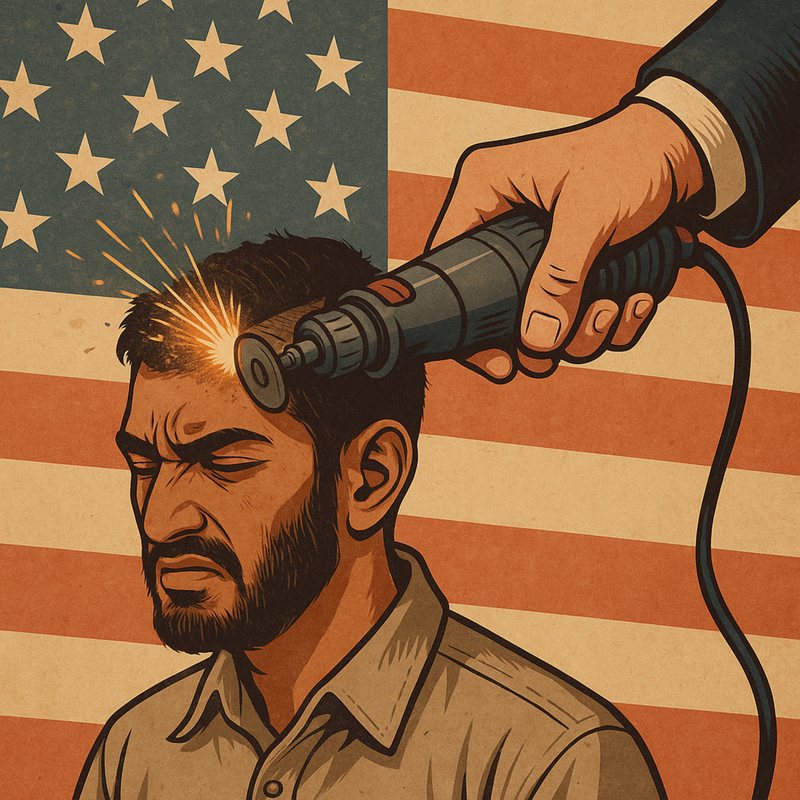
Historical figures, cultural movements, even spiritual icons, they're presented in a certain way and well, we tend to just accept it, right? But what if that image, the one we all know, is actually constructed carefully put together, maybe even deliberately shaped to, I don't know, take away its original punch? That's it's right at the heart of what we're digging into today. We're looking at how these big societal power structures, what academics call hegemony, use this really subtle strategy. It's a way to neutralize figures and ideas that were once, well, dangerous.
Revolutionary. We're calling this process deburring. Deburring. OK. Like taking burrs off metal, smoothing it down. Precisely, in manufacturing you remove the sharp bits, the rough spots make it smooth, safe Here deburring is about sanding down the sharp edges of a radical person or a challenging idea. Polishing it up, maybe rebranding. It exactly rebranding it so it's safe for everyone, safe for mass consumption.
So you take someone who genuinely scared the establishment, who wanted to flip things upside down, right? And you turn them into something, well, harmless, maybe even respected, but without that original fire, the. Power's gone. It's a kind of control through transformation, OK. So our mission today for you listening is really to get a handle on this process, right?
Yeah, exactly. This isn't just history lessons. It's about giving you a lens, a way to see how our understanding of, well, everything, culture, politics, even spirituality, gets shaped subtly but constantly. It's happening all around us and we've been looking at some really fascinating sources for this analysis critiques. Yeah, things that explore how these revolutionary leaders somehow end up as like. Mascots.
Or how really sharp ideas get Sort of watered down until they're safe for everyone. We. Want to unpack how it happens, what it looks like and you know what it really means for us trying to understand the world? OK, so let's really get into this deburring radicals idea. What the sources keep pointing out is that hegemony, this sort of network of power and shared beliefs.
It doesn't just, you know, crush its enemies head on all the time. And sometimes it does, obviously. Right, but often the more effective way, maybe the sneakier way, is transformation. That's the key thing. It's not always suppression, which can backfire, create martyrs, you know?
Instead, it's often about taking that leader or that idea that really poses a threat, something that disrupts things. Something scary to the status quo. Exactly. And then suddenly, sometimes not so subtly, turning it into something harmless, maybe even celebrating it like you said, making it a national symbol. But the sting is gone. The sting is gone.
The original dangerous change making power is stripped away. It's neutralized by being well domesticated, tamed. And the ways they do this, they're everywhere, aren't they? It's kind of clever in a disturbing way. It really is like turning a real firebrand, someone who scared people into just a character in a kids book.
Or a national holiday. That sounds great, right? But it often means simplifying everything they stood for. Yeah, or boiling down a whole complex philosophy into just a slogan. Or a T-shirt.
That's the classic. All right, the dangerous part, the critique of power, the thing that made them matter. It just gets smoothed out, sanded down until anyone can handle it. And the result isn't that the idea vanishes. Sometimes it becomes even more famous. But it's neutralized.
It is. It loses its power to actually inspire fundamental change or to be a real threat. It's still there, but it's defamed. It's like a museum piece. Polished up, but the original uncomfortable bits are gone. Exactly.
So why is this way of doing things, this sort of gentle control? Why is it so effective compared to just, you know, cracking down? Well, I think part of it is it looks benign. It can even look like honoring someone. Right. It's hard to argue against a holiday or a statue. Exactly.
It sort of absorbs the critique. How can you criticize the sanitized version without looking, I don't know, negative or unpatriotic? That makes sense, and the sources suggest why the system might prefer this, not just crushing things. Yeah, a couple of reasons seem to come up. 1 Is that the original idea?
Or the person might just be too powerful to resonate with people to actually erase? Trying to crush it might just make it stronger, OK. And 2nd, if you can't erase it, maybe you can coopt it. You can kind of absorb it and use it. Use it for profit or just to make the system seem OK. Both potentially put it in merchandise or use the sanitized version to say, see, we value these things too. It sort of uses the opponent's own energy against. Them like ideological judo or something? Yeah, something like that turns a bomb into an ornament. OK, let's make this concrete case study #1 Martin Luther King Junior.
I think for most people, probably myself included, the first image that pops up is the I have a Dream King. The famous speech. Yeah, the profit of color blindness. Kids holding hands. Unity. He's on the holiday, taught in schools. He's a symbol of American progress, right? And that image while true in its own way and important. It is important.
It is, but the sources really hammer this point. It's radically incomplete. It's a curated version. It leaves out the much more challenging King who emerged later, sort of mid to late 60's. The Dream.
Speech was 63. So what happened after that? What's the part that gets left out? Well, this is the erased MLK, the one who was genuinely seen as dangerous. After the big legislative victories like the Civil Rights Act, Boarding Rights Act, his focus really broadened. Civil rights to.
To human rights and crucially, economic justice. He starts seeing capitalism itself is deeply tied to racism, poverty, war. Wow, OK. He became a really fierce critic. He wasn't just asking for a seat at the table anymore.
He was questioning the whole structure of the House. He started talking about a radical redistribution of economic and political power. That's yeah, that's definitely not the version you usually hear about. Not at all. And then there was his stance on the Vietnam War. Right, he spoke out very strongly. Uncompromisingly, that famous speech at Riverside Church in 67?
He didn't pull any punches. He called the United States the greatest purveyor of violence in the world today. That must have caused a massive backlash. Huge, even from within the civil rights movement. He was stepping way outside the accepted boundaries, directly challenging US foreign policy, linking it to poverty at home.
This wasn't just about harmony anymore. This is about confronting power. And he wasn't just talking, he started organizing the Poor People's Campaign. Yes, this was huge. A multiracial army, he called it, of the poor, black, white, Latino, Native American to March on Washington. What were they demanding?
Not just rights, but concrete economic change. Guaranteed jobs, a living wage, decent housing. It was an economic Bill of Rights, essentially a direct challenge to the system, uniting poor people across racial lines. So this king, anti capitalist, anti war, organizing the poor. This king terrified the establishment, the FBI, the White House, the documents show it.
They saw him as a genuine revolutionary threat. And he was spied on, slandered. Constantly intense surveillance, smear campaigns. And then, of course, he was assassinated in 68, right before the Big March. So how did that king get turned into the safe holiday version we mostly remember well? That's the deburring, isn't it?
The holiday, the school lessons, the public monuments They focus almost exclusively on the dream speech, the message of racial harmony. Which is important, but. But it carefully avoids the later, more radical king. The king who challenged economic structures, who condemned militarism. That part gets scrubbed out.
He's framed as someone who helped America fulfill its existing ideals, not someone who fundamentally challenged them. So he becomes safe, inspirational, patriotic even. Exactly made palatable and the implication for us listening is what do we lose when we only get this sanitized version? We lose the sense of what real change looks like, how hard it is. I think so.
It makes us forget that progress often comes from people who made the powerful deeply uncomfortable. It teaches A subtle lesson that change should be nice, incremental, not disruptive. And that's a distortion, really. OK, so Malcolm X presents a different angle on this right? Because he wasn't sanitized after death in the same way King was. He was actively demonized while he was alive. That's right.
It's a fascinating contrast. While he was alive, the mainstream narrative absolutely painted him as the dangerous 1. The Militant, the. Counterpoint to King's non violence. Exactly.
Headlines screamed about hate, separatism, he was seen as violent, anti white, just completely outside the bounds of acceptable discourse, especially early on with the Nation of Islam. And his rhetoric was powerful by any means necessary, That phrase alone. It terrified white America, even while it resonated with black frustration. He wasn't asking for acceptance. He was demanding self respect, self-defense, challenging the very foundation of American Society.
Unapologetic. But then after he was killed in 65, something started to shift in how he was remembered. Yeah, subtle softening began, a kind of post mortem deburring. The sharpest edges, the strong black nationalism, the really biting critique of systemic racism, the call for separation. They start to get well-rounded off a bit in the popular memory.
How so? What did he become instead? He started being remembered more as a courageous leader who spoke truth to power, which of course he did. But it's a specific framing. It is.
It emphasizes his bravery, his eloquence, his personal evolution, especially after his split with the Nation of Islam and his Hajj. These are important parts of his story, but focusing on them can sometimes downplay the core confrontational nature of his political thought throughout much of his public life. So the fire gets dimmed a little. You can say that the sharp edge gets dulled just enough, and the sources point out something really telling relatively quickly after his death, he became safe enough that even school textbooks could mention him without fear. Wow.
That's a huge shift from being Public Enemy number. One it is. It means his message got recontextualized. He could be studied as history, as an important voice, but maybe without feeling his revolutionary impulse as an immediate call to action today. So King was sanitized by erasing his radicalism, turning him into consensus. Malcolm X was maybe reframed his militancy downplayed, his truth telling emphasized in a less threatening way. That seems to be the pattern, yeah. Different methods, same result, neutralizing the threat. And what does that tell us when figures who were once seen as completely beyond the pale are eventually made safe for the institutions they fought against? It suggests the system is incredibly good at absorbing things, at digesting descent.
It can take even the most fiery opposition and eventually turn it into something manageable, something you can teach in schools without causing too much trouble. It's a lesson in how history gets written or rewritten to fit the needs of the present and. Speaking of absorption, maybe the most visually obvious example is Che Guevara. Oh, absolutely. When you think Che today, you almost inevitably think of that image, right The court of.
Photo It's everywhere. T-shirts, posters, mugs. But the actual Che, the man himself, yeah, was about as far from a harmless fashion statement as you could get. Totally. The real Che was a hardcore Marxist revolutionary, a guerrilla commander, ruthless, disciplined, sometimes brutal. Executing traitors, Waging insurgencies. Yeah, trying to export revolution across Latin America, Africa.
He believed in armed struggle, violence to overthrow systems he saw as oppressive. He was driven, committed and, by conventional standards, extreme. Definitely not cute, not fashionable on the way his image is used now. Not at all, but look what happened after he was killed. His image got completely detached from who he was and what he did it. Became a commodity.
The ultimate example of deburring through commodification. That famous photo is everywhere, but it's almost completely disconnected from his ideology, his actions, the violence. And the irony, as the sources say, is just staggering. These things are sold in the same malls he would have burned down. Or at least the capitalist system those malls represent, who she fought violently to destroy.
So the T-shirt Che isn't dangerous anymore. He's just a symbol. A symbol of what though? They'd rebellion. Anti establishment?
Cool. It's usually pretty unclear. Just a look. Yeah. A prop, A fashion accessory. The actual revolutionary Che, the one who believed in armed struggle and communism, is basically gone from that image. The mascot is what's left.
And this commodification angle is really key, isn't it? It is because it shows how the system can just eat its enemies. It absorbs even the most radical symbols, turns them into products, and in doing so, strips them of their original power. The revolution gets sold back to. You right and once it's just another product you can buy, it's not a threat anymore it actually becomes part of the consumer system in a pose and shows how incredibly resilient and adaptive that system is and this. Deburring.
It's not just political figures. It happens in religion too. Think about Saint Francis of Assisi. Yeah, the Birdbath St. Exactly.
Gentle guy talking to animals maybe started the Christmas nativity scene. That's the image, right? Nature kindness. That's the de bird Francis, the real Francis. Back in the 12th, 13th centuries, he was radical. He founded an order based on absolute radical poverty. They begged for food, own nothing. He openly challenged the Church's wealth and power, demanded total commitment to the Gospel ideals of poverty, humility.
So he was a troublemaker for the church establishment. Oh yeah, The sources say his movement terrified the church establishment because it reminded them too much of the Gospels. Think about that. His faithfulness was a threat. He wasn't just pious, he was a living critique of the institution.
A revolutionary within the Church. Absolutely. But the image we have now, the gentle guy with the birds, it's safe, sentimental, domesticated. It focuses on the animals, not the radical poverty or the challenge to wealth. Exactly.
The dangerous part, the part that might make us question our wealth or the church's wealth today, gets erased. The institution and popular culture sort of rebranded him, softened him. Sold him back as a spiritual Santa Claus, as one source puts it. A comforting figure, not a demanding 1. The radical call is replaced by a gentle, harmless icon.
And this isn't just ancient history. It seems like it happens with contemporary figures to Pope Francis, for example. Right. The perception, especially outside the Church, is often the liberal Pope. The Who am I to judge Pope?
Seems like a big shift. Very open, Merciful. And his persona definitely projects that he uses modern media well, speaks excessively, makes gestures of humility. It's a very different style, but the sources we looked at emphasize you have to look past the the brand on core issues. Nothing has shifted in Catholic doctrine.
So sacraments are still sacraments. Marriage is still defined the same way. Exactly. Blessings for same sex couples were allowed, but explicitly stated not to be. Marriage inclusion is emphasized, but the underlying rules, the doctrine, haven't fundamentally changed.
So it's more about presentation, a softer face. That's the argument. He's the smiling face of continuity. Excellent brand management for the church in the 21st century. One source called it a steel spine wrapped in velvet. Steel spine wrapped in velvet.
Wow. Projecting mercy and openness, but without actually altering the core positions on many controversial things. Why does this matter in a spiritual context? Well, it shows that even institutions of faith engage in this branding, this potential deburring. It allows norms to persist while projecting an image of change. Which might make it harder to challenge things from inside or outside.
Possibly, if the perception is already 1 of openness and progress, it can kind of diffuse calls for more fundamental shifts. It shows that institutions can adapt their image quite effectively without necessarily changing their core substance. What's really hitting me is how widespread this is. It's not just famous leaders. It's everywhere in culture. Totally pervasive.
You see it all the time once you start looking. Music is a great example. Like punk rock? Yeah started raw anti establishment DIY angry. Really threatening to some people.
Absolutely. Then over time, what happens? It gets absorbed. It becomes mall punk. Polished commercial sold in chain stores.
Right. The look might be there, maybe some of the attitude, but the real threat, the genuine rejection of the system, mostly gone neutralized. Where the hippies back in the 60s? That was a huge counterculture movement rejecting materialism, war, conformity. Whole different way of thinking about life and society. Communal living, questioning authority. Now you buy tie dye T-shirts at Target. Eace signs are just decoration.
The radical philosophy gets stripped away and you're left with basically an aesthetic, a style that can be bought and sold. Within the very system it tried to reject. Exactly. And even newer movements like think about radical feminism, deep critiques of patriarchy, power structures calling for fundamental change. Then that gets turned into.
Sometimes it gets watered down into things like girl boss culture, right, Which is more about individual women succeeding within the existing corporate system, not challenging the system itself. Personal empowerment over systemic change. Right. It takes the edge off, makes it marketable maybe, but loses the radical critique. It really is like the system doesn't just fight its enemies, it digests them.
It eats them, digests them, and spits them back out as safe consumer products. That metaphor from the source material is so powerful. It's unsettling, like an immune system response, but for culture. It really is, and the goal seems clear. Once you're on the poster, once you're a slogan, once you're a brand, you're not really a threat anymore.
You're managed. You're managed. It's a survival mechanism for the dominant system. Neutralize challenges by absorbing them, making them part of the scenery, part of the market. It's control, but it often looks like celebration.
Which brings us, I suppose, to the biggest example of all, the one that's been going on the longest. Jesus Christ. Yeah, when we think of Jesus today, the images are often so gentle. The baby in the Manger, the shepherd, the kind teacher. But historically, the context, he was executed by Rome.
As a political threat. As a political threat, he talked about a Kingdom that wasn't Caesar's that overturned power structures. He challenged the religious authorities, the economic system in the temple. His followers were seen as a disruptive movement. He wasn't passive. That story about whipping the money changers out of the temple, that's pretty confrontational. It's direct action against economic exploitation within a sacred space and the cross itself. We see it as jewelry now, or a symbol of faith. But originally.
Originally it was a brutal tool of state terror, Roman execution for rebels, slaves, enemies of the state, designed to inflict maximum pain and humiliation as a public warning. So he was seen as dangerous. Arguably, as the sources put it, the most dangerous revolutionary of his time, threatening Roman power, threatening the local religious elite. His very message challenged the foundations of that world. And yet, look at the transformation 2000 years later.
He's become the mascot of Christmas, sentimentalized, associated with gifts, family dinners, goodwill. The Baby Jesus. A comforting story for kids. The radical challenge to power, wealth, empire. Where did it go? Got deburred over centuries, sanded down, rebranded, commodified the cross.
Becomes a necklace. Exactly. It's two millennia of smoothing out the edges. Early Christians were persecuted, Then the religion adapted, became dominant, and in that process the figure of Jesus was also reshaped, made less disruptive to earthly powers perhaps. Until he becomes, as the source says, the ultimate Santa Claus figure.
Safe, palatable for everyone. You can put them on a Christmas card in the mall without anyone thinking about overthrowing empires or giving all their possessions to the poor. The absorption is total. It really highlights how powerful and long term this process can be, how even the most radical origins can be completely transformed, domesticated, made to serve purposes utterly different from the original. It shows hegemony isn't just about short term control, it's about shaping memory and meaning over vast stretches of time. So wrapping this up, the core idea we've explored today is really that hegemony dominant power often survives not by destroying the revolutionary, but by taming them. Domesticating.
Them. Yeah. It grinds them down, deburs the edge, polishes the dangerous tool until it's safe to hold. It's a process. And then the system takes that polished fish and brands them, turns them into an icon for values the system can handle.
Right. King becomes a dreamer. Not the radical critic Malcolm X, the truth teller, but less the militant. Yeah. The T-shirt Rebel Francis The Bird Loving Garden St.
And Jesus, the baby and the Manger, Yeah. The dangerous ones are gone. The Santa Clauses are what's left. So the thought we want to leave you with as you go about your week, just take a moment, look around at the figures, the ideas, the movements presented to you. Ask yourself, is there anything being deburred right now? Any sharp edges being smoothed out? What might we be losing when we accept the easy, comfortable version of a person or an idea?
What's the specific edge, the uncomfortable bit? The challenging part that's maybe being missed or deliberately hidden? Because it's happening all the time, often right under our noses, and just recognizing it, seeing the process is maybe the first step to really thinking critically about the world we live in.