Read the full transcript (8,215 words, machine made)
This is the brief on a recent Dungeons and Dragons session, covering a wild rescue, a resurrection, and a pretty hasty retreat. So picture this. The adventurers are hightailing it out of a town that just had a coup, right? They're carrying their dead cleric Traxador, and their only hope is this powerful but frankly kind of creepy celestial being. First, their escape from the town Valachi.
It only worked because the famous Monster Hunter Rudolph Van Richten showed up out of nowhere. See, after they snatched Traxador's body back, this nasty barbed devil came after them. But Van Richten poof, eliminated it instantly with a powerful spell. Then he gives them his hidden wagon to escape in. But wouldn't you know it, the axle brakes hitting the gate.
Luckily, Van Richten magic it back together with a quick mending spell, and off they went to Kresk. Second, Traxidor actually gets brought back to life. The Abbot, this celestial guy who's basically a fallen Angel living in an Abbey, did the honors. He only agreed because the party brought him a wedding dress he wanted for Vasilka, His disturbing flesh. Gollum creation. Traxidor's back.
Yeah, but the whole thing really upset the town's leader, Dmitry Kreskov. He was literally weeping in the street, yelling about how the Abbot could save a stranger but not his own son. Pretty rough. Finally, the party checks out this old Manor. Argon Vostolt looked promising, right?
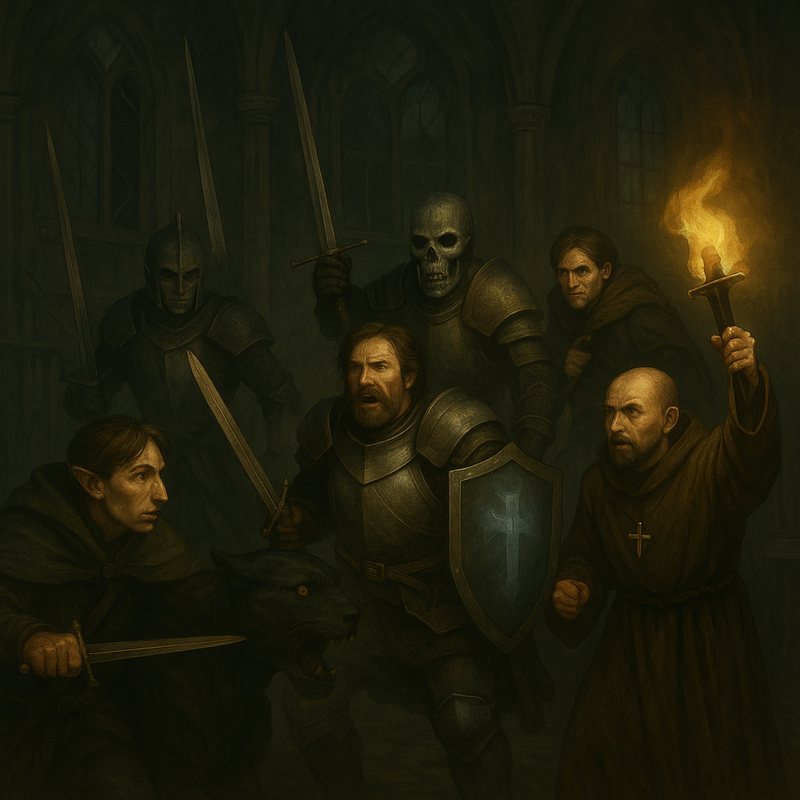
Dragon statue, Old Chapel. Well inside. Three figures in rusty armor turned out to be revenants. These aren't your average undead. They're super tough and driven by vengeance.
It forced an immediate fighting retreat, especially when the Ranger Orihorn realized, hey, even if we beat them, their spirits just hop into new bodies. Yikes. So despite getting their cleric back, the party quickly learned they're now up against threats way scarier than plain old skeletons. Welcome to the debate. Our focus today is Argen Vostholt, that sprawling, really decrepit Manor house the party stumbled upon after well, after that harrowing flight from Valaki, and, of course, the critical resurrection of Traxador back in Kresk. In this place, Argenvoss told.
It really presents one of the sharpest contradictions in the material. I think as soon as the party enters, they see these incredibly powerful symbols of good. You've got the huge statue of a silver dragon, you know, typically champions of good. And then there's the altar with the rising sun, the symbol of the morning Lord, right? But these symbols are standing amidst total ruin, physical decay, spiritual decay, and guarded by these, well, incredibly dangerous undead.
Exactly. And that paradox presents a fundamental question for us, really Does the presence of these powerful undead, the self renewing revenants within Arjun Vos told, signify a complete total spiritual corruption, a collapse of the ideals that were once held there? Or does the fact that the iconography, the symbols, still persist, does that represent something more like a tragic state of failed duty, a sort of lasting, maybe twisted fidelity to those old ideals? I really think we have to lean towards that second interpretation. You know, if the place was just purely evil, totally conquered, why would the symbols still be there?
It doesn't quite track. See, I take a different view. I see Arjun Vos told as pretty undeniable evidence that even, you know, really strong sources of good can be fundamentally tainted. Their purpose gets hijacked, overcome by this localized, really persistent evil. For me, it's a cautionary tale of, frankly, total moral ruin.
And I'm arguing that the manner represents more of a spiritual catastrophe, sure, but one that stems from a failure of duty. The good iconography remains precisely because it defines the tragedy. It's this haunting structure that explains the specific kind of Undid we find there, figures tied to broken oaths, to vengeance, not just some generic necromantic evil. OK, let's dig into the evidence for collapse, because I think it's compelling. Our game, vows told, isn't just haunted or abandoned, it's thoroughly ruined. I mean, the material describes collapsed towers, furniture smashed and overturned in the main halls, graves disturbed outside this level of physical destruction, it's not just time and neglect.
It feels like prima fascia evidence that active hostile forces, whether they came from inside or out, have fundamentally broken this place, this sanctuary, and crucially, the spirits of the nights. They haven't found peace. They're called fearsome adversaries, revenants. Their spirits just rise again, seeking revenge, even if they're struck down. That points to a malicious, unending cycle of violence that seems to completely over shadow any good they once stood for. That description of the decay is certainly vivid, but I guess I question what the physical state definitively proves. Decay and ruin, Well, they're pretty common across this whole valley, aren't they?
I approach it differently. If there were active total corruption, wouldn't it aim to eradicate or, you know, replace the original symbols? But the core visuals, that enormous silver dragon, the morning Lord altar, they are still prominent features. They haven't been defaced in the same way, or torn down, or replaced with symbols of pure darkness. But what about the other things the party saw? That fleeting Serpentine shadow with wings, the loud hissing they heard right when they entered, doesn't that suggest an active, maybe external dark force has actually taken up residence?
This entity, even if it was just a glimpse, it seems like it's eclipsed whatever good was there before. The decay feels too thorough, too violent for just a historical haunting, you know? Maybe. But let's consider the Knights themselves. The material is quite precise here.
They are revenants driven by unresolved duty or vengeance, not mindless zombies. And we're specifically told they were found kneeling before the Morning Lord's altar. Now that suggests their connection to that ideal is deeply corrupted absolutely. But severed? I wouldn't go that far. It feels more like a terrifying, twisted kind of fidelity. Their power source is specific.
And remember Traxidor's reaction? He was confused momentarily by this conflict. The silver dragon champion of good and these dangerous undead kneeling before its symbol. That dissonance. I think that's the entire point. It's an internal paradox the material deliberately presents, pointing towards a failed sanctuary, not just some conquered evil den.
I see why you're emphasizing the dissonance. Yeah, but let's focus on the core behavior, the effect of their existence. You mentioned the kneeling, but what's their function now? These creatures, the material notes, they are far more powerful than whites. Why? Because they have this unending quest for revenge, so they're kneeling in practice, Isn't it just an ironic, maybe empty gesture?
A ritual with no real spiritual meaning anymore, given their undead, incredibly violent state. Oh, I wouldn't call it empty. It's performative, maybe, but in a horrifying way. It's like this mocking religious tableau, a visual representation of what happens when sacred duty collapses in on itself. Perhaps, but their primary function now is violence, pure hostility towards anyone who enters. We saw it immediately with that savage attack on Radley, right? That specific, unending violence focused on preserving their twisted domain.
Doesn't that override any symbolic echo of their original ideals? The truth of the place now feels like inescapable malice, whatever that altar once represented. That's a strong point about their immediate aggression, yes, but have you really considered the distinction Urichhorn makes about their classification? These aren't, as he says, simple animated skeletons or just generic ghosts. They're heightened power.
They're persistent. It's intrinsically tied to a very specific emotional self-sustaining curse 1 rooted in betrayal or a failure of duty. That's the definition of a revenant. If the place were just some generic evil ruin, why would the controlling evil force bother with this highly specific form of undead? Why would the Knights retain the symbols of their old order and even maintain a physical position of devotion, kneeling, even if it's totally perverted?
Their power, it seems, comes from that broken oath that makes the location a site of profound failure, a kind of catastrophic spiritual stagnation rather than just total conquest by some outside corruption. They're cursed by their own history, not simply animated puppets. But stagnation, when it results in unending, violent, self renewing hostility, functionally, that becomes corruption, doesn't it? The revenants will rise again. They will seek revenge, either against those who wronged them ages ago, or just anyone who enters their space now.
That relentless malice that feels like the very definition of a fundamentally tainted spiritual landscape. Any connection to the Silver Dragon is now just fuel for their vengeance machine. But I think the type of fuel matters. If it were pure external corruption, wouldn't they just be shadows, Wraiths. Something less specific. The fact that it's fueled by duty and vengeance, suggests this element of tragedy.
Something that maybe potentially could be resolved, however unlikely. OK, let's pivot slightly to the physical evidence again, interpreting the physical decay, the sheer state of the place, smashed furniture, collapsed towers, the disturbed graves right outside. That isn't just weathering. It feels like tangible proof of destructive corruption. The physical ruin mirrors the spiritual ruin of the knighthood itself.
The state of the building for me proves the sanctuary has been utterly overcome. I'm sorry, I just don't quite buy that the physical decay automatically proves spiritual conquest. Ruin happens, especially where there's been long conflict and neglect, which perfectly describes a failed order, right? If the collapse was proof of total conquest by some outside evil, then why did that key symbol of good, the dragon statue, seem to retain even a flicker of, well, active defense? I mean, the material describes that chill air exhaling from the statue when the party enters. It didn't harm them, sure, but it was undeniably there. I might frame that chill air differently, maybe just a lingering echo, an atmospheric quirk from the intense haunting, or simply the byproduct of so much death concentrated there, not necessarily a lingering protective charm. If it were truly protective, why is the manner overrun with revenants?
Why is there that weird winged Serpentine shadow lurking about? The dominant spiritual feeling is 1 of unending revenge and decay, backed up by the scattered bones and disturbed graves right next door. It seems the Knights have taken their ideals of duty and justice and twisted them into the singular pursuit of malice. But the material presents the statue as a champion of good. For it to retain any active effect, no matter how weak, suggests that the ideal itself, the spiritual framework the silver dragon represents, hasn't been fully snuffed out. The decay, I think, is the result of terrible conflict and the failure of the Knights to uphold their oaths. But the structural symbols of good, they still retain some vestige of power, some presence even amidst the ruin, almost like a painful reminder of what was lost. Their vengeance is certainly a curse born from who they were, I grant you that.
But let's think about the broader implications here for the materials whole spiritual landscape. The real message of Argenvos told if you see it as total collapse is, well, it's bleak. It suggests that even the strongest champions of good implied by the Silver dragon, the Morning Lord, can be fundamentally hijacked, their devotion twisted into this tireless, self fueling engine of revenge. That sets a deeply unsettling precedent for the party's own quest against straw, doesn't it? It's like a warning. Past heroism offers no real defense against present persistent corruption.
That bleak? Why complicate things with revenants? If the goal was pure malevolence, wouldn't they just be simpler undead like whites or spectres, stripped of their past identities? The fact that they are revenants makes them tragic reminders that justice and duty, when they fail, when they're unmet, it can curdle into something arguably worse, a more fearsome curse than pure, simple malice. Their very nature suggests that redemption, or at least resolution of the curse might be possible. Extremely difficult, yes, but possible because it's tied to a specific broken oath.
I'm still not quite convinced by that line of reasoning, mainly because the Revenant's current actions, their primary behavior, is just purely hostile. It's focused entirely on violently forcing intruders to leave this place. Any connection to the Morning Lord feels like, well, ancient history now. A historical footnote that just serves as an ironic backdrop for their current malicious state. And the presence of that fleeting Serpentine shadow seems to confirm the environment is actively corrupted, likely by an outside force, completely overshadowing any faint notion of failed heroism that could somehow still be redeemed.
But we have to acknowledge the dissonance the material presents all at once. The specific nature of the revenants, the enduring silver dragon statue, the kneeling posture. The manner isn't merely evil. Its identity is wrapped up in its tragedy. The failure of their sacred duty created this uniquely dangerous and complex siritual mess. One with the ersistence of the good symbols only serves to amplify the horror of their fall, and suggests maybe that the real conflict here is philosophical, not just a matter of finding and destroying obvious evil. Ultimately though, the state of Argenvoss Holt ruined, occupied by the self-sustaining hostile undead, possibly monitored by some active hostile force.
It really demonstrates, I think, that the forces of corruption have fundamentally tainted this location. They've reduced powerful ideals to mere historical artifacts. The unending self renewing cycle of the revenants proves that. Malice and vengeance persist almost without limit. It feels like a place truly conquered by spiritual rot.
While the tragedy the Knights follow the absolutely undeniable, the sheer physical presence of the Silver Dragon statue and the Morning Lord altar, the very altar these revenants still kneel before, suggests a far more nuanced story. This isn't just another evil layer, it's a monument to profound failure, and the specific nature of the undead, these powerful revenants, confirms a twisted, complex, and, yeah, ersistent connection back to the very ideals they once chamioned. Understanding why those symbols remain is, I think, crucial to grasping the full complexity of this setting. Clearly, the interaction between those enduring symbols of good and the powerful, persistent nature of the revenants at Argenvoss talt it it definitely merits deeper exploration within the material. It offers a genuinely challenging look at the nature of spiritual conflict in this world. Absolutely.
And so we leave it to the listener to weigh the evidence. Is the manner fundamentally corrupted? It's goodness extinguished. Or is it tragically cursed, haunted forever by the catastrophic failure of its former heroic champions? Welcome back to the Deep Dive.
Today we are strapping in for perhaps our most intense analysis yet, charting a well, a really high stakes journey. Absolutely. It starts with this frantic escape, moves through a very controversial resurrection and ends up at this haunted Manor. It's quite the sequence. Yeah, guarded by some kind of, like, undying fury.
This deep dive, it's really about the moral calculus of survival. You know what's the actual price of life in this cursed land? And what kind of enemies do you make when you mess with the dead? That's a big part of it, definitely. We're pulling from session 20 and 21 notes here.
They take us right from the Streets of the Lackey to the Weirdness of Arjen. Vols Holt. OK, So what's the core mission for us today, right? It's kind of three things we need to unpack this shifting alliance with Van Richt and the Monster Hunter. He's complicated then really dig into the cost spiritual political of bringing Traxador back with the Abbot's hell the.
Abbot in Kresk, right? Always a strange one. Exactly. And finally figure out the nature of these new adversaries they just ran into. They seem personalized and tough.
OK, let's set the scene. We're starting in Volaki. The clocks basically hit 0. Bradley escaped execution, but Tracidor the cleric not so lucky. No, his body was publicly displayed.
A warning from the new boss, Lady Watcher. Grim stuff. So the party's sneaking around after dark, trying to get his body back before they can even think about leaving town. It's sheer loyalty, right? But also desperation. They know being out after curfew under Watcher is risky. But leaving tracidor there unthinkable for them. Right.
And the notes say the second they grabbed the body, boom, trap sprung. They walked right into it. Calculated deadly. And this wasn't just town guards. Lady Watcher showing off her new power. She's summoned something nasty.
Yeah, a full-fledged Barb devil. And you need to understand this isn't just a minor fiend, it's large. It's tough, like infernal shock troops. Covered in barbs, fiery attacks, the works. Absolutely. It's presence alone means Hell's basically opened up shop in Valaki and wasn't alone.
Several smaller flying ones. Spiny Devils aerial support. So chaos, pure chaos in the back streets, howling fire. Total cacophony. Imagine that echoing in those narrow alleys and they're trying to escape while carrying a body.
Right. Bradley's got Traxador. He's strong, but that's dead weight slowing them down. He's literally trudging, the notes say Dearman's on foot scrambling euro horns on his Panther so he's faster. But the devil's right behind them.
Relentless and hurling Hellfire like actual balls of fire. They're dodging and weaving, carrying a body. They. Can't outrun that. No way. Exactly.
The notes suggest they were getting ready to turn and fight a last stand. Suicidal, really. They felt trapped. Something changed. Says they're about to commit. Yeah.
A figure appears silhouetted in the mist ahead, walking towards the chaos. Walking towards a barbed devil. Completely unhurried, you just hear this tap tap sound. A metal shod walking stick on the cobblestones. So calm against the howling. That's unnerving.
Who is it? The light hits him. Your horn recognizes him instantly. Rudolf and Richton the Monster Hunter, the guy who was disguised as Rectavio the circus master. All right, the expert. And what's interesting is your horns had big doubts about Radley and Derman, right?
But seeing this thing, all that suspicion just vanishes. Immediate threat. Trump's everything. OK, so then Richton arrives. What does he do?
Does he just wade in? He drops the casual act immediately, pulls a thin blade hidden in the cane, says he'll handle it. And Radley. Radley just keeps jogging past with the body. Pure survival instinct, maybe thinking even Van Richten can't stop this thing. OK.
So then, Richten versus the devil. And this is where you see his power. He casts dispel good and evil. Big Spell does it with a flourish. While the devil's attacking.
Literally lunging at him inches away. The party's watching, probably expecting him to get torn apart. A pulse of blue light shimmers out. The Devil's Roar just stops, cuts off mid howl, it recoils, and then poof. Gone.
Gone. Not killed, banished, erased from this plane. Instantaneous. Wow, OK, the silence after that must have been intense. Overwhelming, I bet. And then classic Van Richton sheets. The blade turns to the heroes, who are still sort of shuffling away.
He congratulates them. Not quite. He says something like he wasn't actually sure that spell would work. Seldom any guarantees with magic of that kind, he mutters. Always the pragmatist.
OK. And then he snaps it. Radley calls him an O for just trundling off with the body, tells him to come back and listen. Huh. OK, so respect for courage maybe, but not for inefficiency. That sounds like him.
That's the dynamic right there. So the party explains their plan. Get to the blue water in, grab their wagon, head to Kresk. Hope the Abbot can do a resurrection. What's then Richton's take on the resurrection part? He gives this like skeptical look when they mention the Abbot but his main focus is tactical.
He says no you can't go back to the end, why not? He figures anyone summoning devils like Watcher probably has smaller invisible spies, little Imps or something watching. So going back with lead Watcher straight to Danica and Irwin at the end. Exactly. Endanger them directly. His paranoia, or maybe just baredness, saves the Martakoffs. OK.
And you mentioned a slip up. Yeah, right here. While they're talking about protecting allies Yurihorn accidentally, let's slip something about the Martakoffs being were Ravens. Oops to Van Richten, the master Monster Hunter. He was completely unaware, the notes say. Van Richten gives Yurihorn this really sharp, curious look, puts the Ranger on the spot.
How does Yurihorn handle it? Quick backtrack, gives a vague dismissive answer, tries to cover it up. Does Van Richten push? No, wisely, he lets it go, but it hangs there. You know this unspoken thing.
They're allies of convenience, not total trust. Critical truths are still being hidden. So no in where do they go? Van Richten takes them to the Air 6 stockyard. That's where his ride is parked.
He's right. A battered old carnival wagon. Peel and paint, says Rick Tavio's Carnival of Wonders on the side. Kind of ironic now. OK, a wagon escape vehicle. But he gives him a very clear warning. Don't touch the padlock back door. Don't even try.
More secrets? Didn't he have issues with your horns Panther earlier? He did, and now as they get close to this wagon, the Panther gets edgy. Low growl, tail straight, ears flat. Classic predator sensing another predator.
And then the wagon lurches violently. Something big and heavy shifts inside. Another animal. Definitely sounds like another large cat secured in the back. Yeah.
So Van Richten isn't just a hunter. He's maybe transporting dangerous creatures. It has a whole new layer to him. He's prepared for anything. OK, so they need to get out of a lackey fast.
How does that go? Well, Van Richten hitches his horse. Derman quickly ties Traxidor's body wrapped up to the back stoop of the wagon. Then Van Richten just snaps the reins, charges the horse full tilt. At the southern gate, guards are yelling halt. He ignores them completely.
Does he make it? Sort of. The wooden bar across the gate snaps, yeah, but the front wheel hits the brick archway hard. Oh, no. Instant disaster. Axle shatters the wheel just shears right off the wagon, skids maybe 50 feet past the gate and grinds to a halt, digging into the dirt.
So they're out but stuck. Right outside the gate, pinned down. 3 guards in a warden rush out. The warden starts firing off necromantic magic bolts. Bad situation. Can they freak back?
Dearman and your horn. Use their bows, take down to guards quickly, but the third one gets a horn. Call off. Alarm is sounded. Reinforcements are coming. They've got minutes, maybe less.
What about the wagon? Can they? Fix it. This part is almost. Comical but desperate, Van Richten is yelling for the wheel. Derman grabs it.
Radley, using all his eldritch night strength with Derman helping, actually lifts the broken corner of the wagon off the ground. He lifts the wagon. Trying to hold it up so van. Richten can get the wheel back on but it's useless. The axle linkage is totally smashed, wood and metal splintered.
No way to fix it normally, so they are trapped. It looks that way. Hearts must have sunk, but Van Richten pulls out another trick. He casts mending, bending the. Cantrip, yeah, see basic, right? But he uses it perfectly on the shattered axle linkage. The magic just knits the wood and metal back together, instantly functional again.
That's incredible. Saved. By a magical first aid on a wagon wheel. Kind of perfect for Borovia. Isn't it?
They scramble back on board, leave the guards shouting in the dust, and head W towards Kresk, finally free of A. Lackey What about Van Richten? Does he stick with them only through the night? As morning approaches near Kresk, he just leaves. Says he needs to find a new place to finish his plans. Rides off into the mists.
So helpful when? Needed, but ultimately a lone wolf. Exactly. He. Helped them survive, but now they're on their own again, facing the Abbey.
OK, so they. Arrive at the Abbey of Saint Markovia. What's the vibe? Is it welcoming? Not really.
It's stark, high on a hill, chilly, snow on the ground, forbidding. The Cres Town guards let them in. They know the party by now. But the Abbey itself, problems start right away at the gate, Yeah. The Mongrel.
Folk guards Zig Frick and Otto found them asleep at their post Classic. Oh boy. And when they wake up, there's this immediate argument, not about the party getting in, but about your horn's Panther. They won't let the beast on the holy ground. Petty stuff when they've just. Escaped death and are carrying a corpse totally so. Derman, thinking fast, realizes arguing is pointless. He needs leverage.
What does he do? Demands they fetch. Their master, the Abbot, and the excuse he says they have that wedding dress the Abbot wanted for Vassilka, his creation, the dress. Does that work like magic? The Abbot comes rushing out, absolutely beaming, laughing, holding up this crumpled, muddy dress like it's the holiest relic imaginable. Doesn't care that it's filthy.
Not one bit. He immediately invites them all in, Panther included. The Mongol folk are clearly disgusted, but the dress Trump's everything. For the Abbot, it's key to his big plan. OK, so they're inside. They've got Tracer's body.
This is the moment of truth. They ask for the resurrection. They demand it really carry. The body in the Abbot initially just offers, you know, a proper burial, standard stuff, but they push him, yeah. And his mood.
Shifts. The notes mention a flash of real anger before he kind of smooths it over. Does he refuse He. Argues against it. First, surprisingly, he gives this little speech about the purposeful cycle of life and death and the dangers of tampering, the risk of unforeseen calamity.
So he knows it's. Risky. He understands the implications. He absolutely. Does He's not naive about what he's doing bringing a soul back.
He knows the power and the potential cost. And yet. He agrees abruptly. Yes. And this is the core issue in Krusk, isn't it? Why does he do it after arguing against it? The dress purely.
The dress. It's transactional. Bringing tracks that are back isn't about compassion or rewarding a good cleric. It's payment for the item that helps his ultimate, frankly bizarre mission, redeeming Strad to. Make Barovia a paradise again using the silk, the flesh golem bride.
Yeah, yeah, OK. Right. So this profound miracle restoring life is just currency for his political, theological end game. It's kind of chilling. So he agrees, tells them it'll.
Take time. They come back the next morning. Day 16. Yeah, they go. Back down and tracks doors alive just like that fully.
Alive, yes. But the cost is visible. He's in a simple monk's robe, wooden holy symbol of the Morning Lord. But he looks drained. How so? Utterly.
Fatigued. The notes say he struggles just to stand up. His voice is soft, weak. What's the Abbot's? Explanation.
He calls it the soul's. Arduous journey back to the body says he just needs a few days to recover but it's clear right there resurrection isn't flicking a switch. The soul went through something traumatic to get back. Wow. But the.
Real emotional fallout happens later, right? With the Burgo mask? Oh yeah, before. Leaving Kresk, they need gear for Traxxidor. They go see Baron Dmitry Kreskov, the Burgo master, and he sees Traxidor. Alive and he just loses it.
Completely distraught, rushes out, grabs Traxidor, shaking him, furious, demanding to know what trickery this is because he'd been told the cleric was dead. He didn't know the Abbot could. Do this or wouldn't exactly the? Realization that the Abbott has this power, used it for strangers but not for Kresk's own people. It breaks him. What does he do?
Sinks to his knees in the street, weeping, shouting, the notes quote him, yelling. Why should Ilya, the last of the Kreskov line, die when the Abbott can return my son to me? Oh man, that's. Heartbreaking. His son died and the Abbot could have saved him.
That's the implication. And the Abbot chose not to or couldn't be persuaded. His grand plan for Straud took precedence over the very real grief of the town's leader, the potential end of a noble line. It's the ultimate condemnation of the abbot's priorities. So the Abbot's paradise.
Comes at the cost of individual suffering. Right now, pretty much his. Wife Anna Kreskova has to pull the Baron back inside. But the guards, they see the injustice. They quietly give Traxador some basic gear. Studded leather, spear, Mace, shield, backpack, water, skin. Minimal stuff, but a gesture.
OK, so Traxador is. Back minimally equipped, they leave Kresk. What's the plan now? Priority shifts they need. To retrieve that stolen holy amulet, Madame Eva told them about the one they need to eventually face straw. Strategic necessity, right?
The artifact hunt. They head east on the old Swellidge Rd. Yep, and. As they're traveling, discussing this amulet, something weird happens. Atmospheric.
You got it. A cauldron. Of bats, the notes call it suddenly bursts overhead. Not just a few bats, A massive swarm moving together like 1 entity. A murmuration.
Whoa, what do they do? It sweeps down low. Right over the road engulfs the party for a second in this like silent swirling cloud of black wings, and then just as quickly, it flies off into the mists ahead near the lunar river bridge. OK, that's creepy. An omen feels like it, right? Dense, sudden, deliberate, like a warning about where they're heading.
So where are they heading? They turn off the main Rd. Following info van Richten gave them back when he was Rectavio about an old Manor house. And they find it. Yeah. The path leads.
Up onto this rise and there it is, Argon, Voss told huge, decrepit Manor overlooking the Lunar River Valley, Mount Gakis looming in the background. It looks ancient and sad. Argon boss hold. OK, what? Stands out first the most striking thing.
Right out front, a big statue on a 10 foot stone base. A silver dragon. A silver dragon. But aren't they good exactly tracidor? Points that out immediately. Silver Dragons are champions of good protectors. It's a symbol of light guarding this gloomy ruin place. Very odd.
You're a horn, checks the base. No mechanisms, no inscriptions. So a noble symbol. In front of a wreck. What's the rest of the place look like?
Decay. Collapse towers and walls on one side, an old barn foundation, and, significantly, a tall mausoleum and a graveyard off to the east. Graveyard let me. Guess disturbed graves. Bingo. A number.
Of them suggests old battles, maybe grave robbing. Definitely disrespect for the dead. OK, so they head for the main. Entrance up the stairs. The name Arginvostolt is carved right into the stone lentil above the door, and as they step inside, something happens.
A blast of cold air. Washes over them, seems to come from the dragon statue outside. Weirdly doesn't hurt them, but it feels like a warning, like the place itself is reacting. Spooky. What's the foyer?
Like grand but. Faded stone pillars, big staircase, balcony. There's a tapestry showing a knight in shining armor, hints of a noble military past. Any immediate threats? Not immediately.
Radley uses his shield to cast light, and that's when it happens. A loud hissing sound echoes through the hall, and then, quick as anything, a shadow falls across the wall. A shadow of. What a Serpentine. With wings like a dragon, but just a shadow. It flashes past.
The hissing stops. Silence again. The serpent shadow. OK. That ramps up the creep factor. Draconic, but not quite exactly it's. Just the forces here are ancient, maybe related to Dragons but maybe twisted.
Where do they go next? Deeper in. Find a dining hall. Big 20 foot table but furniture is smashed. Overturn signs of violence or looting. Anything else significant?
The chairs, the. One still standing have backs carved to look like folded dragon wings. Golden dragon wings so. Whoever lived here, they were definitely connected to Dragons. Knights of the dragon maybe?
Seems very likely. Every detail points to this dragon motif. Then they find leaded glass doors leading to the Chapel. Ah, the Chapel. What's in there? This is where the paradox really hits you. Tall arched windows, stained glass, and kneeling at the altar. 3 figures in rusted chainmail. Undead look like it, but the altar itself? It has a carving of a rising sun, the symbol of the morning. Lord, the good deity.
Exactly. So you have these. Potentially undead nights kneeling before the symbol of a God of light and life. It makes no sense. OK, that is seriously. Confusing good symbols?
Undead guardians, What does the party do? Does your horn sense anything? He uses his primordial. Sense yeah confirms there's a lot of undead energy around the Manor grounds but and this is key no actual Dragons nearby yeah living or undead within a mile at least so whatever these nights are they're. Not Dragons themselves.
What are they? That's the question. It's a total. Psychological trap? Do you attack what look like undead monsters who are praying to a good God? Tricky.
Who makes the 1st? Move Dermot. Always the curious one. Maybe a bit reckless. Uses mage hand, The invisible magic hand.
Oh no, don't tell me he. Poked 1. He tapped one on the shoulder. Gently bad idea. Very bad idea. All three figures stir, rise slowly, deliberately turn towards the party.
What do they say? Simple. Question. Why do you disturb the dead? Then they draw these tarnished long swords and tell the party to leave now. OK, definitely hostile.
How do they look? Just skeletons. You're a horn. Realizes instantly watching them move in that heavy armor. These are way tougher than basic skeletons, not even whites. Something more powerful, elite undead warriors and combat starts.
Immediately. Radley steps up, tries to engage one by some time, casts shield as the first blow comes. How does it work? Perry's the first hit, yeah, but the second blow from the night lands hard, savagely jars Radley right through the magical shield, forces him stumbling back. Wow.
So these. Things hit like trucks, immense power. The notes really emphasize that it's immediately clear the party is seriously outmatched here. How does Trexidor react? He was just resurrected, sees undead at an altar of his God. Total spiritual crisis.
He summons his spiritual weapon, this glowing divine hammer thing, but he hesitates. He can't reconcile it. The contradiction. Undead Nights Morning Lord's symbol? Exactly.
Are they corrupted? Are they holy guardians? Attacking feels wrong, but letting them attack feels worse. His divine sense is just scrambled by the paradox, so he doesn't attack not. Directly with the weapon.
He tries using his channel divinity instead to rebuke undead. See if that works. Does it partially. One of the nights actually recoils, backs off a step. So they are vulnerable to holy power, but only one. What about the other two?
They keep pressing the. Attack relentless. Dearman tries a distraction, a minor illusion behind them, but they don't even seem to notice, totally focused on driving the intruders out. So rebuke works A. Bit illusion fails. They're still losing badly.
It's. Clear This is not a winnable fight right now. They're forced into a fighting retreat, backing out, swords flashing through the FOIA past the dragon statue. Right past it, out the front. Doors into the open air, the Knights pursue them right to the threshold, then stop. Safe outside for.
Now adrenaline crash. I bet totally. And that's. When your horn puts it together. He's the monster expert, after all.
He thinks about how they fought, their power, their single mindedness, and he figures out what they. Are yeah, he. Delivers the bad news. Those weren't just tough undead, they were revenants. Revenants. OK, how?
Bad. Is that really bad? This changes everything. Your horn explains it to the others. Revenants aren't just animated corpses, they're driven by this powerful, undying spirit of vengeance. A specific grudge or hatred fuels them, so they're intelligent.
And motivated. Highly motivated. Incredibly. Resilient, but the worst part? Their spirits don't rest, meaning even if you destroy their current body, the spirit doesn't pass on.
It finds the nearest suitable corpse, possesses it, rises again, and comes right back after you, still driven by that same original vengeance. Oh wow, so defeating. Them physically is temporary at best, unless you can resolve the. Reason for their vengeance? Yeah, they're basically just activated.
An eternal enemy, Personalized, undying, Relentless. All from tapping one on the shoulder. They didn't just fight some. Monsters. They picked a fight with ghosts that won't stay dead.
Hashtag tag outro. OK, let's let's try and wrap our heads around all that. What a journey. The physical escape from Falaki dodging Hellfire Van Richten's magic, right? The banishment was impressive.
But then being saved by mending on a wagon wheel? Almost anticlimactic, but totally crucial. Then the whole Kresk. Situation Trexors return, but the cost, yeah, that resurrection. Reveals so much about the Abbot. His goal.
Redeeming straw Trump's everything. Individual life, the grief of Baron Kreskov, the principles of life and death, all secondary to his grand, flawed plan. Traxidor's life was just payment, not a gift. A. Transaction and then Arjen Vos told This place is just layers of contradiction.
Exactly. You've got the goodness. Of the silver dragon symbol, the Morning Lord's altar, right next to these powerful, seemingly corrupt undying nights. Faith, decay, duty, vengeance. All tangled up.
And that first fight just proves. How dangerous it is, the search for that amulet, it's not going to be easy, not at all. They're. Facing revenants now, that's not just a combat challenge, it's a persistent threat. These spirits are motivated, they're relentless, and they will keep coming back.
That tap on the shoulder started something potentially unending. So we saw a soul. Come back from what the Abbot called an arduous journey, clearly fatigued by it. And now we've met creatures whose spirits seemingly never leave, they just find new bodies to continue their hate. A real contrast. In how souls interact with this world, isn't it? Definitely.
So if Van Richten himself says magic has seldom any guarantees, what are the real long term costs US for Traxador soul after that transactional resurrection? And what kind of ancient powerful vengeance have they truly woken up inside Arjun Bosstholt halls? Yeah, what is eternal? Undeath driven by vengeance look like when it's focused squarely on you. Something to think about.
Welcome back. Today we're looking at a piece covering a pretty intense escape, a resurrection bargain, and a scary showdown with some undead nights. Yeah, lots. Happening. So let's dive right in. Try and make these big moments hit even harder. OK, first.
Up. That. Escape from Valaki. Rudolf Van Richten's appearance is, while stunning, great drama, but the way he takes out the barbed Devil one spell, it feels like it kind of short circuits the tension they'd built. It really does, I mean.
The material did a good job setting up this devil. Relentless throwing Hellfire. Exactly. The party couldn't outrun it. You felt that desperation.
Radley's exhausted, carrying the body. It felt like they. Were properly cornered and then Van Richten steps in, casts dispel good and evil and problem solved instantly. Yeah, instantly. And even that line about the thunderous silence afterwards?
It's dramatic, sure, but the threat just evaporates. Hmm. It makes the devil. Seem, I don't know, less formidable after the fact? Like, was it really that big a threat if one spell could just dismiss it? Right, so the.
Weakness is that imbalance. The relief is huge, but the resolution feels almost too easy. No real cost felt in that moment. So the suggestion. Is really about recentering that confrontation? Van Richten needs to be crucial, Absolutely. But maybe not the instant win button. Yeah, we need to.
Reinforce how tough these infernal things are. Make the survival feel earned, You know, not just convenient. I think you've nailed it. The intervention needs a clearer cost, otherwise, like you said, it feels less like a climax and more like, well, a plot device just wiping the slate clean. So how do we do that? Maybe, maybe the spell doesn't banish it completely. Ah, I like.
That what if the dispel good and evil works but it's say just severely wounds the devil or stuns it right then Van. Richten in the party have to scramble, work together for another round or two, a fighting retreat kind of thing. Keeps that tension. High right at the escape point forces them to rely on each other under fire. That could work really well. Or maybe the?
Cost is more personal to Van Richten. How so? Well, the text. Mentions him saying he was unsure that it was going to work. What if we show that risk?
Describe him as visibly drained, maybe even injured because he cast such a powerful, risky spell. Oh, interesting. So he pays a price for the intervention. Maybe he's like coughing, weakened. Yeah, maybe.
The spell takes a serious toll that would add weight to his uncertainty, and it would justify why he needs to get out of Locky immediately too. It feeds into his character later. I see so. The immediate threat is handled, but there's a lingering consequence, a cost that feels much stronger narratively. Yeah, it shifts it. From few they got lucky to wow that was close and it cost them something more earned.
Agreed. Definitely more earned. OK, let's shift. Gears the Abbot of Kresk and tracks the doors. Resurrection.
We need to strengthen the logic behind the Abbott's big decision here. It feels abrupt. Yeah, the motivation. Shift is the tricky part. It's not that he can't be unhinged, his logic just needs to be, well, logical within its own framework, the material sets. Up his initial stance, really.
Clearly he's angry, right? Philosophically opposed to messing with life and death, talks about the risks, divine wrath, all that. Exactly. It's presented as a major moral and spiritual boundary for him, but then the. Party shows up with this crumpled and muddy dress and suddenly all.
Those profound objections just vanish. He agrees to perform this huge reality altering act resurrection, basically as a reward for fetching an item for his creepy doll project, right? And. While OK, the text mentions his bigger goal of redeeming Strad, the direct trigger, the dress feels disproportionate, almost trivial compared to bringing someone back from the dead. That's the core weakness. That disconnect, it feels transactional in a way that undermines the gravity of both his initial refusal and the act of resurrection itself.
So the suggestion. Is to layer his decision making, make it less like quest item for reward and more like a a a believable step in his own messed up plan. Or really lean into how skewed his priorities are we need to make. That. Dress mean something more to him in that moment connected to his grander, albeit insane, purpose make the retrieval of.
The dress the important thing, not the dress itself. Precisely. For example, maybe the Abbot explicitly says something like the party bringing back the stress against all odds proves their devotion, their commitment. Ah, so retrieving. The dress becomes proof they understand sacrifice, proof there may be worthy allies and his impossible quest to fix Strad exactly. It overrides his spiritual concerns because he sees it as evidence they're truly committed to his cause. It reframes his madness as a kind of twisted test of faith that could work.
It ties the. Seemingly trivial task to his core obsession. What about linking the dress to the ritual itself? How do you mean? Well, tracidor comes. Back fatigued, right?
What if that's not just a random side effect? What if the Abbot needs the party's help with the ritual? And maybe the dress is, I don't know, an ingredients or an anchor, so. The dress isn't just the price for the resurrection, it's part of the process, and maybe involving the party or using this mundane item is why it's flawed. Why Tracksidar comes back weekend. Yeah, it.
Makes the consequence feel less arbitrary. It links the fetch quest, the resurrection and the characters resulting stayed together in a more meaningful and kind of dark way. I like that it. Adds a layer of consequence tied directly to the bargain they made. Makes the Abbott's method seem even more suspect too. OK, good.
Now the final point. Argon Vest hold maximizing the terror of those revenants. Ah yes, the. Undead nuts. The action is good, but the big reveal about what they are it it comes a bit late.
Yeah, that detail. That even if you defeat them, their spirits just find another corpse and keep coming. That's chilling. Super chilling. But the text holds it back until the parties basically already decided they're outmatched and are retreating, and that's the weakness. If they knew from the start that killing these things was pointless, that retreat wouldn't feel like a tactical withdrawal, it'd feel like pure, desperate panic. Exactly.
The reveal comes almost like in footnote after the main tension of the fight is established based on just being outnumbered. It limits that feeling of hopelessness, the psychological horror of it. We need to get that dread. In earlier, make the nature of the revenants clear right away, so the stakes are immediately psychological, not just physical. Turn it from can.
We beat them to oh God, we can't beat them. We need to get out now, right So. How to see that earlier? Well, think about that. Moment when Derman uses Mage hand to tap the skeleton shoulder that initial contact instead of just startling it.
What if it speaks not just a groan, but a clear cold word like vengeance or unfinished? Something that signals purpose, not just animation. Oh, OK. That immediately changes the vibe. You're not just dealing with animated bones, you're dealing with an undying will. Precisely.
Or focus on the combat descriptions right at the start, when Radley gets hit hard. Maybe it's not just the force, but a palpable sense of focused hate, like personal burning hatred radiating from the night. And maybe they. See one get struck down, only for the light in its eyes to flare brighter, or for it to start reforming almost immediately. Something visually unsettling?
Yes, something. That forces Yurihorn or someone to recognize them as revenants much earlier. That realization these things literally cannot be stopped needs to hit them mid fight, not afterwards. So that. Triggers the desperate escape attempt not just because they're losing, but because they realize victory is impossible against this enemy.
Exactly. It transforms the fight into a frantic flight from an unkillable curse that ramps up the readers anxiety immediately because they understand the true stakes alongside the characters. Much more terrifying. Yeah, that lands. Much harder.
OK. I think those are three really solid areas for enhancement. The core material has great dramatic instincts already. Absolutely. It's strong stuff. These are just ways to tighten the screws, make those big moments pay off even more so just to. Recap the main suggestions.
First, give the Barb Devil resolution more weight. Either make Van Richten pay a price for his spell or force the party and him to fight a bit longer together. Second Shore. Up the Abbott's logic connect to the dress retrieval, to his twisted need for proof of the party's devotion to his grand plan, maybe even weaving the dress into the resurrection ritual itself to explain the consequences and 3rd front. Load the horror of the revenants make their undying nature clear much earlier in the Argenvostholt encounter to maximize that dread in desperation. Yeah, focus on that.
Narrative cost and consequence, and making sure the reader understands the stakes right when the characters do the action. Writing is already effective. These tweaks just sharpen the impact. Great insights. This piece is definitely.
On the right. Track We absolutely encourage you to revise and send the updated material back for another look.