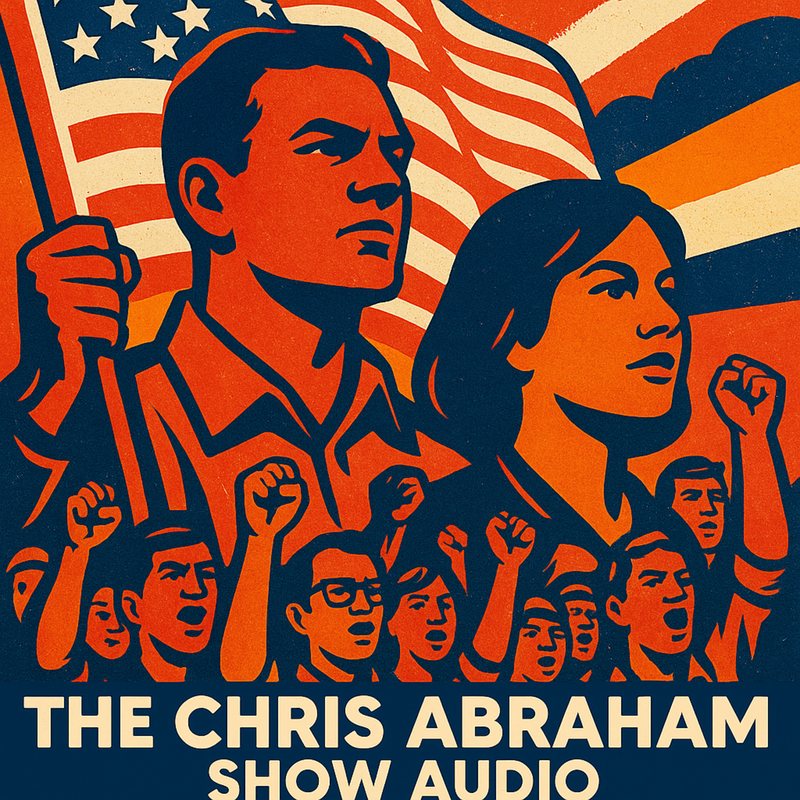
Read the full transcript (11,782 words, machine made)
Welcome back to the Deep Dive. This is where we take your source material, really pull it apart. Look at all the pieces. Yeah, get down to the essential architecture. Exactly.
So you can be truly well informed and today, wow, we are wrestling with something well, profound, I think, and frankly kind of confusing A. Big shift. Yeah, A. Huge shift in American political aesthetics. We're talking about the flag, the founders, you know, the actual language of patriotism.
Things that felt very settled for a while, or at least settled in certain circles. Right. For what? The better part of the last maybe 2 decades, especially among, let's call it the credentialed cultural establishment national symbols. They were often viewed with, well, skepticism.
Sometimes outright disdain even. Yeah, patriotism felt provincial suspect. Totally. The flag was suspect. The National History was mostly something you apologize for. A source of critique, primarily.
Suddenly, I mean really dramatically, that seems to have flipped. Completely inverted. We're seeing what your sources are calling The Great Patriotic Heist, this same establishment now enthusiastically waving the flag. Quoting the founding document. Engaging in these, you know, really robust, very visible displays of Americana. It's striking.
It is, and it forces the question. Which is our mission today, right? To figure out the core intent here, and maybe more importantly, the potential consequences of this this inversion. Is it real? Is this a genuine, maybe necessary civic evolution?
Like a fundamental heartfelt re engagement with the country's identity. Is it theatre? Or is it just strategic political theatre? A calculated costume change, you know, designed purely to win back the Cultural Sunderground. Performance versus reality.
Is it real or is it performance? That's the core question. And that tension right there between genuine belief and let's say calculated performance, that's really the philosophical bedrock for this whole deep dive. You really had to start with a serious warning, a philosophical one from Jean Paul Sarge way back. He gave us this key principle for understanding this kind of, well, self-conscious political turn, he said.
You become what you pretend to be. So be careful what you pretend to be. Wow, OK, that lands heavily here. It does, and it's not hyperbole. Not in the context of American civic life, anyway. We're a nation that has, in many ways, always acted itself into being.
Performing our way into existence. Almost. Exactly. Performance isn't just, you know, deception here. Historically, it's often been the very first stage of becoming. So if the progressive establishment is now pretending to be patriotic.
Right. Adopting the rituals, the language, the symbols. Then the danger isn't just that they're being hypocritical. No, the deeper danger, the Sartrian danger, is that they might succeed entirely, that the costume, as you put it, could actually fuse to their skin. Changing not just their election strategy.
But their very ontology, their fundamental being. OK. Ontology, the nature of being, that's yeah, that's a heavy concept, but I see why it's critical here. It really is. So we're exploring these two powerful competing viewpoints based on the sources you've provided, right?
One argues this new patriotism is essentially bad faith, a dangerous performance, a strategic lie that risks creating this kind of self-righteous new orthodoxy. The negative view. And the other viewpoint argues no, this is necessary. It's civic pedagogy. It's a vital lesson in how the Republic actually renews itself by. Contesting ownership of its own ideals. Exactly following a long historical pattern. So to cut through all this complexity, to really understand how we got to this very specific, almost choreographed moment, we need a map A.
Framework. Yeah, a framework, and the one that seems most useful here from the sources is the Hegelian dialectic. Thesis. Antithesis. Synthesis.
Precisely. Think of it like a historical pendulum swinging back and forth, sometimes violently. OK, this model lets us track the progression phase by phase, how the political culture shifted, leading us right to this current wealth. Strategic Inversion. OK, let's unpack that history. Opposition reaction The starting point, the dominant culture, say through the 2010, the system that kind of invited the backlash.
Right. The sources defined this as the thesis, the managerial moral order. A managerial moral order. OK. And this period, it's really about this seamless merger, almost high velocity. And merger between what?
Between global capitalism on one hand and progressive virtue on the other, they just flowed together. So this class, it wasn't defined by ideology in the old sense, like left versus right. Not primarily. It was more defined by expertise, by control over processes. Technocratic.
Very technocratic, deeply moralizing too, and fundamentally therapeutic and how it approached governance. What does that mean? Therapeutic governance? What does that look like? It means you govern less through, say, bold political commands, and more through administration, like managing people.
The goal if you wanted to run society, was to treat it like a huge HR. Department. An HR department? Seriously. Yeah, the focus was all on compliance process, internal audits, and maybe above all, the mandatory display of empathy.
Display being the keyword there. Absolutely, it had to be seen, it had to be performed according to the rules. And how did this, this managerial class view things like patriotism, national identity? With suspicion. Deep suspicion.
Often it was seen as a threat really, to their global technocratic project. Well, patriotism. You know the kind, filthy, the average person. It was dismissed, seen as provincial sentimentality. Something quaint, maybe a bit embarrassing.
Exactly. Suitable for, I don't know, local sports teams, maybe veterans parades, but not for serious people dealing with complex global issues. The sources called it the low church religion of the unenlightened. Ouch. Yeah, a belief system for those who lacked the right credentials, the right degrees, the right understanding of sophisticated global interconnectedness.
So if you were part of this class, your focus was international. International equity, climate protocols, Complex policy analysis. You handle the important high minded global virtue stuff. While the uncredentialed masses back home. They were sort of left to handle the cultural plumbing, the messy, nostalgic, maybe slightly embarrassing sentimentality of flag waving. There's a real sense of hierarchy there. Absolutely, and the problem was their governing style. Even with all the language of inclusion and empathy, it felt inherently paternalistic.
How so? It basically tried to replace things like faith, tradition, maybe local identity with credentialing. If you have the right degrees, use the approved language, the latest acronyms, the current terminology, then you were deemed virtuous. Yeah, capable of leadership. And if you didn't?
You were relegated to the realm of the managed the people who needed guidance. And this approach, predictably I guess, had a crucial consequence. Yeah, a fatal 1. Politically speaking, it bred deep widespread moral resentment. Moral resentment, OK, the sources really highlight this.
The population being managed, they eventually started to notice something that this mandatory empathy, it always seemed to flow downward from the credentialed to the uncredentialed. Never outward or upward. Rarely outward, almost never upward. And this polite, process driven paternalism coming from the aware classes, it started to feel less like enlightened leadership. And more like.
More like what the sources call a soft despotism of tone. A soft despotism of tone. Let's break that down because that's a really critical insight, I think. It is. It's not about, you know, tanks in the streets or obvious oppression, no.
Secret police. No, it's about language policing, institutional norm control, that pervasive feeling that you are constantly being corrected. Or implicitly accused of some kind of moral failure. Exactly. Just for existing outside of that specific managerial bubble. Think about the shift from debating policy substance to what, to mandatory sensitivity training. The replacement of political argument with compliance procedures.
It's control, but exercise, not by force. But by mandatory performance, you have to perform the right kind of sensitivity. Precisely. You felt constantly monitored, not by the state, maybe, but by the relentless moralizing gaze of your own institutions. Your HR department like you said, your university, your social media feed even. Yes, and that simmering resentment, that feeling of being perpetually managed, corrected, judged. It created the perfect conditions for the backlash, the inevitable backlash.
Which brings us right to that counter reaction, the antithesis, the populist revolt. Right. And this wasn't just one thing, it was this collision of grievances, different groups, different complaints, but finding common ground. Fueling movements like Bernie Sanders on the left and much more visibly, obviously the Man G movement on the right. Yeah.
And what's really fascinating, looking at how the sources frame it, is this idea that the movement was fundamentally about recognizing a shared enemy. Transcending the usual left, right divide. For a moment, yes, the dispossessed left angry about globalization, economic extraction, feeling left behind. And the alienated right? Angry about cultural marginalization?
Feeling look down upon dismissed. They looked across that political chasm and they saw the same target. The credentialed moral technocracy. The managers. The people who ran everything and seemed to judge everyone.
And that shared recognition? It led to something powerful, at least temporarily. Yeah, the source is called the Populist Alchemy. It was like the first attempt at a new synthesis. An alchemy?
Mixing what? Mixing that old populist left anger about economics, anti globalism, pro worker sentiment with the populist rights, cultural defiance embodied by the flag, by traditional faith, by the idea of sovereignty. So a coalition forged basically in the shared experience of being looked down upon by the elites. Pretty much shared resentment as a binding agent. And into this steps Donald Trump.
The perfect symbol, perhaps? He really channeled that energy, didn't he? He became the image of the unapologetic American. The guy who refused to adopt the new moral language. Refused compliance, defied the managers, and in doing so he became the perfect antagonist to that managerial thesis. He was maybe for a weird brief moment, this kind of feral, almost post ideological middle finger aimed right at the center of power.
Yeah, that captures some of it. And that moment, the anger, felt authentic to many. But, and here's the but. Here's where that Sir Train warning starts to echo again, because as the sources meticulously detail the tragedy of this revolt, what was it is that it seemed to quickly freeze into self caricature. The rebellion itself became a kind of costume. OK, I want to push on this a bit. How do the sources draw that line? When does an authentic movement stop being about substance? And become addicted to theater.
Yeah, how do you know? That's a crucial distinction, and the analysis suggests the transition happened when the act of defiance became an end in itself. Rather than a means to actual reform. Exactly. The original populist energy, left and right, wanted to fundamentally change how the country was governed, how the economy worked.
But the costume? Yeah, the persona of the unapologetic rebel. It was just too rewarding emotionally, politically, socially within that tribe, the movement got addicted to the theater of defiance. They enjoyed making the managers angry more than they enjoyed the hard work of actual governance. That seems to be the argument.
The performance took precedence over the policy. It became about triggering the elites owning the libs rather than building something new. So it did break the old orders monopoly on meaning. It absolutely did that, smashed it in some ways. But it became a performance obsessed with maintaining its own image, the perpetual outsider, even when it held significant power.
Right. And that breach, that successful interruption of the managerial monopoly, that's precisely what forced the center, the establishment, to attempt its own strategic reversal. Which brings us back to the main event, the counter antithesis, the great patriotic Heist. The inversion. This is where we return to that core observation. The progressive left the establishment. They realized they had an existential problem, A. Political survival problem.
They could no longer just mock the flag or the founders or National History without seriously alienating the public right, especially those working class voters they desperately needed to win elections. The dismissal strategy wasn't working anymore. It was backfiring. So the decision was made. If you can't beat them, Co optim. Steal it back instead.
The strategy was to steal it back. This feels like a pure strategic inversion, a highly self-conscious pivot in aesthetics. Oh absolutely. And you see the aesthetic changes everywhere now, like. What?
Give us examples. Well, the progressive left is now actively blending its social justice rhetoric with Revolutionary War iconography. Like tricorn hats at a climate rally. Maybe not that literal, but you see things like No kings, that old revolutionary slogan repurpose for very progressive causes. You see inclusive 1776 art installations.
OK, you hear media commentators, people who maybe spend years criticizing America's founding or history, now suddenly, quite sincerely it seems, referring to our Republic without a trace of irony. And the meaning of patriotism itself is being shifted, recast. Fundamentally recast to align it with that managerial worldview we talked about. So it's no longer primarily about, say, shared sacrifice or military strength or national competition less. About that and more strategically packaged, well this source is called, call it progressive therapy.
Progressive therapy? How does that work? Patriotism as therapy. Think about it. When the credential class feels anxious about populism, rising climate instability, maybe institutional collapse, the act of claiming national symbolism, saying no, we are the true patriots. We defend democracy.
It's an act of emotional regulation. It soothes the anxiety. OK. It makes them feel better, more grounded, more in control. Exactly. It shifts the emphasis away from say, land of the free in a traditional sense towards something more like safe space of the self aware.
We aren't celebrating what the country is. Maybe warts and all. We're celebrating what we believe the country should be. And by asserting that ideal loudly and patriotically, we feel morally superior and maybe less anxious about the parts we don't like. Which locks us right back into that philosophical core, the Sartrian trap. Bad faith as national mood.
Precisely. You said earlier bad faith isn't just hypocrisy. We need to give the listener A clearer sense of that because it's the existential threat the sources seem to be warning about. Right. Bad faith or movies fois, in Sartre's French, isn't really about lying to other people.
It's about lying to yourself. Sartre defined it as the self in flight from its own freedom. We know deep down, maybe unconsciously, that we are constantly defining ourselves through our choices, that we are fundamentally free to be otherwise. But freedom is scary. That responsibility is heavy. Terrifying for Sartre.
So to escape that burden, we adopt fixed roles. We pretend the role is us, like a waiter, a professor, a politician. We act the part so completely that we convince ourselves the role defines us, erasing the terrifying freedom to choose differently tomorrow. We stop questioning the role. So the classic example is the waiter who tries so hard to be the perfect waiter.
He stops questioning whether he is a waiter. He just becomes the waiter. He fuses with the role, loses his freedom within it. And for the progressive establishment performing patriotism now? The danger isn't just that they're faking it badly or hypocritically. The real danger is what the sources call ontological experimentation.
Ontological experimentation. Trying on a new way of being. Exactly. They're trying on this patriotic costume, and they might actually succeed in making it permanent, fusing with it. And why is that success dangerous? Because it could be spiritually dangerous. In a sense, the identity of this class for a long time was built on critique, on rebellion against tradition, on a moral superiority derived from identifying historical failures and injustices.
But now they're being forced into affirmation or choosing affirmation. They're choosing to perform love for the very thing they or their recent predecessors often mocked or critiqued, or at least choosing to perform that love very publicly. And the performance might work too well. It might work so completely that they actually transform into what they're pretending to be. Leading to a new kind of orthodoxy, a rigid 1.
Exactly. The original managerial moral order, fuse, technocracy, and a certain kind of virtue. This new version, this synthesis we're heading towards, it risks fusing progressive morality with a kind of forced compliance. They might become the bureaucratic, self-righteous patriots they are currently mimicking. Enforcing a patriotism of paperwork, of correct opinions, of institutional alignment. That's the Sartre and Trap laid bare. OK, but now we have to pivot because there's a powerful challenge to this whole Sartre and warning, right? Absolutely the opposing view, which the sources also explore in depth.
Which argues that this performance is acting. It isn't necessarily deceptive or dangerous. In fact, it might just be how America works, how it's always worked. That all genuine civic renewal starts by acting the part first. That's the core idea, yeah.
And here we bring in another philosopher, George Santiana. OK, what did he say? He had this insight. Nothing was ever born without pretending to be something else first. Interesting that nothing was ever born without pretending. The historical argument based on that is that in America, before you get a deeply held, unified national belief, you often get a shared ritual, a performance.
Something you do together, even if you don't all believe it the same way yet. Exactly. A performance that allows the belief to actually form over time. What looks like cynical mimicry today? Might just be the necessary muscle memory, the practice required for conviction to actually take root tomorrow. That's the counter argument, and in this longer view, the idea that the flag must belong to only one faction, say conservatives or the right.
That's just historically illiterate. Completely according to this perspective, the flag as described in our sources is more like a battlefield symbol. Always being fought over. Constantly being fought over, seized, remade by each generation to fit the crisis of its time. So the progressive move isn't necessarily theft. It's simply the latest turn in an ancient, ongoing contest for ownership.
OK, to really appreciate that, we need to slow down and trace that history. Look for moments when the vocabulary of belonging, what it means to be American, was successfully grabbed and redefined. Especially by those who didn't traditionally seem to own. It all right, let's start at the beginning, 1776 to 1865, the founding and was often called the second founding. Right. And patriotism, Then it began fundamentally as an act of rebellion, no?
Kings. Exactly. Profoundly pro accountability and a tyranny, it was a shared commitment to a constitutional ideal. And the key here, the sources note, is that early American identity was civic, constitutional. Yes, defined by shared ideas and laws.
Not by ethnicity, not by bloodline. That was crucial. Then comes the Civil War, the ultimate contest over what that constitutional identity actually meant. Absolutely. And Lincoln's Gettysburg Address that's presented as the ultimate act of reappropriation, of redefining patriotism.
He reframed patriotism not as celebrating a finished, perfect thing, but as moral continuity. Unfinished work. Exactly defining the country is unfinished work, a debt owed to the ideals of equality laid out in the Declaration. He essentially stole the founding fathers back from the slaveholders. You could argue that by insisting that the nation score identity, its reason for being was dedicated to that proposition that all men are created equal. That was a profound, strategic and necessary act of redefinition.
Absolutely necessary for the union, survival and moral purpose. OK, moving forward, 1890 to 1945, the Progressive Era in the World wars, a very different time. Totally different. Mass immigration, brutal industrialization, huge wealth inequality. Society was fracturing.
So just waving the flag from 1776 wasn't going to cut it anymore. It wasn't enough to unite people. Not enough. The era demanded a new narrative, a new definition of what patriotism required. And reformers stepped in.
People like Jane Addams, Theodore Roosevelt, they pioneered with the sources called Social patriotism. Social patriotism? What's that? They explicitly linked loving your country with social service with civic duty. So patriotism means?
It means cleaning up the slums, ensuring public health, building and supporting public schools for everyone. It became about service to others within the national community. Taking care of the nation's people. Right then the world wars came along and solidified. This collectivism demanded huge sacrifice for the national effort.
But as the sources remind us, this collective patriotism wasn't always inclusive. No, it often came at a moral cost, the most glaring example being the tragic internment of Japanese Americans during World War 2. Patriotism defined who belonged, but also who didn't. OK then we hit 1945 to 1975 Cold War confidence and counterculture post war boom. Yeah, and for a brief moment, the flag seemed like a settled symbol again, almost like a a corporate logo. For what?
For American prosperity, democracy, consumer goods being sold around the world, it was kind of flattened, commercialized, maybe taken for granted. And that flatness, that confidence, made the collapse during the Vietnam era even more spectacular. Exactly the moral authority of that commercialized corporate flag was shattered for many, which led directly to the countercultural revolt. Flag burning protests. Yes, but here's the paradox the sources want us to really grapple with What is it That flag burning?
While obviously deeply offensive to many Americans, for some who did it, it was actually an act of higher patriotism. How can burning the flag be patriotic? It was framed as an appeal to the Republic's own unfulfilled ideals. Liberty. Dissent. Constitutional protection.
Peace. So they were saying this flag represents ideals you are betraying. Essentially, yes. I care about the promise of this country, the idea of this flag, so much that I am willing to commit this shocking act to challenge the state when it betrays that promise. It's a complicated claim, but historically significant. OK.
Then the next phase, 1976 to 2001, from the Bicentennial to 9/11. This era feels largely defined by a kind of therapeutic nostalgia, according to the analysis. Therapeutic nostalgia. Yeah, the bicentennial in 76 was partly a national attempt to heal, to get over the trauma of Vietnam and Watergate. Lots of tall ships and fireworks.
And Reagan tapped into that. Masterfully, he skillfully merged that nostalgia for a simpler pass with a narrative of economic prosperity and national strength. He effectively monopolized the emotional terrain of nationalism for a while. And where was the left during this period? Well, having associated the flag so strongly with the Vietnam War, with the military industrial complex, maybe with that corporate logo idea, they largely retreated. Retreated into what?
Into identity politics, mostly focusing on group identities rather than a national one, they effectively ceded the entire concept of national belonging, the language of patriotism, almost entirely to the right. And that dynamic mostly held until. Until 911, which very briefly forced a kind of unity, a unity through shared grief, a temporary truce in the culture wars, everyone flew the flag. But it didn't last, no. That trust, that unity, it eroded pretty quickly, especially with the controversy over the Iraq war and then the 2008 financial crisis.
Which seemed to prove that the managerial class wasn't just moralizing, but maybe also incompetent. Yeah, it damaged their credibility significantly, which sets the stage for the next phase. 2008 to 2020. The moralization of politics. Obama's era.
Rise of social media. Right. Obama's rhetoric certainly tried to revive a kind of aspirational civic pride, the hope and change idea. But the Coalition fractured. It did the post crisis environment, the rise of social media amplifying divisions, it fractured and cultural progressivism gained dominance within that establishment sphere.
Focusing on. Focusing heavily on defining virtue through the lens of systemic oppression. Recognizing privilege. Being aware of historical injustices. Which had a direct impact on how patriotism was viewed. A huge impact patriotism itself became in many influential circles recoded as privilege, meaning displays of national pride were often scrutinized, seen as naive at best, or maybe willful ignorance of ongoing injustices at worst. So the flag became suspect again. Explicitly suspect symbolizing for its critics things like white male authority, systemic racism, military aggression, all the things the managerial class built on critique instinctively rejected.
Which brings us right up to the present moment. 2024 to 2026 The Reclamation Project. The Great Patriotic Heist in action. And the shock that forced this change, this reclamation, it wasn't primarily moral. No, the sources argue, was purely strategic, a cold political calculation. The establishment realized.
They realized they had ceded the fundamental language of belonging, of national identity. They left the field wide open for the populist right to define what it means to be an American. And that was politically suicidal for them. So they had to get back in the game. Had to steal the symbols back and the new progressive line.
It's a political masterstroke really built on that historical precedent we just walked through. What's the line? Democracy itself is patriotic. Protecting democracy is the highest form of patriotism. So the goal isn't to reject the national story anymore.
No, that failed politically. The goal now is to embrace the story but insist they are the ones best suited to finish it. Finish it How? Every civil rights advance, every Environmental Protection measure, every social justice initiative, it's framed not as an anti American critique anymore, as an act of completion, honoring the promise, fulfilling the ideals, cashing that promissory note that King talked about. And the sources argue this reappropriation, this heist, is defensible because it's how things have always worked. Entirely defensible from that historical perspective, they point to strong precedent for reappropriation. Like Lincoln, as we discussed.
Lincoln reappropriated the Founders. FDR, with his four freedoms, explicitly redefined the flag to include economic and social welfare. He connected patriotism to the right to a job, a secure home. He made the New Deal patriotic. Exactly.
And Martin Luther King Junior's promissory note sermon may be the most powerful example describing American ideals as a debt, a check written by the founders that keeps bouncing. And demanding the nation honor its own commitment. Yes, the argument is the current progressive turn is just the latest iteration of this. Maybe adding a layer of self-awareness? Maybe corporate efficiency?
To this ancient American habit of redefining what the flag means. They're performing necessary civic pedagogy, teaching the nation what patriotism should mean. Now that's the defense. OK, so we've got the philosophical warning, Sartre's bad faith and the historical defense. Santiana's performance as the start of becoming. 2 owerful lenses. Now let's really dig into the present moment, analyze the true nature of this new synthesis, this progressive patriotism, and let's start by acknowledging the case for it, why it might actually work, or why it might even be sincere or at least strategically necessary.
Right. And the first big reason the sources cite for why this performance might stick, why it might be more than just a performance, is the realization that guilt alone fails. Guilt alone fails. Meaning the moral exhaustion of the 20 tens, that relentless focus on historical wrongs, the constant atmosphere of apology and critique. It proves something.
What? That you can't sustain a political consensus, let alone govern effectively when the primary unifying emotion you offer is collective shame or perpetual self critique. Critique is easy, maybe, but governance needs something more positive affirmation. Exactly. If you want to mobilize a diverse country, you need to offer a shared path forward, not just a shared apology for the past.
So reframing progressive goals, Equality, environmentalism, social justice. Reframing them as expressions of national pride rather than as a renunciation of a flawed past that builds an absolutely crucial emotional bridge. Back to the mainstream, back to people who might have felt alienated by the constant critique. Precisely. It replaces that feeling of endless correction with a sense of aspirational unity.
Let's Make America fulfill its Promise is a much more inviting message than America has always been terrible. OK. That makes sense strategically. What's the second point? 2nd is the strategy of updating the Canon, expanding who counts as a founder essentially.
How does that work? When the establishment starts quoting figures like Frederick Douglass, Susan B Anthony, WEB Dubois, right alongside Jefferson and Madison. They're making a statement. They're making an explicit argument the American Revolution was interrupted. It wasn't finished in 1776 or 1787.
So this isn't about diluting the founding. No, the argument is that it's about extending it, that the Canon of American ideals is inherently expandable. Every major civil rights advance, every expansion of liberty. Is framed as honoring the Founders original intent, even if the founders themselves didn't fully live up to it. Exactly.
It's completing their work, making the promise real for everyone. And that makes the American creed, the core ideas more portable, more accessible to a really diverse, pluralist society. Absolutely. It transforms the national narrative from one may be centered on a few white male land owners. Into a continuous story, a story of contested liberation, a struggle that includes everyone who fought to make the country better, closer to its ideals.
A belief in liberty and equality that transcends ancestry or origin. That's really the only kind of patriotism that can work in a truly diverse modern nation. That's the argument OK. And the third reason why this might be working. 3rd, they are actively, consciously closing the emotional intelligence gap. The EI gap between whom?
Between the managerial left and, well, the rest of the country, perhaps for too long, that establishment seemed to believe that superior policy papers and charts and facts would automatically win the day. The technocratic belief and reason, right? But they learned a painful lesson, especially in the Trump era. Which was? Facts persuade, maybe, but feelings mobilize. Emotion drives politics far more than logic does. So a democracy run purely by spreadsheets and policy briefs? Cannot, in the long run, outlast one fueled by powerful symbols, shared songs, deep visceral affection, even if that affection is sometimes messy or irrational. So by reclaiming national symbols, the flag, the anthems, the history.
The establishment is realizing, or perhaps relearning, that they have to master the emotional language of belonging. You have to speak to the heart, not just the head. You can't govern a story you refuse to tell. Exactly. And now they're actively trying to write themselves back into that national story in a starring role. OK, that's a strong case for why this might be effective, maybe even necessary from their perspective. It is but.
But that strategic mastery immediately leads us back to the critique. The critique of artifice. The uncomfortable reality of the second synthesis. Right. If this is indeed working, if this performance is succeeding, what exactly are we creating?
What does this new synthesis look? Like and the sources define this outcome as. As synthetic patriotism. Synthetic, meaning artificial manufactured. Pride that is managed by professionals, belonging that is distributed through institutional channels with rules and guidelines.
OK, where do we see evidence of this synthetic quality? Well, look at the slogans. They're noble enough. Sure. Defend democracy, freedom for all, love of country, love of justice.
All good things, but notice they are also inherently antiseptic. Antiseptic clean. Sterile. Exactly. Carefully curated focus group for maximum compliance and minimum offense, minimum risk.
They lack the the raw quality, the messy, maybe even dangerous energy of spontaneous belief or fierce dissent. Precisely. It's the difference the sources draw between the quote sweaty beer stained patriotism of barbecues and gun ranges. That kind of unmanaged grassroots emotion. Versus patriotism as a brand activation. Managed, clean, predictable.
The flag. In this new context, it risks becoming What was the phrase? A corporate logo for decency. Woof, a corporate logo for decency. Sterilized focus grouped. Safe for all institutional investors in HR departments. That's the critique.
And this synthesized patriotism, if it takes hold, inevitably produces what the sources satirically call the United States of HR. The United States of HR. That's a powerful image. What does it imply? It implies that the danger isn't necessarily malice or evil intent. It's professional control.
It's management taking over everything. So freedom in this context gets redefined. It suddenly gets redefined as the right to participate safely in the collective performance of virtue. Safely meaning. Meaning within approved boundaries, following the rules, using the right language.
Think about it. It's a managed environment. Consensus is strongly preferred over messy contestation. Belonging is granted or validated through compliance with institutional values. So your patriotism isn't demonstrated by, say, sacrificing for the country or challenging power. No, it's demonstrated by using the correct approved language, attending the mandatory diversity and inclusion workshops, aligning yourself visibly with the current progressive orthodoxy.
And all of this is done under the banner of defending democracy. Right. Democracy becomes synonymous with compliance with the approved institutional narrative. This tension then culminates in this bizarre fusion of opposites. Yeah, ostensibly you have the woke manager in the corporate office and the Mad J trucker out on the highway. And now they're both performing love for the same country, waving the same flag.
They might be, but the critical point is they love it or perform loving it for fundamentally opposite reasons. OK, explain that the manager loves the country because. The manager in this framework loves the country for its potential, for what it should be, its capacity for moral correction, for progress. They love the ideals yet to be achieved. I love the distance between the flawed reality and the perfect aspiration.
You could say that they love the project of improvement managed by people like them and the. Truckers, the populist, They love the country because. They love its defiance, its history of rebellion against elites, against that managerial class, its freedom as they see it to speak unfiltered truth, to reject centralized control and process. So 1 loves the potential for managed perfection, the other loves the freedom of unmanaged defiance. Exactly. And the synthesis that tries to contain both of these opposing instincts, that's where the looming danger lies. Which the sources identify as a new form. Of moral.
Nationalism, moral nationalism. OK. We need to linger on this because this feels like the core risk they're outlining. It absolutely is. It's the fusion of that progressive empathy or the performance of. It with centralized control, with management. Yes, unity achieved not through shared identity, maybe, but through pervasive supervision, through ensuring everyone adheres to the same moral framework. So moral nationalism insists that for the country to be good, you must adhere to a specific set of moral precepts defined by the managers.
Precisely. And if you question the policy, if you descend from the values, if you use the wrong language, you're not just a political opponent anymore. You're a moral failure, an enemy of democracy itself. That's the danger. This kind of patriotism doesn't primarily ask you to fight for the country, it asks you to comply with its certified institutional values.
It transforms critique not into debate, but into compliance. That's the end point of synthetic patriotism, according to this critique. OK, so Hegel's dialectic keeps rolling. Every synthesis hardens becomes the new thesis, the new status quo. Which inevitably creates the conditions for its own opposition. Yeah.
So now we need to look at the consequences if the progressive establishment actually succeeds in this, if they achieve the professionalization of sincerity. Yeah, and this is the great irony. The sources point out the institutional left, which maybe wasn't great at winning the old culture war on purely economic or traditional grounds. They are profoundly adept at institutionalizing things. Masters of it, even something as seemingly unmanageable as rebellion or authenticity, they might actually succeed where the populist right failed.
How? By making authenticity itself a bureaucratic mandate. Exactly. By professionalizing sincerity, turning it into a measurable outcome, a policy goal. So we have to ask that really difficult question, what actually happens when anti establishment sentiment or the performance of it becomes a civil service requirement? Yeah, when the symbols of rebellion, maybe even quitting radical thinkers, are approved and distributed by the establishment itself through official channels. The flag becomes just another compliance symbol. A check box on the corporate diversity audit. Patriotism becomes a managed brand asset, demonstrating the institution's alignment with approved values. This is where that Sartreon warning about pretending comes roaring back.
It transitions into the true prophecy of bureaucratic patriotism. The danger isn't that the performance remains. Hollow. No. The deeper danger is that it becomes real, but real in the worst possible way.
How? So. Self-righteous. Pervasive. Institutionally inescapable. Managed from the top down.
It transitions from a chosen performance, maybe strategic, to sincerity by decree. Yes, the flag hangs in every classroom, every corporate lobby. Not because of organic love or local pride, but because it's policy. It's mandated. It's a nationalism that might quote James Baldwin or Audra Lord instead of Thomas Jefferson.
But it still demands the same kind of top down obedience, often enforced, as the sources suggest, with extensive mandatory paperwork, training modules, compliance reports. It's a nationalism that comes with that friendly, empathetic, managerial smile. But that smile has an audit trail attached. Performance reviews based on demonstrated alignment. So this new orthodoxy, even with its language of democracy and inclusion, it's still fundamentally about control. Control enforced from above by the managerial class defining the parameters of acceptable civic thought and behavior. And this enforced virtue, this managed patriotism, it immediately creates its own vulnerabilities. Its own potential weaknesses and honest risks. It plants the seeds of its own destruction. And the primary risk as outlined in the sources you gave us? Is sanctimony.
Sanctimony. Self righteousness. The inherent belief that moral virtue belongs exclusively to one political tribe, the self aware, the educated, the credentialed, those who use the right language and hold the right opinions. And if this new patriotism ossifies, if it hardens into what the sources call a sermonizing technocracy? Where every national symbol comes with a mandatory lecture on its proper interpretation.
It risks recreating the very thing that caused the backlash in the first place. Exactly. It risks recreating that soft despotism of tone, that feeling of being constantly lectured and managed that birthed the populist revolt. History as we know, as a dark sense of humor. It loves to repeat its contradictions. And that failure of self-awareness, that potential for sanctimony, it guarantees the inevitability of the next revolt, the next antithesis.
Because every managed authenticity, every enforced sincerity, eventually breeds its opposite. So once inclusive patriotism, this synthetic managed version becomes the default civic orthodoxy, the expected performance in every school, every workplace, every institution, a fresh. Rebellion is almost certain to erupt, probably from the margins again. And who leads this next revolt? What does it look like?
The sources speculate it might come from the genuinely apolitical, or maybe the post political the young maybe those completely burned out by the endless culture wars of the previous generation. Maybe veterans disillusioned with all political performances, those who feel fundamentally alienated by the performance required by both the managerial left and the populist right. They reject the whole. Game. They reject not just the woke moralism and the Maggie A populism, but the entire machinery of choreographed political performance itself.
They're looking for purity, maybe. Yeah, something the sources describe as brutally real, stripped of hashtags and choreography. Something authentic that isn't managed or branded. Yes, a generation that finds managed patriotism, however well-intentioned, completely suffocating. It might not wave any flag at all.
Or they might find an entirely new symbol, something that represents a quest for sincerity completely unchanted by political management or corporate branding. It's possible they'll seek an authentic expression of self or community that is defined neither by compliance with the new order nor by nostalgic defiance against it. Something else entirely. But underneath all this back and forth, this thesis, antithesis, synthesis, the core truth remains that this constant contest is the American metabolism. That's a great way to put it.
The country doesn't actually seem to reconcile its deep, painful contradictions. You know, slavery versus liberty, wealth versus equality, individualism versus community. It does what instead. It markets them. It performs them. The performance becomes the product, the brand, and eventually that product.
That performance becomes the accepted creed for a while. So the strength of the Republic may be paradoxically. Is that the flag never gets to rest, that it remains violently contested? That it has to insist on meaning different things to different people all at the same time. That seems to be the argument. The left's current embrace of patriotism isn't the end of the story.
It can't. Be it's simply the next necessary chapter. Ensuring that the unfinished, contested, maybe unresolvable business of America just keeps going. The dialectic continues. Hashtags tag outro. Wow.
OK, so we have journeyed all the way from the managerial thesis of the 20 tens. The HR department running the world. Right through the messy, defiant populist revolt. The breaking of the old consensus. And landed squarely in this current synthesis a kind of multicultural, corporately managed patriotism, designed, it seems, to restore order and reassert a specific kind of moral authority.
Yeah, the sources have given us really profound map, I think, for navigating what feels like a confusingly synchronized, almost choreographed civic landscape right now. It really clarifies the underlying dynamics. And we end by locking right back into that core philosophical tensions, Sartre on one side, Hegel on the other. Performance versus historical process. And the vital recognition from both.
Really, every synthesis is temporary. It will become the new thesis, and every act of bad faith, every sustained performance of a chosen role, eventually risks hardening into ontology. It rewrites who you are. It fundamentally rewrites the culture it seeks to inhabit, and we are watching the American identity try to rewrite itself right now in real time through this performance. So our final take away for you, the listener, based on everything we've unpacked today, is this, this new patriotic synthesis. It will likely be highly successful, at least in the short term.
It will look good on camera. It'll be promoted everywhere. It will feel safe, reassuring to many. It will sound profoundly sincere, especially coming from institutions we trust. And according to the critical analysis we've explored today, that very success, that seamlessness, that sincerity, that is precisely why it could be dangerous. Because the moment the line vanishes, the line between the chosen role of the virtuous patriot and the live reality of bureaucratic control and compliance. The new orthodoxy is born, maybe without us even noticing the shift.
And that leaves us and you with that central unresolved dilemma, the question the American dialectic seems to always circle back to the question for you to consider long after this deep dive ends. When you're faced with the nation's deep contradictions, its hypocrisy is in its aspirations. Which is worse, the lie that offends or the truth that terrifies? Because the pattern suggests we Americans will continue to act out the answer first, perhaps for a long time, before we ever find the courage to name it truthfully. So we encourage you observe how performance shapes reality in your own life, in your communities, and your institutions, and recognize that this contest over the flag, this messy ongoing struggle over who gets to define what this Republic means. That struggle is the Republic.
It might be the greatest and most necessary duty of being. Our subject today is, is something quite visible lately, this shift within the American progressive establishment, specifically the well, the sudden and quite enthusiastic embrace of patriotic symbols, nationalistic rhetoric. You know, we're seeing figures, institutions that maybe once treated the flag or the founding documents with a certain skepticism, now quoting Jefferson without apparent irony, holding no kings rallies and using the phrase our Republic quite frequently, almost almost defensively, it seems sometimes. Mm Hmm. And it's definitely not a minor shift, is it?
I mean, the source material we're looking at frames as phenomenon, not just as some kind of a political rebranding exercise, but potentially as a real turning point in the American dialectic. It forces us, I think, to ask some pretty fundamental questions about political sincerity and maybe even the nature of civic duty itself. Absolutely. So the core question before us today, the real heart of the debate is this. Does this new progressive patriotism represent a frankly dangerous act of what the source material calls bad faith?
You know, a calculated performance that's just destined to harden into a kind of self-righteous bureaucratic orthodoxy. Or, alternatively, is it actually a necessary, perhaps even genuine act of civic pedagogy, a kind of reclamation that's actually required for the Republic self correction? Right. And I'll be arguing that what we're seeing is essentially A genuine and I think necessary civic evolution. It follows a pattern we've seen before, historically speaking, the idea that, well, all civic renewal begins as performance.
And I'm going to argue that this is better understood as, let's call it the Great Patriotic Heist, a synthetic and I believe, deeply dangerous political maneuver toward what I worry could become a kind of sincerity by decree. OK, well let me start then by laying out why I think this shift, even if it looks a bit awkward or, you know, stage managed at first, is actually fundamentally necessary very for the political body to survive. Critics might dismiss it as mimicry or just calculated politics, but I think it could very well become what the source calls muscle memory. And that's really how genuine belief systems often form. The historical context, I think really supports this view.
If you look back, all significant civic renewal tends to start as ritual, as public performance, before it really hardens into deep conviction. The material reminds us of Santiana's observation, doesn't it? That nothing was ever born without pretending to be something else first. In a way, we're performing the future we hope to inhabit. I can see why history might seem to provide, well, a permissive framework for this, but I tend to frame it quite differently. For me, this shift seems driven much more by a kind of deep narrative panic, you know, a panic that really set in after the the populist revolt expose this massive vulnerability in the establishment's, let's say, emotional connection to the country.
So what we're witnessing, I think, is some pretty profound ontological experimentation the progressive establishment is deliberately trying on this patriotic costume that maybe they secretly fear, or perhaps desperately hope will eventually just fuse right onto their skin. But hang on, is it just trying on a costume, or is it perhaps an act of reclamation? Because that seems deeply woven into the fabric of American history. I mean, think about our major moments of moral progress. Lincoln, for example, he effectively reappropriated the founders from the slaveholders who claimed exclusive ownership, didn't he?
He defined the nation not just by who we were then, but by the, quote, unfinished work we owed to the world. Or Martin Luther King Junior using America's foundational ideals, the Declaration itself as a kind of promissory note, a debt the country simply had to honor. What we're seeing now, well, it looks to me like the latest version of that same process, not some sudden, out of the blue invention. But. Isn't there a key difference there that historical reclamation you mentioned, it was largely driven by outsiders, wasn't it? Abolitionists.
Civil rights figures, people forcing the system to bend toward its own stated ideals, using those ideals almost as a weapon against the existing establishment. This current shift, it seems to be coming from the inside. It's the establishment itself performing the change. And that difference feels crucial to me. It brings us towards something like, well, Sart's concept of bad faith. And this isn't just, you know, simple hypocrisy, which implies you know the truth and consciously choose to lie. This feels more like that Sertrian bad faith, the establishment choosing to hide from the, let's face it, difficult truth that they are actively performing this identity right now.
They're playing the patriotic role so completely, almost desperately, until the role itself becomes mandatory, a kind of self-imposed cage. It feels like an attempt to negate their own past critiques by adopting the aesthetics of the very system they once seemed to oppose. OK, I hear you on the cage metaphor for national identity, and I agree any codified civic identity certainly risks becoming restrictive. But isn't that choice of identity also necessary for stability, for survival even? Why is choosing an aspirational patriotic identity, especially 1 based on the proposition of equality, necessarily a cage rather than, say, a necessary foundation?
Because the danger, as I see it, isn't that the performance is hollow or fake. The source material actually suggests it might become real in the worst way. If this shift actually succeeds, the worry is that it institutionalizes a kind of moral nationalism that fuses empathy with control, and that leads directly to what the source rather chillingly names the United States of HR. Think about that. This isn't a state controlled by, you know, jingoistic military figures.
It's potentially a kind of soft despotism where compliance with a very specific set of approved progressive values, things like diversity metrics or environmental stewardship targets, gets mistaken for genuine freedom. The flag in that scenario becomes almost like the logo for internal corporate compliance. I just don't quite buy that the primary outcome here is going to be some sort of totalitarian HR department running the country. I suppose I come in it from a different angle. The practical and frankly, the emotional necessity, guilt alone, relentless critique.
That just can't hold a complex democracy together, can it? Especially not in today's fragmented information environment. You need some level of affection. You need common songs, common symbols. This new patriotism, I think, is simply the latest attempt to translate that old idea that America is a proposition, not a tribe.
We simply need something more visceral, more felt than spreadsheets and policy papers, if we want to outlast the appeal of, say, raw ethno nationalism. OK, I understand prioritizing that need for affection to fill what you see as an emotional vacuum. But let me push back a bit on the nature of that necessity. If this is truly about meeting a desperate emotional need, why does it feel so, well, inorganic? I mean, I challenge the sincerity by calling this synthetic patriotism.
It feels like pride that's being managed by communications professionals, distributed through institutions, think tanks, media platforms. It feels less like a genuine change of heart and more like the establishment learning the right kind of cosplay, if you will, needed to absorb the aesthetics and the emotional power of the populist revolt, its antithesis, and ultimately neutralize its energy. It looks like a calculated institutional defense mechanism, not some spontaneous civic awakening from below. Well, it might be calculated, sure, but calculation doesn't automatically negate its function. The performance itself can still serve a crucial and I'd argue necessary function with the source calls civic pedagogy.
How do citizens learn shared ideals and values? Often through public rituals, through symbols, through declared affections, even if they feel a bit forced at first. This current shift looks like an explicit effort to reframe equality, inclusion, and environmental stewardship as expressions of profound national pride rather than renunciations of it. And that seems like building an absolutely essential emotional bridge back towards the political mainstream, especially after the let's call it moral exhaustion of the 20 tens, when progressive politics often felt defined almost solely by critique and rejection. But that calculated reframing, that synthesis you describe, that's precisely where I see the danger lurking, because it attempts to sanitize control. I have to disagree pretty profoundly about the likely outcome of this synthesis.
I see the current blend, this mix of progressive moral vocabulary with a kind of populist aesthetic or affect, as basically an extension of the founding promise. It's making explicit what many have argued all along, that the original American Revolution was, in a sense, interrupted, not finished. The source material itself points to the deliberate inclusion now of figures like Frederick Douglass and Susan B Anthony. Alongside Jefferson is, you know, proof that the Canon is being updated, made more honest, not diluted. To me, this looks like an inclusive moral nationalism, an aspirational step towards the nation we're actually supposed to be. That's certainly a compelling argument for the intent behind the update, I grant you that.
But I'm just not convinced about the benevolent outcome, largely because history tends to show us how power actually works. And I'd bring up the Hegelian dialectic here, which, as you know, dictates that every successful synthesis eventually becomes the new thesis, and, crucially, every performance becomes the new orthodoxy. We're not just debating abstract ideals here. We're debating managerial power structures. This new patriotic synthesis, I worry, risks being monstrous precisely because it institutionalizes compliance. It seems to demand obedience to a specific, very current set of progressive moral values.
In that world, the flag stops being a symbol of, say, defiant risk or even shared, complicated history, and instead become something more like a corporate logo for decency. OK, the idea that this aspirational patriotism will inevitably morph into an instrument of oppression, I think that underestimates the foundational American, maybe even human resistance to mandatory belief. We are, after all, a nation pretty much built on disagreement. You're concerned about control. It's valid, of course it is, but it has to be weighed against the necessary function of having any shared story at all.
You're focusing on the managerial risk, but I'd argue the attempt to create some kind of shared aspirational narrative is actually a necessary safeguard against the sheer nihilism that can be born from constant shame and self flagellation. But the specific danger, I think, lies in the institutionalization of this managerial moral order precisely because of who seems to be leading the charge this time. The left arguably has always been better at institutionalizing things, you know, creating nonprofits, staffing government agencies, shaping HR policy. And that means potentially they might actually succeed where the right failed by professionalizing sincerity. And when you professionalize sincerity, the patriotism risks becoming mandatory.
The flag becomes, as I suggested earlier, the compliance symbol, and that results in that dangerous synthesis, sincerity by decree. It might look like a friendly face, sure, but ultimately it's a smile with paperwork attached. How can you really have freedom if dissent itself gets labeled as unpatriotic or even worse, simply noncompliant? I absolutely understand the skepticism toward any kind of top down morality, I really do. But have you fully considered the alternative threat? The danger of emotional nihilism frankly seems far greater to me than a few bureaucratic hurdles.
A Republic that dedicates itself only to critique, only to self dissection. Well, it eventually forgets how to love itself, doesn't it? So this new move, even if it starts out feeling synthetic, seems to me to be seeking a critical middle path, somewhere between jingoistic chauvinism on one side and debilitating shame on the other. It seems to acknowledge what the source calls the emotional intelligence gap in recent progressive politics, recognizing that maybe we need to provide some positive affection for institutions if we expect them to survive rigorous criticism. If we just reject this kind of civic evolution out of hand, we risk leaving the entire field of national affection to those who define love of country in the narrowest, most tribal, and often exclusionary terms.
You worry about soft despotism. I worry more about civic evaporation altogether. But civic love enforced by the managers, well, that isn't really love, is it? It's soft despotism disguises communal improvement. And for me, that brings us right back to Sartre, your original warning. When you choose to negate your own freedom by simply assuming a pre written role, you risk becoming enslaved by that very performance you're arguing for.
A necessity that I fear in practice risks erasing genuine, necessary dissent. And I believe the effort to redirect populist energy and the national story toward pluralism rather than just letting it devolve into nativist nostalgia is probably the only viable path towards self correction we have right now. The performance, however clumsy it might seem initially, might be the only tool available to forge some kind of common language again. So we've explored this. This profound tension between historical necessity, as you see it, and political sincerity, as I worry about it, inherent in this pretty dramatic political shift, Let me just reiterate the Sartre and warning that really guides my position here. Pretending long enough to be patriotic risks erasing the line between the political role and, well, personal reality. It risks hardening calculated bad faith into a kind of mandatory national culture, the potential for a multicultural, corporately managed patriotism that enforces sincerity by decree.
That feels like a profound threat to genuine freedom and authentic civic descent. We have to remain vigilant, I think, against the flag becoming just a symbol of required conformity enforced by those who are best at managing the paperwork. And I'll reiterate the what I see as the necessary historical perspective. This country tends to digest its contradictions by fighting about them, usually quite publicly. The flag survives and maybe even remains useful, precisely because it remains contested territory, meaning different things to different groups of citizens at different times. So whether this progressive patriotism is ultimately just a strategic rebrand or signals A genuine revival, well, it seems to me part of the long, often messy American pattern of self correction.
It reminds us that loving your country, in whatever form that takes, is maybe the shared duty of everyone who argues about its meaning, even, and perhaps especially those who started out as the country's sharpest critics. Indeed, and the material makes it quite clear that this debate leaves a core tension unresolved. Really, for the listener, it's that tension between two different forms of political threat which is ultimately worse for the future of the Republic, the lie that offends or the truth that terrifies. And regardless of our intellectual conclusions here today, the country itself, as it always seems to do, will probably just act it out. Archer. And Hegel, quite powerfully, I think, to look at the left's turn towards patriotism, asking if it's performance or, you know, genuine evolution.
It's definitely ambitious, philosophically deep, but that ambition brings challenges, especially with complex frameworks. Maybe we start there with the clarity of the structure. Right, the Hegelian dialectic. It's the backbone here. Thesis, managerial moral order, antithesis, populist revolt. But then it gets a bit intricate with the synthesis. Yeah, that's the friction point for me. The dialectic is a great tool, but the way the sequence unfolds here, well, it needs clear signposting. So topic one, while the Hegelian application is strong, the structural terms need streamlining for clarity. OK, so the material calls the populist revolt MAGA the antithesis, but then labels MAGA itself the first synthesis. It's actually, And then you get the Great Patriotic Heist as a counter antithesis, which then leads to synthetic patriotism as the second synthesis.
And look, the concern isn't that it's wrong. Maybe reality is that messy. But the weakness is that this dense layering risks confusing even a careful reader. Which synthesis is the main event? Where's the focus? It kind of blurs the path to the final point about progressive patriotism.
But isn't that complexity part of the point, reflecting the actual messiness of, well, now? Are we trying to oversimplify? I don't think it's about oversimplifying reality, it's about sharpening the writer's argument about that reality. So the suggestion is streamline The terms make the progression towards that final synthesis, the progressive 1, crystal clear. Right, because that's the real subject under the microscope here.
Precisely. So one concrete way, maybe just label the populist revolt the full antithesis, then reserve synthesis only for the final synthetic patriotism. That gives you a cleaner thesis. Antithesis Synthesis arc focused on the main argument. OK, see that.
But what if the author really wants to keep both MAGA and progressive patriotism as distinct synthesis showing sort of parallel resolutions? That's definitely possible. It's a sophisticated take, but if they do that, the text absolutely has to spell out what specific contradiction each synthesis resolves. Like, OK, MAGA resolves this tension, pause. Now, moving on, the progressive synthesis addresses this contradiction.
So explicitly signpost each stage and its function. Exactly. Make the complexity a feature, not a bug. By guiding the reader through it very deliberately, it reinforces the analysis instead of obscuring it. OK, structure clarified.
Let's shift gears slightly. What about the the weight and placement of the core arguments? I'm thinking specifically about the Sartre and warning versus the historical counter argument. Yeah, that's the second big area. You've got these two really powerful perspectives, Sartre on the existential danger, Santiana on historical renewal.
But they feel kind of separate, and that separation, I think, actually weakens the punch of the main argument. The main essay You become what you pretend to be. It sets up this really stark warning, performative patriotism becoming real, but in the worst way, very urgent. Super urgent that existential threat lands hard. But then much later we get this detailed counter section.
The whole reinvention of the flag piece. It's thorough, it's historical. But it arrives so late it almost feels like a different essay. And the weakness there is that it unintentionally dials down the urgency of the initial Sartre and warning. It shifts the focus from philosophical danger to, well, historical precedent.
Almost like civic lessons, it feels tacked on, maybe pulling focus from that really original idea about synthetic sincerity. So the reader gets this jolt of existential dread and then later a kind of historical corrective. Does it feel connected enough? That's the question. Are we asking the reader to do too much work connecting the dots between the philosophical risk and the historical context? So the suggestion is integrate them, weave that historical evidence, the Santiana angle, into the main flow of the Sartre in argument.
Instead of a separate block. Right. Let the core warning absorb that history, engage with it directly, and then transcend it. It makes the final synthesis, the main warning, feel stronger, more grounded. I can see that strengthening the flow, but isn't their value in presenting it as a distinct counter?
Doesn't that show intellectual honesty, acknowledging the other side fully? That's a fairpoint, we don't want to lose that nuance, but you can maintain that honesty by integrating the history as context or specific counter examples within the main argument rather than a full separate rebuttal. OK, so for instance, how would that look? Well a concrete example instead of the whole separate section. Bring in Lincoln or MLK using American ideals or those anti war vets reclaiming the flag.
Bring those examples in earlier. And use them to contrast to say this is what they did, but the current performance is different because. Exactly. It sharpens the critique. It highlights the difference between what the writer sees as authentic civic evolution versus this specific synthetic managed version they're worried about.
The history then serves to clarify the present danger. Or another way, maybe use the historical shifts in language. You know how belonging was talked about from 1776 versus 2001. Use that as scaffolding within the body paragraphs. Yeah, build it in.
So the conclusion can then circle back hard to the main point. Belief enforced from above, even with historical nods, is still control. It keeps the focus on that institutional bad faith idea. That works beautifully. It keeps the rigor but improves the narrative Dr. significantly. OK, which brings us, I think to the core warning, learning itself, this United States of HR, the sincerity by decree, it's a really chilling concept.
How do we make that land with maximum impact? That's the final piece. To really make that central warning hit home, the performance becoming real in the worst way. We need to translate those powerful but abstract ideas into very concrete, recognizable examples. That's our third topic sentence.
Right now the language is evocative. Definitely moral nationalism, fusing empathy with control. The flag as a compliance symbol, A smile with paperwork attached. Great phrases. Absolutely killer phrases, but the weakness is that they remain slightly philosophical, a bit generalized. It makes it harder for the reader to really picture the everyday reality of this managerial control being critiqued.
What does it feel like? We need to take the Sartre in bad faith out of the seminar room and put it into the office. Maybe. Exactly so the suggestion is provide vivid practical illustrations show how this moral nationalism manifests in actual contemporary settings, corporate life, institutions, culture. Ground the abstract risk in tangible outcomes.
Make that compliance symbol something you have to click on. OK, Yeah. So, thinking about that flag as a compliance symbol, how does that actually show up on a Tuesday morning? Well, concretely maybe it looks like mandatory love of country, love of justice training modules you have to complete for your performance review. Framed as Wellness or belonging, not politics.
Or tying national holidays like Memorial Day or July 4th to hitting specific corporate diversity and inclusion metrics so expressing patriotism becomes literally a KPI. Oh yeah, imagine that quarterly review. Your civic belonging score is below target. That makes the managerial control instantly, painfully real. That's concrete and the therapeutic state idea. How does dissent get managed?
We need to illustrate that too, not through force, but through emotional or managerial framing. So maybe examples like public shaming campaigns or specific language codes where disagreeing isn't just wrong, it means you lack belonging or have moral resentment. Basically pathologizing dissent. Precisely if you don't perform the required sincerity, you're not just incorrect, you're psychologically flawed. Maybe need counseling. That's how the smile with paperwork attached becomes truly chilling.
It translates bad faith into HR policy. OK, this is really shaping up. It's already such a strong analysis tying philosophy to the present moment. These three areas seem key to making it even sharper. Absolutely. So to re tap the actionable advice, first clarify that Hegelian structure.
Either streamline the terms or if keeping multiple synthesis, explicitly define the function of each stage. Got it. Second, weave the historical counter arguments directly into the main essay. Use the Santana perspective and historical examples to enrich and challenge the Sartre and warning from within, not from a separate section. Right.
Make it part of the flow. And 3rd, make that central warning about sincerity by decree concrete. Translate the abstract philosophical dangers into vivid, specific examples of institutional, corporate, or cultural control that readers can immediately recognize. It's excellent material already. These suggestions are really about maximizing its coherence and its urgency for the reader.
Exactly. It's high caliber work. We think these refinements will really elevate its impact. We're definitely looking forward to seeing how these ideas might be incorporated. Please feel free to implement these suggestions and send the revised work back.
Progressive patriotism and the American dialectic. OK, So what we're looking at here is how the progressive left seems to be really leaning into patriotism lately. But it feels kind of like a performance, right? And the worry, like the philosopher Jean Paul Sartre warned, is that this act could actually become a real belief. And that could seriously change things in American culture.
First off, there's this core danger Sartre called bad faith. Basically, it's like self deception. You pretend to be something and then poof, you actually become it. So the left's current patriotic vibe, you know, things like no Kings rallies, maybe it started as mimicry. But hey, in America, pretending has often been step one to actually becoming something, right? The risk this pretend patriotism gets real hardens into this kind of self-righteous official nationalism that doesn't feel genuine.
Second, let's talk about what's driving this shift. Think of it like a political back and forth. You had the sort of managerial, technocratic mood of the 20 tens. Then the populist MAGA thing pushed back against that. Now the left's move, this great patriotic heist is kind of like the next step they're taking populist style, mixing social justice talk with Revolutionary War vibes, basically trying to create this synthetic patriotism. And finally, what's the potential outcome here? Well, the sources warned about a new standard, a kind of diverse, corporate approved patriotism where sincerity is like, professionalized and freedom starts looking a lot like just going along.
But this kind of forced sincerity, it's almost guaranteed to spark a reaction down the line, a new rebellion looking for something, you know, raw and real, not managed. So the essential take away it's that the American story often moves in these cycles where today's political performance becomes tomorrow's official belief, which then just tease up the next pushback against feeling managed.