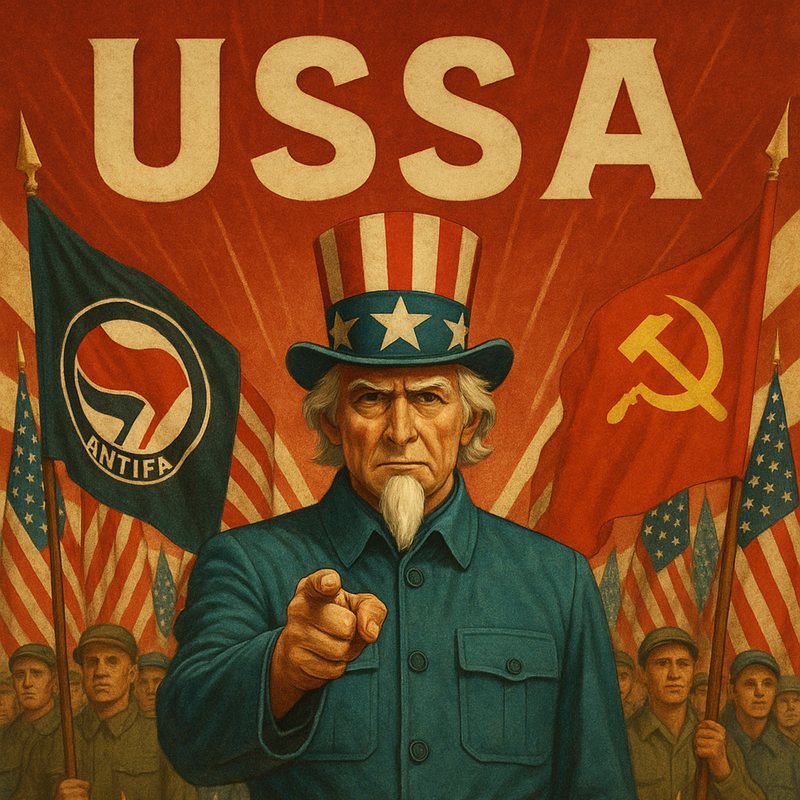
Read the full transcript (9,595 words, machine made)
Welcome to the the date. Today we're looking at, well, one of the most striking cultural shifts in recent American politics. It's this sudden pivot really among the progressive mainstream. You know, for years, many prominent voices, major cultural players, they viewed the US through this intensely critical lens, talking about compromised origins, systemic injustice, even questioning the symbols themselves. Right, using terms like criminal project or avoiding America altogether sometimes. Exactly.
And now Fast forward to today, as we're heading towards the 250th anniversary America 250, and there's this, well, this concerted effort from many of the same corners to embrace patriotic language, national symbols, even the founders, albeit selectively. The whiplash, as you said, it's palpable. Anti patriotic discourse one minute, mandatory progressive patriotism the next. Which brings us right to our central question. How do we make sense of this? Is this emerging progressive patriotism a, shall we say, calculated, maybe even cynical bid for narrative control? A patriotic heist?
Or is it something more like a necessary act of national self correction, an attempt to genuinely reclaim the country's founding promise for a, well, a more equitable future? I'm going to argue that this shift is actually a pragmatic and justifiable rehabilitation, both politically and morally. And I see it rather differently. I think this whole rebrand is fundamentally a, well, a managerial oeration. It feels engineered, built on strategic calculation, maybe even deceit, and lacking crucially authentic belief in the very symbols being Co opted. OK, let me lay out my position then. My core idea here is that this pivot isn't just cynical maneuvering.
It's maybe a pragmatic, even potentially regenerative evolution. It comes from realizing, perhaps harshly, that just, you know, pure moral scolding alone, it can't hold a nation together in the long run. You could even argue that the intense critique we saw was, ironically, its own kind of expression of love, or at least a deep investment in an appeal to the nation's unfulfilled promise. An appeal, OK. Right. So when progressives now try to quote OWN 1776 and try to reshape its meaning towards greater equity, I think we should see that as a legitimate act of inheritance, not theft. Patriotism doesn't have to be the enemy of justice. It can be, and perhaps must be, the vehicle for achieving it. The the suddenness that just reflects an urgent strategic awareness.
If we want to sustain the Republic, especially heading into something big like America 250, we have to adopt the language of belonging, of common identity. It's the price, maybe, of becoming effective stewards of the nation's future. That's a that's certainly a strong case for political necessity. But my worry, my core objection is that it this feels completely divorced from any kind of genuine moral discovery. It doesn't feel like a change of heart.
It feels like, well, like a simulation basically constructed by people who deep down maybe still a harbor that same fundamental dislike for the country as historically constituted, but now find themselves in a political bind. So my thesis is this, this new patriotism, it's a short term long con. It's driven purely by the immediate political situation. It wasn't triggered by some profound rethinking, but by the sheer necessity of stopping the other side from completely owning the narrative. Around the 250th anniversary and this rebrand, it's being staged very deliberately from above, by what you might call the managerial class, the technocrats, the narrative engineers the goal simply to neutralize that damaging charge of anti Americanism. The result, though, feels kind of well, the source material uses the phrase Soviet in texture, treating civic love like it's just another variable in behavioral engineering. The real moral problem here isn't change itself. It's the perceived deceit, that feeling that power is being asserted, but it's all you know, couched in kindness instead of flowing from real belief in the symbols they're suddenly waving. OK, let's dig into that charge of deceit because I think perhaps it misunderstands how political language actually works, especially in a climate like ours, so polarized. You're saying this new patriotism lacks authenticity because, well, the same people who were denouncing the Founders are now what, invoking Madison to defend democracy? You're suggesting the public has a finely tuned radar for fakery and you just can't rebrand conviction? Absolutely.
The whole thing seems focused on optics over conviction. That's the critical failure when elites try to just borrow language that they previously rejected. It comes across as a performance, like a conditional acceptance asking the nation to love itself, but only on these pre approved, supervised terms. It's the sincerity that's just missing if the architects of this still seem intellectually uncomfortable with or even hostile to the country's historical framework, when no amount of slick marketing is going to create genuine affection. And I think the political fallout from that kind of visible hypocrisy could be pretty severe.
See, my issue with that view is that it holds political action to an almost impossible standard of pure authenticity, especially in mass politics. Does strategy always have to spring from some perfectly pure, unmanaged emotion? I mean, societies evolve. Political language has to evolve, right? If it doesn't, it calcifies.
So this attempt to make patriotism more inclusive, to define the nation by its potential for justice, not just its past sins, I think that's inherently positive, even if the initial push was, well, managerial or strategic. Political rhetoric often starts a strategy, doesn't it? A means to an end. And then through practice, through repetition, it can become genuinely shared belief. Possibly over time, but. And think about the alternative.
What's the alternative? Just seed all patriotic language, the entire narrative of the Republic? To the populist right? That seems strategically disastrous and frankly, detrimental to the nation itself. So the utility of adopting the language of our Republic, making it speak to today's struggles, economic, social, whatever, I think that utility simply outweighs the charge that it's instrumental.
Political actions ultimately are judged by their results and a more inclusive patriotism. That seems like a worthwhile result, even if the initial spark was, let's say, strategic necessity. I understand the pragmatism argument, I really do, but sacrificing sincerity for utility feels like a dangerous trade off in the long run. It erodes the kind of moral capital a Republic needs, and I think the comparison to past patriotic moments really highlights this this managerial problem. Think back to 1976. The vicentennial.
People describe that as a kind of spontaneous carnival of belief. It was messy, loud, maybe a bit tacky, sure, but it felt like it came genuinely from below. Today's effort feels well engineered, inorganic. OK, I see the contrast you're drawing, and yes, the difference is quite stark. The populist right today certainly channels some of that messy, loud, unfashionable America vibe. It's often coarse, even vulgar, as the source material notes. But then you look at this new progressive patriotism with its careful messaging, its diverse models, its approved slogans, and this undeniable undercurrent of maybe moral condescension towards the actual historical American experience. It just doesn't feel spontaneous. Like 76.
It feels like you said focus grouped, maybe outsourced. In that right there is where the moral argument gets really interesting for me. Because while the populist right might be coarse, self interested, and frequently vulgar, as the text puts it, there's a kind of vulgar transparency to it that might actually be, in a strange way, morally clearer. It's legible. You know what you're getting. It's about appetites, it's about loud self-interest. It's not really pretending to be this detached moral guide or curator of the national spirit.
Legible in its coarseness. Exactly. Whereas the progressive elites approach often involves a sense of nudging, steering, trying to manage citizens for their own good, and that impulse to control the narrative rather than genuinely persuade people. That feels like the real betrayal of something deep in America's cultural DNAI mean, isn't the Republic partly founded on skepticism, towards centralized moral authority? On a kind of rugged individualism that prefers, you know, plain speech even if it's uncomfortable, over polished choreography?
The idea that a select few can sort of dictate the proper terms of civic affection and engineer the correct way to be patriotic. That's where that Soviet and texture feeling comes from. It treats citizens less like participants and more like subjects whose attitudes need managing for some higher ideological purpose. But you seem to be elevating transparency, no matter how crude or frankly, divisive. It's content above the strategic need for civic cohesion.
And I think that's a risky move when the very identity of the Republic is being fought over. If the definition of the nation is up for grabs, just abandoning the language of national belonging because adopting it might involve some temporary political stagecraft seems self defeating. If we just let messy, vulgar transparency run wild and monopolize the whole discourse, don't we risk just fragmenting completely civic identity? Especially in a huge diverse country like this? It needs some cultivation, some shared symbols, which almost inevitably requires a degree of, well, management. Perhaps, but let's shift to the words themselves, because this is where the heist accusation feels sharpest, the way historical terms are being ideologically repurposed. Right.
Talk about that. We'll look at how the American Revolution itself is being essentially recast as a kind of left wing prototype. The idea of no kings, for instance, suddenly gets reinterpreted to mean no billionaires or freedom from tyranny, which historically was about freedom from arbitrary government power, about establishing ordered liberty that gets twisted into freedom from tradition or freedom from economic inequality. I think this does real violence to the language because it drains these revolutionary concepts, other specific original meanings, and just refills them with contemporary, often vague managerial jargon. It feels like intellectual counterfeiting, really making the past just a convenient mirror for today's political wish list.
OK, that's a very fairpoint about semantic drift, about how meanings change. But I'd argue that this process of reinterpretation is actually a form of legitimate inheritance. It's the ongoing intellectual struggle over what a nation's founding means. Political language, especially the language of revolution and founding. It's always dynamic.
It has to be right. It needs to evolve to speak to current crises. Otherwise it just becomes irrelevant. A museum piece. So yes, maybe the Founders are tolerated now primarily as quote flawed dreamers whose unfinished work conveniently resembles the Democratic Party platform. Conveniently, yes.
But. But this reinterpretation might be necessary to keep the Republic's founding promise alive and relevant today, connecting that original fight against hierarchy in 1776, the arbitrary power of a king, to modern forms of inequality, whether economic or social. That isn't necessarily theft. It's drawing a line, connecting past to present to drive what I called self correction. We're not appealing to the founders perfection, obviously not, but to the promise embedded in their words and actions.
If you freeze the meaning of revolutionary language in 1776, you're basically saying the nation's moral and intellectual journey is over, and it clearly isn't. I'm sorry, I just, I still don't quite buy that this reinterpretation is just a benign update, because that logic seems to ignore the pretty profound conceptual shifts involved. The founders, even the most radical, they generally defined patriotism as loyalty to a system, self rule protected by law. This structure of ordered liberty that limited both state power and pure popular impulse. The current progressive reframing, though, often defines patriotism more as a kind of moral duty, curated from the top by this managerial class we've discussed. OK.
So the result is revolutionary language gets twisted to justify forms of top down social or economic control, which feels fundamentally anti revolutionary in spirit. Saying no kings means no billionaires isn't just updating language, it's swapping a fight against the nature of arbitrary political power for a fight against certain economic outcomes. It drains the language of its core focus on individual political liberty and replaces it with a collectivist ideal of managed welfare that feels like the ideological hijack is complete, using the language of freedom to potentially justify more institutional control, not less. That really brings us back to the tension between expediency and principle, doesn't it? But look, regardless of how pure we judge the motives to be, the strategic effect is what ultimately matters for the nation. This pivot, OK, maybe it was sudden, maybe calculated, but it allows progressives to finally wield patriotism as a potent vehicle for justice.
It lets them argue, convincingly perhaps, that demanding a more equitable Republic is an appeal to America's highest promise, not a rejection of it. This adoption of the language of belonging, however, and perfectly it began. That's how a nation evolves, how it repairs itself. It's about ensuring the next 250 years are better, more inclusive than the last. And I have to reaffirm my view that this current rebrand feels like a performance.
It substitutes, as the source suggests, faith with performance, conviction with optics. And the ultimate danger to the Republic might not be any specific ideology, but the normalization of hypocrisy as a political strategy. You can't really steal belief, you can only mimic it. And eventually that mimicry shows. And it further erodes the civic trust that any shared national project desperately needs to survive. So it sounds like we certainly agree on one thing. The upcoming America 250 anniversary is shaping up to be a major referendum on authenticity. This whole tension between what might be sincerely believed and what is strategically necessary, that's clearly going to keep shaping how Americans try to define their country. Indeed, it really forces a choice, doesn't it? Or at least forces us to weigh the options. Is it the demand for absolute candor, even if messy? Or is it the perceived necessity of political maneuvering to reach certain goals?
The listener, I suppose, has to decide which approach the polished, perhaps managerial performance aimed at neutralizing opponents, or the louder, maybe messier belief rooted in transparency. Which one will ultimately last longer and better sustain the Republic? There's definitely a lot more to today. We are wrestling with a question that feels particularly pointed, maybe even a bit uncomfortable. Yeah, definitely touches a nerve. It's about what happens when the language of national affection, you know belonging isn't treated as genuine belief, but more like like a product that needs an urgent, high stakes rebranding. And what's really striking here based on the source material we're looking at, is just the sheer speed of the shift they describe.
We're diving into a source that makes this really massive claim that a significant chunk of the American cultural elite who the source identifies as the progressive managerial class, that they've recently engineered, something the source calls the Great Patriotic Heist. The. Great patriotic heist. OK, let's definitely unpack that. So our mission today is to analyze this very provocative claim.
It is provocative. The idea that this recent, seemingly calculated pivot from rejecting American National identity to fiercely appropriating it, that this move is purely strategic. Driven by politics, not conviction. That's the core assertion. Exactly. And lacking any like, you know, true belief. It's a claim that if you take it seriously, it really does reshape how you might see the current political moment. Absolutely, yeah.
Think about the starting point the source lays out just 18 months ago, maybe two years. Not long ago at all. The cultural mainstream and we're talking, you know, major newspapers, universities, cultural institutions was pretty consistently talking about EU s s well, a criminal project. Founded in oppression, structural racism. That was the dominant narrative in those circles.
Right flags were often seen or presented as symbols of shame. The 4th of July, often framed as a day for lamenting historical injustice, empire, things like that. And then boom, the whiplash as the source calls it. The speed is really key to their argument. It seems critical. Almost overnight, the same commentators, the same institutions, suddenly rediscover this vocabulary of belonging.
Yeah, they start using phrases like our Republic, emphasizing the promise of America language that might have seemed well dated or even problematic to them just much before. And this sudden transformation, the source argues, that's what we need to focus on. Why did it happen? And why do they insist on calling the result, this new patriotism, a kind of fraud? Or moral theater.
That's another phrase they use. It implies performance over substance. Moral theater, OK, It suggests a deep suspicion of motives, doesn't it? Completely. The source argues that patriotism for this specific group just became a necessary rebranding exercise, almost a defensive maneuver.
So less about love of country and more about brand management. Exactly. An engineered marketing campaign launched, they claim, by people who previously viewed the nation with pretty profound structural skepticism. The source seems to be saying, you know, every era cooks up its own kind of political deceit. And ours specializes in this kind of managed, highly performative moral signaling.
That's the argument. OK, so this is the core tension we need to hold onto throughout this deep dive, right? What actually happens when patriotism gets outsourced? When it's focus groued, manage from the top down. Instead of bubbling U from the bottom, you know, spontaneously, organically, as just an expression of belonging.
That's the heart of this great patriotic heist claim. And maybe we should quickly clarify who the source means by the progressive managerial class. It's important. Good point. Who are they talking about specifically?
They define it as the educated professional elite. So people managing cultural institutions, running university administrations, foundation boards, major newsrooms, corporate DEI offices. Good keepers, the ones who shaped the narrative. Essentially, yes. The ones who control cultural perception, or at least try to.
It's not necessarily about, say, grassroots activists on the street. Got it. That distinction feels crucial. It's about institutional power. Precisely OK. So to really get why this claim feels so intense, why the source uses language like heist and fraud, we probably need to ground ourselves a bit in the history. Because American patriotism.
It hasn't exactly been static, has it? Not at all. That's a critical piece of the setup for their argument. Patriotism has always shifted, you know, depending on what the country was fighting for or maybe fighting against. Right.
So like the founding period, say 1776 through the 1820s. Back then, the source argues, patriotism was really quite intellectual. It wasn't about blind loyalty to a king or some shared ethnicity. It was loyalty to an idea. Self rule, Individual liberty. Exactly.
And fundamentally it was about rebellion. Rebellion against imperial management, against centralized hierarchy. It was actually anti establishment in a way. OK, but that idea had to evolve, right? This nation grew and faced crises. Oh, massively.
The Civil War forced a huge redefinition. Suddenly, patriotism wasn't just about an idea, it became about devotion to the Union. Preserving the nation itself. Yes, but not just geographically. It became tied to moral progress, specifically the fight against slavery. The nation had to sort of earn its continued existence by addressing that original sin.
Then things shifted again, maybe towards the state in the early 20th century. Definitely the Progressive Era, the world wars. You see patriotism becoming much more about collective duty, sacrifice, loyalty starts getting equated with the growing power of the state. That's when you get things like the income tax, national parks, yeah, big federal projects. Right.
And these expansions of central power were often wrapped in this sense of like, unnecessary civic religion. It became about what you owed the nation collectively. But that kind of consensus, that almost blind faith you didn't last forever, Vietnam seems like a major breaking point. Absolutely shattered it. The source material really highlights Vietnam as the first time anti patriotism, or at least deep skepticism about national motives truly enters the mainstream discourse. Protest cynicism about authority. Yeah, the idea that the government was inherently good or always right, that really took a beating. It never fully recovered in some ways. And that skepticism, according to the source, just got deeper and deeper, especially by the late 2010's. Dramatically so.
You saw intellectual and academic discourse deliberately blurring the lines between patriotism and nationalism, and nationalism was increasingly framed as inherently dangerous. You know, a slittery slope to something ugly. So this is the period the source is really focusing on leading up to the alleged heist, when dissent became almost the default stance in some elite circles. Exactly when the core identity of the nation itself was frequently being questioned, critiqued, even rejected. You see it in the language. They point to terms like colonizer becoming common not just historically, but applied to contemporary figures. Right, or the use of turtle.
I like the indigenous name for North America. Using it symbolically was a way to reject colonial names, reject established authority, showing a really profound break with the conventional narrative. OK, so that context is crucial. It sets up this stark contrast the source makes to really hammer home the scale of the alleged fraud. Yeah, 1976 versus 2026. Yeah, the bicentennial versus the upcoming semi quincentennial.
Let's talk about 76 first. The Bicentennial, 200 years. From the descriptions, it sounds like Yeah, well, pure unmanaged chaos in a good way. Kind of. It's described as this delirious, almost kitschy wave of civic self love. And the key thing It wasn't organized from Washington DC. It just happened everywhere like. Gas stations selling red, white and blue stuff? Yeah, small town parades popping up. Exactly.
Thousands of them. And the source really emphasizes its authenticity. They see it as this moment of genuine, almost collective therapy after the traumas of Vietnam and Watergate. Spontaneous Main St. PTA bake sales. Maybe some questionable folk art? Totally gaudy?
Maybe, but real? There was no corporate sponsor shaping the message, no algorithm driving the sentiment. It came entirely from below. And that very spontaneity, that lack of control, the source argues. That's what unnerves the contemporary managerial class.
Precisely. They quote something like unregulated affection for country looks like a crowd they can't choreograph. It's messy, unapproved, maybe even a little embarrassing to sophisticated tastes. OK. So contrast that feeling, that grassroots explosion, with what the source anticipates for America 250 in 2026. It's night and day.
According to them, the bicentennial was this sprawling, messy carnival of belief. America 250. The source says it's already shaping up to be a highly managed, carefully staged marketing campaign. Orchestrated from above. Yes, planned, curated, focus grouped. The whole atmosphere feels different, prepackaged. And this difference unmanaged, maybe slightly tacky populist pride versus managed, sleek top down symbolism that's central to the heist argument.
Absolutely crucial. It sets the standard. If the feeling in 1970s thought was real, then the planned feeling for 20 76 must be, by their definition, engineered a counterfeit. We have to keep that baseline in mind, that it explains the strength of the language, the accusation of fraud. They aren't just disagreeing with the message, they see the whole delivery mechanism as fundamentally fake. Fake in the sense that it's designed to mimic that 76 feeling, but without any of its complexity. It's grassroots energy.
It's, well, it's authenticity. Which brings us right to the motive. If it's a heist, why do it? Why would this cultural elite, the same group the source claims previously scoring the flag, suddenly launched this massive rebrand? The source material doesn't mince words here. The motive, they claim, was pure control, not some moral epiphany, not a genuine change of heart. Control.
Control driven entirely by political necessity, by circumstance. It's fundamentally about securing and maintaining their cultural gatekeeping authority. That's the argument from the source. Their role as the shapers of cultural perception. Exactly. And the specific circumstance, the threat they proceed, was incredibly specific.
It revolved around the potential return of Donald Trump to the presidency. OK, so the argument is a Trump return. Change the calculus. Completely, according to the source, they state that a potential second Trump presidency would have given him de facto authorship over the entire 250th anniversary celebration. Meaning he would control the narrative, the parades, the speeches, the whole tone.
Everything The official story of America at its 250th birthday. And for the cultural establishment, as the source portrays them, this was an existential threat. The threat to their narrative. The threat that he would effectively own the story of America itself. If Trump claimed patriotism loudly and unapologetically, the narrative they've been building, America as fundamentally flawed, oppressive, would be sidelined, replaced by his version.
Maybe America First triumphalism. So the only way to stop? That was to launch an immediate counter narrative to seize the symbols themselves. The establishment, the source claims, could no longer afford the intellectual luxury of mocking the flag or discepting the founding. They had to appropriate it.
Use the flag to beat him to the punch, essentially. It became a political necessity claim, the symbols of patriotism, to deny them to their chief political opponent. That's the raw political calculation the source describes. OK, I have to jump in here. Calling it a heist implies, you know, deliberate malice, total cynicism. Yeah.
Is the source giving any room at all for the possibility that maybe? Yeah. Maybe some of these elites genuinely had a change of heart. That's a really fair question. Or maybe just realize that constantly attacking the national identity, regardless of the country's flaws is just bad politics.
Yeah, and culturally unsustainable. Maybe some actual self correction is happening? It's a critical point to raise. The source is highly skeptical of good faith motives here. They might concede that the need for some kind of unifying national identity is real, maybe even belatedly recognized. But they see the timing, the suddenness and the texture, the specific way this new patriotism is performed, as overwhelming evidence of manipulation, not sincerity. The texture being that managed feeling we talked about. Exactly.
They view it as what they call a short term long con, a focused, maybe 2 year marketing Sprint. But what goal? The sole purpose, they argue, is to neutralize the political optics. The charge of being anti American just long enough to define the 250th anniversary on their own terms and maintain control of the narrative. OK, so if the motives is presented as political and managerial, how does the strategy actually work?
How do you reframe patriotism so quickly? Well, according to the source, it requires fundamentally rewriting 1776 itself. Rewriting the American Revolution. For framing it, the source describes how the revolution is now being actively presented in these circles as a kind of left wing prototype, a populist uprising against hierarchy. Said of the more traditional story, ordered liberty, constitutionalism, checks and balances. Right.
Less about structure, more about identity and hierarchy. It gets reframed as primarily an identity revolution almost rather than a political or structural 1. And how does the language get repurposed? The source mentioned semantic hijacking. Yes, that's central to the strategy they describe.
It's where the actual words and phrases of the revolution are systematically sort of emptied of their original classical meanings. And then refilled. And then refilled with contemporary, often managerial or therapeutic jargon. The source gives some pretty potent examples. Like what?
Take the foundational slogan No Kings. Simple enough, right? In 1776, that meant rejecting the divine right of monarchs, establishing popular sovereignty, feeling unchecked, centralized power. OK. Standard understanding.
Today, the source argues, No Kings is being subtly reimagined and used almost as shorthand for No Billionaires. Wow, that's quite a leap. It's a huge ideological shift, right? It equates modern economic inequality, however extreme, with 18th century hereditary monarchy. It detaches the language from constitutional structure and applies it purely to, say, economic or social resentment. So the critique shifts from structure and power to wealth and distribution using the same historical words. That's the claim.
Similarly, they argue, freedom from tyranny gets subtly morphed into something closer to freedom from tradition. So liberation from social norms establish morality rather than just political oppression. Exactly. The powerful, stirring language of independence is still used, but its target shifts inward towards cultural constraints rather than external political control. What about the Founders themselves?
They're awkward figures in this kind of reframing, aren't they? You can't just ignore them. No, you can't. So the source says they're now sort of tolerated, but conditionally they're no longer just denounced as slaveholding hypocrites, which was arguably the previous dominant critique from this managerial class. So how are they presented now?
They get reframed as flawed dreamers, visionaries whose hearts were in the right place but whose unfinished work just happens to align perfectly with the current progressive political platform. It's like an ideological adoption. So the revolutionary language gets recycled, but it's floating in. What do the source call it? A semantic fog?
It's. A semantic fog of therapeutic inclusivity. Yeah, it's designed to be slightly confusing, but strategically useful. And the immediate goal, the practical point of all this linguistic maneuvering. According to the source, it's simply to neutralize that damaging anti American charge just long enough to get through the America 250 anniversaries even without Trump or his allies owning the patriotic narrative.
Survive the anniversary. Survive the anniversary and maintain their cultural gatekeeping authority. Secure the brand before the competition can claim it. That's the cold strategic read from the source. It sounds exhausting, honestly, both to perform and to walk.
And that exhaustion, that sense of performance, brings us right to the core moral argument. The source makes the difference between genuine belief and simulation. The Achilles heel of the whole operation, they claim, is what the public's BS detector. Essentially, yes. What they call the American public's radar for fakery.
And that radar, the source argues, is going off like crazy right now. Blaring loudly, they suggest, because this new progressive patriotism feels less like genuine affection and more like a carefully constructed simulation. It feels like patriotism authored by people who maybe still deep down, don't actually like the country they're suddenly professing to love. Is that the idea? That's the core accusation, and the evidence they point to is the tone.
The tone. How so? It's not joyous, it's not messy, it's not visceral or passionate, It's relentlessly managerial. Managerial patriotism? What does that even feel like? The source uses some pretty cutting analogies. It feels like the tenderness of an HR department, or like a hostage negotiation, where the nation is being told it must love itself, but only under strict supervision, with lots of approved language and constant reminders of its flaws, with disclaimers attached.
I can always picture that it's the opposite of like a spontaneous pub sing along of the national anthem. It's a structured meeting with talking points and diversity checklists. Exactly, you nailed it. The source really hammers this idea that the required enthusiasm feels outsourced, like they're beta testing patriotism as a concept on the country. And you see the same patterns across elite messaging campaigns. Approved slogans carefully, diverse models in the imagery, the constant celebration of consensus, and what the source describes, quite pointedly, as the faint odor of moral condescension.
The elite guiding the poor, misguided country toward a healthier, more approved view of itself. That's the vibe they detect, and they compare this whole approach to creating a consumer product. Right. Patriotism is a lifestyle brand. Yes, focus grouped into something sterile, red, white and algorithmic.
Blue is the phrase they use and the killer analogy the. Plant based meat. One, that's the one. This new patriotic fervor is the cultural equivalent of plant based meat, engineered to mimic the flavor of something real without any of the moral cholesterol. Oof. That's brutal, but potent.
It really lands, doesn't it? It suggests patriotism stripped of all the difficult, complicated, sometimes ugly, organic stuff of a real nation. And Polish to the smooth, sterile Sheen of acceptable managed virtue. Exactly. So if that's the case, if it feels so managed and artificial, how does the source explain why this style seems to be struggling, especially when contrasted with the populist right specifically, you know, Trumpism? Does the source romanticize Trumpism then? Not at all.
They are very clear about its flaws. They describe it as coarse, vulgar, often self interested, maybe greedy, certainly shameless a lot of the time. OK, sounds critical. It is but, and this is the crucial distinction they make, it is legible. Legible. What do they mean by?
That they mean it's motivations, even it's vices are pretty much on on the table. It's a creature of appetite, of ambition, of wanting power and recognition. There's not a lot of subtext or hidden motive. You kind of know what it wants. OK, it's blunt.
It's blunt, and this legibility, this lack of pretense, surprisingly grants it a kind of moral advantage in the sources critique of the managerial class. So are they saying bluntness is better than manipulation? Essentially, yes. The source frames it like this. The populist right basically says yeah, I want the gold tower and the big parade, and I don't really care what you think about it. Okay, correct.
While the managerial left in this analysis says we're only seizing control of the narrative and managing your patriotism for your own good, we're doing it kindly to help you. And for a culture that's supposedly prizes straight talk, maybe even distrust smooth talkers. The first one, however offensive you might find its goals, feels in its sheer directness maybe more American, or at least less deceptive than the second. That's the argument. So the core critique is that the managerial left wraps its power plays in the language of kindness, nudging, steering, helping the country understand itself through social engineering. Right.
And this perceived manipulation, this polite deceit, is viewed by the force as fundamentally more corrosive, maybe morally inferior to just rude honesty, because manipulation is harder to identify and fight than open ambition or even open vice. It's the instinct to manage, to guide, to correct, rather than just persuade or argue. That's what gives this new patriotism it's unsettling feel. That's what the source argues makes it feel Soviet in texture. Not communist, obviously, but relying on civic love as a form of behavioral engineering.
Trying to replace organic faith with prescribed performance. Replacing conviction with a focus group consensus. It sounds like the age-old problem of hypocrisy. The Puritans feared it as a sin. The source seems to argue our modern elites have turned it into a political strategy.
That's a great way to put it. And this strategic hypocrisy, this managed approach, leads directly to why the source thinks it fundamentally clashes with, well, with America's cultural DNA. The operating system rejects the patch idea. Exactly. That's such a powerful analogy they use trying to run Scandinavian social democracy on frontier software.
OK. Can you flesh that out? What is the source mean by Frontier software or this American cultural DNA? The core argument is that the US, historically and culturally, was built by people who were almost by definition risk takers, gamblers even. People who left everything behind rolled the dice.
Right, people who often failed, sometimes dramatically, before maybe succeeding. The source calls the US an almost embarrassingly sink or swim country. Which sounds inherently resistant to collectivist management. Deeply resistant. It's a culture, the source argues, that doesn't primarily venerate the vulnerable or the collective in the way some other societies might. It celebrates the stubborn survivor. The individual who picks themselves up stands their ground.
The theology is less Blessed are the meek and more. More Get back up, dust yourself off and try again. Maybe even Don't Tread on me. And how does that translate into a moral code that pushes back back against this managerial impulse? It fosters a deep seated value for standing your ground, protecting what's yours physically and metaphorically, and crucially trusting your own judgement over some committees consensus or a bureaucrats guidance. The basic temperament just rejects being handled. Does the source give an example of this? They use a pretty stark 1 the cultural resonance of self-defense.
They argue that shooting an intruder who breaks into your home in the American cultural context, it often transcends legal debate. It becomes symbolic. It's a parable of sovereignty. They say self-defense acquires this moral grandeur because it embodies that ultimate individualistic imperative. Trust yourself.
Protect your sphere. Don't wait for the committee to approve. OK, so the attempt to graft this layer of collectivist virtue of managed emotion and prescribed behavior onto this fiercely individualistic, self reliant temperament, it's failing. It's like an organ transplant rejection. According to the source, the system fundamentally rejects the managerial patch.
Americans, they insist, will forgive a hustler long before they forgive a handler. Because the handler implies condescension control. Exactly. The source maintains that the managerial class fundamentally misreads the countries energy. They think America yearns for instruction for therapeutic guidance.
When really the default is suspicion of anyone trying to control the narrative or manage feelings. That's the argument. Suspicion of control runs deeper than the desire for guidance. But here's a twist. Maybe the source points out a danger for the engineers of this so-called heist, right? The language itself is powerful.
Yes, this is a fascinating paradox. They identify when you strategically start using terms like defend democracy, invoking James Madison, or you readopt our Republic. A phrase may be previously dismissed as patriarchal. You risk the original, meaning bleeding back in. Precisely, you can't play with the fire of the founders language, liberty, self governance, resistance journey for too long without its original radical meaning starting to to resurface.
The source warns that the counterfeit oxidizes into the genuine article. And for an ideology supposedly built on careful control and managerial distance, accidental sincerity must be terrifying. What would be? It means losing control of the language, losing the ability to define the terms of the conversation if people start taking the words at face value again. The source describes watching this performance as almost tragic. Tragic, almost Greek, is the phrase watching elites who perhaps just a few years ago built careers arguing America was never great, now struggling to convincingly say God Bless America without a visible sense of irony. Or, you know, an inner cringe.
The performance itself reveals its own falseness because the underlying discomfort, maybe even contempt, for the messy, unmanaged parts of the nation is still visible. That's the claim. The mask keeps slipping, and the ultimate prognosis from the source is pretty grim for the success of this heist. Why? Because the country can smell the management.
That's the bottom line. The heist they predict will ultimately fail, probably through sheer exhaustion. Exhaustion. Yeah, because the lack of genuine belief simply cannot sustain such an elaborate high stakes performance indefinitely, especially under the intense spotlight of something like the two the 150th anniversary, the effort becomes too much. OK, so we really dug into the sources critique of this great patriotic heist.
The alleged motive, the strategy, the cultural clash, the predicted failure due to inauthenticity. But like you said, no deep dive is complete without looking at the other side. Absolutely, we need to give the alternative perspective it's proper to. What if this whole pivot isn't a cynical theft at all? What if it's actually necessary evolution or even rehabilitation? That counter perspective is definitely out there and the source acknowledges it, framing it as patriotism as self correction.
OK, self correction, how does that argument go? This view argues that the shift is a kind of rehabilitation, not theft. It reframes the critique of America's injustices not as anti Americanism, but is actually the deepest possible expression of patriotism by appealing to the nation's founding promise. The idea is when progressives point out flaws and demand change, they aren't rejecting America. They're holding it accountable to its own highest ideals, the ones written down in 1776, even if they weren't fully realized then.
So in this interpretation, demanding a more equitable Republic isn't betraying the nation. It's showing a deeper fidelity to the original revolutionary idea. It's saying I love this country enough to demand it live up to its promise. OK, and how does this view explain the suddenness of the shift, the whiplash? This counterargument suggests it might be driven by a pragmatic, maybe even overdue, recognition.
Moral scolding alone can't hold a nation together. A realization that you need positive vision, not just critique. Exactly that they needed a positive vehicle for achieving the justice and change they seek. And that vehicle ultimately has to be patriotism itself. You can't build if you only tear down. So if this group, the managerial class, successfully reclaims 1776, even if they frame it as unfinished work, then they earn the right to remake.
It they inherit the responsibility? Yes, using patriotism as a vehicle for justice and reform. In this view, that's legitimate inheritance, not theft. It's the difference between shouting I hate my family and saying I love my family. And because I love it, I demand we fix these problems. That's a great analogy for the shift they might claim they're making from outsider critic to demanding insider. OK, so 2 very different interpretations of the same phenomenon, but regardless of whether the motive is genuine self correction or cynical strategy, the source material seems pretty convinced that the 250th anniversary in 2026 is going to be a major moment of truth. A showdown.
Yeah, the ultimate referendum on authenticity. This is where these two competing versions of America and American patriotism are going to clash head on. How does the source see that playing out? They predict a really stark contrast during the celebrations. On one side you'll see the professional patriotism, the results of the alleged heist, meaning the focus grouped flags, the carefully managed messaging, the speeches polished by committees to be inoffensive, universally approved, maybe a little sterile.
OK. The managed version and on the other side. On the other side, you'll see what the source calls the messy, loud, unfashionable America, the maybe less polished, more spontaneous expressions. The people who still believe the country is worth arguing about loudly in public may be getting it wrong sometimes. Exactly. Unafraid of being loud, maybe a bit vulgar, Definitely not Focus grouped the raw energy.
The professional manage side will probably look better in the official photos and corporate reports. Oh, undoubtedly it will have that sterile Sheen, but the sources final bet is on the raw, unfiltered version. That's the one they believe will actually sustain belief and last longer. Why? Because it originates in genuine conviction, however imperfectly expressed, not in a marketing plan.
So the ultimate conclusion of this really powerful if critical analysis is pretty firm, then the heist fails. It fails, they argue, because authenticity is the only real patriotism. You can't actually steal belief. You can mimic it, but mimicry always betrays itself eventually, especially under pressure. And a Republic survives it. Indoors, the source concludes, not because it's perfect or because it's elites currently find it fashionable to praise it, but because deep down, the culture still prefers the ugly truth, the sometimes rude, vulgar honesty of its people, to the beautiful lie of managed, curated public feeling. A country founded by rebels, they argue, ultimately can't be governed by life coaches or brand managers. That's the final word from the source. A pretty provocative 1.
It really is. This whole analysis gives us so much to think about, especially as we head towards 2026. So considering everything we've unpacked today, the history of patriotism always shifting, the sources claims about strategic motives behind the recent pivot, the arguments about a cultural DNA that resists management and that final judgement on authenticity versus performance. It's a lot to process. It is. So we leave you, our listeners, with this question. What does it actually mean for you to define American patriotism today?
Knowing, as this analysis suggests, that the very language is constantly being rewritten, fought over, repurposed by different groups seeking to control the national story? How do you decide what that word truly means? And maybe more importantly, to whom does that narrative, that story of America, ultimately belong? A question definitely worth mulling over long after the fireworks whether they're. Real Today we're looking at the Great Patriotic Heist. Essentially, it argues, the progressive left suddenly pivoted from calling America a criminal project to grabbing patriotic symbols.
Right. Purely strategically, the piece says to counter the populist Right before America 250. It's a really sharp piece, very dense. Our aim here is just to offer some high level thoughts to maybe enhance its impact even further. Absolutely. The writing itself is fantastic.
Those analogies like plant based meat for patriotism or the tenderness of an HR department, they really land phenomenal stuff. The core thesis feels very solid, so maybe the 1st place to look in is. Is the completeness of the contrast really defining the two sides? OK, Yeah, the piece does a great job painting the managerial left, the handlers. It uses these vivid analogies, you know, Soviet and texture, that kind of thing. Really nails their calculated approach. It really does.
And to make that contrast hit even harder, maybe the argument for the other side, for populist authenticity, could be defined by something more than just, well, temperament, more concrete political action. Right now, the critique of the elite is super specific. They're the engineers, the managers trying to fix things behaviorally. And the populace, the hustlers, they come across as, you know, authentic, maybe course, sink or swim types defined by affect, being loud, transparent, trusting, gut judgement. That parable about shooting the intruder?
Exactly that focus on affect. That's where there might be a slight vulnerability. It risks leaving authentic patriotism a bit too abstract. How so? Well, it could open the door to the criticism that it's just romanticizing vulgarity rather than showing a genuine moral superiority over manipulation. I see.
If the hustler is primarily defined as crude, then the handler can just sort of claim the high ground of sophistication, right, And dismiss, the populist says. Just throwing a tantrum. But wait, isn't the whole point that the populist side is unfiltered? That the candor itself is a moral good against the managed deception? Isn't that enough?
It's a strong point, but crude can be easily dismissed as just bad manners or maybe a lack of self-control. You know, not necessarily a civic virtue. OK, so the suggestion here is maybe to strengthen that contrast by showing how this unfiltered patriotism shows up civically in actual events beyond just the leader style. Moving from style to civic methodology. Precisely. So instead of just the self-defense metaphor, maybe draw a clearer line showing how the populist right translates something like the founders ordered liberty into a current non managerial action.
Like what for example? Well, you could explicitly link that value they place on, say, plain speech or irreverence to specific modern populist movements or moments. Show how their lack of Polish, the opposite of obsessing over optics, is itself framed as a defense of the Republic's original spirit. OK, so it's not just about being loud, it's about why they're allowed civically speaking. Exactly. It makes the hustler a figure of principled resistance, not just reaction.
It grounds that core distinction between the Hustler and handler in concrete actions, proving it's a method, not just a mood. That definitely adds weight. It gives the hustler that civic virtue needed to counter the handler's claim to moral superiority through process. Right, it shores up that side of the argument against the very well defined managerial methods of the left. OK, that makes a lot of sense, so let's pivot slightly. Talk about the timeline of this heist. The piece uses that great historical contrast, the spontaneous and 1976 Bicentennial versus the planned curated 2026 semi quincentennial. Yeah, that contrast is absolutely central, isn't it? It's the backbone of the argument. So how can we make that even sharper? Well, one way to sharpen the contrast between 76 and 26 might be to lean into those specific modern academic critiques of the bicentennial that are mentioned in the supporting notes. The idea that critics now see 76 as almost sinister, like proto fascist.
Exactly. The essay notes that and correctly dismisses the cynicism, but it doesn't fully weave that critique into the main argument structure. Right, I see what you mean. It's mentioned, but maybe not fully weaponized for the argument itself. Yeah, because, the essay argues, the managerial class is defined by this deep fear of unmanaged affection.
Doesn't. It it does. So if the piece can show why they fear 1976, spelling out that they genuinely see that kind of spontaneous patriotism as, I don't know, a spectacle of sin, something that ignores systemic issues, it really amps up the stakes of the heist. It makes the appropriation seem less opportunistic and more like an ideological necessity for them to tame that energy. Precisely, it explains their motivation on a deeper level.
But hold on, the presumed audience for this piece probably already gets the critique of the managerial class right. Do we need to slow down and spell out the opposition's worldview using their jargon? I don't think it's slowing down. I think it's adding structural tension. It's about showing the enemy's ideology more clearly.
OK. So the suggestion is maybe to explicitly use some of that managerial vocabulary. You know, Colonizer, Original Sin, Turtle Island, whatever fits to frame their critique of 76. Ah, use their words against them, essentially. Kind of make it clear that what the progressives found problematic in 1976 was precisely it's unregulated nature, the lack of control over the affection.
So you're showing the reader what the handlers believe they're saving the country from by orchestrating 2026. It justifies the heist in their own minds. Exactly. So when you talk about that 76 spontaneous carnival of belief, maybe immediately juxtapose it with the modern critique. Like the managerial class sees that carnival not just as tacky but as dangerous and outburst of unaccountable affection, the kind that papers over systemic injustice or ignores colonizer history.
I see it demonstrates the heist isn't just politics, it's rooted in a fundamental, almost theological need to manage and control sincere patriotism. Right. It deepens the moral case against that control by showing the depth of their ideological commitment to control. You use their own framework to highlight how fundamentally they disagree with spontaneous national feeling. That definitely elevates it, takes a background point and pulls it right into the central conflict.
OK, great, let's move to the ending then, the piece argues the heist will ultimately fail. Yes, through exhaustion, not violence. Because no amount of branding can sustain a love. You don't feel the counterfeit oxidizes? It's a powerful image, that oxidation. It is very poetic, but maybe does the ending need a slightly clearer consequence for the handlers? Failure by exhaustion is maybe a bit philosophical. Yeah, maybe a bit.
The assertion is strong, but the projected outcome could be defined more sharply. What does failure mean for them specifically? Well, the essay paints them as trying to redomesticate populist energy, right? Using HR like tactics, Civic love as behavioral engineering. So what's the worst outcome for a class defined by control?
Losing control, obviously, but losing control of what I think the worst thing is losing their authority to define reality, to manage the narrative. That description of failure, the stitching shows it's good, but maybe a touch passive for such an aggressive piece. Yeah, perhaps. For an essay that's pointed, the failure should probably result in a more tangible loss, like a political or cultural loss of authority for the managerial class itself. OK, so connect the failure directly back to what?
Maybe connect it directly to linguistic collapse to them losing the very ability to curate national morals through language. So the failure isn't just that they feel tired or that the branding looks fake. It's an active political consequence. They lose their role as the nation's moral curators. Exactly. Their attempt to control backfires spectacularly, so strengthen that link between them appropriating language like using no kings to mean no billionaires and how that ultimately fails.
The piece hints at this, saying the counterfeit oxidizes into the genuine article. Right. So how specifically does the language backfire? What does that collapse look like? Well, maybe specify how it backfires.
Perhaps suggests that the deep original meaning of the founders syntax, that core belief in self rule independence, starts to seep back through the managerial disguise. Like the original programming reasserting itself. Yes, the words they tried to steal suddenly start meaning what they used to mean, rendering the handlers careful spin. Totally irrelevant, even counterproductive. And that transfers credibility back to. Back to the loud, vulgar and free citizens, the ones who arguably never stop speaking that original language. The ultimate failure isn't just bad PR, it's the public seeing the beautiful lie for exactly what it is. Which collapses their monopoly on meaning. Precisely, and with it their authority. The failure becomes a decisive cultural loss for them. They lose the power to manage the national story. That makes the ending much more active, much punchier. It loops back perfectly to the theme of trying and failing to manage sincere belief, a loss of authority, not just running out of steam.
Exactly. It gives the conclusion the kind of political bite that matches the intensity of the rest of the argument. OK, this has been incredibly helpful, really drilling down into an already excellent piece. So just to recap the main areas we touched on for strengthening the Great Patriotic Heist. Sure.
First was about fleshing out that definition of populist authenticity, giving it more concrete civic examples, moving beyond just temperament to really show it as a form of principled resistance, making the hustler a figure of clear civic virtue. Right. Second, leveraging that modern critique of the 1976 bicentennial, using the managerial classes own fears and vocabulary about unregulated patriotism to really under score why they feel the need for this heist. Raising the ideological stakes. And finally, sharpening the ending, defining the failure of the heist not just as exhaustion, but as a specific loss for the handlers, a collapse of their linguistic control, their authority, their monopoly on meaning when the language they appropriated turns sincere again. Great.
These feel like targeted, high level suggestions that can really maximize the leverage of what's already a very forceful argument. It's truly sharp, necessary work. Agreed. We strongly encourage the author to keep refining it. It's an important piece. And please do send it back if you revise it based on this discussion, we'd be very interested to see it again. Definitely we look forward to.
The Great Patriotic Heist. So what's this all about? Well, it looks at how the progressive elite kind of suddenly flipped, right? One minute they're calling America A criminal project. Flags are props of shame.
The next, bam, they're all about patriotism. The source calls this sudden switcheroo the Great Patriotic Heist. Let's dig into why they think this happened with three main takeaways. First, the argument goes, this isn't some heartfelt change. Nah, it's purely strategic. See, the country's 250th birthday, America 250 in 2026 is coming up fast.
The fear that rivals would basically own the whole story of America. So boom, a quick two year marketing Sprint to grab the flag and push their own narrative. Second this new patriotism. It's described as well, managerial, think, top down control, not real feeling. It's an attempt to rewrite the script, framing 1776 less about ordered liberty and more like some early progressive uprising against hierarchy.
You know, twisting no kings into something like no billionaires. It ends up feeling kind of forced, like patriotism run by an HR department, if you get me. And finally, the piece says this whole act, it's bound to fall. Flag because it just isn't sincere. American culture tends to value, you know, straight talk, grit, getting back up.
It doesn't really vibe with this managed moral paternalism stuff. You just can't. Fake. Belief, right? You can mimic it for a while, but that's not going to last. So the take away is pretty clear. In a culture that values keeping it real, genuine authenticity is the only patriotism that truly sticks.