Read the full transcript (10,252 words, machine made)
Welcome back. So these sessions cover a really tough period for the party of Beast Bond, a companion's death on Mount Gaffes, A tragic accident and then a very deceptive return to Valaki. The groundwork here is fantastic. I mean, it shows these brutal consequences of failure. Now we just need to look at how to maximize the, you know, the lingering impact of it all.
I agree completely. The material is strong, really strong, especially in how it generates these high stakes failures. Yeah. But our job here is to make sure those failures don't just happen to the characters, but that they that they inhabit them. We're talking about maximizing that narrative reverberation.
OK, so let's begin where I think the greatest emotional taxes due, but the payment was kind of summarized away. Right, and here's the core idea. The true horror and significance of major setbacks can be deepened by actively detailing the immediate emotional cost rather than summarizing the transition away from the tragedy. And we're talking about two massive events here. First, Truxador's brutal death by the rocks on the mountain.
Yeah. And then later, the crushing accidental death of the maiden after that cart disaster. Both are inherently dramatic, but after these defining traumas, notes just indicate the party moves on almost clinically. Exactly. If we look at the notes after the maiden's death, it literally says the party simply turns and continues on their way.
And after Tracidor's cremation, they only take an hour recuperating before they just, you know, make the strategic decision to descend. That immediate detachment, that quick back, it really risks minimizing the gravity. It's almost like a kindness to the characters, but it's a cruelty to the drama. It really is. It turns what should be a defining moment of tragedy into just another waypoint on the map.
Right. If the characters bounce back instantly, the reader doesn't feel that loss. We're left asking, did that even hurt? So the problem isn't that the characters don't care, it's that the notes, by just summarizing the action, skip over the necessary emotional processing. It's a pacing choice that kind of deflates the consequence. We need to force them to pay that emotional tax. And that tax is the story here.
But how do we dedicate that space without, you know, grinding the story to a halt? They do have to keep moving. Well, my suggestion is to dedicate focused, specific space to the characters immediate reactions, coping mechanisms, or just the subtle manifestation of trauma, even if it delays the next plot point by a few narrative breaths. OK. The descriptive quality that was used for Urihorn's mystical bonding with the Mountain Lion.
That intimate sensory detail that needs to be applied to these moments of distress. If they can write peace beautifully, they have to write pain just as beautifully. That makes sense. We're not adding a chapter on therapy. No, we're adding a paragraph of sensory detail that carries the weight.
So let's start with the Maiden's death on the road. OK, so instead of them just turning away, maybe we note how the scene affects the character with the most agency in that moment, Radley. The Eldritch night. Right, He let the cart pass him. Exactly.
He carries the heaviest burden of responsibility for that disaster. So you focus on a specific horrible detail suggests that the sound of the girl's screams seems to linger, you know, echoing off the trees even after the sound of the impact has faded. That's powerful. It turns a physical sound into an internal psychological scar. Precisely.
Or you could describe a shared heavy silence between Yurihorn and Dermont as that he struggled to process their failure to catch the cart. That silence, you know, against the gruesome scene, it speaks volumes. It's the quiet shame of not being fast enough. And what about on the mountain after Tracidor's cremation? That's a totally different kind of trauma, almost cosmic.
We just shift the sensory focus there. We lean into the physicality of the grief. Mention the lingering acrid smell of burning flesh, not just ash, but the undeniable scent of their friend. Or describe how the physical exhaustion causes the party to move slower, literally dragging their feet through the snow. You make the consequence manifest in the environment.
Yes. That physically represents the weight of loss on the journey back down, making the trauma part of their bodies, not just their thoughts. When you make the reader feel that physical toll, you maximize the cost of the sacrifice. That focus on the immediate burden leads right into how they handle the similar pressure point later. Moving from that horror on the road to the village we hit that crucial deception scene with is Mark. Yeah.
Which carries its own kind of moral weight. And this brings us right to our second opportunity. The significant decision to deceive is Mark about Arena's true fate offers an excellent opportunity to inject profound narrative tension into an otherwise straightforward scene. I mean they don't tell is Mark the church was burned, the priest was killed, that straw demanded Irena. Or that the mob surrendered her. A terrifying mob.
Yeah, they just say they left her at the church and moved on. The lie of omission is just monumental. And the weakness is that the reporting of this betrayal is, well, it's flat. It reads like a factual account of what was said instead of a tense, high stakes moment of coordinated lying. It makes the moral betrayal feel too easy. And it's made worse by the scene right before it is Mark is so paranoid that he douses them in holy water to make sure they're not undead.
Exactly. That test establishes immediate paranoia, but the dialogue that follows doesn't really leverage it. Precisely. Right now, it sounds easy to lie to a grieving, desperate man who has just shown he doesn't trust them. This is a moment where they cross a moral line, and the notes just have to reflect that weight.
The reader needs to be leaning forward, terrified they'll get caught. So the suggestion has to be about reframing it as a performance. Absolutely. My suggestion is to frame the interaction not just as a factual report of the lie, but as a delicate performance where every verbal omission and partial truth is loaded with the danger of discovery. This shift would highlight the mental gymnastics Radley and Derman have to do while facing this desperate Ismark.
They aren't just answering questions, they're improvising an alibi under extreme duress. So how do we translate that internal performance into readable action? What does that high wire act look like on the page? You focus on the sensory details, on the physical discomfort of the liars. Describe the effort it took for Radley and Dermont to maintain their composure.
Dermont the arcane trickster. He's usually quick witted, but here he has to measure every single word. Maybe he pauses too long before answering. Yes, or he avoids ismarks Eye contact. That internal pause, described well, transmits the tension directly to the reader. And you could contrast their state with Ismarks to heighten the stress.
You have to you contrast the intense urgency of Ismarc, who is pressing, pressing them about his sister, with the overly controlled, almost rehearsed answers of the party. Maybe Radley, disheveled and exhausted, struggles to hold a serious face. Describe the physical pain of forcing that mask on. That immediately raises the stakes. We move from just omitting facts to actively performing a denial of trauma, which is so much more dramatic it builds massive narrative irony.
And that irony is the ticking clock we have to highlight, the palpable relief mixed with immediate guilt when is Mark finally accepts the story and rushes off. Right. That dual emotion relief. It worked. And guilt over the betrayal?
It shows the emotional burden the lie imposes on them. And by making that relief explicit, you emphasize that this omission will have consequences. It's going to hang over them just waiting to explode. OK, now let's circle back to Mount Gehacas. Because the failure to reach the Amber Temple and losing Trxador, it needs a better sense of closure.
We talked about the emotional toll, but what about the physical arc of the retreat itself? And that brings us to pacing. The crucial transition phase following the intense rock battle and the failure to reach the Amber Temple requires deliberate pacing to fully register the severity of the loss and the strategic necessity of retreat. The weakness here is structural compression. The notes summarize the retreat from Selinka Pass way too fast. After the death in the battle.
It jumps from searching an empty tower for fuel to just a simple summary. They again climb over the wall and then journey back down. It compresses what should be a grinding, painful withdrawal into just a few quick lines of text. Yeah, and this rushes past the physical and psychological toll of abandoning their mission. It leaves the weight of tracidor sacrifice feeling less impactful. The reader needs to feel that Mount Gehacas rejected them. Isn't just the rocks, it's the mountain they couldn't conquer. That's it exactly.
The mountain has to remain an active antagonist even after the demons are defeated, so the suggestion is to expand the description of the retreat, making sure the action emphasizes the physical difficulty, the unrelenting cold, and the psychological impact of failure. We need to make the mountainside feel like it's still trying to kill them. So if we slow down, how do we keep the descent from just becoming a tedious travel log? Instead of summarizing, you focus on the sheer mechanics of the retreat, the contrast between the adrenaline of the fight and the grinding exhaustion afterward. Detail the the precariousness of climbing down those rigged ropes with fingers that are stiff and frigid.
You highlight the effort required to help the less agile party members. And you reinforce that earlier description, the evocative one. The notes mentioned the climb up was like a monkey trying to fuck a football. Right. That image should be amplified here. Show that same struggle, but now it's compounded by exhaustion and grief and defeat.
That grinding effort is magnified when they know they are running from a failed mission, not moving toward a goal. And the cold is such a constant threat in this section, but it fades once the summary starts. That sensory input has to come back. It absolutely has to, and a good way to pull that threat back in is to use the character Bond as a yardstick. Mention how the Mountain Lion or a horns new bond navigates the descent. OK.
Lawyer the cat scrambled up a near vertical surface, showing its strength. You contrast that early strength with the current fatigue. Maybe the Mountain Lion moves slower now it's fur icing over, or it struggles for a moment to keep its footing on the ice covered switchbacks over that precipitous drop. That small detail about the animal struggle would instantly symbolize the party's own fatigue. It grounds the failure in something tangible and makes the environment the final, relentless obstacle. By applying the physical weight of that failure to the descent, the reader gets the time they need to process Tracidor's death and the strategic failure of the mission. It gives the narrative the closure it needs before they get thrown into the next sequence.
It's a strong structural fix. So these three changes, slowing down for the emotional aftermath, framing the deception as a high stakes performance, and extending the physical struggle of the retreat, they all work together to amplify the weight of these sessions. They ensure failure doesn't just happen, but that it leaves lasting, visible scars on the narrative and the characters. It really elevates the entire submission. The story gains that needed depth and resonance. It forces the reader to sit with the consequences rather than just read about them.
Exactly. So to summarize, we focused on three critical areas to really sharpen the narrative impact. First, dedicate space to the emotional fallout after traumatic events. Use that descriptive sensory detail for moments of grief. Second, exploit the dramatic tension in the deception of is Mark.
Frame that scene as a high stakes, physically painful performance. Right. And third, slow down the pacing during the retreat from Mount Gehacas to emphasize the profound physical and psychological cost of failure. Turn the environment itself into a grinding antagonist. We really look forward to seeing the revisions of these compelling sessions.
Please feel free to send us your next draft for another critique. Welcome listener to the deep dive. We are plunging back into, well, the perpetual gloom of Borovia. It's a place where sanity is really a luxury and survival demands these constant, terrible compromises. It really does. And today's sources, they're from message dot TXT covering sessions 24 and 25.
So that's from December 13th through December 20th, 2025. And these notes, they don't just chronicle a journey, they document a a really rapid moral erosion under some intense, intense duress. Yeah, you said it. These notes describe a period of, I mean, unprecedented volatility for the party. We're going to see them making packs for dark power, suffering a just devastating loss on a treacherous mountain. And committing what might be their most chilling betrayal yet right out on the open Rd.
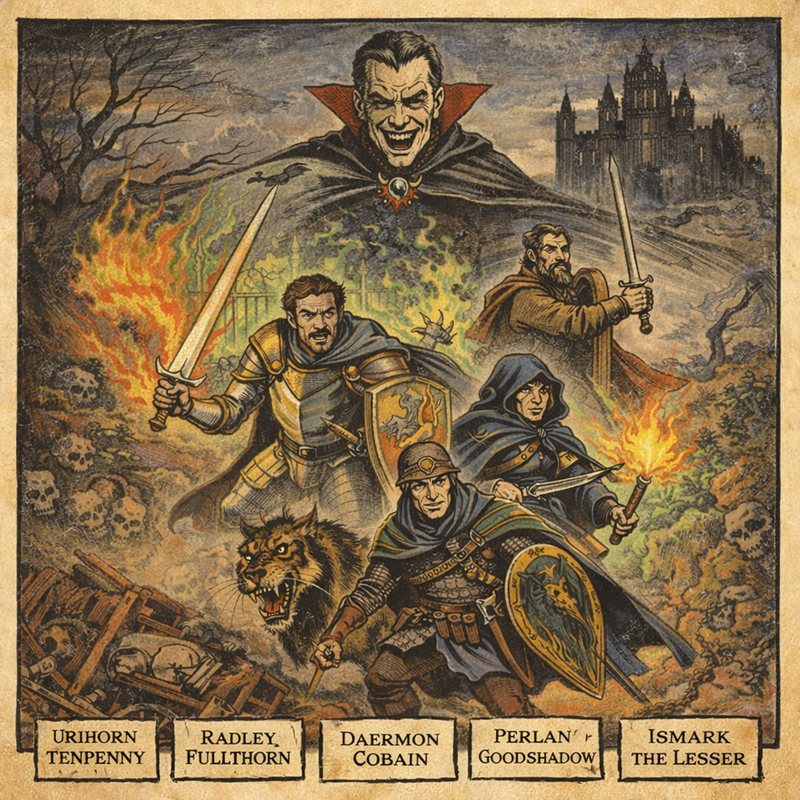
Exactly. So our mission today is really to track these rapidly shifting goals. They go from seeking ancient power to, you know, political infiltration. And we need to analyze the psychological and ethical cost of just existing in Raven Loft. So our surviving core group, we've still got Jorhun Tenpenny, the Halfling Beastmaster. And Radley the human Eldridge Knight, and Derman Cobain, the elven arcane trickster.
But we have to acknowledge which the the tragic vacuum left by the recent death of Tracidor, the half elf cleric of light, His absence, I mean as both a healer and kind of a moral anchor. It is felt immediately and profoundly in these sessions. Oh, absolutely. And taking his place, at least for now, is a new, very pragmatic edition per land. Good Shadow, A halfling monk.
The stakes have just never been higher. And the notes, they really force us to ask a question. At what point does the goal of defeating Strad justify the corruption you need to gain and the power to do it? And when does self preservation just fully extinguish the capacity for basic human decency? OK, let's unpack this by starting in what seems like a safe place where a pretty dark secret is revealed right over dinner. Yeah, that's the perfect place to start. So this deep dive, it opens on a brief, almost jarring moment of peace.
The party has arrived at the Wizards of Wine. Right, the Vineyard estate. It's protected by the Mardukov family, which includes Danica and Irwin, who you'll remember had to flee all that political chaos back in Valaki. And they're all gathered for a dinner celebration. It's probably the first truly peaceful moment they've had in weeks. And it's such a classic narrative technique, isn't it? You create this brief, warm backdrop just so you can reveal the darkness that's been lurking underneath all along. They're relaxing among allies.
They think they're safe, but the moment is just shattered by a simple observation that has these profound implications in a place like Borovia. And that observation is. The discovery that you're a horn. The Hafling casts no shadow. The sources are so clear about this they call him the Shadowless Halfling.
Wow, for a place governed by the dark powers and just saturated with ancient evil, that is an immediate glaring spiritual anomaly. You can't just ignore that. Not at all. And the group's suspicion is, I mean, it's totally justified, right? Oh 100%. In the established lore of Ravenloft, losing your shadow is never an accident.
It implies a critical detachment from the mortal world, a profound severance, or, and this is the most common one, a contract with one of the dreadful vestiges. The sentient ancient entities imprisoned under the Amber Temple. Exactly the ones that grant power in exchange for, you know, a piece of your soul or your identity. But you're a horn. He seems prepared for this. He immediately admits his purpose is total vengeance against Stride for all the misery and Raven Loft, and to get the power he needed for this one singular mission, he acquired what he calls a missed token. And that token, he confirms, demanded his shadow as payment. It's such a complex trade off, isn't it? He sacrificed a piece of his very essence for what seems like a noble purpose, defeating the ultimate evil of the land. And the party, I mean, they're exhausted by repeated failure, so they're temporarily placated by this. They just accept the shadows loss as the necessary cost of competence.
Which raises A crucial question right at the start. Can power that's sourced from the Land's own corruption truly be used for salvation? Does the source of that power inevitably taint the mission, no matter how noble the intent? It almost feels like a bargain he had to make to survive, you know? I think so.
In Borovia you can't fight the devil with just pure intentions. You need teeth. Exactly. And the power Eurohorn gets is both magical and intensely practical, which we see like immediately, the very next morning. Yeah, that token seems to have enhanced his deepest skill, his connection to the natural world.
Speaking of his specific goals, the next morning he goes on what's detailed Less is a simple search, and more is this ancient, highly technical ritual, the taming of a powerful beast. He's described as an expert woodsman, but this feels like it goes way beyond just tracking. The notes really emphasize this almost shamanistic process. He leaves the winery in the pre dawn hours tracking a specific quarry and it's so detailed he collects Tufts of hair, pieces of tree bark where the prey marked its territory. So he's gathering reagents. He is.
These organic components are crucial. He gathers a variety of local herbs and then adds the tracking evidence to them, creating this bundle that's both bait and a ritual component. And he finds his target, a magnificent, fierce Mountain Lion perched high on a thick branch. And it's not happy to see him. It's immediately territorial, fully prepared to treat this halfling as a, you know, a small meal.
But you're a horn armed with his deep knowledge and I think maybe the subtle influence of that Miss Token, he just refuses the confrontation. And what's fascinating here is his use of these non aggressive psychological tactics. Right, instead of drawing a weapon, he. Performs a series of slow blinks to calm the beast. In the animal Kingdom, that's a universal sign of trust, of non threat, and it stops the predator cold.
Mountain Lion. It was tense, ready to pounce, but now it just starts to pace and aggression is replaced by curiosity. And then the ritual culminates. Your horn rubs this wad of herbs into his hands, infusing his own scent with these powerful, calming reagents. Then he gently throws the rest of bundle on the ground and just backs away, letting the cat approach on its own terms.
And the cat's reaction is just transformative. Apprehension gives way to this overwhelming curiosity about the scent. It leaps down, sniffs it, and then in this this amazing display of submission, it just flopped into the forest floor and starts writhing in the herbs. The fight is over, the bond is forming and the final physical interaction, the cat rubbing its face in the halflings palms and then eventually just reclining right on top of him as the dawn comes up that solidifies this mystical symbiotic bond. And the result is immediate.
Your horn instantly mounts his new companion, this formidable Wildcat, and they return to the winery together. He's gone from a vulnerable man to a Beastmaster with a loyal, incredibly powerful ally. And that's critical context. That Mountain Lion isn't just a pet, it's a force multiplier and apex predator bound to your horn. This bond gives them a critical advantage they will need immediately as they turn their attention to the highest, most dangerous point in the entire valley.
With your horn newly empowered, the party reaffirms their goal over breakfast. They have to ascend Mount Gawkies to find the Amber Temple. A location foretold in Madame Eva's card reading, and it's reputed to be this Nexus of ancient forbidden power. Really the only potential source of strength they think is capable of challenging Strawd. The quest for the Amber Temple, it feels like a desperate play for competence.
They know they're outmatched and they need that ancient knowledge or some powerful artifact to close the gap. But even as they commit to this dangerous path, we see just how fragile their alliances are. That's right, When the adventurers get back on the Spellish road and turn toward the mountain, the druid Riven Thal, who they had rescued and traveled with for a while. He just thanks them and unceremoniously departs. That phrase unceremoniously departs. It's so significant it just underlines this relentless theme of self-interest in Barovia.
There's no sentimentality, no discussion of strategy, just a quick severing of ties. Riven Thal clearly weigh the danger of the Amber Temple against the benefit and just decided the risk was too great. Yeah, and the party's immediately reminded that in this land, survival always supersedes loyalty. Every alliance is temporary. So the remaining group, they turn S onto a gravel road and the climb begins immediately. The notes detail this rapid, punishing intensification of the conditions.
Oh yeah, they're hit with patches of snow. The temperature just sinks drastically and they have to deal with this gusting, whipping wind. The road becomes a treacherous switch back. Sheer Cliff on one side, deadly drop on the other. It's an immediate physical grind.
They're transitioning from the relative safety of the valley floor to a profoundly hostile environment, both physically and magically. The cold itself becomes this constant grinding enemy before they even meet a single monster. And their arduous ascent is eventually blocked by this really imposing structure, a defensive wall and a gatehouse that just cuts off the path to the higher reaches of the mountain. This architecture is pure dark spectacle. It's designed to repel.
We're talking 20 foot high walls crowned by a gay house that's 10 feet higher than that. The size alone is intimidating. And then on top you have two colossal statues that look like ominous vultures and the wall itself is lined with these tall stone spikes. Just screams do not enter. And the most immediate, terrifying obstacle is the passage itself. The portcullis is dropped, and just beyond it a colossal wall of green flame is burning furiously. This isn't it's just a fire.
This is clearly powerful lethal magic, possibly infernal. And their immediate response is just perfectly pragmatic. It's exactly how survivors operate. They stick an arrow into the flames. And it instantly bursts into. Fire confirming it's real, not an illusion. Very dangerous energy.
They can't just pass through it. This forces them into a difficult decision, which is compounded by the rapidly deteriorating weather. Their solution requires Eurohorn's new Beast companion. Despite the mountain lion's reluctance to climb sheer rock, Eurohorn commands it to scramble up the near vertical surface of the Cliff face right next to the gate. And once the cat is at the top, Eurohorn uses one of the walls defensive spikes as a makeshift snubbing post and throws a rope down to the party below.
It becomes this exhaustive, protracted effort to haul the entire party, including Radley and Derriman, over that 20 foot wall. And this is a critical detail. They are physically draining themselves before the inevitable confrontation. They're spending vital energy reserves that they're going to need for the battle to come. Once they're over, their thoughts immediately turn to survival against the elements. They spot a white stone guard tower nearby, and they're just desperately speculating about shelter. The temperature is sinking toward truly lethal levels, threatening to end their quest not by monster but by hyperdermia.
But the mountain, it had other plants. Their desperate musings on shelter are just interrupted by this horrifying piercing sound and unearthly screeching that cuts right through the howling wind. Looking back, they realized the two enormous vulture like statues atop the gatehouse are no longer statues. They're animated, yeah. The terror of the surprise attack is multiplied by the reveal that they are facing something far worse than standard undead.
These creatures flap down, landing right in the middle of the party. And the notes confirm their demonic nature. They're nearly 10 feet tall, terrifying 15 foot wingspan, and they emit this palpable, stinking miasma of fitted decay. They are later identified as Rocks, powerful demons from the Abyss. This is a tactical nightmare. These aren't just brute force combatants. Rocks are specifically designed to incapacitate groups to neutralize defenses and control.
Absolutely. Let's let's dissect their brutal methodology. They attack on multiple fronts at the same time. First, they periodically unleash this cloud of spores designed to cause uncontrollable wretching and convulsions. So a crippling physical attack that takes targets out of the fight immediately.
Immediately and second they deploy these deafening magical screams that assault the mind and stun anyone who use the It's a perfect 1-2 punch. Incapacitate the body with spores. Incapacitate the will with the scream. And while the party is convulsing or stunned, the rocks use their primary physical attack. Running with these great scythe like claws, the party's typical tactics are just thrown into chaos. The tactical dynamics here are really revealing. Dermont the Arcane Trickster.
He relies on stealth and opportunity. He only engages when enemies are distracted, which is a difficult task when everyone is stunned or retching. And Radley the Eldritch Knight. He's forced to alternate wildly between his sword, offensive magic like Fire Bolt, and then necessary defense with his shield spell. But without a dedicated healer to remove the conditions, the spores and the screams are just deadly.
You're a horn mounted on his great cat wisely avoids the epicenter of the melee. He uses the cat's mobility to shoot arrows while he's trying to scout the tower, and he finds the door is barred from within, which is emphasizes their isolation. And the lack of a cleric, the lack of Tracidor, is suddenly and tragically magnified the Rock's ability to 'cause these widespread, debilitating conditions, it requires instant healing and counter magic, which Tracksador used to provide. And because he was the most visible source of light, of life and healing in this dark land, the notes state, he was the one hardest pressed by the demons. He falls under the barrage of claws and spores, slowly bleeding out amid the carnage before the demons just slay him completely. It's a devastating, irreversible blow. Tracidor was the moral compass, the source of restoration, and now he is simply gone.
It confirms the brutal cost of even attempting to reach the Amber Temple. So with him dead and the remaining members exhausted, wounded and spent their magical resources, the immediate pragmatic decision is made. The quest is abandoned. They cannot continue upward. This moment, it feels like the true turning point of this whole deep dive. The dream of the Amber Temple, the hope for ancient power, is deferred by a violent death.
It's a harsh reminder that the environment of Borovia will punish overreach relentlessly. They literally drag their bodies over that wall only to realize they didn't have the strength to survive the gatekeeper. The first step after that brutal battle is a necessity dictated by the cold. They have to dispose of their fallen friend Traxidor, and the chosen method is profoundly unsettling. Yeah, it really is. At the slink of Pass Gate, the party honors their fallen cleric by creating his body in that mysterious wall of green flames that blocks the passage.
It's a shocking symbolic act. They're using the Infernal Barrier that ended their quest to dispose of the body of their Cleric of Light. Just think about the psychological toll of that using an evil, seemingly unholy energy source to perform a rite of passage for a virtuous companion. It just underscores the utter desperation and the blurring of moral lines that is now standard operating procedure for this group. After this grim closure, they turn back to the White Tower for shelter. Radley boosts your horn up to the second story window, and the halfling once again slips past the iron bars. He's their scout and their key.
Your horn reports back on the strange empty interior. He then heads to the parapets, finding 10 tall golden statues of female Knights, clearly figures of defense or dedication. And ominously, several chainmail clad skeletons half buried in the snow. Which suggests that many have tried and failed to hold or pass this point before them. He finds nothing of value on the frozen skeletons and actually unbarring the door.
They discover the tower, while it's structurally sound, is useless for true rest. It has a hearth, but no fuel. They realize they cannot survive the night there. So after taking only a single hour to patch their wounds and catch their breath from the rock assault, they choose immediate descent. This whole sequence is a master class in prioritization. They are not heroes seeking glory. They are survivalist, prioritizing warmth and safety over recovery or exploration.
They climb back over their ropes and begin the long, exhausting descent down Mount Gakis. Once they hit the Mains Failage Rd., they choose the village of Barovia as their next objective. Get warm, purchase new equipment to replace what they lost on the mountain. But as they approach the Western. Gates of Barovia.
They intercept a highly disturbing convoy, and this is the critical. Juncture where the narrative shifts from physical survival to profound moral failure. They catch up to travelers from Valaki, town guards they recognize, and about a half dozen villagers who are laboring to push a heavy cart up the steep Rd. toward Castle Ravenloft. And the carts?
Terrifying. Contents are immediately visible inside. A young woman is bound to posts, clearly dressed for a ritual sacrifice. She's in white, adorned with mountain flowers, but her beauty is just. Overshadowed by her terror, her countenance is fearful. Her wrists are raw from desperate attempts to free herself.
They realize instantly this is a victim being delivered distraught. Their initial reaction is. Pure instinctive heroism. They immediately decide to ambush the guards and free the maiden before the group reaches the castle, and the execution is swift and clinical. Expert arrow shots and a magical fireball dispatch the guards instantly before the villagers or the.
Maiden can even fully process what's happening, but the immediate success? Is followed by a catastrophic failure of execution and judgment. Seeing the guards killed, the villagers instantly flee, scattering into the woods. Critically, the cart is left. Unattended on the steep ascending Sailage Rd. gravity immediately takes hold and the cart begins to roll backwards, uncontrolled, picking up devastating speed.
It's just a devastating sequence. Your horn and Dermont both try to catch the carts frame as it rockets past them, but their hands slip on the accelerating wood. They just don't have the mass or the leverage to stop it and the speeding card approaches. Radley, the party's Herculean and fighter, the man who has stood toe to toe with demons and survived. This is the moment where physical competence meets psychological collapse, the notes stated so.
Clearly, Radley opts to step aside and let it rumble past. Here is where the weight of the. Last 48 hours just crushes the hero. Why did he step aside? We have to analyze this beyond a simple plot device.
Radley is physically capable of stopping or at least slowing that cart, but he's mentally spent. He just watched his friend. Die was nearly killed by demons, cremated his comrade and infernal fire that choice. To let the cart go. It could be read as calculated indifference, a momentary triage where he prioritizes his own safety over a high risk, low percentage chance of saving a stranger. Or, and this is maybe more psychologically devastating, it's a trauma response, a moment where the accumulated horror just paralyzed his will to act.
And the consequence is. Horrific. The Maidi shrieks in terror as the cart gains impossible speed. It flies over the embanked, then at a sharp bend in the road, is dashed violently against Stony outcroppings and it just disintegrates into splinters, the note stated with brutal. Clarity the maidens crushed corpse lies splayed amid the wreckage and this next detail is.
Arguably the most brutal of the entire deep dive. After briefly viewing the carnage, the crushed body, the shattered wood, the party simply turn and continue on their way. No discussion? No. Grief, no attempt to bury the body, no moment of recognition that their heroic impulse resulted in an agonizing, unnecessary death. This scene perfectly encapsulates. The brutalizing nature of their environment. They have achieved a level of emotional bankruptcy where an innocent, agonizing death directly caused by their actions is met with cold dismissal.
They have officially prioritized their immediate goal of buying equipment over the life they just tried and failed to save. Their moral capacity is. Completely eroded under the pressure of Borovia, so the party enters the village. Of Borovia under the cover of night, carrying this immense psychological weight. Traxidor's death.
The Cart Maiden's fate, Radley in particular must be dealing with immense Survivor's Guild, having lost Vallanaire and now Tracidor, his original comrades that internal stress. It has to find an outlet, and it manifests immediately in his choices. First they had to the only Tavern, the blood of the Vine, and the atmosphere there is just one of profound, resigned desolation. The Sullen Barman, Eric. Is serving only water.
Even the small, temporary comfort of wine is denied to the desperate inhabitants of Borovia. It's in this setting they find a. Small temporary reprieve. They meet Pearlman Good Shadow, the only other halfling scene in the village of Borovia. He's a monk, and after hearing the dangers the party faces and likely recognizing the dangers in the village itself, Pearlman agrees to join forces. So they quickly patched the.
Manpower gap left by Traxidor But while this new alliance is. Forming Radley is drawn away. Mirabelle of Estani proprietor recognizes him She approaches him in this sultry fashion, making unsubtle references to his recently missing companions. Instead of offering grief, she. Offers him an alternative distraction to the barrenness of the village and Radley eagerly.
Accepts this eldritch knight is seeking a desperate temporary escape. He agrees to spend the evening with Mirabelle and her sisters Alenka and Sorvino. This immediate embrace of hedonism is a classic trauma coping mechanism, a desperate attempt to numb the pain and psychological horror of the last few days through indulgence. That pursuit of a. Rate Desperate Distraction stands in stark contrast to what the remaining trio experiences.
You're a horn. Derrman and Purlen head out to find shelter, and they run into one of Barovia's most insidious threats. The old hag Morganta, right? She's pushing her cart. Slyly trying to sell her addictive dream pastries for a single gold coin, the trio ever.
Distrustful, they brusquely refuse her wares. But Morganta, completely unfazed, delivers this chilling line. She insists someone else will buy them as she never returns home with unsold pies. And that statement is so critical. It reinforces the ubiquitous nature of this invisible, insidious evil that grips the populace.
While Radley is escaping his trauma through self medicating hedonism, the rest of the town is caught in the subtle, pervasive addiction that literally preys on their dreams. Both choices just reflect the. Profound misery that Barovia inflicts. So the trio finds an abandoned house, barricades themselves inside, and settles down for a restless night while Radley is elsewhere. Day 19 begins with Radley. Rejoining the group, the notes describe him as disheveled and wearing a dopey expression, clearly showing the physical signs of his night of deep, desperate indulgence, and the contrast is immediate.
The eldritch night, smelling of drink and perfume, is instantly thrust into this urgent political and emotional confrontation. They go immediately to the Burr Master's Manor to seek out IS Mark, who has taken up his late father's mantle. IS Mark opens the door. But his demeanor is highly suspicious. He demands to know who these three strangers are.
He last saw Radley with Tracidor and Valenaire, and his paranoia is taken to. An extreme degree. Without warning, Ismark abruptly splashes the entire party with a bucket of water, immediately explaining it was holy. Wire and he had to ensure they were not undead. Spawn of Strawd. This is an act of welcoming.
It's a necessity born of the acute paranoia that infects every resident of Barovia. So once they're soggly inside. The conversation immediately turns frantic. Ismark asks urgently about his sister. Irena, Radley and Derman relay the tale of the Vampire spawns attack on Valaki 8 days prior and Ismark is frantic.
He's clearly received little to no accurate news in the Valley, and this is the moment of moral collapse. Ismark is desperate for truth and the party, seeing an opportunity for self preservation, commits a highly strategic deception they intentionally conceal. Several critical, damning facts from Ismark. Let's break down the layers of this. Betrayal. They omit that Saint Andrew's church was burned to the ground and the priest was killed in the chaos. They conceal the terrible truth.
That Straud had demanded Irena from the townsfolk, and most damningly, they failed to mention that the terrified mob had literally pulled Irena from the Blue Water Inn and surrendered her to the vampire Lord. Instead, they offer a carefully. Constructed half truth, they say they had merely escorted her to the church for safety and then left town to seek refuge at the Wizards of Wine. They're protecting their own reputation and avoiding confessing the failure that led to Irene's capture. It's a necessary move. To secure is mark as an ally as a shield as they try to re enter of Alaki and is mark distraught.
By the incomplete information insists they must leave immediately to save his sister. The party agrees with the suspicious haste, not for altruistic reasons, but because they desperately need to retrieve their lost Amulet of Ravenkind from the new Burgo Master. Lady Washer is Mark just dashes out. Sword girded, urging Aced. Think about the depth of this.
Betrayal. They are manipulating their friends Grief and dedication, marching him straight into a town they know is under the control of a dark cultist without giving him the vital life saving context that his sister is already likely compromised and that the townspeople themselves. Are responsible for her capture. They're using him as a pawn to. Retrieve a necessary artifact.
It's. It's cold, so is. Mark is. Driven by the singular purpose, he's marching like a possessed man back towards Balaki. He barely even registers the marks near the western gates of Barovia, where the Cartmaiden sacrifice turned into tragedy.
His focus is entirely on Irena, on the journey, the party. Fills him in on the political chaos, the deposition of Baron Vargas Volakovich and the seizure of the title of burgomaster by Lady Walker and Ismark offers. A crucial piece of lore. Here he shares that the Walker family is very old in Barovia, dating back to before Straud even arrived in the Valley. That's a fascinating detail, isn't? It it suggests that Walker isn't just some political climber. She might represent a deeper, older corruption in Barovia, perhaps a rival power structure or a collaborator with something far more ancient than Stride himself. It raises the stakes.
Significantly, they come up with a plan. Since Radley, your Horn and Derriman are fugitives, is Mark and Pearlman, the strangers will try to convince the guards to open the gate under the pretext of is Mark's urgent mission setting up an ambush. But watch your security. Is immediately apparent. The ruse fails instantly.
The guards loyal to the new Burgamaster are fiercely suspicious and totally unimpressed by IS Mark's minor status. They insist on strict. Non negotiable orders not to allow strangers in, belligerently demanding that is Mark and Pearlman leave immediately. This confirms 2 things. One, the party is still very much wanted fugitives in balaki and two, Lady Watchers regime is far more tightly controlled and ruthlessly pragmatic than the previous baron's chaotic delusional rule. A direct confrontation at the gate is just impossible, so retreating to.
Concealment. The party realizes the gates are the only heavily garrisoned area. They move northward to a secluded section of the city wall, deciding to use stealth and agility to bypass the guards. They recognize the immense. Risk involved, though. They vividly recall their last encounter with Lady Watcher, where her personal bodyguard of devils required the intervention of Rudolf Van Richten to save them. They are infiltrating a known layer of infernal power, and they have no cleric to heal them this time. They Sprint toward the wall.
Waiting for the momentary cover of the ever present mist to obscure a single century's vision and the ascent is predictably a mixed bag of grace and awkwardness. The notes describe the climb. Humorously, they say, some glide over easily, while others struggle in a manner resembling a monkey trying to fuck a football. That small injection of humor. Is important.
I think it's a necessary stress relief for a party under incredible strain. It is but. Regardless of their grace, they all make it over, dashing immediately for the concealment of the houses within the town. Their target is clear. Lady Watchers home, which they correctly identify as the keeper of all the secrets in the town, and they decide the safest, most discreet entry point is the basement root cellar. They successfully descend.
Into this vacant root cellar which has a dirt floor. But as they move the tell tale sound of crumbling dirt heralds an ambush. 8 animated skeletons claw their way violently from the earth to menace the party. This is Washers defense. System for subterranean entry but what's fascinating here is how this fight contrasts with the traumatic battle against the rocks this confrontation serves as a powerful demonstration of the party's profound evolution as combatants yeah this highlights their. Transformation from clumsy adventurers to hardened, lethal survivors.
Radley, who began as a simple man at arms, has been forged in the Crucible of weeks of combat into a ruthless eldritch knight. Proficiently combining spells and swordplay, they're better equipped. Ruthlessly coordinated and just far more efficient, the adventurers effortlessly cut and smashed through them what would have been a terrifying. Resource draining battle just weeks ago is now a little more than maintenance work. The fight is over almost before it begins, demonstrating their sheer increase in physical competence. Even if their moral compasses, you know, shattered, they are now just better.
At survival after dispatching the skeletons. They start searching the room and note a crucial environmental clue. If you foot traffic, the wear pattern in the dirt floor runs heavily from the exterior door to a specific far wall, which suggests the pathway used. Often by something or someone significant to watchers operations investigating the wall they. Apply pressure and find it easily spins on a fulcrum revealing a secret chamber beyond this is the moment they bypass all her overt security and breach watchers, true private operations and the disturbing contents.
Are laid bare in the empty room, 5 chairs surrounding A carefully drawn pentagram on the floor. This disturbing revelation. Immediately confirms the nature of Lady Washer's power base. The pentagram is the unmistakable sign of infernal or demonic ritual and the presence of five chairs. Is also significant. It suggests a coven or a dedicated ritual group, maybe the five people required for specific packs or summoning rights.
This discovery reinforces. Why she had a bodyguard of devils when they last met. Her Watcher's not just a political schemer. She is an active participant in dark rights, ruling Valaki by Infernal contract. This confirms the immense danger.
The party is in, especially since they are now standing literally beneath the home of a dark worshipper whose primary objective is to stop anyone who threatens Strawd. They have infiltrated the layer. Of a power structure that may even predate the Dark Lord himself. They came to steal an amulet, but they have stumbled upon the very source of corruption in the new Valaki regime. We have completed a deep. Dive into two turbulent sessions listener tracking a party that has evolved from desperate adventurers into, well, ruthless survivalists.
It's quite a transformation we. Witnessed your horns profound sacrifice of his shadow for a mystical bond. The brutal failure and cost of Tracidor's life on Mount Caucus and the shocking moral. Collapse on the Spalich Rd. culminating in the cold, immediate dismissal of the Cartmaidens agonized death. The central themes are just so.
Clear The pursuit of power necessitates compromise. The price of the Mist token was your horns essence. The price of the Amber Temple quest was Traxidor's life and the price of their rush to. Borovia was the life of an innocent they failed to save. Their emotional and ethical compass is now severely compromised.
They are highly efficient but increasingly callous. Yeah, and they've re entered. Valaki, under the guise of Ismarks grief, hiding the crushing truth of Irena's capture. They are now literally beneath the home of Lady Walker, a woman whose operations clearly involved the ritualistic worship of dark powers, proven by that pentagram chamber. This raises a final provocative.
Thought for you to consider as they move forward. They are now expert survivors in a land designed to break them. So given the terrible things they have. Seen and done using infernal fire for cremation, their indifference to human life and the tactical deception of their friend is Mark. Are they still seeking to save the land of Barovia, or have they simply become the most capable, morally hollow creatures within its misery?
And what price ultimately? Will they pay when Lady Watcher inevitably realizes they have uncovered the dark nature of the power she is truly serving in that pentagram room? This is the brief on. Dungeons and Dragons Sessions 24 and 25. All right, so this story arc takes the party way deeper into Borovia, that gloomy vampire ruled land. And we're talking about a huge character moment. I absolutely brutal fight on a frozen mountain and the start of a really dangerous political conspiracy. First up, let's talk about the beastmaster Yurihorn Tenpenny to get his hands on a powerful mist token for his revenge quest. He paid a chilling price.
He's now completely shadowless, but Even so, he managed to form this incredible bond with a Mountain Lion, using an ancient ritual of slow blinks and herbs to mystically seal their partnership. Honestly, this new ally might be the only thing that keeps him alive, but that high point just didn't last. Second, we have the battle on Mount Galacus. The party was climbing toward the legendary Amber Temple, a place of immense power, when a fortified gatehouse blocked their path. And the guards 2 giant vulture statues that came to life as rocks. You know, powerful winged demons. The fight was desperate, exhausting, and in the end the group suffered a terrible loss.
Their cleric, Tracidor, was killed. The survivors had no choice but to retreat, cremating their friend in some mysterious green flames before abandoning the quest. So after that disaster, they descended the mountain, recruited a new companion, a halfling monk named Pearland Good Shadow, and shifted their focus. Finally, a dangerous infiltration. They successfully sneak into the home of the new Burger Master or village leader, Lady Walker.
Down in the basement, they destroy 8 animated skeletons and then find a secret chamber. And what's inside is chilling 5 chairs surrounding a massive pentagram. Pretty much confirming the new leadership is tied to some kind of deadly cult. So what we're seeing is a tragic mix of profound personal moments, the brutal cost of challenging evil in Borovia, and clear signs of a terrifying conspiracy just beginning to unfold. Welcome to the debate. We are returning today to the the unforgiving landscape of Borovia, focusing on a really pivotal moment for the halfling Beastmaster Yuri Horn Tenpenny right during sessions. 24 and 25 and this is where he's driven by this deep need for revenge against Strad and well, he has to make an ultimate choice. He does.
He has to pay a. Metaphysical Price He sacrifices his own shadow to get a Mist token, this artifact that's supposed to aid his cause. And the question we're wrestling with today is, is both practical and deeply existential. Does Yuri Horn's calculated sacrifice of his shadow represent a justified strategic commitment, something vital for operating in Barovia? Or does it signify A profound, compromising existential cost that fundamentally undermines his ability to achieve his goals?
Frame it. I mean, we are. Dissecting the high cost of what some might call necessary cruelty. And I firmly argue this transaction constitutes an irreversible existential debt. The moment your horn lost his shadow, he he compromised his very nature. In the context of Ravenloft, this isn't just poetic, it's a visible spiritual abnormality that marks him. And I would argue this was.
Perhaps the most rational choice he could have made given his mission. His actions weren't rash. They were rooted in in explicit strategic necessity. He needed power, and he needed it now. Sure, he stated clearly. His mission?
Required the Mist token and the shadow was simply the currency. And we can't overlook the immediate tangible utility this price yielded. The very next morning, he successfully uses that token to bond with an Apex Mountain Lion. This cat becomes an essential mission critical resource. The commitment yielded immediate results and I acknowledge the.
Impressiveness of that bond I do. The power it conferred is undeniable. However, I don't frame it as a successful trade, but as a Faustian bargain with immediate damning consequences. The loss of a shadow, especially in these lands, is not a simple transactional cost. It is a visible liability and we have proof during. The celebration at the.
Wizards of Wine, the Martikoff family who are so tied to the land they noticed their suspicion was immediate, and it required Yuri Horn to, you know, concoct A stressful explanation on the fly to placate one of the few benevolent factions in all of Barovia. The cost wasn't abstract to all, it was a brand and he managed that liability. Perfectly, didn't he? The fact that he was able to provide a convincing explanation and move on just shows his commitment was strong enough to manage that social friction. But more importantly, let's focus on the return on investment. The bonded Mountain Lion proved its worth instantly when they reached Salanka Pass.
The party's ascent to the Amber Temple was stopped cold by a formidable defensive structure. We're talking a 20 foot high wall, a portcullis, wicked spikes and a perpetual wall of green flame. I mean, this thing was a showstopper, a military barrier. The cat able to scramble the near vertical Cliff face provided the vital bypass that demonstrated immediate strategic utility. It moves the party from absolute deadlock to progress.
That to me, outweighs the abstract metaphysical cost. My concern? Is that we're prioritizing a temporary means over the inherent cost of those means. Your record pays this heavy known existential cost a piece of itself for a goal. The miss token who specific long term utility against Strad is, well, it's undefined.
He made a permanent sacrifice based on a generalized promise. The short term benefit of climbing a wall, while useful for that one afternoon, just doesn't seem to justify the potential for long term spiritual danger to the Marta cops. Being shadowless implies you're tainted. Maybe you made a pact. Or worse, you've already fallen prey to Strad.
It's a vulnerability that requires constant mental energy to conceal. Let's delve into that a bit. More deeply, the strategic gain versus this existential vulnerability. I can see the shadows and metaphysical cost. But the Salanka Pass was an equally potent physical representation of Barovia's opposition. We are talking about overcoming A literal fortress. The Mountain Lion bond enabled the breach of an obstacle that could have cost the party weeks or forced an immensely costly frontal assault.
The ability to bypass that is not a minor footnote. It is a direct, measurable strategic return. I understand the. Tactical necessity of bypassing the gate? I do, but the cause compromises Yuri Horn's identity in a way that risks catastrophic exposure later on. In Barovia, the shadow is often seen as a tangible piece of the soul.
Losing it isn't just losing your shade, it is fundamentally diminishing your essence. This unnatural state. It makes him a magnetic target. If he later interacts with genuinely good entities. That shadowless state won't just result in suspicion, it could result in automatic hostility.
And what about the dark powers themselves? They demanded the price. Do we really believe the entity that took his shadow no longer retained some kind of claim, a subtle connection to him? He is now carrying a vulnerability that only benefits the enemy. The entity retains a. Claim, yes, but Yurihorn consciously accepted that to operate against Straud, one must accept that the conventional rules of morality, of light and shadow, they are suspended. He traded a potential future spiritual complication for immediate tangible power.
If he had waited, they might have been trapped at Salinka Pass indefinitely. The fact that the CAT allowed them to continue their primary mission proves the decision was sound in the immediate tactical sense. But this leads perfectly. Into our second point, the nature of the mission and the consequence. I'm sorry, I just don't buy that the Miss token was truly necessary to achieve the Mountain Lion bot.
The source material details Yuri Horn, an expert woodsman tracking the predator meticulously. He gathers specific herbs, the Nights bloom and the whisper leaf and Tufts of the cat's own fur. He was performing this master work of primal communion. He was already 90% of the way. They're using his skill and that 90% was. Insufficient.
Exactly. He paid an immense existential price for an artifact that simply facilitated the final 10% of the bond. Was the Mist token truly necessary, or did he just take a shortcut out of impatience? A shortcut that left him permanently diminished when patience and skill might have achieved the same result? Without the sacrifice, he could have returned the next day.
This suggests the shadow loss was an avoidable, extravagant cost. That's an interesting point. Though I would frame it differently, you're looking at the bond as a natural expertise challenge. I see it as a political challenge within Borovia. The MISS token represents the necessary step past the limits of conventional expertise when facing a foe like Strawd.
Pure expertise is not enough there. You need the extraordinary, the unnatural, to fight an unnatural enemy. The token ensured the bond was not merely one of respect, but a bond of absolute command. This let the cat perform feats like that near vertical climb under fire that a naturally befriended beast might refuse. He accelerated his power curve precisely because time was a luxury they did not have. He traded A theoretical moral purity for immediate consolidated actionable power.
That is a tactical win. But that actionable power? Came packaged with a compromise moral framework. This commitment to necessary brutality is evident later, isn't it? We see this shift in the group when they encounter the fatally injured maiden who fell with our cart. The party, newly hardened by this philosophy, made the callous decision to abandon her.
They just continue on their way. The Shadow Law set the stage for this new brutalized morality. But this is where the commitment breaks down. I would say it's the. Ultimate expression of the tactical mindset required to win in Barovia. The sacrifice of the shadow prepared him and the party psychologically for the ruthlessness the survival demands.
They couldn't save her, and spending time on it would have risked the entire mission. They stayed focused, and yet this. Focus. This hardening, this existential sacrifice, it all failed. This brings us to the most crushing evidence against the strategy, the ultimate failure at Salenka Pass.
Despite the utility of the cat, and despite Udir Horn's hardening, shortly after this transformation, they suffered A devastating loss. Tracidor was slain by the Abyssal of Rocks that appeared. The party was so defeated, so spent, that they abandoned the mission to the Amber Temple entirely. They were treated back down the mountain. The existential sacrifice did not guarantee mission success. Instead, it preceded A profound tactical failure and retreat. I would argue that the mission.
Failed due to the sheer unforeseen power of the rocks, not because of Yuri Horn's commitment. He secured the means to access the temple. The sudden, devastating intervention of Abyssal demons derailed the plan. The means were sound. The execution was excellent. The external circumstances were simply overwhelming. To claim that losing a shadow somehow invited the rocks is speculative.
I think it's more than. Speculative. It's a question of alignment. The rocks, being abyssal, are fundamentally antithetical to the normal Borovian forces. The party had made this extreme sacrifice within the Borovian framework to gain an advantage, yet when the ultimate test arrived, it came not from Borovia's typical horrors, but from an outside, purely destructive planer force.
Did oriole horns compromise his spiritual branding? Make him magnetically attractive to all forms of darkness. The fact that they gained this power and immediately suffered A shattering mission ending loss suggests the spiritual scales were tipped decisively against them by the cost they paid. The correlation between. The sacrifice and the rock attack is circumstantial at best.
We have to acknowledge that Traxadora's death was a crushing blow, an event that would necessitate retreat regardless of whether Yurihorn had a shadow or not. The decision to retreat was a functional necessity, not a reflection of the commitments failure. The Beastmaster commitment provided the path. He did not guarantee immortality against abyssal forces, but the compromise remains a. Ticking clock Yuri Horn is now permanently diminished. His vulnerability isn't hidden, it's visibly apparent to any entity sensitive to the flow of souls and darkness. This vulnerability defines his future interactions in Barovia. Whether the mission progresses today or a year from now. You paid a permanent cost for a temporary fleeting advantage that resulted only in failure and profound loss. That is the definition of a bad bargain. Look your.
Corn made a calculated, necessary commitment. He exchanged an abstract existential state, a shadow for concrete, immediate power required to challenge Straud. The evidence of the wall climb shows the strategic merit of the sacrifice. Even if the overall mission was later stalled by the devastating reality of combat. The commitment was correct. The ensuing combat was tragic, and while the resulting beast. Bond was undeniably useful for that specific task. The cost of losing the shadow represents A corrupting debt that compromises your corn's essence. In the end, this kind of existential compromise it rarely results in a net gain, especially when the overall strategy that necessitated it still LED directly to profound loss, exhaustion, and the forced abandonment of the mission. The trade was fundamentally unequal. The dilemma remains.
Stark for anyone trying to operate within the extreme brutality of Borovia, does the pursuit of absolute good, or in this case absolute revenge, justify trading foundational aspects of the self for fleeting tactical gains? And the question for our listeners? When confronting an enemy like Strad is whether any cost, even one that diminishes the soul, can ever truly lead to victory, or if it simply makes you a more potent instrument for the very darkness you aim to conquer. We still have much more to explore in the consequences of this. Always a pleasure to analyze. The true cost of power in Borovia.