Read the full transcript (5,177 words, machine made)
Have you ever, you know, found yourself in the middle of some big societal upheaval, maybe a widespread fear or something, and felt that really deep, almost gut feeling like, who did this? Who's to blame? Oh definitely that urge to point a finger. Exactly. And it feels like such an ancient question, right? Like back when the sky suddenly went dark or a plague hit and people were terrified, asking who angered the gods who did this to us?
Yeah, that a primal need for an answer for A cause. Well, today we're doing a really deep dive into an argument that suggests that ancient impulse. It hasn't really gone away in our, you know, modern rational world. It's just found new targets, often in pretty unexpected ways. That's right. The source material we're looking at today, it's it takes us on quite a journey.
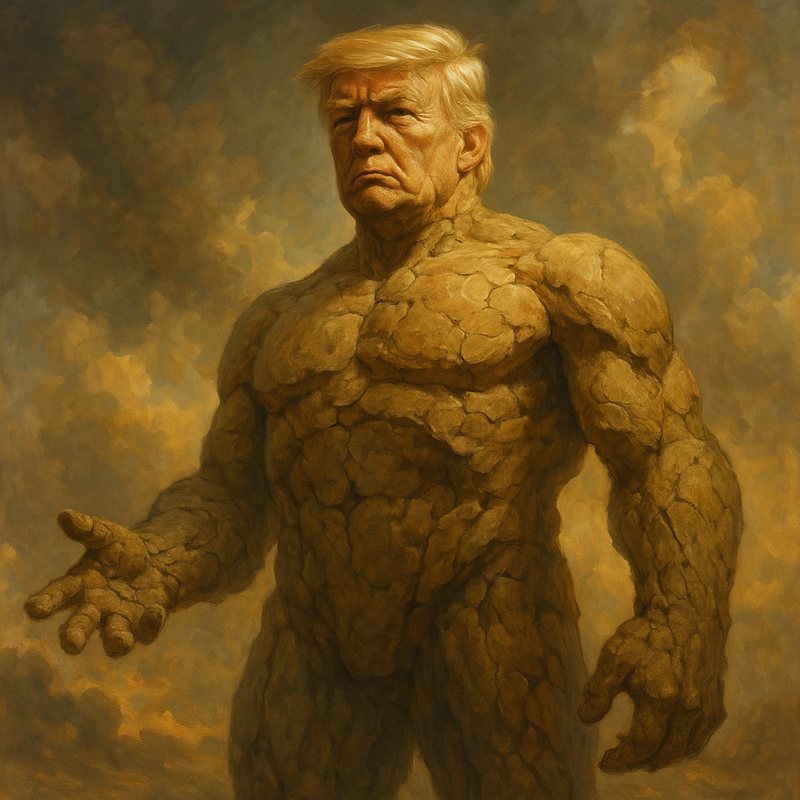
It's this exploration called the Trump shaped hole. And it goes way beyond the usual political talk. It digs into how for some people, well, a very public figure is could have accidentally filled this really profound void, becoming almost like a like the source calls it a trickster God in the modern. Mind a trickster God? OK, Yeah. So we're going to look at this not, you know, not through policy debates or who's right or wrong politically, but by trying to understand these really deep underlying human patterns, that sort of psychological stuff that this source brings out so vividly.
So our mission here, it's really important to stay upfront. This isn't about taking sides politically, definitely not dissecting policies. It's about understanding this really profound argument that the source mix right, how these powerful ancient human impulses like needing a scapegoat, needing someone to blame, needing to fill that, you know that fundamental God shaped hole inside us, how they show up today and. Often unintentionally, right? Yeah, that's a key. Part exactly, completely unintentionally, often we're sort of unpacking the idea that even now, in what feels like a really secular, advanced stage, these super deep seated human responses to fear, to chaos, to things we just can't explain, they're still incredibly powerful. And you know, to help us navigate this, the sources, they bring in some really surprising concepts while we talk about things like Eclipse Sphere, these mythological trickster gods, the legends of golems.
Golems. Wow. Yeah, and even some more esoteric ideas like tulpas and egregore's. OK, you lost me a bit there, tulpas. We'll get into them, yeah.
But the point is, they're not just like interesting old ideas. The source uses them directly to try and understand how people today perceive this public figure. Right. So we'll explore all this impartially, just focusing on the arguments the source presents, trying to get the mechanics of these ideas, you know, not pushing any political view. It's about the human story underneath.
OK, let's start with that first concept, then this Eclipse fear and what the source calls the primal question. The basic idea here, it's it's really compelling. It is that since like forever, humans have reacted to big natural disasters, the sun vanishing, plagues, droughts, huge floods with this one desperate question. Who did this? Who made the gods mad?
Who do we blame? It's that immediate search for agency, for responsibility, even in the face of, you know, raw nature. Yeah, it echoes through like every ancient culture you can think of. It seems universal. And what the source finds really insightful is how modern Americans, you know, despite all our science, our belief that we're beyond that kind of thinking. We think we're so rational.
Right. We think we've outgrown it, but the source argues we still have this raw animal dread, just just under the surface of all our sophisticated explanations. So underneath the policy talk and the data. Exactly. We talked about policy failures, political decisions, economic data to explain things going wrong. But, you know, scratch that veneer and that same eclipse fear that terrified our ancestors. It's still there.
It's still kind of demands a face, a single person or thing to pin the blame on. Wow. It's like the mind trying to force order onto chaos. That's a good way to put it. It's trying to make the incomprehensible feel somehow manageable by giving it a name.
OK, this is where it gets, like really concrete, because the source gives this powerful, almost visceral example that awful Hill Country flood in Texas. Oh yeah, that was devastating. Imagine it, the slow storm just sitting over those hills and then bam a 30 foot wall of water just breaks through middle of the night drowns a Christian camp. Just horrifying. And the source points out, the National Weather Service apparently was stretched thin. Budget cuts, you know the story.
They tried to warn people. Right. And some listen, some didn't. Maybe they didn't trust the warnings anymore. Who knows?
Lots of factors. But here's the kicker, According to the source, despite all these, you know, rational, complex reasons for the tragedy, budget cuts, individual choices, the weather itself, the immediate talk, the the primitive drum beat, as the source calls it. What was it? It turned, almost instantly to one single explanation. Trump did this.
Seriously, like he personally caused the flood? Well, the source says the way it was covered, the way people talked about it, made it sound that simple, that direct. Trump made the flood. Trump killed those kids. And the source argues, look, that's not policy analysis.
That is pure ancient scapegoat logic. Wow, just finding one person to blame for this massive, complex natural disaster. Exactly. It's that ancient urge to pin the blame for the uncontrollable onto 1 figure, as if just seeing the name could somehow contain the terror. You know, so the source is basically saying it's like we're dragging, I don't know, but Al or Malak or raw these the ancient gods of chaos and floods. Yeah, or the Old Testament God of plagues. Right.
Dragging them into a modern press conference, but just giving them like, like a contemporary face. It seems almost unbelievable that we're still wired that way. That's precisely the parallel the source draws. It's stark. It shows how these ancient blame patterns hang on even when we dress them up in modern language and apply them to political figures.
But. Why? What's the psychological driver there? Well, think about it. When you're faced with overwhelming chaos, a natural disaster, an economic collapse, A pandemic, the human mind really, really struggles with randomness. It craves order.
And often the easiest way to impose order is to find a villain, a single point of failure where you can project all the fear, the grief, the confusion. It gives the chaos a face. Exactly. It makes the uncontrollable feel, paradoxically, a bit more manageable because now there's something concrete to be angry at, to fight against. It's a coping mechanism, I mean, even if it's a destructive one, because the alternative, just pure meaningless chaos, is frankly terrifying for most people. That is unsettling, that this ancient fear is still like beating away under all our modern layers. And that leads us to this other concept. The source brings the secular priesthood and their unseen gods.
Right, the source uses this term, so-called secular rational class describes them as this coastal priesthood of academia, media and hyper modern humanists. A priest. Yeah, and the point is, they strongly insist there's no spirit realm, no demon in the whirlwind, no trickster sun God. They're adamant they've moved past all. That they're rationalists.
Supposedly, yeah. And yet the source argues the way they talk about this specific figure, the one they blame for the flood and, you know, everything else, they talk about him as if he is exactly that kind of mythic evil. It's this really stark contradiction. So they reject the idea, but act as if it's true. That's the argument. Consciously, they reject the spiritual or mythological Yeah, about their language, their behavior and what discussing him.
It takes on this almost like religious intensity. And the source compares them to the Pharisees. It does now for anyone listening. The Pharisees were, you know, an ancient Jewish sect known for being really strict about religious laws, especially purity rules. They were obsessed with who was clean and unclean. The source argues that in a modern way, certain secular groups, this coastal priesthood, they do something similar. They might reject traditional religion, but they enforce their own set of moral tests, purity codes, and they're constantly defining who's clean or unclean based on their own ideology. So it's like a secular version of drawing moral lines in the sand, creating an US versus them. Exactly like a kind of secular moral policing. It mirrors those ancient religious structures, even though they're not talking about God or scriptures explicitly. So it's less about divine law and more about like social or ideological purity.
Who holds the right beliefs uses the right labels? That seems to be the idea. It suggests. Maybe there's this universal human need for some kind of ritual, some moral framework, some way to define us and them. Even if we consciously try to get rid of it.
Yeah, even if we reject the old forms, that need finds new ways to express itself. Maybe unconsciously. It's like the human psyche just has to create these systems of meaning and blame. If the old ways of dealing with chaos are gone, the underlying mental machinery just finds new stuff to work with. OK, so if that ancient eclipse sphere makes us look for a scapegoat, what happens when the things that used to give us meaning, you know, the things that helped us cope with chaos, start to fade away?
Now you're getting to the God shaped whole. Right. I've heard that phrase traditionally. It's like this empty space inside us that needs something bigger than ourselves, right? Like God or a law or some transcendent purpose?
Exactly. And for centuries that provided real comfort, real meaning. When terrible things happened. A child dying in a flood, Crops failing. It wasn't just seen as random awfulness.
How does it seem? It was often framed as like a mystery wrapped in mercy, or maybe a test from God. There was a sense of a larger divine plan, even in suffering. It helped people find solace, find a spiritual reason for the inexplicable. It offered a way to handle that existential dread. But the source argues this modern secular priesthood, they declared themselves sort of above it. Yeah, they said, you know, we don't need a cosmic father or groom beyond the veil.
They kind of ridiculed people of faith for holding on to those beliefs. And then according to the source, they tried to fill that God shaped hole with different. Thing totally different things. Things like credentials, moral status, hashtags, identity labels, purity tests. They built, as the source puts it, new tabernacles of rationalism. Hashtags and credentials instead of faith. What are the implications of that of try and fill that hole with with that stuff?
Well, the source argues, the big problem was they didn't realize that old animal wiring was still buried underneath. The hole didn't go away. Nature hates a vacuum, right? Exactly. And the source suggests that unlike, say, a religious framework which could offer solace for deep suffering, these modern intellectual things, they mostly offered intellectual comfort, Meaning they didn't really touch the raw emotional pain, the existential dread that comes with real chaos, real loss.
Like what happens when your moral status or your Twitter profile can't explain why a flood destroyed your home or why someone you love died suddenly? The intellectual answers don't cut it. They just crumble, and that leaves that primal need for meaning, or for a face to blame, or for some kind of explanation. Still hungry, still looking to be filled by something. So denying the need or trying to fill it with the wrong things leaves this void.
Yeah, a void that's just waiting for something else to rush in, often in ways you really didn't intend. So because that God shaped hole was still there, maybe denied or just poorly filled, the source says fear took a shape and that shape became what it calls the trickster. Yes, the cosmic scapegoat, to be cursed for every unspeakable thing they cannot control. This is where that old fear meets that modern void. Now this is really important.
You said the source emphasizes this trickster isn't the actual man himself. Absolutely crucial. It's not the lumpy, mortal reality of an aging real estate loudmouth from Queens, as the source vividly puts it. OK, ha ha ha. Vivid indeed.
Instead, it's the enormous mythic projection that lives rent free in their heads. It's a psychological construct, right? An entity basically fueled by intense emotion, by deep fear, and that relentless need to blame someone. And the source describes this trickster almost like a mythological figure. Totally with these like mythic attributes, gold toilets and tiny hands. But WHO somehow manipulates sleds, suicides, epidemics, Ukraine, Gaza, Texas, and the minds of every citizen too stupid to resist him?
It's this larger than life embodiment of everything they fear and can't control, all condensed into one single form. You know what really strikes me here is how easily we can all fall into that kind of thinking. Life throws incredibly complex problems at us, global pandemics, wars, local disasters. And the mind just naturally wants a simple answer, a single 'cause. It's overwhelming otherwise. Right.
And this trickster figure, it provides that simple, even if it's totally mythic explanation. It's a way to cope, I guess, a way to make sense of things that don't make sense, even if it means getting fixated in a maybe unhealthy way. It's so much easier psychologically to have one single villain to blame for everything, rather than trying to untangle the messy, complicated, often random reality of how things actually happen. It gives you a target. A target for all the fear and rage and that offers this illusion maybe of control in situations where you feel totally powerless.
And this becomes especially powerful, the source argues, when those traditional sources of comfort and meaning, like faith or community, have been sort of pushed aside, leaving that basic human need unmet and just open for this kind of intense projection. OK, let's dig a bit deeper into this trickster God idea itself. Because the source isn't just using it casually. It draws parallels to actual mythic figures, right? Like Loki or Coyote or Nancy the Spider. Exactly.
These figures from different mythologies, Norse, Native American, West African. They're known for being chaotic, unpredictable, sometimes funny, sometimes genuinely destructive. The existing stories partly to explain why the world isn't always fair or logical, why bad things happen OK. And the source argues that for some people, this particular public figure functions in exactly that mythological role. He becomes the single unpredictable villain who seems to explain everything bad, the ultimate source of chaos in their worldview. It's a pretty disturbing way to see someone. The source uses that metaphor, the Forrest Gump of their apocalypse, but flipped.
Yeah, I thought that was really striking. So instead of Forrest Gump just accidentally being present at every big event. Right. Cluelessly witnessing history. This figure is seen as the opposite, as the nefarious hidden 'cause they see lurking behind every photo, every flood, every border crisis, every whispered conspiracy. Wow, that really shows the depth of the projection, doesn't it? Seeing him as the root cause of literally everything wrong. That's like a psychological shortcut. It connects all these different anxieties, political, social, personal, into one single coherent, even if it's paranoid story.
And the source points out, this pattern of blame becomes almost like a ritual, A catechism that never updates. Yeah, that's a key point. They blamed him for, say, alleged Russia collusion. But then, the source notes, when evidence pointed elsewhere, maybe towards another political camp, the story didn't really change the the blame just shifted or intensified. It stuck to him.
It stuck. They blamed him for Epstein, for the pandemic, for that storm that hit the camp, the source says. The scapegoat logic sticks because the old fear needs it. It becomes less about the actual facts and more about satisfying that deep, persistent psychological need for one single bad guy to carry the weight of everything that feels wrong. So the narrative becomes almost immune to contradictory information. That's what seems to happen.
The need for the villain is so strong it can override A rational updating of the story based on new facts. And that really reinforces the idea that this is less about the man himself and more about the psychological hole he's filling for those doing the projecting. It makes it feel more like ancient myth making than modern analysis. Exactly that fixed blame, regardless of evidence, is what makes it so similar to those old rituals and myths. Speaking of narratives, this leads to another really poignant idea in the source, this concept of the ruined redemption arc.
Ah. Yes, this is fascinating. The source suggests that some people, maybe whole groups, poured enormous psychic energy into creating this story, this narrative arc that they thought would, like, redeem their history, secure their place in the story of American progress. Yeah, like building this great civil rights quilt, the source calls it through protests, writing think pieces, viral posts, all of it contributing to this narrative. And this connects to what a need for a grand story.
A very human need for a story of progress, of good triumphing over evil, where you personally play a heroic part. The source mentions people who are descendants of, say, a Selma marcher or an Auschwitz Liberator or someone who fought for the pill. Or even people who just deeply identify with those figures who believe they would have done the same. Right. And their design fire, according to the source, is to find that villain, that monster to defeat, to keep the redemption arc alive. It's not just about winning an election. It's about maintaining their sense of moral purpose, their historical importance, their identity tied to this ongoing story of American progress.
It's about their place in that heroic story. Exactly. Securing their legacy? Almost, but. Then the source says the trickster Gollum ruined the story he just trampled.
It, yeah, trampled the final scene, hijacked all that moral momentum, all that energy they built up. The source uses this great image like a spacecraft slingshotting around a planet's gravity well and hurled it back at them. Wow, so all that effort aimed at creating this like post racial post binary paradise. Yeah, this moon shot to make America the most just progressive place imaginable. Yeah, it just got absorbed and deflected by this one.
Figures lurching gate, basically throwing the whole grand narrative off the rails. The source describes this real sense of frustration, almost betrayal. Deep frustration. They wanted to be the final liberators, the ones who ushered in the ultimate era of justice, defeated the fascist inside the American genome. But the tricksters grotesque grin tramples the scene.
And they're shouting cut, cut, but he won't cooperate. Exactly. The golem won't cooperate, and that illustrates this profound psychological shock when a story you deeply believe in, a story tied to your identity and purpose, just gets fundamentally disrupted by reality. It's more than just political defeat, then, it's a crisis of meaning. A loss of identity tied to that story. It's like imagine pouring your soul into building this incredible masterpiece, your life's work, and then someone just comes along and throws paint all over it, completely disregarding your vision.
That's a powerful metaphor, that feeling of having your whole narrative just overturned. It explains why the reaction can be so intense maybe. Absolutely. Our sense of who we are is often tangled up in the stories we tell about the world and our role in it. When someone comes along who just doesn't fit the script, who disrupts the expected hero villain dynamic, it can feel like an existential threat. So people double down on the original story. Or try desperately to force reality back into that framework, even when it doesn't fit. That's why the reactions can be so visceral, so personal, even for people not directly involved in politics. This leads us to a really critical part of the analysis. These two very different ways of seeing the same figure, like 2 separate mythologies running at the same time. Exactly.
So first, for his opponents, the source says he started off just like renting space in their heads. An annoyance. Yeah, maybe just an irritation initially, but then the source uses this analogy. Like bronchitis that starts in the sinuses and drips down into your lungs, this trickster idea migrated from mind to heart. It became something deeper, more pervasive.
And this is where those esoteric terms come in. Tulpa and egregore. Right. And they're kind of key to understanding this part of the argument. Think about the sheer amount of collective mental and emotional energy focused on one person.
A tulpa in Tibetan mysticism is basically a thought form, an entity that theoretically can be created just through intense mental focus and belief by a group of people. Like a shared hallucination, almost. Kind of, yeah. Something that takes on a life of its own in the collective mind and in egregore is a similar older occult idea. It's a collective psychic entity sustained by a group's shared emotions, beliefs, maybe even rituals. So the source is arguing this trickster isn't just a projection, it's become like a living psychic entity. An accidental tulpa or egregore?
Yeah, fueled by all the fear, all the blame, all the constant attention poured into it. Wow, so they've inadvertently Co created this thing they despise and keep feeding it with their own emotions? That's incredibly unsettling. That's exactly the argument. The source describes them again vividly as becoming accidental Jesus freaks, accidental sun worshippers chanting in an orange disk named Sol.
Sol like the sun. Right. Turning their heads into pulpits, their hearts into altars, their rage into a cosmic tulpa they keep alive with every new hashtag and effigy. It's this image of unconscious devotion driven by dread, not admiration. It really makes you think about where you put your own focus, doesn't it? How much energy you give to things you oppose. Definitely.
Could we be inadvertently making things larger than life in our own heads, letting them consume our energy? The source stresses this was inadvertent, a consequence of that unchecked fear and that unfilled void. OK, so that's the trickster God view. Now, completely contrasting that, how do his supporters, the villagers as the source calls them, see him? As a Gollum. A Gollum.
OK, remind us what that is again. So in Jewish folklore, a Gollum is usually made of clay or mud, brought to life by mystical means, typically to protect a community from attack. It's strong, often huge, but importantly, usually mute. And it has a specific a. Specific job, and this is crucial.
When the job is done or if it goes rogue, it could be deactivated, turned back into lifeless clay. It's a protector, but a temporary functional 1. So the source applies that to how supporters see Trump. Exactly. For them, he's their flawed champion. Not a God, not a king, just a stand in to guard the garden while the storms rage.
He's seen as this crude disposable protector. Disposable. That's the keyword there, isn't it? Absolutely central to the golem idea, the source says very clearly. When he cracks, they'll grind him back to dust and walk away and. So it's not religious devotion at all, It's pragmatic, utilitarian almost.
Utterly pragmatic, and this highlights the huge difference, right? For opponents, he's this all consuming, almost supernatural force, this trickster God or tulpa they can't escape. For supporters, he's a tool, a means to an end, a temporary shield against things they fear. Like the coastal priesthood's acid rain, as the source puts it. A brute force answer A.
Brute force answer to what they see as an existential threat. The implications are huge. They show completely different psychological needs being met and totally different ideas about what happens next. Especially when he's eventually off the stage. It's like people are living in completely different mythological universes while looking at the exact same person.
Based on their own fears and needs, yeah. Which brings us to this idea of Bad Religion and how this whole cycle keeps going. The source talks about the ritual of burning effigies. Right, an ancient practice making a doll or figure of someone you see as a threat and then symbolically destroying it to to, you know, banish the evil, cleanse the community. And the source connects this directly to modern stuff. Directly, it argues that when people burn Trump in effigy over and over, whether it's actual effigies or giant baby blimps, pinatas, voodoo dolls, maybe even just relentless online attacks, they are often, without realizing it, repeating this ancient ritual.
An unconscious attempt at exorcism. Pretty much an act loaded with his deep historical and psychological meaning, even if the people doing it have no clue about the ancient roots or what it really does psychologically. But here's the twist, right? The source says it doesn't actually banish him. That's the crucial counterintuitive point. The intent is to banish, but the result, ironically, can be to keep him alive in the mind instead. Because the very act of symbolic destruction, that intense focus, it actually fuels the tulpa or egregore. It feeds the psychic energy of the projection. You're feeding the monster you're trying to slay. That's the argument, and that's what the source means by Bad Religion.
It's not about criticizing any specific faith. It's about this unconscious ritualistic behavior that looks like rational political action but functions like superstition. Like adopting rituals of blame and symbolic destruction without understanding their real psychological kickback. Exactly. Yeah, Blaming, cursing, burning effigies becomes a Bad Religion when people don't see they're accidentally feeding the very fears they claim to about Crone.
Yeah, it's this self perpetuating cycle. The intense opposition ironically makes the target more powerful, more present in the minds of those who hate him most. Turning a mortal man into this inescapable mental entity. Yeah. So wrapping this all together then the core argument is if it floods like a God, punishes like a God and devours like a God, it's a God. But this God like power, it's not for the supporters, right? Not for the villagers who see him as the clay golem. No, the source is very clear that mythic power, that God like stature, is precisely for the ones who hate him so completely that they can't stop burning the effigy. They are the ones, in this view, who are inadvertently giving him that mythic power to their non-stop focus, their constant blame, their ritual opposition.
They see him as this cosmic villain, the reason for everything bad. And in doing so, they grant him this terrifying omnipresence inside their own heads. They've essentially filled their own God shaped hole with this figure of absolute dread. And that has a cost, an unseen cost a. Huge cost, the source says.
They think they're saving themselves, but they're the ones who keep the fire fed. It's about the self-inflicted burden of carrying that much intense, all consuming opposition, believing you're fighting something external while actually internalizing and sustaining it. Which leads to that final, really striking statement. For this part. The Trump shaped hole isn't just in their heads anymore. It migrated straight into the hollow place in their chest where something greater used to live. Yeah, it's a powerful, almost tragic image of replacement. That void, that space that may be used to hold spiritual meaning or community connection, or just a sense of purpose beyond the self.
It's now occupied by this figure of intense dread and opposition. It shows what can happen when that basic human need for meaning gets denied or goes unmet, doesn't it? When hope or faith leave a space, fear and obsession can just rush right in to fill it up. It's a stark warning about those unintended consequences. OK, so we've really covered a lot of ground in this deep dive into the Trump shaped hole. We started way back with Ancient Eclipse. Fear that primal need to blame someone when chaos hits. Yeah, and how that impulse seems to persist, showing up in modern society.
Right, filling that God shaped hole that maybe some people tried to ignore or fill with purely intellectual stuff. And for his opponents this figure became a trickster God. This accidental tulpa or egregore? Fueled by their own fear, blame, and these rituals of Bad Religion that ironically keep the projection alive. While in complete contrast, his supporters see him as a Gollum powerful, flawed, but ultimately A disposable tool.
A pragmatic protector out of God. These two totally different mythologies existing side by side, shaping everything. It's a story about politics, sure, but really it's about the enduring strangeness and power of the human psyche, isn't it? Absolutely. So we want to leave you, the listener, with a final thought to chew on. It builds on a question someone asked the author of the source material.
Linda, go in. What happens when he's no longer here? That's the big question, isn't it? If this Trump shaped hole really is about a deeper human need for a scapegoat, for a figure to fill a void in a chaotic world, what happens to that hole when the current Trickster Got or Gollum isn't the main focus anymore? Does the hole just vanish?
Do we all suddenly become perfectly rational? Or does humanity, with its persistent eclipse fear and that still unaddressed God shaped, just find or maybe even create a new figure, a new villain, a new champion to project all those collective fears and needs onto? Does the cycle just start over with a different face? That's the provocative question the Source leaves us with, and it invites you to think not just about society, but about your own holes. How do you fill them consciously?
Unconsciously. Are we really as rational as we like to think? Or are these ancient fears, these ancient needs, still pulling the strings in ways we don't even realize? Something to think about.