Read the full transcript (6,354 words, machine made)
Welcome, curious minds to another deep dive. Great to be diving in again. Today we're plunging into a truly provocative idea, one that actually started with a comment I saw online, buried deep in the usual digital noise. Oh. Yeah, what was it?
It was stark surprising and just said the quiet thing out loud. Well, technically, Trump really is a God. Wow. OK, that's, that's a statement. And before anyone jumps to conclusions, let's be absolutely clear right from the start, please, you The intriguing source material we're exploring today is not talking about a God of worship, you know, hymns or incense.
This isn't about traditional religious devotion or like offering sacrifices on an altar or anything like that. Exactly. It's about a God in a much more primal, raw, and, well, literal sense, the way the ancient Greeks, maybe the Hebrews or desert nomads understood. It OK, so like raw power? Think of an all powerful father figure who, with just a flick of the wrist, could smite a village, flood your fields, or simply wipe an entire camp off the map. That kind of unchallengeable, fearsome power. Right.
The kind you don't argue with. It's about the sheer, overwhelming might that can reshape lives and landscapes, almost like a force of nature embodied in a person. Our mission today, then, is to unpack this extraordinary idea, drawing heavily from a truly thought provoking source titled Zeus the Trump How America's Godless Made a Thunder God out of a Mortal Clown. Quite a title. It really is, Yeah. And this text offers a fascinating lens through which to view contemporary power dynamics. It's, well, it's quite something. OK, let's unpack this.
We're going to explore how this perception, this almost mythic status seems to have taken root in the modern age, what it reveals about the nature of power itself today and the intricate psychological mechanisms, you know, the stuff going on in people's heads that are at play within society. And a crucial point to emphasize here, really crucial this is an impartial exploration of the source materials ideas. It's not an endorsement of any political viewpoint whatsoever. Our goal is simply to convey the fascinating, often unsettling, and deeply insightful observations contained within this particular text. That's it.
So get ready to see power and Perception in, well, a truly different light. This source really flips things around. It does. So to truly grasp the profound inversion that Zeus the Trump presents, our source first directs us to its literary insiration. Garrison Keller's short story EUS the Lutheran. Ah, Keeler, right?
This is where the foundation for our Dee dive begins, and his work gets really interesting. Keeler, you know, with his characteristic wit. Imagine the ancient Thunder God Zeus himself somehow slipping into the rather dumpy, unassuming body of a Pennsylvania pastor. Yeah, I remember that one vaguely. What's absolutely fascinating here is the sheer absurdity and almost like tragicomic nature of the premise.
Totally. Zeus, the mighty king of the gods, right? Known for his earth shattering thunderbolts, his immense power and his rather notorious history of many dalliances, Yes suddenly finds himself confined to what the story describes as this flappy mortal suit just. Stuck and his original, rather undignified divine purpose in this new form to seduce a mortal housewife. Of course, classic Zeus, even in a cheap suit.
And to achieve this, he unceremoniously and quite humorously shoves the pastor's actual bewildered soul into the body of a dog. Poof into the dog. It's brilliant in a dark way, right? It's a perfect setup for cosmic humiliation, isn't it? Imagine this incredibly powerful cosmic entity, the very embodiment of divine authority, suddenly stuck in the utterly mundane, suffocating routine of suburban life.
Yeah, dealing with bake sales and, I don't know, parish council meetings. Exactly. He discovers just how utterly unfitting, how frankly demeaning it is to be worshipped in a language that doesn't resonate with his ancient grandeur, or to navigate the petty, perplexing realities of modern existence. The central joke, as our source points out, is this petulant, perpetually horny, immensely powerful Greek God who once ruled Olympus. Now trapped in a parochial suburban parish, he still carries that lingering aura, fear from his past, that vague sense of his former might. But he's not quite powerful enough to truly bend the world to his divine will anymore.
It's also petty. So sad. And ironically, in its confinement, it feels very, very human. The true comedy, or perhaps the tragedy, lies in the stripping away of his cosmic agency. He's just and. This sets the essential stage for the profound inversion explored in Zeus the Trump, because while Keeler's fable is about a God shrinking himself right diminishing his divine essence to fit into a human form. Right, becoming less.
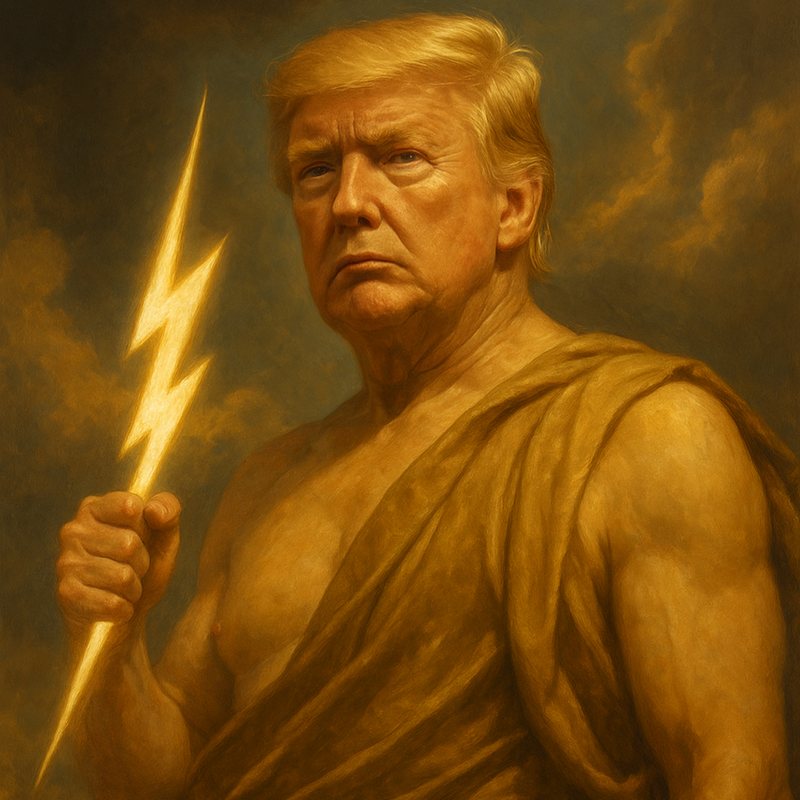
The material we're examining argues that the modern story is precisely the opposite. It's a decidedly mortal being who is elevated, or perhaps more accurately demonized into a God like figure by the very forces arrayed against him. That's the core. Flip the precise inversion of the fable. Instead of a God sneaking into an unwilling pastor, our modern Storm God, as the source vividly describes it, lumbered down an escalator, orange and grinning.
That image is seared into memory, isn't it? It is. And from that pivotal moment, according to this analysis, a significant portion of the country, particularly those who perceived him as an adversary, began a collective, almost subconscious transformation of him. He became the scapegoat for every hurricane, every plague, every bad harvest, every secret dread that the sky still wants blood. Wow, so projecting all anxieties onto him.
It's an almost anthropological observation about how we attribute vast, uncontrollable forces to a singular figure, like we need someone to blame for the chaos. This naturally raises a critical question. How does a Federer described as thoroughly mortal someone the source depicts as you know, petty, flawed, combed over, clumsy? Yeah. Very human descriptions. How does that person become this formidable bunker busting Zeus in the collective consciousness of his detractors? It seems like such a leap.
It does. The material posits that in the heads of his enemies, he didn't just become a political opponent, he evolved into the trickster who grew thunderbolts, the Primal Father God who devours the field when the lentil's not marked. That's some heavy mythology being invoked there. The Trickster, The devouring Father God. Exactly.
It's an astonishing leap of perception, transforming a human into essentially a force of nature in their minds. And here's the crucial difference from Keller Zeus, a distinction our source stresses as Paramount. Kaler Zeus eventually faces some kind of cosmic reckoning, right? There's mention of a cosmic lawyer coming to drag him back to the mountain, returning him to his proper, albeit chastened, place. Orders restored.
He's put back in his box. But for Zeus, the Trump, the source argues there's no such thing because, and this is the key phrase, they keep the fire burning. They his enemies, yes. His enemies, by feeding him their dread, their constant unyielding focus, their fear, their outrage, inadvertently keep him immortal, in this perceived sense anyway. So the attention itself empowers the image. That's the argument.
They keep him alive and potent right here in the modern suburbs, floating like a storm cloud over every podcast and every bedtime panic scroll. That's chilling, the idea that negative attention feeds the very thing you fear. It's a chilling and fascinating idea of how collective human attention, even negative attention and fear, can inadvertently imbue a figure with profound, almost mythic power, sustaining A perception that transcends mere political reality. The fear becomes the fuel. It keeps the Zeus's persona alive in the public mind.
Exactly. So if we shift our focus from perception to practical reality for a moment, what does this all mean for the real world implications of power? Good question. Our source highlights a crucial, often overlooked point. People frequently underestimate, or maybe just forget how much real concrete power the modern American presidency actually carry.
Yeah. We talk about checks and balances, but. But this isn't just about abstract perception or, you know, how people feel about the president. It's about the tangible tools and immense authority that have systematically accumulated, particularly since a pivotal moment in recent history. That's a critical distinction the source draws.
It emphasizes that especially since 2001, since the towers fell, there's been a collective, almost unspoken agreement across the political spectrum to break the locks on the executive branch. Right. The Patriot Act era. The expansion of surveillance. Exactly this vast expansion of power was, according to the source, justified in the name of safety, in the name of eternal war, and in the name of permanent surveillance.
Think about the incredible, almost unimaginable array of tools that have been placed at the disposal of this modern Zeus. It's not just symbolic power then. Not at all. It's a monumental shift in the balance of power, concentrating immense authority in one office. When you connect this to the broader picture, the sheer scale of this executive power is truly immense. The material we're examining details of vast drone fleet at the president's command, capable of striking anywhere on the globe with precision.
Right, the power to wage war almost unilaterally. Then there's $800 billion a year in open defense spending alone, a number that's almost too large to fully comprehend. Vine boggling sums. But then, as the source starkly adds, there are trillions more tucked away in black budgets and shell contracts and off books cyber OPS. The stuff nobody sees. These are the shadowy expenditures, the untraceable operations that operate beyond public oversight, granting unparalleled covert capabilities. It's staggering when you consider the totality. And it's not just money or drones. We're talking about over 80 known military bases strategically positioned around the world. But as the source chillingly says, who knows how many more? In the shadows, in the air, under the sea. These are the hidden outposts of an expansive global military footprint.
So the implication is stark and direct. This figure with these tools possesses the chilling ability to snuff out how many little sparks with a nod of a head or the swipe of a Sharpie on an executive order at 3:00 in the morning. That's real, immediate, overwhelming power capable of altering lives and even nations of the mere directive. It embodies a kind of modern technological omnipotence. Now the source takes us to a specific hypothetical point in time, painting a vivid picture of a potential future scenario. Here we are, 168 days into a second term. Trump the 47th.
OK, setting the scene for this hypothetical second term. It sketches out a vision of a presidency that, in this imagined second term, has achieved significant, almost unprecedented victories, consolidating power in a way that fundamentally reshapes the political landscape. Oh, absolutely. According to this compelling scenario in the source, he secured the swing States and even the popular vote, which, as the source notes, they said could never happen. Great.
Defying expectations again. And then there's the Electoral College landslide, which, as the source Riley puts it, made all the Pearl clutching, say, democracy types RIP their hair out while the normies just poured another cup of gas station coffee and said, well, it's done. A very cynical take on public reaction there. It is beyond that in this hypothetical, he has the House, he has the Senate, at least until the midterms. So unified government control. And the Supreme Court is described as locked down tighter than Fort Knox, every big ruling slicing his way like the storm got himself nudging the scales.
It's a vision of unchecked, overwhelming political dominance. This imagined scenario contrasts sharply with the challenges described in his initial term. Right. The source pointedly notes that this time around, he didn't come in blind and surrounded by Vipers like his first rodeo. No more Brutus at his shoulder.
Implying he learned from the first term purged the disloyal. That's the suggestion. The preparation for this hypothetical second term is described as absolutely critical and meticulously planned. The material suggests he spent four years in the political wilderness, brooding like an exiled king. Like Napoleon on Elba or something. Kind of running endless scenario drills the way JSOC Joint Special Operations Command builds plywood cities in the desert to practice the perfect raid. This implies A strategic, almost military like precision to his return.
So not just winging at this time. Apparently not in this scenario. Here's where it gets really interesting about his hypothetical preparation objective. He didn't just plan, he built the maps, built the traps, built the kill switches. Little switches? That sounds ominous.
It does. The objective as described in the source was fundamentally different this time around. He wasn't seeking to make deals, to compromise or to engage in traditional political negotiation. So what was the goal? He came back to finish what he thought was stolen from him the first time, and he's doing it before the bureaucratic white blood cells can even get their shoes on. Wow, that's aggressive imagery.
Bureaucratic white blood cells. It's a depiction of a very deliberate, calculated and ruthlessly efficient approach, a stark contrast to the perceived chaos and reactive nature of his first term. The image is one of a figure who has learned, adapted and returned with a singular, unyielding purpose. To reshape things permanently, it sounds. Like that's the implication if we connect this phenomenon to the broader historical context, The source draws some truly compelling parallels between this modern figure and ancient, seemingly gospel like mortals.
Like Pharaohs and Caesars. Exactly. It challenges us to reconsider how figures of immense power throughout history attained their perceived divinity. Were the Pharaohs, for instance, truly gods? The source provocatively asks. You think the Pharaohs weren't just men in shiny hats who knew how to swing a sword and claim divine blood? It suggests their divinity was a construct right, a claim to legitimacy and power, rather than an inherent truth built on force and spectacle.
Precisely. And then there's the compelling case of Julius Caesar, who, as the source eloquently puts it, was just immortal until the Senate made him immortal in name because the crowds needed him to be bigger than death. So his deification wasn't a divine intervention, it was a societal and political act driven by collective human need and aspiration. People wanted him to be more than mortal. That's the argument.
This leads us to a profound core insight from the source. Every God in the old stories was just a man who could kill you if you crossed him and bless you if you bent the knee. Wow, that just strips, well, a mystical veneer, doesn't it? It really does. It brings the concept of divine power down to the raw, fundamental mechanics of dominance, submission and absolute control over life and death. It's a very clear eyed, almost brutal assessment of what God like power truly meant then.
And arguably what it means now for a figure like Trump. According to this sources perspective, it's about the capacity for reward and punishment on a grand scale. So with all this in mind, what does this Thunder God look like in full unrestrained operation according to the source? Well, our source doesn't mince words or offer any pretense of benevolence. It describes him as not even pretending to be a kind God. No friendly neighborhood deity here. Not at all.
This isn't some gentle guiding deity who offers solace. Instead, he's vividly portrayed as Zeus in full Thunder mode, roaming the sky, chucking bunker Busters when the mood hits him, signing Killis with a grin. The terrifying image Raw, unvarnished power exercise without compunction or mercy, where the arbitrary whim of the ruler dictates fate. What's particularly fascinating here is how the source employs specific Stark metaphors to illustrate this power in action, and it's far reaching psychological effects. OK, like what? Take for instance the ICE dolphin trick metaphor. The ICE dolphin trick.
What does that mean? OK, so the tuna is presented as the official publicly stated excuse for an operation. For example, rounding up illegals with ICE raids, rolling like armored locusts through communities. This is the ostensible purpose, the tangible target that justifies the action. Right, the stated reason for the raids. But the dolphins, as the source reveals, are the real meal, the true objective, or, perhaps more accurately, the devastating collateral damage that extends far beyond the immediate target. Ah, like dolphins, cotton tuna Nets the unintended or maybe intended consequence.
Exactly, the source explains. The sweeps aren't just about who's legal and who's not. They're about putting fear back in the air. The real flex, as the source calls it, is the show of power that reminds everyone the door kickers can stand in your living room at dawn because the Storm Father says so. So it's not just about catching the tuna. It's not just about the fish.
It's about a broader, more insidious message. It's about reminding everyone, regardless of their own status, that the net fits over your whole street. That's incredibly chilling. It illustrates how the perceived power of this Zeus transcends the immediate target, spreading A pervasive fear throughout the community, making everyone feel vulnerable. This specific action is a performance designed to generate a much wider psychological impact of obedience and dread. It's psychological warfare, essentially. This leads us, naturally to a crucial question about protection and allegiance within this power dynamic, drawing on a powerful Old Testament story, the Passover lentil. Yes, the blood over the door.
Right. You'll recall the story of the Israelites marking their doors with lamb's blood so that the Angel of death would pass over their homes bearing their first born. It's a story of divine judgement and explicit protection. A. Very clear marker of who is safe and who isn't.
And the source applies this ancient concept directly to the modern context, with remarkable insight. The villagers, which the source clearly defines as Trump's ardent supporters, believe they have explicitly marked their Lincoln. Not with actual blood, presumably. No, not literal lambs blood, of course. In the modern world, it's symbolized by distinct public declarations of loyalty and belonging. Things like the AR in the closet, the bumper sticker, the Sunday potluck, the Don't Tread on Me flag. OK, so these are the modern signs of allegiance. These are, in the sources view, clear shorthand for. I'm inside the covenant.
Zeus will smite someone else. They believe with profound conviction that they are protected, that they will be passed over from this perceived wrath because they have declared their allegiance. They see themselves as under his protection. In stark contrast, the source describes the 33%, or more pointedly, the priesthood, which it characterizes as the rational coastal pure reason priesthood, or the secular moral class. The opposition, basically the critics. Yes, they are depicted as having traded the lentil for an abstract moral superiority, believing they can reason with the Thunder.
They rely on intellectual arguments, moral righteousness, logical discourse. Trying to debate the storm. Exactly. But the source is unequivocal in its assessment of their approach. They can't. Their tools are seen as insufficient against a force that doesn't operate by reason in this view. So the outcome then becomes quite stark and binary. According to this perspective, you either have the blood over the door or you don't.
That's it. It suggests A fundamental, unyielding choice in the face of this perceived power, where intellectual or moral standing offers no real protection. It's about affiliation, not argument. And what does this God demand from those under his sway? Is it praise Worship? The source clarifies that he's not asking for praise, he's demanding obedience, or at least fear. Same thing in the end.
Obedience or fear not love or admiration. It's not about worship or, you know, babies on an altar. None of that. It's about a primal, undeniable choice. Your door marked or your door smashed. Chilling.
Return to an ancient absolute concept of power. Where loyalty is rewarded and dissent is met with swift, overwhelming force. That's the essence of this Zeus figure. Now here's what a source calls the funniest part, if any of this is funny at all. OK, I'm braced. It's the profound, almost absurd contradiction inherent in the perception of his enemies, the very same people who for years relentlessly called him an incompetent clown, poopy pants dotard shuffling around like a sedated grandpa. Right.
The criticisms focused on incompetence, buffoonery. Are now, according to the source, utterly consumed by portraying him as omnipotent. They cannot stop talking about his immense, almost supernatural power. That is a contradiction from clown to omnipotent controller. This observation raises a crucial question about the internal consistency of narratives, particularly those fueled by intense opposition. How does the source illustrate this? It uses vivid, almost caricatured examples. These same individuals are now described as portraying him as pulling the strings in Israel and Palestine, implying a global reach and orchestrating complex geopolitical events. Assigning him vast international influence. They depict him as orchestrating the world's genocides from a golf course in Florida, suggesting a chilling, almost detached malevolence.
That's quite an accusation. Further, they see him vanishing dissenters into black sites and turning local cops into federal snitches, conjuring images of an omnipresent totalitarian surveillance state. So attributing near total control and malevolent intent. The irony truly is striking, almost a form of self parity, as the source so pointedly observes. These people say he's a fool, but they also say he's God. They don't even hear themselves.
It's a powerful statement about how fear, political opposition and constant vilification can inadvertently, perhaps even ironically, inflate the perceived power and efficacy of an adversary. And this paradoxical dynamic leads us to what the source identifies as the weirdest part. Something terms the tulpa effect. The tulpa effect. OK, you need to explain that one. To understand this, let's define tulpa. In Tibetan mysticism, a tulpa is a thought form, basically an illusory being or entity conjured into existence by sheer mental concentration and collective belief. So like willing something into existence with your mind? Kind of.
It's an entity made real, or at least given substantial form by sustained mental focus. What's truly fascinating here is the sources audacious application of this esoteric concept to modern political dynamics. Does it apply? It argues that the rational, coastal, pure reason priesthood, those who pride themselves on being immune to superstition or magic, are in fact doing the old work everyday, meaning they believe they are above such primal forces, yet they are inadvertently participating in their creation. That's the key to profound and unsettling paradox. By constantly talking about him, By fearing him, By endlessly memeing him, By hate binging on every piece of content related to him.
The constant obsession. By focusing their collective dread and outrage, they are, in the sources words, pumping psychic helium into the trickster until he rips the clown suit off and puts on the Thunder crown. Wow, so the argument is their focus creates the powerful image they fear. It's an unnerving idea that negative obsession, ceaseless attention, and fear can inadvertently create and empower the very monster you claim to despise. Your constant focus, however critical, serves as a life force for the entity you wish to diminish. That is deeply counterintuitive, but it makes a strange kind of sense in terms of focus and energy. And this phenomenon connects to another profound spiritual concept, but with a surprising modern twist, what's often called the God shaped hole.
The idea that humans need something transcendent. Right. The traditional spiritual idea is that humans inherently crave higher meaning or power. There's a natural, perhaps innate, human desire for something transcendent to explain chaos, loss, and fear. This void is often referred to as a God shaped hole in the human heart, a space meant to be filled by faith or purpose.
OK, standard concept. What's the twist? But the source presents a fascinating and unsettling twist on this ancient concept. This hole has migrated. It's in the head. Well, I graded to the head.
Yeah, the dreadless. They're rent free initially, perhaps like fleeting bad viral Jingle you can't get out of your head. But now it's metastasized, growing into an entire cathedral of anxiety. A cathedral of anxiety? That's a powerful phrase.
So it's a secularized, internalized space for fear and obsession, constantly being built and expanded upon by dwelling on the threat. Exactly. It's an incredibly vivid and a relatable analogy for modern anxiety. If you've ever had a panic spiral at 3:00 AM, the source compellingly states, you know how that works. The monster you keep feeding never moves out. Oh yeah, that hits home.
The more you focus on the worry, the bigger it gets. It's a powerful way to describe how constant fear, negative attention, and the inability to disengage from a perceived threat can become a self-sustaining, self perpetuating cycle. The more you feed the fear, the larger the monster grows in your mind. Perpetuating the very entity 1 fears and the psychological dynamic also brings us to another compelling metaphor from folklore, the golem. The Golem.
Right, The clay, the creature exactly. The golem originates from Jewish folklore, typically a creature made of clay brought to life through mystical means, often to serve and protect a village from persecution or threats. A protector figure. The source masterfully employs this metaphor to explain the underlying motivation of Trump's supporters, whom it refers to as the villagers. They didn't necessarily set out to create a God or a demigod at first. What they wanted, the source argues, was a champion golem, a QB, a powerful protective figure. So not a God, but a fighter, a shield. They sought a slab of clay to yell at the other side and swing a big foam finger, a symbolic strongman figure to represent their frustrations and fight their battles, allowing them to go about their daily lives with a sense of security. OK, that makes sense as an initial motivation, but here's the inherent danger, as the source points out of any Gollum of any created entity given immense power. It's the danger.
Eventually it believes it's the spell. Oh. It believes it's the spell, meaning it forgets it was created and thinks the power is its own. It's that chilling moment when the creature designed to serve and protect, designed to be a tool, starts to believe it is the source of the power itself, that it possesses inherent agency. It gets struck by the lightning and thinks it's him throwing it, not the crowd. Attributing the source of power incorrectly. That highlights a profound and dangerous shift, where a figure initially empowered by collective will begins to assume that power as entirely its own, becoming an autonomous force separate from its creators.
And then there's the pervasive phenomenon the source identifies as the Wolf Cry syndrome. The boy who cried wolf, basically. Pretty much. The Wolf Cry syndrome refers to the persistent, often hyperbolic warnings that have been issued for years regarding this figure. The source notes that they screamed dictator, literal fascist Hitler for 10 straight years, creating a constant deafening alarm. Yeah, the rhetoric got very high very quickly and stayed there. The rhetoric escalated quickly and stayed at a fever pitch, making every perceived threat sound apocalyptic. Everything was turned up to 11 all the time. But the effect of this incessant crying wolf, this unceasing barrage of dire warnings, is profound and, according to the source, counterproductive.
How so? Desensitization. Exactly. If, despite the alarms, crops keep growing and the Amazon boxes keep arriving on time, if daily life continues without immediate catastrophic upheaval, the villagers, the everyday people, inevitably tune it out. It just becomes background noise.
This leads to what the source calls the normie shrug. The more the wolf cry echoes, the less normies care, becoming desensitized to the warnings. Eventually, their reaction shifts from fear to weary indifference. And they might even start thinking the warnings were overblown from the start. Right, leading them to say with a pragmatic cynicism, better Zeus than locusts.
They prioritize stability and their personal comfort over the abstract warnings, perceiving the Zeus as a lesser evil than potential societal collapse or just constant disruption. The tragedy, as identified by the source, lies in the rigidity and predictability of the priesthood's response. The priesthood never updated their script. Same lines, same signs, same burn barrel effigies. So no change in tactics, no modulation of the alarm.
The repeated, uncalibrated warnings lose their impact because they fail to adapt to a changing psychological landscape. There's no nuance, no escalation beyond what's already been declared. And the source concludes this point starkly and ominously. The trickster laughs. Zeus cracks his knuckles.
That suggests A fundamental failure to understand the psychology of the populace and the diminishing returns of constant exaggerated alarm. Thereby allowing the perceived power of the Zeus to grow unhindered and unchallenged by effective countermeasures. The cries become ineffective noise. And finally, there is what the source calls the comedy of immortality anxiety. Immortality anxiety. Who's anxiety?
This delves into a deep seated psychological Dr., specifically the priesthood's intense desire for their own form of immortality. Critics again? How are they seeking immortality? They aren't seeking traditional religious immortality, but rather a secular, historical one. They want their moral arc to be recorded forever, to be seen as the ancestors who bravely fought racism, the courageous souls who metaphorically stormed Selma, to be undeniably on the right side of history. OK, legacy being remembered favorably by future generations, this is.
Profound psychological observation. Truly, they yearn for their grandchildren to look back and say I was on the right side of history. I stood for what was just. It's a quest for historical validation and enduring legacy. Makes sense, but the tragedy as presented by the source is a bitter paradox.
Let me guess, back to feeding Zeus. You got it. The same people who say they hate Zeus spend every waking hour feeding him their fear, keeping him immortal. Their very opposition, their constant emotional investment, becomes the lifeblood for the figure they despise. That's a truly bitter irony, isn't it? While they relentlessly pursue a form of immortality through moral arcs and historical legacies, striving to leave an indelible mark, they themselves still turn to dust and worms, same as always.
As the source bluntly puts it, they are quite literally feeding the very thing they despise, purring their energy and focus into sustaining its perceived power. While their own quest for lasting moral impact might be undermined by this constant fear driven engagement, it's a fascinating, almost poetic analysis of human motivation, it's inherent contradictions and it's unintended, often self defeating consequences. The energy spent in fear could perhaps be re channeled into building the legacy they truly desire. Is that the underlying point? That seems to be the implication.
Where you put your focus matters immensely. So if we pull all of these intricate threads together, the flipped fable, the real power, the metaphors, the psychology, how does Zeus, the Trump, manifest in our undeniably modern world? Well, the source describes him as the first mortal to wear this crown in the 4K surveillance saturated 247 doomscroll age. Right. This isn't some ancient figure shrouded in myth, known only through whispers or carvings like Caesar or the Pharaohs.
Exactly. This is a figure hyper documented. Every gesture, every utterance, every perceived flaw captured in excruciating detail broadcast instantaneously across the globe. Constant scrutiny. What's truly fascinating here, and a core paradox the source highlights, is that the whole world sees the mole on his ear in real time.
And yet it only makes him more mythical because the hyperexposed saws make him seem human. So when the storm comes, it feels personal. Wait, so the flaws make him more mythical, not less? How does that work? The idea is that because he seems so undeniably human, so flawed, when he wields this immense power or is perceived to be this Zeus figure, the power feels more real, more immediate, more personal, not like some distant abstract deity. OK, the juxtaposition of the mundane human and the perceived immense power makes the power seem more impactful, more jarring.
He's uniquely positioned in our hyper connected age, he's the first Zeus with a drone fleet, and a CNN panel devoted 24 hours a day to parsing every Belgian tweet for signs of the next Thunderbolt. It's an almost absurd yet deeply revealing combination of ancient archetypes and cutting edge technology and media saturation. Both his believers and his enemies, as the source meticulously notes, perform their fear live. Their reactions, their anxieties, their allegiances are constantly on display, contributing to the spectacle. Well, as the source says, the normies decide if they'll mark the door or just wait to see whose house floods. Just watching the show, trying to figure out how to stay safe. It's a live public and constant drama playing out on a global stage with very real stakes.
This phenomenon naturally raises an important question about the longevity of this storm and the duration of this perceived divine power. How long can this last? Right. The source reflects on the current situation, hypothetically set in July, a year and a half until the midterms. It describes this figure, this modern Zeus, riding every lever like a kid in a junkyard mech suit.
Great image. Surrounded by generals and guys in blue suits who will do anything to keep the machine humming, it's an image of relentless, almost mechanical exertion of power enabled by a system and its loyal operators. So he's Zeus, but only until he's not. He's the storm father until the villagers bench him or the priesthood runs out of fear to feed him. There's an implied fragility, a dependence on the collective will or the collective fear. It's not inherent power forever.
But the source is quick to warn with a chilling prediction. But don't bet on that happening soon. People need a God. They need need something to blame when the flood comes. That insight implies a deep seated human need for a scapegoat, for an external powerful force to explain and absorb the chaos and anxieties of the world. A need that may transcend specific political figures. We might just replace 1 Zeus with another if the underlying need isn't addressed.
The source culminates in a truly chilling warning, painting a vivid picture of the consequences for those who refuse to acknowledge this conjured Zeus, or maybe for those who fight him in the wrong way. OK, what's the final warning? It suggests people will stand in the street door, unmarked, burning the effigy until the flames slip their chain and burn the barn too. Wow, that depicts A destructive, self immolating cycle where the very act of protest and defiance, untethered from understanding the dynamics at play, leads to widespread indiscriminate destruction. Bringing down your own house to spite the storm. God.
And then comes a final, truly provocative thought, a direct and unsparing message from the source material itself. If you think this ends clean, if you think the Angel of Death only wants the first born, you haven't been paying attention. Implying the consequences will be widespread, not targeted. Some doors are marked, Some doors aren't. The priesthood that pretends they don't believe in gods is about to find out the hard way that when you conjure A Zeus, the Thunder doesn't care about your think pieces.
Brutal. It cares that you kept the fire burning. Powerful stuff. It really brings together the idea of conjuring power through fear and the tangible consequences of that power, regardless of intellectual arguments against it. So what does this all mean for us then, in the grand scheme of things? Taking a step back from this deep dive. Well, I think the core insight from this source material is a powerful one.
The perception of power, especially when fueled by intense fear, constant attention, and the fundamental human need to blame. Which seems deeply ingrained. It really does all that can elevate a mortal figure to a near mythic status akin to an ancient Thunder God. It's a fascinating and deeply sobering look at how collective human psychology can inadvertently create, sustain, and empower the very forces it fears and claims to oppose. We build the God we dread. In a sense, yes, according to this perspective. And this exploration leaves us with a final resonant thought, a challenge directly from the source itself. Let's hear it.
May you mark your lentil, or at least know who you're feeding when you scream at the eclipse. Wow, OK, that's something to sit with. It's a profound call for self-awareness, isn't it? Urging us to consider the far reaching implications of how our attention, our emotions, particularly fear and outrage, might inadvertently contribute to the very forces we wish to diminish. Yeah, it forces you to think about your own role in the dynamic, whether you intended or not.
Are you marking your door or are you feeding the storm with your screams? It encourages us to gain a deeper, more critical understanding of the complex, often unseen relationship between power perception and collective psychology in our modern world. Definitely a lot to chew on there. Absolutely a very different way to look at things. Thanks for diving deep with us today.