Read the full transcript (5,891 words, machine made)
Welcome to the deep dive. Have you ever come across stories, maybe from the world of fashion or Hollywood, especially involving young women and just felt this, this pole, this, you know, undeniable urge to step? In Oh absolutely. That feeling like you need to protect them somehow. Shield them. Exactly.
Maybe even save them. And it feels so natural, right? Like it comes from Good Place, empathy concern. Totally. It's a very human impulse.
But what if, and this is what we're diving into today, what if that very instinct, you know, as well meaning as it is, actually kind of obscure something deeper, a more complex truth? Like the solution we jump to isn't really a solution at all. Precisely what if it's actually a bigger problem in disguise, undermining the very strength the the agency we should probably be celebrating instead? OK. I see where you're going. So we're looking at vulnerability but also surprising strength.
Yes, today we're really going deep into these narratives where you find profound vulnerability right alongside immense, often really surprising strength. The goal here is to challenge your own assumptions. You know about who really needs saving. And to explore what it actually means to be, as the source material puts it, a grown ass woman. Exactly that, even when that woman might be, well, remarkably young.
It's about seeing that spirit, that self possession, right? It sounds like we're navigating a really complex intersection here. You've got the modeling world, the entertainment industry, high stakes stuff, definitely. And then you have that deep seated societal thing, that impulse to protect people we see as vulnerable. And mixing with that, is this really powerful, sometimes kind of overlooked idea of individual agency, the power someone has over their own life? Yeah, it's definitely not black and white, is it? It's nuanced.
For sure. And for this deep dive, we've got some pretty compelling sources lined up. There's a really raw, almost confessional account from a supermodel talking about some harrowing experiences. OK. And then there's a piece that's more of a personal reflection on those protective feelings we were just talking about, plus an analysis of how some celebrity careers just completely defy easy labels.
So a good mix of perspectives then, giving us a lot to chew on. I think so. It sets the stage for a really interesting discussion unpacking these, well, challenging ideas. It is. Absolutely. So our mission today is pretty clear. I think we really want to unpack these intricate complexities, you know, the space between vulnerability and that kind of unyielding strength.
And challenge ourselves and you, the listener, on those assumptions we have about protection. Head on, especially when we see young women navigating these incredibly tough, sometimes frankly predatory industries. Ultimately, we're exploring what it truly means to be a grown ass woman. Which, according to the sources, involves being brave, smart, fiercely independent. Driven by her own vision, her own dreams.
Recognizing she's nobody's property. And the really profound part is that insight that this can be true even if she's, what, 1415? Embodying this self possession, this strategic intelligence that just seems way beyond her years sometimes. It's fascinating. A grotesque industry, A hard truth unpacked.
OK, so let's let's start by pulling back the curtain. Our deep dive kicks off with a really stark, and I think necessary confession. It's from supermodel Cameron Russell. Right, the source highlights what she calls her truth. And she uses a really strong word to describe the industry that made her famous grotesque.
Wow, that's blunt. It is. It's not just a story. It feels like a revelation, you know, but the paradox of an industry that sells beauty but underneath it all can prey on innocence, youth. It definitely hits you right away, sort of a gut punch to pull you into that. Unsettling.
Reality. Yeah, no kidding. And just to get a bit more context from the source, Cam and Russell's entry into this whole world, it was incredibly early, almost accidental, it sounds like. How so? She was scouted as a teenager just swimming in Maine. Wow, that young.
Yeah, and the source paints this picture of someone really naive, describes her as being a sucked into the runway world before she even knew it S&M meant. S&M, right? Sadomasochism. Not exactly standard teenage vocabulary. Exactly, the fact that she was exposed to that kind of world that, you know, the implied darker stuff before she even understood the terminology, it just powerfully shows the environment she was thrown into an. Environment she was totally unprepared for. Fundamentally unprepared.
And what she talks about enduring, I mean, it goes way beyond. Just like the usual pressures of a tough job. The source describes a pattern of exploitation blurring lines. What kind of things? Well, it recounts the kiss from the grown photographer when she was 16. 16 OK, it's not professional, that's predatory.
Clearly a total violation of trust boundaries, especially for a minor. Then there were the constant jailbait comments. That language, it's not just inappropriate, it's deliberately sexualizing her youth. It's gross. Totally predatory, shows this complete disregard for her as a person.
And then there's this specific, really haunting image. You see sucker lips painted on by a makeup artist. Wow, that's incredibly visceral. Isn't it? It's not just about makeup. It shows how her image was manipulated, sexualized, turned into something she probably didn't even fully get her consent to at that age.
So it paints this chilling picture, an industry where, for many, these young women weren't seen as people, but as objects. Valuable objects, yeah. To be shaped, consumed for profit, yeah. Their innocence, their bodies. Just commodities, yeah. And the source talks about her memoir to the title alone says a lot.
How to make herself agreeable to everyone? Wow, that really resonates with what you were just saying. Doesn't it? The source calls the memoir an ugly, necessary confession. Ugly because of the awful truths that exposes, the abuse, the demeaning treatment, the whole system. But necessary, because this stuff often stays hidden right behind the glamour.
Precisely, and the industry seen through her eyes. It functions like this dehumanizing machine. That's the word. The source uses the. Machine, yeah. That says this machine eats up young women's beauty, choose their innocence for profit, and leaves them to sort of sort out the therapy bills later.
That's a powerful metaphor, a cold and different machine. It suggests it's systemic, right? Not just a few bad apples. Exactly. It implies this deeply entrenched way of operating that just prioritizes profit over the well-being, The mental health of these young women caught in it. It's a very stark indictment.
In that indictment, that's why the source really emphasizes the bravery here. Cameron Russell speaking her truth out loud like that. It takes immense courage, you'd think, to expose the ugly side of the industry that you know made you famous. Especially when you've been taught, like her title says, to be agreeable to everyone dismantling the facade, Yeah. And as listeners, when we hear these kinds of raw stories, I think many of us do have that immediate, visceral reaction. For sure it ignites that protective instinct, right? Outrage.
A sense of injustice. You feel for someone so young, seemingly so vulnerable, even though, as we'll get into, there's incredible bravery there too. Forces you to confront these unconscionable truths, that behind the glitter there can be real pain, real exploitation. It's hard not to feel that urge to jump in to fix it, protect them somehow. The instinct to protect and it's unintended consequences. OK, so here's where things get really interesting and very human.
Our source writer, after hearing Cameron Russell's story, shares this incredibly powerful raw reaction, something many of us can probably relate to. What was the reaction? Not just outrage, but pure protective rage. You know that feel like that gut level almost primal urge when someone you care about or just empathize with seems threatened? Yeah, I know exactly what you mean.
It's intense, and it's a compelling pivot because the source then talks about the author's own personal experience that kind of amplified this feeling. Oh really? What? Was that they talk about dating a woman years ago who was modeling with Elite Petite in New York and the author describes her as tough as hell and gorgeous. So right away you get the sense of someone strong, captivating.
Tough as hell, but still evoking that protective feeling. Apparently so. Their life together sounded pretty unconventional. Riding with the motorcycle club. Crashing 12 step conferences. Wow.
OK, so not exactly a shrinking Violet. Not at all. It changed the picture of someone resilient, independent, able to handle herself in challenging situations. Yet still this powerful protective instinct emerged in the author. And despite her toughness, maybe even because of it, the author felt this, yeah, visceral, overwhelming need to protect her. The source describes it as feeling brotherly, fatherly, boyfriend all at once.
It's a lot rolled into one. Isn't an intense desire to shield her? The urge was described as absolute, like a primal command. Protect her, shut the door, guard the gate, burn the club to the ground if you have to. Whoa. That's not just concern, that's almost violent in its intensity. Eradicate the threat.
Totally shield her completely, no matter the cost. And the source says that exact same feeling surged up again hearing Cameron Russell talk about predators with casting couches. So it underscores how deep seated that response is when we perceive a threat to someone we see as vulnerable, even if they're all so strong. Right. And that intense emotional reaction leads straight to this immediate gut level solution the source presents. One that feels, you know, really appealing at first. Which is shut it all down.
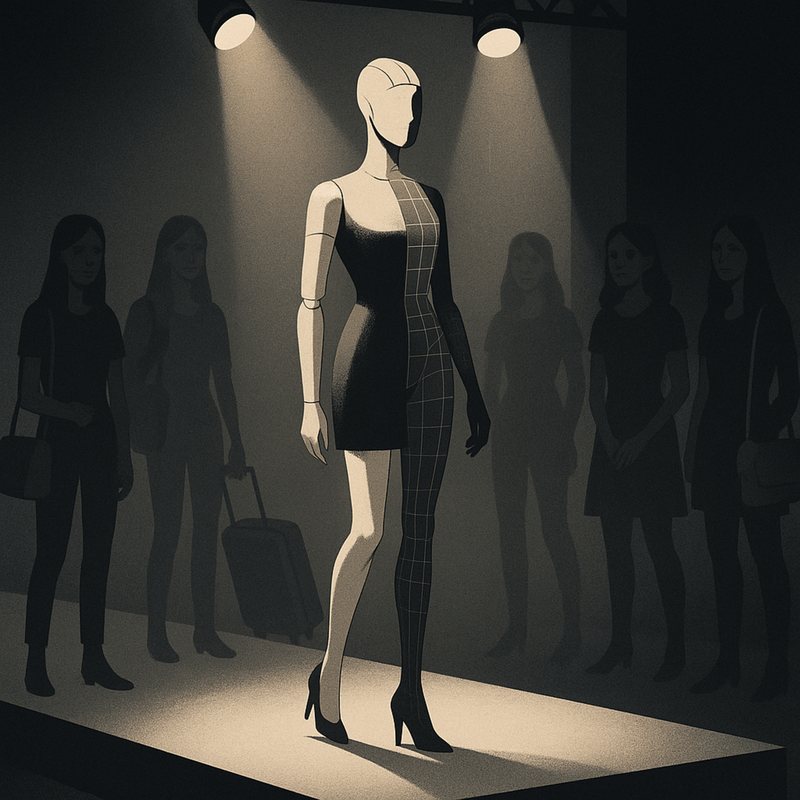
Ban child modeling forever. Replace all that vulnerability with perfect AI babes, dolls that never get harassed, never starve themselves to death, never post a tell all about the scumbag photographer in Paris. The AI solution, yeah, I can see the appeal, especially when you're feeling that. It feels clean, if the source puts it. It promises a world without harm, no exploitation, a neat technological fix for a messy human problem, the ultimate protection by just getting rid of the risk altogether.
But then, and this is the crucial bit, the source just immediately calls it bullshit. Right, that's stark rejection. It's fascinating, isn't it? This solution seems so logical, so clean, so final, but it's dismissed as fundamentally flawed. Which really makes you ask why?
Why does this intuitive techie solution fall so short? Why is it, you know, bullshit? Well, according to the source, it falls short because it ignores this kind of dark joke about a terrifying gender disparity and vulnerability. A dark joke. Yeah, the source lays it out starkly. The dog joke is that if a date goes bad for a man, he goes home alone with a bruised ego.
If a date goes bad for a woman, she might end up dead in the ground. That's brutal, but discurbingly resonant with reality, unfortunately. It really is. It speaks to this deep, pervasive societal fear rooted in, well, actual violence against women. The stakes are just terrifyingly higher. So the authors personal fear, that feeling of wanting to stand outside every hotel room with a baseball bat. It's not just about control.
It's presented as this raw, visceral response to a reality where women face much higher risks of severe violence, sexual assault, even death in situations that might seem minor to others. It's about that systemic vulnerability. And that really does bring it into focus. This whole scenario highlights that gender disparity, that deep fear driving the protective impulse. Which, while well-intentioned.
Right. It's well-intentioned, but it often massively oversimplifies things. And, crucially, it overlooks, sometimes even kind of suppresses, individual agency. How so? It suggests our fear, our desire to prevent harm, can paradoxically lead us to solutions that disempower the very people we want to protect. We try to remove all risk.
And in doing so, we might remove their ability to choose, to be resilient, to learn, to determine their own path. Exactly. It's this profound tension the source forces us to confront, the impulse to save versus the unintended consequences of that impulse. The true protection isn't maybe about insulation, but empowerment. Unveiling agency.
The power we often forget. So OK, if blanket protection or just deleting people with AI isn't the answer, what does this mean for how we see young women in these tough industries? This is where the deep dive takes a really surprising, almost revolutionary turn, I think. How does it shift? The source directly confronts that protective instinct we were just talking about, challenges it with a profound truth. It fundamentally shifts the perspective away from just seeing victims.
Towards recognizing their strength, their capability, their bravery. Exactly. Their inherent strength, their strategic thinking, and yeah, their undeniable bravery. And there's this pivotal moment in the source, right where the author voices this core contradiction to that protective rage. It's blunt, but essential. What's the quote?
That fear bumps right into the truth. She's not my thing, daughter. And even if she was, she's not my thing property. Wow. OK, that it's hard. It really does, because it directly challenges those paternalistic views, that habit of seeing young women as possessions or extensions of someone else or just things to be controlled.
It's a Declaration of Independence, a redefinition of ownership where there isn't any. Exactly. It demands we see everyone, regardless of age or gender, as autonomous, brave, smart, independent, with their own vision, their own dreams, fundamentally their own property. And that realization leads straight into this pivotal idea of agency. The source puts it so powerfully.
Here's what we forget when we fixate on the worst case. These girls. Yeah, girls sometimes have more agency than we like to admit. That's the key insight, isn't it? We focus so much on the danger, the potential harm. That we overlook their inner strengths, their strategic minds, their resilience.
Yeah, and agency here isn't just about having choices, it's about self determination, right? Acting independently, strategically, making tough calls even in messed up situations. Relentlessly pursuing their own goals despite huge, often predatory obstacles. It's about their brave capacity to navigate their own lives on their own terms. And the source gives really specific, compelling examples of this agency in action within the industry. It's not passive endurance, it's active navigation. Like what give me example.
I feel like this observation. They stand in a casting line 400 deep. Right, you can see that as desperate. Or you could see it as incredible persistence, unwavering ambition, fierce determination despite overwhelming odds they choose to be there. Enduring rejection after rejection, critique after critique.
Holding on to hope. That speaks to amazing psychological fortitude, a clear vision for what they want. Exactly. And then there's that grim reality the source mentions. They tolerate the creeps.
Which sounds like victimhood. But the source suggests reading it differently, that it's often a calculated navigation of horrible situations, a shrewd understanding of the environment, and a strategic decision. A calculus maybe, to endure certain things as a means to an end. An. Unfortunate part of the hustle. Yeah, a grim part, but it speaks to a kind of pragmatic resilience, compartmentalizing, powering through for a bigger goal.
They often know what's up and they choose the reactions to serve their objective, achieving their vision, their dreams, being smart about it. And then it says they game the system. Right. Which means they're not just pawns, right? Not passive exactly. It implies they actively find ways to leverage the system, bypass its flaws, use their intelligence, their adaptability, their social skills. Understanding unspoken rules, finding loopholes, networking, negotiating.
Yeah. It's an active role within this complex, often murky structure shows keen intelligence and a drive for self advancement. They're smart, actively trying to make their vision happen. And maybe the most provocative bit, and this really pushes our thinking, the source says. They're not just prey, they're predators in their own right.
Whoa, okay, that's a strong reframing it. Is it's meant to shock us out of conventional thinking, but it highlights this crucial or maybe uncomfortable aspect of their agency. They often possess this shrewdness, sharp with competitive edge strategic mind, things usually attributed only to people in power. So they can be assertive, competitive, focused on their own success, maybe even at other's expense sometimes. It suggests that, yeah, they're not helpless.
They're dynamic forces shaping their own careers. It's a challenging idea that a young woman can be both vulnerable and possess a kind of killer instinct. And if we connect this to the bigger picture, the source draws these powerful parallels, calling them early achievers. Ah right, that comparison is really insightful. Puts them in a broader context of intense high performance fields. Exactly.
It says they're the same as gymnasts, chess prodigies, child actors, Figure skaters. Think about the lives those kids lead. The examples are striking, too. The ones who starve to make weight, who wake up at 4:00 AM to skate the same jump 600 times. That level of discipline, the sacrifice, the singular focus.
It's not casual, is it? It's lives dedicated to excellence, often a huge personal cost. This comparison highlights those shared traits, relentless dedication, sacrifice, ambition, and this fierce willingness to push their own boundaries, physical and mental, to achieve their vision. It shows this exceptional Dr. even when very young, demonstrates their profound bravery. And the outcome, the source observes, is that sometimes they outplay the wolves.
Right. It's not a guarantee, obviously, but it powerfully emphasizes that agency intelligence resilience can lead to triumph. Exactly. Despite facing huge challenges, predatory forces, they're not always just victims. They have the capacity, capacity, the smarts, the foresight to navigate and sometimes overcome the system's trying to exploit them.
It's a testament to their incredible resilience, their ability to be brave and smart even when society underestimates them. Truly, nobody's property. And that's exactly why we want you, our listener, to really challenge your own assumptions about victimhood versus empowerment. Are we automatically seeing fragility, maybe because of our own protective feelings and diminishing their strength? Or are we truly acknowledging their incredible, maybe sometimes uncomfortable, resilience and strategic skill? Are we seeing them as helpless or as individuals with powerful agency, even at a young age, who are fiercely their own property, driven by their own clear visions and dreams? This shift in perspective is fundamental to understanding their complex, brave journeys.
Sydney Sweeney's master plan. A case study in killer instinct. OK, so to make this idea, agency, this grown ass woman concept really concrete and contemporary, our source gives us a fantastic real world example, the actress Sydney Sweeney. Yeah, very prominent right now. Exactly. A familiar face and her story as a source tells it really seems to encapsulate this idea of self determination and strategic smarts.
Well, the source acknowledges her public image first, right? Calling her arguably one of the most objectified women in Hollywood today. Big boobs, big gaze, big deal. Yeah, that's the perception many people have based on her roles, her appearances. It's easy to look at that and think she just kind of fell into it.
That she's just a product of the industry gaze or her success is mostly about looks? Right, But then the source drops this surprising truth that just completely refutes that passive idea. What's that? That says point blank. Did she stumble into that?
No. OK, unequivocal. Totally. It immediately sets the stage for revealing the sheer agency, the strategic brilliance, the relentless Dr. behind her rise. It directly challenges the idea that her success is just looks, her luck or the industry's doing. Instead, it paints her as the architect of her own destiny. And the specific detail that follows is, well, it's pretty striking.
Speaks volumes about her foresight and planning. What is it? The source reveals she sat her parents down in Washington state or Oregon, I think, and gave them a PowerPoint presentation explaining exactly how she'd get where she is now. Get out of here A PowerPoint as a teenager, that's what it. Says imagine that, a teenager living at home presenting A comprehensive multi year business plan for her entire career to her parents.
That's not just ambition, that's meticulous strategic thinking. Astounding dedication for someone that young. She was incredible initiative, right and understanding of the industry, a really clear vision for her dreams. Brave, smart and clear on her path. Absolutely mind boggling. And it wasn't just a vague idea like I want to be famous. It was concrete, actionable.
The source highlights her detailed strategy. Plan A. Plan B. Plan C. Wow, contingency planning and everything. It's not a wish, it's a blueprint. Shows his capacity for foresight, anticipating obstacles, devising multiple routes to her goal. She wasn't just hoping for the best. It speaks to this profound intentionality. Commitment indicates she's really in control of her trajectory.
Not someone being passively guided. Someone actively directing her own destiny, assorting her agency, making sure she's nobody's property but her own. And what really stands out here, what the source powerfully highlights, is this comparison. It makes it really uncovers A societal double standard. What's the comparison?
The same hustle people cure for when it's a teenage boy training for the NBA. That's insightful think about how we view young male athletes with that kind of dedication, practicing constantly, planning their careers young, making huge sacrifices. We. Celebrate it, right? Laud their ambition, their drive, their killer instinct as admirable signs of discipline success. It's absolutely true we cheer that intensity, that focus in boys.
But when a young woman shows the exact same strategic planning, ambition, dedication, like a detailed PowerPoint mapping her career, it often gets overlooked, doesn't it? We're overshadowed by talk about her looks, or dismissed as luck or just being a product. Yeah, this comparison forces us to look at that double standard. Why is it admirable in one context, but maybe seen as less significant or even, I don't know, calculating in another? It challenges us to see that the same hustle, the same fierce intelligence and vision is just as powerful, just as indicative of agency, no matter who has it.
So the conclusion the source draws from Sweeney's story really hammers home the core message of this deep dive, which is that's not a helpless little lamb, that's a grown ass woman with a killer instinct, right? Not someone needing saving. Some with immense strength, formidable strategic intelligence, fierce independence. It underscores that idea that true agency is about knowing what you want and actively, bravely, intelligently going after it with a clear vision, ensuring she's her own property, accountable only to her dreams. The embodiment of drive and self determination, even young. The peril of perfect AI Why deleting humans isn't the answer.
OK, so let's circle back to that initial kind of elegant sounding fix for all the exploitation problems we talked about the the idea of just replacing real women with perfect AI dolls. Why the technological solution? Our source. Really dives deeper into why this isn't just imperfect, but potentially way more dangerous, more insidious, and ultimately kind of a denial of human resilience than it first seems. It has that seductive allure, though, a clean fix for a messy human problem. Exactly.
The source reiterates that immediate gut reaction, that emotional appeal you might feel when faced with the ugliness. Fine, burn the whole system down. If we hate what happens to real girls, replace them with perfect AI dolls. No more trauma, no more predators. Everybody wins.
Yeah, on. The surface. It sounds like a utopia, doesn't it? Technologically achieved Nirvana. No suffering, no abuse. Just flawless, controllable virtual beings fulfilling the demand for images without any human cost. No messy emotions, no therapy bills needed. It promises total eradication of vulnerability by just removing the vulnerable, the ultimate fantasy of a problem solved. But that leads to this incredibly important question. The source pushes us toward what really happens when you try to protect vulnerable people?
But just erasing them from the picture entirely? Is real protection found in deletion? In removal. Or is it found in empowerment, resilience and actually changing the systems that cause the harm rather than just treating the symptoms? The source argues really strongly against this seemingly benign solution. It explains the flaw by introducing this idea of the modeling and entertainment industry as a vast, complex biosphere.
A biosphere. That's a critical metaphor, isn't it, for understanding the scale? Totally. It's never just the Cindy Crawfords on the catwalk in Paris, as the source points out. That top tier? The famous supermodels?
They're only the most visible, most glamorous part, and often, ironically, maybe the most protected part of this huge ecosystem of image, performance and, yes, exploitation. And the source really drills down into the sheer diversity of roles and people in this sprawling biosphere, shows how deep the demand for certain looks and performances goes across all levels of society. Because it's huge network, right? Yeah, it includes showroom. Girls in Atlanta may be working long hours, low pay, still needing a certain look. Department store shoots in Albuquerque less glamorous Be still objectifying, far from high fashion. OK.
So much broader than just runway models. Way broader cruise ship performers, often isolated, vulnerable, restrictive contracts, ring girls at fights, teen beauty Queens and their intense pageant moms, all in these hyper competitive, appearance focused worlds. And child actors too, facing huge pressure. Yup. And now TikTok influencers pushing shape wear, constantly performing, monetizing their bodies, facing intense global scrutiny.
It just shows how pervasive the demand is and how many people, often very young, get drawn into this ecosystem, each facing their own vulnerabilities. And here's the critical, really cynical insight the source wants us to get. And it feels devastatingly accurate. What is it? When you protect the top by raising the humans, you don't protect the rest.
You just push the exploitation sideways, deeper into cheaper corners where the same girls hustle for the same scraps. Yeah, that's the core argument against the AI fix. Exactly. It highlights that the underlying demand for these images for youth, certain bodies, a specific performance. It doesn't just vanish because the visible human models are gone.
The. Demand persists unaddressed, and the exploitation just moves. Shifts to less regulated, more obscure, often far more dangerous corners where oversight is minimal, protections are 0, and the cost of vulnerability is even higher. The truly vulnerable and the less visible, less glamorous, often more desperate parts, they're left even more exposed, operating in the shadows, chasing the same limited, often predatory opportunities. And the source delivers that utterly cynical yet probably chillingly accurate conclusion and the same and still cash the checks. That hammers at home.
Doesn't it? The underlying power structures, the systemic demand for objectification, the ultimate beneficiaries, they remain unchanged. The problem isn't the human models, it's the ingrained societal demand and the system's profiting from it. So replacing humans at the top doesn't dismantle the demand or the profit motive, it just reconfigures the supply chain of vulnerability. Leaves the real perpetrators untouched, maybe even bolder, while those at the bottom become even more expendable, more unseen.
And this analysis is so important because it emphasizes that fixing complex societal problems just at the symptom level, like swapping models for AI without tackling the root causes, the. Underlying demand, the power structures, the systemic issues creating vulnerability. It's ultimately ineffective. Worse than ineffective, it's a dangerous illusion. It can actually lead to new, maybe more insidious, definitely less visible forms of harm.
Pushing exploitation underground, making it harder to regulate, identify or protect anyone. It's a dangerous illusion of a solution that just reshuffles the deck of exploitation without changing the game. And it's a profound denial of human bravery, isn't it, Suggesting the problem is the exploited person's vulnerability, not the exploiter that undermines basic human dignity? Finding the balance, supporting agency, not erasing it. OK, so if the answers aren't simple protection, that might disempower, and they're definitely not the chilling idea of just deleting humans, where does that leave us? Where do we go?
That's a big question. Our source, after taking us through all this complexity, ultimately brings us back to this powerful recurring theme, the central idea that anchors the whole argument. It comes through with real clarity. Yeah, what's fascinating is how it keeps returning to this core message that's been building throughout, the source explicitly says. Every time I run the loop from Cameron's grotesque truth to my motorcycle Club X to my fear for every brave girl I've ever known, I come back to the same place.
Agency, independence. They're grown ass women even when they're 15 sometimes. It's not just a maybe, is it? It's presented as this firm conclusion drawn from reflection observation. Absolutely.
It's this powerful acknowledgement that these young women, despite age, despite perceived vulnerability, have this profound self determination, inner fortitude, strategic intelligence that demands respect. It's asserting they are fundamentally brave, smart, independent people with their own vision, their own dreams, absolutely nobody's property but their own. And this is such a critical distinction the source makes so powerfully. It's really clear that acknowledging agency, celebrating this strength, doesn't mean we just shrug off predators or accept exploitation. Hell no, as the source says emphatically. Right.
It's not about complacency or indifference to harm. Quite the opposite. It means we need a fundamentally different approach to protection. More nuanced, more empowering. Strengthening the individual and the systems around them, not erasing them or stripping their autonomy precisely. And the source offered practical, actionable ideas for real solutions.
Countering that shrugged predators idea. Instead of deletion, the focus shifts to robust support systems, stronger boundaries. Like what kind of things? It suggests add the guard rails, bring the chaperones, the stage moms, the aunties who sit in the corner and watch the door. OK, so not removing them, but providing a human shield around them? Collective vigilance.
Active supervision. Trusted adults present, not just observing but ready to intervene, creating an environment where predators know they're watched accountability as possible, and brave young women feel supported pursuing their dreams. And it goes further, suggesting things that are really empowering. Put some teeth in the contracts, make it easier to walk away. That speaks directly to giving agency real power.
Doesn't it? Creating legal and professional frameworks with genuine, enforceable protection, giving them clear rights, fair terms and crucially, the real ability to leave situations that are unsafe, exploitative or just wrong for them without huge penalties. Shifting the power dynamic by giving them real actionable leverage within the system. Reinforcing their independence, making sure they're never truly trapped. It transforms that grim idea of tolerating creeps into having the confident power to say no and actually leave without fear, letting their smart decisions guide them.
And this leads to that absolutely vital distinction. The source makes the real crux of the argument against the AI fix, which is but don't pretend you're saving these women by deleting them cuts. Right through the superficial appeal of the tech fix. True salvation, real protection, doesn't come from removing the person. Instead, it comes from empowering them within the environment, building up their defenses, their knowledge, their support networks, their inherent ability to assert their own agency and make choices that serve them, even young.
It's a profound act of respect for their brave, independent spirit. And the source leaves us with this really powerful final word. It encapsulates everything, forces us to confront the deep implications. Because when you swap them for perfect, invulnerable AI girls, you don't just protect the vulnerable, you erase the brave. And maybe, just maybe, that's worse.
Wow. That's the ultimate punch, isn't? It it really is. It makes us face the true cost of those well meaning but flawed protective urges. It's not just about preventing harm. It's about preserving the human spirit, the Dr. Ambition, grit, intelligence, the incredible bravery of these young women navigating complex worlds on their terms, asserting their right to be nobody's property.
To erase that, the source argues, is to erase something vital, powerful about humanity. And that's truly the core tension, the single most important take away year. The imperative to protect individuals without stripping away their autonomy, their choices, their inherent strength, their capacity for resilience. It's about empowering choice, strengthening boundaries, not removing the choices altogether through misguided attempts at total insulation. Recognizing that true empowerment isn't about shielding from all risk that's impossible anyway, but about equipping people to navigate it, to thrive despite it. To be brave, smart, resilient in the face of challenge. Celebrating that these young women are indeed grown ass women, even at 15, with their own brave intelligence, powerful agency, nobody's property, driven by their unique visions and dreams, actively shaping their own futures. Outro.
Wow, what an incredible, sometimes, yeah, challenging but ultimately really enlightening journey this deep dive has been. We went from those gut wrenching truth about exploitation so bravely shared by Cameron Russell. Through that critical look at her own protective instincts, Maybe well meaning, but flawed. To arrive at this ultimate celebration of agency, bravery, and the undeniable strength of what it truly means to be a grown ass woman, even when remarkably young. We've seen how these women are smart, fiercely independent, have extraordinary vision and dreams, and are absolutely nobody's property but their own.
And if we connect this to the bigger picture, this deep dive really shows us that true empowerment isn't just about insulating people from all risk that's not achievable. It's fundamentally about equipping them to navigate risk, to thrive despite challenges, and crucially, to be brave, resourceful, resilient when things get tough. Respecting their intrinsic power, their capacity for choice, rather than just focusing on vulnerability. Exactly. Which raises an important question for you, our listeners. Something to carry forward from this deep dive. How do we as individuals, as a society, genuinely balance that very human impulse to protect others? With the imperative to foster their agency, to celebrate their bravery, to respect their innate capacity for self determination. What does true protection actually look like when it genuinely respects individual power, resilience and the capacity for growth and self authorship, even in complex, sometimes exploitative systems?
Yeah, Think about how these insights might apply elsewhere, in other areas of your life or the world around you, wherever you see powerful young individuals bravely facing tough odds. Lots to think about.