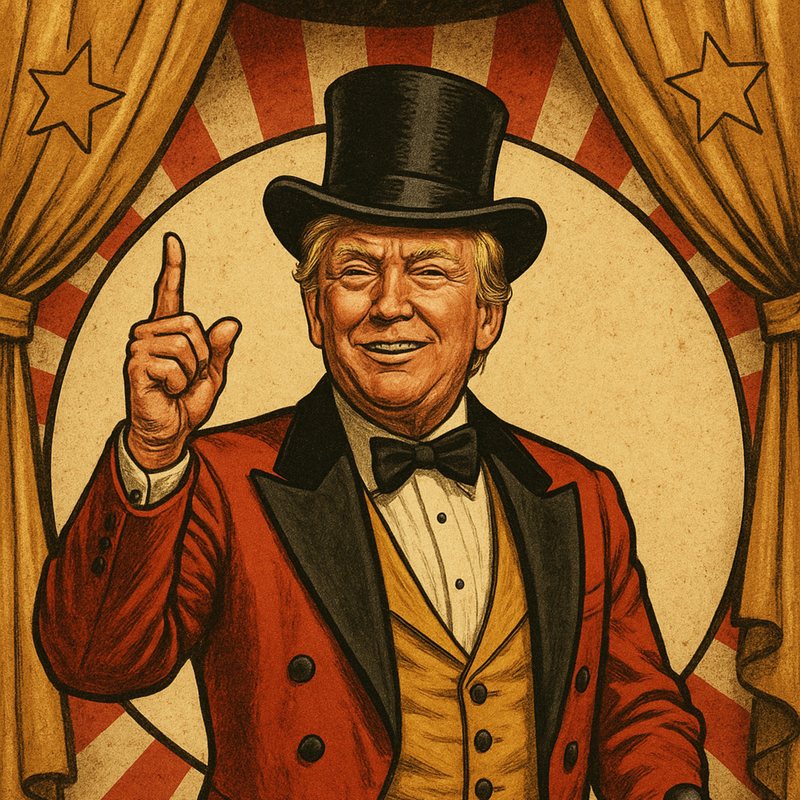
Read the full transcript (4,882 words, machine made)
Have you ever just found yourself, you know, completely baffled by a political figure, Someone who just seems to break all the rules, dodge every prediction? Oh. Absolutely. It's like watching a performance where you know there's a trick, but you just can't quite figure out how it's done. Exactly, and it feels like sometimes the more people shout about the trick, the more, I don't know, powerful the whole thing becomes. It makes you wonder, doesn't it, if maybe our criticisms are actually feeding the very thing we're trying to push back against?
That's a really interesting and maybe uncomfortable thought. OK, let's unpack this a bit. Today we're doing a deep dive into some really fascinating sources that try to get under the skin of Donald Trump's political appeal and also the, well, the intense reactions he triggers. We're going to look specifically through this lens that some people call Trump Derangement Syndrome. Now, let's be clear. This isn't about, you know, armchair diagnosis or anything like that at all.
It's more about how our sources suggest looking at the specific ways critics react, ways that might kind of ironically end up strengthening his position almost against their own intentions. Right, it's analyzing the effect of the reaction, not the reaction itself as a condition. Precisely, we want to challenge those common labels, you hear, you know, dotard or wannabe dictator and ask, do they really explain his unique kind of power, his resilience? And to guide us through this pretty complex territory, we're leaning heavily on Chris Abraham's work Trump the Carnival Brawler, on shame, mockery and the art of never flinching. Plus some really insightful appendices that go with it. Sounds good.
Yeah. And our mission here really is to pull out some, let's say, surprising insights. How has Trump not just survived, but actually seemed to use public perception, use the opposition in ways that just fly in the face of, well, standard political practice? Right, the conventional wisdom just doesn't seem to apply. Exactly. We're going to 0 in on this idea of his apparent immunity to shame and how the criticisms, the attacks often get twisted or even embraced by him, baffling the political establishment time and time again.
OK, so we'll be digging into specific examples, insights straight from Abraham's text, trying to understand why the usual political tactics failed against him. And maybe more importantly, what does that tell us? You, me, everyone listening about the hidden currents in American politics? Things we might be missing? It's definitely a look under the hood, so to speak.
Yeah, It's a deep dive into how power works, how it's perceived in this, you know, very performative political age we're in. Hopefully it gives you some new ways to think about the whole landscape. Right? Let's set the scene. Think back way back before the presidency.
What was the general vibe around Donald Trump? Well, for a lot of people, particularly in, let's say established circles, he wasn't really seen as a serious political contender at all. No, not really. He was often painted as, you know, gauche. Kind of almost a walking punchline, right?
Right. Cartoon version of a mogul. Definitely, the image was all about flash over substance. You remember the details, I'm sure, Stamping his name in giant gold letters on, well, frankly gaudy buildings. I have every word, casinos, towers I'm.
Trying to sell those Trump stakes through the mail, that became a running joke. Oh yeah, the stakes and the Cologne. Wasn't there a Trump fragrance too? There was Trump the fragrance. It all just added to this picture of well over the top self promotion. Maybe a bit superficial.
That's how it was perceived. Certainly the source we're looking at Abraham's work calls him reality TV's Tacky Avatar. That nails it, and Abraham uses this incredibly vivid metaphor, calling him the human golden toilet. Wow, OK. Yeah, it sounds harsh, but it captures that mix, doesn't it? Gleaming, self mythologizing, He built this huge brand, but also ultimately trivial in the eyes of his critics. So gleaming like gold, but you know, a toilet. Ostentatious, but ultimately unserious. Maybe even a bit.
Crass. Exactly that blend of luxury branding and perceived lack of substance. They thought that would make him politically irrelevant. And of course, there was The Apprentice. Oh, The Apprentice, that gold boardroom.
The pointing finger. You're fired. Yeah, pure reality TV gold. And some people loved it, right? They saw a winner, this decisive figure.
Absolutely captivated by the showmanship. While others, and I'd probably put myself in this camp initially, just kind of rolled their eyes. Lowbrow entertainment. Surely this couldn't translate to actual political capital. That was the prevailing wisdom, wasn't it? That this kind of celebrity act would just crumble under real political pressure.
Yeah, you'd think. But then reality hit and it was completely different. That initial perception, the golden toilet idea, it just got shattered. Totally shattered. I mean, think about it.
This figure, dismissed by so many, pulls off this absolutely unprecedented political rise. First, the 45th president, Which? Is stunning enough. Right, but now he's the 47th president, a second non consecutive term. That's only happened once before in US, sister. With Grover Cleveland way back when. Exactly.
Late 19th century. It's an incredibly rare achievement in modern politics. And you know, Grover Cleveland wasn't exactly dancing to the YMCA at huge rallies. Probably not, but Trump does, constantly. He owns that space. He does his that stiff hip to kind of offbeat hand jive thing and his critics, almost on cue, jump on it. They make memes, try to make it look obscene or silly, thinking this is the kill shot.
This mockery will finish him. And it never does. He just shrugs, maybe grins, and does it again next time. Which leads to a really central point in Abraham's analysis. He never seems to demand that traditional respect or deference we associate with the presidency.
That's fascinating. He never says call me Mr. President, or yeah, show some respect for the office. No, he doesn't ask you to, you know, genuflect. He doesn't seem to care about that traditional performance of presidential dignity. So what is he doing then?
Well, the source argues he's operating as something else entirely. He is, and this is a quote, if anything, the most durable American trickster alive. A trickster, OK. Yeah, it's not about traditional respect. It's about a different kind of power, a different currency. Almost 1 based on deflecting, reframing, maybe even enjoying the chaos.
So putting this all together, what does it actually mean? How does someone laughed off as a golden toilet, win, then lose, then come back again, all while basically ignoring the standard rules of presidential behavior? It's a. Huge question. It really forces you to look at your own assumptions, doesn't it?
How? Maybe your initial perceptions, your ideas about what a leader should be, We're just completely wrong footed by him. It challenges that whole framework of political analysis, really. OK, building on that, let's dig into this idea. The source calls the Trickster's Armor shame in the art of never flinching. This is where it gets really interesting, I think. Yeah, because this ties directly into that concept. We mentioned Trump Derangement Syndrome not as a diagnosis, but as Abraham uses it, a way to see how those intense reactions of the constant criticism might actually backfire. Right.
How the nature of the opposition paradoxically strengthened him. Exactly. The source points out this puzzle that the Beltway, you know, the Washington establishment, just never seemed to solve. Which is which Is that other politicians? Almost all of them. They crack when they're mocked.
They get brittle, defensive when you find a chink in that carefully polished armor they wear. It's like a universal political vulnerability. Shame, embarrassment. They're powerful weapons, usually. Usually and Abraham's source give some really specific, almost wince inducing examples.
Think about Hillary Clinton, OK? The source paints this picture of her clutching her lawyer's briefcase of credentials so tightly that every insult drew blood, like she was holding on to her qualifications for dear life. Wow, that's a strong image. The valedictorian's pin wanting that role of historic stateswoman. So badly, the source says, that every insult left a Welt.
It physically hurt her image. Maybe her personally too. She's described as a Pearl clutcher. Sensitive to disrespect, trying constantly to defend her legitimacy. And that vulnerability showed.
Totally. Then there's Joe Biden. The source suggests he bristles at unscripted slights. You hear it sometimes, right? That sharp?
Come on man. Yeah, it feels like a reflex, a tell. Like the source says, the mask slips. Reveals that chip on his shoulder, that defensiveness paper fins, skin, a short fuse when his dignity feels challenged. Which can lead to those awkward moments, those gaffes when he's clearly reacting defensively. Exactly.
And Ron De Santis, even him with the Ivy League background, the tough guy governor image. He still winces every time someone calls him short. Right. The short jokes, the stuff about his boots, it clearly gets to him. You can see it.
And that makes him seem less confident, maybe less authentic somehow when he reacts like that. And think about Barack Obama, even someone as famously cool and collected as him. The ultra curated Obama. Yeah, even he, the source says, sometimes let the mask slip when the world didn't give him his due. Bristled when really poked, like by Fox News criticism.
It shows that even the most composed leaders crave that respect, that acknowledgement. They want the room to go quiet, the Mr. President. That slight irritation revealed that even his cool wasn't totally impenetrable. Let's go back even further. Richard Nixon.
Nixon, the prototype for the fragile King, according to the source. Paranoid. Thin skinned. To the point of bugging his own offices trying to control everything. Ultimately undone by it, resigned in shame because he couldn't handle the exposure of the criticism.
His fragility was his downfall. Then Gerald Ford. The placeholder remember EU Chevy Chase falls on SNL. Oh yeah, the pratfalls. He was the nice guy who just never fought that clumsy fall guy narrative and it just stuck to him to find him more than policy.
It really did. And George HW Bush. Too stiff to survive Bubba saxophone on Arsenio Hall. I remember that moment, Clinton playing sax, looking cool and relatable. And Bush just seemed patrician, reserved. He got hit with that Wimp Factor label. The source suggests he lost because people wanted the relatable Bubba over the dignified dad. That perceived stiffness cost him and Jimmy Carter. The moral scold?
Remember this sweater speech telling America to turn down the thermostat? Feel bad about indulgence. Yeah, austerity. Moral Rectitude. And the voters, the source says, basically rejected the sermon in favor of the pep rally. They didn't want to be lectured.
They wanted Reagan's optimism, not Carter's malaise. And even current figures like Kamala Harris or Pete Buttigieg described as bright technocrats. Very smart policy focus. But they flinch at the mean tweets. They want politeness. They want respectful debate.
They can come across as having quote harpiness dialed up to 11 when challenged directly. So the pattern is clear. Defend, explain, correct the record, show you're serious, and above all, avoid being publicly humiliated. That's the standard playbook. Right.
And this is where Trump just throws the whole book out the window. Completely. While everyone else is clutching pearls or bristling, he just trucks. He laughs at the idea of a respectful hush. Disarms it.
Meme him as a dancing clown. Call him Donnie DJT Orange Buffoon. He'll lean into it. He might even do the meme for you. Remember that Czar jerking off 2 ghosts image that went around?
He doesn't seem bothered. He'll just grin and maybe do the YMCA dance again. He never seems to pull that do you know who I am card? Never. He doesn't scold anyone for not treating him with solemnity, the source argues. Solemnity is actually bad for his brand. Bad for the tent show.
Prefers the circus ring. Exactly. He thrives there, and the harder opponents try to make the clown costume stick, the more he seems to say, OK, hand me the big Red Nose, let's do this. So this is what Abraham calls the Trickster's Shield. Precisely.
He never pleads. Don't laugh at me. That's the vulnerable response. What does he do instead? He turns it around. He tells audience.
They're laughing at you. They hate you. I'm just standing in the way. I'm your shield. Wow. So he absorbs the mockery and redirects it. He.
Transmutes it into a shared grievance. It becomes proof that he's fighting for them against the elites who scorn them both. It's political jiu jitsu, really. And this is the armor the establishment couldn't crack. They kept waiting for that final bullet, right? The ultimate scandal.
The tape, The indictment. The thing that would finally make him feel shame and collapse. And it just didn't happen. Because as the Source hammers home, you can't kill a clown who wants to be laughed at. You can't humiliate a man who has no shame, Valve.
That's a powerful line. It's the core insight, really. If you can't be embarrassed, you can't be erased. It neuters the primary weapon used against almost every other public figure. The source also talks about voters hazing or nagging leaders, right, Like a primal test. Yeah, like in any tribe or group, there's this testing, poking to see if someone cracks under pressure, a fraternity, a bar fight, even asking someone out. There's always a test.
And Trump, in this view, passes that test every time. Exactly. He takes the hits, the ridicule, the mockery, and he doesn't break. He metabolizes it, turns it into fuel, and sells it back as proof of his strength. Proof that he's fighting their enemies. While the political class is looking for someone to demand respect.
The voters, or at least his voters, aren't looking for a scold. They want the guy who grins, takes the punch, and keeps swinging. That resilience, that refusal to be cowed, is deeply appealing to them. OK, this is really something to chew on. What does it actually mean for politics when a major leader operates completely outside that currency of shame? It changes everything.
How does it change the game for everyone else? It makes you think, you know about how you react to criticism, how people around you do. His approach is just so fundamentally different from that basic human instinct to avoid humiliation. He turns into a superpower, almost. So this leads to another point. The source makes this constant expectation from critics, from analysts, that Trump would eventually change, that he'd evolve, Maybe.
Pivot. Oh, the pivot talk that was constant. Non-stop. The idea was there had to be something else behind the curtain, some hidden Shakespearean gravitas backstage, a more serious guy waiting to emerge. Ready to deliver the real proper statesman like speech.
People were saying this back in 2015 when he first came down the escalator. They thought winning Wood forest him to change the weight of the office. Right. Yeah, the gravity. And even after he lost in 2020, when he was gearing up for a comeback, the same critics were saying, OK, this time he'll be more somber, more presidential, more grown up.
They just couldn't let go of that expectation that he'd eventually conform to the traditional mold. But Abraham's analysis just demolishes that idea, doesn't it? Utterly, the source says bluntly. The monkey dance is the whole point. The monkey dance is the whole point meaning. Meaning there is no backstage, there is no pivot coming. If you've seen the rallies, you know his audience doesn't want evolution.
They want the hits. Exactly. They want Locker up, they want build the wall, they want the YMCA dance at the end. And he gives it to them night after night. The same jokes, the same riffs, the same performance. There's no desire for a new act because the old one works just fine for them.
It's so different from other performers, isn't it? The source mentions Bruce Springsteen getting annoyed when fans just want born in the USA again. Or that aging comedian who hates doing his old catch phrase. They want artistic growth. But Trump, the source says he'll do the controversial lines, the signature bits, until the end.
He sells the same hat, tells the same story, and the crowd loves it every time. It's like comfort food almost. They know what they're getting. And the source uses this really interesting term K fade. K Fade from pro wrestling, right? Exactly.
It's that staged reality. The wrestlers, the promoters, the audience, everyone knows it's a performance, but they all agree to treat it as real within the confines of the show. It's the suspension of disbelief. OK, so how does that apply here? Abraham argues Trump's rallies are pure Kfabe. He'll pose with a golden toilet, sell you a Bible with his name on it.
Hawks to takes sell the $50 hat. All part of the. Show all part of the show and he never breaks character. He never steps out of the kfabe to demand you treat him like a serious statesman. He is the performance.
There's no difference between the performer and the real person, at least not when the audience sees or cares about. Right. The Monkey Dance is the show. And that, the source argues forcefully, is why he's so hard to cancel or debunk using traditional methods. He's not pretending to be something he's not.
He's fully embracing the performance his audience wants. Wow. So what does that do to our idea of what a political leader is supposed to be? It completely upends it. We expect dignity, seriousness, gravitas. And he offers spectacle, performance and a refusal to play by those rules.
He's mastered a different kind of leadership entirely. It makes you wonder how much of all politics now is performance, doesn't it? And maybe he just took it to its logical conclusion. Or perhaps an illogical one, depending on your view. He definitely changed the game in terms of performance politics.
OK, let's shift to one of the heaviest criticisms, one of the biggest fears surrounding him, the idea that he's a dangerous demagogue or even a wannabe dictator. That language has been incredibly prevalent. You hear it constantly and the imagery it brings up is frankly terrifying. Jack boots, black helicopters, mass graves, barbed wire, nightmare stuff. The source Abraham even admits. I once believed that too, which shows how widespread that fear was, even among those analyzing him closely. Yeah, you heard it on cable news panels all the time, like a constant drum beat, a dirge or a folk song, as the source puts it.
But the analysis offers a really different take, doesn't it? A provocative reinterpretation. It suggests the real impact, the real danger, if you will, was maybe quieter, more American, less Hollywood blockbuster, more subtle shift. How so? It introduces this concept of the vacuum. Right.
He didn't bring the boots, he brought the vacuum. OK, unpack that. A vacuum. It's not about military force or seizing power through overt authoritarian means. It's about a political realignment siphoning off of support.
A big swap. The source calls it a kind of political coup, but not with tanks. Exactly, it argues he siphoned out the back door these incredibly important traditional Democratic voting group we're. Going to be talking about. The old lunch Pail Army.
The coal miners who benefited from the New Deal. The southern Dixiecrat families who voted blue almost automatically for generations. Union dads, the bedrock of the old Democratic Coalition. And why did they leave according to this view? Because they felt left behind, ignored, maybe even looked down upon by the party they used to trust. And they left for a man who never pretended to be perfect. Someone who spoke their language, maybe? Someone who didn't mind looking stupid to the elites, and crucially, someone who never made them feel like they were stupid or wrong for their views or anxieties about the economy, culture, globalization.
He tapped into those grievances directly. While as this was happening, the source suggests the professional class performed its virtue on TV, signaling their progressive credentials, but maybe missing this huge underlying shift. Treating a massive disconnect. And the result? That battered Middle, the group that used to anchor both parties, is now outside the traditional tent, dancing along to the monkey show. They found a home in his movement. So in this reading, dangerous demagogue doesn't mean literal stormtroopers.
It means he took it all from you while we were sure he'd pick nothing. He dismantled the old coalitions while everyone was watching for a more obvious, dramatic kind of threat. That's a really different way of framing the danger. And the source looks at the wannabe dictator label through the lens of his actual time in office, too. His first term, yeah.
Despite all the noise, the chaos, the rhetoric, all the chaos and none of the tanks, the predicted strongman moment never tame. He pushed boundaries for sure. Ranted. Rallied. Staged the show, but then the Republic moved on.
No secret courts, no disappearances, no dissidents being thrown out of helicopters. The system held, however battered. And now in his second non consecutive term, his 47th presidency. He's already part way through it. Constitutionally he has about 3.5 years left maximum, and still so far no midnight purges, no stormtroopers cleaning house.
The Republic is definitely tired, divided. Tired, battered, divided. But not under a boot, as the source puts it. The most extreme fears haven't materialized in that literal way. So why the persistent wannabe dictator label then?
The source argues it's become a kind of confession. A confession meaning what? Meaning the critics need him to be worse than he is because they can't admit how well the show works. They need the narrative of imminent dictatorship because the reality that his power comes from this shrewder, more American form of political maneuvering and performance is perhaps harder to accept or harder to fight. It misreads the nature of his power. That's the argument now.
Abraham includes A crucial FAQ section here, too. Does no dictatorship mean no harm? And the answer is. Absolutely not. No, it simply means the form was not the nightmare many insisted it would be. Real harms definitely happen.
Deportations, cruelty, chaos, erosion of norms, serious damage. But the state itself didn't flip into full authoritarian mode. Right. The truth is messier than the costume drama, fan fantasies, and the other question could he really do it this time? Become a dictator. What's the take there?
The source says it's possibly, but only if you assume all the guardrails, courts, institutions, public opinion would completely fail. And it points out, tellingly, that he had his chance with a stronger hand in his first term and didn't manage it. And the clock is ticking faster now. OK, this is this is a really significant reframing if the main impact wasn't tanks and purges, but this slow vacuuming away of old loyalties. This reshaping of the political map through performance and tapping into grievance. What does that tell us about the future of political parties in America, about democracy itself, when power can shift so dramatically based on performance and defying shame rather than just policy or force? It's a fundamental question about how power is 1 in health now.
Yeah, a real aha moment, challenging those standard assumptions about political threats. But as the source points out, even the most enduring trickster isn't immortal. There are limits. Right time catches up with everyone. He turned 79 around the time Abraham was writing this.
And the US Constitution is pretty clear. He gets this term the 47th presidency, and that's it. No more reruns after this. The 22nd Amendment, so the carnival as the source calls it, only needs to keep going for a defined period. There's an end point insight for this specific act. But does that end point change the basic lesson here? The source seems to think the pattern will hold right to the end, that expectation that this time the final shame bomb will work.
It won't. That's the prediction, the scandal, the gaffe, the criticism that's supposed to finally bring him down in disgrace. It's not going to land any differently than before. He'll just keep doing his thing. Dance wave the hat.
Play YMCA. And crucially, he will not beg for your respect. He won't suddenly crave traditional validation as his time runs out. Which brings us back to that core insight, doesn't it? Tying it all together. Yeah, he is not the man you thought he was, not the man his followers think he is.
Not the man his enemies need him to be. He's something else. He is, Simply put, the man who refuses to be embarrassed. And the source makes this bold claim. And in America, that is the oldest magic trick there is. The oldest magic trick.
Wow. And the timeless lesson from that? Never underestimate the man who never asks you to bow. Or, put another way, never underestimate the man who never asks for your respect. It's the complete opposite of how we usually think about political authority and gravitas.
Totally. His power comes from rejecting those things. The source draws some historical parallels too. For this trickster archetype. It's not entirely new, even if the scale is different.
Right figures like PT Barnum, the ultimate showman, blurring reality and spectacle. There's a sucker born every minute, but that kind of vibe. Huey Long, the Louisiana populist firebrand, very theatrical, very anti establishment, terrified the powers that be back in the 30s. And even Muhammad Ali, how does he fit? By breaking the mold of the quiet, stoic athlete, the bragging, the poetry, the psychological games through words, he refused to be predictable, refused to be silenced, mastered the performance outside the ring.
So these figures all used unconventional methods, challenged norms. Exactly. But Abraham makes a key distinction about Trump. He's the first to drag the carnival straight into the White House. OK, so not just a sideshow or a state level thing. He brought that trickster energy right to the center of national power.
He didn't just bend the rules, he seemed to rewrite them, showing that this performance based shame immune approach could actually win the presidency twice. The implications of that are huge. It suggests A potentially permanent change in what works in politics. It could be. Yeah. So wrapping our heads around this as this really unique chapter nears its constitutional end, what are the big takeaways about leadership, Political theater, What voters really want, maybe even unconsciously?
It leaves us with a lot to think about regarding the future, definitely. OK, so just to quickly recap our deep dive today, we've looked at the, well, the surprising resilience of a political fan who just doesn't play by the normal rules. We explore how he seems to thrive on mockery, how criticisms like dotard or Dictator, rather than destroying him, often get reframed or even seem to energize his base. Right, that whole Trump Derangement Syndrome lens, looking at how opposition reactions might have inadvertently helped him. And we consider the argument from Chris Abraham's work that his real impact might be less about overt authoritarianism and more about that subtle vacuuming of old political loyalties.
Shifting the whole landscape under everyone's feet almost unnoticed until it was done. Exactly. So as we finish up, maybe here's a final thought to leave you with something provocative from the source. The carnival never stops until it does. OK, what actually happens when this specific trickster, this particular carnival Barker, it leaves the stage for good when the constitutional clock runs out, what fills that space?
That's a big question. And will other politicians look at his success winning twice with this method and try to copy it? Will we see more attempts to build that clown armor, that immunity to shame? Is that the new template? Or will voters, having lived through this era, maybe crave something completely different next? A return to something more traditional? Maybe.
Who knows, But what does it mean for the country long term that this strategy, this performance works so effectively for so long? What does it say about us? That's definitely something to keep pondering. It forces all of us to really re examine how we understand political power, public appeal, and where things might be heading. We hope this deep dive give you some new angles to consider. Keep watching, Keep thinking.
We certainly will. We'll be back next time to unpack more.