Read the full transcript (9,575 words, machine made)
Welcome to the debate today. We're we're diving into what's become, I think a really fraught area in well, in modern American discourse. It's this deep semantic confusion around the words fascism and anti fascism. I mean, these terms have, they've shifted so much from their historical origins that people seem to be operating in completely different intellectual worlds now, and it's causing real problems in how we talk to each other civically. Absolutely.
It feels like two different languages sometimes. Exactly. So the core question for us today is this, when we talk about fascism, should we really keep it anchored to it's very specific historical, political, economic structure, you know, Mussolini's corporatism? Or is the way it's used much more broadly now culturally as a term opposing hierarchy, tradition, global power structures? Is that usage actually more useful for understanding conflicts today?
A fundamental split. Right. And I'll be arguing that we absolutely need to preserve that precise corporatist definition. I think intellectual clarity frankly depends on it. And I'm going to approach this, well a bit differently. While I get the appeal of historical precision, it's clean, it's academic, I want to really explore the, let's call it the utility of this newer, much broader cultural definition.
You know, whether it perfectly matches the 1930s model or not. This is how a huge number of people actually understand and frame their opposition to power structures right now. So we have to analyze how it functions, not just judge its historical accuracy. OK, I see the setup, but let me start by outlining why I think that historical anchor is non negotiable. If we're aiming for political clarity, the definition of fascism isn't really optional.
When you go back and look at the the foundational texts, the history from the interwar period, fascism really stood on 4 main pillars. It was authoritarian, ultra nationalist, militaristic. And this is the crucial part, corporatist corporatism, right? This is the specific political design that really separates fascism from just any old dictatorship or tyranny. It's the idea of society as one single body, a corpus where private companies are essentially forced to serve the state's national agenda.
Yes, they kept their private ownership on paper, but they gave up their operational independence to serve the national machine. And that mechanism, that's what allowed Mussolini and others to sell fascism as this unique third way, You know, orderly, efficient, better than messy capitalism on one side and revolutionary communism on the other. If you take corporatism out of the definition, well then the term just collapses into I don't know what I maybe call bad vibes, authoritarianism. It becomes more of a moral insult than a functional political category that helps us diagnose a specific structure. Focusing only on Hitler's horrific crimes, which of course we must do morally, actually misses the specific political economic logic that made fascism appealing to millions looking for order and national renewal back in the 20s and 30s.
That's a very strong case for historical fidelity, and I absolutely agree that corporatism was the unique engine, the defining feature of that interwar fascism. But the intellectual journey of this term didn't stop there, did it? It evolved precisely because the nature of structural authoritarianism seemed to change, or at least people's understanding of it did. You had thinkers later in the 20th century, people like Umberto Eco, for instance, who started talking about, ER, fascism, these kind of eternal structural tendencies towards control, hierarchy, tradition, worship that could pop up without that specific 1930s economic model of state corporate fusion. OK, so eco broadens it culturally. Exactly.
And the modern activist definition has really latched on to that kind of thinking. It targets these very deep seated cultural and societal structures. Things like patriarchy, borders, flags, traditionalism, even concepts like whiteness. This shift, I argue, isn't random. It reflects a real sense of urgency in society to challenge forms of power that aren't just about state control of industry, but about cultural enforcement, social norms. And for many younger activists today, this viewpoint is definitely shaped by a global perspective, often drawing interestingly from a kind of Maoist anti colonial struggle lineage.
So in that world view, the primary fascist force isn't some rising state mirroring Mussolini, it's the existing global hegemon which is often seen as America and the structural inequalities that system upholds and exports. From that perspective, the narrow corporatist definition just doesn't feel adequate to describe the source of the oppression they see and feel today. I understand the lineage you're tracing, but here's where I push back. I'm just not convinced that treating diagnostic recision for erceived utility is a good long term strategy. It feels like too stee a price to pay. Intellectually we have to be able to alley what I'd call the cororationism test.
When we look at olitical movements or actors today, we need to ask, are they actually advocating for that merger of private corporate power with national state goals? Is capital being forced to serve the state's agenda? The test. Yeah, the test, because if we ignore that core political economic structure, how can we possibly analyze threats accurately? Corporatism is what explains why major industrialists, you know, Krupp in Germany, Fiat in Italy, why they went along with it, they kept their company names, their factories, but the strategic reigns were handed over to the regime all in the name of national greatness, order, efficiency.
Without that strict category of corporatism, any strong form of nationalism, any push for cultural unity, any critique of globalism risks being mislabeled as fascism. And that I think, makes us blind. It blinds us to the actual mechanics of genuine state level authoritarianism when it does arise because we've sort of we've worn out the word on cultural disagreements. OK, while I see the the neatness and the historical sharpness of the corporatism test, the argument from the modern perspective is precisely that the target has shifted. The main focus isn't the state merging with industry anymore, it's the cultural and social forces that people see as propping up existing power structures.
But is that fascism? Well, that's the core of the debate, isn't it? The activists would argue that the real systemic threat now is embedded in what the source material calls the normie continuum, right? This whole framework of traditional normative Western life, pride and one's nation, traditional family models, Christianity, heteronormativity, and so on. For them, these cultural pillars aren't neutral.
They are inherently hierarchical. They're exclusionary, and therefore they are functionally fascist because they enforce what's seen as an oppressive social order. So the definition hasn't just gotten wider, it's actually shifted its focus from analyzing a specific political system to analyzing what they see as a pervasive cultural system of control. And this semantic shift, they believe, is necessary work. It allows them to challenge the very foundations of social consensus, which they see as essential to dismantling structural inequality. And that shift, that exact shift you're describing, is what leads directly to this non reconcilable divide over anti fascism that's tearing fault lines through the country. The two working definitions of anti fascism today are almost entirely disconnected from each other. Completely different worlds.
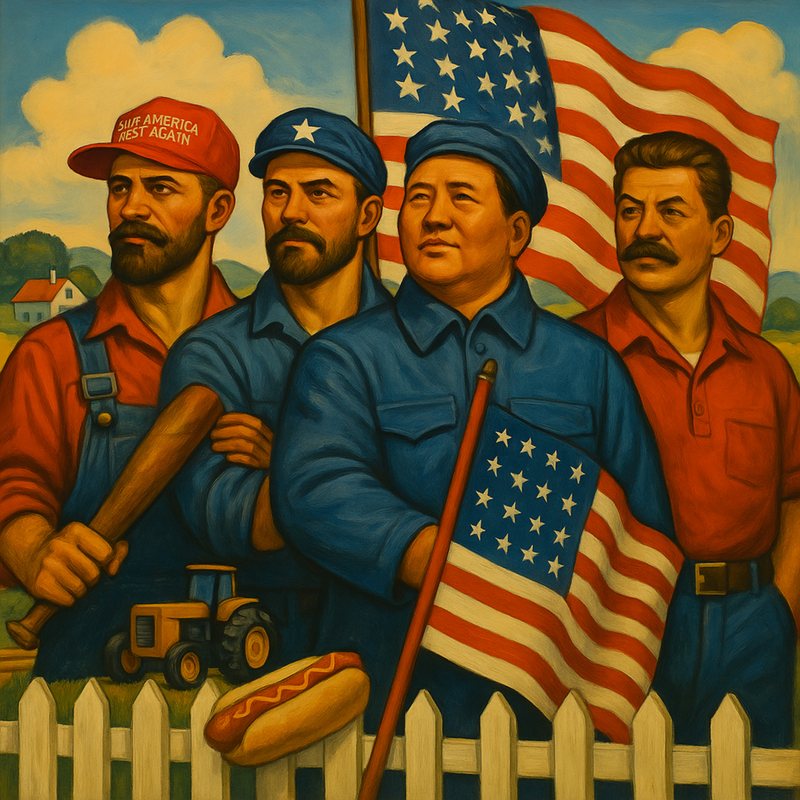
Yes, for for a huge number of Americans the normies to use that term again. Anti fascism is basically synonymous with America itself. Their historical framework is you know, the GI is landing on D-Day, it's the US Constitution, it's the nation that literally fought and died in World War 2 to defeat historical fascism. So for them, patriotism is the ultimate anti fascism. Waving the flag isn't problematic, it's an act of honouring that legacy, defending democracy. I absolutely agree the fracture is profound, but for this younger activist group their understanding of anti fascism often has frankly less to do with honoring World War 2 veterans and much more connection to global anti colonial movements and as I mentioned, even a kind of Maoist cultural revolution lineage.
Their struggle isn't primarily defined against Hitler or Mussolini historically, but as resistance against the current global power structure, against the dominant cultural and economic system that America is seeing to represent. Can you elaborate on that Maoist lineage connection? Because that seems key. Well, when we talk about that lineage, we're referring to an ideological framework that tends to view the entire Western establishment, and that includes its liberal democracy, its capitalism, its cultural norms as inherently imperialistic and structurally oppressive on a global scale. O Within that framework, being antifascist means rejecting the fundamental political and cultural assumptions of the West because those are seeing as the very things perpetuating global inequality and hierarchy.
It's a really fundamental disagreement about who the actual enemy is. Is it the historical Axis powers defeated in 1945? Or is it the present day configuration of global power often symbolized by the US? And the consequence of stretching the term that far is this profound disconnect, this mutual incomprehension that frankly risks breaking down democratic communication entirely. You have older generations whose parents might have literally fought fascists in Europe or the Pacific, feeling like their basic patriotism, their traditional values, are suddenly being framed as somehow fascistic. The gas lighting effect.
Exactly. When the word fascist gets stretched so thin that it includes someone flying a national flag or holding traditional views on family, the level of anger, the alienation, it just skyrockets. It makes any kind of civic consensus almost impossible because the two sides can't even agree on the meaning of the words they're using, let alone the moral framework behind them. You know the person hanging in American flag thinks they're honoring their grandfather, the anti fascist war hero. The activist looks at that same flag and sees the symbol of global hegemony and structural oppression, making the flag waver, in their view, functionally supportive of a fascist system. That gap, it's dangerous.
It feels almost impossible to bridge in political dialogue. I understand the concern about communication breakdown, but I'd argue the democratic risk isn't just about semantics. It's also arguably rooted in the very real structural issues like persistent economic and racial inequalities that maybe pushed this definitional shift in the 1st place precisely because the old terms felt inadequate to address them. However, let me pivot slightly and offer a structural critique that kind of stands apart from the strict corporatist definition debate. It's something I think you might find interesting because it touches on the mechanics of power within movements themselves, specifically the structure of the modern activist movement, particularly it's vanguard element. OK, I'm listening.
Tell me more about this modern vanguard. Well, if you look back at the history of certain authoritarian movements, particularly classical communism, there was this concept of the vanguard, right? A small, ideologically committed elite group. And often this vanguard ended up exploiting the very group it claimed to represent. You know, Lenin needed a vanguard that arguably exploited the proletariat.
The workers became fuel for the revolution, not necessarily partners in power. And we can perhaps see a structural echo of that dynamic today. Some critiques suggest that the modern activist vanguard can sometimes exploit vulnerable groups, say racial minorities, trans individuals, other marginalized people, using them as sort of moral props in their campaigns. Moral props like human Shields, almost. In a sense, deploying their identities and suffering as symbols to justify radical demands, sometimes treating the individuals themselves, to borrow that phrase from the source material like useful Kleenex, discardable once their symbolic value is used up. That is, yes, that's a very compelling structural parallel, and it points to, I think, a deep ethical and maybe operational flaw within parts of the modern movement. When you see that kind of dynamic of vanguard using, let's say, radical chic or weaponized identity politics, it does feel like a cynical form of exploitation that echoes some historical authoritarian tactics. It suggests a pursuit of power that feels profoundly undemocratic, actually exploiting the marginalized to legitimize the vanguard's own agenda. That seems like a structural problem, regardless of whether they label themselves anti fascist or anti hegemon or something else entirely.
Exactly my point. But here's the crucial turn, at least for this side of the argument. Doesn't this structural observation, this exploitation by a self appointed elite, actually reinforce the idea that the real targets of opposition today should be broader than just the 1930s economic model? This very behavior suggests that the core issues are about structural power dynamics, about the mechanics of hierarchy and domination themselves. It implies we need to critique the focuses on systemic oppression that goes beyond just state corporate mergers and includes these cultural, racial and social forms of exploitation. So the Vanguard's bad behavior proves the need for the broader critique.
In a way, yes, if the ultimate aim is genuinely anti authoritarianism. If it's about challenging oppressive hierarchies wherever they exist, then focusing only on the specific economic structure of interwar fascism might seem well insufficient to really analyze the complex, often culturally enforced power dynamics we face in the 21st century. The cultural critique, however messy or prone to misuse it might be, becomes functional precisely because it attempts to identify and target those pervasive forms of exploitation and hierarchy. I do understand the desire for a framework that addresses contemporary power dynamics, and that structural critique of the vanguard is is quite powerful, but I have to come back in conclusion to stressing the absolute need for intellectual precision. The word fascism carries immense historical and moral weight. If we let it dissolve into just a general purpose term for any hierarchy we dislike or any tradition we find objectionable, we essentially destroy its meaning. It just becomes a potent but ultimately empty moral insult. To keep our ability to diagnose specific political threats, I maintain that fascism must remain defined by its core political economic structure, corporatism. That gives us a clear, sharp, admittedly narrow, but effective tool to identify genuinely analogous authoritarian political machines if and when they reemerge. We simply can't afford to sacrifice that diagnostic capability for the sake of a broader cultural critique, no matter how necessary that critique might be in its own right, perhaps under a different name. And I suppose I'll conclude by acknowledging that yes, definitions matter deeply, and this semantic drift, as we've called it, has undeniably created a state of profound confusion and division.
But the reality we face is that these newer, broader definitions of fascism and anti fascism are already active, functioning forces shaping our political landscape. We're not just split by policy anymore, we're split by the very definitions of what we're fighting against and fighting for. We can't simply wish away this new usage or demand that half the country suddenly reverts to a 1988 textbook definition when there lived social and political reality has already generated a working, if perhaps historically imprecise alternative. They find meaningful. Well, I think we've certainly laid bare the core of the conflict here. It's this tension between prioritizing clarity and historical accuracy to diagnose the mechanisms of state power versus prioritizing scope and perceived utility to critique existing cultural and structural hierarchies. And perhaps the most crucial take away is that both sides, operating within their own definitional frameworks, genuinely believe they are the ones fighting for democracy and against tyranny.
The tragedy is that neither side fully grasps or perhaps accepts the fundamental premises and definitions of the other. And that Divergent, makes building any kind of shared civic language incredibly difficult right now. So the listener is left, as always, to weigh these perspectives. Is clarity, anchored in the historical precision of corporatism the better lens? Or does the scope offered by the contemporary cultural critique, despite its ambiguities, provide a more useful tool for understanding the conflicts shaping our present and future?
Welcome to the Deep. Thank you for joining. Us today we're tackling something a bit different. Not a policy and not a specific event, but just one word. Just one word, yeah, but maybe the most loaded word in American politics right now. Fascism.
It feels like it's everywhere and it's tearing things apart. But the sources we've looked at, they suggest something interesting. The problem isn't necessarily fascism itself, but that nobody agrees on what the word even means. Exactly. It's like everyone's shouting fire but pointing at completely different things. Yeah, we've got, based on the academic and cultural analysis we reviewed, essentially 3 different definitions floating around 3 irreconcilable definitions. And that's what we're going to try and unpack today. That's the mission for this deep dive. We want to look at these three faces, the original historical meaning, what you might call the normie or traditional American view, and then this newer cultural or activist definition. Right.
And look, this isn't about picking sides. It's about understanding the political science, the history, how this term evolved culturally, how it got stretched, you know, into basically a catch all insult. Yeah, it's lost its precision. Completely and the sources are really clear. To get any clarity back, we have to go back to the start, back to the definition that used to be standard. And Palacio, I say back in the late 80s, early 90s, OK. And that definition, the one we seem to have forgotten, it's centered on a specific concept, corporatism. Corporatism, that's the key we need to recover. It's absolutely critical.
Without it, the the word just becomes, well, like you said, an insult, a moral judgement, not a political analysis. OK, so let's go back to that political science one O 1 class from say 1988, like our sources mentioned. Yeah. What was that clean definition they were teaching them? Well, the template was really Mussolini's Italy. An academic saw it fitting into a specific historical box with a four key elements. 4 elements OK. One, it was interwar, tied specifically to that period between World War One and World War 2. Got it.
Historical Context. Two authoritarian meaning, you know, total state control over politics. No real opposition allowed. Standard dictatorship stuff 3. Ultra nationalist obsessed with the nation, National glory expansion often based on some kind of mythic past, and four, the crucial 1. Corporatist.
Right, corporatist. And this is where it gets tricky, isn't it? Because today when people hear corporatism, they immediately think of like Amazon or Google influencing the government, big companies. Exactly. That's the modern common usage, but the historical political science term totally different.
It comes from the Latin corpus. Corpus meaning. Body. Precisely. The idea was to reorganize society itself to function like one giant single body, the nation.
OK, so like an Organism? Yeah, the state, led by the dictator, acts as the brain. And then every group of society, labor unions, businesses, farmers, churches, professional groups, they're all seen as essential organs. Organs within the body. Right.
And these organs aren't supposed to compete or pursue their own interests. They're forced into these state controlled structures, these corporations in the corpus sense, and they function under total state discipline, all for the supposed health and strength of the national body. So it's about enforced unity, total social discipline through organization. Why was that specific model so appealing back in the 1920s and 30s? Well, you have to remember the context. after World War One, liberal democracy looked kind of shaky, didn't it?
Lots of economic chaos, strikes, political infighting. It seemed weak, inefficient. And the alternative was communism, which scared a lot of people. Exactly. Communism, with its calls to abolish private property and its violent revolution, seemed destructive. So fascism presented itself as this dynamic third way. A third way between weak democracy and destructive communism.
Right. It promised the order and unity of communism, but without, you know, getting rid of private property entirely. And it promised the dynamism of capitalism, but without the messy competition and class struggle. It looked modern, efficient, decisive. And it tapped into that ultra nationalism, the promise of national rebirth, what the source is called Palin Genesis. That was huge, this idea of returning to a glorious mythical past through radical unified action. Now corporatism was the mechanism to achieve that total unity needed for rebirth.
OK, so understanding what it is also means understanding what it isn't. The sources really emphasize comparing it to the alternatives. Let's start with communism. Because people mix those up constantly. Where's the bright line according to this original definition?
The bright line is really about private property and how the economy is controlled. Classical Marxism, you know, aims to abolish private property completely. The state takes over everything. Factories, farms, the works. Right. The state literally owns the means of production on behalf of the proletariat.
It's total nationalization. OK, so how did fascism handle property differently? It seems sneakier maybe? You could say that, or maybe more cynical. As one source put it, fascism let's private individuals keep the title deeds. You still own your factory.
Say your Fiat in Italy or Krupp in Germany. So you keep your wealth, your status. On the surface yes, but it's ownership in name only. The sources call it neutered capitalism. You're not deciding what to produce based on the market or profit anymore. The state tells you what to make. Exactly.
You produce what the state orders for the National Plan, which usually meant weapons, gear for the military, stuff for the war machine. So the shell of capitalism is there, but the state is running the show from behind the scenes dictating output. Pretty much. You become essentially a highly managed government contractor. You've lost your economic autonomy.
Even if you keep the factory sign, it keeps the structure but empties it of independent function. That's a really important distinction. Control without direct ownership. Yeah, what about the contrast with liberal democracy? That was a system fascism was directly attacking, wasn't.
It absolutely. Liberal democracy, in theory at least, sees the government more like a referee. Setting the rules of the game, enforcing contracts, protecting rights. Right. But largely letting individuals, businesses, different social classes compete within those rules.
Disagreement, political parties, labor unions, fighting for wages. That's all as normal, even healthy, in a free society. And fascism saw all that as weakness, chaos worse than weakness. It saw it as poison, corrosive to the national body. All that competition, all those individual rights asserted against the state, all that class struggle and divide of the nation made it weak. So fascism demanded the opposite. Total unity, total discipline.
The individual doesn't matter. Only the nation matters. Individual rights are suppressed. Class conflict is crushed. Political opposition is eliminated. Everything has to be subordinated to this goal of national rebirth and power.
It's that fusion, then the authoritarian leader, the ultra nationalist ideology, and this specific corporatist economic structure forcing everyone into line. That was fascism, historically speaking. That was the specific political category, yes, interwar, European, defined by those elements. OK, so here's a question that pushes back a bit. Based on that definition, if fascism involves this massive fusion of state and key industries, with the government directing production, why don't these sources then label things we see today, like, say, the 2008 bank bailouts, or the huge military industrial complex, or even the close ties between government and big tech? Now, why isn't that called fascism under this definition? It sounds kind of similar.
That's a really sharp question, and it highlights why that original definition was so precise, the sources acknowledge. Yes, there's definitely a lot of collaboration, sometimes worrying collaboration, between government and big corporations in modern economies. You could call it crony capitalism, maybe regulatory capture, maybe even oligarchy. But not fascism. Not in that original, specific sense, because classical corporatism required more than just collaboration or bailouts.
It required that total organizational discipline across all sectors, enforced by a single party. Authoritarian state explicitly suppressing individual profit motives for a Grand National plan, usually war focused. So the political structure is key, the authoritarian single party rule, the ultra nationalism. Exactly. Modern state capitalism, even when it looks really cozy between government and business, still mostly operates within a framework where companies are competing for favors or contracts within a system that still allows for political opposition, Free Press, some level of market dynamics, however distorted.
Take away the specific authoritarian political shell and the ultra nationalist ideology and you don't have fascism anymore. You might have something else bad like oligarchy, but it's a different category. So stripping out corporatism is what broke the definition without that specific economic and political structure. It just becomes a generic term for any authoritarian regime you don't like or worse as the sources say, just bad vibes. Authoritarianism, a moral insult, not a tool for analysis.
And that's the shift that set the stage for the confusion we have now. Precisely that loss of analytical precision is Ground Zero for the semantic war we're living through. OK, that historical baseline is super helpful. Now let's pivot to how the word fractured in popular culture. The sources talk about this normie definition that emerged after World War 2, the kind of broad, mainstream American understanding.
Right. This is the definition that you know generations of Americans grew up with, especially shaped by the Cold War experience. For them, fascism wasn't really an abstract political theory. It was Hitler. It was Hitler, Mussolini, Tojo, the Nazis, the Holocaust, World War Two. It was a specific, concrete historical evil that America fought and defeated.
I closed chapter, died in 1945 in a bunker in Berlin. Pretty much it was this clear enemy vanquished by American GI's and that led directly to the Corollary. That America is anti fascist. Inherently so. Anti fascism wasn't some radical ideology, it was American patriotism. It was the flag, the constitution, Uncle Sam, the greatest generation narrative defending freedom was anti fascism.
So if you were a patriotic American, you were definitionally an anti fascist. There was no tension there. Not at all. And this got hardwired during the Cold War, right? Because with fascism defeated, the new global enemy became communism.
Another totalitarian ideology that America opposed. Exactly. An ideology that explicitly rejected democracy and individual liberty. So America's whole identity, it's sort of civic firmware got updated. America was the leader of the free world standing against communism, and since communism was bad and fascism was bad, and America opposed communism.
America was fundamentally the good guy. The anti fascist nation. Calling America itself fascist would have sounded completely nonsensical, like a contradiction in terms. It's violated the core national self-image. It was unthinkable for decades.
OK so that's one deeply ingrained understanding the normie view. Fascism WWII bad guys anti fascism America. Now let's look at the other side of this golf the activist definition. The sources trace this one back, interestingly, to an essay by Umberto Eco. Yeah, Eco's 1995 essay or Fascism, which is a brilliant piece by the way.
Eco lived through Italian fascism, and he was trying to identify sort of recurring cultural tendencies or warning signs that might signal a return of something like fascism. He had that list of 14 characteristics right. Things like rejection of modernism, fear of difference, obsession with plots. Exactly. Cult of tradition, Irrationalism.
Disagreement is treason. Contempt for the weak. It was meant as a kind of flexible checklist of cultural symptoms, not as a rigid definition of a state structure like the old corporatist model. But the sources argue that essay maybe unintentionally opened a door. What was meant as warning signs started getting used as the definition itself. That seems to be the argument.
It sort of slipped its historical moorings once. You didn't need corporatism or a specific interwar context anymore. Fascism can become, well, almost anything culturally conservative or traditionalist that activists opposed. So the definition shifted from a political economic system to a set of cultural traits. Right. The new fascism wasn't necessarily about state control of industry.
It became about hierarchy, tradition, patriarchy, strong borders, national flags, traditional religious institutions, even concepts like whiteness or Christian identity. The target changed fundamentally. Completely, the focus moved from the structure of government to the enforcement of cultural norms deemed oppressive. And this leads to a really crucial point the sources make about the lineage of this newer anti fascism. They argue it often owes less to fighting Mussolini and more to Maoism. That seems like a leap.
It sounds jarring at first, but the argument centers on the goals and methods. Maoism, particularly in its anti colonial phase, wasn't just about economics, it was about a cultural revolution. Destroying the old ways, the old hierarchies. Exactly. Erasing traditional culture, challenging patriarchy, attacking religion, seeing all existing structures as inherently oppressive and needing to be overthrown through constant struggle, A kind of permanent revolution.
The focus was on dismantling the cultural superstructure of power. So the idea is that some modern activist anti fascism adopts that cultural revolutionary framework, seeing traditional American culture or Western culture as the oppressive structure that needs dismantling. That's the connection the sources draw. This strand of anti fascism sees America not as the defeater of fascism, but as the source of global oppression, the hegemon, the colonizer, the enforcer of hierarchy through its culture, its borders, its traditions. So fascism becomes a label for that system of perceived oppression. Right.
It's not about Iladus anymore. It's about challenging whiteness or patriarchy or capitalism or borders, things seen as pillars of an oppressive system. And modern antifa movements, while having roots in 1930s anti Nazi street fights, often seem more aligned with that broader anti capitalist, anti colonial cultural struggle. The enemy is the systemic identity itself. Wow.
OK, now the semantic gulf becomes crystal clear. It's enormous. It's huge. You have the normie thinking I'm anti fascist. My grandpa stormed the beaches of Normandy under that flag to fight Nazis. And the activists thinking you're a fascist because you wave that flag and uphold the system my grandpa fought against.
Or maybe the system that exploited people globally? The exact same symbols, the same words mean opposite things. The language has been totally inverted. And this applies to democracy too, doesn't it? Absolutely. For the normie, democracy is about the process. One person, one vote, free speech, rule of law, majority rule with minority rights, the liberal ideal. Basically how we make decisions.
OK. And for the activists? It's often about the outcome. Does the result produce equity? Does it protect the most vulnerable groups?
Does it dismantle oppressive structures? If an election or a court ruling doesn't achieve those outcomes, then the process itself might be labeled undemocratic or fascist, regardless of whether the rules were followed. So 1 focuses on procedure, the other on results defined by social justice schools. Pretty much. And when those two definitions collide, well, you see the arguments we have today. People are using the same words, Fascism, anti fascism, democracy, but they're operating in completely different conceptual universes.
They're not even having the same conversation. Not even close. It's like trying to play chess when one person thinks the pieces move normally and the other thinks the bishops are actually spaceships. It just collapses into incoherence and anger. That gap is already massive, but the sources point out another layer, something that adds like cognitive dissonance, especially for the normie side. And that's the memory hole around the Global War on Terror. Yeah, the 20 year firmware update that got well wiped almost overnight.
Right from roughly 2001 until maybe 20/15/2016, the entire national focus, the definition of US versus them, was about fighting Islamic extremism. For two decades, national unity, patriotism, defending freedom, it was all framed around fighting Al Qaeda, the Taliban, later ISIS. The enemy was explicitly non western, anti democratic, religiously motivated. That was the threat. Standing against that was being a good American and anti fascist in the sense of defending western democracy.
Heroes were soldiers fighting overseas. Patriotism meant supporting the troops flying the flag. And then, almost whiplash fast. Particularly after 2015 or so, that entire framework seems to get buried. Suddenly, the discourse shifts dramatically.
The main threat isn't external anymore, It's internal. It's systemic Racism, patriarchy, white supremacy, the very structures and symbols that were central to the GWOT identity. So the people who lived through that maybe served in the military or just absorbed that culture, they experience a kind of sudden reversal. A. Huge reversal.
The language changed completely. The things that defined you as a patriot during the GWOT may be flag waving, nationalism, Suspicion of certain foreign ideologies are now potentially defined as the problem as fascist tendencies, often by a younger generation of activists who came up of age after the peak of the GWOT and mainly know the newer cultural critique. That must create incredible confusion and resentment. Absolutely. It feels like a betrayal, like the rules change without explanation.
It makes it very hard for that normie population to take the new critique seriously because it seems to come out of nowhere and invalidates their own lived experience and sacrifices. And that feeds into another point. The sources raise the cynicism generated when these critiques seem disconnected from reality on the ground. They use the term NMB paradox. Not in my backyard.
Yeah, this gets at the perceived hypocrisy. The argument is that often the loudest voices condemning systemic fascism or demanding diversity and inclusion are coming from places or demographics that are actually quite insulated and homogeneous. Places that talk the talk but don't walk the walk. That's the perception. The sources point to examples like, say, very liberal states or cities where the population outside of maybe a few core urban areas is overwhelmingly white or affluent.
Think about Oregon's history, founded with racial exclusion clauses, or parts of New England or the Pacific Northwest. So the critique comes from people who don't live with the complexities of diversity day-to-day. That's the charge. Meanwhile, you might have, say, a working class person in a truly diverse area, maybe a place like Northern Virginia or parts of Texas or California, living next door to immigrants from all over the world, dealing with the real, sometimes messy realities of multicultural life every single day. And that person gets called a fascist by someone living in a much less diverse, maybe more privileged environment. Exactly, and that feels deeply unfair and hypocritical to them. They see people preaching diversity from afar while they're the ones actually navigating it. It makes it easy to dismiss the entire critique as just elite posturing, not a genuine concern. The do as I say, not as I do problem. Right, the NMBY phenomenon.
Supporting affordable housing or diverse schools in theory, but resisting them when they're proposed for your neighborhood fuels that cynicism. It allows the normie to say, see, they don't really believe it themselves. It's just a way to signal virtue or gain power. Which brings us to maybe the most challenging concept from the sources, this idea of the vanguard and political exploitation drawing on Marxist theory. If the critique seems hypocritical, where does its moral force come from? This is a complex argument.
It starts with the idea that most revolutionary movements historically needed a vanguard, a core group of dedicated, ideologically committed activists to lead the charge. The revolutionaries who know the way forward, right? But the vanguard is usually small. To gain power, they need to mobilize or claim to represent a larger group. They need to exploit the grievances or identity of a segment of the population to fuel the revolution. OK, so who did classical movements exploit? Classical communism claimed to represent and mobilize the industrial working class, the proletariat. Maoism focused on the peasants and later the youth during the Cultural Revolution.
And in the context of modern American activism, according to these sources, who is the exploited group? The argument is that the vanguard, today often seen as educated, relatively privileged activists, derives its moral authority and political leverage by claiming to speak for the most vulnerable and marginalized groups, racial minorities, LGBTQ plus individuals, immigrants, the disabled. So these groups become moral props? That sounds harsh. It is harsh, but that's the critique presented. The idea is that the Vanguard uses the suffering and identity of these groups as a shield and a weapon. We speak for the oppressed, therefore our cause is righteous and you must yield to us.
It's described as moving beyond radical chic into something more instrumental. The focus isn't necessarily empowering those groups directly, but using their symbolic weight to advance the Vanguard's own political goals. That's the cynical interpretation offered by the sources. Yes, the vanguard positions itself as the indispensable protector and interpreter of the vulnerable, gaining status and power through that role. And this ties into a historical pattern of disposability.
Sadly, yes. History is littered with examples of groups who are championed during a revolution only to be discarded or even purged once the vanguard achieved power and didn't need them anymore. The sources mentioned Lenin's useful idiots. Right. People who genuinely believed in the cause and helped the revolution, but were naive about the leadership's ultimate intentions and were often sidelined or eliminated later. Think about the intellectuals who supported Stalin or. The Afghan translators who worked with the USA. Brutal contemporary example risked everything based on promises, believed they were part of the project, and then found themselves abandoned when political calculations changed, their usefulness expired.
Or the Red Guards in China you mentioned earlier. A. Classic case. Young, fervent, empowered by Mao to tear down the old order during the Cultural Revolution. They were the engine of change.
But once Mao consolidated control and needed stability, not chaos, millions of those same Red Guards were exiled to the countryside, imprisoned or killed. They had served their destructive purpose and became inconvenient. So the underlying fear or the critique is that the modern vanguard, while genuinely believing they're fighting for justice. Might be setting up the very groups they claim to protect for a similar betrayal down the line. That's the chilling implication. The vanguard sees itself as the permanent benevolent guardian. But the normie often instinctively distrust this dynamic, sensing the potential for exploitation and the instability of a moral authority built on symbolism rather than, say, shared experience or genuine representation. And the historical irony is that the revolutionaries themselves are often consumed by the revolutions they start. Absolutely.
Once the old order smashed, the new order needs administrators, not agitators. The skills required are different. The radical energy that was useful for tearing down becomes a threat to the new stability. So the vanguard often finds itself purged by the very power structure it helped create. It's a recurring tragedy.
OK, let's try to pull these threads together. We've mapped out this huge semantic divide. On one side you have the normie definition. Rooted in World War Two in the Cold War. For them fascism is basically Hitler and the Axis powers defeated in 45 life. Anti fascism is fundamentally American patriotism. The flag, the Constitution and democracy means the process. One person, one vote.
Free and fair elections. And on the other side, the activists definition. Rooted more in cultural critique, maybe drawing unconsciously or consciously on anti colonial or Maoist ideas. For them, fascism isn't just a historical regime, it's embedded in current structures, borders, traditions, hierarchies, maybe whiteness or patriarchy. Anti fascism is the ongoing struggle against those structures and democracy means the outcome.
Equity, justice, protection for the marginalized. 2 completely different operating systems trying to run on the same national hardware. Yeah, and causing system crashes all over the place. And the sources suggest this isn't just an internal American problem. It has global ripple effects, right, in terms of alliances and how people see the world. It really does.
The argument is that this deep confusion, this feeling among normies that their own country's cultural elites now label their basic values fascist, pushes them away from traditional allies. Away from like Western Europe, NATO, the EU. Yeah, those places often seem aligned with the activist cultural critique, sometimes looking down condescendingly on American populism or traditionalism. So instead you see a growing affinity, maybe not for the regimes themselves, but for the values projected by certain populous nations. Like where? Places like Russia, Hungary, maybe Brazil under Bolsonaro, India under Modi, the BRICS nations in some ways. Why are the connection there?
Because those nations, or at least their leaders, often publicly champion the very things being labeled fascist by activists in the West. Strong national identity, traditional family values, religious observance, secure borders, Things that resonate with the normie definition of, well, just normal life. So when your own side calls your values fascist, you look for someone, anyone, who validates them. It creates strange bedfellows, doesn't it? America is, at its core, a very populous country. When its own elites seem hostile to that populism, people look elsewhere for affirmation.
It really highlights the danger of the language breaking down. When words lose their shared meaning, they stop being tools for understanding and just become clubs to beat each other with. Exactly. And the source material had that striking metaphor, didn't it? Words like skateboards. Skateboards.
Explain that the idea was skateboards were once just simple tools for transportation or maybe a subcultures recreation. But now imagine someone taking that skateboard, not riding it, but just swinging it like a weapon, hitting people over the head with it. So the word fascism started as a specific tool for political analysis. And now it's been repurposed, stripped of its original function and just wielded as a blunt instrument off against the very people, the normies, who thought they were the original anti fascists. And the ultimate casualty is clarity.
If everyone you disagree with is a fascist, then the word means nothing. We lose the ability to identify the actual specific threat of that historical corporatist, ultra nationalist authoritarianism if it ever truly reemerged. We lose the vocabulary to even recognize it. And likewise, if democracy only means getting the outcomes I want, then it's not democracy anymore either. It's just raw power politics cloaked in democratic language. It feels like we're trapped in an echo chamber where both sides think they're the resistance.
Yeah, one side fighting fascism, the other fighting what they perceive as communism or cultural Marxism, both convinced they're saving the country from the other. Which leaves us with a pretty sobering final thought for our listeners to chew on when the basic words we use to describe our political life, fascism, anti fascism, democracy becomes so contested, so broken that they mean opposite things to different groups. How can a country even function? How do you find common ground or even have a coherent debate? Can you rebuild a shared vocabulary once it's fractured this badly? Or are we just talking past each other into oblivion? It makes you wonder if the semantic split isn't just a symptom, but maybe the cause of feeling like we're living in two fundamentally different countries occupying the same map.
That's the uncomfortable question, isn't it? Something to think about. Thank you for joining us for this deep dive. Is looking at an essay arguing that fascism as a term has fractured right into these incompatible historical, normie and activist meanings, leading to this national paralysis. And what jumps out immediately is how clearly you identify that semantic gulf using your own story. GW Tuberlin referencing ECO.
It's a really powerful way into a very thorny subject. Yeah, that personal framing and the depth are definitely the essays foundation. It's sharp, it's persuasive, and it puts its finger on a a real cultural fault line we need to talk about. So we're just going to focus on maybe four key areas, not about fundamental flaws, but more about how to maximize the impact, make it even more rigorous, moving it from, say, sharp commentary to really definitive political science analysis. Right, let's dive in. First up, maybe a structural point, the idea of corporatism, which you rightly identify as the historical academic core of the definition.
It's introduced early, but then it feels a bit exiled to the Postscript and glossary, and that diminishes its power as the central analytical tool running through the main argument. Yeah, I agree that structural choice, it has real consequences for how the argument lands. Because the main comparison you draw that deep dive into the normie versus the activist view, it ends up playing out mostly along cultural lines, you know, Nazis versus anti hierarchy. And because corporatism, the actual like political economic engine of historical fascism, isn't fully unpacked until later, well, a reader could potentially skim it and just see another piece on cultural war word games. Instead of the powerful reassertion of political science rigor, it clearly aims to be OK.
I get that. If the whole point is, the word drifted away from its historical anchor. Exactly. Then that anchor, the economic reality needs to be constantly present right there in the middle, like a fixed point we keep coming back to. Precisely. If we wait until the very end to explain that core idea, state control of private production, which is the key difference from communism, right, we've missed the chance to ground the whole thing in serious political economy from the start. It leaves the comparison between the three faces feeling maybe a bit too philosophical or cultural, rather than deeply rooted in political structure.
So the suggestion here is really about integration. We need to weave that definitive corporatist criteria, what you call the academic face, more dynamically into the main comparison in the middle. Make it a constant benchmark, not just a footnote or an afterthought. OK, so practically how would that look? Well, take the section where you're describing the activist definition. You talk about how they see fascism through this lens of anti colonial struggle, anti whiteness, that sort of thing. Right there.
You could bring in corporatism immediately for that sharp contrast. Maybe a sentence like. While activists frame fascism primarily as anti colonial struggle, the rigorous historical analysis anchors it specifically to state control of private production. Corporatism and economic arrangement almost entirely absent from this modern critique. See. It cuts right through.
Ah, OK, And then that crucial stuff from the Postscript about how fascism differs from communism because private ownership is neutered, not eliminated. That needs to be woven in much earlier too. Definitely pull that into the main text, right where you first introduced the three faces. It immediately raises the stakes for the historical definition, gives it the weight it needs to properly anchor the whole comparison. Got it. That simple shift really reframes the piece as a core political analysis, not just a commentary on semantics. Exactly.
It ensures the rigor is front and center. OK, strong, start building on that structural gravity. The next point is about balance, right? To make sure the whole critique feels logically robust, perhaps strengthening the political weight given to the normie perspective and it's sort of current geopolitical side. Yes, I think that's key. The essay does a fantastic job, really sharp work dismantling the contradictions in the activist model. You know, the Maoist threads, the NIMBY paradox you point out, the disposable vanguard.
That's all very effective. But the normie perspective, while you treat it with real empathy, you know grandpa fought the Nazis. The commitment to tradition. It feels largely defined by what it reacts against. The ghost of Hitler, fear of communism, fear of radical change. It doesn't quite get the same depth of analysis when it comes to its own sort of positive political program, what it's for, not just what it's against.
And that's the risk, isn't it? If we don't explore that positive program, the essay might feel slightly tilted, like it's primarily critiquing the activist view rather than mapping 3 genuinely distinct and potent worldviews. Because the normie view isn't just nostalgia, it's an active global political stance right now. Right. So the recommendation is to flush that out more, develop the analysis of that bricks populism alignment you mentioned, explore it as a real positive political project. Yeah, exactly.
Thinking about sovereignty, national pride, tradition, cultural borders, what actually defines the normies contemporary view of anti fascism or democracy in a positive sense? OK, so maybe expand that paragraph discussing alignment with Russia, Hungary, Poland, Brazil, India. Analyze that shared DNA not just as like an emotion right, but as a conscious political choice, the commitment to national sovereignty and traditionalism. Yes, and contrast that directly with the perceived liberal internationalism of the EU and NATO. You use that great phrase, an arranged marriage. Frame the normie stance as a positive political defense of the nation state that gives it equal analytical weight and complexity.
And we should probably get specific about democracy too, how the normie view of, say, one man, one vote, one time clashes directly with the activist focus on equity and protecting the vulnerable. Absolutely show why the former is seen by that group is a necessary defense against what they perceive as globalist or activist overreach. It gives that side the intellectual justification that might feel a bit underdeveloped currently. OK, that makes the three faces feel much more balanced in terms of analytical depth. It really captures that paralysis you talk about. Precisely, it shows why the conflict is so intractable. Good.
OK, Third Point. This one's about maybe deepening the originality, drawing a stronger theoretical line. You suggest linking the critique of modern Vanguard more explicitly to the academic concept of Palin Genesis, that idea of radical cultural rebirth. Yeah, I think this could be a really powerful conceptual bridge right now. The analysis of the vanguard being disposable, exploiting the vulnerable, the useful Kleenex idea. It draws on critiques of Marxist revolutionary cycles, you know, Lenin, Tom Wolfe, cultural purges, which is all valid and important.
But it feels maybe a little disconnected from the core argument about the meaning of fascism itself. Exactly. It's a strong critique, but how does it tie back directly to the semantic confusion around fascism? We need to connect the activist drive for like ideological purity and a racing culture back to the revolutionary core of historical fascism. And palangenesis is the theoretical tool for that.
It's essentially about revolutionary cleansing, right? This mythic promise of washing away the corrupt old order, whether through racial purity or in other cases, cultural purity, to birth a completely new, strong national body, that utopian totalizing impulse was central to historical fascism. OK, so the suggestion is use palangenesis as a lens to structure the discussion of revolutionary ambition not just in historical fascism but also in the malice influenced activist model you describe. Yes, by doing that you can frame the activists Dr. erasing tradition and smashing culture to make way for a new world, that Maoist lineage as a kind of contemporary, maybe inverted manifestation of that same palangenic myth. It's still a revolutionary push for total non negotiable cultural unity, just aimed perhaps at a different enemy or ideal, but it shows a deeper shared ideological structure between the seemingly opposed radical forces. That really does add a layer of originality. It gives the reader a more sophisticated tool for understanding these movements.
So a concrete example might be linking the activist desire to be the caretakers, guardians of the vulnerable, back to that utopian nature of palangenesis. Exactly. Show how both historical fascist movements and certain modern revolutionary forces imagine themselves as the sole righteous arbiters of the new body politic that needs to be born from the ashes of the old. It reframes the activist behavior not just as, say, hypocritical, but as embodying a form of utopian cleansing radicalism that shares structural echoes with the very thing they claim to fight. That's a much deeper connection. Very insightful.
OK, final point then. This one is more about flow and impact, specifically around that powerful skateboard metaphor in the conclusion, right? It describes how symbols get emptied and repurposed. It's a great image, but maybe it could be set up earlier, foreshadowed somehow so it lands with even more force. I agree The essay uses several really strong metaphors already. The firmware updates, ghosts versus threats, the NIMBY paradox, they all work well.
But the skateboard as the sort of final summing up image for weaponized semantic drift. It's visually striking, definitely, but it feels like it comes out in nowhere right at the end. Yeah, the reader is sort of bracing for a summary of the crisis, and instead this vivid but new visual metaphor appears in the last moments. The impact feels maybe slightly abrupt because we haven't been primed to think about familiar objects being weaponized in quite that way until the final paragraph. That's the slight weakness. So the suggestion is simply to weave that theme symbol, repurposing weaponization into the introduction. Somehow set a more dynamic visual tone for the whole piece right from the start.
Introduce the idea of weaponization earlier. Strategically smart for the flow. So maybe in those opening paragraphs talking about semantic drift, you could slip of the sentence that anticipates the end. Something like the word hasn't just drifted, it's been repurposed, like a familiar tool of youth culture suddenly turned into a blunt force weapon. Something along those lines. Oh, that works perfectly.
It plants the seed. It makes the final image feel earned, like the culmination of that theme. And then we just need to make sure that final statement about the skateboard being swung at the skull of America itself lands clearly as the climax of the whole emotional and semantic conflict you've described throughout, not just a sudden closing thought. Got it. OK. So let's just quickly recap those 4 core suggestions for the listener.
First, integrate corporatism much earlier and more dynamically for that historical and economic rigor. Second, balance the analysis by fleshing out the positive political program of the normie perspective. Sovereignty tradition, right? Third, use palingenesis to connect the critique of the modern vanguard more deeply back to the historical analysis of fascism. Yes, and 4th foreshadow or plant that powerful skateboard metaphor earlier to maximize its concluding impact.
Exactly. And look, the piece is already very compelling. It's tackling something incredibly important for right now, implementing these steps, especially getting that economic definition integrated and balancing the weight of the three faces. We'll just ensure that central argument about semantic confusion is really anchored in rigorous analysis, historically and politically. It'll give it the maximum robustness and impact it absolutely deserves.
We really believe in pushing ourselves to get better. We hope these suggestions are helpful and we'd invite you to implement them. And feel free to submit the revised material for the. 3 conflicting Definitions of fascism OK, so here's the deal. We're diving into why America seems to have totally lost the plot on what fascism or anti fascism even means. And you know, the source material argues this huge semantic split, it's actually tearing the nation apart. First, let's talk about the original academic idea. It really centers on corporatism. Think of society as one giant body, a corpus, right? So private businesses and property, yeah, they exist, but they're completely stripped of autonomy. They have to serve the goals of the authoritarian state. It was originally seen as this kind of third way, you know, something between chaotic capitalism and revolutionary communism.
Second, you've got this fundamental split in how we understand it today. Older Americans often view fascism pretty narrowly, basically Hitler and the Nazis from World War 2. So for them anti fascism, that's America itself, the victory in 45. But younger activists define fascism much more broadly, seeing things like borders, nationalism, Christianity, even tradition as part of a fascist system. Their anti fascism it's often more about dismantling those kinds of hierarchies, finally ignoring that original meaning.
Corporatism is why the words kind of failing us now. When fascism gets boiled down to just racism and camps or stretched so wide it means anything traditional, it loses its power as a useful political category. It just becomes this vague moral insult. You know, like bad vibes. Authoritarianism.
This massive language gap means both sides think they're the anti fascists but they can't even recognize each other's definitions. Swapping precise political history for fuzzy cultural insults. Well, it's creating a vocabulary crisis that just shuts down conversation.